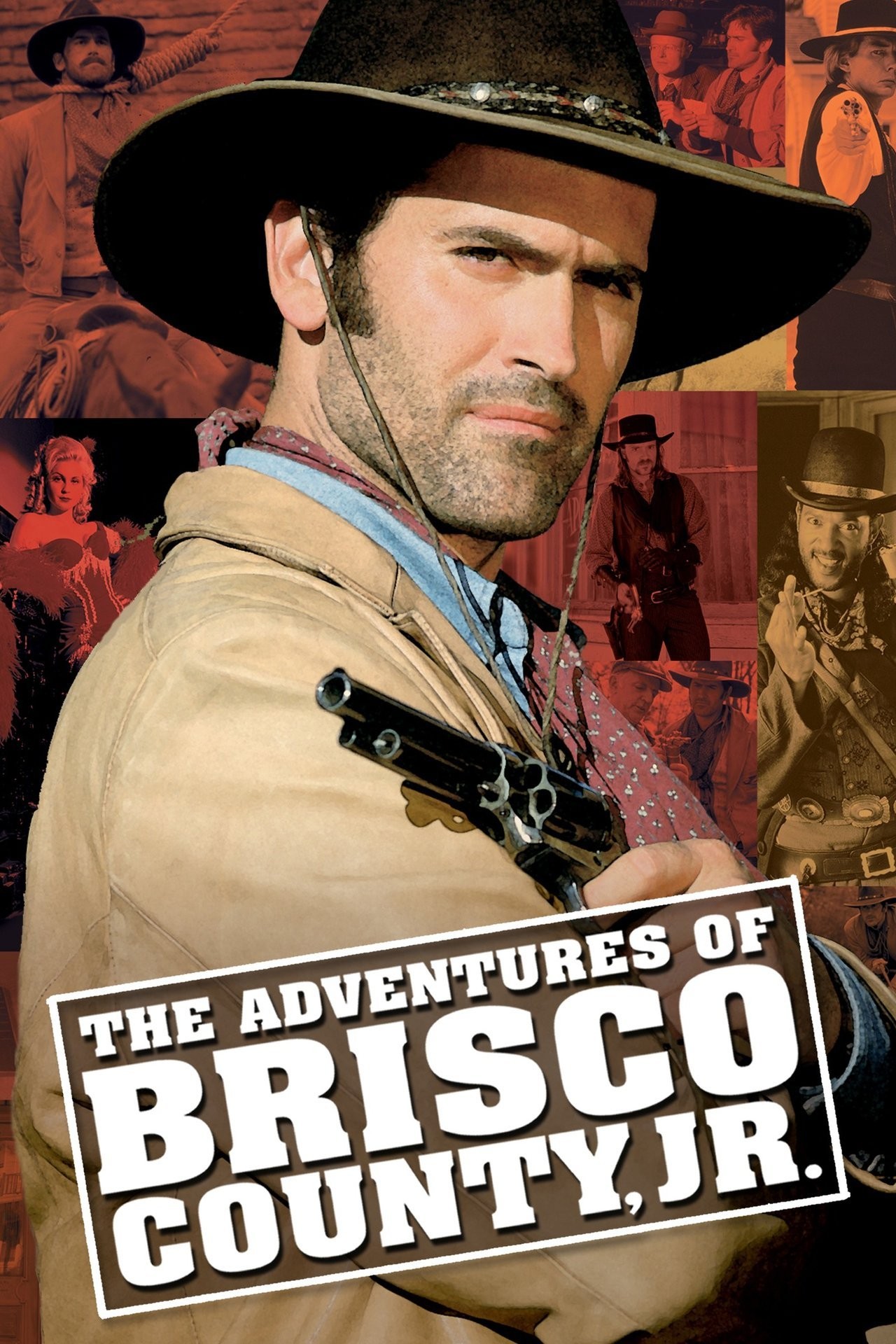
Icarus File No. 31: The Adventures of Brisco County, Jr.


“I’m looking for the coming thing.” — Brisco County, Jr.

Few television series embrace their own oddness as joyfully as The Adventures of Brisco County, Jr.. Blending frontier shootouts, pulp-serial adventure, broad comedy, sci-fi weirdness, and old-fashioned heroics into one deliberately unruly package, the short-lived Bruce Campbell vehicle has only grown more distinctive with time. It ran for a single season between 1993 and 1994, produced 27 episodes, and then vanished from network television before it had the chance to fully grow into the strange, funny, action-packed cult institution it deserved to be. That short life is part of its legend now. The show remains a wonderfully odd hybrid: a Western, an adventure serial, a sci-fi mystery, a screwball comedy, a buddy show, and a loving parody of old-fashioned television heroics. It was never content to simply be one thing, and that creative restlessness is exactly why it was so distinctive.

Bruce Campbell stars as Brisco County, Jr., a Harvard-educated lawyer who becomes a bounty hunter after the murder of his father, legendary lawman Brisco County, Sr. At first glance, that setup sounds like the foundation for a hard-edged revenge Western. Brisco is hired by a group of wealthy robber barons to track down John Bly, a charismatic outlaw who escaped after killing Brisco’s father. The show does not ignore that emotional hook, either. Campbell gives Brisco just enough sincerity that the character’s grief and desire to live up to his father’s reputation land when they need to. But the series almost immediately makes clear that it has no interest in being grim prestige television before prestige television was even a common phrase. Brisco may be motivated by vengeance, but he is also a cheerful idiot at times, an inventor’s dream customer, a romantic disaster, and a man genuinely enthusiastic about the future.

That optimism is one of the show’s most charming qualities. Brisco lives in 1893, but he is obsessed with modernity: bicycles, early automobiles, telephones, scientific gadgets, anything that might make the Old West feel less old. He repeatedly calls these new inventions “the coming thing,” often with the confidence of someone who knows history is on his side even when the technology in front of him is barely functional. It is a funny recurring bit, but it also gives the series an unusual personality. Brisco is not a traditional Western hero longing for a disappearing frontier. He is a cowboy-lawyer-adventurer who wants to survive the frontier and help drag it toward the twentieth century.

Campbell is the ideal actor for that balancing act. He had already built a devoted following through the Evil Dead films, where he proved he could sell broad physical comedy, cartoonish bravado, and genuine intensity all at once. The Adventures of Brisco County, Jr. puts those qualities to excellent use. Campbell looks like the square-jawed hero of a classic matinee serial, but he plays Brisco with a sly awareness of how ridiculous the genre can be. He can throw a punch, ride a horse, fire a gun, and deliver a tough-guy line, then immediately get tangled in a rope, outsmarted by a con artist, or humiliated by one of his own overconfident schemes. The show never treats him as incompetent exactly; Brisco is clever, brave, and unusually resourceful. But it understands that a hero is more entertaining when the universe keeps refusing to cooperate.

The early arc involving John Bly gives the show a memorable villain and a sense of forward momentum. Billy Drago, a genre veteran with one of the most instantly sinister faces and voices in film and television, plays Bly as a quietly unnerving outlaw rather than a loud, swaggering gunslinger. Drago had already become familiar to audiences through roles in crime thrillers, Westerns, horror, and action stories, and his presence adds serious genre street credibility to the series. He is particularly good at making Bly feel unpredictable. The character is intelligent, dangerous, and often strangely philosophical, with Drago giving even a casual line enough menace to make it sound like a threat. His addition helps sell the idea that, beneath the jokes and gadget-driven chaos, Brisco really is moving through a world populated by lethal people.

The show’s supporting cast is equally important to its success. Julius Carry’s Lord Bowler is the real secret weapon. Initially a rival bounty hunter with a powerful need to claim rewards before Brisco does, Bowler evolves into Brisco’s closest partner and one of the series’ most dependable sources of cool. Carry plays him with perfect deadpan timing, making Bowler’s irritation at Brisco’s eccentricities endlessly funny. Their chemistry is the foundation of the series. Brisco talks too much, overthinks everything, and barrels into trouble; Bowler observes, grumbles, and then saves the day when necessary. Their partnership has the rhythm of a classic buddy-action pairing, except it exists in a world where a frontier saloon might contain a mad inventor, an escaped criminal mastermind, and a mysterious glowing orb all in the same episode.

That orb is one of the show’s boldest ideas. Known as the Orb, it becomes the central sci-fi element in a series already packed with anachronistic comedy and pulp adventure. It possesses strange powers, influences human behavior, and hints at a much bigger mythology than the show ever had time to fully explain. The Orb plotline is not always the cleanest element of the series, but it matters because it shows how willing the creators were to push beyond ordinary Western storytelling. One week, Brisco might be hunting a gang of outlaws; the next, he might be dealing with supernatural powers, secret conspiracies, bizarre inventions, or stories that feel pulled from a 1930s adventure comic. The result is a show that can feel like The Wild Wild West, Indiana Jones, and a Saturday-morning serial filtered through a 1990s sitcom sensibility.

In that sense, The Adventures of Brisco County, Jr. was ahead of its time in the way it fused different genres into one coherent theme and narrative. The series never treated its Western setting, science-fiction mythology, slapstick humor, action serial influences, and detective-story plotting as separate gimmicks awkwardly stapled together. All of those elements were filtered through Brisco himself: a hero caught between an old frontier world and the uncertain promise of the future. His fascination with progress, invention, and “the coming thing” gave the show a thematic center strong enough to make even its strangest detours feel like part of the same larger adventure. What might have looked like a mess on paper usually plays as a deliberate expression of the show’s central idea: the Old West was changing, and Brisco was exactly the kind of eccentric hero built to stumble, joke, and fight his way into that change.

That same genre blending, however, likely confused audiences when the series first aired. In 1993, viewers and network marketers generally had a much easier time selling a show that could be described in one clean sentence. A Western was a Western. A sitcom was a sitcom. A science-fiction series was a science-fiction series. Brisco was all of those things at once, sometimes within the same episode. Its tonal shifts were part of the fun for viewers who connected with it, but they may have made it difficult for casual audiences to know what kind of show they were committing to every week. It was too playful and surreal for people expecting a straight Western, but its period setting could also make it seem less accessible to viewers looking for a more conventional action-comedy or sci-fi series.

Critics largely recognized how clever this mixture was. The show earned praise for its humor, its self-aware but affectionate approach to genre material, its charismatic cast, and its willingness to combine Western action with science fiction and absurdist comedy. Yet those very strengths also help explain why it was so short-lived. The Adventures of Brisco County, Jr. was difficult to market in the conventional network-TV landscape. Its placement did not help, either. The show aired on Fox during a period when the network was still building an identity and competing for viewers against much more established broadcasters. It arrived alongside other ambitious but unconventional Fox programming, including The X-Files, but Brisco did not become the breakout hit that its better-known network sibling did.

There is a strong argument that the series would have found a much bigger audience at the turn of the century, or even later. By the late 1990s and early 2000s, audiences had become increasingly comfortable with shows that mixed tones, genres, mythology, comedy, and serialized storytelling. Viewers were more willing to follow eccentric high-concept series whose worlds did not fit neatly into one category, especially as cable television, DVD collections, online fandom, and eventually streaming made it easier to discover a show outside its original broadcast slot. Brisco could have benefited enormously from that environment. Its episodic adventures would have made it easy to casually enjoy, while the larger mysteries around John Bly and the Orb would have rewarded devoted viewers. It is easy to imagine the show building a far larger fanbase through word of mouth, repeat viewing, and a culture more eager to embrace unapologetically nerdy genre experimentation.

That mismatch between quality and ratings is why the show became such a cult fan favorite. Fans who found it did not merely enjoy it; they tended to become attached to its specific flavor. The series offers a version of television adventure that feels generous rather than cynical. It wants to entertain first. Its jokes are broad but rarely mean-spirited, its action is energetic without becoming joyless, and its heroes are allowed to be capable, kind, foolish, and enthusiastic at the same time. Campbell’s performance became central to his larger cult-TV identity, while Carry’s Bowler remains one of the great underrated sidekicks in genre television. Even the show’s oddities—the Orb, the outlandish gadgets, the deliberately pulpy villains, the historical inaccuracies played for laughs—are not flaws to fans. They are the reason the series has lasted in memory.

Ultimately, The Adventures of Brisco County, Jr. is a lovable one-season wonder because it refuses to fit neatly into a box. It is a Western that looks toward the future, an action series that enjoys making its hero the punchline, and a sci-fi adventure that never loses sight of the human fun of two bounty hunters bickering their way across the frontier. Its cancellation remains disappointing because there was clearly more territory to explore, especially with Brisco, Bowler, Bly, and the Orb mythology. But the short run also preserves the show’s charm. It never had time to become routine. It remains a fast, funny, deeply peculiar burst of television imagination—and a reminder that sometimes the most enduring cult shows are the ones too weird, too ambitious, and too specific to become ordinary hits.

Previous Icarus Files:

  1. Cloud Atlas
  2. Maximum Overdrive
  3. Glass
  4. Captive State
  5. Mother!
  6. The Man Who Killed Don Quixote
  7. Last Days
  8. Plan 9 From Outer Space
  9. The Last Movie
  10. 88
  11. The Bonfire of the Vanities
  12. Birdemic
  13. Birdemic 2: The Resurrection 
  14. Last Exit To Brooklyn
  15. Glen or Glenda
  16. The Assassination of Trotsky
  17. Che!
  18. Brewster McCloud
  19. American Traitor: The Trial of Axis Sally
  20. Tough Guys Don’t Dance
  21. Reach Me
  22. Revolution
  23. The Last Tycoon
  24. Express to Terror 
  25. 1941
  26. The Teheran Incident
  27. Con Man
  28. Looker
  29. 1776
  30. Here

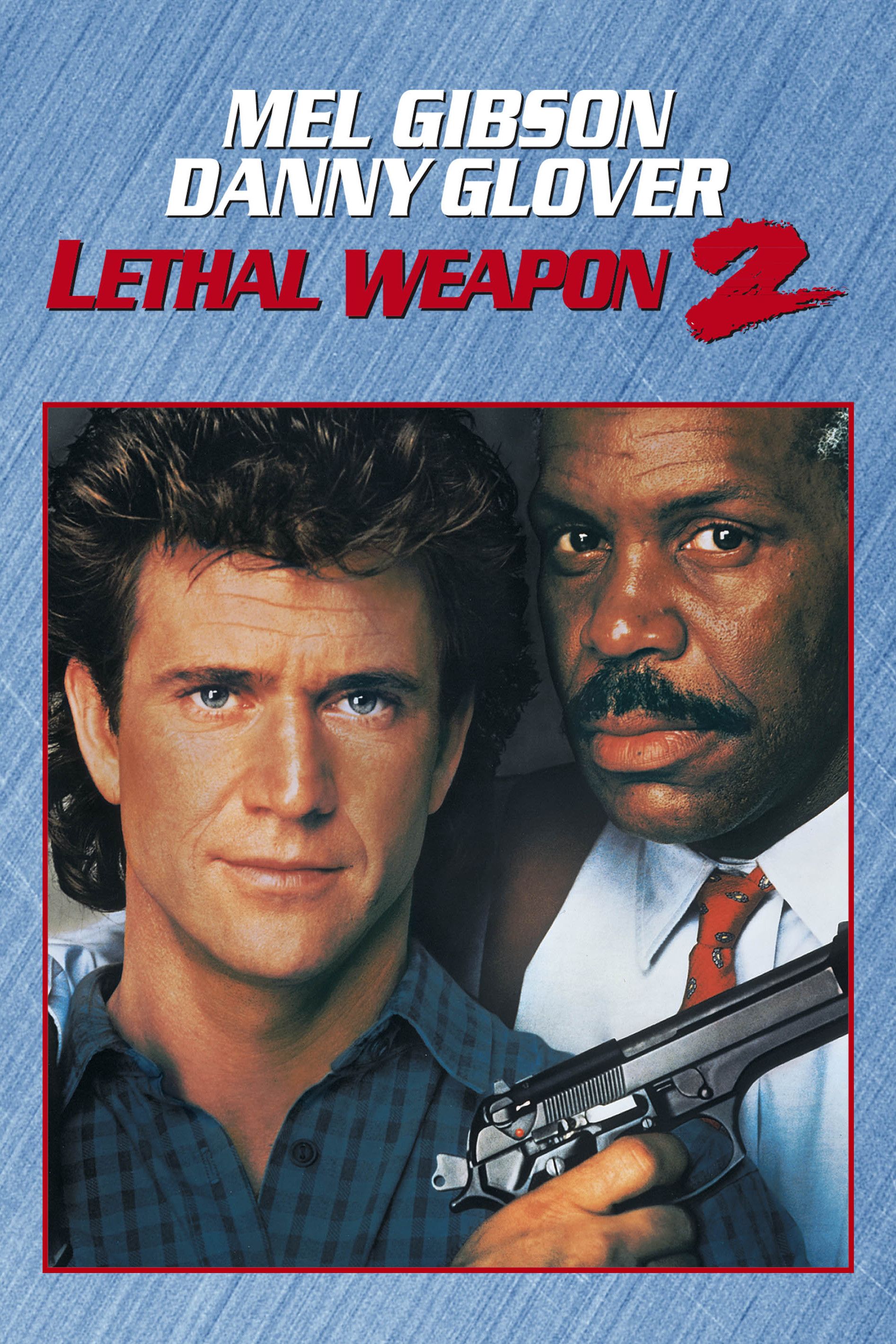
Review: Lethal Weapon 2 (dir. by Richard Donner)


“We’re back, we’re bad. You’re black, I’m mad. Let’s go!” — Martin Riggs

Lethal Weapon 2 is the kind of sequel that doesn’t really try to reinvent what worked the first time so much as crank the volume on everything: the action is bigger, the jokes come faster, and the chaos feels almost constant. Depending on what you loved about Lethal Weapon, that approach delivers more of the high-energy partnership in a flashier package. It’s a confident, very entertaining 80s action movie that knows it’s a sequel and leans into the spectacle that status allows.

Plot-wise, Lethal Weapon 2 wastes no time reminding you what this world feels like. It drops Riggs and Murtaugh into a wild car chase almost immediately, and from there the story locks onto a case involving South African diplomats hiding behind apartheid-era “diplomatic immunity” while running a massive drug and money-laundering operation. It’s a cleaner, more high-concept hook than the original’s murkier web of Vietnam vets and heroin smuggling, and the script makes the villains broad on purpose, almost cartoonishly arrogant, to give the audience someone very easy to hate. The trade-off is that the plot feels a bit more mechanical this time; you always know who the bad guys are and what the destination is, so the film’s real energy comes from the detours, jokes, and set-pieces rather than any mystery.

One of the big shifts from Lethal Weapon to Lethal Weapon 2 is tone. The first film balanced brutal violence and dark humor with a surprisingly heavy focus on Riggs’ suicidal grief and Murtaugh’s fear of getting too old for the job. The sequel keeps those elements in the background but leans harder into banter, slapstick timing, and outrageous gags like the now-famous exploding toilet sequence, with Richard Donner’s direction pushing the script toward action comedy. It’s still R-rated and not shy about blood or cruelty, but the emotional intensity is dialed down compared to the original’s raw edges.

Mel Gibson and Danny Glover remain the anchor, and their chemistry is as sharp as ever. Gibson’s Riggs is still reckless and unhinged, but there’s a looser, more playful side to him this time; he’s less haunted and more of a live-wire prankster until the story gives him something personal to latch onto. Glover’s Murtaugh continues to be the grounded center, constantly exasperated and always half a step away from just walking off the job, and the film has a lot of fun putting his straight-man persona through increasingly humiliating situations while still letting him be competent when it counts. Compared to the first film, where their partnership slowly thawed from suspicion to genuine trust, Lethal Weapon 2 starts from “these guys are already a team” and builds its best moments from how comfortably they now bounce off each other.

The biggest new ingredient is Joe Pesci as Leo Getz, a federal witness turned tagalong who basically functions as the franchise’s third stooge. Pesci leans into the motor-mouthed, paranoid, endlessly complaining energy that would become his signature, and his presence tips some scenes from gritty cop story into broad comedy. He undercuts tension at times, but he also gives the movie a different rhythm, especially in the quieter in-between beats where the first film might have lingered more on Riggs’ inner damage.

In terms of action, Donner clearly has more money and confidence to play with, and it shows. The chases are bigger, the shootouts are staged with a slicker sense of geography, and there’s a steady escalation in scale that makes the film feel like a genuine summer sequel rather than just another mid-budget cop movie. The original had a grimy, street-level intensity, with brutal fistfights and sudden bursts of violence; Lethal Weapon 2 is more interested in creative set-pieces, crowd-pleasing payoffs, and moments designed to make an audience cheer. It’s less intimate, but it is rarely dull.

Where the film lands in a more complicated space is its attempt to keep some emotional stakes alive while also going bigger and funnier. Riggs’ grief over the loss of his wife is still part of his character, and the story finds ways to poke at that wound again, including a new relationship that lets him imagine some kind of future beyond the constant death wish. Those beats are there to echo what worked so well in the first movie, but they have less room to breathe, often getting squeezed between an action scene and a joke instead of shaping the entire film’s tone. You can feel the push and pull between wanting to keep the darker emotional spine and delivering the kind of lighter, more easily marketable sequel a studio would understandably chase.

The villains themselves are effective in that pulpy 80s way: not nuanced, but very punchable. Arjen Rudd, with his smug talk of “diplomatic immunity,” is a villain designed to make audiences grind their teeth, and his main henchman adds a physically intimidating, quietly sadistic presence to the mix. Compared to the original’s more grounded ex-military antagonists, these guys feel one step closer to Bond territory, and that shift mirrors the film’s overall move toward heightened, almost comic-book stakes. What the sequel loses in plausibility, it gains in revenge-fantasy satisfaction.

When stacked directly against Lethal Weapon, the second film feels like a classic case of “if you liked hanging out with these characters once, here’s more time with them.” The original is tighter, more emotionally focused, and arguably more distinctive, with a stronger sense of danger and genuine unpredictability around Riggs’ mental state. Lethal Weapon 2 smooths some of those jagged edges and replaces them with quips, bigger set-pieces, and a more overtly crowd-pleasing structure, which makes it an easier, more consistently fun watch but also a slightly less resonant one. It is still a good film, but in many ways it is also the moment where the franchise shifts from a character-driven cop thriller with action to a full-on action-comedy machine.

As a fair, middle-of-the-road assessment, Lethal Weapon 2 works very well on its own terms and delivers exactly what most people want out of a late-80s buddy-cop sequel. The chemistry is intact, the action is energetic, and the film moves with the kind of confident pace that never really lets you get bored. At the same time, the tonal tilt toward broader humor and more cartoonish villains means it doesn’t quite have the same staying power or emotional punch as Lethal Weapon, especially if what hooked you the first time was how wounded and volatile it all felt. For fans of the original, it’s an enjoyable continuation—a louder, flashier second round that may not hit as hard, but still knows how to entertain.

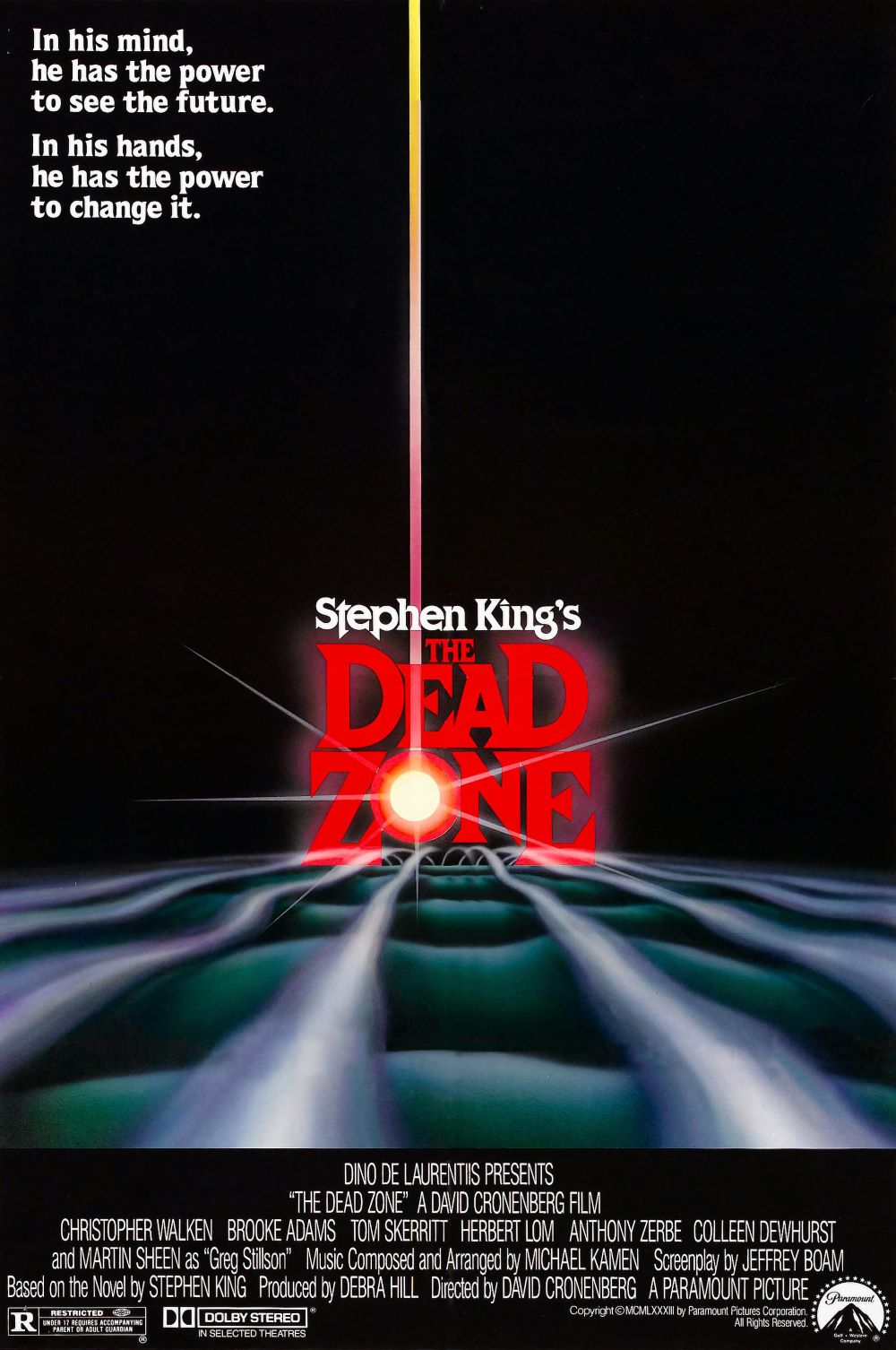
Horror Review: The Dead Zone (dir. by David Cronenberg)


“Bless me, Father, for I have sinned. I had the power… and I tried to prevent what I saw.”Johnny Smith

In 1983, David Cronenberg adapted Stephen King’s The Dead Zone with a distinctive emphasis on mood, morality, and psychological depth rather than traditional horror spectacle. The film follows Johnny Smith (Christopher Walken), a small-town schoolteacher whose life transforms irrevocably after a traumatic car accident leaves him in a five-year coma. Upon awakening, Johnny discovers he possesses psychic abilities that allow him to see the past and future by touch. Rather than a gift, this power becomes a heavy burden, isolating him and forcing him into wrenching moral choices.

Cronenberg’s direction is meticulous and deliberately restrained. The film’s muted color palette and stark winter landscapes visually echo Johnny’s emotional isolation and the fragility of human existence. His careful, often gliding camera movements create a mounting sense of quiet dread, while minimalistic sound design underscores moments of revelation with haunting subtlety. This subdued style elevates the film’s psychological impact, transforming it into a thoughtful and melancholy meditation on the cost of harrowing knowledge.

Significantly, The Dead Zone marks a departure from Cronenberg’s signature body horror. Instead of the grotesque physical transformations and visceral mutations that characterize much of his other work, here Cronenberg turns inward. The real horror lies in the malleability of the mind and the elusive nature of perception—how reality, memory, and the future are unstable constructs that can shift and fracture under psychic strain. This thematic focus on the impermanence and distortion of mental reality touches on some of Cronenberg’s deepest artistic fascinations.

The restrained treatment of body horror in The Dead Zone previews the director’s later, more psychologically driven films such as A History of ViolenceEastern Promises, and A Dangerous Method, where character studies and narrative depth take precedence over startling visuals. In this early pivot, Cronenberg demonstrates that his mastery lies not only in visual spectacle but in probing the profound emotional and moral dilemmas faced by his characters. The vision-focused horror here is cerebral and grounded, rooting supernatural phenomena in human frailty and ethical complexity.

Christopher Walken’s nuanced portrayal is the emotional heart of the film. He captures Johnny’s vulnerability, weariness, and profound solitude, portraying a man burdened by a cursed knowledge that isolates him from the world. Martin Sheen plays Greg Stillson, the ambitious and morally bankrupt politician whose rise Johnny must foretell and who embodies the film’s central threat. The supporting cast, including Brooke Adams as Johnny’s lost love Sarah and Tom Skerritt as Sheriff Bannerman, delivers compelling and authentic performances that humanize the film’s intimate, small-town environment.

Several changes from King’s novel sharpen the film’s thematic focus. The novel’s sprawling plot, including a serial killer subplot and a brain tumor storyline symbolizing Johnny’s mortality, is pared down or omitted. Despite this trimming, the serial killer element retained in the film remains chilling and effective. It highlights the darker repercussions of Johnny’s psychic gift and injects a tangible sense of dread, reinforcing the psychological weight Johnny carries. This subplot grounds the supernatural within a disturbing reality, illustrating the violent and tragic circumstances Johnny must grapple with as part of his burden.

The concept of the “dead zone” itself shifts in meaning. Originally, the term referred to parts of Johnny’s brain damaged by the accident, blocking certain visions. Cronenberg reinterprets it as a metaphor for the unknown and unknowable parts of the future—the gaps in psychic clarity that allow for free will and change. This subtle shift reshapes the narrative toward a more ambiguous, hopeful meditation on destiny and human agency.

Compared to King’s novel, Cronenberg’s Johnny is more grounded and isolated. The novel frames Johnny’s struggle within a broader spiritual and fatalistic context, highlighted by the looming presence of a brain tumor and a nuanced exploration of hope versus resignation. The film, by contrast, focuses on the emotional and moral fatigue induced by Johnny’s psychic gift, emphasizing his loneliness and reluctant responsibility rather than supernatural destiny.

Walken’s restrained, haunting performance strips away mythic grandeur to reveal a deeply human character. The film’s narrowed narrative tightens focus on Johnny’s internal anguish and his difficult ethical choices, making his plight intimate and richly relatable.

On a thematic level, The Dead Zone contemplates fate, free will, and sacrifice. Johnny’s psychic abilities act as a draining, almost chthonic force, transforming him into a reluctant prophet who is tasked with intervening in grim futures at great personal cost. The film’s bleak winter setting visually reflects Johnny’s alienation, while its deliberate pacing highlights the exhaustion and heartbreak that comes with such knowledge.

Ultimately, Cronenberg’s The Dead Zone goes beyond supernatural thriller conventions. It is a profound meditation on empathy, sacrifice, and the human condition—where the greatest horrors are internal, and the cost of knowledge is both psychic and emotional. Johnny Smith emerges as a tragic, flawed figure wrestling with unbearable burdens.

Cronenberg’s direction and the impeccable performances make The Dead Zone a standout in King adaptations. The film’s enduring impact lies in its rich thematic texture, its moral ambiguity, and its unflinching exploration of human frailty, all conveyed through a director shifting skillfully from physical body horror to psychological and existential terror. The film remains as haunting and resonant now as it was upon release, a testament to the synergy of Cronenberg and King’s extraordinary talents.

Horror on TV: Tales From The Crypt 5.9 “Creep Course” (dir by Jeffrey Boam)


For tonight’s excursion into televised horror, how about a little mummy-related terror!?

That’s what you get this episode of HBO’s Tales From The Crypt!  From season 5, here is the ninth episode — Creep Course!  What happens when you mix the principal from Ferris Bueller’s Day Off and the brain from the Breakfast Club with a mummy?  Mayhem!

This episode originally aired on November 10th, 1993.