Icarus File No. 31: The Adventures of Brisco County, Jr.


“I’m looking for the coming thing.” — Brisco County, Jr.

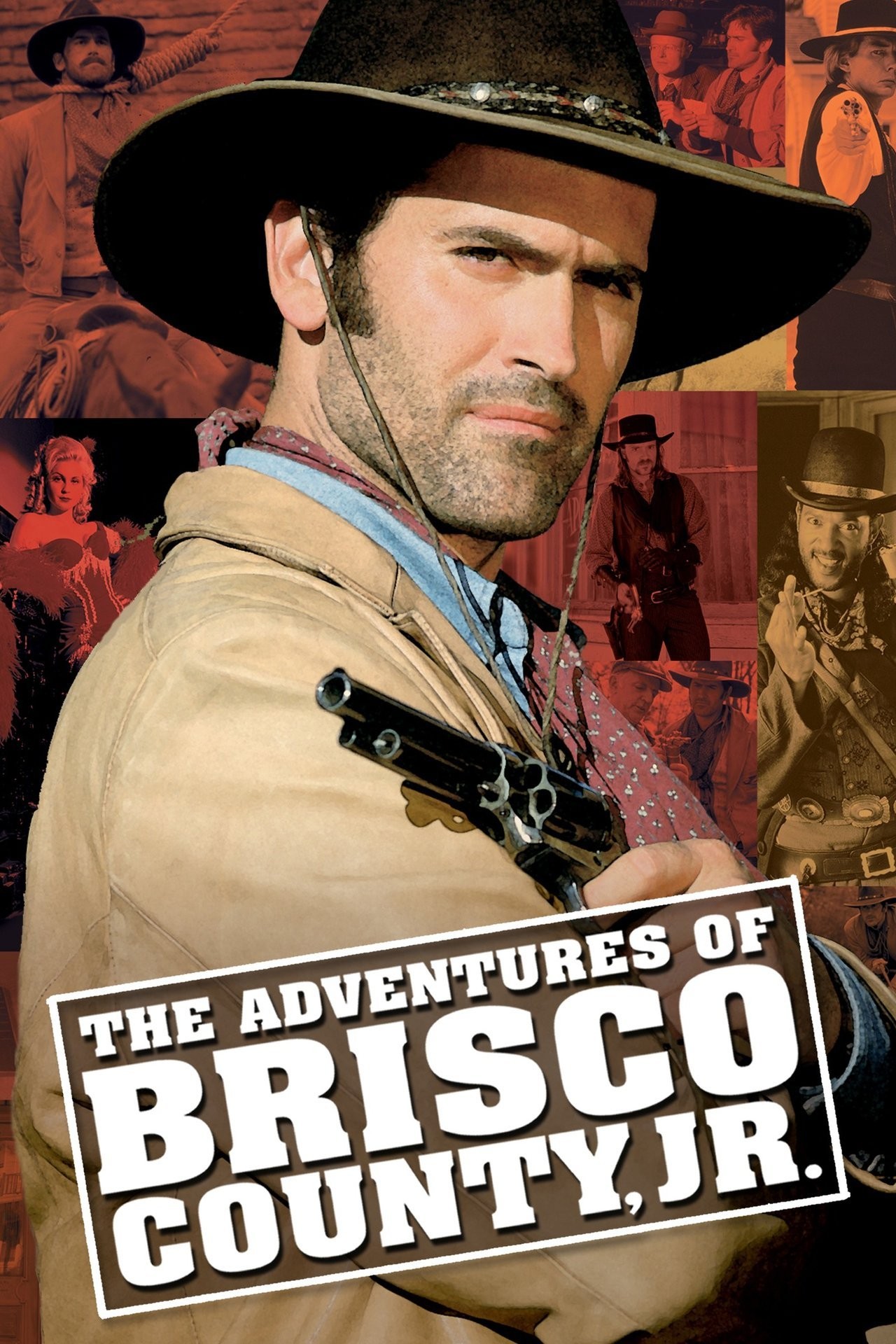
Few television series embrace their own oddness as joyfully as The Adventures of Brisco County, Jr.. Blending frontier shootouts, pulp-serial adventure, broad comedy, sci-fi weirdness, and old-fashioned heroics into one deliberately unruly package, the short-lived Bruce Campbell vehicle has only grown more distinctive with time. It ran for a single season between 1993 and 1994, produced 27 episodes, and then vanished from network television before it had the chance to fully grow into the strange, funny, action-packed cult institution it deserved to be. That short life is part of its legend now. The show remains a wonderfully odd hybrid: a Western, an adventure serial, a sci-fi mystery, a screwball comedy, a buddy show, and a loving parody of old-fashioned television heroics. It was never content to simply be one thing, and that creative restlessness is exactly why it was so distinctive.

Bruce Campbell stars as Brisco County, Jr., a Harvard-educated lawyer who becomes a bounty hunter after the murder of his father, legendary lawman Brisco County, Sr. At first glance, that setup sounds like the foundation for a hard-edged revenge Western. Brisco is hired by a group of wealthy robber barons to track down John Bly, a charismatic outlaw who escaped after killing Brisco’s father. The show does not ignore that emotional hook, either. Campbell gives Brisco just enough sincerity that the character’s grief and desire to live up to his father’s reputation land when they need to. But the series almost immediately makes clear that it has no interest in being grim prestige television before prestige television was even a common phrase. Brisco may be motivated by vengeance, but he is also a cheerful idiot at times, an inventor’s dream customer, a romantic disaster, and a man genuinely enthusiastic about the future.

That optimism is one of the show’s most charming qualities. Brisco lives in 1893, but he is obsessed with modernity: bicycles, early automobiles, telephones, scientific gadgets, anything that might make the Old West feel less old. He repeatedly calls these new inventions “the coming thing,” often with the confidence of someone who knows history is on his side even when the technology in front of him is barely functional. It is a funny recurring bit, but it also gives the series an unusual personality. Brisco is not a traditional Western hero longing for a disappearing frontier. He is a cowboy-lawyer-adventurer who wants to survive the frontier and help drag it toward the twentieth century.

Campbell is the ideal actor for that balancing act. He had already built a devoted following through the Evil Dead films, where he proved he could sell broad physical comedy, cartoonish bravado, and genuine intensity all at once. The Adventures of Brisco County, Jr. puts those qualities to excellent use. Campbell looks like the square-jawed hero of a classic matinee serial, but he plays Brisco with a sly awareness of how ridiculous the genre can be. He can throw a punch, ride a horse, fire a gun, and deliver a tough-guy line, then immediately get tangled in a rope, outsmarted by a con artist, or humiliated by one of his own overconfident schemes. The show never treats him as incompetent exactly; Brisco is clever, brave, and unusually resourceful. But it understands that a hero is more entertaining when the universe keeps refusing to cooperate.

The early arc involving John Bly gives the show a memorable villain and a sense of forward momentum. Billy Drago, a genre veteran with one of the most instantly sinister faces and voices in film and television, plays Bly as a quietly unnerving outlaw rather than a loud, swaggering gunslinger. Drago had already become familiar to audiences through roles in crime thrillers, Westerns, horror, and action stories, and his presence adds serious genre street credibility to the series. He is particularly good at making Bly feel unpredictable. The character is intelligent, dangerous, and often strangely philosophical, with Drago giving even a casual line enough menace to make it sound like a threat. His addition helps sell the idea that, beneath the jokes and gadget-driven chaos, Brisco really is moving through a world populated by lethal people.

The show’s supporting cast is equally important to its success. Julius Carry’s Lord Bowler is the real secret weapon. Initially a rival bounty hunter with a powerful need to claim rewards before Brisco does, Bowler evolves into Brisco’s closest partner and one of the series’ most dependable sources of cool. Carry plays him with perfect deadpan timing, making Bowler’s irritation at Brisco’s eccentricities endlessly funny. Their chemistry is the foundation of the series. Brisco talks too much, overthinks everything, and barrels into trouble; Bowler observes, grumbles, and then saves the day when necessary. Their partnership has the rhythm of a classic buddy-action pairing, except it exists in a world where a frontier saloon might contain a mad inventor, an escaped criminal mastermind, and a mysterious glowing orb all in the same episode.

That orb is one of the show’s boldest ideas. Known as the Orb, it becomes the central sci-fi element in a series already packed with anachronistic comedy and pulp adventure. It possesses strange powers, influences human behavior, and hints at a much bigger mythology than the show ever had time to fully explain. The Orb plotline is not always the cleanest element of the series, but it matters because it shows how willing the creators were to push beyond ordinary Western storytelling. One week, Brisco might be hunting a gang of outlaws; the next, he might be dealing with supernatural powers, secret conspiracies, bizarre inventions, or stories that feel pulled from a 1930s adventure comic. The result is a show that can feel like The Wild Wild West, Indiana Jones, and a Saturday-morning serial filtered through a 1990s sitcom sensibility.

In that sense, The Adventures of Brisco County, Jr. was ahead of its time in the way it fused different genres into one coherent theme and narrative. The series never treated its Western setting, science-fiction mythology, slapstick humor, action serial influences, and detective-story plotting as separate gimmicks awkwardly stapled together. All of those elements were filtered through Brisco himself: a hero caught between an old frontier world and the uncertain promise of the future. His fascination with progress, invention, and “the coming thing” gave the show a thematic center strong enough to make even its strangest detours feel like part of the same larger adventure. What might have looked like a mess on paper usually plays as a deliberate expression of the show’s central idea: the Old West was changing, and Brisco was exactly the kind of eccentric hero built to stumble, joke, and fight his way into that change.

That same genre blending, however, likely confused audiences when the series first aired. In 1993, viewers and network marketers generally had a much easier time selling a show that could be described in one clean sentence. A Western was a Western. A sitcom was a sitcom. A science-fiction series was a science-fiction series. Brisco was all of those things at once, sometimes within the same episode. Its tonal shifts were part of the fun for viewers who connected with it, but they may have made it difficult for casual audiences to know what kind of show they were committing to every week. It was too playful and surreal for people expecting a straight Western, but its period setting could also make it seem less accessible to viewers looking for a more conventional action-comedy or sci-fi series.

Critics largely recognized how clever this mixture was. The show earned praise for its humor, its self-aware but affectionate approach to genre material, its charismatic cast, and its willingness to combine Western action with science fiction and absurdist comedy. Yet those very strengths also help explain why it was so short-lived. The Adventures of Brisco County, Jr. was difficult to market in the conventional network-TV landscape. Its placement did not help, either. The show aired on Fox during a period when the network was still building an identity and competing for viewers against much more established broadcasters. It arrived alongside other ambitious but unconventional Fox programming, including The X-Files, but Brisco did not become the breakout hit that its better-known network sibling did.

There is a strong argument that the series would have found a much bigger audience at the turn of the century, or even later. By the late 1990s and early 2000s, audiences had become increasingly comfortable with shows that mixed tones, genres, mythology, comedy, and serialized storytelling. Viewers were more willing to follow eccentric high-concept series whose worlds did not fit neatly into one category, especially as cable television, DVD collections, online fandom, and eventually streaming made it easier to discover a show outside its original broadcast slot. Brisco could have benefited enormously from that environment. Its episodic adventures would have made it easy to casually enjoy, while the larger mysteries around John Bly and the Orb would have rewarded devoted viewers. It is easy to imagine the show building a far larger fanbase through word of mouth, repeat viewing, and a culture more eager to embrace unapologetically nerdy genre experimentation.

That mismatch between quality and ratings is why the show became such a cult fan favorite. Fans who found it did not merely enjoy it; they tended to become attached to its specific flavor. The series offers a version of television adventure that feels generous rather than cynical. It wants to entertain first. Its jokes are broad but rarely mean-spirited, its action is energetic without becoming joyless, and its heroes are allowed to be capable, kind, foolish, and enthusiastic at the same time. Campbell’s performance became central to his larger cult-TV identity, while Carry’s Bowler remains one of the great underrated sidekicks in genre television. Even the show’s oddities—the Orb, the outlandish gadgets, the deliberately pulpy villains, the historical inaccuracies played for laughs—are not flaws to fans. They are the reason the series has lasted in memory.

Ultimately, The Adventures of Brisco County, Jr. is a lovable one-season wonder because it refuses to fit neatly into a box. It is a Western that looks toward the future, an action series that enjoys making its hero the punchline, and a sci-fi adventure that never loses sight of the human fun of two bounty hunters bickering their way across the frontier. Its cancellation remains disappointing because there was clearly more territory to explore, especially with Brisco, Bowler, Bly, and the Orb mythology. But the short run also preserves the show’s charm. It never had time to become routine. It remains a fast, funny, deeply peculiar burst of television imagination—and a reminder that sometimes the most enduring cult shows are the ones too weird, too ambitious, and too specific to become ordinary hits.

Previous Icarus Files:

  1. Cloud Atlas
  2. Maximum Overdrive
  3. Glass
  4. Captive State
  5. Mother!
  6. The Man Who Killed Don Quixote
  7. Last Days
  8. Plan 9 From Outer Space
  9. The Last Movie
  10. 88
  11. The Bonfire of the Vanities
  12. Birdemic
  13. Birdemic 2: The Resurrection 
  14. Last Exit To Brooklyn
  15. Glen or Glenda
  16. The Assassination of Trotsky
  17. Che!
  18. Brewster McCloud
  19. American Traitor: The Trial of Axis Sally
  20. Tough Guys Don’t Dance
  21. Reach Me
  22. Revolution
  23. The Last Tycoon
  24. Express to Terror 
  25. 1941
  26. The Teheran Incident
  27. Con Man
  28. Looker
  29. 1776
  30. Here

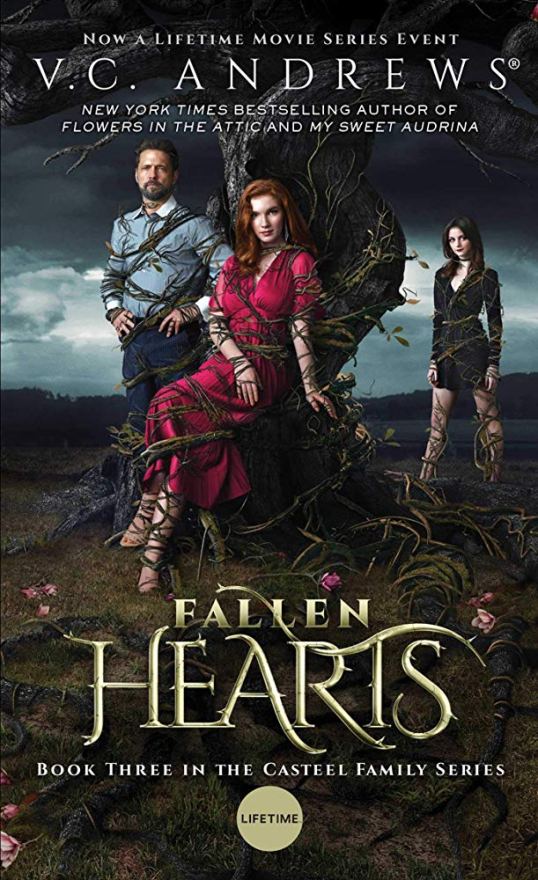
Lifetime Film Review: V.C. Andrews’ Fallen Hearts (dir by Jason Priestley)


About 12 minutes into Fallen Hearts, the perpetually aggrieved Heaven (Annalise Basso) goes to the local circus so she can taunt her stepfather, Luke (Chris William Martin), over the fact that 1) Heaven looks exactly like her mother, Angel and 2) Angel’s dead.

Upon arriving at the circus, Heaven runs into her stepbrother, Tom (Matthew Nelson-Mahood), but it takes her a while to recognize him because he’s wearing a big red clown nose.  It’s not until he takes the nose off that she recognizes Tom and then asks him why he’s dressed up like a clown.  It turns out that Tom is a clown now!  I guess he got a promotion.  Tom then asks why Heaven has made herself up to look exactly like Angel….

Unfortunately, Luke has already spotted Heaven and, apparently not understanding how death works, becomes convinced that Angel has returned to life and is standing in the middle of a low-rent circus in West Virginia.  Unfortunately, Luke is apparently now a lion tamer and he’s so shocked to see his dead wife that he loses track of his lion.

And, of course, the lion promptly kills Tom.  Would the lion have spared Tom if he hadn’t removed his red clown nose?  We may never know.

Now, of course, everyone in the film treats this as being a great tragedy.  Strangely enough, no one blames Heaven, even though none of this would have happened if not for the Heaven’s apparent obsession with mentally tormenting everyone from her past.  But I have to admit that I laughed out loud as soon as I saw that lion in the background because I knew there was no way the scene was going to end without Tom getting pounced on….

And really, that’s the type of film that Fallen Hearts is.  It’s the third film in Lifetime’s adaptation of V.C. Andrews’s Casteel Saga (the previous two were Heaven and Dark Angel) and, from the minute that lion pounces at Tom, everyone should know better than to take anything that happens too seriously.  Fallen Hearts somehow manages to be even more melodramatic than the first two films and, as directed by Jason Priestley, Fallen Hearts appears to be fully in on the joke.

Priestley not only directs but he also appears in the film, once again playing Tony Tatterton.  Tony is not only Heaven’s unacknowledged father but he’s also her stepgrandfather as well.  When Heaven finally ends up marrying Logan Stonewall (James Rittinger), Tony invites them to come up to Massachusetts for their honeymoon.  Heaven says no but Logan, being a simple boy from the West Virginia hills, is all about family.  While up in Massachusetts, Heaven discover that her first husband, Troy (Jason Cermak), isn’t dead after all.  He’s just been in hiding for the past five years, mostly because, after the wedding, he discovered that he was also Heaven’s uncle and that type of relationship just isn’t right.  Of course, that doesn’t stop Troy and Heaven from having sex after they run into each other while wandering around a hedge maze.  Troy vanishes the morning afterward but soon, Heaven discovers she’s pregnant.  Is the baby Troy’s or Logan’s?

Actually, speaking of babies, Heaven’s trashy and bitter sister, Fanny (Jessica Clement, stealing the entire damn movie) is also pregnant!  And it turns out that Fanny’s been having an affair with Logan so he might be the father.  Then again, there’s also scene where the town’s preacher looks at Fanny and shouts, “WHORE!,” so who knows for sure.  The one thing we do know for sure is that all of this is going to lead to two pregnant sisters facing off in a court room.  These things always do.

Anyway, Fallen Hearts is not a film that’s really meant to be taken seriously and, as I said before, the film itself is obviously in one the joke.  The melodrama is turned up to 11 and the actors tear through the overripe dialogue like a moonshiner trying to outrun the cops.  Annalise Basso again manages to keep things somewhat grounded as Heaven but the film is totally dominated by Jessica Clement, who brings the wonderfully trashy Fanny to vivid life.  The townsfolk and the hillfolk might not think much of Fanny but she keeps Fallen Hearts beating.

The fourth part of the Casteel Saga, Gates of Paradise, will air on Lifetime next Saturday.

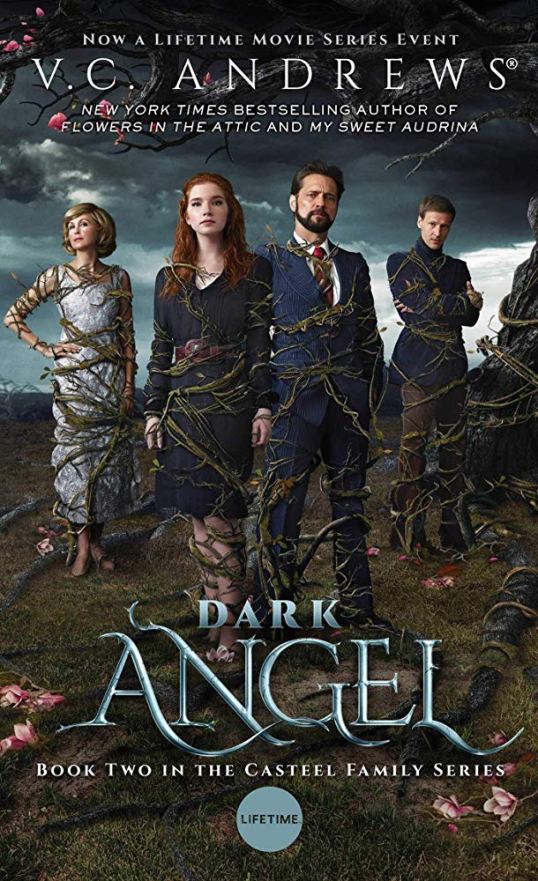
Lifetime Film Review: V.C. Andrews’ Dark Angel (dir by Paul Shapiro)


When we last saw Heaven Casteel (Annalise Basso), she was boarding a bus so that she could leave the backwoods of West Virginia and hopefully live with her mother’s wealthy family in Boston, Massachusetts.

Dark Angel picks up where Heaven left off, with Heaven arriving at stately and creepy Farthinggale Manor and discovering that the rich are just as fucked up as the poor.  She’s greeted by her stepgrandfather, Tony Tatterton (Jason Priestly), who tries to come across as being friendly but quickly reveals himself to be cold and manipulative.  She also meets her grandmother, Jillian (Kelly Rutherford).  Jillian always has a drink in her hand and worries that Heaven will leave “hill grime” around the house.  Jillian doesn’t want Heaven to stay at the house for too long but Tony manages to change her mind.  Tony tells Heaven that, in order to thank him for his generosity, she’ll basically have to do everything that he says.

For instance, Tony tells Heaven that she is, under no circumstances, to enter the estate’s hedge maze.  (Rich people always have a hedge maze.)  So, of course, Heaven does just that.  She gets lost but eventually, she comes across a small house sitting in the middle of the maze.  Inside the house, a handsome man (played by Jason Cermak) carefully crafts a doll’s face.’

“Excuse me, sir,” Heaven says, “I got lost in your hedge maze!”

“You must be Heaven,” the man replies.

The man it turns out is Troy Tatterton, Tony’s younger brother.  Troy suffers from depression and he’s been exiled to the maze because Jillian can’t stand the sound of dolls be made.  Troy and Heaven soon find themselves falling in love, despite Tony’s demand that Heaven stay out of the maze.

Tony also demands that Heaven stop writing to her family but, of course, Heaven continues to try to reach out to them.  Her siblings aren’t doing quite as well as Heaven.  For instance, one sister is living in a trailer.  Her brother is working at a circus.  And her two youngest siblings are living in Washington, D.C, where they’re undoubtedly surrounded by politicians and interns.  AGCK!  It’s a fate worse than spending the rest of your life brewing moonshine in the hills.

And, while dealing with all of this, Heaven is also trying to graduate from high school and hopefully get into an Ivy League college!  She wants to study literature.  At one point, she explains that her favorite writer is Shakespeare but that she also really loves Fitzgerald.  She says that Fitzgerland “saved the best for last,” with Tender Is The Night.  It was at this point that I yelled, “HIS LAST NOVEL WAS THE LAST TYCOON!” and threw a shoe at the TV. 

Complicating matters even further is the fact that her old backwoods boyfriend, Logan (James Rittinger), is attending college in Boston.  Logan says that he doesn’t want anything to do with Heaven because he’s still angry over everything that happened during the previous movie but it’s pretty obvious that he’s still in love with her.

And then….

Well, listen — a lot happens in Dark Angel.  As opposed to Heaven, Dark Angel is full of twists and turns.  Everyone’s got a deep, dark secret and, at time, it gets a bit overwhelming trying to keep track of it all.  Then again, that’s what makes a film like this fun.  It’s just so over-the-top and implausible that you really can’t help but enjoy watching it all play out.  Every few minutes, someone else is popping up and either taunting Heaven for being from the hills or revealing that they’re actually one of her relatives.  Seriously, this is one messed up family.  The good thing is that Dark Angel seems to be aware of how silly all of the melodrama occasionally is.  The other good thing about Dark Angel is that it mostly involves rich people instead of poor people, which means that, as opposed to the first film, everyone gets to wear nice clothes.

Annalise Basso again makes all of us redheads proud in the role of Heaven but the film is really stolen by Jason Priestley, who appears to be having the time of his life playing the ambiguously evil Tony.  Kelly Rutherford is a bit underused as Jillian but she does get one good scene towards the end of the film and she makes for a stylish drunk.

The sequel to Dark Angel, Fallen Hearts, will air on Lifetime later tonight and hopefully, I’ll have a review of it up on Sunday.  And if I don’t, I guess you’ll just have to spank me like a character in a V.C. Andrews novel….

Horror On TV: Night Visions 1.1 “The Passenger List” (dir by Yves Simoneau) and “The Bokor” (dir by Keith Gordon)


Do y’all remember an old show called Night Visions?

Night Visions was a horror anthology show that ran for a season in 2001.  It got some good reviews as a summer replacement series but it struggled to find an audience.  After the 9-11 attacks, the show was preempted for three weeks straight and, when it finally did come back, I imagine that viewers weren’t really in the mood for a horror anthology, not when they had real-life horror to deal with on a daily basis.

And so, Night Visions was canceled but apparently, it still has a strong cult following.

Below is the very first episode of Night Visions.  It originally aired on July 12th, 2001 and it tells two stories.  In the Passenger List, a man investigating a plane crash starts to doubt his own sanity.  In the Bokor, a group of medical students make the mistake of cutting into the cadaver of a powerful voodoo priest.  Mayhem follows.

From what I’ve seen on YouTube, it looks like Night Visions was actually pretty good so enjoy this episode!

(And yes, each episode was hosted by Henry Rollins.)


Adventures in Cleaning Out The DVR: Night of the Wild (dir by Eric Red)


night of the wild

After I finished up my review of Buried Secrets, it was time to watch Night of the Wild.  Night of the Wild, which was produced by the wonderful people at The Asylum, originally aired on the SyFy network on October 3rd.  Much like Ominous, The Hollow, and They Found Hell, it was aired as a part of their 31 Days of Halloween.  I was on vacation when Night of the Wild was originally aired, so I missed it.

Night of the Wild is exactly the type of film that appears to have been made to give me nightmares.  It’s a film about killer dogs and I’ve always been a bit scared of dogs.  Recently, as a result of meeting some very well-behaved and sweet-natured members of the species, I’ve become a little bit more accepting of them but, for the most part, dogs still make me very nervous.  I just can’t deal with all the barking and the growling and the jumping.  Add to that, it freaks me out that dogs are apparently attuned to human emotions because I tend to be pretty moody.  Get a dog around me and chances are my emotional nature will cause them to have a nervous breakdown.

Night of the Wild opens with a green meteorite crashing down to Earth.  It lands near a small farming community.  Soon, glowing chunks of the meteorite are appearing everywhere and the town’s dogs start to turn against their owners.  (It’s debatable whether or not it’s just dogs that go crazy.  One of my favorite shots of the movie is of a hundred cats safely perched up in a tree, as if they’re aware that the dogs are having issues and don’t want anything to do with them.  There’s another shot the features several cows mooing in a slightly ominous fashion, as if they also can’t wait to take out a few farmers.)  It’s pretty much a typical SyFy/Asylum scenario — the dogs go on a rampage through town, a lot of people die, and the members of a family (made up of Rob Morrow, Kelly Rutherford, Tristin Mays, and Carmen Tonry) try to get to safety.

And yet, there are a few things that set Night of the Wild apart from other SyFy films.

First off, there’s the look of the film.  According to the imdb’s trivia section, director Eric Red and cinematographer Spencer Hutchins were inspired by the look of Dario Argento’s classic Suspiria.  And you can certainly tell while watching the film.  The colors are vibrant.  The green glow of the meteorite is often seen in the background.  When the dogs lay siege to a farmhouse, the reddish lighting will remind you of Suspiria‘s scenes of Jessica Harper investigating the hidden passageways of that haunted dance academy.

The other thing that sets apart Night of the Wild is just how violent and gruesome the film eventually becomes.  Unlike Sharknado 3, this is not a comedy.  This is not a film that invites you to laugh over all the mayhem.  Night of the Wild is a grim and dark movie, one in which you’re never quite sure who is going to survive and who is going to fall victim to the dogs.

Night of the Wild is a film that will make you want to hug your favorite cat.