Late Night Retro Television Review: 4.5 “….The Clock Runs Out”


Welcome to Late Night Retro Television Reviews, a feature where we review some of our favorite and least favorite shows of the past! On Wednesdays, I will be reviewing 1st and Ten, which aired in syndication from 1984 to 1991. The entire series is streaming on Tubi.

This week, Joe Hears meets his fate.

Episode 4.5 “….The Clock Runs Out”

(Dir by Stan Lathan, originally aired on November 2nd, 1988)

Poor Joe Hearns!

Last episode, Joe went from being a skid row windshield cleaner to being a defense coordinator to being a linebacker on the team.  This episode …. well, he dies.

Seriously.

It’s not a particularly noble death either.  After a rookie player (played by Kevin Sorbo, of all people) is seriously injured in a prank involving a bull, Hearns decides to go back to the farm and challenge the bull himself.  The show ends with the bull charging at Hearns and since Harold Sylvester (the actor who played Hearn) is not listed as having appeared in any episode of 1st & Ten beyond this one, I can only assume that the bull won.

Seriously, what was the point of that whole storyline?  Bubba, Jethro, and TD all thought that Joe Hearns would be able to redeem himself on the Bulls.  Hearns turned out to be suffering from massive PTSD, the result of having crippled an opposing player the last time he played.  This episode, Joe has a near breakdown when one of the team’s new executives reprimands Joe for parking in his spot.  And then Joe dies.  I guess the lesson here is that he would have been better off if Bubba and Jethro had just left him in that parking lot.

Watching this show, I get the feeling that the writers really didn’t have much direction in the writing room.  It’s amazing how often a potentially interesting character like Joe Hearn will be introduced and then dropped an episode later.  There have been so many storylines that have been started and abandoned in a similar fashion.  This very season started with the Bulls players buying the team and then, three episodes later, they decided that they didn’t want to be team owners after all.

The one thing that remains consistent?  The bland affability of OJ Simpson.  OJ may not have been a particularly good actor but he certainly was personable.  That undoubtedly paid off for him later in life.

Unfortunately, Joe Hearns was not personable.  And now, he’s dead.

(Actually, so is OJ.)


Retro Television Review: The Love Boat 7.24 “A Rose Is Not A Rose/Novelties/Too Rich and Too Thin”


Welcome to Retro Television Reviews, a feature where we review some of our favorite and least favorite shows of the past!  On Wednesdays, I will be reviewing the original Love Boat, which aired on ABC from 1977 to 1986!  The series can be streamed on Paramount Plus!

Come aboard, we’re expecting you.  And love …. won’t hurt anymore…. Actually, that’s not quite true.  There’s some real pain in this week’s episode.  Then again, there’s also Don Adams and Rich Little.  It’s all a bit strange, to be honest.

Episode 7.24 “A Rose is Not a Rose/Novelties/Too Rich and Too Thin”

(Dir by Neil Cox, originally aired on March 17th, 1984)

Hey, Don Adams is on The Love Boat …. again!  This time, he’s playing a novelties salesman who is in love with Audrey Meadows.  Meadows, however, assumes that Adams is only pursuing her because he wants to place his gag gifts in her store.  Adams doesn’t help his case by constantly bringing up his novelties.  This was a silly story.  It wasn’t bad but it wasn’t particularly memorable.  It was pleasant in the way that watching an old sitcom with a grandparent can be pleasant.

Both Doc and the Captain have fallen for Jamie Sloane (Jamie Lynn Bauer), an actress who is up for a big commercial.  Jamie worries about her weight.  She pops diet pills like crazy.  She doesn’t eat at dinner.  Yes, that’s right — The Love Boat deals with anorexia!  And there’s nothing wrong with that except for the tonal whiplash that comes from having a relatively serious story about a potentially fatal condition playing out next to Don Adams trying to sell novelty gifts and Rich Little pretending to be a woman.

Yep, impressionist Rich Little boards the cruise.  He’s playing Barry Corwin, the best friend of singer Rose York.  Rose has been hired to sing on the boat but she’s fallen ill.  So, Barry boards the boat disguised as Rose …. no, come back.  Come back.  This is really dumb but at least let me finish the review.  Of course, passenger Radford Harcourt (Arte Johnson) falls for Rose.  In fact, no one figures out that Rose is actually Barry, even though Rose has a noticeable five o’clock shadow and is wearing a pretty obvious wig.  Meanwhile, Barry falls for Julie.

And again, it’s not that this is really a bad story.  It’s pretty much a standard silly Love Boat story.  But there’s just a massive tonal whiplash here as the episode goes back and forth from Don Adams and Rich Little to a woman dying to be thin.  As such, this episode really doesn’t work.

But I know what you really want to know.

How coked up was Julie?

Obviously, very coked up.  I mean, she didn’t even notice that the cruise’s entertainer was just Rich Little in a wig.  Somehow, I can’t help but think this could have been avoided if Ace had been on this cruise but this the second week in a row that the ship has sailed without its photographer on board.

This was an odd cruise.  Eating disorders suck.

Song of the Day: Main Theme From Zombi 2 by Fabio Frizzi


Zombi 2 (1979, dir. Lucio Fulci, DP: Sergio Salvati)

For today’s song of the day, we celebrate the birthday of Lucio Fulci with Fabio Frizzi’s main theme from 1979’s Zombi 2.  If you’ve ever seen the film, it’s impossible to hear this piece of music without imagining hundreds of zombies walking across the Brooklyn Bridge.

Late Night Retro Television Review: Pacific Blue 4.7 “Damaged Goods”


Welcome to Late Night Retro Television Reviews, a feature where we review some of our favorite and least favorite shows of the past! On Tuesdays, I will be reviewing Pacific Blue, a cop show that aired from 1996 to 2000 on the USA Network!  It’s currently streaming everywhere, though I’m watching it on Tubi.

This week, the bike cops are it again.

Episode 4.7 “Damaged Goods”

(Dir by Michael Levine, originally aired on October 4th, 1998)

Bobby has a new girlfriend named Annie (Tracy Hutson).  Bobby says that he’s in love with her.  Meanwhile, Granger is in lust with Annie’s best friend, Jo (Shannon Elizabeth, in an early role).  After Granger sleeps with Jo, Jo tells him that he owes her $200.  It turns out that both Jo and Annie get paid to have sex.  Meanwhile, Annie’s roommate is found dead below a 6-story window.

Chris is convinced that Annie’s roommate was murdered.  TC and Cory disagree.  TC is especially angry because he thinks Chris is spending too much time hanging out with her friends in Homicide.  Oddly enough, none of those friends show up in this episode.  As well. no one from the Vice Squad shows up to investigate the campus prostitution ring.  Instead, this is yet another episode where it somehow all falls to the bicycle cops.

Monica goes undercover and joins Jo and Annie’s therapy group, where Dr. Alicia Alper (Joyce Hyser) teaches that prostitution is empowering.  Soon, Jo recruits Monica to work as a an escort.  Or, at least, I think it was Jo.  This episode is edited in such a haphazard way that it was hard to keep track of what was actually going on.

This episode finds Cory worrying about how she’s going to survive as a single mom.  Her ex-boyfriend, Doug (Owen McKibben), returns and says that he wants to be in the baby’s life.  Cory says that it’s been over a month since Doug reacted to the news of her pregnancy by walking out on her.  Doug threatens to sue for the right to be a part of the baby’s life.  Cory has a miscarriage.  She says it was due to the stress Doug put her under.  Doug says that it was due to Cory still working a very physically demanding and rough job despite being pregnant.  I felt so bad for Cory in this episode, especially since the only person (other than Doug) who bothered to visit her in the hospital was Chris, who is pretty much incapable of feeling or showing emotion.

Anyway, it turns out that Annie’s roommate was murdered by a client and then the client was murdered by Dr. Alper.  However, when the bike cops arrest her, several other woman all walk up and declares that Dr. Alper is innocent because they killed the client.  However, Dr. Alper confesses.  Bobby breaks up with his girlfriend.  That’s probably for the best.  Everyone knows Bobby should be with Monica.

This episode …. oh God.  I mean, it tried to liven things up a little.  There were a lot of intense interrogation scenes and a lot of jump cuts that were apparently meant to create tension.  We would watch Chris ask a question and then jump to someone in a totally different room answering an unrelated question.  It was very showy but it wasn’t very effective.  These folks aren’t hard-boiled detectives.  They’re bicycle cops.

Seriously, where were the real detectives?

Late Night Retro Television Review: CHiPs 5.23 “Trained For Trouble”


Welcome to Late Night Retro Television Reviews, a feature where we review some of our favorite and least favorite shows of the past!  On Mondays, I will be reviewing CHiPs, which ran on NBC from 1977 to 1983.  The entire show is currently streaming on Prime!

This week, there’s an interesting crime spree but nothing is more important than Ponch’s feelings.

Episode 5.23 “Trained For Trouble”

(Dir by Barry Crane, originally aired on April 4th, 1982)

Animals have been trained to steal money!  A hawk swoops down and steals a bag of cash from an armored car.  Chimpanzees rob a bank!  It’s madness and the Highway Patrol has its work cut out for them as they attempt to catch whoever has trained these criminal animals.  (The minute that one sees Don Stroud’s name in the guest star list, it’s pretty easy to guess who is responsible.)

That may sound like a cute idea for a show and, to be honest, it is.  However, this episode is somehow less concerned with the animals robbing banks than it is with every woman in Los Angeles mistaking Ponch for a Chippendale’s dancer.  It turns out that one of the male strippers — “Officer Richard” — looks like just like Ponch.  Richard is credited as being played by “Angelo Bernardi.”  Seeing as how Bernardi has no other credits on the imdb other than this episode, I’m not convinced that wasn’t Erik Estrada stripping off his uniform.

Consider this to be your weekly reminder that, during the fifth seasos, CHiPs was….

From what I’ve read, Larry Wilcox left this show after the fifth season specifically because he felt Erik Estrada was getting all of the good storylines and had basically become the producer’s pet.  Watching this episode, you can see why he would be upset.  While Estrada spends the episode being chased by every woman in Los Angeles, Wilcox gets a handful of forgettable lines.

On a positive note, this episode did feature the character actor Dan Hedaya, playing someone who chronically confesses to unsolved crimes.  His character was, at least, a little interesting.  He also got more lines than Larry Wilcox in this episode which, again, perhaps explains why Jon Baker returned to Wyoming after the fifth season.


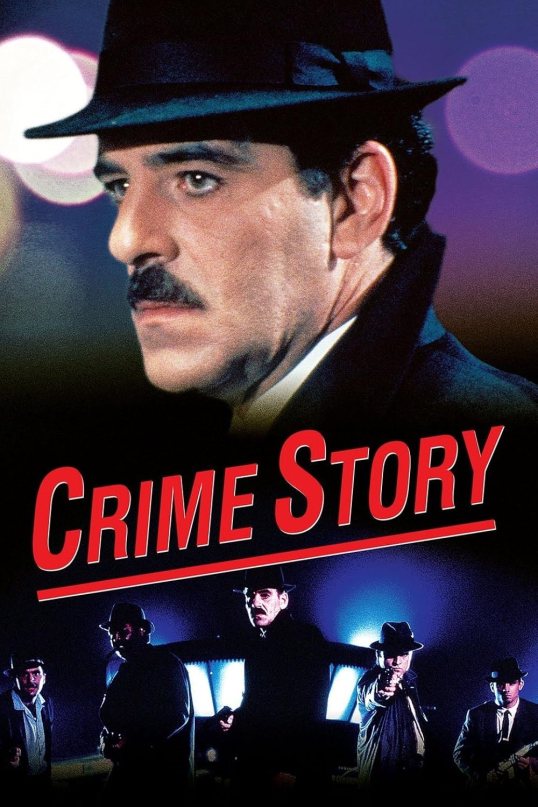
Retro Television Review: Crime Story 1.7 “Pursuit of a Wanted Felon”


Welcome to Retro Television Reviews, a feature where we review some of our favorite and least favorite shows of the past!  On Mondays, I will be reviewing Crime Story, which ran on NBC from 1986 to 1988.  The entire show can be found on Tubi!

This week, the Torello marriage falls apart.

Episode 1.7 “Pursuit of a Wanted Felon”

(Dir by Aaron Lipstadt, originally aired on October 28th, 1986)

Last week, a recently acquitted man named Hector (Ving Rhames) was arrested after murdering his landlord.  Torello, Danny, and David Abrams were all upset.

This week, they’ve all moved on.  Sorry, Ving Rhames, you were only a one-episode guest star.

David is pursuing his relationship with Suzanne Terry (Pam Grier).  At a cocktail party, Detective Walter Clemmons (Paul Butler), the black member of the Crime Squad, approaches Suzanne and warns her that she shouldn’t be pursuing a relationship with “that white boy.”  Seriously, this is the first time that Walter’s gotten any real dialogue since the show began and it’s basically to tell Suzanne not to pursue an interracial relationship.  “We’re only seven years out from integration,” Clemmons says, an awkward piece of dialogue that is meant to remind viewers that this show takes place in 1963.  The show actually deserves some credit for being realistic about how many people would have viewed David and Suzanne’s budding romance in 1963.  I just find it interesting that the show’s only regular black character is the one who is shown objecting while all of the white Chicago cops don’t have a problem with it.  Who knew the Chicago police force was so progressive in the early 60s?

(I really want to like Stephen Lang’s performance as David but something feels off about it.  It’s not a bad performance.  I stand by my earlier praise.  It’s just that David is such a caricature of an early 60s liberal that it is sometimes hard for me to tell if his character is supposed to be satirical or not.  In episodes like this, where David is portrayed as being a cool hipster, Lang can seem a bit stiff and miscast.  He’s much better when he’s giving an emotional speech in court.)

Luca continues to prove himself indispensable to Manny Weisbrod.  In this episode, he blows up a union leader who doesn’t want to take orders from the mob.

Finally, Mike and Julia Torello split up in this episode.  It’s not really a shock.  Mike Torello is extremely intense and obsessed with his job.  He’s tightly wound, to the point where he seems like he might just randomly shoot someone at any given moment.  An attempt to take a relaxing vacation with Julie is a disaster.  (The motel is tacky.  The service is mediocre.  Mike spends the entire time threatening the staff and complaining.)  As soon as Torello returns to Chicago, he hops on a plane for Cleveland in an unsuccessful attempt to capture Frank Holman.  When Torello returns home, he finds that Julie is preparing to go out with another man.

“You are not going to watch my TV,” Torello says, before grabbing the TV and leaving the apartment with it.

Does that scene sounds familiar?  That’s probably because Michael Mann later reused the scene, almost word-for-word, in Heat.  It’s a good scene.  It’s certainly the most memorable moment in this episode.

Otherwise, this episode felt a bit bland.  Torello’s doomed marriage isn’t really that interesting and I actually kind of got annoyed with David and Suzanne going to a cocktail party when they really should have been trying to get Hector out of prison.  I laughed at Torello’s irritation at the hotel and his line about the TV.  Those were the highlights.  The rest of this installment was forgettable.

Brad reviews BOOTLEGGERS (1974) – #ArkansasMovies – My Celebration of Movies Filmed in the Natural State!


All my life, my Dad has told me that Roger Corman’s BLOODY MAMA (1970), which was filmed completely in Arkansas, contained scenes filmed along the beautiful white bluffs of Calico Rock, Arkansas. Dad and I watched it today, and we didn’t see any such scenes. I did some quick internet research, and it turns out my dad has been spreading misinformation all these years. He had mistaken the film for a different movie called BOOTLEGGERS (1974). It was filmed in and around the Ozark town of Calico Rock, and it was directed by B-movie maestro Charles B. Pierce (THE LEGEND OF BOGGY CREEK, THE TOWN THAT DREADED SUNDOWN). I was very happy to see that it was streaming on Amazon Prime, so I decided to give it a watch.

Set in rural Arkansas during the Prohibition era, the movie follows Othar Pruitt (Paul Koslo) and his moonshine-running buddy Dewey Crenshaw (Dennis Fimple) as they manufacture high quality moonshine whiskey and battle their local business rivals, the Woodalls, led by their vicious patriarch Rufus (Seamon Glass). When he’s not battling the Woodall’s, Othar finds time to hang out with his grandpa (Slim Pickens) and romance the tough but beautiful Sally Fannie (Jaclyn Smith, who receives an “introducing” credit). If you’ve seen many southern redneck movies, you probably know where this is all heading, but the fun is watching how it gets there!

BOOTLEGGERS is not a traditionally great movie, but there is a lot of fun to be had if you’re in the right frame of mind for some crude regional filmmaking. Director Charles B. Pierce clearly understood rural Arkansas in a way most filmmakers don’t. The dusty roads, cave-based moonshine stills, and run down old homes feel more authentic since they are actually filmed on location. I’ve been through that area many times, and he gets it right. Heck, a lot of the extras look like they wandered into the scenes straight off the local streets and fields. The print I watched looks like a really bad VHS copy, but Tak Fujimoto’s cinematography still manages to capture the beautiful nature of the area with its beautiful mountains and limestone cliffs hanging over the White River. One gripe though… the characters keep referring to the river as the Buffalo River, which is another beautiful river in Arkansas, but it is not the river in this movie. 

Another element of the film that I found interesting is the casting of Paul Koslo as the lead and good guy of the film, Othar Pruitt. Koslo almost always plays a slimy bad guy, at least he did in Charles Bronson’s 70’s films THE STONE KILLER, MR. MAJESTYK and LOVE AND BULLETS. The German born actor is actually pretty good as an Arkansas redneck, and he seems more comfortable handling the revenge sections of the film than he does the romance and comedy. 

As far as the other cast members, Dennis Fimple steals most of his scenes as Othar’s friend Dewey. He’s the goofy but lovable hillbilly friend that these types of movies almost always have. He’s fun here. I always love seeing Slim Pickens and he’s pretty much exactly what you’d expect as an old moonshiner with plenty of homespun wisdom. Jaclyn Smith, a couple of years before her CHARLIE’S ANGELS fame, has a few fun scenes as a pistol-packing local hairdresser who takes a liking to Othar. Needless to say, when she did hit it big, the producers shamelessly repackaged the film to make it seem she was much more important to the plot than she actually is. All part of the 70’s fun of trying to make a buck at the drive-in!

At the end of the day, BOOTLEGGERS isn’t as professionally made as a movie like the Arkansas set WHITE LIGHTNING with Burt Reynolds. What it is though, is a solid southern redneck film, set in a beautiful location, with good performances and a violent ending that should please its intended audience. It certainly did me! 

Film Review: The Quatermass Conclusion (dir by Piers Haggard)


1979’s The Quatermass Conclusion opens with a narrator telling us that civilization is collapsing and no one knows why.

Though the film takes place in London and the English countryside, we are told that societal collapse a worldwide phenomenon.  What we see in London is a city that has been taken over by criminal gangs, where the police stand-by helplessly and watch as battles play out.  The elderly, abandoned by their government, hide out in decrepit homes and try to avoid being noticed.  The future is a world that is pretty much ruled by the young and the young appear to be insane.

Even if one escapes the gangs, there’s still the Planet People to deal with.  The Planet People are a group of hippies, who walk across the countryside and who claim that they are going to be transported to another planet.  At first glance, they make seem innocent and even a bit ludicrous.  But they are actually aggressive and angry, convinced that the adults have destroyed the Earth and that the young are the chosen ones who will be transported to a better world.  They are led by a man who calls himself Kick Along (Ralph Arliss), an anti-Semite who smiles when he manages to find a gun and who clearly relishes getting to decide who deserves to be saved and who doesn’t.

Into all of this comes a retired scientist named Bernard Quatermass (John Mills).  Elderly and suffering from heart disease, Quatermass has come to London to search for his missing granddaughter.  Because Quatermass has spent the last few years living in the Scottish highlands and because the British government has covered-up the extent of the unrest, he is shocked to discover just how bad things have become.  Rescued from a gang by another scientist, an astronomer named Joe Kapp (Simon MacCorkindale), Quatermass finds himself watching as humanity slowly sacrifices itself to an alien presence who is not interested in saving anyone but who instead just wants to feast.

The Quatermass Conclusion started life as a 4-episode British television simply called Quatermass, which was the last to feature the character of Prof. Bernard Quatermass.  The four-hour miniseries was edited down to a 100-minute feature film that was subsequently released outside of the UK.  As a result of the editing, The Quatermass Conclusion is a occasionally intriguing, frequently messy, and almost relentlessly downbeat.  Having seen both the original miniseries and the subsequent film, I can tell you that tragedies that were evenly spaced out over the course of four hours come at you nonstop in the feature version.  It seems like every other scene features someone either dying or giving up hope.  Themes that were fully developed in the miniseries are only hinted at in the feature film.  Events that were fully explained and built-up in the miniseries seem to spring out of nowhere in the movie, giving the whole thing a disjointed but nightmarish feel.

Taken on its own, the film has its flaws.  I’m not really sure that the plot can truly be followed if you haven’t already watched the original miniseries. As the unfortunately-named Kick Along, Ralph Arliss gives a disturbingly plausible portrayal of a fascist who has adapted to the latest trend and John Mills is instantly sympathetic as the mentally strong but physically weak Prof. Quatermass but some of the other performances are definitely more appropriate for television than a film.  And yet the film has moments that work incredibly well.  A scene where the alien presence feasts on the thousands who have gathered at Wembley Stadium is undeniably well-done and brings to mind the real-life reports of political dissidents being held and executed in South American soccer stadiums.  By the end of the film, the atmosphere has become so polluted with the particles of human remains that it takes on a sickly yellow hue.  Even the film relentlessly bleak tone works.  If you’re going to make a movie about the collapse of civilization, you should definitely go all out.  There’s not much deliberate humor in The Quatermass Conclusion but, then again, there’s not much to smile about when the world’s collapsing.

Watching The Quatermass Conclusion, what struck me is just how much writer Nigel Kneale and Piers Haggard got right about the future.  On the one hand, the film is anti-youth to the point of almost feeling like a parody.  This is a movie that often seems to be shouting, “Get off my lawn!”  Watching this, one can easily guess how Nigel Kneale felt about everyone from the hippies to the punks.  However, the film’s portrayal of cities where people are scared to go out at night and of bureaucrats who would rather cover-up a problem than solve it feels rather prophetic today.  (In the miniseries, there’s a youthful government official who is overjoyed at the idea of creating an entirely new civilization after destroying the current one and it’s hard to watch him without being reminded of some of the rhetoric of the COVID lockdowns.)  It’s easy to laugh at the Planet People, with their face paint and their chanting, but they really don’t feel that far off from a lot of today’s wannabe activists.  There’s really not that much difference between the smugly ignorant Kick Along and the people who used to throw paint on works of art.

The Quatermass Conclusion is a flawed, messy, intriguing, and prophetic.  It may not be subtle but it’s a film that feel very relevant today.


Late Night Retro Television Review: Degrassi: The Next Generation 2.20 “How Soon Is Now?”


Welcome to Late Night Retro Television Reviews, a feature where we review some of our favorite and least favorite shows of the past!  On Sunday, I will be reviewing the Canadian series, Degrassi: The Next Generation, which aired from 2001 to 2015!  The series can be streamed on YouTube and Tubi.

This week, Degrassi goes there.

Episode 2.20 “How Soon Is Now?”

(Dir by Eleanore Lindo, originally aired on February 9th, 2003)

After intensive therapy with the school’s counselor, Ms. Sauve (Jennifer Podemski), Paige convinces herself that she’s emotionally recovered from being raped by Dean.  Paige says she doesn’t need any more therapy and she just wants to get on her with her life.  However, when she discovers that Dean’s school will be coming to Degrassi for a basketball game, she starts to spiral.

Paige’s rape was one of Degrassi’s first “mature” storylines, in that it dealt with a controversial issue and it did so in  a realistic way.  Instead of simply wrapping things up after an episode or two, Degrassi stretched this storyline over several seasons and let it play out with an honesty that is rarely seen on television..  Instead of having Paige magically go back to being who she was before she was raped, Degrassi portrayed how Paige changed as a result of both the rape and her struggle to get justice.  That the show did so realistically is a credit to both Degrassi and Lauren Collins’s portrayal of Paige.

One of the things that makes this episode difficult to watch is that Paige largely suffers alone.  Only a few people know about the rape.  A bitter Spinner still thinks that the encounter between Paige and Dean was consensual.  When Dean does show up at Degrassi, it’s obvious that he feels no guilt about what happened and, soon, he’s even hitting on Manny.  When Paige tries to warn Manny, Manny replies that Dean told her all about how crazy Paige is.  It’s only when Paige tells JT about what happened that someone finally stands up for her.  JT may just be the mascot but he doesn’t hold back when he attacks Dean on the court.  Of course, JT is still JT so it’s not like he really does that much physical damage to Dean but it’s still gratifying to see.  In fact, this is the first episode in which JT actually reveals himself to be something other than just the annoying class clown.

At the end of the episode, Paige tells Ms. Suave that she wants to press charges against Dean.  Ms. Suave warns her that, with the amount of time that has passed, it’s going to be Paige’s word against his.  Paige says she understands.  I always want to applaud at the end of this episode, even though I know how things are going to develop.

As for the B-plot, Marco’s being a jerk.  He and Ellie are working on a class project.  They have to create an ad campaign for a fake cologne.  Marco wants to do a “Bollywood thing.”  Ellie wants to turn Marco into a sex symbol.  Marco gets annoyed because Ellie hasn’t fully accepted that he’s gay and not romantically attracted to her.  Hey, Marco — you’re the one who asked her to pretend to be your girlfriend so that you could stay in the closet so instead of getting mad at her, maybe think about what you’re putting her through!

Seriously, I get that Marco was a ground-breaking character at the time and I respect that, just as with Paige’s storyline, the show attempted to be realistic in its portrayal of Marco slowly finding the confidence to be his true self.  That said, Marco could be really self-righteous.

But no matter.  Even with Marco acting like Marco, this was an important episode.  Degrassi went there.