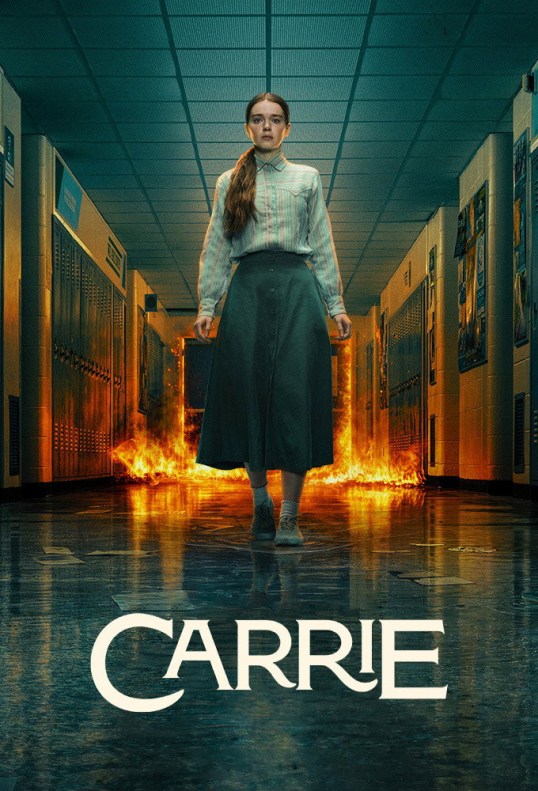
Icarus File No. 34: Carrie (dir by Mike Flanagan, Kate Siegel, Axelle Carolyn, Kyra Sedgwick, Hiromi Katana)


If I had to choose two words to describe Mike Flanagan’s “reimagining” of Carrie, they would probably be “fan fiction.”

In fact, it’s sometimes humorous just how obviously this miniseries is a work of fan fiction. Carrie White (blandly played by Summer Howell) may be a bullied and sheltered girl with telekinetic powers, but now she has a best friend, Emaline (an equally bland Thalia Dudek, who looks less like a 2026 teenager and more like the bassist in a 1990s riot grrrl band), who also has a power and always has the best advice and the snarkiest comebacks! What would Carrie do without her best friend Emaline? And while Margaret White (Samantha Sloyan) is still present as an overprotective and paranoid force in Carrie’s life, there’s now another maternal figure named Adelaide (Kate Siegel) who exists to talk about how those with secret powers are always being held down by a society that’s just not capable of accepting how important they are. Adelaide opens each episode with a monologue that feels like it was written by a 2017 college freshman who has just watched Linda Sarsour on YouTube. Watching the miniseries, one gets the feeling that Flanagan and his writers really wanted to make a show called Emaline and Adelaide and decided to graft them onto Carrie.

Ever since this miniseries was announced, there’s been a lot of talk about how Flanagan has updated the story. In this case, that means there’s an emphasis on phones and social media, as if teenagers couldn’t find a way to hurt each other even before technology caught up with them. In fact, social media is pretty much to blame for everything that happened. The audience is meant to violently roll their eyes at Margaret White for believing in conspiracy theories and religion while, at the same time, accepting a portrayal of the dangers of social media that makes Aaron Sorkin look even-handed and calm. One gets the feeling that if this show had been made just a few years earlier, it would have found a way to blame Margaret White and Chris Hargensen for the January 6th riots. There is a riot in the sixth episode, but it just involves all of the students doing a massive walkout to protest Chris Hargensen’s secret Instagram account. “Death to Hargensen!” the students chant, and it briefly seems like maybe Flanagan is going to make a bigger point about how the bullies can become the bullied, but ultimately, this is too much of a work of fan fiction to delve too deeply into anything that complex. It’s also too much of a work of the streaming era to introduce an idea that can’t be neatly summed up in 15 seconds.

Yes, this is a new version of Carrie. If King’s novel and De Palma’s film gave us a Carrie White who was never happy until that one prom night and who lashed out after that happiness was stolen from her, the Mike Flanagan miniseries gives us a Carrie who becomes the most popular girl in school even before prom night. No longer does Tommy (Joel Oulette) ask Carrie to prom as a favor to his guilt-ridden girlfriend, Sue Snell (Siena Agudong). Instead, he asks Carrie as a friend. Carrie’s no longer sheltered and shy. Instead, she’s somewhat smug and annoying. She sneaks out of the house many times before prom night. She goes to a party. She goes to the junkyard and curses like a sailor while showing off her powers. Her best friend Emaline is impressed. What would Carrie do without her best friend, Emaline? Of course, by changing all of this, Flanagan robs the story of all of its emotional power. This is probably the first version of Carrie where I’ve actually found myself getting annoyed with Carrie as a character. Towards the end of the miniseries, she just becomes so smug and self-righteous, like the girl at school who used to sweetly pull you aside to tell you that your skirt was too short. This is a version of the story that lets Carrie off the hook. Emaline is the one who suggests that she use her powers to get revenge. Adelaide and her dumbass cult are the ones who accidentally set fire to the school. Carrie dances in the street with Emaline and, for a few seconds, you actually find yourself wishing for the calming hand of Ryan Murphy.

Yes, I know that Stephen King has endorsed Mike Flanagan’s changes. That doesn’t mean that I have to. The fact of the matter is that Stephen King has consistently shown that he will endorse just about anything, and it’s also been a while since King has written anything that can match the power of his earlier work. There’s a world of difference between the youngish and struggling writer who originally wrote Carrie and the wealthy boomer who is now probably better known for his angry tweets than his more recent literary output. As well, it’s obvious that King likes Flanagan. Flanagan is the ultimate fan. And yet, considering that Flanagan’s best film, Hush, was also his simplest, one can’t help but feel that Flanagan would do well to stop adapting his heroes and maybe just try to focus on creating unapologetic suspense.

It’s the curse of elevated horror. Right now, the critics who hate entertaining horror love slow-moving elevated horror. They go on and on about the subtext, as if there wasn’t subtext to be found in the horror movies that were made in the past. The truth of the matter is that the subtext is usually the least interesting thing about these films and series. Making a film or a show that is critical of capitalism and religion is hardly the radical act that the critics seem to think it is. There’s nothing particularly interesting or special to be found between the lines when it comes to this version of Carrie. Indeed, for all the time and effort that the series puts into villainizing Margaret White and Chris Hargensen, they’re ultimately the most interesting characters because Samantha Sloyan and Alison Thornton are the only two performers who are allowed to break free from the show’s rigid ideological structure. (Samantha Sloyan especially deserves a lot of credit for finding a hint of reality in her portrayal of Margaret.) Chris and Margaret are compelling because they’re the only characters who don’t just parrot the accepted lines and the accepted thinking. They’re the only characters who seem to have a life and an outlook that was formed by something other than the demands of the show. We’re meant to shake our heads when Margaret becomes an online celebrity with a podcast, but instead, we’re interested and almost happy for her because Margaret is actually doing something unexpected and making an effort to take actual control of her life. It’s hard not to feel that this version of Margaret White deserved a better ending than what the show gave her. In the end, Margaret feels less like a villain and more like a victim of the show’s writers and their own feelings about religion and politics. (One wonders if the writers realize that their show ultimately makes the case that all of the tragedy could have been avoided if the government had simply stayed out of it and just allowed Margaret to continue to homeschool her daughter.) If previous versions of Carrie seemed to be designed to appeal to shy outsiders, this version of Carrie is designed to compliment self-styled victims who don’t have the self-awareness necessary to realize that they are now the bullies.

In the end, Carrie feels like a forgotten Showtime series from 2018 and, if it had been made by anyone other than Mike Flanagan, no one would care.

Previous Icarus Files:

  1. Cloud Atlas
  2. Maximum Overdrive
  3. Glass
  4. Captive State
  5. Mother!
  6. The Man Who Killed Don Quixote
  7. Last Days
  8. Plan 9 From Outer Space
  9. The Last Movie
  10. 88
  11. The Bonfire of the Vanities
  12. Birdemic
  13. Birdemic 2: The Resurrection 
  14. Last Exit To Brooklyn
  15. Glen or Glenda
  16. The Assassination of Trotsky
  17. Che!
  18. Brewster McCloud
  19. American Traitor: The Trial of Axis Sally
  20. Tough Guys Don’t Dance
  21. Reach Me
  22. Revolution
  23. The Last Tycoon
  24. Express to Terror 
  25. 1941
  26. The Teheran Incident
  27. Con Man
  28. Looker
  29. 1776
  30. Here
  31. The Adventures of Brisco County, Jr.
  32. The Cable Guy
  33. A Chorus Line


Brad’s favorite horror thriller of the past decade…HUSH (2016)!


I may be contributing to our annual Horrorthon here at TSL, but I’ll be the first to admit that I’m not as knowledgeable about the horror genre as the rest of the crew. Most of the horror films I watched growing up were the edited versions that would play on my favorite local channel, Fox-16 out of Little Rock. If not there, I’d see scary movies at my friend’s bunking parties when I was in grade school or junior high. That’s how I first saw the FRIDAY THE 13TH series, and I even remember seeing Fulci’s HOUSE BY THE CEMETERY (1981) at one such party. I didn’t have a clue who Fulci was at the time, but I do remember a victim’s throat being ripped out! I’d go home and have a hard time sleeping. I’ve never been good with gore, and I’ve always preferred action films. With that said, I’ve been trying to up my horror game over the last few years. I try to take part in the weekly #ScarySocial live tweet event, and I’ll watch horror films periodically that my friends tell me about or that seem interesting for some reason. I’ve still got a large backlog to get through, and I’ll never watch the classic gorefests, but I know way more now than I did a few years ago. Horrorthon is an amazing place to learn more.

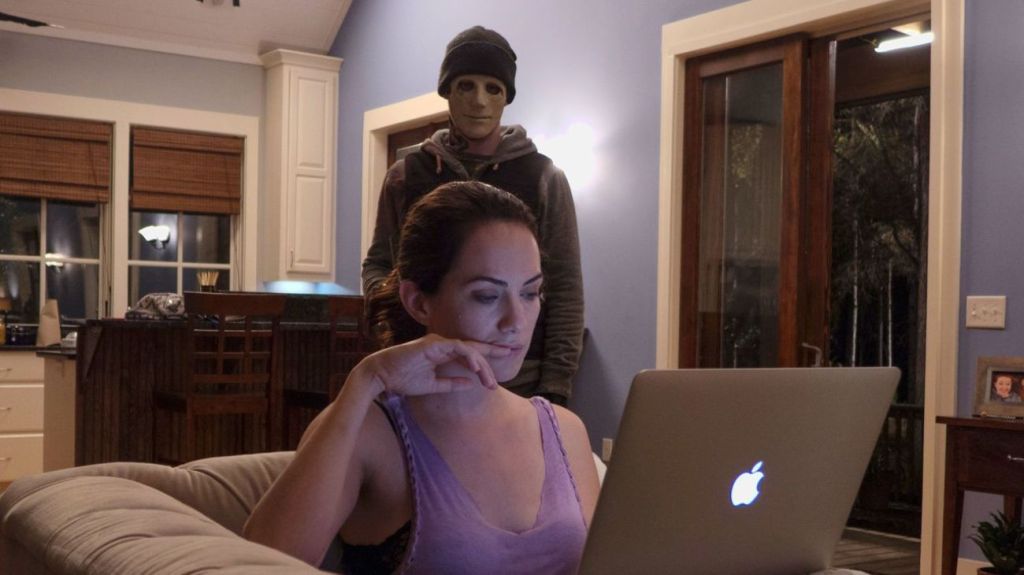
I came across a horror movie ten years ago that I loved, and I still watch it every year. That film is HUSH, which I see as more like a nightmarish thriller than a straight on horror film. The setup is incredible as our lead character Maddie, who’s both deaf and unable to speak, finds herself being stalked at her remote home. There are some early visuals that illustrate the psychopathic evil of “The Man” (John Gallagher, Jr.) as he turns his attention towards Maddie, while also showing us how vulnerable her inability to hear or speak make her in this situation. There’s also a sequence involving the Man sending current pictures to our heroine’s laptop that show her being watched. It’s here that she first realizes something horrific is going on, and it’s a truly chilling scene. The movie hooked me right there, and I was completely invested as the psycho played his cruel games with her.

I thought Kate Siegel was exceptional in the lead role. I didn’t know a thing about the actress going into the film all those years ago, and I’m not sure I’ve watched any of her work since, but I still don’t think anyone could have been better. She proves herself to be smart, resourceful, and not near the fun, easy target our killer thinks she’s going to be.  After being put through hell both physically and mentally over the first couple of acts, I can only describe her character as a total bad-ass as the film races towards its conclusion! She also co-wrote the film with its director, Mike Flanagan, which helped me appreciate her work even more as she helped craft the amazing character. John Gallagher, Jr. is effectively creepy as the killer. This character could have walked straight out of an 80’s horror film, as we never understand why he’s so evil, which makes him more terrifying as far as I’m concerned. I don’t have to understand his motives to want him to die by the end.

As a warning for the more squeamish viewers like me, some of the violence is extremely difficult to watch, with various hands and necks being the most susceptible to extreme harm. The violence is realistic and personal, and I still look away because I know it’s coming and can’t really handle it. It also is one of the reasons the movie stays with me year after year. Just writing about it now is making my toes curl up a bit.

If you’ve seen HUSH before, I hope this makes you want to watch it again. If you’ve never seen it, I’ll let this serve as my recommendation that it’s a movie I love and think you probably will too. And if you want to know even more about the film, check out Lisa’s REVIEW from when it first came out back in 2016. It has more detail about her own personal reactions to the film, as well as her unique critical insight.

Things are heating up in the trailer for Mike Flanagan’s Carrie!


It’s not always easy to adapt someone else’s work. 

Stick too close to the source material, and you end up with Gus Van Sant’s Psycho. Veer just a bit away from it, and you may end up with surprises like Stanley Kubrick’s The Shining or Frank Darabont’s The Mist. Tossing out the source material or rushing the story gives you Nikolaj Arcel’s The Dark Tower. Sometimes it works, sometimes it doesn’t. Even Stephen King had a rough time adapting his own work to film with Maximum Overdrive. 

So seeing that we have yet another adaptation of King’s first novel, Carrie, I was a little confused and surprised when Mike Flanagan’s name came up. I know I haven’t kept up on everything online these days, but wasn’t he working on an adaptation for The Exorcist? Either way, we have it, and it looks like it has the potential to be pretty great. Flanagan’s no stranger to King’s works, having adapted Gerald’s Game and Doctor Sleep.

As always, Flanagan’s invited some of this friends to join in on the fun. For me, the standout returning actor is Samantha Sloyan, who previously worked on Hush, Midnight Mass, and The Life of Chuck, among others. Samantha’s playing Margaret White, and while Piper Laurie’s portrayal in Brian DePalma’s 1976 classic still scares me, I’m excited to see how this will turn out. Additionally, we have Midnight Mass‘ Michael Trucco and Rahul Kohli on hand. Of course, Flanagan production would be complete without his Hush lead actress, muse and wife, Actor/Director Kate Siegel. Matthew Lillard (Five Nights at Freddy’s) and Amber Midthunder (Prey, Novocaine) are also featured, with Summer H Howell (Night of the Reaper) as Carrie. 

Carrie premieres on Amazon Prime early this October, just in time for Halloween. 

Review: The Fall of the House of Usher (by Mike Flanagan)


“If pain and suffering were the kisses of Jesus, then he kissed the living fuck out of my mother.” — Roderick Usher

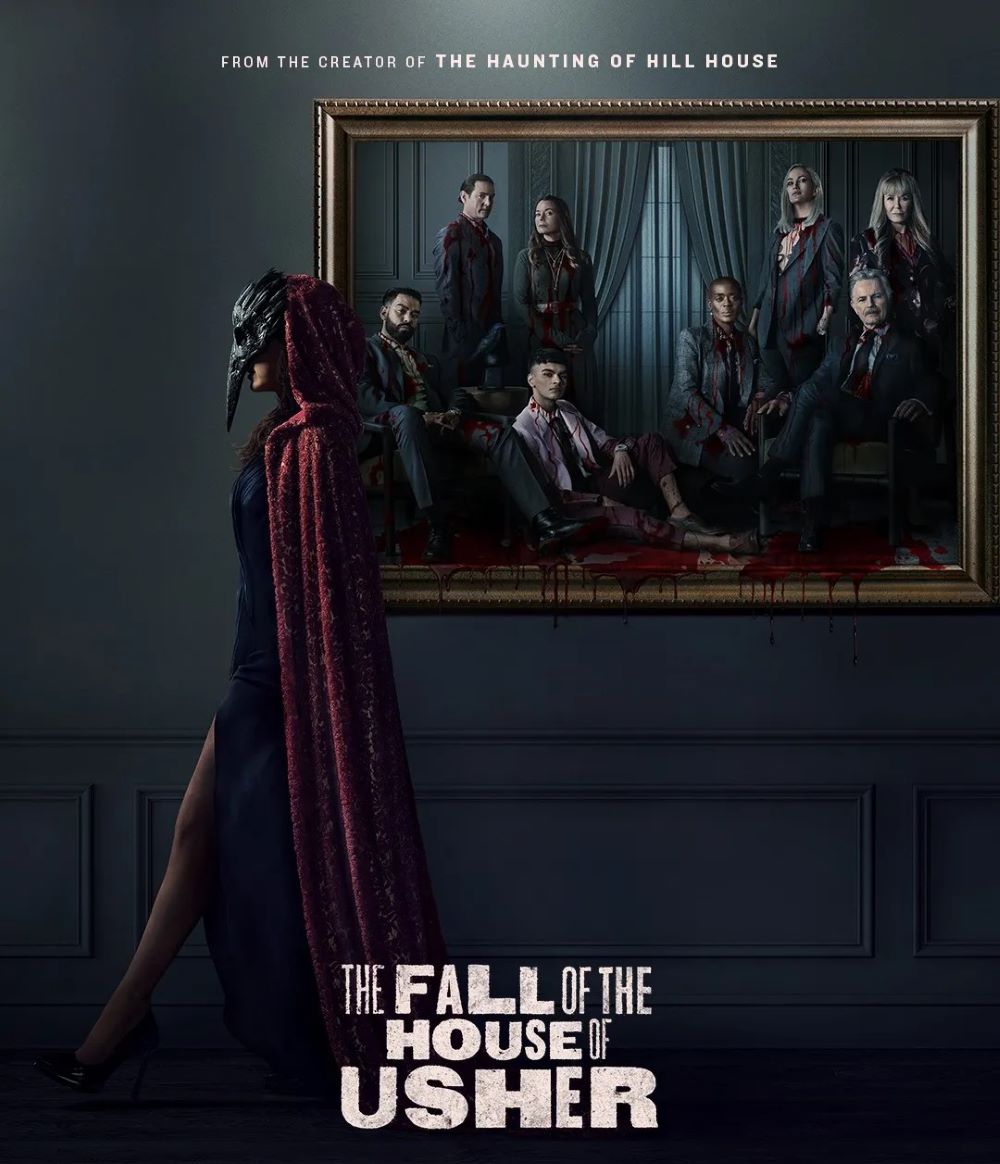
The Fall of the House of Usher delivers Mike Flanagan’s signature blend of gothic dread and modern moral reckoning, reimagining Edgar Allan Poe’s tales as a savage family implosion tied to corporate excess. This Netflix miniseries unfolds over eight taut episodes, framing the confessions of a pharmaceutical tycoon as his bloodline meets grisly, poetic ends. It balances sharp satire with emotional undercurrents, though its heavy-handed messaging and repetitive structure occasionally blunt the impact.

Roderick Usher, now a hollowed-out patriarch, recounts his empire’s collapse to a relentless prosecutor in the crumbling family mansion, flashing back to decades of ambition, betrayal, and supernatural intervention. His twin sister Madeline, the brains behind their Fortunato Pharmaceuticals fortune, shares equal narrative weight, their pact with a enigmatic figure sealing a curse that claims each heir in turn. The setup echoes Poe’s original story but explodes it into a sprawling anthology, with every installment riffing on a different work from the author’s macabre catalog. This structure keeps the momentum high, turning personal flaws into fatal traps, yet it risks formula once the pattern of vice-reveal-demise becomes predictable.

A standout early episode channels The Masque of the Red Death, where a debauched heir’s orgiastic gala spirals into carnage, blending excess with infectious horror in a sequence that’s equal parts thrilling and grotesque. Later, Goldbug skewers influencer wellness culture through a sibling’s pyramid-scheme downfall, its tech-glitch kills inventive and on-theme. These Poe-infused vignettes shine when they lean into visceral spectacle—impalements, immolations, animalistic frenzies—elevating routine family feuds into something operatic. However, weaker entries, like those fixated on lab accidents or courtroom paranoia, feel more procedural than poetic, diluting the supernatural menace amid procedural tangents.

Flanagan’s direction thrives in the atmospheric details: opulent sets that rot from within, shadows pooling like guilt, a score that swells with mournful strings underscoring inevitable doom. Performances anchor the excess, with Carla Gugino’s shape-shifting Verna stealing scenes as a devilish facilitator—charming one moment, apocalyptic the next. Bruce Greenwood lends Roderick a defeated majesty, his monologues on greed and legacy landing with gravitas despite their length. Mark Hamill’s fixer adds gravelly comic menace, a cold pragmatist navigating the Ushers’ moral sewer. The younger cast fares variably; some heirs pop as vicious caricatures—the coke-fueled playboy, the ruthless scientist—while others blur into interchangeable privilege.

Thematically, the series wields Poe’s obsessions—entombment, madness, retribution—against Big Pharma’s sins, drawing parallels to real-world opioid scandals without subtlety. Roderick and Madeline’s rise from rags via a addictive painkiller mirrors ethical shortcuts in pursuit of immortality, their “house” both literal estate and dynastic delusion. Verna embodies karmic balance, not mindless evil, her interventions exposing how wealth insulates sin until cosmic debt collectors arrive. This critique bites, especially in rants decrying humanity’s commodification of suffering, but preachy asides can halt the dread, turning horror into TED Talk territory. Flanagan fans will recognize his grief motifs, here twisted into generational poison rather than personal catharsis.

Pacing falters in the midsection, where flashbacks to the Ushers’ origin drag against the ticking present-day trial. The frame narrative, while elegant, withholds twists too long, making early hours feel like setup over payoff. Gorehounds get inventive set pieces, from pendulum blades to heart-pounding pursuits, but scares prioritize irony over outright terror—less Hereditary shocks, more Final Destination comeuppance. For a one-season arc, it wraps tightly, circling back to Poe’s raven as a symbol of unending loss, though the finale’s revelations feel more intellectually tidy than emotionally shattering.

As adaptation, it honors Poe’s spirit over fidelity, cherry-picking motifs from tales like The Tell-Tale Heart, The Black Cat, and The Pit and the Pendulum to fuel a contemporary revenge saga. Purists might chafe at the liberties—Poe’s claustrophobic intimacy traded for ensemble sprawl—but the result captures his misanthropy, updating crumbling aristocracy to cutthroat capitalism. It’s Flanagan’s angriest work, swapping supernatural melancholy for gleeful vengeance, yet retains his humanism: even monsters get poignant final beats, hinting at redemption’s flicker amid ruin.

The Fall of the House of Usher polarizes like much of Flanagan’s output—loved for audacity, critiqued for indulgence. Its ensemble and kills draw praise, but detractors note tonal whiplash between camp and sincerity. For horror enthusiasts craving literary flair over found-footage tropes, it’s a feast; casual viewers may tire of the lectures. Compared to Flanagan’s Hill House or Midnight Mass, it’s less introspective, more punitive, trading tears for dark laughs at the mighty’s tumble.​

Ultimately, the miniseries succeeds as pulpy prestige, a bloody valentine to Poe that indicts modern excess without fully escaping melodrama’s clutches. Its highs—Gugino’s tour de force, baroque deaths, thematic ambition—outweigh the bloat, making it binge-worthy for gothic fans. In Netflix’s crowded horror slate, it stands out for wit and wickedness, a flawed but ferocious reminder that some houses, and legacies, deserve to fall.

Film Review: Doctor Sleep (Dir. by Mike Flanagan)


If I asked you about Stephen King’s The Shining, would the book or the film come to mind?

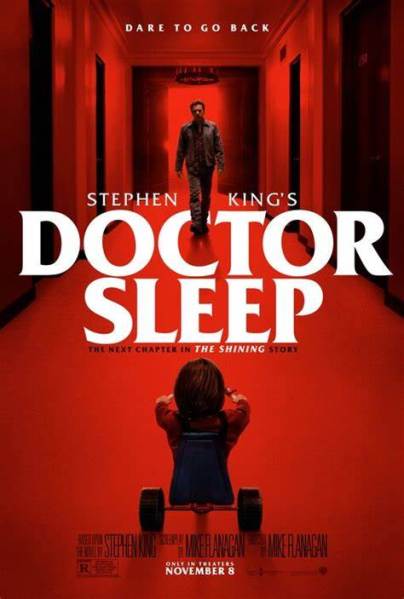
DoctorSleepPosterWhen it comes to adapting Stephen King’s stories to film, it’s not an easy feat. King himself had a problem turning his own short story “Trucks” into something good when he directed Maximum Overdrive. For every great film like Stanley Kubrick’s The Shining, or It-Chapter One, we occasionally get a misstep like The Dark Tower or It-Chapter Two.  As King can sometimes get wordy in his books, I’ve felt the best adaptations were the ones where the director’s own vision came into play. Kubrick made a number or changes to King’s story, including the Grady twins and the hedge maze, which were never in the novel. The film is so widely recognized that most people recall events in the movie, rather than the book. That’s the effect Kubrick had. 
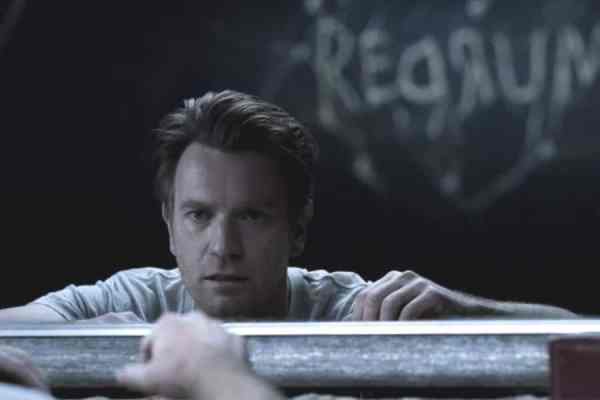
With Doctor Sleep, Mike Flanagan once again proves he’s a fantastic fit for King. The film moves at a great pace, with great performances by Rebecca Ferguson and newcomer Kyliegh Curran. In an age where audiences are typically quiet, the applause that occurred in scenes during last night’s preview screening were great to hear. The film manages to pay homage to Kubrick’s The Shining and King’s Novel of Doctor Sleep while still completely showcasing Flanagan’s vision. Of course, we already knew this from Flanagan taking on King’s own Gerald’s Game and Netflix’s The Haunting of Hill House.  One might even argue that for this film, we may in time recall Flanagan’s tale more clearly than King’s.

Doctor Sleep takes place after the events of The Shining, with Dan Torrance (Ewan McGregor) suffering from the same demons that plagued his father, Jack. Although the keeps to himself, he drinks too much, gets into brawls, and is unable to hold down decent work. Dan is also haunted by the Overlook Hotel, and the power that drew the souls to him known as The Shining. The Shining (or just the Shine) is a coveted power in King’s lore. When a group of nomads that feed on the Shine (in a way that’s reminiscent of Mick Garris’ Sleepwalkers) discover a girl with the same ability, Dan is brought out of hiding. 

Fans of the original Kubrick film will see there’s a lot of love here. You’ll be able to count some of the references to The Shining, from objects in a room to different locales. For casting, Flanagan uses a mixture of old favorites and new faces. You’ll recognize some of them right from the start, such as Bruce Greenwood and Violet McGraw. Others, like Jacob Tremblay (The Predator) are welcome additions. Rather than relying on footage from the original Shining, Flanagan recreates certain elements with new cast members, which I felt worked extremely well here. I’m not sure how others will take it.

Ewan McGregor is good in the role of Dan Torrance, which feels more like his Mark Renton character from Trainspotting than anything else to me.  This isn’t a bad thing, but it works. The film truly belongs to both Rebecca Ferguson (Mission Impossible: Fallout) and Kyliegh Curran. Ferguson’s Rose the Hat is a wicked villain, and she carries the role with a sinister, yet stylish flair. Ferguson has some of the best scenes in the film, particularly when paired with Zahn McClarnon (Midnight, Texas and Westworld), who plays Crow Daddy. Kyliegh Curran chews up the scenes she’s in, easily handling screen time with McGregor and Ferguson like a pro. Rounding out the cast are Cliff Curtis (Sunshine), Carl Lumbly (Mantis) and Emily Alyn Lind (The Babysitter). 

Doctor-Sleep-1

Dan Torrance (Ewan McGregor) can’t run from his past in Mike Flanagan’s Doctor Sleep.

As for the fear factor, there is some terror in the hunt for Abra and the way that the group interact. Doctor Sleep doesn’t have much in the way of jump scares, but makes up for it with some tense moments. I didn’t feel as scared as I did with It-Chapter One, but I cared enough about the characters to worry about how the story was going to turn out. That might be a turn off for those expecting to watch the movie from between their fingers or run out of the theatre screaming. If you enjoyed Flanagan’s other works, such as Hush or Oculus, you’ll be fine.

Speaking of Hush, Doctor Sleep lacks a Kate Siegel cameo. Flanagan is Siegel’s partner in crime (and husband). Together, they’ve been in almost every film they’d done. I’ve gotten used to going “Oh, there’s Kate!”, while watching his films. It’s not an issue at all, but it would’ve been cool to see her.

The camera work for Doctor Sleep is very even, though there are a few special effects scenes that really stand out and picked up some applause (or gasps) once they were over. The one main drawback I had with the film was that it was a little difficult to keep up with all of the locations and time periods early on. Even though everything’s clearly labeled, it took me a moment to recognize just where and when things were occurring. Not a terrible thing, though.

Overall, Doctor Sleep is an easy film to recommend. It has some great performances, and manages to be a great follow up to The Shining, while showing a lot of love for the source material.

Doctor Sleep hits cinemas on Friday, November 8th, and I’ll make a return visit.


The Things You Find On Netflix: Hush (dir by Mike Flanagan)


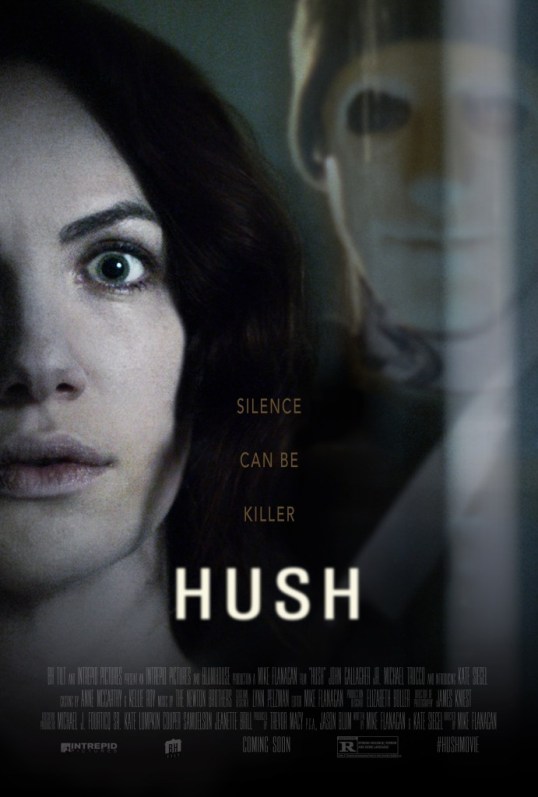
Hush_2016_poster

Let me start by stating the obvious.  I have seen a lot of horror movies.  I love horror as a genre and, in fact, it was my love of horror that first led to me becoming a film blogger in the first place.  I have seen a lot of scary and shocking images onscreen.  I know the experience of watching a movie and screaming.  I also know the experience of watching a horror movie and being bored out of my mind.

I have also seen a lot of home invasion movies.  The home invasion genre is not a complicated one.  A group of people are isolated and trapped in their home while, outside, some terrible menace tries to enter the house.  Night of the Living Dead is a home invasion film.  The final 20 minutes of Straw Dogs (both the remake and the original) are home invasion films.  Michael Haneke made two of the ultimate home invasion films with two separate versions of Funny Games.  And, of course, we can’t talk about the home invasion genre without mentioning the brilliant You’re Next.

The home invasion genre works so well because, at its center, is a very real fear: the fear that, even within our own home, we are not safe.  When I get home, I am practically obsessive about checking to make sure that I always close and lock the door behind me but really, what good would that really do if someone was determined to get in?  Like everyone, I chose to believe that things like a locked door or a closed window is going to keep me safe but, honestly, if someone wants to get in, they’re probably going to find a way.  Locks and alarms and calls to 911 can only do so much.  Perhaps for that reason, home invasion movies always frighten me.  I can watch a zombie graphically devour someone in an Italian horror film and it doesn’t bother me at all.  But a well-directed home invasion movie?

That’ll keep me up for a week!

(And I know what you’re saying: “Lisa, if home invasion movies scare you so much, why do watch them?”  It’s a legitimate question and it’s something that I’ve often wondered myself.  I think, ultimately, it comes down to this: the only way to conquer our fears is to face them.)

With all that in mind, allow me to now come to the point of this review.  Last night, I watched Hush, which was just recently released by Netflix.  Hush is a home invasion movie.  Kate Siegel (who also co-wrote the script) plays Maddie, a writer who has been deaf and mute since she was 13 years old.  Still dealing with the a bad break-up, Maddie lives in an isolate cabin in the wilderness.  By day, she works on her second novel and occasionally visits with her neighbor.  And by night — well, on this particular night, she finds herself being watched by a man.

The Man (who is played by John Gallagher, Jr.) wears a white mask that gives him a permanent smile.  He carries a crossbow with him, a crossbow that has 8 notches on it.  When we first meet the man, he’s stabbing Maddie’s neighbor, Sarah (Samantha Sloyan), to death.  And now, he’s turned his attention to Maddie…

I say this without hyperbole: Hush is one of the scariest home invasion movies that I’ve ever seen.  The plot may occasionally seem familiar but director Mike Flanagan keeps things moving at an almost unbearably intense pace and he creates an atmosphere of such dread that you never feel truly safe assuming that anyone is going to survive the movie.  John Gallagher, Jr, who speaks with a deceptively soft voice, is terrifying as the Man.  The fact that he has no motives beyond his own sadism makes him all the more frightening.

But, ultimately, the reason the film works so well is because of Kate Siegel.  Kate Siegel gets an introducing credit in this film.  According to the imdb, Hush is not her first film but that introducing credit still feels appropriate.  Siegel is wonderful in the role of Maddie, giving a performance of such ferocity and empathy that Hush announces that a major talent has arrived and that Kate Siegel is a force to be reckoned with.

Hush is not always an easy film to watch.  The violence is visceral, the often spurting blood looks real and, when bones were snapped, it sounded disturbingly authentic.  Throughout the entire film, I found myself wondering what I would do if I was Maddie.  I cheered whenever it appeared that she might be able to escape the Man and I screamed whenever it became clear that she would not.  This is an intense and frightening home invasion film and one that all horror fans should see.  Hush captures our most primal fears and makes us wonder if we have what it takes to conquer them.

Hush will undoubtedly give me nightmares but I’ll take them.