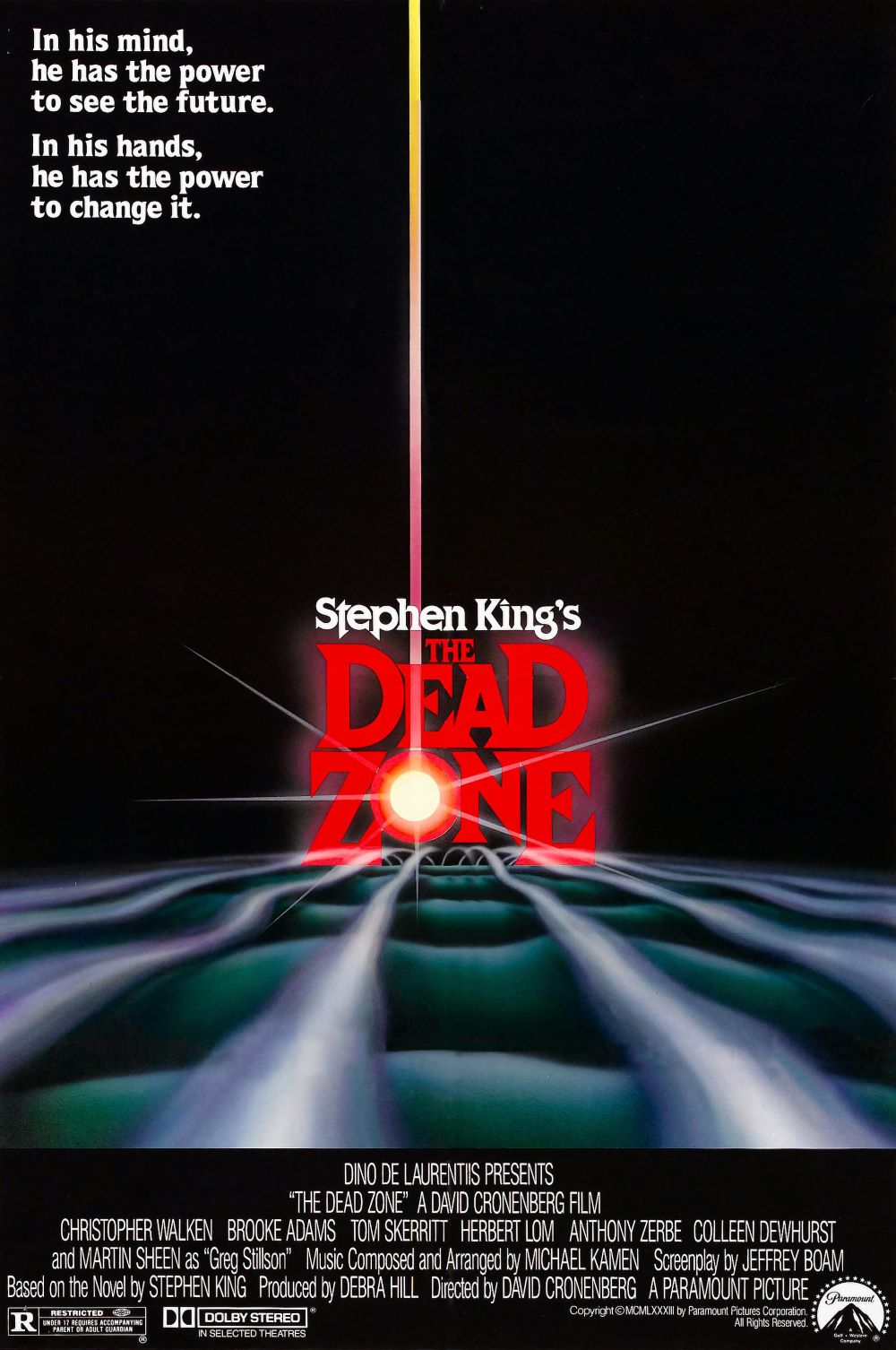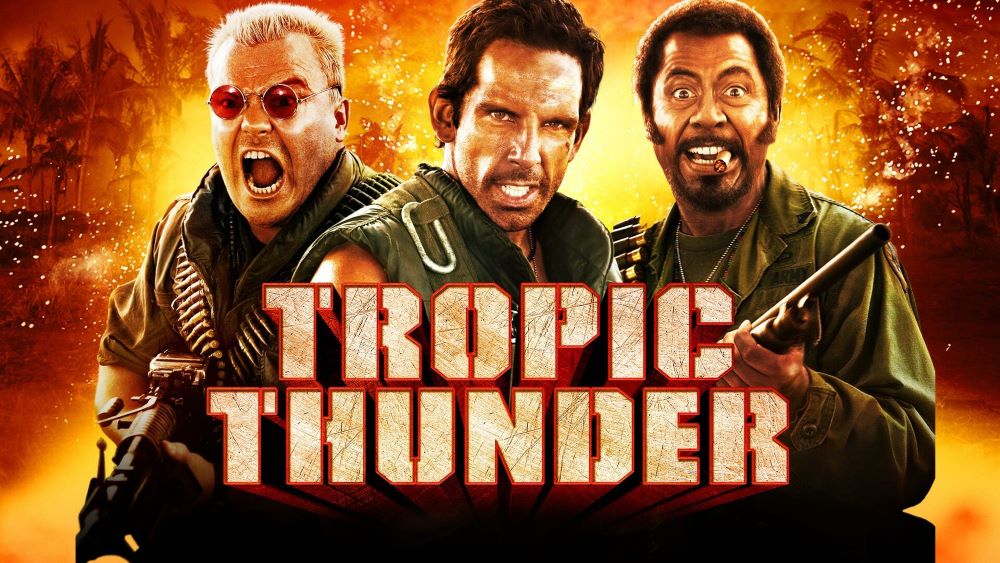
Review: Tropic Thunder (dir. by Ben Stiller)


“A nutless monkey can do your job.” — Les Grossman

Ben Stiller’s Tropic Thunder is a bold, chaotic comedy that dives headfirst into the wild world of Hollywood satire. The film, which Stiller directed, co-wrote, and starred in, feels like a high-energy roast of the movie industry itself, blending action, parody, and sharp commentary into one explosive package. The cast is stacked with familiar faces like Robert Downey Jr., Jack Black, Jay Baruchel, Brandon T. Jackson, and even Tom Cruise in a shockingly hilarious cameo, all committed to the film’s madcap, anything-goes spirit.

A distinctive touch that shows Tropic Thunder’s deep commitment to Hollywood satire is how it begins—not with a typical studio logo or title sequence—but with a series of fake movie trailers. These trailers parody different film genres and Hollywood clichés, setting an irreverent tone before the actual film even starts. The highlight is undoubtedly the “Oscar-bait” trailer for Satan’s Alley, a pitch-perfect send-up of self-serious, emotionally heavy dramas designed for awards season attention. By embedding these faux trailers, the film immerses viewers in its meta commentary and signals from the outset that it’s willing to mock and take apart the film industry at all levels.

This movie-within-a-movie begins with a group of egotistical actors trying to make a serious war film based on the fictional memoir of a Vietnam veteran. Their attempt at gritty realism falters under the weight of their own vanity and cluelessness, turning the set into a feverish comedy of errors. When the director dies and the actors are abandoned in a real jungle with actual dangers, the film blurs the lines between fantasy and reality, leading to a relentless cascade of absurd situations and insider jokes about Hollywood machinery.

Robert Downey Jr.’s portrayal of Kirk Lazarus, a method actor who undergoes extreme skin pigmentation surgery to play a Black character, is both provocative and hilarious. His performance skewers Hollywood’s past mistakes with race and casting, while his tense exchanges with Brandon T. Jackson’s Alpa Chino, who plays a genuinely Black rapper, provide sharp moments that balance discomfort with comedy. Downey Jr.’s “blackface” was a conscious satire of method acting and Hollywood egos, an attempt to ridicule extreme lengths actors go for acclaim rather than an endorsement of offensive practices. However, even at its release in 2008, it sparked conversations about the boundaries of comedy and racial sensitivity—an issue that would be even more controversial in 2025’s cultural climate.

Similarly, the film’s handling of ableist humor through the subplot of Simple Jack, a fictional movie starring Ben Stiller’s character as a person with intellectual disabilities, drew mixed reactions. While intended as a biting critique of Hollywood’s exploitation of disability for sympathy and awards, the portrayal nonetheless walked a tightrope that made some audience members uncomfortable. This nuanced but risky satire highlights how Tropic Thunder throws a wide net in exposing Hollywood’s many blind spots, yet its fearless approach also invites legitimate questions about respect and representation.

Jack Black delivers wild physical comedy as Jeff Portnoy, a drug-addled comedian losing control, offering a blend of slapstick and oddly sincere moments. Meanwhile, Tom Cruise steals the film with his iconic turn as Les Grossman, the balding, foul-mouthed studio exec whose explosive rants and dance moves have reached legendary status. Industry insiders often note that Grossman’s tempestuous persona seems inspired by real-life producer Scott Rudin, known for a similarly volatile temperament.

Much of the film’s humor targets Hollywood’s obsession with awards and ego, skewering Oscar-bait films, blockbuster excess, and ridiculous celebrity antics. The fake trailers highlight these themes, and Lazarus’s infamous line “Never go full retard, man!” takes aim at acting extremes motivated by prestige rather than authenticity. Stiller’s direction embraces loud, over-the-top action sequences that mimic classic Vietnam War movies but infuse them with cartoonish chaos, while the lush jungle serves as a satirical arena for exposing the actors’ incompetence.

While Tropic Thunder is gleefully offensive and hilarious, its treatment of race and disability sparked debate about where satire crosses lines. The film’s biting self-awareness and sharp commentary doesn’t always prevent discomfort, but it highlights the difficulty of balancing edgy humor with social consciousness in comedy. The film’s reception reveals how comedy evolves with cultural awareness; what passed as biting satire in 2008 would face even fiercer scrutiny in today’s more sensitive and politically aware environment.

From an entertainment standpoint, the movie delivers nonstop laughs, with rapid-fire jokes, strong chemistry among the cast, and sharp Hollywood references that keep fans engaged. Downey Jr.’s method acting antics, Black’s physical comedy, and Cruise’s outrageous studio boss combine into a relentless comedic assault. It’s not a film for those who prefer safe or sanitized humor, but for those who appreciate biting satire with reckless energy, it’s a must-watch.

Looking back, Tropic Thunder stands as a snapshot of a moment before social media and instantaneous backlash reshaped Hollywood comedy. Its controversial content might not get greenlit today, much like the boundary-pushers Blazing Saddles and Airplane! before it. Yet, as history shows, comedy will always find new ways to challenge sensibilities and push limits. Only time will tell what the next film is that dares to cross such lines again.

If you haven’t experienced Tropic Thunder, prepare for a relentlessly funny, sharply satirical comedy that skewers everything from celebrity egos to studio politics with savage wit and over-the-top energy.
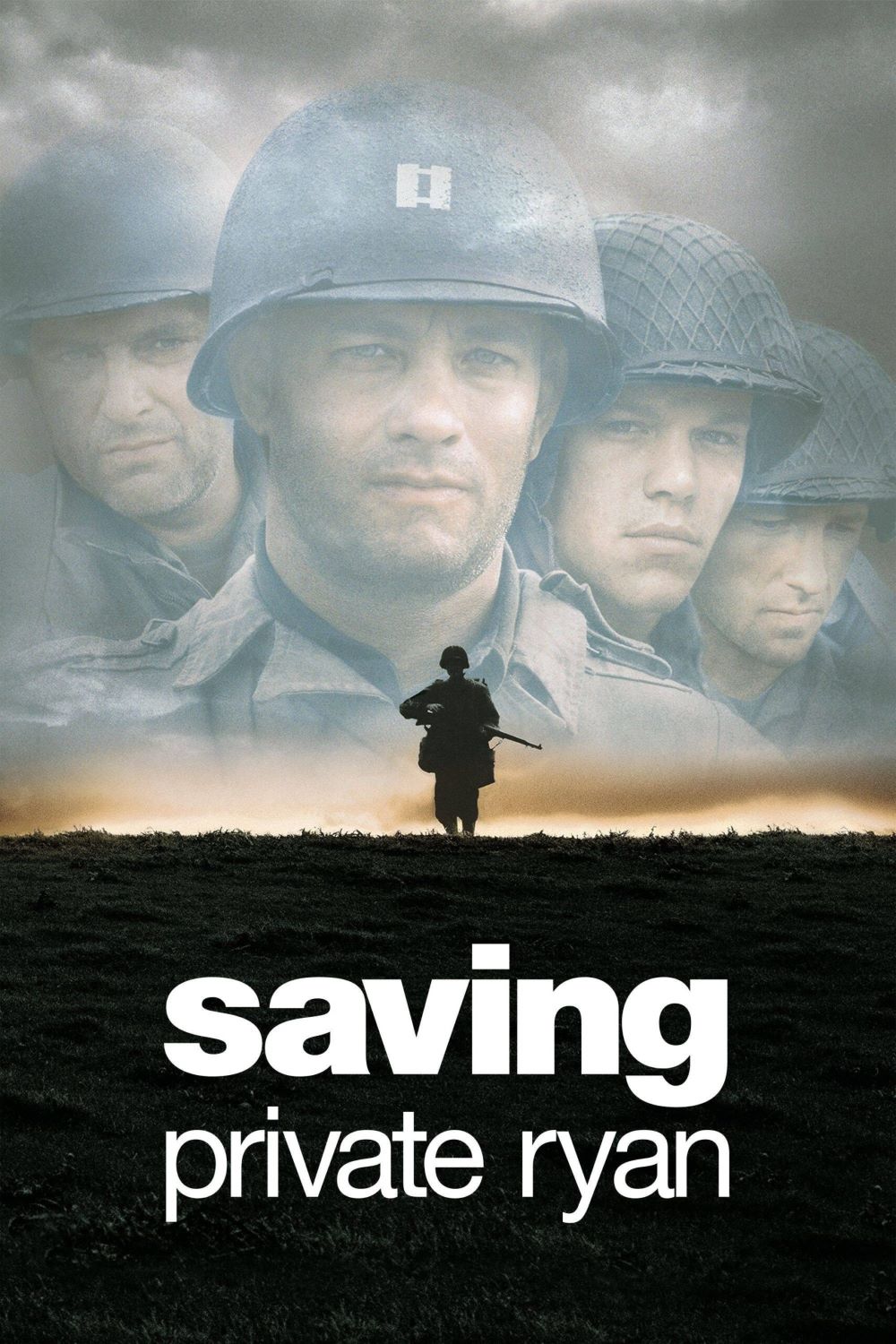
Review: Saving Private Ryan (dir. by Steven Spielberg)


“Someday we might look back on this and decide that Saving Private Ryan was the one decent thing we were able to pull out of this whole godawful, shitty mess.” — Sergeant Horvath

Saving Private Ryan stands as a landmark achievement in war cinema, intricately weaving immersive battle scenes, rich character dynamics, and profound moral themes into a nearly three-hour exploration of World War II’s human cost. One of its most remarkable features is the opening Omaha Beach landing sequence, a meticulously crafted, over 24-minute depiction of warfare’s brutal reality. Spielberg deploys a cinema verité style with handheld cameras capturing disorientation and chaos through the soldiers’ eyes. The sound design envelops the viewer in a sensory onslaught—gunfire, shouting, explosions—creating a visceral experience that immerses audiences directly in the terror and confusion of D-Day.

The filming process drew heavily on historical accuracy, with the production shot on the coast of County Wexford, Ireland, employing amputee actors and practical effects over computer graphics to simulate violent injuries and battlefield horrors. Muted tones evoke wartime photographs, and rapid, shaky editing conveys the disorganized, frantic environment soldiers endured. Consulting WWII veterans and historians, Spielberg created a sequence that reshaped cinematic portrayals of war, influencing how future films would approach the genre’s raw immediacy and emotional weight.

The film’s narrative follows a squad led by Captain Miller on a mission to locate and bring home Private James Ryan, whose three brothers have been killed in combat. The mission is steeped in the real-life tragedy of the five Sullivan brothers who died together aboard the USS Juneau in the Pacific, prompting military policies to prevent similar familial devastation. This historical context frames the story’s ethical heart: risking several men’s lives to save one, raising enduring questions about the value of individual sacrifice within the broader war.

In Saving Private Ryan, sacrifice is portrayed ambiguously—not as the sacrifice of a single hero but as the collective cost borne by the men tasked with rescuing one individual under perilous conditions. As the squad journeys through the war-torn French countryside, the deaths, injuries, and tensions they face underscore war’s randomness and the difficulty of weighing one life against many. The narrative refuses to romanticize or simplify, instead confronting the audience with the tragic truth that countless soldiers lose their lives without recognition or purpose, while some survive against staggering odds.

Duty and camaraderie thread throughout the film, portrayed through the soldiers’ evolving relationships and personal struggles. Each grapples with loyalty not only to their mission but to their fellow men and their own moral codes.

Integral to the film’s power is Tom Hanks’s layered performance as Captain John Miller. Hanks breathes life and emotional depth into Miller, portraying him as a man shaped by civilian life—revealed poignantly when he discloses his pre-war profession as a schoolteacher—now transformed by the relentless demands of war. He embodies an officer who is both composed and vulnerable, carrying the heavy burden of leadership with quiet dignity. Hanks’s portrayal reveals the internal struggles beneath Miller’s stoic exterior: moments of doubt, moral conflict, and fatigue subtly expressed through a trembling hand or a weary gaze. This humanity makes Miller relatable, as a man trying to maintain order and purpose amid chaos.

Hanks skillfully balances Miller’s authoritative presence with warmth and empathy, particularly evident in his paternal interactions with younger soldiers, reinforcing Miller’s role as both a leader and protector. His nuanced acting delivers the complexity of a man constantly negotiating duty and compassion. In scenes of high tension or moral quandaries, Hanks conveys the weight of command while allowing glimpses into Miller’s psychological strain, deepening the film’s emotional resonance.

Following Hanks’s Miller, a standout amongst the supporting cast is Tom Sizemore’s portrayal of Technical Sergeant Mike Horvath, Miller’s steady second-in-command. Sizemore embodies the pragmatic, battle-hardened soldier whose loyalty and experience provide emotional grounding for the squad. Sizemore portrays Horvath’s weariness and quiet commitment, adding layers of realism that deepen the exploration of how war reshapes individuals. The chemistry and shared history between Miller and Horvath are palpable, illustrating the bonds that sustain soldiers through hardship and lending emotional weight to the narrative.

The film wrestles with intense moral ambiguity throughout. The mission’s premise—to risk many lives to save one—compels both characters and viewers to confront complex questions about justice, value, and the cost of war. Scenes presenting difficult choices, such as the decision to spare or execute prisoners, dramatize these ethical dilemmas and highlight the emotional burdens borne by soldiers.

Technically, the film excels, with Janusz Kaminski’s dynamic cinematography capturing both the chaos of battle and intimate moments with evocative clarity. The immersive sound design reinforces the brutal reality, stripping warfare of glamor and confronting audiences with its daunting human costs.

Despite the overwhelming destruction and loss, Saving Private Ryan offers moments of humanity and hope. The rescue mission serves as a fragile symbol of compassion in the midst of devastation, while the film’s closing reflections on memory and legacy emphasize the lasting significance of sacrifice and survival.

Saving Private Ryan stands as a monumental achievement in the war genre, combining visceral combat realism, compelling characters, and moral complexity. Through Hanks’s deeply human Captain Miller and the nuanced supporting performances, especially Sizemore’s grounded Horvath, the film explores themes of sacrifice, duty, and brotherhood with unflinching honesty. Its enduring legacy lies in its unvarnished yet empathetic portrayal of war’s cost and the profound sacrifices made by those who lived it.

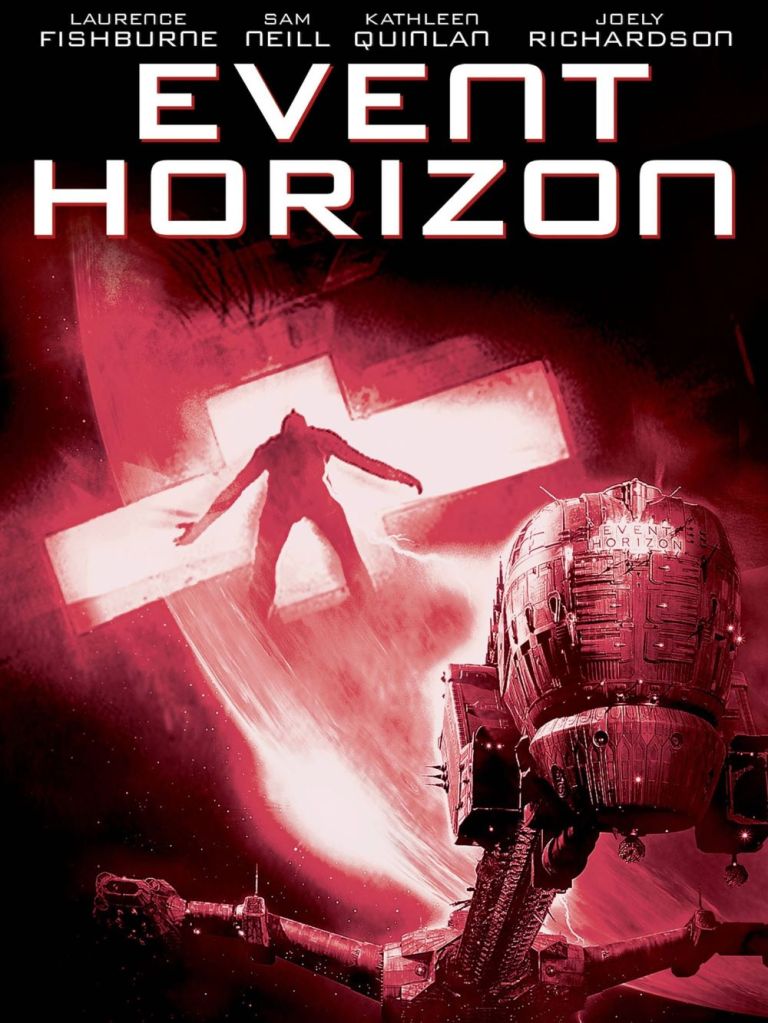
Horror Review: Event Horizon (dir. by Paul W. S. Anderson)


“You know nothing. Hell is only a word. The reality is much, much worse.” — Dr. Weir

Paul W.S. Anderson’s 1997 film Event Horizon stands out as a memorable mix of science fiction and horror, remembered for its gripping atmosphere and disturbing visuals. The story is set in 2047: a rescue crew aboard the Lewis and Clark is sent out to recover the long-missing spaceship Event Horizon, a vessel built to test a new kind of faster-than-light travel. Onboard with them is Dr. William Weir, the Event Horizon’s creator, who explains that the ship vanished after first activating its “gravity drive,” which can fold space to allow for instant travel across vast cosmic distances.

Soon after reaching the drifting Event Horizon, the crew discovers signs of mass violence and horror. They recover a disturbing audio message and realize something traumatic happened to the original crew. As they search for survivors, they experience intense and personal hallucinations—memories and fears brought to life by the ship. It becomes clear that the Event Horizon didn’t just jump through space; it traveled to a place outside reality, a nightmarish interdimensional realm resembling hell.

What makes Event Horizon particularly unique is its concept of hell as an alternate dimension that can infect and corrupt whatever or whoever crosses into it. The ship’s gravity drive doesn’t simply facilitate faster travel—it accidentally opens a gateway to this chaotic, malevolent place. This portrayal of hell as a dangerous interdimensional reality that preys on minds and bodies echoes the idea found in the massive gaming property Warhammer 40K, where hell is depicted as the Warp, a dimension of chaos that corrupts and drives people insane. Like the Warp, the film’s hell is an unpredictable, hostile realm where sanity and physical form break down, infecting and warping everything that comes into contact.

Visually, the film relies on claustrophobic corridors, flickering lights, and unsettling sounds to keep the audience off-balance. The design of the ship itself—part gothic cathedral, part industrial nightmare—adds to the sense of unease and dread throughout. The use of practical effects and detailed sets grounds the sci-fi terror in something tangible, making it all feel more immediate and believable.

Event Horizon also hints at bigger philosophical questions: how far should science go, and what happens when the drive for knowledge is unchecked by ethics or humility? The gravity drive is a technological wonder, but it’s treated with little caution by its inventor, and the catastrophic results suggest that some discoveries may be better left unexplored. The ship becomes both a literal and figurative vehicle for exploring the limits of human ambition and the dangers of pushing beyond them.

As the movie builds toward its climax, the rescue crew faces increasingly desperate odds. The possessed Dr. Weir, now an outright villain, sees the hellish dimension the gravity drive visited as the next step for humanity—a place of chaos and suffering. Multiple characters die in gruesome ways, and the survivors have to fight their own fears and the haunted ship itself. The ending is chilling and ambiguous, leaving open the possibility that the ship’s evil has not been fully contained.

At release, Event Horizon divided critics and audiences. Some found the violence and nightmare imagery too intense or the story too messy to follow. Others praised its ambition and the way it blends psychological horror with cosmic sci-fi. Over the years, the film has developed a cult reputation, frequently cited as one of the more effective and original space horror movies. Its legacy can be seen in later media, especially in video games that tackle similar haunted spaceship scenarios.

However, the film is not without flaws. Many viewers and critics point out uneven pacing, especially in the second half where tension sometimes drains away. The characters often act inconsistently or make choices that feel unrealistic for trained astronauts, which undermines the suspense. The script’s tonal shifts—from serious psychological drama to moments that unintentionally verge on camp—can jolt the viewer out of the experience. The use of jump scares is sometimes predictable, and the film’s heavy reliance on loud, chaotic sequences instead of quiet suspense can feel overwhelming. Some CGI effects haven’t aged well, contrasting with the otherwise impressive practical effects and set design. Acting performances are mixed too; while Sam Neill and Laurence Fishburne are strong, some supporting cast members lack conviction, making emotional engagement uneven.

Importantly, Event Horizon represents Paul W.S. Anderson at his most subtle and effective in directing. Compared to many of his later films, where his style often becomes frenetic and unchecked—possibly due to a lack of producer control—Event Horizon is more controlled, atmospheric, and haunting. This balance between style and substance makes it one of Anderson’s better directorial works, if not his best to date. The film showcases his interest in spatial geography, the use of negative space, and claustrophobic production design, all elements he would expand on in his later work but never as effectively deployed as here. The haunting visual touches, combined with his ability to direct actors and maintain tension, set Event Horizon apart from his more bombastic, less focused later entries.

Despite its flaws, Event Horizon remains gripping and memorable. Its strengths lie in combining deeply personal psychological horror with the vast, terrifying unknown of space and alternate realities. The film explores not just external threats, but also how guilt, fear, and trauma can be weaponized by forces beyond human understanding. For viewers seeking more than a standard haunted spaceship story, Event Horizon offers a disturbing, thought-provoking glimpse into the dark frontier of science, faith, and madness. It stands as a cult classic of sci-fi horror that continues to inspire discussion about the dangers of pushing too far into the unknown.

Horror Review: The Dead Zone (dir. by David Cronenberg)


“Bless me, Father, for I have sinned. I had the power… and I tried to prevent what I saw.”Johnny Smith

In 1983, David Cronenberg adapted Stephen King’s The Dead Zone with a distinctive emphasis on mood, morality, and psychological depth rather than traditional horror spectacle. The film follows Johnny Smith (Christopher Walken), a small-town schoolteacher whose life transforms irrevocably after a traumatic car accident leaves him in a five-year coma. Upon awakening, Johnny discovers he possesses psychic abilities that allow him to see the past and future by touch. Rather than a gift, this power becomes a heavy burden, isolating him and forcing him into wrenching moral choices.

Cronenberg’s direction is meticulous and deliberately restrained. The film’s muted color palette and stark winter landscapes visually echo Johnny’s emotional isolation and the fragility of human existence. His careful, often gliding camera movements create a mounting sense of quiet dread, while minimalistic sound design underscores moments of revelation with haunting subtlety. This subdued style elevates the film’s psychological impact, transforming it into a thoughtful and melancholy meditation on the cost of harrowing knowledge.

Significantly, The Dead Zone marks a departure from Cronenberg’s signature body horror. Instead of the grotesque physical transformations and visceral mutations that characterize much of his other work, here Cronenberg turns inward. The real horror lies in the malleability of the mind and the elusive nature of perception—how reality, memory, and the future are unstable constructs that can shift and fracture under psychic strain. This thematic focus on the impermanence and distortion of mental reality touches on some of Cronenberg’s deepest artistic fascinations.

The restrained treatment of body horror in The Dead Zone previews the director’s later, more psychologically driven films such as A History of ViolenceEastern Promises, and A Dangerous Method, where character studies and narrative depth take precedence over startling visuals. In this early pivot, Cronenberg demonstrates that his mastery lies not only in visual spectacle but in probing the profound emotional and moral dilemmas faced by his characters. The vision-focused horror here is cerebral and grounded, rooting supernatural phenomena in human frailty and ethical complexity.

Christopher Walken’s nuanced portrayal is the emotional heart of the film. He captures Johnny’s vulnerability, weariness, and profound solitude, portraying a man burdened by a cursed knowledge that isolates him from the world. Martin Sheen plays Greg Stillson, the ambitious and morally bankrupt politician whose rise Johnny must foretell and who embodies the film’s central threat. The supporting cast, including Brooke Adams as Johnny’s lost love Sarah and Tom Skerritt as Sheriff Bannerman, delivers compelling and authentic performances that humanize the film’s intimate, small-town environment.

Several changes from King’s novel sharpen the film’s thematic focus. The novel’s sprawling plot, including a serial killer subplot and a brain tumor storyline symbolizing Johnny’s mortality, is pared down or omitted. Despite this trimming, the serial killer element retained in the film remains chilling and effective. It highlights the darker repercussions of Johnny’s psychic gift and injects a tangible sense of dread, reinforcing the psychological weight Johnny carries. This subplot grounds the supernatural within a disturbing reality, illustrating the violent and tragic circumstances Johnny must grapple with as part of his burden.

The concept of the “dead zone” itself shifts in meaning. Originally, the term referred to parts of Johnny’s brain damaged by the accident, blocking certain visions. Cronenberg reinterprets it as a metaphor for the unknown and unknowable parts of the future—the gaps in psychic clarity that allow for free will and change. This subtle shift reshapes the narrative toward a more ambiguous, hopeful meditation on destiny and human agency.

Compared to King’s novel, Cronenberg’s Johnny is more grounded and isolated. The novel frames Johnny’s struggle within a broader spiritual and fatalistic context, highlighted by the looming presence of a brain tumor and a nuanced exploration of hope versus resignation. The film, by contrast, focuses on the emotional and moral fatigue induced by Johnny’s psychic gift, emphasizing his loneliness and reluctant responsibility rather than supernatural destiny.

Walken’s restrained, haunting performance strips away mythic grandeur to reveal a deeply human character. The film’s narrowed narrative tightens focus on Johnny’s internal anguish and his difficult ethical choices, making his plight intimate and richly relatable.

On a thematic level, The Dead Zone contemplates fate, free will, and sacrifice. Johnny’s psychic abilities act as a draining, almost chthonic force, transforming him into a reluctant prophet who is tasked with intervening in grim futures at great personal cost. The film’s bleak winter setting visually reflects Johnny’s alienation, while its deliberate pacing highlights the exhaustion and heartbreak that comes with such knowledge.

Ultimately, Cronenberg’s The Dead Zone goes beyond supernatural thriller conventions. It is a profound meditation on empathy, sacrifice, and the human condition—where the greatest horrors are internal, and the cost of knowledge is both psychic and emotional. Johnny Smith emerges as a tragic, flawed figure wrestling with unbearable burdens.

Cronenberg’s direction and the impeccable performances make The Dead Zone a standout in King adaptations. The film’s enduring impact lies in its rich thematic texture, its moral ambiguity, and its unflinching exploration of human frailty, all conveyed through a director shifting skillfully from physical body horror to psychological and existential terror. The film remains as haunting and resonant now as it was upon release, a testament to the synergy of Cronenberg and King’s extraordinary talents.

Glen Powell is everyone’s target in Edgar Wright’s The Running Man trailer!


I’m happy to see Edgar Wright back making movies. It’s been a while since 2021’s Last Night in Soho, and this time around, he’s remaking 1987’s The Running Man. Based off the story by Stephen King, Ben Richards (Glen Powell, Twisters, Hit Man) is a man who needs some help, living in the slums with his wife (Jayme Lawson, Sinners, The Batman) and child. To earn a high stakes reward, he joins The Running Man, a tv show that puts him in the spotlight for 30 days while everyone hunts him down. Should he survive, his family will be set. The movie looks like it has a good cast, with Colman Domingo (Sing Sing) and Josh Brolin (Dune) also in the mix. Admittedly, I’m curious of what the soundtrack to this will be like, given Wright’s flair for pairing scenes with music.

The Running Man will be in theatres this November.

Shadow joins the fray in the Sonic the Hedgehog 3 Trailer!


The trailer for Sonic the Hedgehog 3 dropped today, and it has Sonic (Ben Schwartz), Tails(Colleen O’Shaughnessey) & Knuckles (Idris Elba) squaring off against Shadow, voiced by Keanu Reeves. Shadow seems to be too much, even for the trio. It looks like we might get a team up with Dr. Robotnik (Jim Carrey). Of course, both Tom (James Marsden) and Maddie (Tika Sumpter) are still on hand to cheer on our heroes with moral support.

Sonic the Hedgehog 3 will be in cinemas this December.

A new fighter enters the Arena in Ridley Scott’s Gladiator II trailer!


I don’t know how or why we have a sequel to Ridley Scott’s Academy Award Winner Gladiator, but here it is in all its glory. It looks quite interesting, I have to say. In my opinion, Ridley’s films are a coin flip. This can go either way. And who knows? Maybe if we’re lucky, we’ll get a Kingdom of Heaven follow up. One can only hope.

Gladiator II looks like it’s expanding on the first film, at least in terms of the fighting arena. We have naval battles in the Colesseum now. Despite the fall of Commodus in the first film (Joaquin Phoenix), Rome still has issues. A young gladiator (Paul Mescal, All of Us Strangers) seems to have an issue with General Marcus Acacius, played by Wonder Woman 84 and The Last of Us’ Pedro Pascal. Ridley’s also reunited with American Gangster‘s Denzel Washington, as well as Gladiator‘s Connie Nielsen and Derek Jacobi. Also on hand are Joseph Quinn (A Quiet Place: Day One), Rory McCann (Jumanji: The Next Level), May Calamawy (Marvel’s Moon Knight) and Peter Mensah (300).

Harry Gregson-Williams (Man on Fire, Kingdom of Heaven) will be scoring the film, taking over for Hans Zimmer.

Gladiator II will be in theatres this November.

Film Review: Top Gun: Maverick (dir. by Joseph Kosinski)


From the moment it was announced, I had low expectations for Top Gun: Maverick. I figured it was just Tom Cruise milking his other franchise for what it’s worth. I mean, I adore the Mission: Impossible movies, but was there ever really a need to return to the Top Gun Universe? I didn’t believe so, particularly with Joseph Kosinski being involved. I enjoyed Oblivion and I’ll die on the hill that is Tron: Legacy, but also recognize that Tron: Legacy could have been a better film if the writers just didn’t paste the original film and wipe it down with a new coat of paint. I think I may have incorrectly put that on Kosinski, rather than the writers.

Top Gun: Maverick does pretty much the same thing here. If you’ve seen the original Top Gun, you already have the blueprint for the sequel in your head. You could play both films side by side, and not counting for the pacing between them, align each scene with the sequel’s counterpart. Does that even make for a sequel? Did we learn nothing from Star Wars: The Force Awakens?

I don’t know. I didn’t hate Top Gun: Maverick at all. It’s just that odd feeling at having seen it all before and almost completely guessing what’s going to happen next. If you can get past that, it’s a good film. By the end of the movie, I wanted to buy a computer, a Thrustmaster HOTAS set and a copy of DCS to fly with.

Top Gun: Maverick continues the story of ace fighter pilot Pete “Maverick” Mitchell, once the 2nd Best at Top Gun. Now testing special aircraft, he lands himself into trouble again with the Navy, only to be sent back to Top Gun. Yes, he was an instructor there and this new film references this. However, Maverick’s return has him training a team of elite pilots on a special bombing mission requiring some unorthodox maneuvers. In training the pilots, the best will be declared the mission leader. When Maverick discovers that one of pilots is Brad Bradshaw (Miles Teller, Whiplash), son of his deceased Radar Intercept Officer (RIO) Goose, tensions erupt. Can Maverick get the team to improve and be ready for the mission?

Writing wise, Top Gun: Maverick isn’t bad. It gets in, does the job and gets right back out. No scene is drawn out too far, no storyline angle seems to be mulled on. With two main writers and three screenplay writers (including Mission: Impossible‘s Christopher McQuarrie), it’s pretty tight. Again, there’s the problem of using the same story map as the original. There doesn’t appear to be many obstacles for them to hurdle, storywise. Like Underwater, having so many familiar sites and scenes helps. What I did like was that it didn’t point many fingers at any one place. The opposing fighters are “5th Gen” craft, but you don’t really get any kind of feeling of where they’re from. Were they Russian? Serbian? Chinese? Canadian? Unless I missed something in the watch, I didn’t catch who the enemy was. They were just men in planes with missiles and guns.

I liked the cast here. Jon Hamm (Tag)makes for a good opponent to Cruise, and they have good scenes together. There’s also something of a love story to the film, though it’s light. While it would have been cool to have Kelly McGinnis back, Jennifer Connelly (Alita: Battle Angel) made for a good replacement and her character’s okay. For the young pilots, I particularly liked Lewis Pullman’s (Bad Times at the El Royale) Bob and Monica Barbero (NBCs Chicago Justice) Phoenix, along with Glen Powell’s (Everybody Wants Some!) Hangman. Each one brought some style and attitude to the mix.

By far the best entry here is Val Kilmer’s return as Tom “Iceman” Kazansky. The story was written in a way to include his issues with speech, given his cancer diagnosis. He honestly has one of most memorable moments in the film, and I loved how they tied his character back to Maverick’s. I have to give some kudos to Cruise, Kilmer and company for that. If there’s any other reason to see the film other than the planes, that was it.

Oh, the flight and fight scenes! Goodness, what a treat! I usually sit in the front row, where no one ever sits. Since the Regal RPX screen is huge (but not Lincoln Center IMAX beastly), that first row is some distance away. The sense of speed was cool and there were some fantastic shots both in cockpit and out, which had me leaning in my seat with the action with every hard left and right. While I’ve always been more of a fan of the F-14 Tomcat used in the original, there is a legitimate reason for the team to have to use the F-18 Hornet. While the main mission feels a lot like the trench run from Star Wars: A New Hope, it’s a great sequence overall. Watching Maverick make a plane dance is a sight to behold, and there is at least one scene in the film that contained an awesome thrust vectoring moment. Think of thrust vectoring like drifting a plane in midair the way you would drift a car in a turn. It’s hard to describe, but beautiful when seen.

Musically, I don’t have much to say. While Lorne Balfe (Mission: Impossible – Fallout), Hans Zimmer (Dune), Harold Faltermeyer (Top Gun) and Lady Gaga (House of Gucci) all worked on this, I can’t say that any tune other than the original Top Gun Anthem really stood out for me. Not a terrible thing at all, just not extremely memorable. At least with Fallout, I was humming the 2nd half of “Stairs and Rooftops” until I bought the album. Gaga’s “Hold My Hand” is a great piece and ties in pretty well to where it’s used.

Overall, Top Gun: Maverick is a treat, and was better than I expected. It gets a little heavy handed at following the same path of the original, the but the new story is enjoyable enough to have it stand out on it own.

Ethan Hunt returns in the Mission: Impossible – Dead Reckoning Part One Teaser!


Holy Cow! On Twitter, Christopher McQuarrie dropped the teaser trailer for Mission: Impossible – Dead Reckoning – Part One and there’s just so much to unpack here. Lorne Balfe reunites with McQuarrie on the score and I’m loving the piece that plays in this trailer. It looks like almost everyone from Mission: Impossible Fallout are back, and some new faces are present with Haley Atwell joining the fray. It’s also interesting to see Henry Czerny back in the mix. If the Fast and Furious movies have taught us anything, it’s that you can always find a use for a character you thought you shelved. Wow, it’s just a teaser, and it’s only Part One! I’m pretty excited for this.

Ghostface returns in the new Scream trailer!


From the directors of Ready or Not comes yet another chapter in Wes Craven’s Scream series. I’ll admit I’m liking the cast in this one. We have Melissa Barerra (In the Heights), Jenna Ortega (Yes Day), Dylan Minnette (30 Reasons Why), Jack Quaid (The Boys), Marley Shelton (Planet Terror), Kyle Gallner (Jennifer’s Body), and Mikey Madison (Once Upon a Time…In Hollywood)

Then you have the returning cast, which includes Neve Campbell, Courtney Cox and David Arquette. Most importantly, it appears that Roger L. Jackson is voicing the Ghostface again! On a side note, Jackson was also responsible for Mojo Jojo’s voice in The Powerpuff Girls. (“Curses!”)

January movies don’t always do very well, but we’ll see what happens with this one.

Scream releases in cinemas on January 14th, 2022.