We are just a few hours away from the start of our annual October Horrorthon but, before we do that, I do have one last bit of business to attend to. Here are my Oscar predictions for the month of September! If you want to see how my thinking has evolved, be sure to check out my predictions for March, April, May, June, July, and August!
As for my latest set of predictions, they’re largely shaped by the news coming out of the festivals. Digger is no longer a contender for anything. And, just as last month, I continue to suspect that Dune Part Three will not be the Oscar powerhouse that some are expecting. The first two Dune films were both nominated but it just doesn’t feel like there’s a huge sentiment out there that’s saying, “We simply have to keep honoring each new installment!”
Here are my latest predictions!
Best Picture
The Debut
Elsinore
Fjord
I Play Rocky
La Bola Negra
Mr. Irrelevant
The Odyssey
Primetime
Project Hail Mary
Wild Horse Nine
Best Director
Javier Ambrossi & Javier Calvo — La Bola Negra
Jesse Eisenberg — The Debut
Phil Lord & Christopher Miller — Project Hail Mary
It’s time for me to list my Oscar predictions. As far as wild speculation is concerned, the current Oscar race still feels like it’s off to a slow start. There seems to be a general assumption that The Odyssey is going to dominate both the nominations and the awards, and that there isn’t much point in considering what else could be nominated.
I do think The Odyssey is going to be a big contender. I also think Project Hail Mary will still be in the conversation at year’s end. Fjord won the Palme d’Or at Cannes, which has become a fairly good precursor for nominations, if not for the actual awards. As for the rest of the nominees, it’s still pretty much a guessing game at this point.
Here are a few of my guesses:
Digger will not be the powerhouse some people are predicting. Even when he was winning Oscars, Alejandro G. Iñárritu was still a dreadfully pretentious and self-important director. That tendency has only increased in the years since he won his second directing Oscar.
Michael will get a lot of hype, but it won’t be nominated for much because of the controversy around Michael Jackson’s later legal troubles. Colman Domingo might still get in, because the Academy always enjoys nominating someone for playing a bad father.
The Social Reckoning and Ink will both get middling reviews, but both will be nominated for reasons that have more to do with politics than quality.
Wild Horse Nine will be nominated but, like most of Martin McDonagh’s films, people will either love it or hate it. John Malkovich will be a strong contender for Best Actor, if only because he’s not getting any younger and this might be the Academy’s last chance to honor one of the best actors of his generation. Either Steve Buscemi or Sam Rockwell will be nominated for Supporting Actor. I went with Buscemi because he’s never been nominated before.
The Debut, I Play Rocky, and Mr. Irrelevant will benefit from being crowd-pleasers.
In the style of Siân Heder’s previous film, CODA, Being Heumann will be the nominee that nobody really thinks about until after it’s actually nominated.
You can check out my predictions from March, April, May, June, and July to see how my thinking has evolved over the year.
Best Picture Being Heumann The Debut Fjord I Play Rocky Ink Mr. Irrelevant The Odyssey Project Hail Mary The Social Reckoning Wild Horse Nine
Best Director
Danny Boyle, Ink
Phil Lord and Christopher Miller, Project Hail Mary
Martin McDonagh, Wild Horse Nine
Cristian Mungiu, Fjord
Christopher Nolan, The Odyssey
Best Actor
David Corenswet, Mr. Irrelevant
Matt Damon, The Odyssey
Ryan Gosling, Project Hail Mary
Anthony Ippolito, I Play Rocky
John Malkovich, Wild Horse Nine
Best Actress
Sandra Hüller, Fatherland
Ruth Madeley, Being Heumann
Julianne Moore, The Debut
Inde Navarrette, Obsession
Renate Reinsve, Fjord
Best Supporting Actor
Steve Buscemi, Wild Horse Nine
Matt Dillon, I Play Rocky
Colman Domingo, Michael
Paul Giamatti, The Debut
Jeremy Strong, The Social Reckoning
Best Supporting Actress
Colleen Camp, Club Kid
Anne Hathaway, The Odyssey
Sandra Hüller, Project Hail Mary
Scarlett Johansson, Paper Tiger
Samantha Morton, The Odyssey
These predictions are still too early to be taken seriously. The year is getting off to a slow start as far as the Oscars are concerned. That said, here are my predictions for June!
Check out my predictions for March and April and May!
Best Picture
The Adventures of Cliff Booth
Digger
Dune Part Three
Fatherland
Fjord
I Play Rocky
Primetime
Project Hail Mary
The Social Reckoning
Wild Horse Nine
Best Director
David Fincher for The Adventures of Cliff Booth
Phil Lord and Christopher Miller for Project Hail Mary
Before I say anything else about Gus Van Sant’s new film, I feel that I should make something clear.
I am a huge Al Pacino fan. My love for the Godfather films (even the third one!) should be obvious to anyone who regularly reads this site. I love the majority of Pacino’s work, even the roles that occurred after he started bellowing all of his lines. I think his cop in Heat is one of the most entertaining characters to ever appear in a crime film. I loved his performance as Jimmy Hoffa in The Irishman. I enjoyed the humor that he brought to his role in Once Upon A Time In Hollywood. I will always be happy to defend Al Pacino.
So, it gives me no pleasure to say that Al Pacino gives one of his worst performances in this film. He plays M.L. Hall, the owner of Meridian Mortgage Company in Indianapolis, Indiana. Pacino only appears in three brief scenes. Wearing a ridiculous wig, he delivers his lines in one of the worst Southern accents that I’ve ever heard. Playing a businessman who is so heartless that he won’t even negotiate with the man who is holding his son hostage, Pacino gives a performance that isn’t even entertaining enough to be considered cartoonish. It’s the type of performance that one might expect from the villain-of-the-week on a particularly heavy-handed episode of Law & Order. It’s not the type of performance that you would expect from Al Pacino.
Fortunately, despite all of that, Dead Man’s Wire is still a fairly compelling film.
Based on a true story, Dead Man’s Wire stars Bill Skarsgard as Tony Kiritsis, a real estate developer in 1970s Indianapolis who feels that Meridian Mortgage Company has cheated him out of the money that he hoped to earn through some land he developed. Because M.L. Hall is on vacation in Florida, Tony takes M.L. son, Richard (Dacre Montgomery), hostage. Tony wires a shotgun to Richard’s neck so that any sudden movement by either one of them will lead to Richard getting his head blown off. Tony announced that he’ll only release Richard in return for immunity and an apology from M.L. Hall.
For three days, the city of Indianapolis watches as the situation plays out. Detective Michael Gable (Cary Elwes) tries to negotiate with Tony but Tony is only willing to talk to the DJ (Colman Domingo) at his favorite radio station. Meanwhile, Tony picks up some support from other people who feel that they’ve been screwed over by the M.L. Halls of the world.
Indeed, while watching this movie, it was hard not to think about the creepy cult that has sprung up around Luigi Mangione. Of course, being a blue collar guy who appears to have simply been pushed past his breaking point, Tony is a much more compelling figure than a phony intellectual like Luigi. That said, director Gus Van Sant is more interested in Tony as an outsider on the fringes of polite society than as a political symbol. Skarsgard plays Tony as a man who can go from being friendly to enraged in a matter of seconds and he’s actually quite frightening in the role. Meanwhile, Dacre Montgomery makes Richard into a rather sympathetic character. Even if you don’t agree with the actions of his father, it’s hard not to respect the way that Richard handles the situation. Watching this film, one gets the feeling that the unstable Tony thinks that he and Richard are developing a common ground but in reality, there’s no way that anyone could expect Richard to sympathize with a man who held him hostage for three days. The film respects the characters and the actors too much for that type of false sentimentality.
Towards the end of the film, there’s a rather odd moment where breaking news about the hostage situation interrupts John Wayne presenting the award for Best Picture at the Oscars. In reality, the 1977 Academy Awards were held a month after the hostage situation had been resolved and the ceremony seen in Dead Man’s Wire was held in 1979. (Wayne presented the Oscar just a few months before his own death from cancer.) It’s classic Van Sant move in that it seems like it should mean something but, in the grand scheme of things, it really doesn’t. Van Sant is one of those directors who has been around long enough and who has made enough interesting films that he can get away with something like that.
Dead Man’s Wire is Van Sant’s first film in seven years and his best film since Elephant. It’s flawed but always watchable and it has a sense of humor and enough odd but memorable details to balance out the film’s angrier moments. There are a few moments where the film falls into the trendy and intellectually shallow anti-capitalism that is all the rage nowadays but, for the most part, this is a compelling recreation of a true story and a character study of two men who will be forever linked.
These predictions are still too early to really be taken seriously. The year is getting off to a slow start as far as the Oscars are concerned. That said, here are my predictions for May!
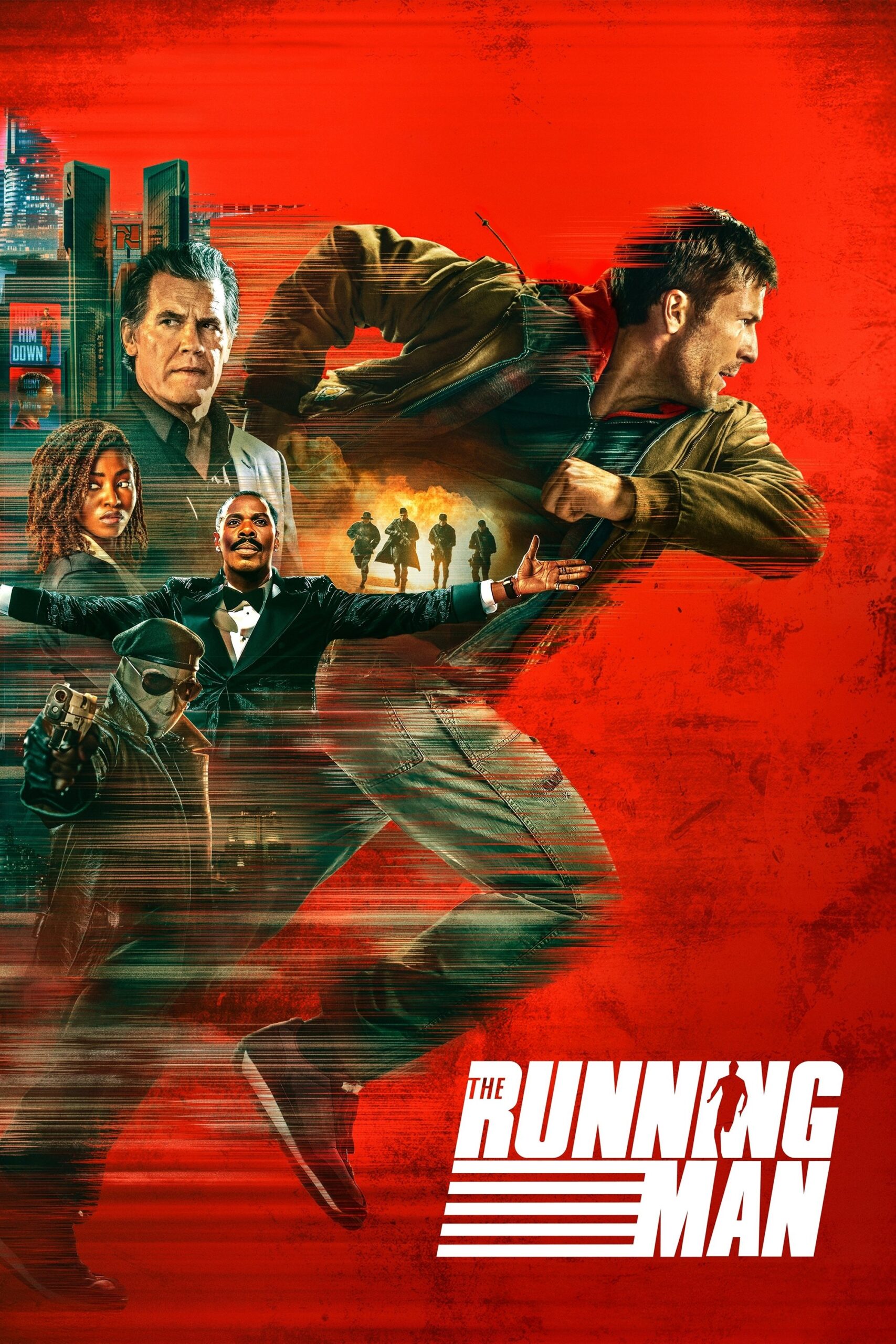
Edgar Wright’s 2025 take on The Running Man is an adrenaline shot to the chest and a sly riff on our era’s obsession with dystopian game shows, all filtered through his own eye for spectacle and pacing. Unlike many of his earlier works, such as Shaun of the Dead and Scott Pilgrim vs. The World, which bristle with meta-commentary, the film is a sleeker and more bruising affair. At its core, this is a survival thriller decked out in neon, driven by a director who wants to both honor and outpace what’s come before.
Wright’s version ditches the muscle-bound caricature of the 1987 Schwarzenegger adaptation, recentering on a more grounded protagonist. Glen Powell’s Ben Richards isn’t a quip-dispensing tank; he’s a desperate father, pressed to extremes, haunted more by anxiety than rage. We meet him in a world where reality TV devours everything, and nothing is too cruel if it wins the ratings war. Richards is cast as the sacrificial everyman, volunteering for the deadly Running Man show only because his family’s survival is at stake, not his ego. This lends the film a more human—and frankly, more believable—edge than either of its predecessors.
Visually, The Running Man is vintage Wright: kinetic and muscular, with chase scenes propelled by propulsive synths and punchy editing, each set piece designed as much to thrill as to disorient. Gone, however, is much of the director’s comedic ribbing; what remains is a tense visual feast, saturated in electric colors and relentless motion. The camera rarely settles. The television show itself is depicted as both garish and sinister, a spectacle that feels plausible because it’s only five minutes into our own future.
The film takes sharp aim at the machinery of television and the spectacle it creates, exposing how entertainment can thrive on cruelty and manipulation. It highlights a world where reality is heavily curated and shaped to serve ratings and control, with the audience complicit in consuming and encouraging the degradation of genuine human experience. The media in the film mirrors warnings that have circulated in recent years—that it has become a tool designed to appease the masses, even going so far as to use deepfakes to manipulate narratives in favor of particular agendas. While this focus on broadcast media delivers potent social commentary, Wright does drop the ball a bit by concentrating too much on traditional TV media at a time when entertainment consumption is largely online and more fragmented. This narrower scope misses an opportunity to deeply engage with the digital age’s sprawling and insidious impact on public attention and truth.
Glen Powell’s performance is pivotal to the film’s success. He anchors the story, selling both the exhaustion and the resolve required for the role. This Ben Richards is no superhero—his fear feels palpable, and his reactions are messy, urgent, and often impulsive. Opposite him, Josh Brolin steps in as Dan Killian, the show’s orchestrator. Brolin’s performance, smooth and menacing, turns every negotiation and threat into a master class in corporate evil. The stalkers, the show’s gladiatorial killers, are less cartoon than their 1987 counterparts, but all the more chilling for their believability—branding themselves like influencers, they embody a world where violence and popularity are inseparable.
On the surface, Wright’s Running Man leans heavily into social satire. It lobs grenades at infotainment, the exploitation inherent in reality TV, and the way audiences are silently implicated in all the carnage they consume. Reality is a construct, truth is whatever the network decides to show, and every moment of suffering is a data point in an endless quest for engagement. The critique is loud, though not always nuanced. Where Wright has previously reveled in self-aware storytelling, here he pulls back, focusing on the mechanics and cost of spectacle more than its digital afterlife.
Action is where the film hits hardest. Wright brings his expected flair for movement and tension, with chase sequences escalating to wild, blood-smeared crescendos, and hand-to-hand fights that feel tactile rather than stylized. The film borrows more heavily from the structure of King’s novel, raising stakes with each new adversary and refusing to let viewers catch their breath. Despite the non-stop pace, the movie runs a little too long—some sequences feel indulgent, and the final act’s rhythm stutters as it builds toward its conclusion. Still, even in its bloat, there’s always something energetic or visually inventive happening onscreen.
The movie’s climax and resolution avoid over-explaining or revealing too much, instead choosing to leave room for interpretation and suspense about the outcomes for the characters and the world they inhabit. This restraint preserves the tension and leaves viewers with something to chew on beyond the final credits.
For fans of Edgar Wright, there’s a sense of something both familiar and altered here. The visual wit, the muscular editing, the stylish sound cues—they’re all present. Yet the film feels less like a playground for Wright’s usual whimsy and more like a taut, collaborative blockbuster. It’s playfully brutal and thoroughly engaging, but does not, in the end, subvert the genre quite as gleefully as some might hope. For every moment of subtext or clever visual flourish, there is another in which the movie simply barrels forward, content to dazzle and provoke in equal measure.
The Running Man (2025) is a film with a target audience—those who want action, smart but accessible social commentary, and just enough character work to feel the stakes. It will delight viewers drawn to a flashier, meaner take on dystopian spectacle, and Powell’s central performance is likely to win over skeptics and fans alike. If you’re hoping for a thesis on algorithmic age or a meditation on surveillance capitalism, you may need to look elsewhere. But if you want a turbo-charged chase movie that occasionally stops to wag a finger at the world that spawned it, you’re likely to have a great time.
Ultimately, Edgar Wright’s Running Man is a sharp, glossy refit of a classic dystopian story, packed with high-octane action and grounded by its central performance. It won’t please everyone and doesn’t attempt to, but it never forgets that, above all, good television keeps us running. In the era of spectacle, that might be all you need.
I’m happy to see Edgar Wright back making movies. It’s been a while since 2021’s Last Night in Soho, and this time around, he’s remaking 1987’s The Running Man. Based off the story by Stephen King, Ben Richards (Glen Powell, Twisters, Hit Man) is a man who needs some help, living in the slums with his wife (Jayme Lawson, Sinners, The Batman) and child. To earn a high stakes reward, he joins The Running Man, a tv show that puts him in the spotlight for 30 days while everyone hunts him down. Should he survive, his family will be set. The movie looks like it has a good cast, with Colman Domingo (Sing Sing) and Josh Brolin (Dune) also in the mix. Admittedly, I’m curious of what the soundtrack to this will be like, given Wright’s flair for pairing scenes with music.
The Running Man will be in theatres this November.
We’re taking just a short break from our Eastwood-a-thon so that I can share my Oscar predictions for May.
As I say every month, don’t read too much into anything this early in the year. I do think Sinners has a decent chance of getting nominated, despite being released early in the year. And since Cannes has now emerged as a semi-reliable precursor, you’ll find a lot of this year’s winners mentioned below. That said, in all probability, the actual Oscar nominations will look completely different from what’s below. That’s part of the fun of doing monthly predictions!
I should note that Clint Eastwood is apparently working on another film. Given how quickly he directs, he might be directing this year’s next sudden contender.