Icarus File No. 32: The Cable Guy (dir. by Ben Stiller)


“You were never there for me, were you, Mother? You expected Mike and Carol Brady to raise me! I’m the bastard son of Claire Huxtable! I am a lost Cunningham! I learned the facts of life from watching The Facts of Life!” — Chip

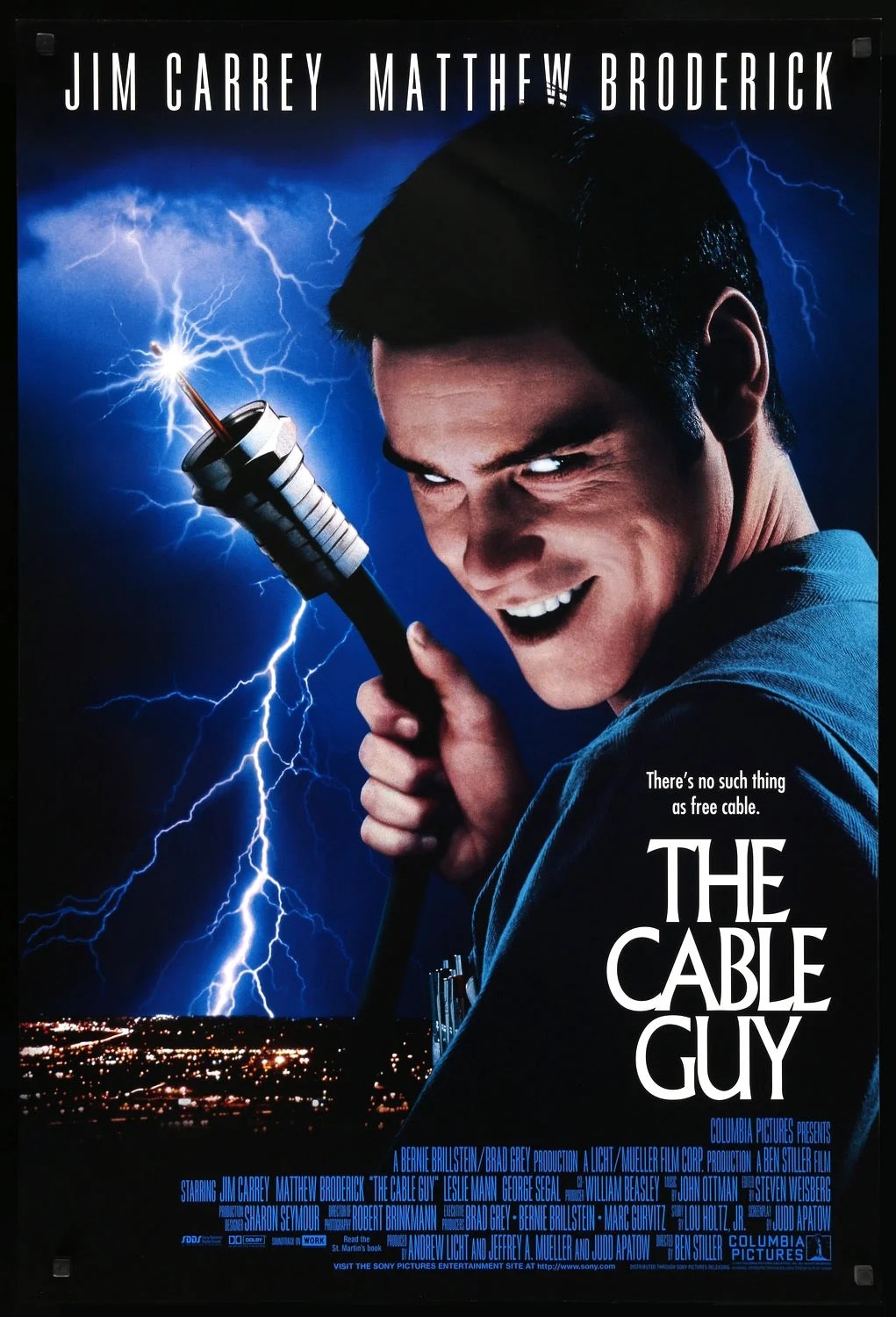
Few 1990s studio comedies are as awkwardly fascinating—or as misunderstood on arrival—as The Cable Guy. Directed by Ben Stiller and built around one of Jim Carrey’s most deliberately uncomfortable performances, it arrived at a strange point in Carrey’s career: he had become a massive box-office draw through films such as Ace Ventura: Pet Detective, The Mask, Dumb and Dumber, Batman Forever, and Ace Ventura: When Nature Calls. Audiences associated him with rubber-faced chaos, exuberant catchphrases, and a kind of manic but fundamentally likable comic energy. The Cable Guy offers something much colder. Carrey is still loud, physical, and wildly committed, but the movie twists those familiar traits into a portrait of loneliness, obsession, and emotional menace. It is a dark comedy about a man who has absorbed television culture so completely that he cannot form a normal human relationship without treating it like an episode of a sitcom.

That basic idea remains clever and surprisingly ahead of its time. Carrey plays Chip Douglas, a cable installer who enters the life of Steven Kovacs, played by Matthew Broderick, after Steven moves into a new apartment following a breakup with his girlfriend Robin, played by Leslie Mann. Steven wants cable television installed; Chip wants a best friend. What begins as awkward friendliness becomes invasive dependence, as Chip worms his way into Steven’s social circle, his professional life, and eventually his relationship with Robin. Chip is not simply a pest or an eccentric service worker. He is a lonely, emotionally stunted man whose references to television, movies, commercials, and game shows have become his entire vocabulary for intimacy.

The most interesting thing about The Cable Guy is that it understands television as both comfort and damage. Chip’s childhood was clearly shaped by neglect, with television functioning as his guardian, teacher, and surrogate parent. The movie makes this point broadly, sometimes too broadly, but it also gives the character a sad logic. Chip does not understand friendship as mutual connection; he understands it as a package deal. You meet someone, quote the same shows, hang out constantly, become inseparable, and live out the happy ending promised by popular entertainment. When Steven resists that fantasy, Chip does not know how to process rejection. His behavior turns increasingly controlling and vindictive because, in his mind, Steven has violated the rules of the relationship genre they are supposed to be playing.

In that respect, the film was well ahead of its time. In 1996, the idea of television becoming an all-encompassing babysitter for a generation of children was recognizable, but it still played largely as exaggerated satire. Chip represents the extreme result of a childhood where adults failed to provide stability, affection, supervision, and basic emotional guidance, leaving television to fill every role instead. He learned how to talk, how to joke, how to flirt, how to fight, and how to imagine friendship from whatever appeared on the screen. The tragedy is that media gave him endless information and endless imitation, but no real understanding of boundaries, empathy, or reciprocity.

That concern feels much less hypothetical today. Television did not disappear; it expanded into streaming libraries, on-demand movies, YouTube, social media feeds, online games, short-form video, and the constantly available internet. More children now grow up surrounded by screens that are not confined to a living-room television set or a few scheduled hours of programming. The old guardrails of limited channels, parental supervision around a shared TV, and the simple fact that a show ended at a certain time have weakened or, in many homes, disappeared altogether. The Cable Guy obviously does not predict every aspect of the internet age, but it does anticipate the emotional danger of allowing media to become a substitute for parenting, companionship, and healthy social development.

The film is careful enough to suggest that media alone did not create Chip. He is the product of abandonment first and television second. That distinction matters, because the movie is not arguing that children who watch too much television will inevitably become unstable stalkers. Rather, it suggests that screens can become especially powerful when they are used to fill an emotional void that should be addressed by family, community, and genuine relationships. Chip’s many references are funny at first because they are recognizable, but they become sadder as the movie reveals that he is not simply quoting pop culture for fun. He is quoting it because he has little else to draw from.

That makes the film more ambitious than its reputation as “the weird Jim Carrey movie” might suggest. The screenplay, by Lou Holtz Jr., has fun with media saturation, consumer culture, male insecurity, and the way people use technology to avoid direct emotional communication. The title itself now feels almost quaint, because cable installation hardly seems threatening in an age of smartphones, streaming services, social media surveillance, and algorithmic recommendation systems. Yet Chip’s obsession has only become more recognizable. He is essentially a proto-internet stalker, a man who treats access as entitlement. Because he can enter Steven’s home to connect his television service, he assumes he deserves access to Steven’s private life. The film exaggerates that premise for comic effect, but the underlying discomfort has aged well.

At the same time, The Cable Guy has a major problem, and it is inseparable from the reason the film exists: Jim Carrey. Casting Carrey was a commercial gamble meant to make a very dark premise accessible to a mainstream audience. In theory, it is an inspired decision. His brand of elastic, outsized comedy gives Chip a strange unpredictability; you never know whether he is going to make a ridiculous movie reference, belt out a sentimental song, physically humiliate himself, or suddenly become frightening. Carrey’s comic instincts make Chip memorable in a way that a more restrained actor likely would not have been. His version of the character is like an abandoned cartoon character who has somehow wandered into a real person’s life.

But the same performance often works against the movie. Carrey’s penchant for excessive facial expressions, exaggerated voices, and physical escalation overwhelms the subtler and more unsettling possibilities in the script. The film wants to be a satirical dark comedy, but it repeatedly gives itself over to big Jim Carrey bits. Some are undeniably funny, especially because Carrey commits to them with fearless energy, but they can make Chip feel less like a damaged human being and more like a delivery system for gags. The movie keeps shifting between “this man is dangerously unstable” and “look at Jim Carrey doing something weird,” and that unevenness prevents it from fully landing as either a truly disturbing character piece or a consistently hilarious farce.

The medieval-themed restaurant sequence is probably the clearest example of both the movie’s strengths and weaknesses. When Chip and Steven engage in an extended jousting and sword-fighting routine at Medieval Times, it is funny because it transforms a casual social outing into a ridiculous, testosterone-heavy spectacle. It also exposes the warped nature of their friendship: Chip is trying to force Steven into a grand, cinematic bonding ritual. Yet the scene is so broad and so committed to the escalating stunt comedy that it can feel detached from the film’s more interesting emotional undercurrents. It is memorable, certainly, but it is also the kind of scene that makes it easy to see why contemporary audiences may have expected another straightforward Carrey comedy rather than a satire with genuine bitterness beneath the jokes.

Broderick is important here because he provides the film’s necessary straight-man perspective. Steven is not a particularly dynamic protagonist, and that is partly the point. He is an ordinary, mildly selfish guy trying to rebuild his life after a breakup, which makes Chip’s intrusion feel even more invasive. Still, Broderick’s deliberately subdued performance can make Steven seem passive compared with the hurricane of Carrey’s performance. The movie needs Steven to be bland enough for Chip to project his fantasies onto him, but that choice also leaves the film with an imbalance: Chip is by far the most vivid person on screen, even when the story is asking us to see him as a nightmare.

Leslie Mann brings warmth and patience to Robin, while Jack Black, in an early supporting role as Steven’s friend Rick, adds a welcome jolt of weird energy without taking over the movie. The supporting cast understands the heightened tone, but Stiller’s direction occasionally pushes the material toward sketch-comedy exaggeration. That is not always a flaw; The Cable Guy is frequently inventive in its visual jokes, its television parodies, and its depictions of Chip turning every situation into a warped pop-culture performance. Still, the film is at its best when Stiller lets the strangeness breathe rather than constantly underlining it.

The movie’s lackluster initial reception makes sense in context. Audiences had been trained to see Carrey as a wildly energetic hero of broad studio comedies, not as a creepy, needy antagonist whose jokes often curdle into discomfort. The promotional challenge was enormous: sell The Cable Guy as a Jim Carrey movie, and viewers might expect another crowd-pleasing laugh machine; sell it honestly as a dark satire about loneliness and media dependency, and it becomes a much harder commercial proposition. Many viewers at the time seemed to reject it not because it lacked ideas, but because it did not give them the version of Jim Carrey they thought they were buying a ticket to see.

In the years since, however, the film has developed a deservedly large cult following. Distance has helped. Modern audiences are more accustomed to comedians making darker career turns, and the themes of mediated identity, parasocial attachment, isolation, and invasive access now feel much more relevant than they did in the mid-1990s. Carrey’s performance, once seen by many as abrasive or miscalculated, can now be appreciated as a risky attempt to weaponize his own comic persona. Chip is funny precisely because he is desperate to be liked, but he is also disturbing because his idea of being liked involves total possession.

The Cable Guy is not a perfect dark comedy. Its tone wobbles, its protagonist can feel underwritten, and Carrey’s larger-than-life antics sometimes obscure the sharper satire hiding underneath. Yet those flaws are also part of what makes it fascinating. It is a studio movie willing to be unpleasant, odd, and commercially confusing at the height of a superstar’s popularity. Rather than simply giving Jim Carrey another vehicle for his most familiar tricks, it turns those tricks into symptoms of a damaged man’s inability to connect. The result is uneven, but it is far more interesting than a safer 1996 Jim Carrey comedy would have been—and its cult status feels earned.

Previous Icarus Files:

  1. Cloud Atlas
  2. Maximum Overdrive
  3. Glass
  4. Captive State
  5. Mother!
  6. The Man Who Killed Don Quixote
  7. Last Days
  8. Plan 9 From Outer Space
  9. The Last Movie
  10. 88
  11. The Bonfire of the Vanities
  12. Birdemic
  13. Birdemic 2: The Resurrection 
  14. Last Exit To Brooklyn
  15. Glen or Glenda
  16. The Assassination of Trotsky
  17. Che!
  18. Brewster McCloud
  19. American Traitor: The Trial of Axis Sally
  20. Tough Guys Don’t Dance
  21. Reach Me
  22. Revolution
  23. The Last Tycoon
  24. Express to Terror 
  25. 1941
  26. The Teheran Incident
  27. Con Man
  28. Looker
  29. 1776
  30. Here
  31. The Adventures of Brisco County, Jr.
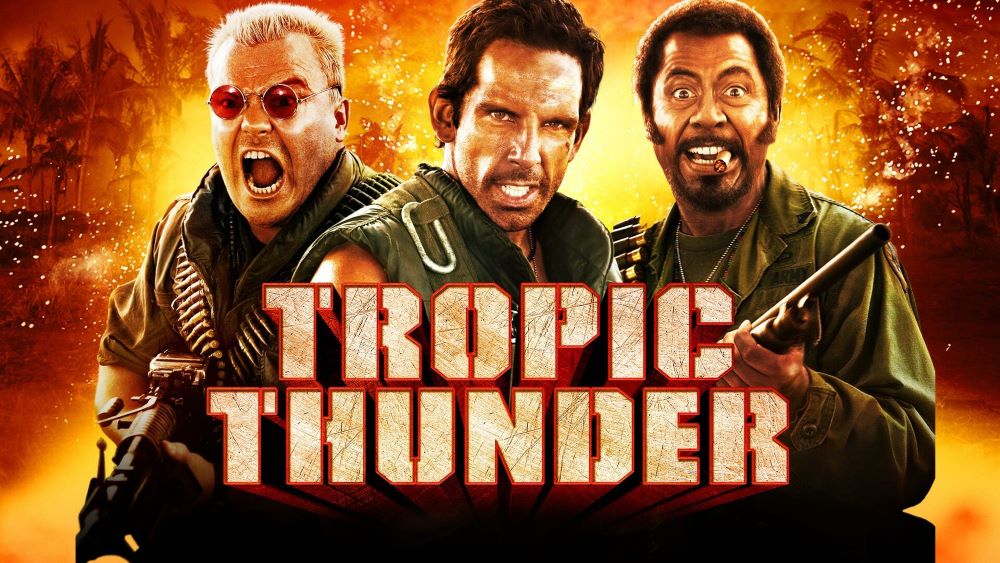
Review: Tropic Thunder (dir. by Ben Stiller)


“A nutless monkey can do your job.” — Les Grossman

Ben Stiller’s Tropic Thunder is a bold, chaotic comedy that dives headfirst into the wild world of Hollywood satire. The film, which Stiller directed, co-wrote, and starred in, feels like a high-energy roast of the movie industry itself, blending action, parody, and sharp commentary into one explosive package. The cast is stacked with familiar faces like Robert Downey Jr., Jack Black, Jay Baruchel, Brandon T. Jackson, and even Tom Cruise in a shockingly hilarious cameo, all committed to the film’s madcap, anything-goes spirit.

A distinctive touch that shows Tropic Thunder’s deep commitment to Hollywood satire is how it begins—not with a typical studio logo or title sequence—but with a series of fake movie trailers. These trailers parody different film genres and Hollywood clichés, setting an irreverent tone before the actual film even starts. The highlight is undoubtedly the “Oscar-bait” trailer for Satan’s Alley, a pitch-perfect send-up of self-serious, emotionally heavy dramas designed for awards season attention. By embedding these faux trailers, the film immerses viewers in its meta commentary and signals from the outset that it’s willing to mock and take apart the film industry at all levels.

This movie-within-a-movie begins with a group of egotistical actors trying to make a serious war film based on the fictional memoir of a Vietnam veteran. Their attempt at gritty realism falters under the weight of their own vanity and cluelessness, turning the set into a feverish comedy of errors. When the director dies and the actors are abandoned in a real jungle with actual dangers, the film blurs the lines between fantasy and reality, leading to a relentless cascade of absurd situations and insider jokes about Hollywood machinery.

Robert Downey Jr.’s portrayal of Kirk Lazarus, a method actor who undergoes extreme skin pigmentation surgery to play a Black character, is both provocative and hilarious. His performance skewers Hollywood’s past mistakes with race and casting, while his tense exchanges with Brandon T. Jackson’s Alpa Chino, who plays a genuinely Black rapper, provide sharp moments that balance discomfort with comedy. Downey Jr.’s “blackface” was a conscious satire of method acting and Hollywood egos, an attempt to ridicule extreme lengths actors go for acclaim rather than an endorsement of offensive practices. However, even at its release in 2008, it sparked conversations about the boundaries of comedy and racial sensitivity—an issue that would be even more controversial in 2025’s cultural climate.

Similarly, the film’s handling of ableist humor through the subplot of Simple Jack, a fictional movie starring Ben Stiller’s character as a person with intellectual disabilities, drew mixed reactions. While intended as a biting critique of Hollywood’s exploitation of disability for sympathy and awards, the portrayal nonetheless walked a tightrope that made some audience members uncomfortable. This nuanced but risky satire highlights how Tropic Thunder throws a wide net in exposing Hollywood’s many blind spots, yet its fearless approach also invites legitimate questions about respect and representation.

Jack Black delivers wild physical comedy as Jeff Portnoy, a drug-addled comedian losing control, offering a blend of slapstick and oddly sincere moments. Meanwhile, Tom Cruise steals the film with his iconic turn as Les Grossman, the balding, foul-mouthed studio exec whose explosive rants and dance moves have reached legendary status. Industry insiders often note that Grossman’s tempestuous persona seems inspired by real-life producer Scott Rudin, known for a similarly volatile temperament.

Much of the film’s humor targets Hollywood’s obsession with awards and ego, skewering Oscar-bait films, blockbuster excess, and ridiculous celebrity antics. The fake trailers highlight these themes, and Lazarus’s infamous line “Never go full retard, man!” takes aim at acting extremes motivated by prestige rather than authenticity. Stiller’s direction embraces loud, over-the-top action sequences that mimic classic Vietnam War movies but infuse them with cartoonish chaos, while the lush jungle serves as a satirical arena for exposing the actors’ incompetence.

While Tropic Thunder is gleefully offensive and hilarious, its treatment of race and disability sparked debate about where satire crosses lines. The film’s biting self-awareness and sharp commentary doesn’t always prevent discomfort, but it highlights the difficulty of balancing edgy humor with social consciousness in comedy. The film’s reception reveals how comedy evolves with cultural awareness; what passed as biting satire in 2008 would face even fiercer scrutiny in today’s more sensitive and politically aware environment.

From an entertainment standpoint, the movie delivers nonstop laughs, with rapid-fire jokes, strong chemistry among the cast, and sharp Hollywood references that keep fans engaged. Downey Jr.’s method acting antics, Black’s physical comedy, and Cruise’s outrageous studio boss combine into a relentless comedic assault. It’s not a film for those who prefer safe or sanitized humor, but for those who appreciate biting satire with reckless energy, it’s a must-watch.

Looking back, Tropic Thunder stands as a snapshot of a moment before social media and instantaneous backlash reshaped Hollywood comedy. Its controversial content might not get greenlit today, much like the boundary-pushers Blazing Saddles and Airplane! before it. Yet, as history shows, comedy will always find new ways to challenge sensibilities and push limits. Only time will tell what the next film is that dares to cross such lines again.

If you haven’t experienced Tropic Thunder, prepare for a relentlessly funny, sharply satirical comedy that skewers everything from celebrity egos to studio politics with savage wit and over-the-top energy.

I Re-Watched Anchorman (2005, Dir. by Adam McKay)


“Ron Burgundy was the balls.”

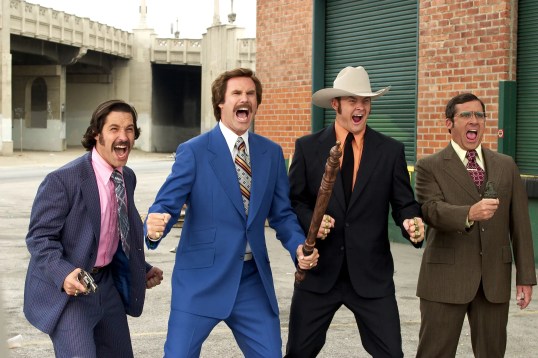
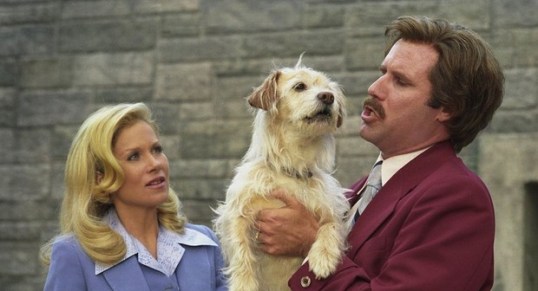
You got that right!  That’s one reason why I’ve lost track of the number of times that I’ve watched Anchorman.  Whatever’s going on in the world or my life, I know that Anchorman is going to make me laugh and make me feel better about things.  The adventures of anchorman Ron Burgundy (Will Ferrell) and his news team (Paul Rudd, David Koechner, Steve Carell) never cease to amuse me, whether they’re capturing the birth of a panda or getting involved in a street fight with their rival newsmen.

“Brick killed a guy.”

He did!  Where did Brick get a trident from?  When the street fight started, he only had a hand grenade.  Ron Burgundy suggests that Brick should find a safehouse and I hope Brick took his advice.  There’s a lot of funny people in Anchorman but Steve Carell, playing the weatherman with an IQ under 80, is my favorite.  Brick saying that he loves the lamp is so touching.

“Fare thee well, Baxter.  You shall always be a friend of the bears.”

The first time I saw Anchorman, I couldn’t believe it when Baxter was drop-kicked off that bridge.  I swore that I would never watch another movie featuring Jack Black!  Baxter was so cute!  When Ron broke down over the loss of his dog, I wanted to break down with him.  Later, when Baxter emerged from the river and barked, “I’m coming, Ron!,” I was so relieved.  Baxter lives!  Baxter’s conversation with the bears warmed my heart.

“Stay classy, San Diego.”

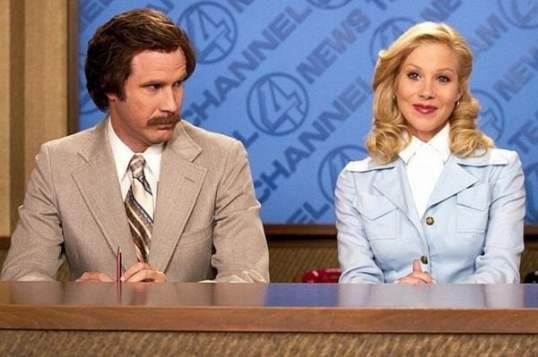
That’s right, San Diego!  Stay classy.  Anchorman is in a class all of its own.  Ron Burgundy makes beautiful music with his jazz flute.  Brian Fantana is a walking advertisement for Sex Panther.  Veronica Corningstone (Christine Applegate) strikes a blow for women’s liberation and teaches Ron an important lesson about teleprompters.  It’s the little moments that make me laugh the most, whether it’s Fred Willard talking to his son’s school about why his son has been expelled or Tim Robbins as the PBS anchor who smokes a pipe and chops off Luke Wilson’s arm or Vince Vaughn shouting about the ratings.  Best of all, Will Ferrell has never been better than as the pompous Ron Burgundy, so stupid but so committed to his job that you can’t help but love him.

“Wow, that really escalated.”

You bet it did, Ron!  Each moment of Anchorman is funnier than the last.  (I wish the same was true of Anchorman 2.)  That’s why Anchorman is a film that I watch and rewatch.  In fact, I think I’ll go watch it right now!

“Thanks for stopping by, San Diego.”

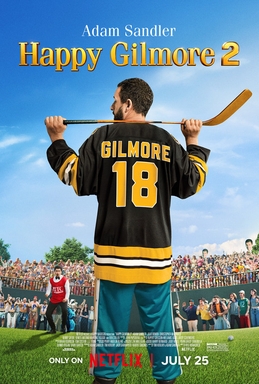
The Films of 2025: Happy Gilmore 2 (dir by Kyle Newacheck)


I love 1996’s Happy Gilmore and, over the past few months, I have very much been looking forward to the release of the long-delayed sequel, Happy Gilmore 2.  Still, I was a bit concerned when I opened the film on Netflix and discovered that the sequel had a nearly two-hour running time.  (The original clocked in at an efficient and fast-paced 90 minutes.)  Comedy is all about timing and, in general, shorter is funnier.  I know that Judd Apatow and Adam McKay might disagree with me on that but let’s be honest.  For all of the acclaim that it was met with, when was the last time you actually felt any desire to rewatch The King of Staten Island?  For that matter, if you have to pick between Anchorman or Anchorman 2, which are you going to pick?  The 90 minute original or the sequel that takes more than two hours to tell essentially the same story?

Having now watched the film, I can say that Happy Gilmore 2 does run a bit too long.  There are a few sequences that could have been trimmed without hurting the film.  I can also say that I thoroughly enjoyed the film.  I laughed more often than not.  It’s a funny film but it’s also a surprisingly touching one.

Taking place 29 years after the first film, Happy Gilmore 2 features an older and slightly more mature Happy.  It also features an older and slightly more mature Adam Sandler and, to its credit, the film acknowledges that.  It doesn’t try to convince us that Sandler and Gilmore are still the young hell-raisers that they once were.  (Happy’s Happy Place has changed considerably.)  I’ve often written that there are two Adam Sandlers.  There’s the youngish Sandler who made silly and often stupid films where he basically just hung out with his friends and didn’t seem to put much effort into anything.  That’s the Sandler who has won multiple Razzie awards.  And then there’s the older and wiser Adam Sandler, the sad-eyed character actor who gives sensitive performances as world-weary characters.  This is the Adam Sandler who seems to be overdue for an Oscar nomination.  If an alien came to Earth and only watched Adam Sandler’s serious films, they would probably think he was one our most-honored actors.  While Happy Gilmore 2 is definitely a comedy, it still features quite a bit more of the serious Sandler than I was expecting.

At the start of the movie, Happy is not in a happy place.  His grandmother has passed away.  His wife, Virginia, was killed by an errant tee shot.  He has four rambunctious sons and a daughter, Vienna (played by Sunny Sandler, who was so good in You Are So Not Invited To My Bat Mitzvah).  After Virginia’s death, Happy gave up golf.  He lost his money.  He lost his grandmother’s house.  Now, he’s working in a grocery store and he’s an almost forgotten figure.  He’s also an alcoholic, keeping bottles of liquor hidden around the house.  (A tiny liquor bottle is hidden in the cuckoo clock.)  And while this film is certainly not Uncut Gems or even The Meyerowitz Stories, Sandler still does a good job of capturing the reality of Happy’s depression.  There’s a true sense of melancholy running through the film’s first hour, as Happy returns to golf to try to make enough money to pay for Vienna to attend a prestigious dance academy.  The second hour, in which Happy leads a team of pro golfers against a team of “extreme” athletes is far more goofier but Happy’s love for his family is a theme that runs through the entire film.

Aging is the other theme that runs through the film.   Forced to play with three younger players (including Eric Andre and Margaret Qualley) at a local golf course, the rusty Happy grimaces when he hears one of them say, “Is he trying to do the Happy Gilmore swing?”  When Happy rejoins the PGA, he discovers that all of the younger players now hit the ball as hard as he used to.  An obnoxious tech bro (Benny Safdie) wants to start a new, extreme golf league, one that will “continue the revolution” that Happy started.  Happy finds himself defending traditional golf and it’s an acknowledgement that both Gilmore and Adam Sandler have grown up and have come to appreciate that not everything needs to change.  Sometimes, you just want to play a nice round of golf on a pretty course without having to deal with the sensory overload of the 2020s.

It’s a funny movie.  Even when he’s playing it straight, Sandler still knows how to deliver a funny line.  Ben Stiller returns as Hal L., who is now an addiction recovery specialist.  (His techniques include ordering people to wash his car.)  Christopher McDonald also returns as Shooter McGavin, having escaped from a mental asylum and now fighting, alongside Happy, to save the game that they both love.  As someone who always felt that Shooter kind of had every right to be upset during the first film, I was happy to see him get a bit of redemption.  Several professional golfers appear as themselves.  A running joke about Scottie Scheffler getting arrested and then forcing all of his cellmates to watch golf made me laugh a lot more than I was expecting it too.

The sequel is full of shout-outs to the first film.  A fight in a cemetery reveals that everyone who died during and after the first film just happens to have a gravestone and it was actually kind of a nice tribute.  (Even the “Get Me Out Of Here” Lady gets a headstone.)  It’s a sequel that truly appreciates and values the legacy and the fans of the first film.  It’s also a sequel that seems to truly love the game of golf, which is not necessarily something that could be said about the first film.

Happy Gilmore 2 is a worthy sequel, even if it is a bit long.  It made me laugh but, at the same time, it was hard not to be touched by the obvious love that Happy had for his family and that they had for him.  (It didn’t hurt that Happy’s daughter was played by Sandler’s daughter.)  In the first film, Happy played golf for his grandmother.  In the second film, he returns to the game for his daughter.  It’s all about family, as Adam Sandler’s unexpectedly heartfelt performance makes clear.

Scene I Love: Tom Cruise In Tropic Thunder


Today, the Shattered Lens wishes a happy 63rd birthday to one of the last remaining movie stars, Tom Cruise!

While it’s tempting to celebrate this day by sharing a scene from a film like Top Gun: Maverick or one of the Mission Impossible sequels or maybe even something like Magnolia, Jerry Maguire, Edge of Tomorrow, or Risky Business, I am going to go with a clip from 2008’s Tropic Thunder.  There’s a lot talent in this particular scene, with Bill Hader and Matthew McConaughey both giving good performances.  But, of course, the whole thing is dominated by Tom Cruise’s wonderfully demented performance as Les Grossman.

“We do not negotiate with terrorists!”

Retro Television Review: Miami Vice 4.2 “Amen …. Send Money”


Welcome to Retro Television Reviews, a feature where we review some of our favorite and least favorite shows of the past!  On Mondays, I will be reviewing Miami Vice, which ran on NBC from 1984 to 1989.  The entire show can be purchased on Prime!

This week, Miami Vice takes an unwelcome detour.

Episode 4.2 “Amen …. Send Money”

(Dir by James Quinn, originally aired on October 2nd, 1987)

This was pretty dumb.

Tubbs, working undercover, busts Leona Proverb (Anita Morris), who just happens to be the wife of Billy Bob Proverb (Brian Dennehy).  Billy Bob is a television preacher who continually asks his followers to send him cash so he can live the lifestyle that he says God wants him to live.  On paper, this sounds like a great role for Brian Dennehy but this episode’s script lets him (and, for that matter, everyone else in the cast) down.  Somehow, the fact that the guy is named Billy Bob Proverb is the least heavy-handed aspect of this episode.

Faye Nell (Jo Anderson), who is one of Billy Bob’s followers, calls Tubbs to the studio and says she has information on what the Proverbs are doing.  As soon as Tubbs shows up, Faye tosses herself on him, rips her dress, and starts to yell, “Rape!”  Tubbs finds himself being investigated by Internal Affairs while Faye claims that God told her to call Tubbs down to the studio and she even passes a lie detector test.

“I’m being set up by a preacher!” an angered Tubbs says but it turns out that Billy Bob Proverb is not the one behind all of Tubbs’s problems.  In fact, Billy Bob is actually sincere, in his own strange way.  Instead, the villain turns out to be another television preacher, Mason Mather (James Tolkan).  Mather has the ability to make himself go into a coma, which makes it difficult to arrest him.

Before I started watching this season, I read online that season 4 featured some of Miami Vice‘s worst episodes.  Amen …. Send Money feels almost like a parody of Miami Vice.  The episode itself is meant to be largely comedic and perhaps if this episode had centered on Switek and Zito instead of Crockett and Tubbs, it would have worked.  Unfortunately, the show killed off Zito last season so instead, it’s Crockett and Tubbs making odd jokes and rolling their eyes in shock.  The thing is, Miami Vice has — up until this episode — been a show about ruthless dealers and the futility of the War on the Drugs.  The thing that set Miami Vice apart from other 80s cop shows was that it was thematically dark, the endings were frequently unhappy, and Crockett and Tubbs were always the epitome of cool, no matter what happened.  This episode features cartoonish villains and a silly plot and both Crockett and Tubbs come across as being a little …. well, dorky.

(On the plus side, the show does continue its tradition of featuring future stars by giving Ben Stiller a small role as a con artist.)

Oh well.  Not every episode can be a great one.  Hopefully, next week will be an improvement.

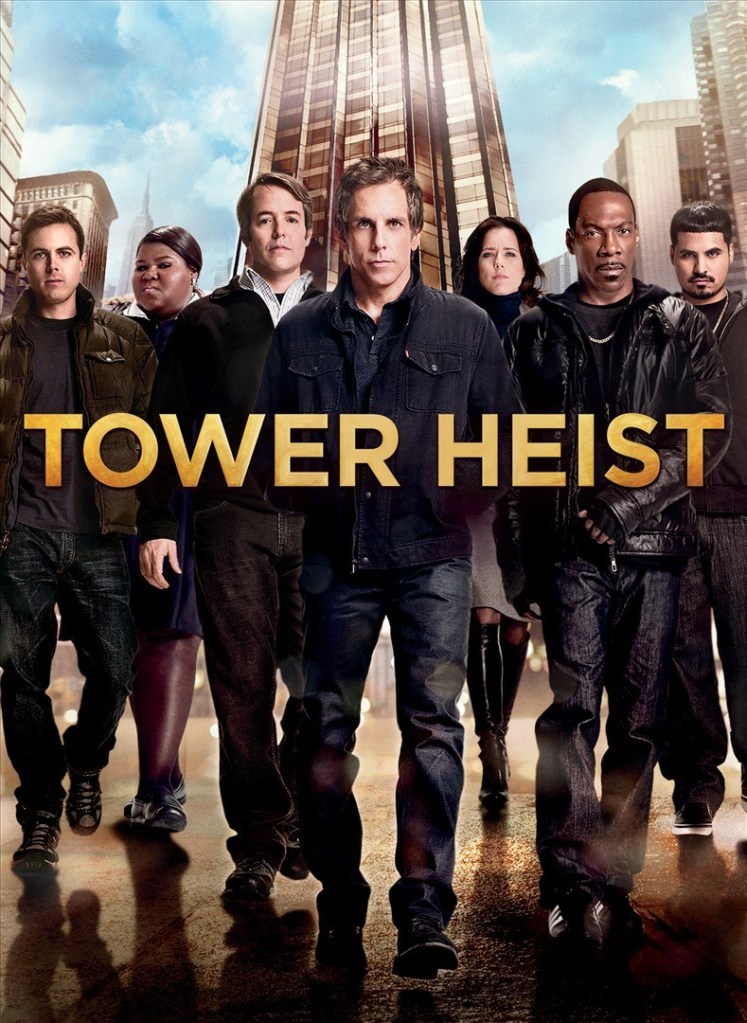
#MondayMuggers – Why TOWER HEIST?


Every Monday night at 9:00 Central Time, my wife Sierra and I host a “Live Movie Tweet” event on X using the hashtag #MondayMuggers. We rotate movie picks each week, and our tastes are quite different. Tonight, Monday November 25th, we’re watching TOWER HEIST starring Ben Stiller, Eddie Murphy, Casey Affleck, Alan Alda, and Matthew Broderick.

So why did Sierra pick TOWER HEIST, you might ask? It’s simple. It’s a Thanksgiving movie. The Macy’s Thanksgiving Day Parade is even used as a key part of the heist strategy! Sierra and I love the holidays and we’re getting in the spirit. We hope watching this movie will enhance your Thanksgiving week!

It’s on Amazon Prime, and we’ll be following along the theatrical edition (NOT the Extended Edition). Join us if you’d like!

Scene I Love: Tom Cruise Dances In Tropic Thunder


Today, the Shattered Lens wishes a happy 61st birthday to one of the last remaining movie stars, Tom Cruise!

While it’s tempting to celebrate this day by sharing a scene from a film like Top Gun: Maverick or one of the Mission Impossible sequels or maybe even something like Magnolia, Jerry Maguire, Edge of Tomorrow, or Risky Business, I am going to go with a clip from 2008’s Tropic Thunder.  There’s a lot talent in this particular scene, with Bill Hader and Matthew McConaughey both giving good performances.  But, of course, the whole thing is dominated by Tom Cruise’s wonderfully demented performance as Les Grossman.

“We do not negotiate with terrorists!”

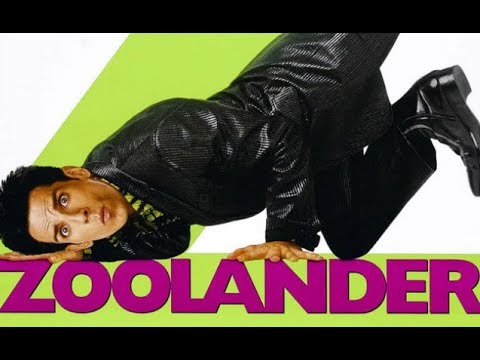
Live Tweet Alert: Join #FridayNightFlix for Zoolander!


As some of our regular readers undoubtedly know, I am involved in a few weekly live tweets on twitter.  I host #FridayNightFlix every Friday, I co-host #ScarySocial on Saturday, and I am one of the five hosts of #MondayActionMovie!  Every week, we get together.  We watch a movie.  We tweet our way through it.

Tonight, at 10 pm et and weather-permitting, I will be hosting #FridayNightFlix!  The movie? 2001’s Zoolander!

It may be freezing outside but #FridayNightFlix will be keeping things hot with Ben Stiller, Owen Wilson, and Will Ferrell!

If you want to join us this Friday, just hop onto twitter, start the movie at 10 pm et, and use the #FridayNightFlix hashtag!  I’ll be there tweeting and I imagine some other members of the TSL Crew will be there as well.  It’s a friendly group and welcoming of newcomers so don’t be shy.

Zoolander is available on Prime and Paramount!  See you there!

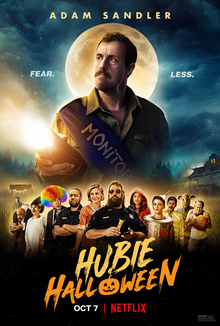
Horror(-ish) Film Review: Hubie Halloween (dir by Steven Brill)


“Oh my God!” I said as I looked at what was new on Netflix, “A Halloween movie starring the guy from Uncut Gems!?  THIS IS GOING TO BE INTENSE!”

Of course, as I’m sure you already guessed, Hubie Halloween might as well be taking place in a totally different universe from Uncut Gems.  Uncut Gems was an intense drama that starred Adam Sandler as a man so self-destructive that he literally seems to spend the entire movie just daring death to reach out and take him.  Hubie Halloween, on the other hand, is fairly laid back comedy featuring Adam Sandler playing yet another well-meaning manchild.  The film features supporting performances from all the usual Happy Madison suspects, like Kevin James, Rob Schneider, Steve Buscemi, Tim Meadows, Ben Stiller, Maya Rudolph, Keenan Thompson, and Colin Quinn.  It’s sentimental and it’s about thirty minute too long and the humor is often juvenile but also frequently funny.

Adam Sandler plays Hubie, who lives in Salem, Massachusetts with his mother (June Squibb).  Hubie is the town eccentric, the type of guy who thinks that he’s protecting the entire town but who mostly just gets on everyone’s nerves.  A lot of people make fun of Hubie (who they call Pubie).  Pete Landolfa (Ray Liotta) may be mourning the recent death of his father but he still finds time to toss Hubie into an open grave.  Not even Father Dave (Michael Chiklis) has much sympathy for Hubie.  Hubie is the type of guy who goes down to the local school to give a speech on Halloween safety, just for the students (and teachers) to respond by throwing all of their food at him.

One of the few people who is nice to Hubie is his new neighbor, Walter Lambert (Steve Buscemi).  However, Hubie suspects that Walter might be a werewolf and when people start to disappear over the course of Halloween, Hubie suspects that Walter’s responsible.  Meanwhile, the police (represented by a heavily bearded Kevin James) thinks that it might be Hubie, seeing as how everyone who has disappeared is also someone who has bullied him.

Then again, Richie Hartman (Rob Schneider) has just escaped from the local mental institution.  Could he possibly have something to do with the mysterious happenings in Salem!?

When Adam Sandler won his Indie Spirit Award for Uncut Gems, he infamously announced that, if he didn’t get an Oscar nomination, he would get back at the Academy by making the worst film of all time.  Well, Sandler was snubbed the Academy.  (Though Sandler deserved that nomination — and probably nominations for The Meyerowtiz Stories, Funny People, and Punch-Drunk Love as well — it’s pretty obvious that the Academy is never going to nominate the star of That’s My Boy and Jack and Jill.)  However, Hubie Halloween is certainly not the worst film ever made.  It’s actually a rather likable and sweet-natured comedy, one in which the humor is definitely juvenile but, in contrast to some of the other Happy Madison comedies, never really mean-spirited.  In many ways, it’s a perfect Netflix film.  It’s good enough to keep you entertained while, at the same time, you don’t necessarily have to really pay attention to every minute of the film to get it.  It’s the epitome of the type of film that you can watch while doing something else.

One of the main complaints that’s always lodged against Sandler is that he primarily just makes movies so that he can hang out with his friends and get paid for it.  There’s a certain amount of truth to that statement and that, more than anything, explains why Sandler’s filmography tends to be so frustratingly uneven.  The cast of Hubie Halloween looks like they had a lot of fun making it.  Fortunately, in this case, that sense of fun actually translates onto the screen.  Steve Buscemi, June Squibb, and particularly Ray Liotta all seem to be having a ball getting to parody their own dramatic images.

Admittedly, Hubie Halloween is not a film that sticks with you.  It won’t make you laugh as much as Happy Gilmore and it won’t leave you stunned like Uncut Gems.  But, for what it is, it’s just likable enough to be entertaining.