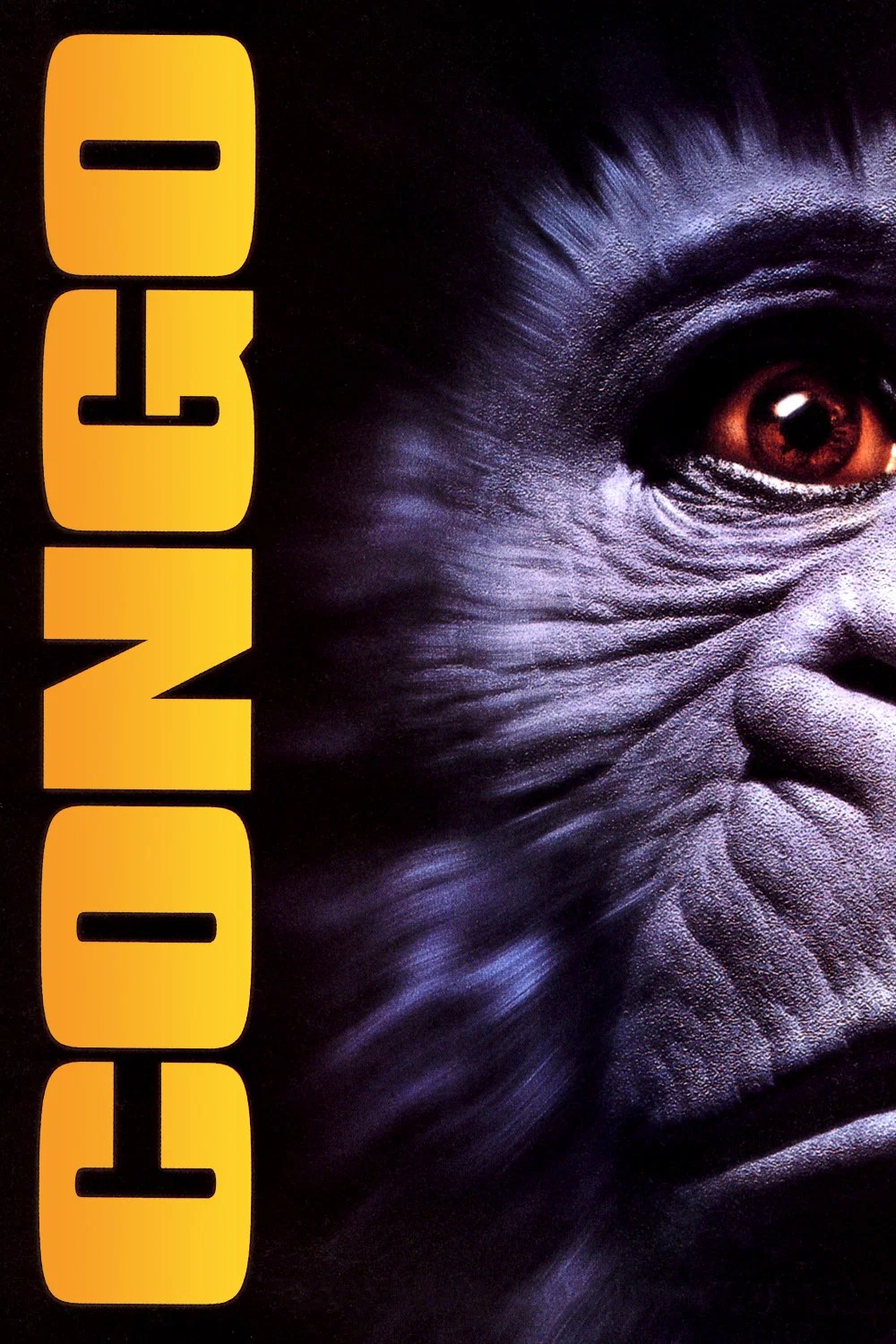
Guilty Pleasure No. 129: Congo (dir. by Frank Marshall)


Congo is the kind of movie that makes perfect sense as a guilty pleasure because it is always hovering just above the level of complete nonsense, yet it has enough energy and conviction to remain enormously watchable. Directed by Frank Marshall, the 1995 film turns Michael Crichton’s jungle-thriller premise into a sprawling mixture of monster movie, treasure hunt, corporate conspiracy, technological anxiety, and old-fashioned adventure serial. It is loud, messy, often ridiculous, and loaded with moments that should not work at all. But that is the pleasure of Congo: it commits so completely to its bizarre material that the movie becomes difficult to dislike.

The setup is wonderfully overstuffed. A corporate expedition disappears while searching for a legendary diamond mine in the Congo, apparently after encountering some mysterious, deadly force. At the same time, primatologist Peter Elliot is preparing to return Amy, a gorilla he has raised and taught sign language, to the wild. Amy has recurring dreams—or perhaps memories—of a strange jungle city, and she communicates through a glove that translates her signs into a robotic voice. Before long, Peter, Amy, corporate representative Karen Ross, Romanian explorer Herkermer Homolka, and a mercenary guide named Captain Munro Kelly are all headed toward the same lost city, where diamonds, ancient ruins, and murderous white gorillas await.

That synopsis alone explains why Congo has developed such a devoted guilty-pleasure reputation. It is a movie where satellites, laser weapons, genetically engineered guard apes, corporate greed, sign-language research, volcanoes, and ancient African mythology all exist in the same story without anyone pausing to question the sheer overload of it. The movie treats every development with sincere urgency, even when the audience is watching Amy the gorilla say “Amy good gorilla” through a computerized voice device. It is impossible not to admire the confidence. Congo never winks at the audience, never admits that its premise is wild, and never cuts itself down to a more manageable size. It simply keeps adding more adventure-movie ingredients until the whole thing becomes strangely hypnotic.

Laura Linney’s Karen Ross and Dylan Walsh’s Peter Elliot are meant to anchor all of that craziness, but they are also among the film’s blandest elements. Linney is a talented actress, and she brings a professional focus to Karen’s corporate mission, but the character is written in such functional terms that she rarely feels like more than the person carrying the plot’s technological and business-related exposition. Karen is competent, determined, and occasionally vulnerable, but she never develops a particularly distinctive personality. Linney plays her with a seriousness that fits the film’s overall tone, yet that seriousness can make her feel oddly distant. She is there to make sure the satellite plot, the diamond plot, and the rescue plot keep moving, rather than to provide much spark on her own.

Walsh has an even tougher assignment as Peter. He is essentially the emotional center of Amy’s story, and the film needs the audience to believe in his paternal, almost codependent relationship with her. But Peter is such a mild, generic protagonist that he often gets swallowed by the movie’s more eccentric ideas. Walsh is not bad, exactly; he is simply too subdued for a film filled with volcanic eruptions, killer gorillas, and Tim Curry speaking every line as though he is announcing the end of civilization. His performance has a sincere gentleness that helps the scenes with Amy, but it also makes him feel like he wandered in from a quieter, more conventional family adventure. When the movie becomes bigger and stranger, Peter’s personality does not expand with it.

That blandness becomes especially noticeable because Ernie Hudson and Tim Curry are having such an obviously fantastic time in their roles. Hudson plays Captain Munro Kelly with the relaxed confidence of someone who knows he is the coolest person in the room. Munro is a professional guide, a fighter, a pilot, and a survivor, but Hudson does not turn him into a grim action-movie cliché. He gives the character humor, charisma, and a reassuring calm under pressure. Whenever the group faces another disaster—whether it is hostile terrain, dangerous animals, mercenaries, or the increasingly unhinged situation inside the lost city—Hudson makes Munro feel like the one person who might actually know what he is doing.

Hudson’s performance also gives Congo a sense of fun that the central characters sometimes lack. He has an easy screen presence, and he seems to understand that the film works best when it leans into the pleasures of a grand, pulpy adventure. Munro is not a particularly deep character, but Hudson makes him memorable through timing, attitude, and sheer likability. The movie becomes livelier whenever he takes charge, whether he is negotiating with people in the field or calmly reacting to another completely absurd revelation. If Karen and Peter are the story’s functional leads, Munro is the character who gives the audience someone to enjoy following.

Then there is Tim Curry as Herkermer Homolka, who delivers what can only be described as a masterclass in hammy, scenery-chewing entertainment. Curry does not merely play Homolka; he devours the role with a kind of operatic enthusiasm. Every line is delivered in his grand Romanian accent with the force of a proclamation, and every gesture suggests that Homolka believes he is the hero of the greatest expedition in history. Curry appears to be enjoying himself so much that it becomes infectious. He is not interested in realism, restraint, or subtle characterization. He is there to make every scene larger, louder, and more theatrical.

Homolka is already a ridiculous figure on the page: a pompous explorer with a famous family name, an exaggerated ego, and a dramatic flair that makes him seem less like a real adventurer than a flamboyant villain from a lost serial. Curry recognizes that the only correct way to play him is at maximum volume. His performance turns every bit of dialogue into an event. He gives the impression that he has spent years preparing speeches for this exact jungle expedition, waiting for the chance to announce his discoveries to the world. Even when Homolka is making selfish or foolish decisions, Curry makes him too entertaining to hate.

The contrast between Curry and the more restrained leads is one of the reasons Congo feels so odd. Linney and Walsh approach the material with a level of seriousness that suggests they are trying to preserve some emotional credibility. Hudson and Curry, by contrast, seem to recognize that credibility is not really the point. Hudson brings a cool, knowing charm, while Curry turns the movie into a one-man theatrical spectacle whenever he appears. Neither approach is necessarily wrong, but the difference creates a tonal imbalance. The film’s heroes feel flat because its supporting players are so much more alive.

The killer gorillas, of course, are another major source of the film’s guilty-pleasure appeal. These are not normal gorillas defending their territory. They are pale, vicious creatures bred to protect the diamond city of Zinj, and they attack with the exaggerated menace of monsters in a haunted-house ride. The effects have not aged gracefully. The suits and animatronics are visible, the movements can be stiff, and the creatures are often more amusing than frightening. Yet they remain memorable because the movie gives them a distinct, nightmarish look: white fur, glowing eyes, sharp teeth, and sudden appearances from dark corridors or jungle fog.

Frank Marshall directs the action with enough pace and polish to keep Congo from collapsing under the weight of its own silliness. The jungle setting, the ruined city, the expedition equipment, the satellite imagery, and the volcanic finale all give the movie a bigger sense of scale than its reputation might suggest. It feels like a genuine studio blockbuster from a time when Hollywood would spend serious money on an unapologetically strange idea. The film is not elegant, and it is certainly not believable, but it is never boring for long.

As a conventional adventure movie, Congo is uneven. Its African setting is often treated as a vague, dangerous backdrop, and its plot is overloaded with enough corporate jargon and techno-babble to distract from the more entertaining monster-movie material. But as a guilty pleasure, it is hard to beat. The movie is too bizarre to be generic and too sincere to feel cynical. Laura Linney and Dylan Walsh may be stuck playing bland characters at the center of the chaos, but Ernie Hudson and especially Tim Curry make the journey worth taking. Curry’s performance alone is a treasure: a joyous, magnificent display of overacting that turns Congo from a merely strange blockbuster into something genuinely unforgettable.

Previous Guilty Pleasures

  1. Half-Baked
  2. Save The Last Dance
  3. Every Rose Has Its Thorns
  4. The Jeremy Kyle Show
  5. Invasion USA
  6. The Golden Child
  7. Final Destination 2
  8. Paparazzi
  9. The Principal
  10. The Substitute
  11. Terror In The Family
  12. Pandorum
  13. Lambada
  14. Fear
  15. Cocktail
  16. Keep Off The Grass
  17. Girls, Girls, Girls
  18. Class
  19. Tart
  20. King Kong vs. Godzilla
  21. Hawk the Slayer
  22. Battle Beyond the Stars
  23. Meridian
  24. Walk of Shame
  25. From Justin To Kelly
  26. Project Greenlight
  27. Sex Decoy: Love Stings
  28. Swimfan
  29. On the Line
  30. Wolfen
  31. Hail Caesar!
  32. It’s So Cold In The D
  33. In the Mix
  34. Healed By Grace
  35. Valley of the Dolls
  36. The Legend of Billie Jean
  37. Death Wish
  38. Shipping Wars
  39. Ghost Whisperer
  40. Parking Wars
  41. The Dead Are After Me
  42. Harper’s Island
  43. The Resurrection of Gavin Stone
  44. Paranormal State
  45. Utopia
  46. Bar Rescue
  47. The Powers of Matthew Star
  48. Spiker
  49. Heavenly Bodies
  50. Maid in Manhattan
  51. Rage and Honor
  52. Saved By The Bell 3. 21 “No Hope With Dope”
  53. Happy Gilmore
  54. Solarbabies
  55. The Dawn of Correction
  56. Once You Understand
  57. The Voyeurs 
  58. Robot Jox
  59. Teen Wolf
  60. The Running Man
  61. Double Dragon
  62. Backtrack
  63. Julie and Jack
  64. Karate Warrior
  65. Invaders From Mars
  66. Cloverfield
  67. Aerobicide 
  68. Blood Harvest
  69. Shocking Dark
  70. Face The Truth
  71. Submerged
  72. The Canyons
  73. Days of Thunder
  74. Van Helsing
  75. The Night Comes for Us
  76. Code of Silence
  77. Captain Ron
  78. Armageddon
  79. Kate’s Secret
  80. Point Break
  81. The Replacements
  82. The Shadow
  83. Meteor
  84. Last Action Hero
  85. Attack of the Killer Tomatoes
  86. The Horror at 37,000 Feet
  87. The ‘Burbs
  88. Lifeforce
  89. Highschool of the Dead
  90. Ice Station Zebra
  91. No One Lives
  92. Brewster’s Millions
  93. Porky’s
  94. Revenge of the Nerds
  95. The Delta Force
  96. The Hidden
  97. Roller Boogie
  98. Raw Deal
  99. Death Merchant Series
  100. Ski Patrol
  101. The Executioner Series
  102. The Destroyer Series
  103. Private Teacher
  104. The Parker Series
  105. Ramba
  106. The Troubles of Janice
  107. Ironwood
  108. Interspecies Reviewers
  109. SST — Death Flight
  110. Undercover Brother
  111. Out for Justice
  112. Food Wars!
  113. Cherry
  114. Death Race
  115. The Beast Within
  116. Girl Series
  117. Gone in 60 Seconds
  118. Swordfish
  119. Marked For Death
  120. The Internship
  121. The Angry Red Planet
  122. 2012
  123. Old School
  124. No Escape
  125. In Death Series
  126. Alligator
  127. Little Annie Fanny
  128. Wicked Wanda

Review: Legend (dir. by Ridley Scott)


“What is light without dark? What are you without me? I am a part of you all. You can never defeat me. We are brothers eternal!” — Darkness

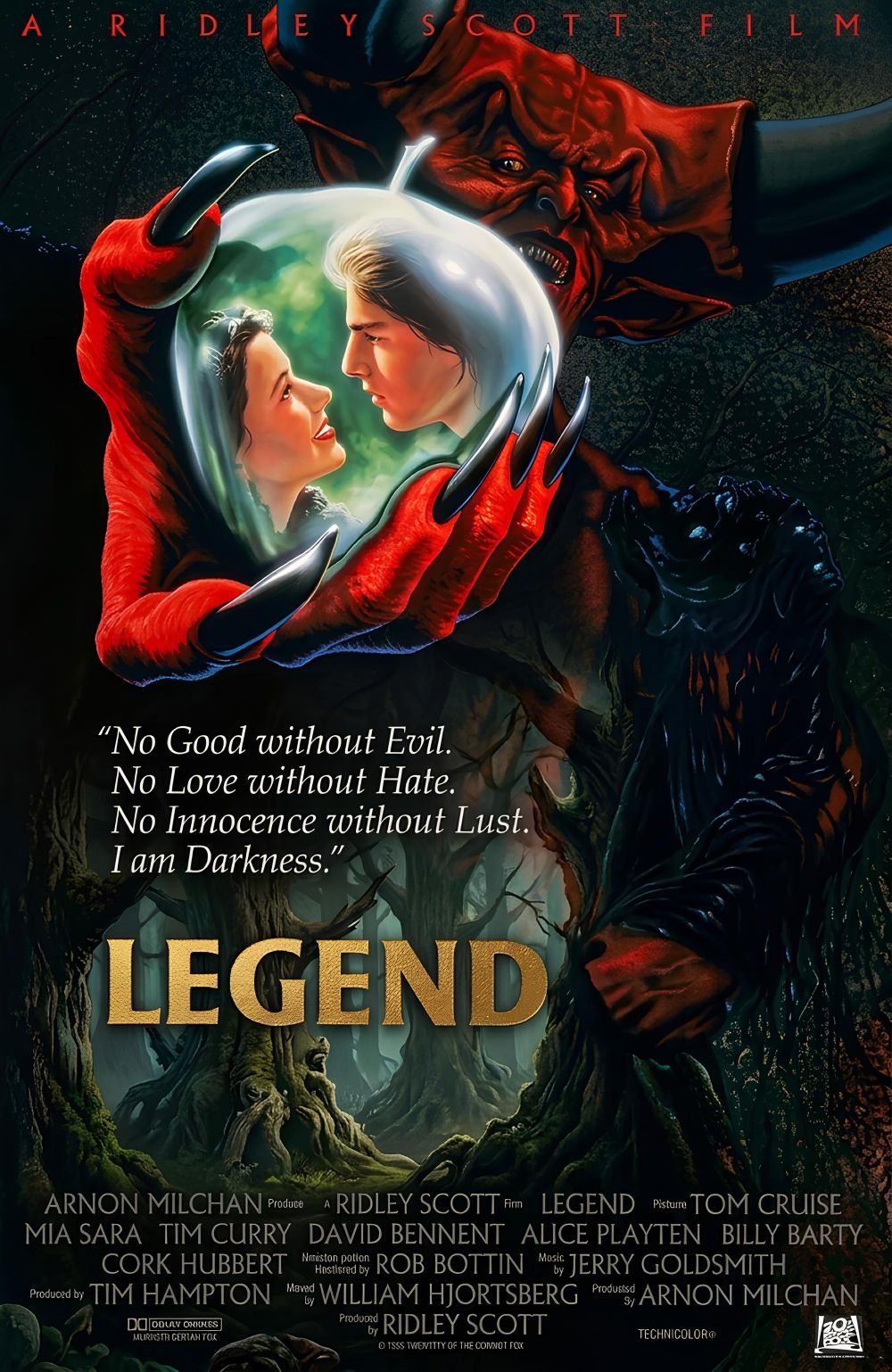
Legend is one of those films that feels like it should be a masterpiece even before it begins. It has Ridley Scott behind the camera, an extravagant fantasy premise, elaborate practical effects, striking production design, and a cast that includes a young Tom Cruise, Mia Sara, and Tim Curry. Released in 1985, the film arrived as a dark fantasy event that had been heavily anticipated, especially because Scott had already earned a reputation for visually stunning films. Alien and Blade Runner had established him as a director who could make entire worlds feel tactile, mysterious, and overwhelming. The idea of Scott applying that sensibility to unicorns, goblins, forest sprites, demonic lords, and fairy-tale mythology was exciting on paper. Unfortunately, while Legend is often gorgeous to look at, it becomes an uneven mess that is only saved from becoming a major disappointment by Tim Curry’s performance as Darkness.

The setup is familiar enough to sound almost deliberately archetypal. In a magical forest, Jack, played by Cruise, is a woodland boy who lives in harmony with nature and has fallen in love with the innocent Princess Lili, played by Sara. The world’s balance is tied to a pair of unicorns, embodiments of purity and light. Darkness, a devil-like ruler who wishes to plunge the world into permanent night, sends his goblin servants to kill the unicorns and take one of their horns. Lili’s fascination with the unicorns sets the tragedy in motion, and once one of the creatures is slain, winter and darkness descend upon the land. Jack must rescue Lili, restore the horn, defeat Darkness, and return light to the world.

There is nothing inherently wrong with a simple fairy-tale plot. In fact, Scott’s strongest instinct in Legend is treating fantasy with a sense of visual seriousness. The forest does not look like a clean studio set built for children; it looks damp, overgrown, foggy, and vaguely dangerous. The trees loom like ancient creatures, shafts of light break through the branches in painterly bursts, and even the beautiful areas of the film carry an eerie quality. Scott and cinematographer Alex Thomson create images that often resemble illustrated storybooks poisoned by a nightmare. The film’s environments are its greatest achievement. Whether it is the glowing forest, the icy wasteland after the unicorn’s death, or Darkness’ fire-lit underworld, Legend makes a serious effort to create a fully realized fantasy space rather than simply dressing actors in costumes and placing them in generic medieval scenery.

That visual commitment is why the film remains so fascinating despite its flaws. You can pause almost anywhere and find something worth admiring: a strange creature in the background, smoke drifting through a cavern, an enormous set textured with roots and stone, or a costume that looks handmade rather than mass-produced. Scott’s eye for atmosphere is undeniable. The film has an unusual physicality, too. Its magic is created through prosthetics, makeup, puppetry, matte work, and elaborate sets, so even when some effects have aged, they retain a handmade charm. Modern fantasy often has the advantage of digital flexibility, but Legend has the kind of tactile design that makes its world feel like it has dirt under its fingernails.

Still, visual beauty cannot completely compensate for a story that never finds a consistent rhythm. Legend often feels less like a fully developed narrative than a collection of spectacular images and half-formed fairy-tale ideas. Characters appear with little introduction, emotional shifts happen abruptly, and major story developments can feel rushed or strangely underexplained. The theatrical cut in particular carries the sense that important connective material has been removed. There are moments when the movie seems to expect emotional investment simply because the images are grand or the music swells, but the script has not done enough to earn that reaction.

Jack is also an unusually bland hero for a film that needs a strong center. Cruise was still early in his career, and there are flashes of the screen presence that would soon make him a major star. He is physically committed and looks believable racing through forests, climbing ruins, and confronting danger. But Jack is written as a generic pure-hearted fantasy protagonist, and Cruise never gets enough material to make him feel specific. He is brave because the story says he is brave, romantic because the story says he loves Lili, and destined to save the world because that is what these stories require. He does not have much inner conflict beyond the expected guilt and determination.

Lili is similarly underwritten, although Mia Sara does bring a dreamy, otherworldly quality to the role. The film wants her to embody innocence, temptation, and romantic idealism, but it does not give her much agency until she becomes corrupted by Darkness’ influence. Her transformation into a dark bride is visually memorable, especially in the elaborate black gown and makeup, but it also highlights the film’s habit of prioritizing imagery over character. The sequence is beautiful, eerie, and loaded with gothic fantasy appeal, yet Lili’s emotional journey into that role feels more decorative than dramatically convincing.

The supporting characters are more colorful but not always more useful. The dwarfs, elves, and forest companions give the story occasional energy, particularly the sarcastic fairy Oona and the armored dwarf Gump. Yet their presence can make the film feel tonally scattered. Sometimes Legend wants to be haunting and mythic; sometimes it wants broad comic relief; sometimes it drifts toward romantic melodrama. Those modes do not always blend. The result is a movie that can move from an ominous demonic ritual to a goofy side-character exchange without establishing a stable tone.

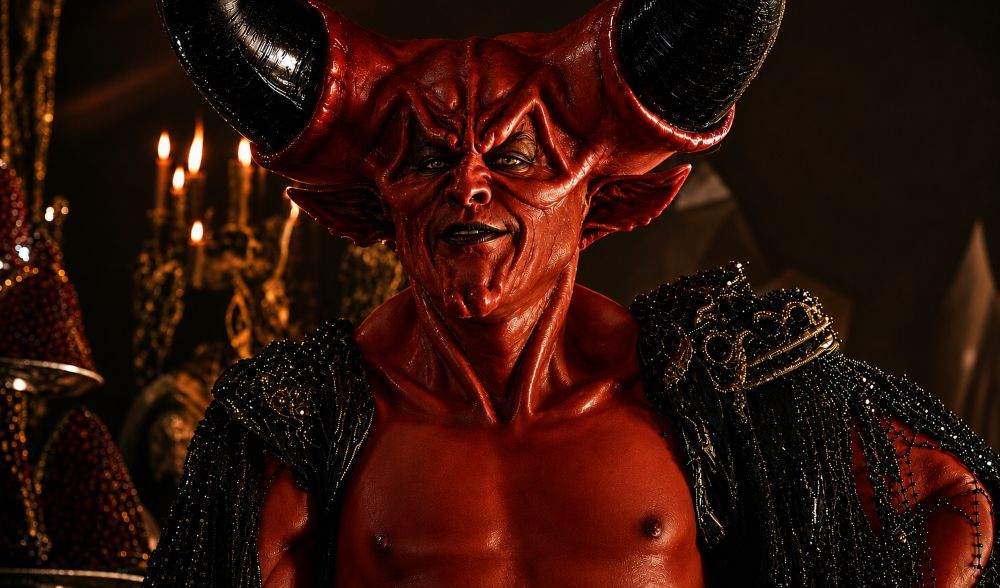
Then there is Tim Curry, who walks into the movie and immediately makes every other problem less important. His Darkness is one of the most iconic fantasy villains ever put on screen, and it is not difficult to understand why. The makeup design alone is astounding: massive horns, red skin, cloven hooves, muscular proportions, and a towering silhouette that makes him look like a medieval illustration of Satan brought to life. But the design would be nothing without Curry’s performance. He does not merely hide beneath the prosthetics; he gives Darkness a voice, posture, and seductive intelligence.

Curry plays Darkness as both monstrous and theatrical. His deep, measured delivery turns lines about night, desire, and evil into something genuinely alluring. He understands that the character should not simply roar or sneer. Darkness is persuasive. He offers Lili beauty, power, and escape from innocence, which makes him more interesting than a villain who only threatens destruction. His scenes with Sara have a strange, almost operatic energy, mixing horror, seduction, and camp in a way that fits the film’s most ambitious visual impulses. Curry makes Darkness feel ancient, vain, cruel, romantic, and weirdly funny all at once. He gives Legend its pulse.

The famous confrontation between Jack and Darkness should be the film’s crowning achievement, and visually it almost is. Darkness’ lair, lit by flames and surrounded by infernal architecture, gives Scott room to indulge his talent for monumental images. Curry’s villain towers over Cruise, making the hero look small and vulnerable. Yet even here, the fight is more memorable for its atmosphere than its dramatic construction. It is a good example of the whole film: rich in aesthetic invention, less persuasive as storytelling.

The music also reflects the movie’s fractured identity. Different versions of Legend are associated with different scores, most notably the Jerry Goldsmith score and the Tangerine Dream soundtrack used in the American theatrical release. The Goldsmith material feels more classically mythic and orchestral, while Tangerine Dream’s electronic music gives the film a distinctly 1980s dream-pop atmosphere. Both have their supporters, and both alter the experience considerably. That split feels appropriate for a movie that has always existed in multiple forms and competing moods. Legend is never quite one thing.

In the end, Legend is a flawed cult fantasy rather than a lost masterpiece. Its reputation rests largely on its imagery, its practical craftsmanship, and Curry’s towering performance, not on the strength of its plot or its emotional depth. Ridley Scott clearly wanted to make a dark fairy tale that felt ancient and sensual, but the finished film too often gets trapped between mythic grandeur, children’s fantasy, gothic romance, and broad adventure comedy. It is an uneven mess, but it is a beautiful one. And every time Tim Curry’s Darkness enters the frame, Legend briefly becomes the extraordinary film it was always trying to be.

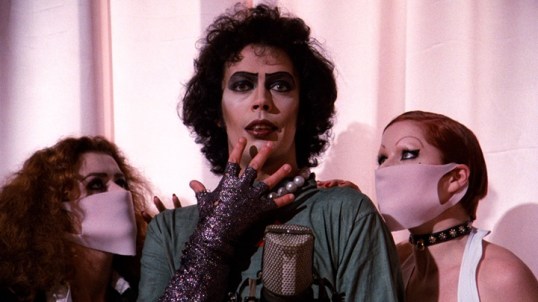
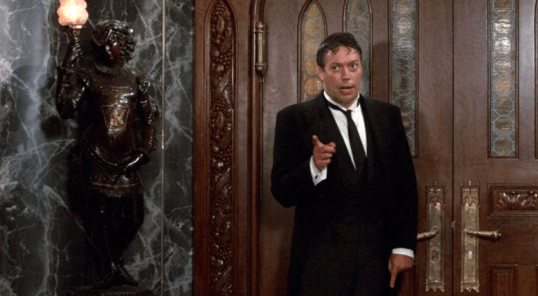
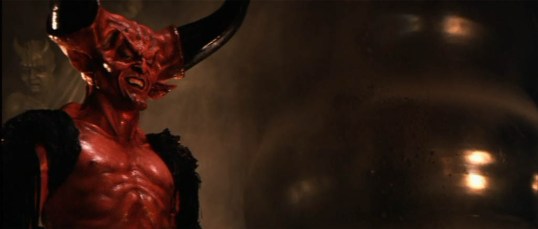
4 Shots From 4 Films: Special Tim Curry Edition


4 Or More Shots From 4 Or More Films is just what it says it is, 4 shots from 4 of our favorite films. As opposed to the reviews and recaps that we usually post, 4 Shots From 4 Films lets the visuals do the talking!

Rest in Peace, Mr. Tim Curry.

4 Shots From 4 Tim Curry Films

The Rocky Horror Picture Show (1975, dir by Jim Sharman)

Clue (1985, dir by Jonathan Lynn)

Legend (1985, dir by Ridley Scott)

It (1990, dir by Tommy Lee Wallace)

Villain of the Day: Darkness (Legend)


“Dreams are my specialty. Through dreams I influence mankind. My dream is of eternity… with you.” — Darkness

In the hall of fame cinematic evil, few figures loom as large—both literally and figuratively—as Darkness, the demonic antagonist of Ridley Scott’s 1985 fantasy film Legend. While the film itself is a flawed, sumptuous fever dream of unicorns, goblins, and saccharine innocence, its enduring legacy rests squarely on the cloven shoulders of its primary antagonist. Darkness is not merely a monster or a plot obstacle; he is the philosophical and aesthetic center of the film, a being of pure, conscious malevolence who articulates the seductive logic of eternal night. Yet, for all his cosmic horror, he remains a surprisingly relatable figure, a tyrant who exudes weary boredom and theatrical pique. This complexity is entirely the work of Tim Curry, whose performance elevates what could have been a one-note bogeyman into one of the most flamboyant, charismatic, and unforgettable devils ever committed to celluloid.

Tim Curry’s physical transformation into the Lord of Darkness is, in itself, a masterclass in prosthetic commitment, but it is his performance beneath the latex that breathes terrifying life into the horns. Under layers of crimson makeup, sculpted muscle, and ram-like horns, Curry’s most potent weapon is his voice—a resonating, purring baritone that slithers between a seductive whisper and a thunderous roar. He delivers dialogue like a Shakespearean actor chewing rich, decadent scenery, imbuing lines about “the glory of the night” with a sensual, almost poetic conviction. Yet, Curry never lets the grandeur become ponderous. He injects a wicked, knowing levity into the role, a mischievous twinkle in his prosthetic-lidded eyes that suggests the Devil is not just evil, but is having a genuinely good time being so. This is the Tim Curry “sass” in full effect: a raised eyebrow, a sarcastic drawl, and a contemptuous flick of his clawed hand that makes his Darkness feel less like an ancient, faceless god and more like a decadent, immortal rock star who has grown bored with eternity.

What makes Curry’s portrayal so revolutionary is his ability to make Darkness a mesmerizing and charismatic figure who outshines the film’s ostensible hero, Jack, played by a young, earnest Tom Cruise. Cruise’s Jack is the quintessential pure-hearted faerie-tale protagonist—brave, wholesome, and tragically one-dimensional. He fights for love and light with a fervent sincerity that, while admirable, lacks texture or conflict. In contrast, Curry’s Darkness is a creature of profound, articulate desire; he wants to extinguish the sun not out of mindless spite, but to create a world where his aesthetic of shadow and chaos can flourish. He offers Lily (Mia Sara) a crown of stars and an eternity of passion, a temptation far more intellectually and emotionally engaging than Jack’s simple, chaste devotion. When Curry shares the screen with Cruise, the film’s energy shifts palpably; the audience’s attention is irrevocably drawn to the demon’s throne room, leaving the hero’s quest feeling like a tedious errand.

Crucially, Curry’s Darkness transcends mere villainy by possessing a startlingly human vulnerability, a pathos that makes him more than a symbol of absolute evil. He is a creature of immense power, yet he is bound by cosmic rules and frustrated by the very light he seeks to destroy. There is a weary, jaded quality to his performance, a sense that he has been playing this game of cosmic chess for eons and is irritated by its predictability. When he is ultimately defeated, it is not with a grand, defiant curse, but with a quiet, almost melancholic acknowledgment of fate. This fleeting moment of resignation, delivered with Curry’s signature subtlety, adds a layer of tragic grandeur to the character. He is not just a devil; he is a failed artist of darkness, a monarch who has lost his kingdom, and Curry ensures we feel the weight of that loss, even as we cheer for his vanquishment.

In the end, Ridley Scott’s Legend is a flawed tapestry of light and shadow, but Tim Curry’s Darkness is the golden thread that holds it all together. He gave the Devil a flair that was both terrifying and deliciously camp, a combination that has cemented his performance in the horror-fantasy hall of fame. While Tom Cruise’s Jack may be the film’s designated hero, he serves primarily as a straight man to Curry’s operatic villainy. Decades later, audiences may forget the plot’s intricate details or the film’s lush visuals, but they will never forget the sight of Curry rising from his throne, horns silhouetted against the fire, and purring his seductive threats. He proved that the most compelling evil is not a mindless beast, but a charismatic, sassy, and deeply intelligent force of nature—one who makes the eternal struggle between good and evil feel less like a battle and more like a spectacular, unforgettable show.

Villain of the Day

Rest in Peace, Tim Curry!


Tim Curry is an actor I’ve always loved. So many love him for THE ROCKY HORROR PICTURE SHOW and CLUE, and while those are probably his most memorable performances, neither of those are the first movies I think of when I think of Curry. I think of HOME ALONE 2: LOST IN NEW YORK, because I saw it in the theater, and I think of PASS THE AMMO because it was filmed here in my home state of Arkansas when I was a teenager. In my personal celebration of his wonderful career and life, I share this scene from PASS THE AMMO (1988), which also stars Bill Paxton, Linda Kozlowski, and Annie Potts!

Rest in Peace, Mr. Curry!

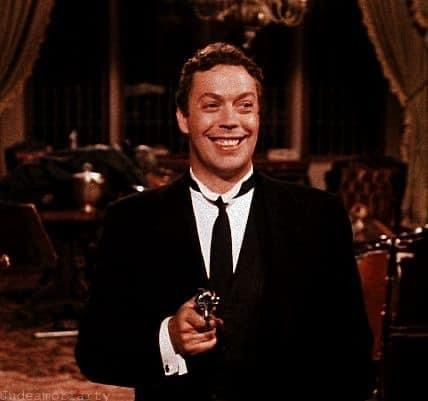
Scenes That I Love: Tim Curry Explains It All In Clue


Yesterday, the great actor Tim Curry passed away at the age of 80.

Though Tim Curry will probably always be best-known for his role in The Rocky Horror Picture Show, my favorite Tim Curry film is 1985’s Clue.  Here he is, in all three of the film’s endings.

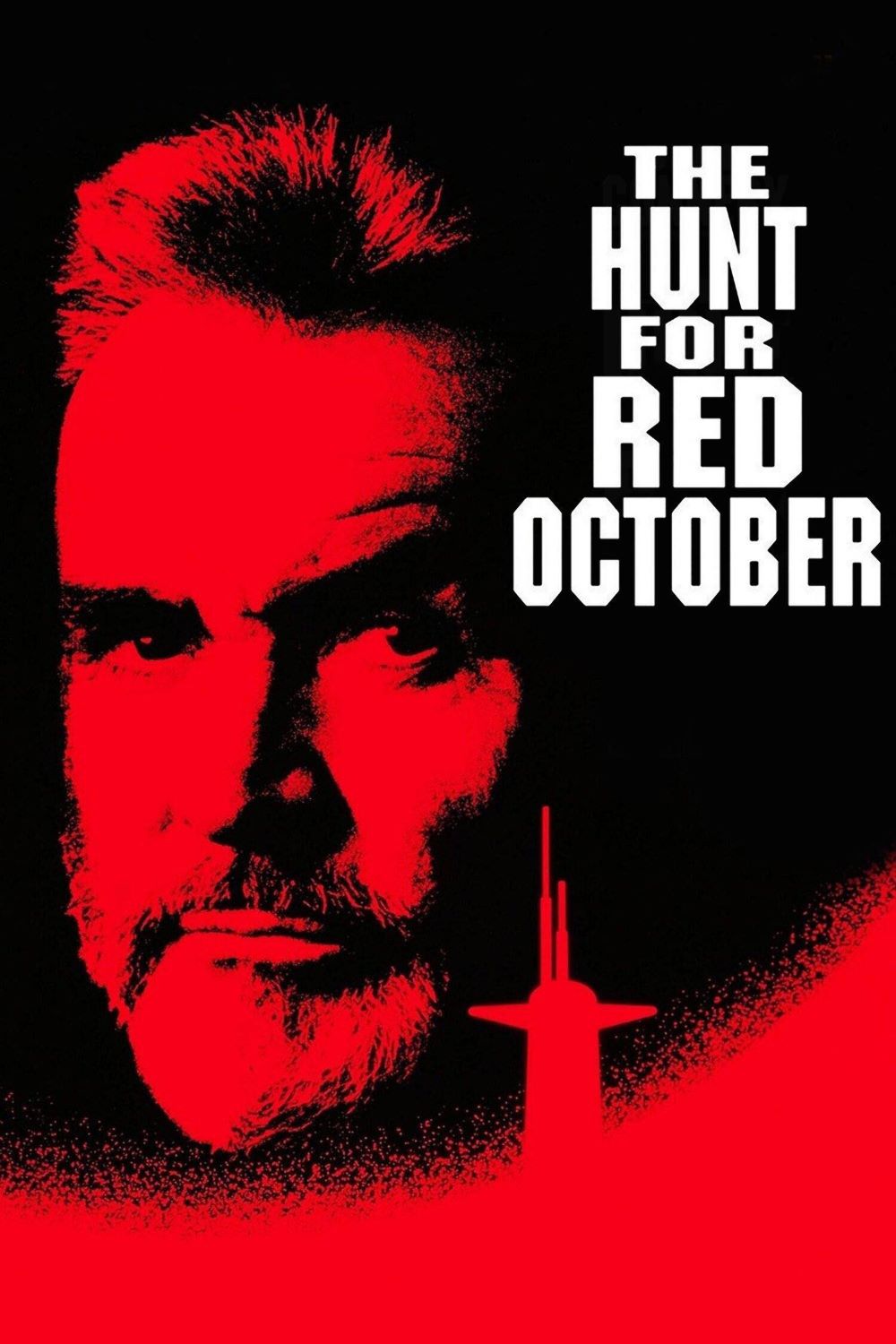
Review: The Hunt for Red October (dir. by John McTiernan)


“I’m a politician. Which means that I am a cheat and a liar, and when I’m not kissing babies, I’m stealing their lollipops.” — Dr. Jeffrey Pelt, National Security Advisor

The Hunt for Red October glides into the tail end of Cold War cinema like a stealthy sub cutting through midnight swells, packing a smart mix of spy intrigue and nail-biting underwater showdowns that keep you locked in from the opening credits. Directed by John McTiernan, fresh from helming Die Hard, this 1990 adaptation of Tom Clancy’s doorstopper novel smartly distills pages of naval geekery into a taut, propulsive thriller where Soviet skipper Marko Ramius—Sean Connery in full brooding mode—pilots the formidable Red October, a behemoth sub with a hush-mode propulsion system that ghosts past detection like a shadow in fog.

McTiernan shines in wrangling the script from Clancy’s tech-heavy tome, slicing through the babble to propel the story with crisp momentum and unrelenting suspense, turning potential info-dumps into pulse-quickening beats that hook casual viewers and sub nerds alike. The premise grabs fast: Ramius’s bold maneuvers ignite a transatlantic frenzy, with U.S. and Soviet forces locked in a paranoid standoff over what looks like an imminent crisis. That ’80s-era distrust simmers perfectly here, crammed into a runtime that pulses with fresh urgency decades later, amplified by those dim-lit sub corridors in steely teal tones that squeeze the air right out of the room.

Alec Baldwin embodies Jack Ryan as the reluctant brainiac from CIA desks, sweaty and green around the gills yet armed with instincts that cut through official noise like a periscope through chop. Pulled from family downtime—teddy bear in tow—he injects everyday stakes into the global chessboard, proving heroes don’t need camo or cockiness, just smarts and stubbornness. Connery’s Ramius dominates as a haunted vet with a personal chip on his shoulder, steering a tight-knit officer corps including Sam Neill’s devoted second-in-command, their quiet bonds hinting at deeper loyalties amid the red menace.

Standouts fill the roster seamlessly: James Earl Jones lends gravitas as the steady Admiral Greer backing Ryan’s wild cards; Scott Glenn commands the American hunter sub with laconic steel; Jeffrey Jones brings quirky spark to the sonar savant whose audio tricks flip the script on silence. The dialogue crackles with shorthand lingo and understated jabs, forging a crew dynamic that’s as pressurized as the hull plates, pulling you into hushed command post vibes without a whiff of cheesiness.

​​

McTiernan elevates the genre by leaning on wits over blasts—thrilling pursuits deliver without dominating, letting mind games and split-second calls drive the dread, all while streamlining Clancy’s minutiae into seamless propulsion. Gadgetry gleams without overwhelming: the sub’s whisper-quiet tech sparks clever cat-and-mouse in hazard-filled depths, ramping uncertainty to fever pitch. Pacing builds masterfully from war-room skepticism—Ryan battling brass skepticism—to heart-in-throat ocean dashes, every frame taut as a bowstring. Practical models and effects ground the peril in gritty tangibility, no digital gloss, evoking Ice Station Zebra‘s frosty traps but streamlined into a relentless machine that dodges the older film’s drag. It’s a clinic in balancing spectacle and smarts, where tension coils from isolation’s cruel math: one ping too many, and it’s lights out.

On the eyes and ears front, the movie plunges into submersed nightmare fuel—consoles pulsing crimson in battle stations, scopes piercing mist-shrouded waves, silo bays looming like sleeping leviathans. McTiernan tempers his action flair for thinker-thrills; Basil Poledouris’s great orchestral score surges with iconic power through the chases—those brooding horns, choral swells, and rhythmic pulses echoing engine throbs have etched into legend, pounding your chest like incoming cavitation and elevating every dive. Audio wizardry seals the immersion: hull groans, ping echoes, bubble roars craft a metallic tomb where errors echo eternally. Flaws peek through—early scenes drag with setup chatter, foes skew broad-stroked—but the core hunt erases them, surging to a sharp, satisfying close that nods to Ryan’s budding legend without overplaying the hand.

’90s tentpole lovers and thaw-era history fans find a benchmark here, as the film plays the long con of trust amid torpedoes, fusing bombast with nuance that reboots chase in vain. It bottles superpower jitters spot-on—frantic commands clashing with strike debates—yet softens adversaries via Connery’s world-weary depth and Neill’s subtle conviction. Endless rewatches uncover gems: crew hints dropped early, sonar hacks foreshadowing real tech leaps. Baldwin’s grounded Ryan—chopper-barfing, suit-clashing, chaos-navigating—earns triumphs the hard way, contrasting Das Boot‘s bleak grind with upbeat ingenuity that feels won, not waved. Poledouris’s motifs linger post-credits, a symphonic anchor boosting replay pulls.

Endurance stems from mastering sub-horror’s essence: solitude sharpening choices, where flubs invite apocalypse. Ramius embodies defector realism—war-weary idealist mirroring history’s turncoats—while Clancy’s specs (sub classes, velocities) anchor without anchoring down. McTiernan sidesteps flags; zero flag-waving, pure operator craft in dodges and climactic finesse that blends brains with boom. Quirks delight—the premier’s bluster, aides’ cool calculus—padding a 134-minute gem that exhales you surfacing, amped. Expands on score’s role too: “Hymn to Red October” choral rise mirrors Ramius’s quiet rebellion, threading emotional undercurrents through mechanical mayhem, a Poledouris hallmark outlasting the film.

Bottom line, The Hunt for Red October captivates via cerebral kick—shadow games in fluid physics, intellect over muscle, audacious plays punking empire folly. Sparks post-view chin-strokes on allegiances and risks. Connery’s gravelly “One ping only, Vasily” endures as gold; storm-watch it, trade sofa for sonar station—raw thrill spiked with savvy. Sub saga staple? This silent stalker nails every target.

Music Film Review: The Rocky Horror Picture Show (dir by Jim Sharman)


It feels strange to actually watch The Rocky Horror Picture Show without an audience.

I say this because the film is actually far better known for its fans than anything else.  First released in 1975 to middling reviews and, at first, anemic box office returns, The Rocky Horror Picture Show went on to become the first great cult film.  It’s literally been playing in theaters for 25 years, which has to be some sort of record.  When one sees Rocky Horror Picture Show in a theater, one does not merely sit back and watch in a state of suspended animation.  Instead, most of the audience becomes a part of the show.  They yell, they dance, and many of them return night-after-night.  I have been to two midnight showings of the Rocky Horror Picture Show and I have to admit that it was actually pretty intimidating both times.  The people in the audience — the veterans who knew every line and knew exactly what to do — were, more or less, friendly.  I’ve read some online horror stories about people who felt like they weren’t welcome the first time they attended a showing.  I had the opposite experience.  No one was rude, no one glared.  It was definitely a cliquey group but I felt as if they had earned the right to be in their clique.  No one seemed to be bothered by the fact that I was mostly there just to observe.  (I should also mention that neither showing that I attended demanded that the first-time watchers stand up or go to the front of the theater or anything like that.  Apparently, there’s quite a few people online who got upset over being singled-out as “virgins” and never got over it.)  But it was intimidating in much the same way as meeting a friend of a friend is intimidating or exploring a new town is intimidating.  I was surrounded by people who had a deep connection with each other, one that had been forged by sharing the same experience for years.  It was a communal experience that was actually touching to see, even if I never stopped feeling like an outsider.

It’s interesting to compare the midnight showings of The Rocky Horror Picture Show to the midnight showings of The Room.  I attended several midnight showings of The Room and I have to admit that I eventually soured on them as it became clear that many people were showing up to taunt the film as opposed to enjoying it for the odd, communal experience that it was.  The last few The Room showings that I attended were filled with a hostility that left me feeling a bit uncomfortable.  Whereas The Room’s cult has often felt a bit mean-spirited (as if everyone had gathered together to laugh at Tommy Wiseau for thinking he could make a movie), The Rocky Horror Picture Show‘s cult is based on a genuine love for the film.

As for the film itself, I watched it last month without an audience and I judged it solely as a film.  The pacing is a bit off and, without the group experience, it’s a lot easier to notice that the film’s storyline doesn’t make a bit of sense, though that was undoubtedly deliberate on the part of the filmmakers.  That said, Tim Curry’s performance still gives the film a jolt of energy, recapturing your attention and holding it until the film comes to a close.  (The genius of Curry’s performance as that, as flamboyant as it is, he still plays Dr. Frank-n-Furter as being an actual characters with feelings and emotions.  He doesn’t just coast on attitude.  One need only compare him to Laverne Cox in the 2016 TV production to see how strong Curry’s performance is.)  Susan Sarandon brings some depth to her performance as Janet and, if Barry Bostwick is a little on the dull side of Brad …. well, the heroes who appeared in the film that Rocky Horror sends up were rarely that exciting.  I enjoyed the snarky humor of Richard O’Brien’s performance and the energy that Meat Loaf brought to the production.  Charles Gray, in the role of the Criminologist, really doesn’t get enough credit for holding the film’s disparate parts together.

In the end, when viewed as a film as opposed to a communal experience, The Rocky Horror Picture Show is undoubtedly flawed but it’s still energetic enough to work.  The love for the old sic-fi films comes through and Tim Curry’s uninhibited performance works with or without an audience.  The Rocky Horror Picture Show is a film that brings people together and I hope it continues to do so.

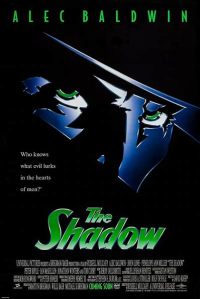
Guilty Pleasure No. 82: The Shadow (dir. by Russell Mulcahy)


As Guilty Pleasures go, The Shadow is a movie that has absolutely everything you need for a fun, campy ride. An Al Leong cameo, alongside James Hong? Check. Heroes and Villains taking time out to discuss their wicked plans (and how they’ll be stopped) over a glass of fine American Bourbon? Check. Early 90s Era CGI? Mark it down. Duel Wielding Pistol shooting action? Got it. Tim Curry just being there? Sweet.

After the wild success of Tim Burton’s Batman in 1989, Hollywood was scrambling to squeeze what they could out of the Superhero Movie. The Punisher, with Dolph Lundgren, would come out the same year. We’d end up with The Rocketeer (one of my personal favorites), BarbWire, Dick Tracy,The Crow, The Mask, and The Phantom, among others leading into the mid-90s. Among these was 1994’s The Shadow, based off the 1930’s character from Walter B. Gibson. Pre-dating all of the before mentioned characters (including DC’s Batman by almost a decade), The Shadow started as a series of radio stories before moving on to other forms of media. The movie didn’t do very well on it’s original release. Much like the magic that clouds men’s minds, audiences were more enraptured with The Crow months before and The Lion King. Some may remember a Shadow movie was made, but it was eclipsed by more popular films at the time.

At the same time, there were major advances happening in audio technology, thanks to a tiny Universal film called Jurassic Park. Jurassic Park helped to usher in an update in sound quality known as The Digital Experience (which we now know as DTS for short). As theatres coverted to the new sound system, various films in the early to mid nineties would make use of it, such as The Crow, The Mask, Timecop and The Shadow. By the time my family picked up their first Laserdisc player, DTS quality sound was available at home. My dad had a series of speakers lined around the living room of our house so that regardless of where you sat, the sound would move around you. One of the best tests of it was with John Carpenter’s The Thing, where Blair is standing off against the crew. The gunfire from his pistol would richochet from the front to the rear speakers, making the kids duck down.

The Shadow also made of use of this in certain areas, particularly with the way voices carried in a room. The part with Shiwan Khan’s voice moving over the city at night was amazing to hear with the right sound system. Just about any scene where The Shadow spoke had this sweet spatial effect that I loved.

The Shadow is the tale of Ying Ko (Alec Baldwin, The Getaway), a.k.a. Lamont Cranston. Living high in the Opium Fields of Tibet, he is a man of darkness, having inflicted great evil over time. Kidnapped and brought to a Tulku (a wise man) who has decided it’s time for redemption, Cranston is taught to cloud men’s minds, bending people to his will and to hide every aspect of himself save for one thing, his Shadow. He then returns seven years later to that “most wretched lair of villainy we know as” New York City, for we all know that the weed of crime bears bitter fruit.

Cranston spends most of his nights at The Cobalt Club with his Uncle Wainwright (Jonathan Winters, It’s a Mad, Mad, Mad, Mad World), who also happens to be the Police Commissioner. It allows him to keep up appearances while making sure the police don’t put The Shadow in their spotlight. When he meets the beautiful Margot Lane (Penelope Ann Miller, The Relic), he’s not only smitten, but finds her ability to read minds a dangerous threat to him.

When a metal casket from Tibet arrives at the New York Museum of Natural History, it reveals Shiwan Khan (John Lone, The Last Emperor), the last descendant of Genghis Khan. Gifted with the same abilities as Cranston, Khan has plans for the city and the world. He would rather have Cranston join him than to kill him. This turns the story into a classic Bond-like cliche where the hero and villain spend the bulk of the movie explaining their plans.

Enjoying the successes of Death Becomes Her and Jurassic Park, writer David Koepp was on a roll. The Shadow doesn’t take itself too seriously. Koepp and director Russell Mulcahy (Highander) splash moments of light comedy at just about every turn, mostly through the witty banter between characters. Some are over the top, particularly with Tim Curry’s character, while others are more subtle, like with Ian McKellan (The Lord of the Rings). If you’re looking for a serious drama in your superhero film, this isn’t it. Additionally, there are one or two elements that make no sense whatever. Mongol warriors walking around in full armor that no one ever seems to notice and taking rides in taxicabs (unless we assume they’re masked by Khan’s magic).

Most of the movie was filmed on the Universal Studios New York backlot, which explains why some scenes look like they were borrowed from Walter Hill’s Streets of Fire (that also used it years before). The mystical Tibetan Phurba dagger that echoes the disposition of its owner was a variant of the one used in Eddie Murphy’s The Golden Child in the late 80s.

if the movie’s climax between The Shadow and Khan feels a bit abbreviated, it’s because of a last minute change in filming. The original plan for the ending involved a series of mirrors, but an earthquake earlier in the year caused damage to the props the production team planned to use. So, what we get is a quicker scene, still falling in line with Mulcahy’s penchant for glass shattering, but leaving the audience to partially wonder what we could have had if everything worked out.

Finally, the real gem in all this is Jerry Goldsmith’s score. Although out of print, you can still find most of the tracks on YouTube, and the songs keep the immersion flowing. While I don’t see the film getting any kind of remakes in the near future, it’s nice to know everything came together (as well as it could) for this entry. Then again, who knows?

Previous Guilty Pleasures

  1. Half-Baked
  2. Save The Last Dance
  3. Every Rose Has Its Thorns
  4. The Jeremy Kyle Show
  5. Invasion USA
  6. The Golden Child
  7. Final Destination 2
  8. Paparazzi
  9. The Principal
  10. The Substitute
  11. Terror In The Family
  12. Pandorum
  13. Lambada
  14. Fear
  15. Cocktail
  16. Keep Off The Grass
  17. Girls, Girls, Girls
  18. Class
  19. Tart
  20. King Kong vs. Godzilla
  21. Hawk the Slayer
  22. Battle Beyond the Stars
  23. Meridian
  24. Walk of Shame
  25. From Justin To Kelly
  26. Project Greenlight
  27. Sex Decoy: Love Stings
  28. Swimfan
  29. On the Line
  30. Wolfen
  31. Hail Caesar!
  32. It’s So Cold In The D
  33. In the Mix
  34. Healed By Grace
  35. Valley of the Dolls
  36. The Legend of Billie Jean
  37. Death Wish
  38. Shipping Wars
  39. Ghost Whisperer
  40. Parking Wars
  41. The Dead Are After Me
  42. Harper’s Island
  43. The Resurrection of Gavin Stone
  44. Paranormal State
  45. Utopia
  46. Bar Rescue
  47. The Powers of Matthew Star
  48. Spiker
  49. Heavenly Bodies
  50. Maid in Manhattan
  51. Rage and Honor
  52. Saved By The Bell 3. 21 “No Hope With Dope”
  53. Happy Gilmore
  54. Solarbabies
  55. The Dawn of Correction
  56. Once You Understand
  57. The Voyeurs 
  58. Robot Jox
  59. Teen Wolf
  60. The Running Man
  61. Double Dragon
  62. Backtrack
  63. Julie and Jack
  64. Karate Warrior
  65. Invaders From Mars
  66. Cloverfield
  67. Aerobicide 
  68. Blood Harvest
  69. Shocking Dark
  70. Face The Truth
  71. Submerged
  72. The Canyons
  73. Days of Thunder
  74. Van Helsing
  75. The Night Comes for Us
  76. Code of Silence
  77. Captain Ron
  78. Armageddon
  79. Kate’s Secret
  80. Point Break
  81. The Replacements