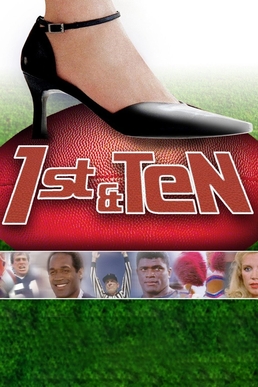
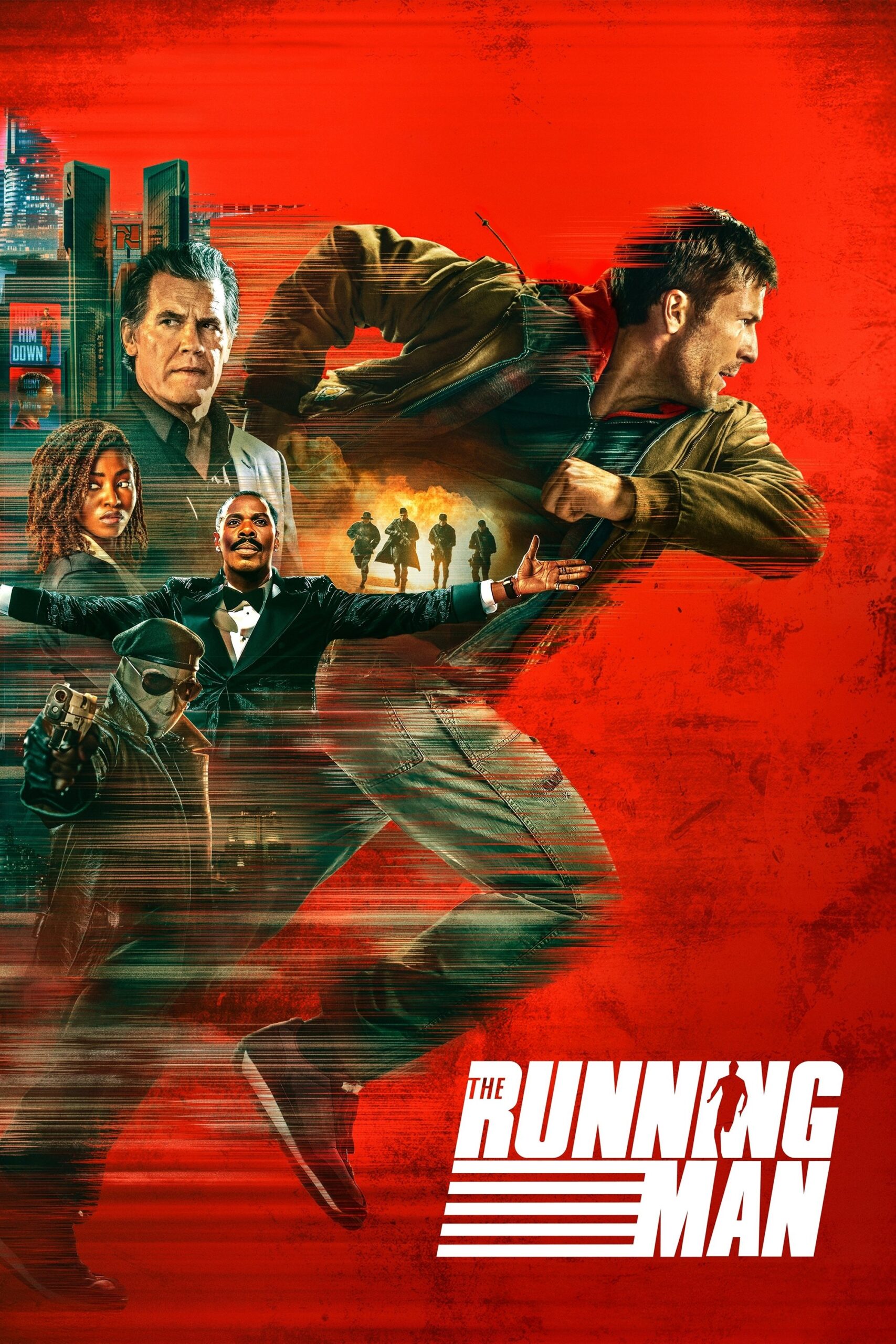
Welcome to Late Night Retro Television Reviews, a feature where we review some of our favorite and least favorite shows of the past! On Wednesdays, I will be reviewing 1st and Ten, which aired in syndication from 1984 to 1991. The entire series is streaming on Tubi.
(Dir by Stan Lathan, originally aired on December 7th, 1988)
As a show, 1st & Ten has a weird habit of introducing new characters and pretending as if they’ve always been around even if they’ve never been seen or even mentioned before. In this episode, we meet Coleman King (Richard Lawson), the team’s veteran running back who fears that he’s on the verge of being dropped from the Bulls. Coleman is also an old friend of TD Parker’s (O.J. Simpson).
TD is conflicted. He knows that Coleman is past his prime. The Bulls are on the verge of signing a new running back and, when they do, TD knows that he’s probably going to have to cut Colman from the team. As a former player, TD knows how painful it is when your professional career is murdered and no one is held responsible for it. Complicating matters is the clear attraction between TD and Coleman’s wife, Della (Vanessa Bell Callaway).
While TD tries to figure out how to protect both the team and Coleman, Ernie Denardo runs into his ex-girlfriend, Brenda (Shannon Wilcox), at a bar. Brenda has some scary people after her because of her unpaid gambling debts. She tells Denardo that she has money on the next Bulls game. If the Bulls win by more than ten, her debt will be paid off and then she and Denardo can be together.
The next day, the Bulls are on the verge of winning by 9. With only a few seconds left in the game, Denardo has the team kick a field goal so that they can win by 12. Denardo returns to Brenda’s apartment and discovers that she’s gone. It was all a scam, hatched by Brenda and her real boyfriend.
In tears, Denardo tells TD that he has to quit as coach of the Bulls.
TD argues that Denardo didn’t do anything wrong because he didn’t have money on the game. TD points out that the field goal unit needed the practice and that the Bulls need as many points as possible to clinch home field advantage in the playoffs. The episode ends with TD embracing the sobbing Denardo. Awwww! Is there nothing an OJ Simpson pep talk can’t fix?
After last week’s bizarre episode, this was a traditional 1st & Ten episode. This episode served as a reminder of just how bland OJ Simpson was as an actor. That said, Reid Shelton did a good job as the grief-stricken Denardo and the gambling subplot at least did have a few interesting twists. By the standards of 1st & Ten, that makes this episode a success.
Edgar Wright’s 2025 take on The Running Man is an adrenaline shot to the chest and a sly riff on our era’s obsession with dystopian game shows, all filtered through his own eye for spectacle and pacing. Unlike many of his earlier works, such as Shaun of the Dead and Scott Pilgrim vs. The World, which bristle with meta-commentary, the film is a sleeker and more bruising affair. At its core, this is a survival thriller decked out in neon, driven by a director who wants to both honor and outpace what’s come before.
Wright’s version ditches the muscle-bound caricature of the 1987 Schwarzenegger adaptation, recentering on a more grounded protagonist. Glen Powell’s Ben Richards isn’t a quip-dispensing tank; he’s a desperate father, pressed to extremes, haunted more by anxiety than rage. We meet him in a world where reality TV devours everything, and nothing is too cruel if it wins the ratings war. Richards is cast as the sacrificial everyman, volunteering for the deadly Running Man show only because his family’s survival is at stake, not his ego. This lends the film a more human—and frankly, more believable—edge than either of its predecessors.
Visually, The Running Man is vintage Wright: kinetic and muscular, with chase scenes propelled by propulsive synths and punchy editing, each set piece designed as much to thrill as to disorient. Gone, however, is much of the director’s comedic ribbing; what remains is a tense visual feast, saturated in electric colors and relentless motion. The camera rarely settles. The television show itself is depicted as both garish and sinister, a spectacle that feels plausible because it’s only five minutes into our own future.
The film takes sharp aim at the machinery of television and the spectacle it creates, exposing how entertainment can thrive on cruelty and manipulation. It highlights a world where reality is heavily curated and shaped to serve ratings and control, with the audience complicit in consuming and encouraging the degradation of genuine human experience. The media in the film mirrors warnings that have circulated in recent years—that it has become a tool designed to appease the masses, even going so far as to use deepfakes to manipulate narratives in favor of particular agendas. While this focus on broadcast media delivers potent social commentary, Wright does drop the ball a bit by concentrating too much on traditional TV media at a time when entertainment consumption is largely online and more fragmented. This narrower scope misses an opportunity to deeply engage with the digital age’s sprawling and insidious impact on public attention and truth.
Glen Powell’s performance is pivotal to the film’s success. He anchors the story, selling both the exhaustion and the resolve required for the role. This Ben Richards is no superhero—his fear feels palpable, and his reactions are messy, urgent, and often impulsive. Opposite him, Josh Brolin steps in as Dan Killian, the show’s orchestrator. Brolin’s performance, smooth and menacing, turns every negotiation and threat into a master class in corporate evil. The stalkers, the show’s gladiatorial killers, are less cartoon than their 1987 counterparts, but all the more chilling for their believability—branding themselves like influencers, they embody a world where violence and popularity are inseparable.
On the surface, Wright’s Running Man leans heavily into social satire. It lobs grenades at infotainment, the exploitation inherent in reality TV, and the way audiences are silently implicated in all the carnage they consume. Reality is a construct, truth is whatever the network decides to show, and every moment of suffering is a data point in an endless quest for engagement. The critique is loud, though not always nuanced. Where Wright has previously reveled in self-aware storytelling, here he pulls back, focusing on the mechanics and cost of spectacle more than its digital afterlife.
Action is where the film hits hardest. Wright brings his expected flair for movement and tension, with chase sequences escalating to wild, blood-smeared crescendos, and hand-to-hand fights that feel tactile rather than stylized. The film borrows more heavily from the structure of King’s novel, raising stakes with each new adversary and refusing to let viewers catch their breath. Despite the non-stop pace, the movie runs a little too long—some sequences feel indulgent, and the final act’s rhythm stutters as it builds toward its conclusion. Still, even in its bloat, there’s always something energetic or visually inventive happening onscreen.
The movie’s climax and resolution avoid over-explaining or revealing too much, instead choosing to leave room for interpretation and suspense about the outcomes for the characters and the world they inhabit. This restraint preserves the tension and leaves viewers with something to chew on beyond the final credits.
For fans of Edgar Wright, there’s a sense of something both familiar and altered here. The visual wit, the muscular editing, the stylish sound cues—they’re all present. Yet the film feels less like a playground for Wright’s usual whimsy and more like a taut, collaborative blockbuster. It’s playfully brutal and thoroughly engaging, but does not, in the end, subvert the genre quite as gleefully as some might hope. For every moment of subtext or clever visual flourish, there is another in which the movie simply barrels forward, content to dazzle and provoke in equal measure.
The Running Man (2025) is a film with a target audience—those who want action, smart but accessible social commentary, and just enough character work to feel the stakes. It will delight viewers drawn to a flashier, meaner take on dystopian spectacle, and Powell’s central performance is likely to win over skeptics and fans alike. If you’re hoping for a thesis on algorithmic age or a meditation on surveillance capitalism, you may need to look elsewhere. But if you want a turbo-charged chase movie that occasionally stops to wag a finger at the world that spawned it, you’re likely to have a great time.
Ultimately, Edgar Wright’s Running Man is a sharp, glossy refit of a classic dystopian story, packed with high-octane action and grounded by its central performance. It won’t please everyone and doesn’t attempt to, but it never forgets that, above all, good television keeps us running. In the era of spectacle, that might be all you need.
Welcome to Late Night Retro Television Reviews, a feature where we review some of our favorite and least favorite shows of the past! On Thursdays, I will be reviewing Highway to Heaven, which aired on NBC from 1984 to 1989. The entire show is currently streaming on Freevee and several other services!
This week, Highway to Heaven begins its second season with a two-part episode.
Episodes 2.1 and 2.2 “A Song For Jason”
(Dir by Michael Landon, originally aired on September 18th and September 25th, 1985)
Well, this is certainly a tear jerker.
The two-part second season opener of Highway to Heaven finds Jonathan and Mark assigned to work at Camp Good Times, an actual summer camp for children who have cancer. And while Jonathan is, as usual, enthusiastic about the assignment, Mark responds by begging to be allowed to sit this one out. Jonathan’s response is to tell Mark to stop feeling sorry for himself and to help the kids. Mark starts to walk away from his friendship with Jonathan until he runs into one of the kids, Jason (Joshua John Miller, whose best-known work as an actor might be as the scary child vampire in Near Dark). Jason basically repeats the same thing that Jonathan said, telling Mark that he needs to stop feeling sorry for himself. Mark realizes that if a kid like Jason can be brave in the face of cancer then the least Mark can do is spend a summer as a camp counselor.
(Adding a bit of poignance to all this is that both Victor French and Michael Landon would die of cancer five years after this episode aired.)
Jason is the son of rock star Miki Winner (Barry Williams — yes, Greg Brady). Miki is always finding excuse not to spend any time with his sick son. Maybe Jonathan can change his mind.
But that’s not all!
Curtis (played by a ten year-old Giovanni Ribisi in his acting debut) is scared to death to go outside, a result of his overprotective mother (Robin Riker) constantly harping on the fact that he could die at any minute. Can Jonathan help Curtis have fun while encouraging his mom to let Curtis be a kid?
Teenage jock Gary (Brian Lane Green) has bone cancer and might lose his leg. Can he got over his bitterness and get a date with camp counselor Trish (Jill Carroll)?
And will Mark finally realize that there is hope to be found in even the most dire of situations?
(The answer to all of that is yes but you probably already guessed that.)
Even by the standards of Highway to Heaven, this episode was a bit heavy-handed, without a subtle moment to be found. Barry Williams is as unconvincing a rock star here as he was on The Brady Bunch Variety Hour. Some of the kids were better actors than others. It’s also hard not to feel that the story could have been told in just one episode. The first part, especially, feels a bit padded. That said, it all still brought tears to my mismatched eyes because, seriously, how couldn’t it? This is one of those episodes where the show’s earnestness and sincerity really worked to its advantage. The episode is so heartfelt that it feels rather churlish to be too nit-picky about it. In the end, flaws and all, the episode works.
Add to that, if you can’t enjoy the scene where Jonathan disguises himself as a barber and shaves a bully’s head, I don’t know what to tell you.
The last couple days have seen the release of a number of upcoming films that should be jockeying for all those fancy-pants end of season awards. One such film is the latest film from Quentin Tarantino. Django Unchained is his latest trip into the grindhouse world with this film being his take on the spaghetti westerns made popular by Italian maestros like Sergio Leone, Sergio Corbucci and Enzo G. Castellari.
It’s an ensemble cast that’s headlined by Jamie Foxx in the title role with Christoph Waltz, Samuel L. Jackson and Leonardo DiCaprio (playing against the grain as the main villain of the piece). To pay respect to the very genre that this film owes not just it’s title, but theme and tone, Tarantino has even cast the original Django in Franco Nero in the role of Amerigo Vassepi.
Django Unchainedis set for a Christmas Day 2012 release date (hopefully the world didn’t end just four days earlier).
If there’s a film arriving this year that’s bound to be hyped up by both fanboys and critics alike it would be the latest from Quentin Tarantino. Django Unchained will be his ode to the spaghetti westerns of the 60’s and 70’s. The title of the film alone owes much to Sergio Corbucci’s own spaghetti western, Django.
The trailer first premiered simultaneously over at Fandango and Movies.com and the amount of times the trailer has been reposted over the blogosphere just shows how much people have been waiting for anything about Tarantino’s western when it was first announced. I know that pretty much most everyone here at Through the Shattered Lens have been anticipating this film especially co-founder Lisa Marie Bowman.
I’d describe the trailer itself, but it’s better just to watch it. I’m sure Lisa Marie squealed a bit when two Django’s met near the end.