After spending two weeks researching the career of Jason Voorhees, I am in the mood for some movies that feature absolutely no one getting brutally murdered. That’s why this edition of Lisa Marie’s Favorite Grindhouse and Exploitation Trailers is dedicated to some of the most light-weight comedies ever made.
(Yes, I realize that these films aren’t exactly grindhouse films but they’re close enough.)
1) Making the Grade (1984)
This trailer almost feels like a parody, doesn’t it? In fact, it very well could be. Has anyone ever actually seen this Making the Grade movie?
2) White Water Summer (1987)
This is a weird movie that, for some reason, tends to pop up on TV every few months or so. Kevin Bacon is a nature guide who appears to be sociopath and Sean Astin is the kid that he bullies nonstop. Eventually, Bacon breaks his leg and Astin saves his life or something like that. The whole movie just has a really weird feel to it.
3) Private Lessons (1981)
These next three trailers form a trilogy of sorts. We start off with Private Lessons, which — let’s be honest — is a pretty creepy trailer.
4) Private School (1983)
The 2nd part of the private trilogy was directed by Noel Black who also directed one of the best films of the 60s, Pretty Poison.
5) Private Resort (1985)
And then we come to this…Private Resort. Much like White Water Summer, Private Resort used to always show up on Sunday afternoon TV and I’ve never really understood why. That said, I watched it a few times because I’ll watch Johnny Depp in anything.
6) Fraternity Vacation (1985)
And finally, let’s wrap things up with Fraternity Vacation, starring future Oscar winner Tim Robbins.
This month, the 13th is going to fall on a Friday so I figured what better time would there be to watch and review the Friday the 13th franchise? Through April 13th, I’ll be reviewing each film in the franchise. Some of these reviews will be positive and quite a few of them will not. Let’s get things started with the one that started it all, the original 1980 Friday the 13th.
Is there anyone out there who does not know the plot of Friday the 13th? For those who don’t, here’s a spoiler-filled refresher. In the late 50s, at the rather crummy looking Camp Crystal Lake in New Jersey, two counselors sneak off from a sing-along so that they can do whatever it was that young people used to do in the 50s. Suddenly, someone else walks into the room. “Uhmm, we weren’t doing anything,” one of the counselor says right before a machete is plunged into his stomach.
Jump forward 25 years. Annie (Robbi Morgan), a bubbly young woman who won’t stop talking about how much she loves children, hitchhikes into Crystal Lake. She tells the townspeople that she’s looking for a ride to Camp Crystal Lake and everyone give her that “Oh no you didn’t” look. Crazy old Ralph (played by Walt Gorney) tells her, “You’re doomed.” Since this is a slasher film, Annie ignores him and ends up getting her throat slashed in the woods by an unseen assailant wearing black gloves.
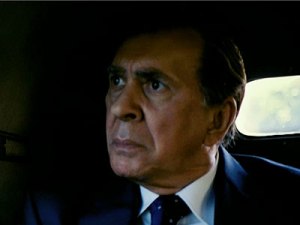
Meanwhile, at Camp Crystal Lake, the somewhat jerky Steve Christy (played by an actor named Peter Brouwer who never gets enough credit for giving a good performance here) is working hard to get the long-since deserted camp up and ready for its grand reopening. Helping him out are his fellow camp counselors — lovers of life and fun Marcie (Jeannine Taylor) and Jack (The Kevin Bacon, who is like such a total hottie in this film I don’t even know where to start), boring Bill (Harry Crosby), bossy meanie Brenda (Laurie Bartram), obnoxious practical joker Ned (Mark Nelson), and finally Steve’s girlfriend, Alice (Adrienne King). Steve tells his counselors to get the camp ready and then heads off to pick up supplies in town. (Or at least, that’s what Steve says he’s doing. As far as I can tell, the only thing he does when he gets to town is head over to the local diner and start flirting with the 90 year-old waitress…)
With jerky old Steve gone for the day, the counselors decide to spend their time swimming (and, in Ned’s case, pretending to drown), having sex, smoking pot, and eventually getting killed one-by-one by an unseen murderer. Eventually, once Alice is the only counselor left alive, she runs into a nice, older woman named Pamela Voorhees (played, with a lot of genuine menace, by Betsy Palmer). When Alice explains that everyone’s dead, Pamela responds by mentioning that her own son — Jason — drowned at the camp 25 years ago because the counselors were too busy “making love.” Pamela then tries to kill Alice and Alice ends up chopping Pamela’s head off and then floating out onto the lake in a canoe. (Meanwhile, the camp is nowhere close to being ready for opening day.)
The next morning, Alice wakes up in the canoe and spots a bunch of police officers on the shore. As she starts to call out to them, a deformed boy suddenly jumps out of the water and grabs her. This, of course, is one of the most famous scenes in the history of horror and one that has been parodied and ripped off numerous times. However, when I first saw Friday the 13th, that scene made me scream and, even today, I still find my heart racing just a little bit faster whenever I know that it’s coming up.
The first time I ever saw the original Friday the 13th, I was either 8 or 9 and it was all incredibly daring because I was staying up way too late with my older sisters and watching a cable station for grownups that I knew I wasn’t supposed to be watching. We didn’t want to wake up mom or dad so we had the volume turned down as low as it would go and we whispered our comments of “Ewwww!” and “Agck!” (Yes, even at the age of 8, I was already saying “agck.”) Even though I couldn’t hear the film, I could see it and the end result was thatm when I did eventually go to sleep, I was awake after about an hour, screaming because I had a Friday-inspired nightmare. I doubt that the movie would scare me as much today because today,I know who Tom Savini is and, if I need proof that Kevin Bacon was actually not killed by Mrs. Voorhees hiding underneath the bed, I can watch my DVD of Crazy,Stupid Love. But when I was younger, Friday the 13th was the fuel of nightmares and, seeing as I’ve always had my little morbid streak, I think that’s why the franchise continues to interest me.
If there’s one thing that everyone seems to agree about when it comes to Friday the 13th, it’s that the true stars of the film were the disturbingly plausible gore effects designed Tom Savini. Even when I rewatched the film before writing this review, I was surprised by not only just how bloody a movie Friday the 13th was but also at how realistic it all looked (especially when compared to the intentionally over-the-top gore effects that Savini provided for Dawn of the Dead). There’s a surprising brutality to the film that reminds us that — unlike future installments in the franchise — the original Friday the 13th was not made for mainstream audiences but instead for the audiences who populated New York grindhouses and dark Southern drive-ins. The special effect that every other reviewer always seems to point out is the scene where the arrow bursts through Kevin Bacon’s neck. While that scene is indeed shocking (and sad too, because it’s Kevin Bacon dying), I’m always more disturbed by the scene that immediately follows, where Marcie gets hit in the face with the axe. That’s the scene that showed up in my nightmare after I watched the film for the first time.
Director Sean Cunningham has said, in numerous interviews, that he was inspired to make Friday the 13th largely because of the box office success of Halloween and there are some pretty obvious similarities between the two films. What is less often commented upon is just how much of the original Friday the 13th was inspired by the Italian giallo films of Mario Bava and Dario Argento. Whether it’s the focus on the killer’s black gloves or the use of Harry Manfredini’s iconic theme to signal when something bad is about to happen, the giallo influence is pretty obvious. Sean Cunningham was hardly an innovative director but when he stole, he stole from the best and the end result, crude as it may have sometimes been, was undeniably effective.
In Peter Bracke’s fascinating history of the franchise, Crystal Lake Memories, there’s an interesting quote from Jeannine Taylor, the actress who played Marcie. When discussing her reaction after first reading the script, Taylor says, “To me, this was a small independent film about some very carefree teenagers who are having a great time at summer camp where they happen to be working as counselors. Then they just happen to get killed.” Taylor’s comment gets at one reason why Friday the 13th — out of all the slasher films to come out after Halloween — continues to be watched by even people like me who weren’t even alive when it was first released. Uniquely among the films in the franchise, Friday the 13th is a true ensemble film and, though the performances are somewhat uneven and the characters are pretty one-dimensional, the cast has an easy and likable chemistry. Watching the film today, it’s a bit hard not to concentrate on the fact that you’re seeing Kevin Bacon in a low-budget slasher film but once you get over that, you realize that Bacon and the entire cast are totally believable as bunch of likable, carefree kids who end up in the wrong place at the wrong time. A lot of critics have complained that the first half of the film drags as we just watch everyone goofing off around camp. To me, those early scenes make the film because they get us to care about the characters just enough so that we don’t necessarily want to see them killed.
Another frequent critical complaint is that it’s difficult to have much sympathy for characters who consistently do stupid things that ultimately lead to them getting killed. Viewers tend to shake their heads as they watch Ned go wandering into a deserted cabin or when Brenda just happens to wander out on the archery range. Myself, I always tend to roll my eyes whenever the film reaches the point that Marcie decides to run out into the rainy night in just her panties and a shirt. I always find myself going, “Yeah, like anyone’s really that stupid…”
Of course, even as I type this review, I’m thinking about how, a few nights ago, I thought I heard a catfight at 3 in the morning and my immediate response was to run outside and walk up and down in the alley, wearing only a t-shirt and a thong, calling my cat’s name.* Even as I searched for our cat, I found myself muttering, “This is like a slasher movie waiting to happen.” However, I still kept wandering around that alley in my half-naked state because, at the time, I was pretty confident that there weren’t any masked maniacs around.
That’s what people who criticize films like Friday the 13th for featuring stupid characters refuse to admit. We all do more stupid things than we care to admit because we’re usually pretty confident that there won’t be any negative consequences to our stupidity. We all know that there are evil psychopaths out there but we’re also confident that we won’t run into them. The reason why the slasher genre has remained popular is because it forces us to confront our deepest fear, which is that we might not be as safe or have as much control over our fate as we tell ourselves.
Not surprisingly, Friday the 13th and its subsequent sequels has never been as popular with critics as they have with audiences. In fact, critical reaction upon the initial release of Friday the 13th was so hostile that one critic even printed Betsy Palmer’s address and invited outraged filmgoers to write her letters of protest. The standard critical complaint about Friday the 13th was that it presented death as a punishment for having sex and smoking weed and here I would say that the critics were mistaken. While it is true that Jack and Marcie die after doing both of these things, I think there’s actually a far more relevent message to be found within the film. Consider this: Ned dies after he spots someone in a deserted cabin and says, “Can I help you?” Steve Christy is killed because he spots someone out in the rain and approaches them, saying, “What are you doing out in this mess?” Brenda thinks that she hears a child crying for help outside of her cabin and foolishly goes walking around in the middle of hurricane in her nightgown, calling out, “Hello!?” until she’s killed off-screen. What the critics, so caught up in their moral panic, failed to understand was that the message of Friday the 13th is not that people shouldn’t have sex. The message is that people shouldn’t offer to help random strangers.
Despite the amount of critical scorn heaped upon it, Friday the 13th was a box-office success and the 18th highest grossing film of 1980. At the time, for a low-budget, independent film, this was highly unusual. Despite the fact that Friday the 13th ended with Mrs. Voorhees losing her head and Jason still in that lake, there would be a Friday the 13th Part 2.
We’ll deal with that tomorrow. Until then, don’t help any random strangers…
——
*Doc, our cat, was fine, by the way. It turned out, he was sitting in the kitchen the whole time I was outside desperately searching for him.
During my sophomore year of college, I had a political science professor who, every day of class, would sit on his desk and ramble on and on and on about his past as a political activist. He protested Viet Nam, he hung out with revolutionaries, he loved Hugo Chavez, and I assume he probably had a Che Guevara poster hanging in his office. Whenever he wanted to criticize George W. Bush, he would compare him to Richard Nixon and then pause as if he was waiting for the class to all start hissing in unison. He always seemed to be so bitterly disappointed that we didn’t. What he, and a whole lot of other people his age, didn’t seem to understand was that Richard Nixon was his boogeyman. The rest of us could hardly care less.
That was the same problem that faced the 2008 best picture nominee Frost/Nixon.
Directed rather flatly by Ron Howard, Frost/Nixon tells the true story about how a light-weight English journalist named David Frost (played by Michael Sheen) managed to score the first televised interview with former President Richard Nixon (Frank Langella). Both Frost and Nixon see the interviews as a chance to score their own individual redemptions while Frost’s assistants (played by Oliver Platt and Sam Rockwell) see the interview as a chance to put Richard Nixon on trial for Watergate, the Viet Nam War, and every thing else under the sun. That may not sound like a very exciting movie but it does sound like a sure Oscar contender, doesn’t it?
I’ve always secretly been a big history nerd so I was really looking forward to seeing Frost/Nixon when it was first released in 2008. When I first saw it, I was vaguely disappointed but I told myself that maybe I just didn’t know enough about Richard Nixon or Watergate to really “get” the film. So, when the film later showed up on cable, I gave it another chance. And then I gave it a chance after that because I really wanted to like this film. Afterall, it was a best picture nominee. It was critically acclaimed. The word appeared to be insisting that this was a great film. And the more I watched it, the more I realized that the world was wrong. (If nothing else, my reaction to Frost/Nixon made it easier for me to reject the similarly acclaimed Avatar a year later.) Frost/Nixon is well-acted and slickly produced but it’s not a great film. In fact, Frost/Nixon is epitome of the type of best picture nominee that inspires people to be cynical about the Academy Awards.
Before I get into why Frost/Nixon didn’t work for me, I want to acknowledge that this was a very well-acted film. By that, I mean that the cast (Frank Langella, Michael Sheen, Kevin Bacon, Sam Rockwell, and Oliver Platt) all gave very watchable and entertaining performances. At the same time, none of them brought much depth to their characters. Much like the film itself, nobody seems to have much going on underneath the surface. Frank Langella may be playing a historic figure but, ultimately, his Oscar-nominated performance feels like just a typically grouchy Frank Langella performance. Michael Sheen actually gives a far more interesting performance as David Frost but, at the same time, the character might as well have just been identified as “the English guy.” In fact, a better title for this film would have been The Grouchy, the English, and the Superfluous.
For all the time that the film devotes to Rockwell and Platt blathering on about how they’re going to be giving Richard Nixon “the trial he never had,” this film is ultimately less about politics and more about show business. Ron Howard devotes almost as much time to the rather boring details of how the interviews were set up and sold into syndication as he does to the issues that the interview brings up. Unfortunately, for a movie about show business to succeed, the audience has to believe that the show is one that they would actually enjoy watching, This, ultimately, is why Frost/Nixon fails. While the filmmakers continually tell us that the Frost/Nixon interviews were an important moment in American history, they never show us. Yes, everyone has hideous hair and wide lapels but, otherwise, the film never recreates the period or the atmosphere of the film’s setting and, as a result, its hard not to feel detached from the action happening on-screen. For all the self-congratulatory claims made at the end of the film, it never convinces us that the Frost/Nixon interviews were really worth all the trouble. Much like my old poli sci professor, Frost/Nixon never gives us a reason to care.
For a far more interesting and entertaining look at the Watergate scandal, I would recommend the 1976 best picture nominee All The President’s Men. Recreating the story of how two Washington Post reporters (played by Robert Redford and Dustin Hoffman) exposed the Watergate scandal that eventually led to Nixon’s resignation, All The President’s Men is the movie that Frost/Nixon wishes it could be. Despite being made only two years after Watergate, All The President’s Men doesn’t take the audience’s interest for granted. Instead, director Pakula earns our interest by crafting his story as an exciting thriller. Pakula directs the film like an old school film noir, filling the screen with menacing shadows and always keeping the camera slightly off-center. Like Frost/Nixon, All The President’s Men is a well-acted film with a bunch of wonderful 70s character actors — performers like Ned Beatty, Jason Robards, Jack Warden, Martin Balsam, and Robert Walden, and Jane Alexander — all giving effectively low-key and realistic performances. The end result is a film that manages to be exciting and fascinating to those of us who really don’t have any reason to care about Richard Nixon or Watergate.
Both of these two films were nominated for best picture. Frost/Nixon quite rightly lost to Slumdog Millionaire. All The President’s Men, on the other hand, lost to Rocky.
For my first post-birthday review post, I want to take a look at 6 films that I saw earlier this year but, for whatever reason, I haven’t gotten a chance to review yet. My goal has been to review every single 2011 release that I’ve seen this year. So far, I’ve only seen 106 2011 films and I still need to review 21 of them. So, without further ado, let’s “gang bang this baby out” as a former employer of mine used to say. (*Shudder* Seriously, what a creepy thing to say…)
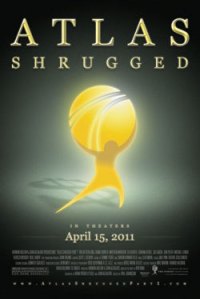
What to say about Atlas Shrugged, Part One? When I recently rewatched it OnDemand with a friend of mine who had just gotten back from Occupying somewhere, he threw a fit as soon as he heard wealthy 1 percenter Graham Beckel declaring, “I am on strike!” When I first saw it earlier in the year, in a theater full of strangers, they broke out into applause when they heard the same line. Atlas Shrugged is a wonderfully divisive film. If you’re a political person, your enjoyment of this film will probably come down to which news network you watch. If you enjoy those MSNBC spots where Rachel Maddow won’t shut up about the freakin’ Hoover Dam, you’ll probably hate Atlas Shrugged. If you truly believe that Fox News is “fair and balanced,” chances are you’ll enjoy it. But what if you’re like me and the only politics you follow are the politics of film and you only bow at the altar of cinema? Well, I enjoyed Atlas Shrugged because the film really is a grindhouse film at heart. It’s an uneven, low-budget film that has a few good performances (Beckel and Taylor Schilling), several bad performances, and ultimately, it goes totally against what establishment films have conditioned us to expect when we go to the movies. Ultimately, the film is a big middle finger extended at both the film and the political establishments and who can’t get behind that? Add to that, Roger Ebert hated it and when was the last time he was right about anything?
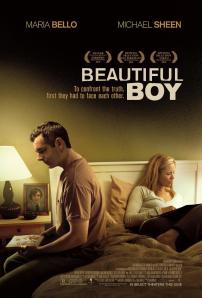
I’ve read a lot of rapturous reviews of this film online and my aunt Kate loved it when she saw it at the Dallas Angelika earlier this year. So, admittedly, when I watched this film via OnDemand, I had pretty high hopes and expectations but, unfortunately, none of those expectations came anywhere close to being met. In the film, two of my favorite performers — Michael Sheen and Maria Bello — play the middle-class parents who have to deal with the consequences (both emotional and physical) of a terrible crime perpetrated by their son. The film is based on the Virginia Tech massacre and both Sheen and Bello give excellent performances but overall, the film feels like a thoroughly shallow exploration of some various serious issues. Ultimately, the film’s refusal to provide an explanation for the crime feels less like a brave, artistic choice and more like a cop-out. The film is less abstract than Gus Van Sant’s Elephant and Denis Villeneuve’s Polytechnique but it’s also a lot less effective.
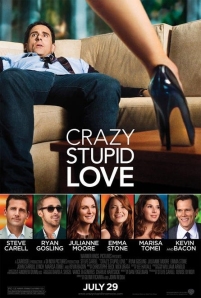
I don’t know if I’ll ever forgive Steve Carell for abandoning The Office and forcing upon me the current, almost painful season of the show. Still, I can’t totally blame him because the guy is totally a film star and he proves it in Crazy, Stupid Love by holding his own with other certifiable film stars like Ryan Gosling, Kevin Bacon, Marisa Tomei, Julianne Moore, and Emma Stone. In the film, Julianne Moore plays Carell’s wife who leaves him for a coworker (played by Kevin Bacon, doing his charming jerk routine). The depressed Carell is taken under the wing of womanizer Gosling who teaches Carell how to be more confident and appealing. Things seem to be working out well until Gosling starts going out with Carell’s daughter (played by Emma Stone). The movie, itself, isn’t anything special and it’s really kind of a mess but it’s saved by a massively appealing cast. And, by the way, Ryan Gosling —très beau! Seriously.
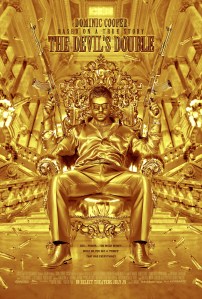
Taking place in pre-Desert Storm Iraq, The Devil’s Double claims to tell the true story of Latif Yahia, an Iraqi who was forced to serve as the double for the sociopathic young dictator-in-training Uday Hussien. I’ve read that there’s some debate as to how faithful The Devil’s Double is to the facts of the story and it is true that Latif is portrayed as being almost too good to be true but no matter. The Devil’s Double is a compelling and oddly fascinating little gangster film, one that manages to show the dangerous appeal of the excessive lifestyle of a man like Uday Hussien without ever actually being seduced by it. The film is dominated by Dominic Cooper, who gives a great performance playing both the tortured Latif and the cheerfully insane Uday.
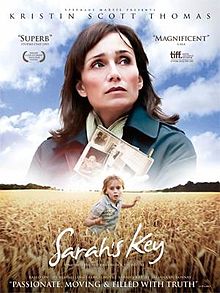
Sarah’s Key tells two stories at once and, the result, is a film that feels very schizophrenic in quality. The better part of the film deals with Sarah, a 10 year-old Jewish girl living in Nazi-occupied France. When Sarah and her parents are sent to a concentration camp, her younger brother is left behind in Paris. Sarah eventually manages to escape and desperately tries to get back to Paris to rescue her brother. Meanwhile, in the modern-day, a journalist (Kristen Scott Thomas) researches Sarah’s story and discovers that her French husband’s family has a connection of their own with Sarah’s story. The film is compelling and heart-breaking as long as it concentrates on Sarah but, unfortunately, the modern-day scenes feel forced and predictable and the end result is a film that’s never quite as good as it obviously could have been.
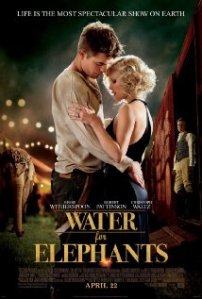
Look, I make no apologies — I freaking loved this movie. Yes, plotwise, this film feels almost like a parody and yes, so much of this film was over-the-top and kinda silly but I don’t care. I loved this film for the old-fashioned, melodramatic, and rather campy spectacle that it is. Robert Pattinson plays a Depression-era Ivy League college student-turned-hobo who ends up joining the circus and falling in love with Reese Whitherspoon, the wife of insane circus owner, Christoph Waltz. Pattinson isn’t much of an actor but he’s easy on the eyes and he and Whitherspoon have just enough chemistry to remain watchable. The film, however, is totally dominated by Waltz who is both charming and scary. The next time your man makes you sit through anything starring Jason Statham, you make him watch Water for Elephants.
So, guess what I did earlier today? That’s right — I put on a blindfold, a stumbled over to my ever-growing DVD, Blu-ray. and even VHS collection and I randomly selected 12 films!
Why did I do this?
I did it so you, the beloved readers of Through the Shattered Lens, could once again have a chance to tell me what to do. At the end of this post, you’ll find a poll. Hopefully, between now and next Sunday (that’s August 21st), a few of you will take the time to vote for which of these 12 films I should watch and review. I will then watch the winner on Sunday and post my review on Monday night. In short, I’m putting the power to dominate in your hands. Just remember: with great power comes great … well, you know how it goes.
Here are the 12 films that I randomly selected this afternoon:
Abduction — From 1975, this soft-core grindhouse film is based on the real-life abduction of Patty Hearst and was made while Hearst was still missing. Supposedly, the FBI ended up investigating director Joseph Zito to make sure he wasn’t involved in the actual kidnapping.
Aguirre, The Wrath of God — From director Werner Herzog and star Klaus Kinski comes this story about a Spanish conquistador who fights a losing battle against the Amazon.
Black Caesar — In one of the most succesful of the 70s blaxploitation films, Fred Williamson takes over the Harlem drug trade and battles the mafia.
Don’t Look Now — Donald Sutherland and Julie Christie are a married couple who attempt to deal with the death of their daughter by going to Venice, Italy. Christie quickly falls in with two blind psychics while Sutherland pursues a ghostly figure in a red raincoat through Venice. Directed by Nicolas Roeg.
The Lion In Winter — From 1968, this best picture nominee stars Peter O’Toole and Katharine Hepburn as King Henry II and his wife, Eleanor of Aquitaine. Taking place on Christmas Eve, Henry and Eleanor debate which one of their useless sons will take over a king of England. This film is also the feature debut of both Anthony Hopkins and Timothy Dalton.
Logan’s Run— From 1976, this sci-fi film features Michael York and Jenny Agutter as two future hedonists seeking Sanctuary and instead finding Peter Ustinov and a bunch of cats. Filmed in my hometown of Dallas.
Lost Highway — From director David Lynch comes this 1997 film about … well, who knows for sure what it’s about? Bill Pullman may or may not have killed Patricia Arquette and he may or may not end up changing into Balthazar Getty.
Mystic River— From director Clint Eastwood comes this film about murder, guilt, redemption, and suspicion in working-class Boston. Starring Sean Penn, Kevin Bacon, and Tim Robbins.
Naked Massacre — From 1976, this stark film is something a grindhouse art film. It takes the true life story of Chicago mass murderer Richard Speck and transfers the action to Belfast. Also known as Born for Hell.
Night of the Creeps— From 1986, this film features alien slugs that turn an entire college campus into a breeding ground for frat boy zombies. Tom Atkins gets to deliver the classic line: “Well don’t go out there…”
Petulia — Considered by many to be one of the best American films ever made and one of the definitive films of the 60s, Petulia tells the story of a divorced doctor (George C. Scott) who enters into an odd relationship with Julie Christie. Directed by Richard Lester, this film also stars Joseph Cotten, Richard Chamberlain, and the Grateful Dead.
What Have You Done To Solange? — From 1975, What Have You Done To Solange is a classic giallo that features dream-like murders, disturbing subtext, and one of the best musical scores of all time.
So, there’s your 12 films. Vote once, vote often, have fun, and I await your decision.
The name Matthew Vaughn should be familiar with comic book fans everywhere. In 2005, Vaughn was introduced as the director to replace Bryan SInger for the third film in the X-Men franchise. The news was met with some cautious optimism. This was a filmmaker who had quite the loyal and growing following for his work on Stardust and Layer Cake. Months after he was picked my 20th Century Fox news came down that he was backing out of the project due to personal reasons and the film scrambled for a replacement which ended up being Brett Ratner. History was made that day as the beginning of the franchise’s decline began and steep plummet which recently reached it’s nadir with 2009’s Wolverine: Origins.
It’s has now been five years since X-Men: The Last Stand made it to the big-screen and now we have a new film in the franchise. X-Men: First Class has a familiar name behind the director’s seat and it looks like Matthew Vaughn stayed this time around (after directing a smaller superhero film in Kick-Ass for 2010) to craft what could become the best film in the X-Men/Wolverine film franchise. This film is a prequel/reboot of sorts (more on that later) and brings a fresh set of eyes and take on the origin story of this franchise.
X-Men: Last Stand actually begins the film exactly how the first X-Men film began with the 1944 World War II concentration camp setting where a young Erik Lensherr (later to become Magneto) finally manifests his power over magnetic fields as he watches his parents torn from his side. The first film ended that sequence once Erik was knocked out, but this time around it continues with a mysterious man named Schmidt (aka Sebastian Shaw and played with James Bond villainous-flair by Kevin Bacon) taking great interest in Erik and his ability which Erik could only use during bouts of pain and anger. The film continues this slight change in the series’ origins by switching over to Westchester County and into the expansive home of a young Charles Xavier who finds a certain young, blue-skinned shapeshifter named Raven who he invites to stay and become his friend once he realized he wasn’t the only one who was different and with abilities.
These two sequences continue to move the film forward as the we see these two “leaders in the making” adults and trying to find their place in the world of the free-swinging lifestyle and the Cold War culture of the 1960’s. Charles Xavier (played like a well-meaning cad and good-natured naivete about the world by James McAvoy) is a student working on his doctorate in Oxford on genetic theories while his “sister” Raven (Jennifer Lawrence) accompanies him. This is a Xavier who still hasn’t found the patient benevelonce of Patrick Stewart’s Professor X and uses his considerable telepathic abilities to help him pick up on beautiful coeds instead. It’s during such a scene where we see Raven show just a hint of jealousy as Xavier tries his lines and moves on a beautiful British lass. It would seem Raven’s feelings for her ‘brother” may go beyond sibling affection though Xavier doesn’t see her as anything other than a sister for him to protect.
Erik Lensherr’s time as an adult was shown as having become a life of obsession over his treatment at the hands of the Nazi’s and those of Schmidt’s as he travels the world in search of escaped Nazi war criminals. Erik takes him throughout South America as he finds the trail of Nazis hiding out in that region since the end of the war. We see this adult Erik hardened by his anger and single-minded need for revenge on Schmidt and those he worked for. He’s not above using his abilities to kill in order to get the information he requires and there’s a hint of satisfaction when he does kill those he sees as responsible for his tragic upbringing with his magnetic abilities. These two adult sequences continues the film’s theme of the ideological difference between Xavier and Erik being formed through nature and nurture as their lives moved down diverging paths from an early beginning until it convergence for a small, brief period around the time of the Cuban Missile Crisis.
The film’s second act begins with Moira McTaggart (Rose Byrne), now a covert CIA Agent, investigating a certain Col. Hendry who she suspects as having betrayed the nation to the Soviets, but instead finds out that the true nature of Hendry’s associations were much more insidious and dangerous. The iconic Hellfire Club of the comics finally make their appearance with Schmidt who actually happens to be Sebastian Shaw (whose powers grant him the ability to absorb all kinetic energy which he uses to keep himself young and can release with explosive results), Emma Frost (January Jones) who’s a telepath with the ability to turn body in a sort of diamond-form, Riptide who can create tornado-like abilities and finally the demonic-looking Azazel whose ability to teleport might give people not well-versed in the “X-Men Universe” a clue as to one-half of parents who may be responsible for Nightcrawler in the second film.
X-Men: First Class spends much of this second act like it was Ocean’s 11 as Xavier and Erik get recruited by the CIA to find other mutants and create their own mutant team to counter Sebastian Shaw’s Hellfire Club and his goal of initiating World War III between the US and the USSR and thus destroy all of humanity and leave the planet for the mutants to rule over. Yeah, it is this part of the film’s plot which may strain the suspension of disbelief for some audiences who never grew up reading the comics, but it shouldn’t. Ian Fleming’s James Bond series used scenarios just as ludicrous with villains just as Machiavellian in the form of SPECTRE so X-Men: First Class and it’s world domination plans shouldn’t be too farfetched to fans of that British superspy and his adventures.
This middle section of the film is where X-Men: First Class actually begins to lag after a strong first act. I don’t know if the sequences of the new recruits training, bonding and learning how to use their powers could’ve been written to move much faster without losing some of the character building scenes. From how this second act played it seemed to look like scenes were actually cut out to try and keep the film from being too long (it’s final cut being just a tad over two hours already upon release), but I wouldn’t be surprised if the DVD/Blu-Ray release actually has a director’s or uncut version that actually expands this middle section to really give life to it instead of having it play out like a perfunctory training montage with a dash of character beats.
The film hits it’s action-film stride with the third and final act as Xavier and Erik’s team of young mutants must now use their abilities to stop Shaw and his Hellfire Club and at the same time prevent World War III from beginning and not freaking out the humans who are still unaware of their existence as a whole. It’s this third section which we see too much of it in the trailers and tv spots that one might say we’ve seen it all before we even see the film as a whole, but it still kept back a lot from those ads to make the whole final twenty minutes of the film thrilling and action-packed.
All of this could just mean that X-Men: First Class was just your run-of-the-mill superhero action film that we get on a yearly basis come summertime, but it’s a testament to Matthew Vaughn’s direction and the strength of the script by Vaughn, longtime collaborator Jane Goldman and Thor scribes Ashley Edward Miller and Zack Stentz that the film goes beyond being just an action film with all it’s sturm und drang coupled with fancy special effects. The previous films in the series always explored important cultural and moral themes that’s always been the bread-and-butter of the X-Men stories in the comic books. We just don’t see the film explore the ideological difference between Xavier’s peaceful co-existence between humans and mutants alike, but also we get more detail on why Magneto finally comes to the conclusion that war between humans and mutants was an inevitability and why his stance doesn’t fall under the aegis of being evil, but something that anyone could understand and even support whether one was human or mutant.
The story also doesn’t just pay lip-service to the idea of how mutants view themselves and how even within the mutant community there’s a visible rift between those whose abilities are invisible to the general population and those whose abilities and genetic mutation physically manifest themselves in such ways that to many might not look to appealing. This idea really gets a major exploration in the subplot involving Raven (soon to be Mystique), Hank McCoy and, to a certain degree, Xavier and Erik. We see how those like Xavier whose abilities don’t show in a physical manner have a sort of “don’t ask, don’t show” about those like Raven when it comes to their power when in public.
Raven (played beautifully by Jennifer Lawrence) is caught between Xavier who wants her to remain incognito so as not to shock the world too soon in realizing that mutants exists and that of Erik who sees Raven’s original blue-skinned form as beauty and perfection and how she should never hide who she truly is. This tug and pull between her two mentors makes for a convincing subplot in how Raven comes to the conclusion which would take her to the side of Magneto in later films, but also highlight how the two sides in later films have so much intertwining bonds of friendship and relationship that seeing them against each other becomes a tragedy on its own. Civil wars are not just a thing of humans but those who sees themselves apart from them.
The great performances by most of the leads add to the film’s strength. McAvoy and Fassbender, at first, look to be unconvincing in terms of their appearance as the younger versions of Patrick Stewart and Ian McKellen, respectively. This becomes a non-issue once they’ve established themselves through their performances which gives new layers to the personalities of Professor X and Magneto. Many people always saw these two as the comic book version of Martin Luther King, Jr and Malcolm X, but that’s an oversimplification. The film and the performances by McAvoy and Fassbender digs deeper into both their characters’ motivations and ideologies and how their past experiences and upbringing couple with their time together as brothers-in-arms and friends show more about these two than just being mutant-proxies of MLK and Malcolm X. The other young mutants do an adequate enough job that they don’t seem lost in the film. Nicholas Hoult as the young Hank McCoy and how he plays off Lawrence’s Raven during their little subplot in the film is one stand-out that I hope gets explore even more in any follow-up sequel.
There’s a nice burgeoning young love chemistry between him and Lawrence as Beast and Raven that doesn’t seem too tacked on to create a the prerequisite love couple in any film. Their common trait of having physical mutations and how they seem to both feel apart even from their fellow mutants develop their characters in ways the previous films in the series never did. They never want to rid themselves of their mutant powers. They just want to look normal and still keep their abilities. It’s a having your cake and eat it too mentality that has some surprising results for both Raven and Hank.
X-Men: First Class has had some fans of the series put in a very difficult situation. The film definitely is a prequel to the previous films, but it also does a major time in rewriting continuity in the series. I was one of those fans and thought it would ruin the film in the context of the franchise. I’m surprised that in the end I didn’t really care and actually hope that this film actually is a reboot of the franchise. I see this film and forget the previous three as being part of it. This film was just too good and fun in it the end for continuity issues to become the major flaw that sinks it. I liken this film as similar to Christopher Nolan rebooting the Batman film franchise. That film honored the contributions to the character, but went on it’s own way to tell that character’s tale. I see Vaughn doing the same with this film. He has done something which many thought was a near-impossible task and that’s make the X-Men franchise relevant once more in a pop-culture landscape that seems to have left the franchise behind after the disastrous Wolverine: Origins of 2009.
This film delivered on the ideas that made the comic books so beloved by millions of fans for almost a half-century. It made great use of the 1960’s time and setting to tell a story of these characters beginnings as heroes and villains (though the latter shouldn’t be seen as them being truly just evil bad guys). Even the inclusion of real-world historical event like the Cuban Missile Crisis was a nice touch which gave the film a foundation in realism. Again, this film played off like a superhero, Marvel version of an Iam Fleming James Bond story. For those who are huge fans of the previous films there’s even two brief cameos of those films two favorite characters that appear in this film. They don’t come off as cheesy and unnecessary and actually come off as great additions. I won’t mention who these cameos were but the audience’s reaction to them was very vocal and very positive. I say the same should be said for X-Men: First Class as a film that resuscitates the franchise.
Super, a very dark and very Catholic comedy that pretends to just be your standard issue super hero movie, played for about three weeks down here in Dallas. Despite a cast that included Kevin Bacon, Liv Tyler, Ellen Page, and Rainn Wilson, it kinda came and went like a ship in the night. It got a few vaguely confused reviews from the local critics and the audience that I saw the film with seemed to be pretty confused as to what they were watching. Which is a shame because if you give the film a chance, you’ll discover one of the best films of 2011.
In Super, Rainn Wilson plays a short order cook who, at various points in his life, has had visions in which he believes God has spoken to him. When his wife, an ex-drug addict played by Liv Tyler, leaves him for a sleazy club owner and low-level drug dealer (Kevin Bacon), Wilson sinks into a deep depression until finally he has a vision in which God sends a bunch of hentai-style tentacles to cut off the top of Wilson’s head and literally place an idea in there. That idea is for Wilson to become a costumed super hero and fight “evil.”
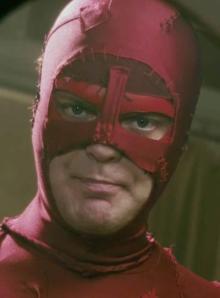
So, that’s what Wilson does, dressing up in what looks like a low-rent Halloween costume, and taking on all those who he considers to be evil and/or doing the wrong thing. This could be anything from dealing drugs to cutting in line at the movies. (And this is a big reason why I loved Super because it asked the same question that I always wonder when I see a super hero movie — i.e., who is to say what’s wrong and what’s right?) Calling himself The Crimson Bolt, Wilson soon becomes a cult figure in the city but he still finds himself incapable of getting Tyler away from Bacon.
Eventually, he finds himself saddled with a sidekick. Ellen Page, giving a performance just as award-worthy as her more acclaimed role in Juno, plays Libby, who works in the local comic book store. She is the only person who figures out that Wilson is actually the Crimson Bolt and she quickly decides that they should work together. Calling herself Boltie, Page quickly turns out to be just as zealous in the pursuit of “justice” as Wilson. Unlike Wilson, who sees himself as being on a holy mission, Page appears to just be happy to have an excuse to kill people.
It all leads to the expected final confrontation with the bad guys and a surprisingly poignant ending which forces the viewer to reconsider what they thought they knew about every character in the film.
Super’s low-budget is obvious in almost every frame of the film but it works to the movie’s advantage, creating an almost defiantly gritty atmosphere. The film is also full of good performances. I already mentioned Page but, in the lead role, Rainn Wilson is perfectly cast. For those of us who love him on The Office, it’s sometimes hard to realize that Wilson is not Dwight Shrute, he’s just an actor playing a role. However, with Super, Wilson proves himself to be a charismatic actor who, if given the right role, can easily carry the film. Towards the end of the film, one of the bad guys taunts Wilson for concerning himself with seemingly minor things like people cutting in line. Wilson shouts, “You shouldn’t cut!” with such righteous fury that it becomes clear that he’s not talking about cutting in line as much as he talks about living in a world where people just no longer seem to care about doing the right thing. It’s an unexpectedly effective scene and line and Wilson handles it perfectly.
Super is the latest film from a genius named James Gunn. Now, I should admit that I am like crazy in lust with James Gunn. Seriously, he’s handsome, he’s funny, he’s talented, he’s hot, he’s vulnerable, he’s dangerous, he’s Irish, and he comes from a Catholic background, which is pretty much a perfect description of my dream man. Plus, he talked to me once on twitter and as a result, I got all giggly and red-faced and I sent him all of these gushy tweets which he never responded to, probably because I was like totally coming across like some sort of psycho stalker type. So, some people are probably saying, “Well, gee, Lisa Marie, are you sure you’re not just letting your damp panties review this film as opposed to your unbiased judgment as a film watcher?” And to those people, I say, “Shame on you and watch your mouth. And speaking of mouths, guess where my mouth would be if I ever met James Gunn…”
Mon amour James Gunn
But let’s get back Super. Super has been frequently compared to Kick-Ass (even though Super actually went into production first) and, on the surface, they do appear similar. It’s only when you dig and look under the surface that you discover that Super and Kick-Ass have about as much in common as I do with that overly friendly girl who always takes our tickets at the Angelika. (She’s the same girl who needs to stop smiling so much at Jeff every time we try to get popcorn. Seriously, not kidding.) While Kick-Ass was undeniably violent, it was also one of those films where the violence was rarely lingered over. Super is not only incredibly violent but it’s also incredibly bloody. Gunn doesn’t just show us the violence but he shows us the end results of the violence as well and, as a result, the audience is forced to consider how much we love to see people getting shot in the head just as long as we don’t have to worry about seeing the body afterwards. Whereas Kick-Ass’s Aaron Johnson was portrayed as being a comic book fan who got to live out his fantasy, Rainn Wilson in Super is specifically portrayed as not being a comic book fan as much as he’s just a genuinely unstable guy who becomes a super hero in order to maintain the delusional black-and-white morality of his worldview. Whereas Chloe Grace Moretz’s Hit Girl was portrayed as having been raised to kill, Ellen Page’s Boltie kills simply because she now suddenly has the opportunity to do so. Finally, Kick-Ass actually ended up fighting true evil doers whereas the villains played by Kevin Bacon and Michael Rooker, in Super, are probably the most stable and sensible characters in the entire film.
In short, Super is that perfect rarity — a truly transgressive work of popular entertainment.
Yes, Super is one of those films that delights in challenging and even ticking off the audience. The common filmgoer watches and asks, “If it’s a drama, then why is it so funny? If it’s a comedy, then why does Rainn Wilson’s heartbreak seem so real and sincere? If Rainn Wilson and Ellen Page are the good guys, why does the film suggest that they both might be sociopathic? If Kevin Bacon’s the bad guy, why is he so likable here?” As a result, the common filmgoer probably walked out of Super feeling confused and slightly annoyed that things didn’t work out the way they were expecting.
Well, you know what? The common filmgoer sucks. The common filmgoer is responsible for every bad thing that has ever happened in the history of the world. The common filmgoer is wasting oxygen that you, my deeply enlightened friends, could make much better use of. This is not the site for the common filmgoer and if you’re still reading, then you’re not a common filmgoer either.
Today we saw the release of the second official trailer for the upcoming X-Men prequel/reboot helmed by British director Matthew Vaughn.
X-Men: First Class looks to show the early days when Professor X and Magneto were still friends and allies instead of the adversarial relationship they had in the first three films in the franchise. This new trailer shows more of the characters who will be involved in this film. It also shows the mutants and their powers in action. I must admit that I wasn’t too thrilled with the previous trailers shown about this film, but this latest shows more action and finally reveals it’s summer blockbuster pedigree. The sequence with Magneto lifting the submarine out of the water was really cool.
It’s still not the superhero film this summer that tops my must-see list, but this trailer has put this film in the running as one of the films I must-see.
X-Men: First Class is still slated to have a June 3, 2011 release.
In what could be 2011’s version of Kick-Ass, the latest film from writer-director James Gunn looks to take the superhero genre into the realm of ultraviolence and some heavy dark comedy. The film is simply titled Super and stars Rainn Wilson, Ellen Page, Liv Tyler and Kevin Bacon and it’s about Wilson’s character deciding he’s had enough of being the meek and the weak. His decision to take control of his life takes him into a very dark place where superheroes are made and lots of vigilante justice served on crime everywhere.
From the look of the trailer it definitely looks like its going to go even farther than what Kick-Ass did in 2010. This film may also share something with that film in that it probably won’t make the sort of money it’s supporters and fans are hoping it’ll make.
So, I suggest people see this film as soon as it comes in their area. People need to support films like this or they should just shut up about how Hollywood has run out of ideas and only cookie-cutter flicks are being pushed on the audience year in and year out.
Of all the Marvel Comic book films coming out this summer it is the one not being made by Marvel themselves which seems to be getting the biggest amount of negative press and buzz from the fans. The last couple weeks has seen pictures from the set either leaked by accident or on purpose to gauge fan reaction. To say that reaction has been underwhelming would be an understatement.
The film is 20th Century Fox Studios latest film on the X-Men franchise. A franchise which is now batting 2-for-4. The first two films in the franchise were thought of as being very good to great and the last two seen as a major mess or just plain awful. Now the fifth film has just released it’s first official trailer and from the look of things it looks to be retconning all the vents which occurred in the first four films. The scenes used for the trailer looked very good and the looks of the many (people complaining about the amount of characters in the third Nolan/Batman film will be apoplectic once they see First Class) characters gives me some hope.
The film has Matthew Vaughn just fresh off of Kick-Ass and it will be up to him to create a gem out of the rough stone people seem to be judging the film at the moment. X-Men: First Class is set for a June 3, 2011 release.