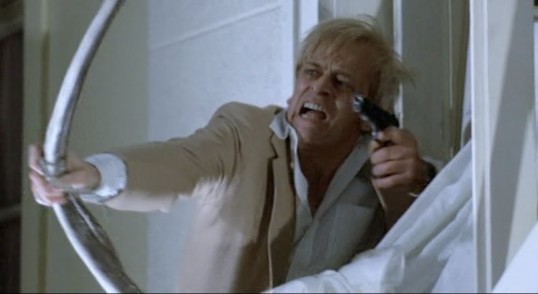
From the 1960s until his death in the early 90s, German actor Klaus Kinski was known for being the enfantterrible of world cinema. Kinski was a volatile talent, an often angry and occasionally violent performer who specialized in playing extreme characters and who reportedly took pride in his ability to drive directors crazy. Kinski appeared in good films and bad films and, in every one of them, he gave the type of unique performance that only he was cable of giving.
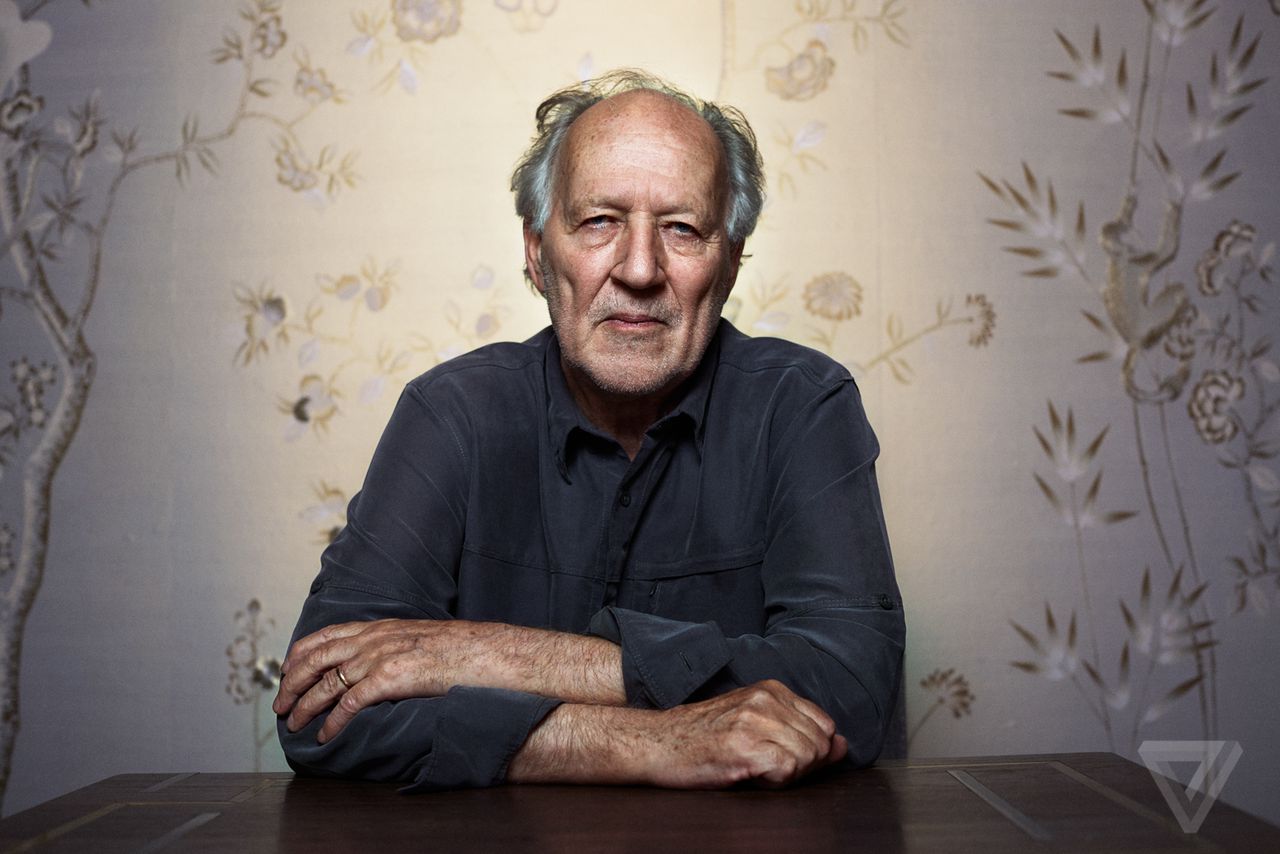
Kinski is best-remembered for his work with his frenemy, Werner Herzog. When Herzog and Kinski weren’t making films together, they were often criticizing each other in the press and sending one another death threats. In the documentary My Best Fiend, Herzog documented his partnership with Kinski. Even while Herzog talked about the time that he went to Kinski’s home with the intent of killing him, Herzog’s affection for his frequent star was obvious. Klaus Kinski was one of an unhinged kind.
In Werner Herzog’s 1980 film, Nosferatu, Kinski played the role of Dracula. In this scene, he comes to visit Isabelle Adjani’s Lucy.
4 Shots From 4 Films is just what it says it is, 4 shots from 4 of our favorite films. As opposed to the reviews and recaps that we usually post, 4 Shots From 4 Films lets the visuals do the talking!
100 years ago today, Klaus Kinski was born in Poland. Kinski was a brilliant actor who, by all accounts, was an absolute monster in his private life. Werner Herzog worked with him on several films and reportedly considered murdering him on more than a few occasions. Herzog, himself, wrote about the time that he had spent in a mental asylum and the time that was diagnosed as being a psychopath. Because of his talent, he appeared in many great films. Because of his reputation for being a literal madman, he also missed out on a lot of great roles and spent much of his career appearing in low-budget exploitation flicks. Many of those films were in the horror genre.
Today, on the anniversary of Kinski’s birth, TSL presents….
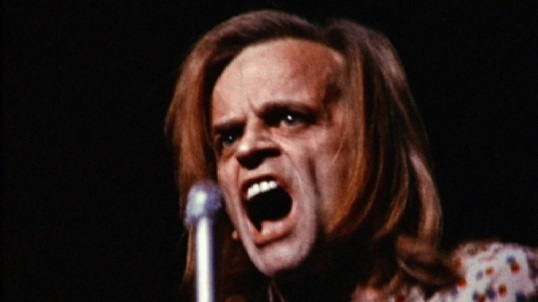
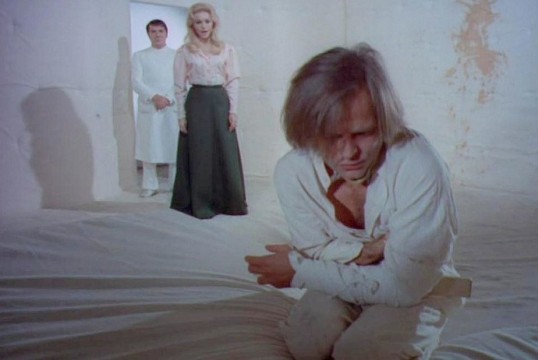
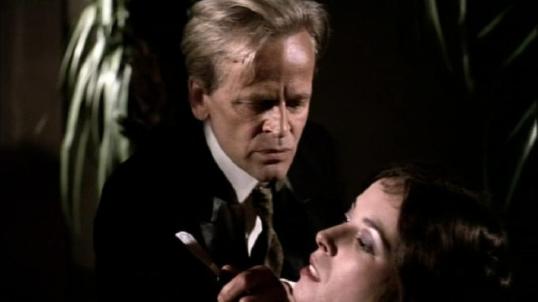
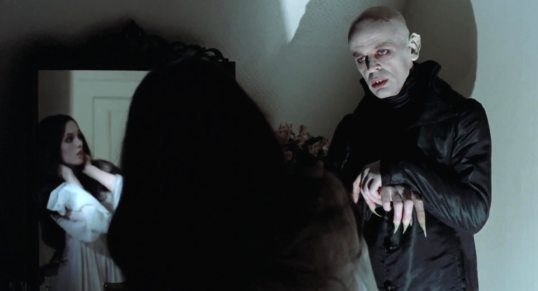
4 Shots From 4 Klaus Kinski Films
Count Dracula (1970, dir by Jess Franco, DPs: Manuel Merino and Luciano Trasatti)
Jack the Ripper (1976, dir by Jess Franco, DPs: Peter Baumgartner and Peter Spoerri)
Nosferatu The Vampyre (1979, dir by Werner Herzog, DP: Jörg Schmidt-Reitwein)
Venom (1981, dir by Piers Haggard, DPs: Denys Coop and Gilbert Taylor)
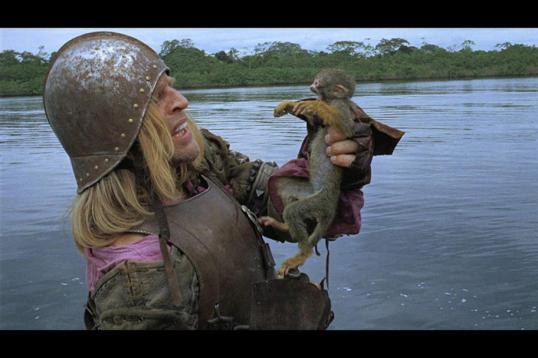
In honor of Werner Herzog’s birthday, today’s scene that I love comes from one of his best films. 1972’s Aguirre, The Wrath of God not only established Herzog as a major filmmaker but it also showed that he was the director who could get the best out of the notoriously difficult Klaus Kinski.
In this scene, Kinski plays the mad conquistador, Aguirre. Lost with his men in the Amazon, Aguirre establishes control over the dwindling expedition.
4 Or More Shots From 4 Or More Films is just what it says it is, 4 shots from 4 of our favorite films. As opposed to the reviews and recaps that we usually post, 4 Shots From 4 Films lets the visuals do the talking!
Today, the Shattered Lens wishes a happy birthday to one our favorite directors, the great Werner Herzog! It’s time for….
8 Shots From 8 Werner Herzog Films
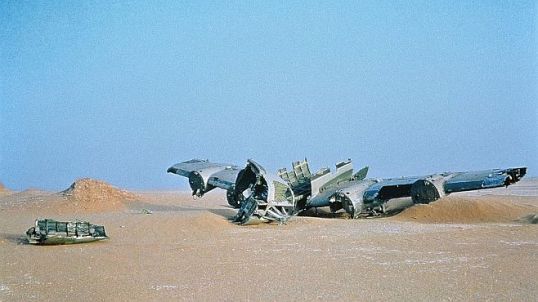
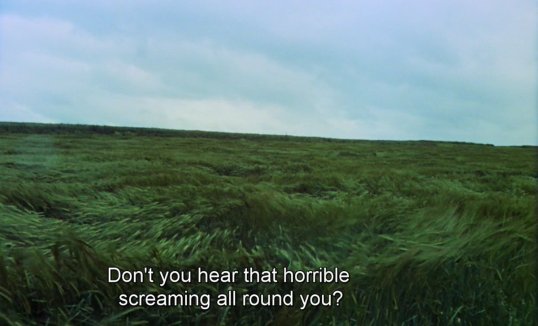
Fata Morgana (1971, dir by Werner Herzog, DP: Jörg Schmidt-Reitwein)
Aguirre The Wrath of God (1972, dir by Werner Herzog. DP: Thomas Mauch)
The Enigma of Kaspar Hauser (1974, dir by Werner Herzog, DP: Jörg Schmidt-Reitwein)
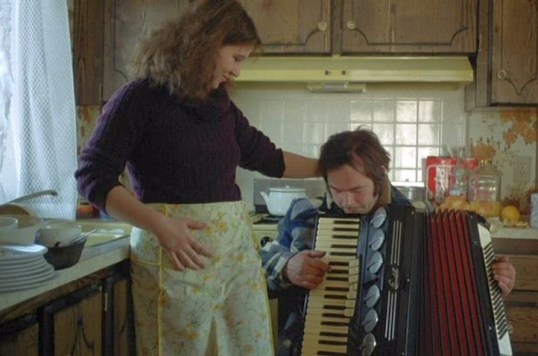
Stroszek (1977, dir by Werner Herzog, DP: Thomas Mauch)
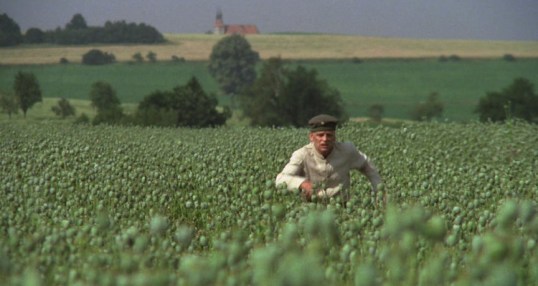
Woyzeck (1979, dir by Werner Herzog, DP: Jorg Schmidt-Reitwein)
Nosferatu The Vampyre (1979, dir by Werner Herzog, DP: Jörg Schmidt-Reitwein)
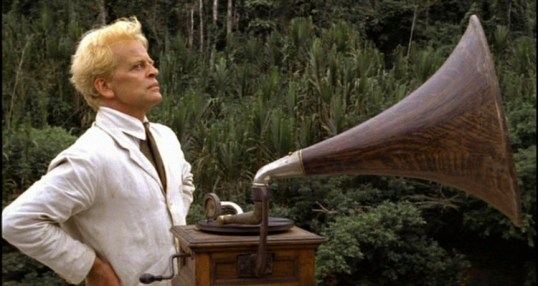
Fitzcarraldo (1982, dir by Werner Herzog, DP: Thomas Mauch)
Bad Lieutenant: Port of Call New Orleans (2009, dir by Werner Herzog, DP: Peter Ziedlinger)
“For here on this river, God never finished his creation.” — Balthasar
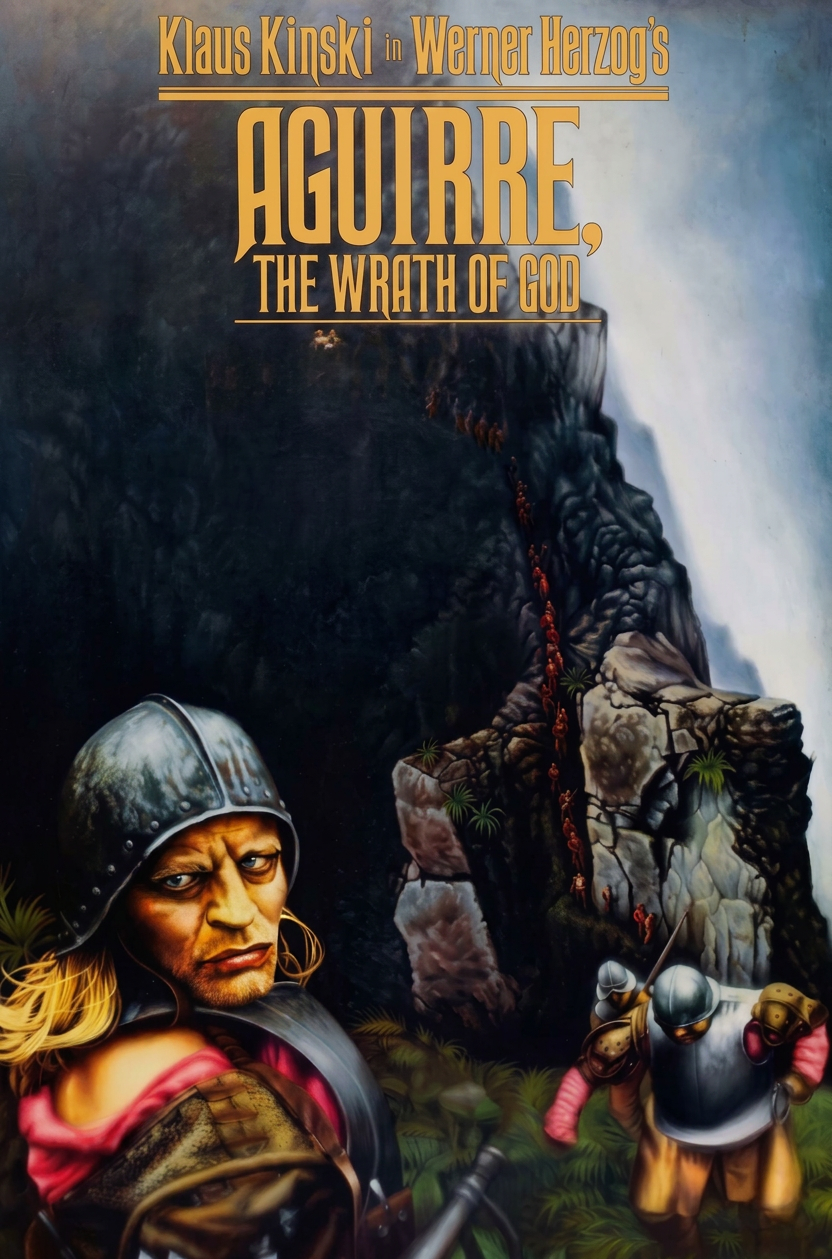
Werner Herzog’s Aguirre, the Wrath of God opens with one of the most hypnotic sequences in cinema: a column of Spanish conquistadors and indigenous slaves snaking down a fog-shrouded Andean pass, cannon winched separately. From that first frame, you sense you’re watching not a historical adventure but a fever dream. The film is loosely based on the real-life Lope de Aguirre, a Basque mutineer who searched for El Dorado in the 1560s. But as Herzog later confirmed, historical accuracy was never the point. Aguirre is fiction—a myth sculpted from jungle heat, river currents, and one actor’s maniacal commitment. Remarkably, the production itself became a hellish mirror of the narrative: shot deep in the Peruvian rainforest under conditions so brutal that the line between making a movie and surviving an ordeal vanished.
The plot is simple. In 1560, a Spanish expedition descends into the Amazon basin, searching for the golden city of Manoa. When rapids prove too treacherous, a smaller party is sent ahead under the noble but hapless Don Pedro de Ursúa (Ruy Guerra). Among them is Aguirre (Klaus Kinski), a wiry, half-mad soldier who immediately undermines authority. After Ursúa is murdered, Aguirre seizes control, declaring himself “the Wrath of God” and proclaiming a new monarchy. What follows is not a rousing conquest but a slow hallucinatory unraveling: rafts stuck on looping rivers, starvation, arrows from invisible natives, and the collapse of every civilizing impulse. This is one man’s battle against nature and his personal crisis of faith—a crisis the production team would come to know intimately.
Herzog’s storytelling prioritizes mood over plot. The narrative drifts through long takes of jungle canopy, close-ups of Kinski’s hollow eyes, and Popol Vuh’s otherworldly score. But the film’s raw authenticity comes from its production: a near-literal trek through jungle hell. Herzog took a small cast and crew into the Peruvian rainforest with no insurance, no backup equipment, and no evacuation strategy. The Urubamba River was unpredictable, with hidden rocks and stretches local guides refused to navigate. Rafts capsized. Food spoiled. Actors began unraveling for real. When a soldier in the film announces, “We are walking in circles,” it is both scripted and a genuine observation from an extra who’d passed the same fallen tree three days running. Herzog left that take in. The boundary between fictional madness and documentary collapse dissolved completely.
And then there was Klaus Kinski. If the jungle was one monster, Kinski was another. The conflict between Herzog and his star is the stuff of legend. Kinski arrived volatile, prone to screaming fits, threatening to abandon the production. At one point, a native chief offered to kill Kinski for free. Herzog declined—he still needed the actor alive. On another occasion, Herzog reportedly held Kinski at gunpoint during an attempted walkout. Kinski stayed. That friction bleeds into every frame. Kinski’s rage and paranoid stillness aren’t simulated; they’re the genuine product of a man frayed by heat, isolation, and his own demons. That is not method acting in a safe studio. It’s a man on the edge, pointed at a director who refused to flinch.
What lifts Aguirre into high art is its philosophical dread, earned through real suffering. And at its heart is Aguirre himself, a character who feels less like a historical figure and more like a literary archetype. As played by the manic Kinski, Aguirre is a remarkable fusion: the tragic Miltonian rebel and the obsessive Melvillean monomaniac. Like Satan in Paradise Lost, Aguirre defies divine and imperial order, preferring to reign in hell than serve in heaven. His self-coronation and final soliloquy echo Milton’s antihero—magnificent in defiance, hollowed by pride. But Herzog drains the grandeur, leaving only the fall without the poetry. Simultaneously, Aguirre is pure Ahab from Moby-Dick: another obsessive dragging a reluctant crew into the void on a suicidal quest. El Dorado is his white whale, an obsession that obliterates loyalty, love, and sanity. Both are swallowed by their obsession—Ahab by the sea, Aguirre by the jungle. But where Melville gives Ahab a thunderous final confrontation, Herzog gives Aguirre a whimper: a circle of monkeys, a drifting raft, and a whispered promise of a dynasty that will never come. Kinski holds both archetypes in suspension—Satan’s pride and Ahab’s fixation—and grinds them into something unrecognizable, belonging only to Herzog’s fever dream.
In the film’s most famous scene, Aguirre stands alone on a raft littered with corpses, small monkeys crawling over his armor, and whispers, “I will be the Wrath of God. Who else is with me?” No one. The jungle has swallowed everyone. Herzog frames this as the logical end of both the Miltonian and Melvillean arcs: absolute power in absolute isolation. The scene was shot in one take—not for artistry but because the raft was about to be swept away. The monkeys were real, biting the crew and defecating on Kinski’s armor. He didn’t break character. He couldn’t afford to. That’s the difference between a film that describes madness and one that embodies it.
Visually, Aguirre is a masterclass in low-budget grandeur. Cinematographer Thomas Mauch’s handheld camera glides through the jungle like a ghost. The opening descent feels supernatural. Rivers fill the frame until you lose direction. A galleon stuck in high branches—a leftover from a previous flood—becomes the film’s central metaphor: even empire is helpless against nature’s chaos. That chaos was logistical as well as thematic.
If there’s a weakness, it’s that the pacing can feel punishing. This film doesn’t build to a climax; it decays. Characters die offscreen or vanish. There is no redemption, no final battle. Some viewers may find this anticlimactic, but that’s the point. Herzog isn’t telling a story about winning or losing. He’s documenting a psychic meltdown from the inside, and meltdowns don’t follow three-act structure. The production’s own meltdown—hunger, disease, screaming matches on muddy riverbanks—only reinforces that vision. Aguirre is not a film about a man battling nature and losing his faith. It’s a film that became that battle, in real time, with real stakes, and somehow survived.
Years after release, Herzog clarified that Aguirre bears only the loosest resemblance to the historical Lope de Aguirre. He claimed he dreamed the film during a hike in the Alps. That dream-logic explains why Aguirre feels less like a period piece than a prehistoric vision. History is just a costume; the real subject is the human capacity to mistake madness for destiny. And that destiny, filtered through Kinski, is neither strictly Miltonian nor Melvillean but a nightmare hybrid: a fallen angel who keeps hunting the whale long after the ship has sunk.
In the end, Aguirre, the Wrath of God remains a towering, unsettling achievement. It influenced everything from Apocalypse Now to Resident Evil 4, but no imitation has matched its specific, waterlogged power. Despite the leeches, dysentery, gun threats, and screaming, the film that emerged is haunting, mesmerizing—a surreal trip into one man’s battle against nature and his crisis of faith. Herzog wanted “ecstatic truth” rather than mere fact. Aguirre is ecstatic truth: a fiction that feels more real than reality, a portrait of a madman that makes you understand why sanity is fragile, and a warning about conquest that remains urgent half a century later. Watch it on the biggest screen you can find, late at night, alone. The monkeys will be waiting. And somewhere in the jungle, Herzog and Kinski are still arguing.
“The mind of man is capable of anything.” — Charles Marlow
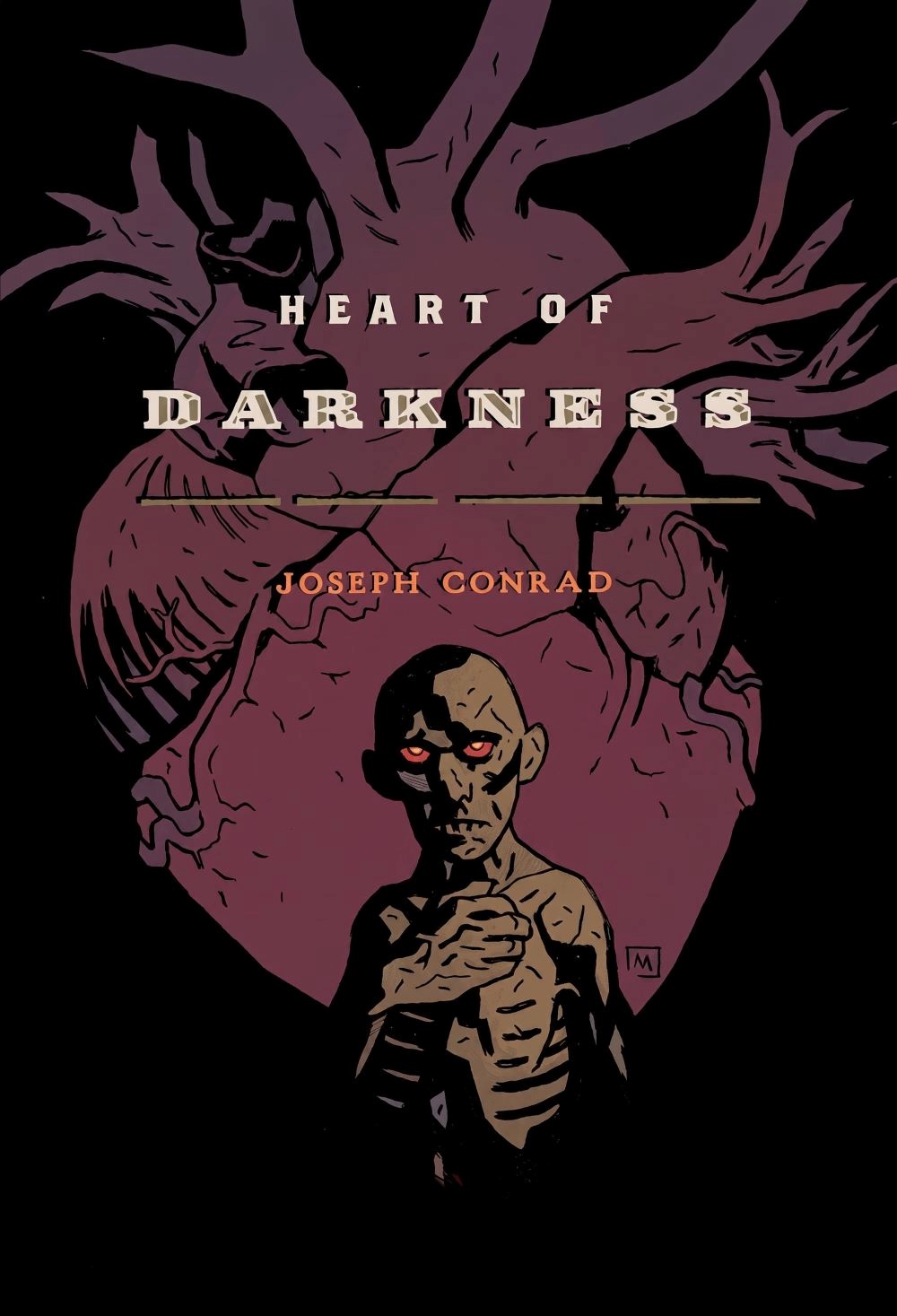
There’s a strange, magnetic pull to Joseph Conrad’s Heart of Darkness that keeps readers coming back, even when the book itself seems determined to repel you. Published in 1899, this novella is often taught as a classic of colonial critique, but spending time with it feels less like a lecture and more like a slow, feverish drift up a murky river. The plot is deceptively simple: a British sailor named Marlow takes a job piloting a steamboat for an ivory trading company in the Belgian Congo. His real mission, however, is to find Kurtz, a charismatic, brilliant agent who has supposedly gone mad and set himself up as a god among the natives. What Marlow finds instead is a hollow man whose final whisper—“The horror! The horror!”—becomes one of literature’s most chilling epitaphs.
Conrad’s prose is dense and atmospheric, almost claustrophobic. He writes in long, looping sentences that circle back on themselves, mimicking the tangled jungle and Marlow’s own spiraling psyche. You don’t read this novella so much as wade through it, feeling the heat, the flies, and the creeping sense of moral decay. The frame narrative—Marlow telling his story to a group of sailors on the Thames—adds a layer of ironic distance. London, the heart of empire, is presented as another kind of darkness, a civilized wilderness that has simply learned to hide its savagery behind suits and ledgers. This structural choice is brilliant because it forces you to ask: is the “darkness” really in Africa, or is it something Europe shipped downriver?
That said, any honest review has to address the elephant in the room: the book’s treatment of race. For decades, the Nigerian writer and critic Chinua Achebe has mounted the most devastating case against Heart of Darkness. In his landmark 1975 lecture “An Image of Africa: Racism in Conrad’s Heart of Darkness,” Achebe argues that Conrad, despite ostensibly critiquing Belgian colonialism, produced a work that is fundamentally racist—a piece of literature born directly from the imperial colonial era and its dehumanizing ideologies. Achebe’s point is sharp and uncomfortable: the novella seeks to expose the dangers and horrors of imperialism, yet it simultaneously perpetuates the very racist ideas it should be dismantling. Conrad denies nearly every African character a name, a voice, or an interior life. They appear as limbs, grunts, or “savages” performing ominous rituals on the shore. Africa itself is reduced to “a place of darkness,” “the prehistoric earth,” and a blank space on the map waiting for European meaning. The sole exception is a well-dressed native man who works as a cook—and even he is reduced to a clumsy, almost comic figure. Marlow is more disturbed by the sight of “improper” cannibals restraining themselves than he is by the company’s brutal exploitation.
Achebe’s critique cuts to the bone: Conrad may have hated the cruelty of colonialism, but he couldn’t imagine Africans as fully human. He traded one set of stereotypes for another, offering a critique of empire that remains trapped inside empire’s own racial logic. You can argue that Conrad is exposing racism by showing Marlow’s limited perspective, but the text gives us no alternative viewpoint. The Congolese remain scenery for a white man’s existential crisis. That’s not just dated; it’s a structural flaw that makes the book feel less like a universal tragedy and more like a monologue delivered in a vacuum—and, as Achebe famously wrote, “a book which parades in the most vulgar fashion prejudices and insults from which a section of mankind has suffered untold agonies and atrocities should not be called a great work of art.” So while the novella wants to critique colonial violence, it cannot see the violence of its own representational strategies. The very language Conrad uses to evoke horror—the “savage” drums, the “prehistoric” shores—ends up reinforcing the racist hierarchies he pretends to question. Overt insults mix with subtle, almost unconscious dehumanization, creating a text that is as morally compromised as the ivory traders it condemns.
Where Heart of Darkness still stings is in its psychological precision, even as Achebe’s critique complicates any easy admiration. Kurtz is a masterpiece of ambiguity: a poet, a painter, a journalist who wrote a report on “civilizing” the natives, only to scribble at the bottom, “Exterminate all the brutes!” He represents the lie at the core of imperialism—the idea that Europe brings light to darkness, when in fact it brings greed, violence, and an insatiable hunger for ivory. The novella’s real horror isn’t the jungle or the cannibals; it’s how easily a man with noble ideals can become a skull-decorating tyrant. Conrad, who himself worked in the Congo, understood that the heart of darkness is not a place but a capacity we all carry. Yet Achebe would counter that this “we” is tellingly selective—the capacity for darkness is explored in Kurtz and Marlow, while actual African people are merely the backdrop against which that darkness is measured.
Despite its flaws—or perhaps because of their uncomfortable rawness—Heart of Darkness has proven enormously influential since its publication. Its DNA can be found in everything from T.S. Eliot’s The Waste Land (which originally quoted Kurtz’s “horror” as an epigraph) to Werner Herzog’s Aguirre, the Wrath of God. But the best and most famous example is Francis Ford Coppola’s 1979 film Apocalypse Now, which transplants the story from colonial Congo to the Vietnam War. Captain Willard stands in for Marlow, and the rogue Colonel Kurtz (famously played by Marlon Brando) becomes the ivory trader’s spiritual twin—a decorated American operative who has set up his own brutal kingdom in the Cambodian jungle. Coppola keeps Conrad’s core structure: a river journey into madness, a whispered report on “unsound methods,” and a final, intimate confrontation with a man who has seen too much. What makes Apocalypse Now such a brilliant adaptation is that it doesn’t just copy the plot; it captures the feverish, hallucinatory tone. The film’s famous line—“I love the smell of napalm in the morning”—echoes Kurtz’s seductive, terrifying embrace of violence. By updating the setting, Coppola proved that Heart of Darkness was never really about the Congo. It was about the darkness any empire carries inside itself. Yet even here, Achebe’s shadow lingers: the film, like the novella, largely sidelines the Vietnamese and Cambodian people, turning them into anonymous threats or scenery for an American psychodrama.
So, is this a book you should read? Yes, but with caution and critical awareness. It’s short—under 40,000 words—but it’s not an easy afternoon’s entertainment. Read it alongside Achebe’s essay “An Image of Africa” or a historical account of Leopold II’s atrocities. Treat Marlow as an unreliable narrator, not a prophet, and recognize that Conrad’s attempt to critique empire is fatally compromised by the very racial imagination he never managed to escape. The prose can be maddeningly vague, and the pacing sometimes stalls under the weight of its own symbolism. Yet for all its flaws, Heart of Darkness refuses to fade away, in part because artists from Conrad to Coppola keep finding new horrors to pour into its shape, and in part because critics like Achebe force us to read it honestly—as both a searing study of evil and an uncomfortable document of that same evil’s persistence. It’s a mirror held up to the worst of us, and whether you see a portrait of colonialism, a study of madness, a racist artifact, or all three at once, you won’t forget what stares back.
4 (or more) Shots From 4 (or more) Films is just what it says it is, 4 (or more) shots from 4 (or more) of our favorite films. As opposed to the reviews and recaps that we usually post, 4 (or more) Shots From 4 (or more) Films lets the visuals do the talking.
Today, the Shattered Lens pays homage to the greatest of Mardi Gras cities, New Orleans!
4 Shots From 4 New Orleans-Set Films
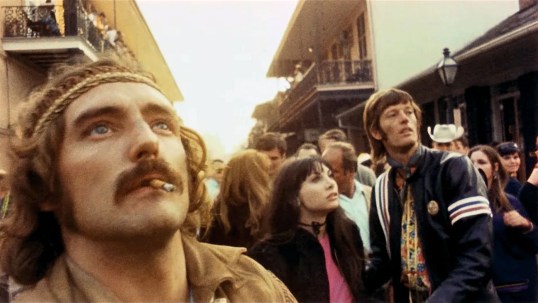
Easy Rider (1969, dir by Dennis Hopper, DP: Laszlo Kovacs)
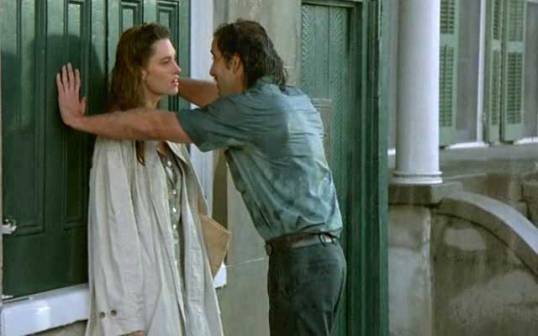
Zandalee (1990, dir by Sam Pillsbury, DP: Walt Lloyd)
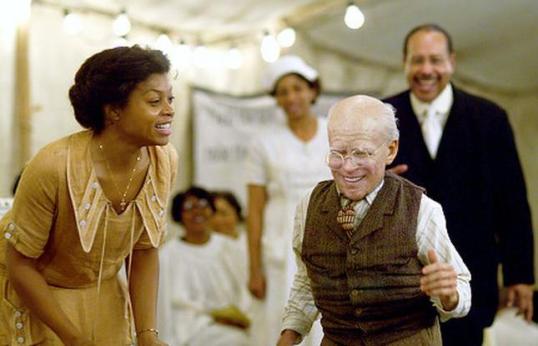
The Curious Case of Benjamin Button (2008, dir by David Fincher, DP: Claudio Miranda)
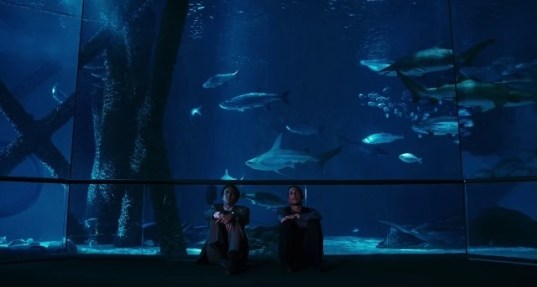
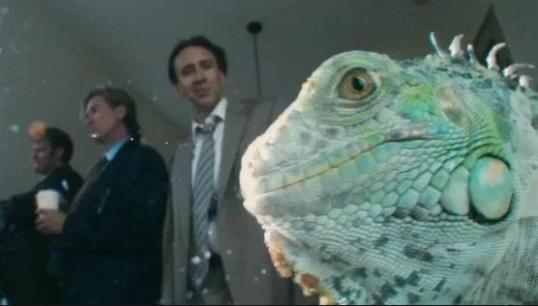
Bad Lieutenant: Port of Call New Orleans (2009, dir by Werner Herzog, DP: Peter Zieitlinger)
Ever since Werner Herzog’s Bad Lieutenant: Port of Call New Orleans was first released in 2009, people have debated the symbolism of the iguanas on the coffee table. Are they just a sign that Nicolas Cage’s bad lieutenant is totally high or do they have a deeper meaning? Myself, I’m not even going to try to guess. All I know is that the lieutenant eventually came to appreciate their presence.
In honor of Werner Herzog’s birthday, today’s scene that I love comes from one of his best films. 1972’s Aguirre, The Wrath of God not only established Herzog as a major filmmaker but it also showed that he was the director who could get the best out of the notoriously difficult Klaus Kinski.
In this scene, Kinski plays the mad conquistador, Aguirre. Lost with his men in the Amazon, Aguirre establishes control over the dwindling expedition.
4 Or More Shots From 4 Or More Films is just what it says it is, 4 shots from 4 of our favorite films. As opposed to the reviews and recaps that we usually post, 4 Shots From 4 Films lets the visuals do the talking!
Today, the Shattered Lens wishes a happy birthday to one our favorite directors, the great Werner Herzog! It’s time for….
4 Shots From 4 Werner Herzog Films
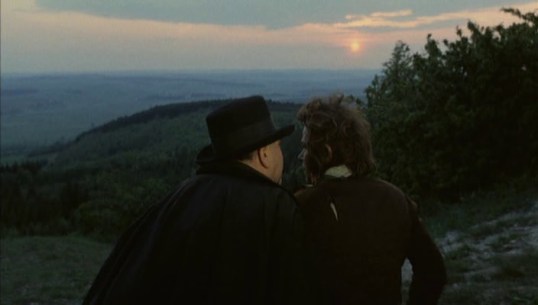
The Enigma of Kaspar Hauser (1974, dir by Werner Herzog, DP: Jörg Schmidt-Reitwein)
Stroszek (1977, dir by Werner Herzog, DP: Thomas Mauch)
Woyzeck (1979, dir by Werner Herzog, DP: Jorg Schmidt-Reitwein)
Fitzcarraldo (1982, dir by Werner Herzog, DP: Thomas Mauch)