Horror Review: A House of Dynamite (dir. by Kathryn Bigelow)


“So it’s a fucking coin toss? That’s what 50 billion dollars buys us?” — Secretary of Defense Reid Baker

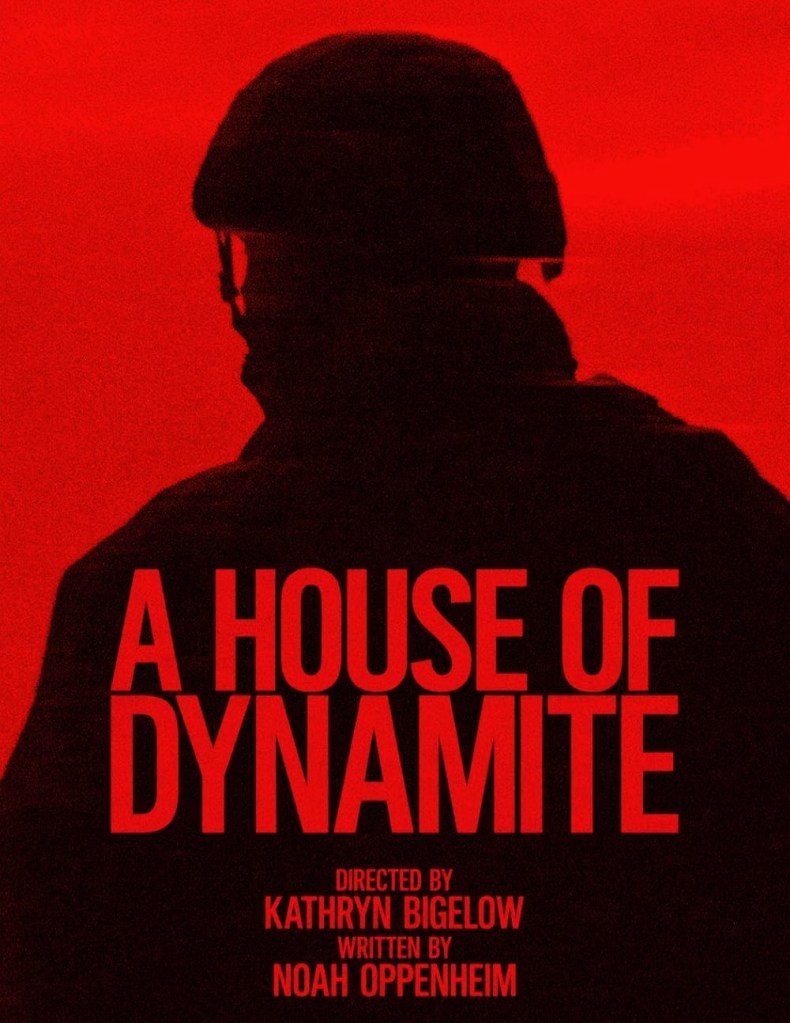
The end of the Cold War was supposed to close a chapter of fear. With the superpowers stepping back from the brink, the world briefly believed it had entered an era of stability. Yet that promise never held. The weapons remained, the rivalries adapted, and the global machinery of deterrence continued to hum beneath the surface. Kathryn Bigelow’s A House of Dynamite faces this reality head-on, transforming the mechanics of modern nuclear defense into something unnervingly human. On the surface, it plays as a high-tension political technothriller, but beneath that precision lies a deeply existential horror film—one built not on shadows or monsters, but on daylight, competence, and the narrow margins of human fallibility.

The premise is piercingly simple. An unidentified missile is detected over the Pacific. Analysts assume it’s a test or a glitch—another false alarm in a world overflowing with them. But within minutes, as conflicting data streams converge, what seemed routine begins to look real. The film unfolds in real time over twenty excruciating minutes, charting the reactions of those charged with interpreting and responding to the potential catastrophe. Bigelow divides the film into three interwoven perspectives: the White House Situation Room, the missile intercept base at Fort Greely, and the President’s mobile command aboard Marine One. The structure allows tension to grow from every direction at once, each perspective magnifying the other until the screen feels ready to collapse under its own pressure.

Capt. Olivia Walker (Rebecca Ferguson), commanding officer of the Situation Room, anchors the story with calm professionalism that gradually frays into disbelief. Ferguson’s performance is clear-eyed and tightly modulated—precise, disciplined, and quietly devastating. She stands as the rational center inside chaos, her composure the last gesture of control in a world that no longer follows reason.

Over her is Adm. Mark Miller (Jason Clarke), Director of the Situation Room, who represents the institutional embodiment of confidence. Clarke plays him with methodical restraint, a man who trusts procedure long after it stops earning trust. Miller’s authority is both comforting and horrifying: a portrait of leadership built on ritual rather than certainty.

At Fort Greely, Anthony Ramos brings an intimate immediacy as the officer charged with the missile intercept. His scenes hum with kinetic dread—the physical execution of decisions made thousands of miles away. Through him, the film captures the most primal kind of fear: acting when hesitation could mean extinction, knowing that success and failure are separated only by chance.

The President, portrayed by Idris Elba, spends much of the crisis in motion—first within the cocoon of the presidential limousine, and later, aboard Marine One as it carves through blinding daylight. Elba gives a performance of subtle, steady erosion. At first, he embodies unshakeable calm, a figure of poise and authority; but as the situation deepens, his steadiness wanes. Words become shorter, pauses longer. Every decision carries consequences too vast for resolution. It is a measured, understated portrait of power giving way to human uncertainty.

Bigelow’s direction is stripped of ornament and focused on precision. Barry Ackroyd’s cinematography heightens the claustrophobia of command centers—the sterile light, the reflective glass, the sense that every surface observes its occupants—while his exterior scenes pierce with harsh brightness, suggesting that no sanctuary exists under full exposure. Kirk Baxter’s editing maintains an unrelenting pulse, cutting with mathematical precision while preserving the eerie stillness of the moments where no one dares to speak.

​A House of Dynamite also shows how even with the most competent experts—military, intelligence, and political—working to manage an escalating crisis, there is no path to victory. The professionals at every level stop seeking to prevent the worst and instead focus on saving what they can when the worst becomes inevitable. The film’s scariest revelation is not the potential for destruction, but the paralysis that intelligence creates. If the brightest, most disciplined people in the world cannot find an answer, what happens when power falls into the hands of those less prepared or less rational? In its quiet way, the film poses that question that we see more and more each day on the news and on social media and we are left with silence and realization of the horror of it all.

Despite its precision, the film isn’t without flaws. Bigelow’s triptych structure—cutting between the three perspectives—works brilliantly to escalate tension, yet the repetition of similar beats slightly blunts the impact. Each segment revisits the same crisis rhythms—a data discrepancy, an argument over authority, another uncertain update—sometimes slowing the natural momentum. While the repetition underlines the futility of bureaucratic systems in chaos, the transitions don’t flow as fluidly as the rest of the film’s airtight craftsmanship. The result is a film that is gripping overall, occasionally uneven in rhythm, but never less than absorbing.

When the final minutes arrive, Bigelow declines to deliver resolution. No mushroom clouds, no catharsis. The President sits in Marine One, head down with the weight of the world on his shoulders as he contemplates his options in the Black Book (options in how to retaliate) and knowing that he has no good choices in front of him. The world remains suspended between survival and oblivion, and the silence that follows feels heavier than sound. The ending resists closure because endings, in the nuclear age, are an illusion—the fear continues no matter what happens next.

In a year crowded with strong horror releases—SinnersWeapons, The Long Walk and Frankenstein among them—A House of Dynamite stands apart. Dressed in the crisp realism of a technothriller, it’s a horror film defined by procedure, light, and silence. Bigelow builds terror from competence, from the steady voices and confident gestures of people trying to manage the unmanageable. This is not the chaos of fiction but the dread of reality, a reminder that the systems meant to preserve and protect might one day fail to deliver on its promise. For all its precision and restraint, A House of Dynamite shakes in the memory long after it ends—the year’s most quietly terrifying film.

Nuclear Close Calls: The situation and question brought up in the film has basis in history as there has been many instances of close calls and false alarms. The film itself doesn’t confirm that the missile detonated, but the implications in past confirmed events just shows how close the world has been to a completed catastrophe.
Shattered Politics: The Front Runner (dir by Jason Reitman)


Based (loosely, I assume) on a true story, 2018’s The Front Runner tells the story of a politician named Gary Hart (played by Hugh Jackman).

The year is 1987 and former U.S. Sen. Gary Hart is preparing to announce that he will be seeking the Democratic nomination for the Presidency of the greatest nation of all time, the United States!  (YAY!)  Hart is widely seen as the front runner, for both the nomination and the general election.  He’s got the youth vote sewn up.  He’s energetic.  He’s supposed to be intelligent.  We are told that he is handsome and charismatic.  (I say “told” because, in this film, they seem to be informed attributes as Hugh Jackman is given a truly terrible haircut and his performance here is a bit on the dull side.)  Hart announced his candidacy while standing in the Rocky Mountains.  His wife (Vera Farmiga) is behind him, even if she chooses not to join him on the campaign trail.  His campaign manager (J.K. Simmons) is welcoming new and idealistic volunteers to the campaign headquarters and encouraging them to remember that all of the difficulties of the campaign will be worth it after Gary Hart is elected president.  As for the press, they’re investigating long-standing rumors that Hart is a womanizer.  “Follow me around, you’ll get bored,” Hart says.  So, two reporters from the Miami Herald (Bill Burr and Steve Zissis) do just that they catch a young woman named Donna Rice (Sara Paxton) apparently staying over at Gary Hart’s Florida townhouse.

“It’s nobody’s business!” Hart snaps, when asked about his private life and it’s obvious that the film expects us to take Hart’s side.  The problem, as Hart’s campaign manager points out, is that a lot of people are volunteering for Hart’s campaign and have sacrificed a lot to help him out and now, if Hart doesn’t figure out some way to deal with the story, it looks like it was all for nothing.  Even if Hart didn’t cheat with Rice, he still showed remarkably poor judgment in spending time alone with her in Florida while his wife was back in Colorado.  The film argues that the press went overboard pursuing the story and perhaps they did.  The press tends to do that and really, no politician has any excuse not to realize that.  But, even if we accept the argument that the press acted unethically, that doesn’t exactly exonerate Gary Hart, though this film certainly seems to think that it does.  To a certain extent, this film reminded me a bit of James Vanderbilt’s Truth, in which it was assumed we would be so outraged that Cate Blanchett’s Mary Mapes was fired for producing a story about George W. Bush’s time in the National Guard that we would overlook that Mapes and CBS news tried to build a major story around a bunch of obviously forged documents.

(Of course, if Hart had been running today, I doubt the scandal would have ended his campaign.  If anything, Donald Trump’s personal scandals seemed to play to his advantage when he ran in 2016 and 2024.  To a find a 21st Century equivalent to Hart’s scandal, you’d probably have to go all the way back to John Edwards in 2008.  Of course, Edwards was cheating on his wife while she was dying of breast cancer, which makes Edwards a special type of sleaze.)

As for the film itself, director Jason Reitman tries to take a Altmanesque approach, full of overlapping dialogue and deceptively casual camera moments.  There are a few moments when Reitman’s approach work.  The start of the film, in which the camera glided over hundreds of journalists reporting from outside the 1984 Democratic Convention, was so well-handled that I briefly had hope for the rest of the film.  Reitman gets good performances from dependable veterans like J.K. Simmons and Alfred Molina.  But, at the heart of the film, there’s a massive blank as Hugh Jackman gives an oddly listless performance as Hart.  The film expects us to take it for granted that Gary Hart would have been a good President but there’s nothing about Jackman’s performance to back that up.  It’s odd because, typically, Hugh Jackman is one of the most charismatic actors around.  But, as Gary Hart, he comes across as being petulant and a bit whiny.

It’s an interesting story but ultimately, The Front Runner doesn’t do it justice.


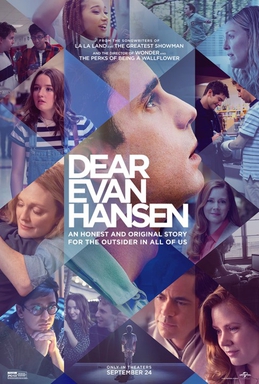
The Films of 2021: Dear Evan Hansen (dir by Stephen Chbosky)


Last night, I finally watched Dear Evan Hansen.

Dear Evan Hansen is the film adaptation of the Tony-award winning Broadway musical of the same name.  Recreating his stage role, Ben Platt plays Evan Hansen, a teenager who suffers from social anxiety and who is mistaken for having been the best friend of Connor Murphy (Colton Ryan), a troubled classmate who committed suicide after stealing a letter that Evan had written to himself.  (Somewhat awkwardly, it was also a letter in which Evan somewhat obliquely wrote about the crush that he had on a member of Connor’s family.)  When the letter is subsequently found on Connor’s body, it’s assumed that it’s a suicide note that Connor meant for Evan.  Evan, who is in love with Connor’s sister, Zoe (Kaitlyn Dever), allows everyone to believe that he and Connor were friends.  Connor’s mother, Cynthia, (Amy Adams) and his stepfather (Danny Pino) adopt Evan as a sort of replacement for their dead son.  Cynthia views Evan as being the only way that she’ll ever understand what Connor was going through and Evan continually reassures that Murphys that Connor really did love all of them and that he was trying to change his life for the better.  With the Murphys now treating Evan as a member of their own family, Evan’s mother (Julianne Moore) feels that her son is now ashamed of her.  And Evan’s classmate, Alana (Amandla Stenberg), launches a movement to raise money to preserve the apple orchard where Evan claims that he and Connor spent all of their time together.

As a musical, Dear Evan Hansen was very popular.  As a film, it doesn’t work and it doesn’t work for all the reasons that everyone assumed that it wouldn’t work.  Believe me, I wanted it work.  From the minute that the trailer first dropped, the reaction to the film has been so overwhelmingly negative that I was really hoping that the film itself would turn out to be an overlooked gem.  I was really hoping that this would be one of those underappreciated films that just needed a few brave champions.  Instead, it turned out to be not terrible in the way that Cats was terrible but still too flawed to be considered a success.

First off, the plot itself doesn’t transition well from the stage to film.  There’s too many holes and there’s too many places in the story where you find yourself wondering why you should care about Evan and his problems.  Those plot holes may not have been as big of a problem when the story was presented on the stage because watching any story play out against an artificial backdrop requires a certain suspension of disbelief.  But, on film, seeing Evan attending an actual school and walking down an actual street and visiting an actual house, you’re much more aware of how inauthentic the story feels.  Evan’s actions rarely make sense and it’s difficult to accept that anyone, even Connor’s emotionally desperate parents, would believe the stories that Evan concocts about his friendship with Connor.  On stage, you could perhaps accept that Zoe would buy that Evan and Connor were friends who confided in each other despite the fact that Evan doesn’t seem to know anything about Connor’s family or home life.  On screen, especially when one considers the fierce intelligence that Kaitlyn Dever brings to the role of Zoe, it’s a bit more difficult to believe.

The other big problem with the film is Ben Platt is too old for the role of Evan.  Platt first played the role in 2015, when he was 23.  He won a Tony and certainly, he deserves a lot of credit for creating the role from the workshop phase all the way to Broadway.  Now, however, he’s 28 and he looks considerably older.  So much of what Evan does is acceptable only if you believe that he’s an immature 17 year-old who is desperately looking for a place and a family where he belongs.  The same actions go from being poignant to being creepy when they’re done by someone who appears to be in his mid-30s.  While Platt has a great singing voice and shines in the musical numbers, he’s a bit too mannered when he just has to recite dialogue.  He’s still giving a stage performance, even though he’s now playing the role on film and everyone around him is giving a film performance.  Platt’s talent is undeniable but he’s miscast here and casting him opposite performers who can actually still pass for teenagers doesn’t help the situation at all.

(When I watched the film, I thought that obvious age difference between Ben Platt and Kaitlyn Dever occasionally made the scenes between Evan and Zoe uncomfortable to watch.  Then I did some research and discovered that Dever is only three years younger than Platt.  It’s just that Dever still looks like a teen while Platt looks very much like an adult.  And there’s no shame in looking your age.  Someone just needs to cast Platt in an adult role.)

In Platt’s defense, the film doesn’t really make perfect use of any of the members of its talented cast.  Amy Adams is such a good actress but the film casts her as a stereotypically flakey rich suburbanite who flitters from one trend to another.  Julianne Moore and Amandla Stenberg are similarly wasted, playing characters who have potential but who are never quite given as much to do as they deserve.  Of the cast, Kaitlyn Dever is the stand-out, even though Zoe is a bit of an inconsistent character.  Initially, she seems like the one person willing to call out everyone on their BS and then, just as suddenly, she’s oddly forgiving of someone who essentially manipulated her emotions for his own benefit.

Not surprisingly, Dear Evan Hansen works best when people are singing.  Ben Platt and Colton Ryan bring so much energy to Sincerely, Me that I briefly had hope that the film was turning itself around.  Unfortunately, that wasn’t the case but still, it’s a good production number.  Unfortunately, the rest of the movie doesn’t really live up to it.

Here Are The Major 72nd Emmy Nominations!


Usually, when it’s time for the Emmy nominations to be announced, I’ll post what I personally would have nominated.  I didn’t do it this year because, for whatever reason, I didn’t watch as much TV last season as I have in the past so I felt like, if I had done a Lisa Has All The Power post for the Emmy nominations, I would have ended up just nominating a bunch of shows that I hadn’t actually watched and that would just be wrong.

I will say that I was hoping to see nominations for Bad Education and Unbelievable.  Both did receive nominations, though not as much as they should have.  Bad Education was nominated for Best TV Movie and Hugh Jackman received a nomination but it deserved so much more.  (It’s the best film that I’ve seen so far this year and it bugs the Hell out of me that it was sold to HBO and not Netflix because Bad Education is the type of movie that should get Oscar recognition.)  Unbelievable was nominated for Best Limited Series but Kaitlyn Dever and Merritt Weaver deserved nominations as well.  I was also disappointed that neither Aaron Paul nor Robert Forster were nominated for El Camino.  I’m also upset that my favorite comedy series — Medical Police — was totally snubbed but I’m not really surprised.  Medical Police is hilarious but it’s not self-important enough for the Emmys.  Still, considering that Curb Your Enthusiasm was kind of terrible this year, it’s a shame that Medical Police couldn’t sneak in there.

(This year still isn’t as bad as the year that Twin Peaks: The Return was snubbed in all the major categories.)

Anyway, here are the major nominees.  At least The Mandalorian got some recognition.  GO BABY YODA!

Drama Series

“Better Call Saul” (AMC)
“The Crown” (Netflix)
“The Handmaid’s Tale” (Hulu)
“Killing Eve” (BBC America/AMC)
“The Mandalorian” (Disney Plus)
“Ozark” (Netflix)
“Stranger Things” (Netflix)
“Succession” (HBO)

Comedy Series

“Curb Your Enthusiasm” (HBO)
“Dead to Me” (Netflix)
“The Good Place” (NBC)
“Insecure” (HBO)
“The Kominsky Method” (Netflix)
“The Marvelous Mrs. Maisel” (Amazon Prime Video)
“Schitt’s Creek” (Pop TV)
“What We Do in the Shadows” (FX)

Limited Series

“Little Fires Everywhere” (Hulu)
“Mrs. America” (Hulu)
“Unbelievable” (Netflix)
“Unorthodox” (Netflix)
“Watchmen” (HBO)

Televison Movie

“American Son” (Netflix)

“Bad Education” (HBO)

“Dolly Parton’s Heartstrings: These Old Bones” (Netflix)

“El Camino: A Breaking Bad Movie” (Netflix)

Unbreakable Kimmy Schmidt: Kimmy vs. The Reverend (Netflix)

Lead Actor in a Drama Series

Jason Bateman (“Ozark”)
Sterling K. Brown (“This Is Us”)
Steve Carell (“The Morning Show”)
Brian Cox (“Succession”)
Billy Porter (“Pose”)
Jeremy Strong (“Succession”)

Lead Actress in a Drama Series

Jennifer Aniston (“The Morning Show”)
Olivia Colman (“The Crown”)
Jodie Comer (“Killing Eve”)
Laura Linney (“Ozark”)
Sandra Oh (“Killing Eve”)
Zendaya (“Euphoria”)

Lead Actor in a Comedy Series

Anthony Anderson (“Black-ish”)
Don Cheadle (“Black Monday”)
Ted Danson (“The Good Place”)
Michael Douglas (“The Kominsky Method”)
Eugene Levy (“Schitt’s Creek”)
Ramy Youssef (“Ramy”)

Lead Actress in a Comedy Series

Christina Applegate (“Dead to Me”)
Rachel Brosnahan (“The Marvelous Mrs. Maisel”)
Linda Cardellini (“Dead to Me”)
Catherine O’Hara (“Schitt’s Creek”)
Issa Rae (“Insecure”)
Tracee Ellis Ross (“Black-ish”)

Lead Actor in a Limited Series or Movie

Jeremy Irons (“Watchmen”)
Hugh Jackman (“Bad Education”)
Paul Mescal (“Normal People”)
Jeremy Pope (“Hollywood”)
Mark Ruffalo (“I Know This Much Is True”)

Lead Actress in a Limited Series or Movie

Cate Blanchett (“Mrs. America”)
Shira Haas (“Unorthodox”)
Regina King (“Watchmen”)
Octavia Spencer (“Self Made”)
Kerry Washington (“Little Fires Everywhere”)

Supporting Actor in a Drama Series

Giancarlo Esposito (“Better Call Saul”)
Bradley Whitford (“The Handmaid’s Tale”)
Billy Crudup (“The Morning Show”)
Mark Duplass (“The Morning Show”)
Nicholas Braun (“Succession”)
Kieran Culkin (“Succession”)
Matthew Macfadyen (“Succession”)
Jeffrey Wright (“Westworld”)

Supporting Actress in a Drama Series

Laura Dern (“Big Little Lies”)
Meryl Streep (“Big Little Lies”)
Helena Bonham Carter (“The Crown”)
Samira Wiley (“The Handmaid’s Tale”)
Fiona Shaw (“Killing Eve”)
Julia Garner (“Ozark”)
Sarah Snook (“Succession”)
Thandie Newton (“Westworld”)

Supporting Actor in a Comedy Series

Andre Braugher (“Brooklyn Nine-Nine”)
William Jackson Harper (“The Good Place”)
Alan Arkin (“The Kominsky Method”)
Sterling K. Brown (“The Marvelous Mrs. Maisel”)
Tony Shalhoub (“The Marvelous Mrs. Maisel”)
Mahershala Ali (“Ramy”)
Kenan Thompson (“Saturday Night Live”)
Dan Levy (“Schitt’s Creek”)

Supporting Actress in a Comedy Series

Betty Gilpin (“GLOW”)
D’Arcy Carden (“The Good Place”)
Yvonne Orji (“Insecure”)
Alex Borstein (“The Marvelous Mrs. Maisel”)
Marin Hinkle (“The Marvelous Mrs. Maisel”)
Kate McKinnon (“Saturday Night Live”)
Cecily Strong (“Saturday Night Live”)
Annie Murphy (“Schitt’s Creek”)

Supporting Actor in a Limited Series or Movie

Dylan McDermott (“Hollywood”)
Jim Parsons (“Hollywood”)
Tituss Burgess (“Unbreakable Kimmy Schmidt: Kimmy vs. the Reverend”)
Yahya Abdul-Mateen II (“Watchmen”)
Jovan Adepo (“Watchmen”)
Louis Gossett Jr. (“Watchmen”)

Supporting Actress in a Limited Series or Movie

Holland Taylor (“Hollywood”)
Uzo Aduba (“Mrs. America”)
Margo Martindale (“Mrs. America”)
Tracey Ullman (“Mrs. America”)
Toni Collette (“Unbelievable”)
Jean Smart (“Watchmen”)

Reality Competition

“The Masked Singer” (FOX)
“Nailed It” (Netflix)
“RuPaul’s Drag Race” (VH1)
“Top Chef” (Bravo)
“The Voice” (NBC)

Variety Sketch Series

“A Black Lady Sketch Show” (HBO)
“Drunk History” (Comedy Central)
“Saturday Night Live” (NBC)

Variety Talk Series

“Daily Show with Trevor Noah” (Comedy Central)
“Full Frontal with Samantha Bee” (TBS)
“Jimmy Kimmel Live” (ABC)
“Last Week Tonight with John Oliver” (HBO)
“Late Show with Stephen Colbert” (CBS)

Here Are The 2019 Nominations of the Detroit Film Critics Society!


Earlier on Friday, the Detroit Film Critics Society released their nominations for the best of 2019!

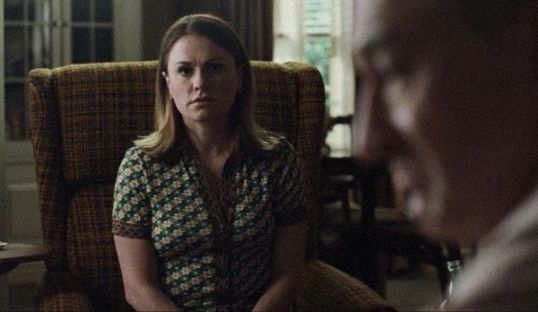
Now, back in 2018, the DFCS honored some great films that were overlooked by the Academy, films like Eighth Grade, A Quiet Place, and First Reformed.  I mean, I really, really loved the 2018 DFCS awards.  And you know what?  I’m pretty happy with what they came up with for 2019 as well!  I especially like the nomination for Anna Paquin in The Irishman.  With all the overblown controversy about how many lines she spoke in the film, it is often overlooked that she gave a great performance and, with just the power of her withering glare, pretty much transformed Peggy into the conscience of the film.

Here are the DFCS nominees for the best of 2019!  The winners will be announced on December 9th!

BEST PICTURE
The Irishman
Jojo Rabbit
Marriage Story
Once Upon a Time… in Hollywood
Parasite

BEST DIRECTOR
Noah Baumbach – Marriage Story
Bong Joon-ho – Parasite
Martin Scorsese – The Irishman
Quentin Tarantino – Once Upon a Time… in Hollywood
Taika Waititi – Jojo Rabbit

BEST ACTRESS
Scarlett Johansson – Marriage Story
Julianne Moore – Gloria Bell
Lupita Nyong’o – Us
Charlize Theron – Bombshell
Renee Zellweger – Judy

BEST ACTOR
Robert De Niro – The Irishman
Adam Driver – Marriage Story
Robert Pattinson – The Lighthouse
Joaquin Phoenix – Joker
Adam Sandler – Uncut Gems

SUPPORTING ACTOR
Willem Dafoe – The Lighthouse
Tom Hanks – A Beautiful Day in the Neighborhood
Joe Pesci – The Irishman
Brad Pitt – Once Upon a Time… in Hollywood
Sam Rockwell – Richard Jewell
Wesley Snipes – Dolemite Is My Name

SUPPORTING ACTRESS
Kathy Bates – Richard Jewell
Laura Dern – Marriage Story
Scarlett Johansson – Jojo Rabbit
Anna Paquin – The Irishman
Florence Pugh – Little Women

BEST SCREENPLAY
The Irishman
The Lighthouse
Marriage Story
Once Upon a Time… in Hollywood
Parasite

BEST ANIMATED FILM
Frozen II
How to Train Your Dragon: The Hidden World
I Lost My Body
Klaus
Toy Story 4

BEST USE OF MUSIC
1917
Once Upon a Time… in Hollywood
Rocketman
Uncut Gems
Wild Rose

BEST ENSEMBLE
Dolemite Is My Name
The Farewell
The Irishman
Once Upon a Time… in Hollywood
Parasite

BEST DOCUMENTARY
Amazing Grace
Apollo 11
Horror Noire: A History of Black Horror
Knocking Down the House
Rolling Thunder Review: A Bob Dylan Story by Martin Scorsese

BREAKTHROUGH
Ana de Armas – actress (Knives Out, The Informer, Yesterday)
Jessie Buckley – actress (Wild Rose, Judy)
Kaitlyn Dever – actress (Booksmart, Them That Follow)
Aisling Franciosi – actress (The Nightingale)
Paul Walter Hauser – actor (Richard Jewell)
Florence Pugh – actress (Fighting with My Family, Midsommar, Little Women)
Lulu Wang – director (The Farewell)
Olivia Wilde – director (Booksmart)

Here Are The Hollywood Critics Association’s Nominations For The Best of 2019


The Hollywood Critics Association was, up until a few days ago, known as the Los Angeles Online Film Critics Society.  Perhaps realizing that HCA just plans looks better than LAOFCS, they announced yesterday that they were changing their name.

They also announced their nominees for the best of films and performances of 2019!  While the HCA may not be one of the major precursors of awards season, their nominations do give a fairly good picture of which films and performances are currently being touted as possible Oscar nominees.

And here they are:

BEST PICTURE

  • “1917”
  • “Booksmart”
  • “The Farewell”
  • “The Irishman”
  • “Joker”
  • “Jojo Rabbit”
  • “Parasite”
  • “Marriage Story”
  • “Once Upon a Time in Hollywood”
  • “Waves

BEST ACTOR

  • Adam Driver, “Marriage Story”
  • Eddie Murphy, “Dolemite Is My Name”
  • Joaquin Phoenix, “Joker”
  • Leonardo DiCaprio, “Once Upon a Time in Hollywood”
  • “Taron Egerton, “Rocketman”

BEST ACTRESS

  • Awkwafina, “The Farewell”
  • “Charlize Theron, “Bombshell”
  • Lupita Nyong’o, “Us”
  • Renée Zellweger, “Judy”
  • Scarlett Johansson, “Marriage Story”

BEST SUPPORTING ACTOR

  • Brad Pitt, “Once Upon a Time in Hollywood”
  • Joe Pesci, “The Irishman”
  • Shia LaBeouf, “Honey Boy”
  • Sterling K. Brown, “Waves”
  • Tom Hanks, “A Beautiful Day in the Neighborhood”

BEST SUPPORTING ACTRESS

  • Jennifer Lopez, “Hustlers”
  • Laura Dern, “Marriage Story”
  • Margot Robbie, “Once Upon a Time in Hollywood”
  • Taylor Russell, “Waves”
  • Zhao Shuzhen, “The Farewell”

BEST MALE DIRECTOR

  • Bong Joon-ho, “Parasite”
  • Martin Scorsese, “The Irishman”
  • Noah Baumbach, “Marriage Story”
  • Quentin Tarantino, “Once Upon a Time in Hollywood”
  • Taika Waititi, “Jojo Rabbit”

BEST FEMALE DIRECTOR

  • Alma Har’el, “Honey Boy”
  • Greta Gerwig, “Little Women”
  • Lorene Scafaria, “Hustlers”
  • Lulu Wang, “The Farewell”
  • Olivia Wilde, “Booksmart”

ORIGINAL SCREENPLAY

  • Bong Joon-ho & Han Jin-won, “Parasite”
  • Emily Halpern, Sarah Haskins, Susanna Fogel, & Katie Silberman, “Booksmart”
  • Lulu Wang, “The Farewell”
  • Noah Baumbach, “Marriage Story”
  • Rian Johnson, “Knives Out”

ADAPTED SCREENPLAY

  • Anthony McCarten, “The Two Popes”
  • Lorene Scafaria, “Hustlers”
  • Scott Silver and Todd Phillips, “Joker”
  • Steven Zailian, “The Irishman”
  • Taika Waititi, “Jojo Rabbit”

BEST PERFORMANCE BY AN ACTOR OR ACTRESS 23 AND UNDER

  • Kaitlyn Dever, “Booksmart”
  • Julia Butters, “Once Upon a Time in Hollywood”
  • Noah Jupe, “Honey Boy”
  • Roman Griffin Davis, “Jojo Rabbit”
  • Thomasin McKenzie, “Jojo Rabbit”

BREAKTHROUGH PERFORMANCE

  • Jessie Buckley, “Wild Rose”
  • Kelvin Harrison Jr., “Waves”
  • Paul Walter Hauser, “Richard Jewell”
  • Taylor Russell, “Waves”
  • Zack Gottsagen, “The Peanut Butter Falcon”

BEST CAST

  • “Avengers: Endgame”
  • “The Irishman”
  • “Knives Out”
  • “Once Upon a Time in Hollywood”
  • “Waves”

BEST FIRST FEATURE

  • “Brittany Runs a Marathon”
  • “Booksmart”
  • “Honey Boy”
  • “The Peanut Butter Falcon”
  • “Queen & Slim”

BEST INDEPENDENT FILM

  • “Booksmart”
  • “The Farewell”
  • “Honey Boy”
  • “Luce”
  • “Waves”

BEST ACTION/WAR FILM

  • “1917”
  • “Avengers: Endgame”
  • “Captain Marvel”
  • “Fast & Furious Presents: Hobbs & Shaw”
  • “John Wick: Chapter 3 — Parabellum”

BEST ANIMATED FILM

  • “Abominable”
  • “Frozen II”
  • “How to Train Your Dragon: The Hidden World”
  • “Missing Link”
  • “Toy Story 4”

BEST BLOCKBUSTER

  • “Avengers: Endgame”
  • “Captain Marvel”
  • “Once Upon a Time in Hollywood”
  • “Shazam!”
  • “Spider-Man: Far from Home”

BEST COMEDY/MUSICAL

  • “Booksmart”
  • “Blinded by the Light”
  • Dolemite Is My Name”
  • “Long Shot”
  • “Rocketman”

BEST DOCUMENTARY

  • “American Factory”
  • “Apollo 11”
  • “Hail Satan?”
  • “The Kingmaker”
  • “Love, Antosha”

BEST FOREIGN LANGUAGE FILM

  • “The Farewell”
  • “Monos”
  • “Pain & Glory”
  • “Parasite”
  • “Portrait of a Lady on Fire”

BEST HORROR FILM

  • “Crawl”
  • “Doctor Sleep”
  • “Midsommar”
  • “Ready or Not”
  • “Us”

BEST ANIMATED OR VFX PERFORMANCE

  • Josh Brolin, “Avengers: Endgame”
  • Robert De Niro, “The Irishman”
  • Rosa Salazar, “Alita: Battle Angel”
  • Ryan Reynolds, “Detective Pikachu”
  • Tom Hanks, “Toy Story 4”

BEST CINEMATOGRAPHY

  • Drew Daniel, “Waves”
  • Jarin Blaschke, “The Lighthouse”
  • Lawrence Sher, “Joker”
  • Robert Richardson, “Once Upon a Time in Hollywood”
  • Roger Deakins, “1917”

BEST COSTUME DESIGN

  • Arianne Phillips, “Once Upon a Time in Hollywood”
  • Julian Day, “Rocketman”
  • Jacqueline Durran, “Little Women”
  • Ruth E. Carter, “Dolemite Is My Name”
  • Mark Bridges, “Joker”

BEST EDITING

  • Fred Raskin, “Once Upon a Time in Hollywood”
  • Lee Smith, “1917”
  • Michael McCusker, “Ford v Ferrari”
  • Thelma Schoonmaker, ‘The Irishman”
  • Yang Jin-mo, “Parasite”

BEST HAIR AND MAKEUP

  • “Bombshell”
  • “Joker”
  • “Judy”
  • “Rocketman”
  • “The Irishman”

BEST ORIGINAL SONG

  • “Catchy Song” from “The Lego Movie: The Second Part”
  • “Glasgow” from “Wild Rose”
  • “(I’m Gonna) Love Me Again” from “Rocketman”
  • “Into the Unknown” from “Frozen II”
  • “Speechless” from “Aladdin”

BEST SCORE

  • Alexandre Desplat, “Little Women”
  • Hildur Guðnadóttir, “Joker”
  • Michael Abels, “Us”
  • Thomas Newman, “1917”
  • Trent Reznor and Atticus Ross, “Waves”

BEST STUNT WORK

  • “1917”
  • “Avengers: Endgame”
  • “Captain Marvel”
  • “Fast & Furious Presents: Hobbs & Shaw”
  • “John Wick: Chapter 3 — Parabellum”

BEST VISUAL EFFECTS

  • “1917”
  • “Ad Astra”
  • “Avengers: Endgame”
  • “Alita: Battle Angel”
  • “The Irishman”

The winners will announced in December!

Back to School #75: The Spectacular Now (dir by James Ponsoldt)


1371723939_the_spectacular_now

Though the film was embraced by critics and performed fairly well at the box office, it’s hard not to feel that The Spectacular Now was one of the more overlooked films of 2013.  For all of its acclaim, it’s a film that was not only ignored at Oscar time but which also rarely seemed to feature much in Oscar speculation.  That’s a shame but not particularly surprising.  With a few notable exceptions (American Graffiti, The Last Picture Show, Ordinary People, and Juno, for example), films about teenagers are usually ignored by the Academy, even if the film in question is as good as either Easy A or The Spectacular Now.

In fact, I would argue that, along with being one of the best films of 2013, The Spectacular Now is a Say Anything… for my generation.

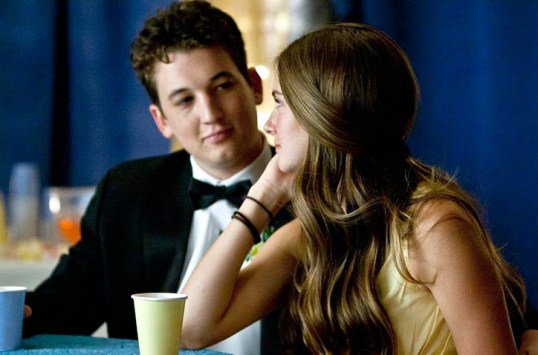
The Spectacular Now follows two teenagers over the course of their senior year in high school.  Sutter Kane (Miles Teller) is one of the most popular kids at school.  He’s charming, he’s funny, and — perhaps not surprisingly — he’s also deeply troubled. He’s angry that his father is no longer in his life and he often takes his anger out on his mom (Jennifer Jason Leigh).   He works as a salesman at a men’s clothing store where his boss (Bob Odenkirk) is willing to overlook the fact that Sutter often comes into work drunk.  Sutter, you see, also happens to have a slight drinking problem that is slowly but surely transforming into full-blown alcoholism.

When Sutter is dumped by his long-time girlfriend Cassidy (Brie Larson), he goes on a drinking binge that only ends with him being woken up on a stranger’s lawn by Aimee (Shailene Woodley).  Aimee is one of Sutter’s classmates and is the complete opposite of most of Sutter’s friends.  Aimee is shy, doesn’t drink, and prefers to spend her time reading manga.

As you can probably guess, Sutter and Aimee do become a couple.  And yes, Sutter does help Aimee come out of her shell and Aimee does help Sutter to start to deal with all of the pain and anger that he attempts to hide.  You can probably predict all of that but what you can’t predict is just how likable and believable both Teller and Woodley are as a couple.  You believe in their relationship and the film handles it (including the scene where they have sex for the first time) with an unusual amount of sensitivity.

There’s an extended sequence towards the end of the film where Sutter and Aimee finally get to meet Sutter’s father.  At first, you want to be as exciting and as optimistic as Sutter is.  This is especially true once you discover that his father is being played by Kyle Chandler, who is one of those actors that you just instinctively want to like.  Of course, Sutter’s father turns out not to be the hero that Sutter was expecting to meet and it’s simply devastating, for both the viewers and the characters.  I’ve always felt that it takes a certain amount of courage for an actor to play a truly bad character.  (By bad, I don’t mean evil as much as I mean just the type of fuckup that we’ve all known and by which we’ve all been let down.)  Chandler has that courage.

I guess it would be a bit predictable for me to wrap this up by saying The Spectacular Now is a spectacular film.  So, instead, I’ll just recommend that you see it.

SpectacularNowBottom