Three college students — meth-addicted Kyle (Aaron Dean Eisenberg), paraplegic Sutton (J. Walter Holland), and occultist Platt (Jared Grey) — come in possession of a 15th century casket that also has a built-in music box. Kyle discovers that, when you lie down in the casket and play the music at the same time, you briefly become a ghost and you can go anywhere without being seen. However, a piece of your soul dies every time that use the music box and Death itself soon starts to follow you around. Platt thinks the box is dangerous but Kyle sees it as a way to pay off his debts and Sutton sees it as a way to both walk and stalk Kyle’s girlfriend, Julie (Liz Fenning).
To give credit where credit is due, the concept behind The Ghostmaker is interesting. Even if the film’s plot is just a retread of Flatliners, I liked the idea of the casket killing Kyle and Sutton’s soul a piece at a time. Just as Kyle has become addicted to crystal meth, Sutton soon becomes addicted to using the casket and the end results aren’t good for anyone. The first half of the movie is genuinely good, with some quality jump scares and plenty of creepy scenes of Kyle and Sutton walking around as ghosts. The second half of the movie is where things fall apart as the story becomes less about the consequences of using the casket and more about Kyle and Sutton’s personal problems. The endless victimization of Julie becomes exploitive and the film’s final scenes really reveal the limitations of the mostly unknown cast. What started out as a thought-provoking look at what it means to have a soul becomes a standard thriller.
The movie opens by saying that it’s based on a true story. If you believe that, I have a ghost-making casket to sell you.
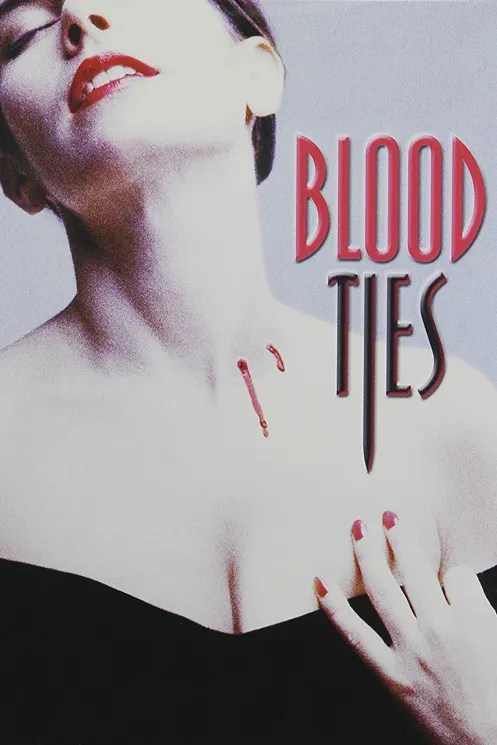
Welcome to Retro Television Reviews, a feature where we review some of our favorite and least favorite shows of the past! This Thursday, I will be reviewing Blood Ties, which aired its only episode on Fox in 1991. The pilot film can be found on Tubi!
Episode 1.1 “Blood Ties”
(Directed by Jim McBride, originally aired on May 27th, 1991)
In Long Beach, California, there is a thriving community of Carpathians. Eli Chelarin (Patrick Bauchau) is the patriarch, a businessman who builds skyscrapers, makes deals, and flies into a rage whenever he learns of anti-Carpathian prejudice. Harry Martin (Harley Venton), born Harlevon Martinescu, is the reform-minded journalist who thinks it is time for the Carpathian community to start mingling with the rest of America. Celia (Michelle Johnson) is Eli’s sultry sister. While Eli is making big business deals and Harry is preaching coexistence, Celia and the younger generation are having a good time.
And then there is Cody Puckett (Jason London), who grew up in small-town Texas and was barely even aware of his Carpathian heritage. That all changed when a group of Carpathian hunters (led by Bo Hopkins) killed Cody’s parents and burned down his house. Cody flees Texas and ends up in California, where he hooks up with his distant relatives.
Harry reveals to Cody that the Carpathians are actually vampires, but that does not mean what Cody initially assumes. Yes, the Carpathians are directly descended from Lilith, and yes, they do have a taste for blood. However, they are not immortal (though they do tend to live to be at least 120). They can go out in the sunlight. They cannot turn into bats. They cannot be stopped by a cross. A wooden stake only kills them because it would kill anyone. The Carpathians are stronger than the average human, but they are not super-strong. (Cody nods and then asks if Carpathians are better at sex than average humans.) In short, the Carpathians are vampires who do not actually get to do any of the fun vampire things. To me, that defeats the whole purpose of being a vampire. Harry and his relatives spend so much time scoffing at misconceptions about vampires that they seem to miss the point: vampires are only interesting as long as they are doing vampire stuff. Vampires that turn into bats will always be more entertaining than vampires who just happen to live a long time.
Blood Ties was a made-for-TV movie that also served as a pilot for a potential series. It is easy to see the direction the series would have taken. Blood Ties mixes 90210-style teenage antics with older adults debating the best way to protect their community. Eventually the Carpathian hunters show up in Los Angeles, and the vampires make quick work of them. Presumably Bo Hopkins would not have been a series regular. Jim McBride’s direction is stylish, and the pilot is well acted, especially by Michelle Johnson. That said, it is hard not to feel that the pilot sabotaged itself by focusing on how the Carpathians were different from traditional vampires. The film rather cavalierly dismisses a lot of things that most horror fans love about vampires. Making the characters vampires who are not really vampires just feels kind of pointless.
Perhaps fortunately, Blood Ties did not become a regular series. If nothing else, that left Jason London available for Dazed and Confused. It is a fair trade.
Consider Cameron Finney. In 2013’s The Perfect Boss, Cameron (Linden Ashby) is a vice president of a pharmaceutical firm and the lover of Jessica Slate (Jamie Luner), who has just been hired to fast-track the FDA approval of a new drug called Ezapine. When Jessica and Cameron learn that one of their own researchers, Dan Renfro (Gary Hudson), is suggesting that Ezapine might not be as safe as the company claims, they decide to take matters into their own hands and murder Dan. By this point, in the film, it’s been established that Jessica has a history of killing people. She smothered her abusive stepfather. She drowned her own mother. Jessica has committed multiple murders and she’s still gone on to have a successful business career. She obviously knows how to get away with killing someone. But, for some reason, Cameron is the one who kills Dan.
From the start, it’s pretty obvious that Cameron has no idea how to pull this sort of thing off. For one thing, he follows Dan around in a rental car. For another thing, he fails to notice that there’s a witness watching him while he attacks Dan. And, finally, Cameron makes the rookie mistake of logging into Dan’s work computer without checking to see if anyone has installed tracking software on it. All of this allows Dan’s teenage daughter, Renee (Ashley Leggat), to investigate her father’s murder.
I liked Renee. She hasn’t even graduated from high school and she’s already solving murders. That was always my fantasy in high school. I wanted to investigate and solve a crime and prove to the police and all of the adults that I was more responsible and clever than they gave me credit for. Unfortunately, there weren’t any juicy local crimes for me to solve, other than figuring out who broke into our house one night. I didn’t really work hard to solve that crime because that crime actually freaked me out. (I slept with a golf club for months afterwards.) Instead, I tried to figure out what happened to D.B. Cooper. Unfortunately, it was kind of hard to investigate that from a Texas high school.
So, Renee accomplishes something that I never did. She solves the crime! But really, it’s not a hard crime to solve because Cameron was such an incompetent murderer. That said, I liked the fact that it gave Renee a chance to win her mother’s respect. At the start of the movie, Renee was getting yelled at for parking her car in a tow-away zone and always dressing in black and, by the end of it, she was graduating high school and realizing that she didn’t always have to paint her nails black. I could relate to Renee.
That said, the true star here is Jamie Luner. Luner was a mainstay in Lifetime films like this and she gives one of her best performances as the cheerfully sociopathic Jessica. I was a bit disappointed that there was never a direct confrontation between Jessica and Renee but at least we got plenty of scenes of Jessica scheming and subtly threatening people not to cross her. Cameron may have been an imperfect murderer but Jessica was truly the perfect boss.
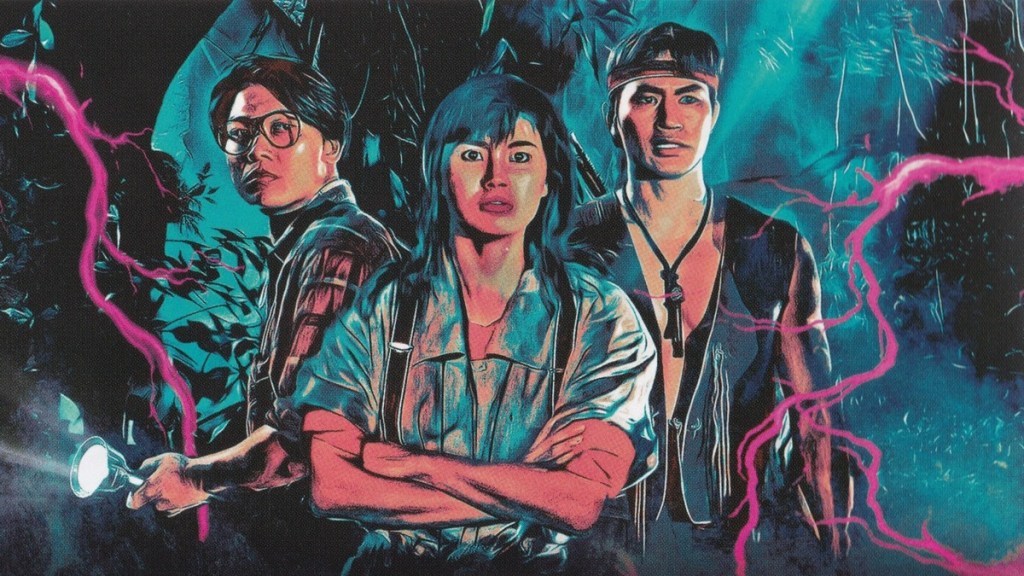
Early in THE SEVENTH CURSE, Dr. Yuan (Chin Siu-Ho) tells a story to his mentor and friend Wisely (Chow Yun-Fat). It seems he had visited Thailand exactly one year earlier, and while walking along a lake, a beautiful woman in a see-through blouse emerged from the water. The two visit for a moment before she ran into the jungle in fear. Later that evening, Yuan heard the sounds of native drums which seem to signal human sacrifices are taking place by the local “Worm Tribe.” Investigating the situation, he saw that same beautiful woman as she was about to be sacrificed to the “Old Ancestor” by the tribe’s sorcerer (Elvis Tsui). He rescued the lady, but he was also damned with a blood curse that will periodically burst through his legs. Luckily, the grateful beauty was able to slice a tumor out of her ample bosom that provided an antidote for one year. Well, the time is up and the bursts are back. Wisely, who puffs on his pipe and seems to be an expert on everything, advises Yuan to head back to Thailand and find a permanent cure before the final burst kills him. With help at various times from the badass Black Dragon (Dick Wei), the beautiful tribe woman we now know as Betsy (Tsui Sau-Lai), the annoying reporter Rainbow (Maggie Cheung), and Wisely, Yuan must find the cure before the final burst comes straight from the heart. It won’t be easy as they will have to defeat the evil sorcerer of the Worm Tribe, a demon baby animated by the blood of ground up children, and “Old Ancestor” himself, a powerful skeleton with glowing eyes who likes to suck out spinal cords before transforming into something really ugly.
Back in 1986, Chow Yun-Fat essentially filmed an extended cameo for this crazy film that could have only been made in Hong Kong. 1986 was also the same year that Chow Yun-Fat became a megastar all across Asia based on his success in John Woo’s A BETTER TOMORROW. Of course, the film was sold on his name, but he’s not in it very much, even if he does show up at the end with a bazooka. With that said, for those in the right frame of mind THE SEVENTH CURSE is an entertaining film, and I like Chin Siu-Ho in the lead role as Dr. Yuan. Part Indiana Jones style adventure and part jungle-terror, this film goes completely over the top with its gratuitous nudity and gore. “Restraint” for this movie means not showing children actually getting ground up so their blood can revitalize a demon baby, although we do see them being placed in the grinder and the blood coming out and being collected in bowls. The same restraint isn’t shown for the men who are torn apart by booby traps and Old Ancestor, impaled by spikes, rip their own faces off and have their spinal cords sucked out. For those of “WTF am I watching” cinema, this should be a fun viewing. The special effects aren’t particularly realistic looking which makes it easier for me to watch.
Overall, THE SEVENTH CURSE is definitely not a film for everyone. The budget is low, the acting isn’t great, it’s gory as hell, and Chow Yun-Fat may have ten minutes of screen time at most. But if my description of the gore doesn’t scare you away and you enjoy crazy cinema, this is probably a movie for you.
First published in 1979, Michael McDowell’s The Amulet takes place in a small Alabama town in 1965. It’s a town that is home to a factory that constructs rifles. The town’s entire livelihood revolves around the business of guns and, with the Vietnam War heating up, it looks like business is going to be good. Unfortunately, that’s little comfort to Dean Howell, a local man who is disfigured and left in an apparent vegetative state after a rifle that he’s testing explodes in his face.
Sarah, Dean’s young wife, tries to take care of Dean while also working at the factory and dealing with Dean’s incredibly spiteful mother, Jo. Angered over her son’s disfigurement, Jo seeks revenge by giving an amulet to Sarah’s boss. What Jo doesn’t tell anyone is that the amulet is cursed and whoever wears it will end up killing their family and then killing themselves. The amulet passes from one hand to another, leading to more and more violent deaths. When Sarah and her friend Becca realize what’s happening, they try to track down the amulet. It all leads to an increasingly over-the-top bloodbath and a twist ending.
The Amulet is an enjoyably gruesome horror story that works as long as you don’t spend too much time trying to understand the logic of the amulet. At first, it seems like a pretty simple curse. The person who wears the amulet is driven to kill their loved ones and then themselves. By the end of the book, though, the amulet seems to have the power to possess both buildings and machines which leads us to wonder whether or not machines actually have loved ones. As a writer, McDowell goes more for shock than narrative consistency but, fortunately, he writes with enough style that he pulls it off. McDowell shows a flair for macabre small town drama and the ending is appropriately unsettling.
This was Michael McDowell’s first published novel. He would go on to write several more novels, along with working on the screenplays for Beetlejuice, The Nightmare Before Christmas, and Thinner.
2018’s Lords of Chaos features one of the most disturbing scenes I’ve ever seen in a movie.
Jack Kilmer plays Pelle Ohlin, a Swedish singer who was horribly abused as a child—beaten so badly his spleen ruptured and he was clinically dead for a few minutes before they brought him back. He grew up obsessed with death, sometimes seeming to believe he already was dead. He took Dead as his stage name and became the lead singer of the Norwegian black metal band Mayhem. He’d found a following, but it didn’t seem to matter. Left alone in his attic bedroom, Dead takes a knife and slits his wrists in close-up. After staring at the blood running down his arms, he uses the same knife to slit his throat. That still doesn’t kill him. Even while he’s coughing up blood he finds the strength to write a note apologizing for the mess. Then he sits on the bed, puts the barrel of a shotgun to his forehead, and pulls the trigger. We see all of it. The gore effects are disturbingly real, and Kilmer’s performance captures the eerie detachment of someone too fascinated by death to care that he’s the one dying. It’s not an easy scene to watch.
What’s even more disturbing is the reaction of Dead’s “friend,” Euronymous (Rory Culkin). The founder and lead guitarist of Mayhem is the one who discovers the body. Instead of calling an ambulance, he drives to a store, buys a disposable camera, and takes pictures. Later he hands out necklaces he claims were made from fragments of Dead’s skull. He uses the notoriety of the suicide to launch a record label and brand Mayhem as the world’s most evil band.
After Dead’s death, Euronymous is approached by Varg Vikernes (Emory Cohen), a fan he’d once cruelly dismissed. Varg has remade himself as a neo-Nazi pagan musician. When Euronymous agrees to produce Varg’s debut album, Varg celebrates by burning down a church. Soon he’s on a church-burning spree. Meanwhile another of Varg’s acquaintances, Faust (Valter Skarsgård), brutally murders a gay man in a park. Euronymous, who built his fame on songs about death and destruction, suddenly finds himself surrounded by people who are actually killing and destroying. Eventually they come for him too.
I should state right now that I’m hardly an expert on Norwegian black metal. It’s not my kind of music. I’ve read a little about the murder of Euronymous and Varg Vikernes’s subsequent career, but I’m in no position to judge how accurate the film is. Plenty of people online were critical of the way it chose to tell the story. Having watched it, I don’t feel it gave me any real insight into what the black metal scene was actually about. If anything, it portrays Euronymous as something of a poseur. Toward the end he tells Varg the whole thing was just an act. Varg doesn’t take it well.
In real life Varg Vikernes served 15 years for the church burnings and the murder of Euronymous. During the COVID years he made a few comments critical of the lockdowns and of “wokeness.” I remember a fellow film critic (someone who’s never written for this site, I should add) was incredibly impressed and started telling everyone they needed to read him. A few of us pointed out that Vikernes was not only a convicted murderer but a neo-Nazi who hated America and was the last person she should be embracing, lockdown opinions or not. For weeks she refused to believe it. Eventually someone told her to read his Wikipedia page and she never mentioned him again.
As for the film itself, it does a good job of capturing the rebellion and directionless anger that could pull someone toward a band like Mayhem. Rory Culkin is strong as Euronymous, smug and arrogant at the start and learning a little humility only when it’s far too late. Emory Cohen has a few effective moments as Varg, but there are also stretches where the character and Cohen’s performance just comes across as being .… well, goofy. Director Jonas Akerlund may have started as a drummer for a black metal band but the film leaves you with the feeling that he doesn’t care much for the scene or have much use for the people who populate it and it’s difficult to get emotionally involved with a film that doesn’t seem to really care about its characters. It’s a well-made and at times disturbingly graphic film, but in the end it never quite convinces the uninitiated that they should care about this story.
This is movie should be called- Thank Goodness, my friends are all dead!
I don’t always hope for the death of comrades, but when I do I drink… well, it’s Pellegrino…
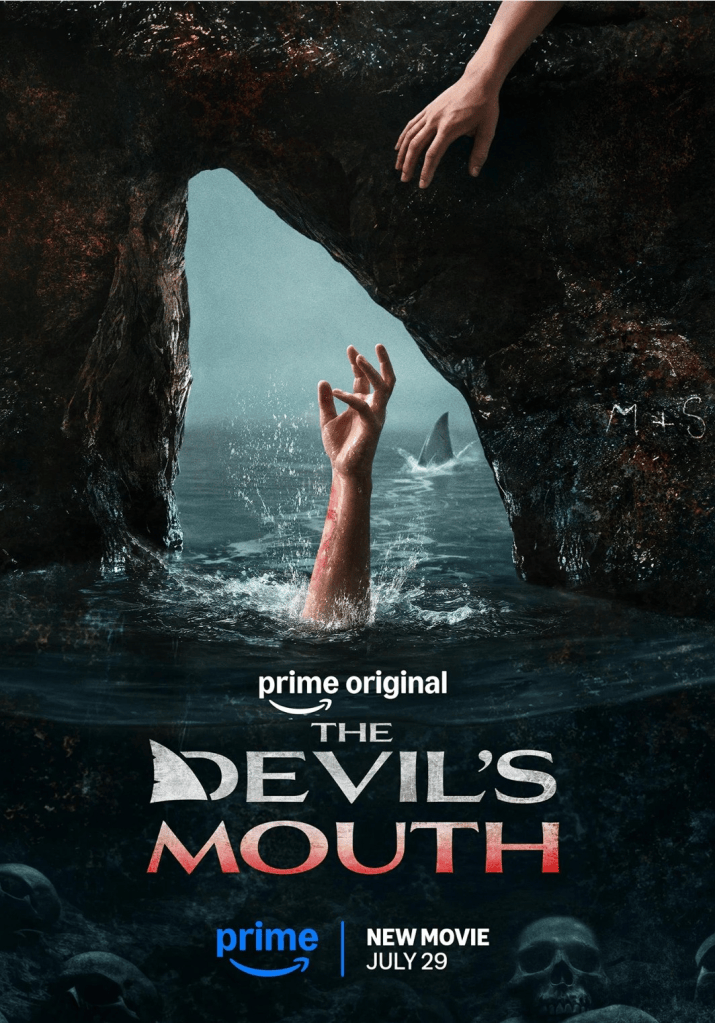
“The Devil’s Mouth” is a movie that looks more expensive that it is and that is actually a signature of the producer/director Jeff Wadlow. He budgets his films to have nothing left at the end; so, it looks like a studio film, but it was only 3.5MM.
If you’re trying become a filmmaker on a budget, watch an interview with Jeff Wadlow below.
This was a great way to begin my Horrorthon because I got to start it with Lisa. My regular readers know that Horrorthon films are a mixed bag, AT BEST. There are movies that don’t take themselves seriously and just have fun, there are short films that are masterworks, and there are Alex Magana films that strain my belief in humanity’s ability for redemption.
“The Devil’s Mouth” takes place in Thailand and Sara McKenna (Kathryn Newton) is on an caving trip with her MANY toxic friends. Five minutes into the film and the friends are all snorkeling; unfortunately, Sara decides to snorkel too, but her terrible friends mix themselves up and boat off and leave her behind “47 Meters Down” style. Then, she gets attacked by jellyfish and gets actual wounds. Her most toxic friend Max (Lana Condor) doesn’t even apologize. Max’s main personality trait is that she bosses people around the whole movie (badly) and gets most of the group killed.
Sara needs a tough love friend or dad to say, “Look, you’re comin home or I’ll meet you there. Leave that trash behind!”
Also, why are these 20 somethings going caving in the first place and not wanting to just drink and sleep around…ON LAND?! You’re in Thailand! You all should be trying create some souped up version of HPV.
Sara and her terrible friends go to this cave system that was flooded with salt water and it looks super creepy and Max demands the group ignore the guide and go in the evil cave system. It is really amazing that Max and her friends have lived as long as they have. They can barely swim, they have claustrophobia, relationship issues, and Max, the toxic garbage person, leading them.
Because the cave was flooded with salt water, bull sharks have come into the cave system and start eating them all. Unfortunately, Max stubbornly continues to live until the final 15 minutes. Sara valiantly fights of sharks and risks her life to try to keep the body count down, but the sharks just want it more!
Dario Argento spent years trying to bring his version of The Phantom of the Opera to life.
Argento has said that he’s always been fascinated by the story of the mysterious and deformed man living underneath the Paris Opera. He has described watching Arthur Lubin’s 1943 version of the tale as one of the formative events of his childhood. In the ’70s, when he was at the height of his popularity, Argento sought to film his own version of the story in Moscow. When that didn’t work out, Argento put his plans for the Phantom aside. It wasn’t until he was filming Trauma and caught a television airing of the 1925 Phantom of the Opera that Argento returned to the project. Argento’s version of The Phantom of the Opera was released in 1998 and was dismissed by most critics. Even today, it has a reputation for being Argento’s worst film. It’s also not an easy one to see. Whereas most of Argento’s films are always streaming somewhere, The Phantom of the Opera usually is not.
Argento’s Phantom of the Opera opens in Paris in the 19th century. A baby is placed in a basket and, much like Moses, is set adrift in a river. A group of empathetic rats save the baby. The baby grows up to be the Phantom of the Opera (Julian Sands), a classically handsome man who lives in the sewers and protects the rats from anyone who might try to harm them. (Just as rats are killed if they leave the sewers, humans are killed if they enter them.) After the Phantom hears Christine Daaé (Asia Argento) singing alone on the stage of the Paris Opera, he approaches her in the empty theater and tells her that her singing has brought light to his heart. The Phantom and Christine develop a telepathic bond, and she becomes the only person whom he allows to enter the sewers and live. Sometimes Christine loves the Phantom and sometimes she doesn’t. Sometimes the Phantom is a tragically romantic figure and sometimes he’s just a black-clad figure who bites people’s tongues out of their mouths. The Phantom becomes obsessed with Christine, and Christine becomes just as obsessed with the Phantom. Meanwhile, Christine’s other suitor—the aristocratic Raoul (Andrea Di Stefano)—smokes opium, hallucinates that Christine has turned into a prostitute, and languidly watches as two men jump into a pool and fight over the merits of Rimbaud. Painter Edgar Degas makes a cameo appearance but manages to avoid the Phantom’s wrath.
As I mentioned earlier, The Phantom of the Opera is not one of Argento’s more highly regarded films. It’s a slow-paced film, one in which the action often seems to go off on strange tangents that don’t really pay off in the long run. (The opium den brings to mind the deliberately ugly orgy scenes that Tinto Brass directed for Caligula, just without the subversive snap.) Argento attempts to portray the Phantom as both an achingly romantic figure and the type of sociopath who brutally kills anyone who enters the sewer. If he were only killing the rat catchers, the Phantom’s actions could be understood. But as soon as he kills two lovers who just happened to be looking for some privacy, it becomes impossible to sympathize with him. Argento’s attempt to portray The Phantom of the Opera as a story of romance sits uncomfortably with scenes in which the Phantom forces himself on Christine.
That said, I actually like Julian Sands’s performance as the Phantom. Argento’s Phantom is not disfigured in any way and, while that may go against the spirit of the story, at least it means Julian Sands didn’t have to wear a mask while filming his role. Sands exudes a cool, sexy danger, and that makes him just right for Argento’s version of the character. Asia Argento plays Christine as someone who only looks innocent, and it does bring an interesting subtext to the story. Indeed, if not for the prologue featuring the rats saving the Phantom as a baby, one could interpret the Phantom as a manifestation of Christine’s own psychosis. As for the rats, they are yet another example of Argento suggesting that animals have special telepathic powers. For all the criticism Argento has taken for the mystical animals he has included in his later films, it appears to be an idea Argento really likes. Personally, I think there’s a quirky charm to it, but I seem to be in the minority.
I can defend elements of The Phantom of the Opera, but I can’t really defend the film as a whole. It’s a bit too cluttered in its storytelling, and the mix of grand romance and brutal violence doesn’t really work. If this film had been made earlier in Argento’s career, perhaps he could have recreated the grandeur of Paris, but at a time when his films were no longer automatic box-office hits and when the Italian film industry itself was struggling, The Phantom of the Opera often looks cheap and unconvincing. Every director has the occasional misfire. Dario Argento has The Phantom of the Opera.
#TubiThursday is a weekly watch party that meets over Thursday at 10 pm et and watches a movie, preferably one that is on Tubi. If you join us, use the #TubiThursday hashtag.
One day, I stepped outside and discovered a turkey vulture walking through the neighborhood.
Usually, I love birds. I put out food for them. I like to take their picture. I’m sad when they leave for a season and I’m happy when they come back. I’m never happy to see a buzzard, though. Buzzards show up when something is dying or has just died. They’re scavengers and turkey vultures are the worst. They only show up after something has already died, mostly so they can get whatever the other scavengers left behind. Their heads are bald so that they can shove their faces into the dead without getting gore on their feathers.
The good thing was that this one appeared to just be visiting. Nothing had died in the neighborhood so it was just looking for a snack to sustain itself until something dead. It walked around and ate a few bugs. The squirrels ignored it. I don’t blame them.
Eventually, it left. Hopefully, it will not return soon.