Moments #35: The Turkey Vulture


One day, I stepped outside and discovered a turkey vulture walking through the neighborhood.

Usually, I love birds.  I put out food for them.  I like to take their picture.  I’m sad when they leave for a season and I’m happy when they come back.  I’m never happy to see a buzzard, though.  Buzzards show up when something is dying or has just died.  They’re scavengers and turkey vultures are the worst.  They only show up after something has already died, mostly so they can get whatever the other scavengers left behind.  Their heads are bald so that they can shove their faces into the dead without getting gore on their feathers.

The good thing was that this one appeared to just be visiting.  Nothing had died in the neighborhood so it was just looking for a snack to sustain itself until something dead.  It walked around and ate a few bugs.  The squirrels ignored it.  I don’t blame them.

Eventually, it left.  Hopefully, it will not return soon.

Previous Moments:

  1. My Dolphin by Case Wright
  2. His Name Was Zac by Lisa Marie Bowman
  3. The Neighborhood, This Morning by Erin Nicole
  4. The Neighborhood, This Afternoon by Erin Nicole
  5. Walking In The Rain by Erin Nicole
  6. The Abandoned RV by Erin Nicole
  7. A Visit To The Cemetery by Erin Nicole
  8. The Woman In The Hallway by Lisa Marie Bowman
  9. Visiting Another Cemetery by Erin Nicole
  10. The Alley Series by Erin Nicole
  11. Exploring The Red House by Erin Nicole
  12. The Halloween That Nearly Wasn’t by Erin Nicole
  13. Watchers and Followers by Erin Nicole
  14. Visitors by Erin Nicole
  15. Fighting by Case Wright
  16. Walking In The Fog by Erin Nicole
  17. A Spider Does What It Can by Erin Nicole
  18. Downtown Richardson, In The Rain by Erin Nicole
  19. Me, our kids, and ONCE UPON A TIME IN HOLLYWOOD! by Bradley Crain
  20. The Statues of SMU by Erin Nicole
  21. Exploring the Back Yard Of An Abandoned House by Erin Nicole
  22. The Ugly Old Swing by Erin Nicole
  23. The Fourth of July In My Town by Erin Nicole
  24. A 4th of July Tradition: Blurry Firework Pictures! by Erin Nicole
  25. That Doll by Erin Nicole
  26. Invasion of the Dolls by Erin Nicole
  27. The Dollhouse by Erin Nicole
  28. Jake and Max by Erin Nicole
  29. The Morning of October 26th by Erin Nicole
  30. Casper The God by Erin Nicole
  31. Carrying The Flag by Erin Nicole
  32. The First Morning Of 2026 by Erin Nicole
  33. This Squirrel by Erin Nicole
  34. That Duck by Erin Nicole

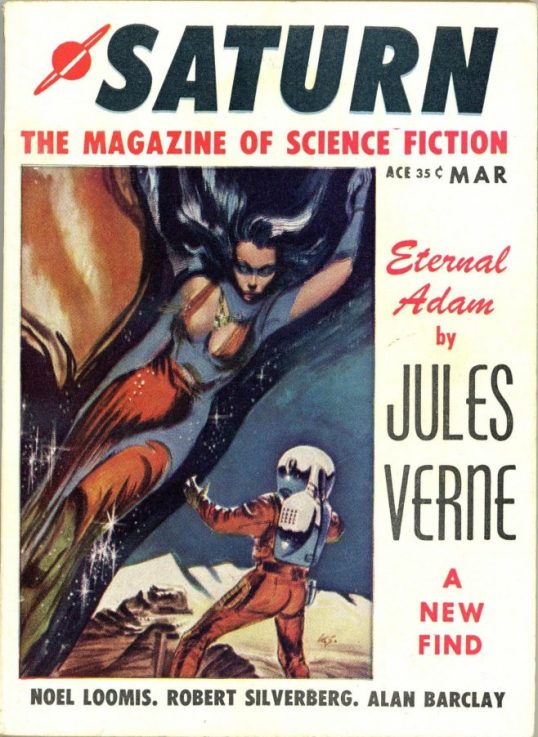
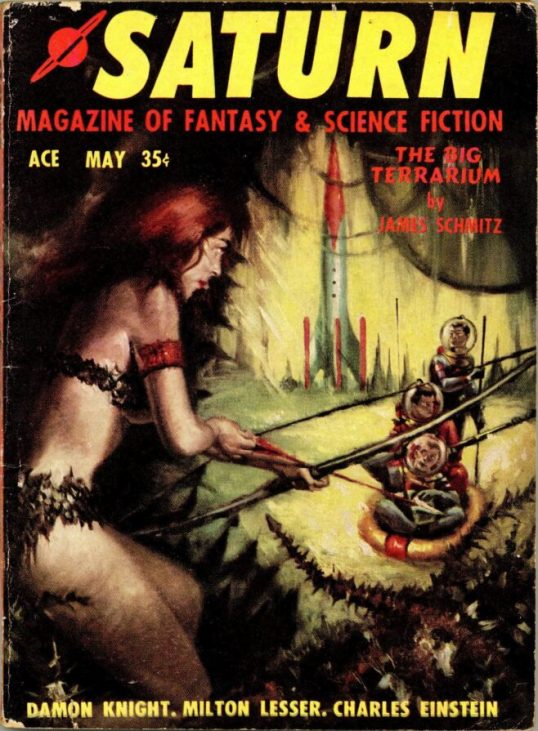
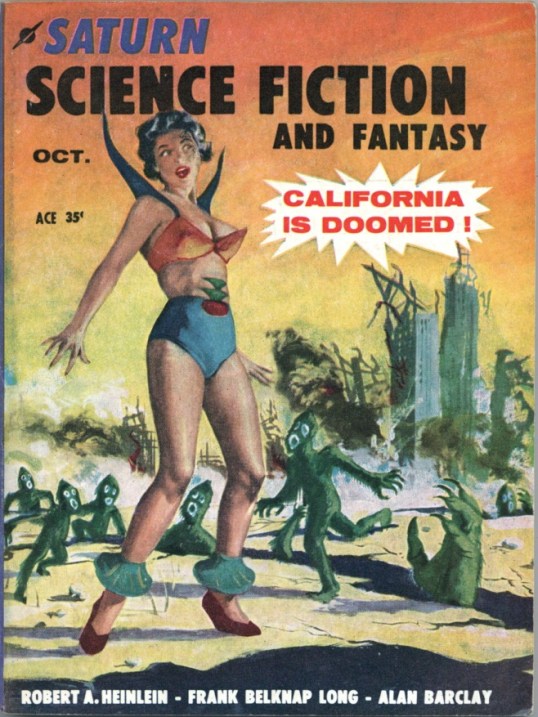
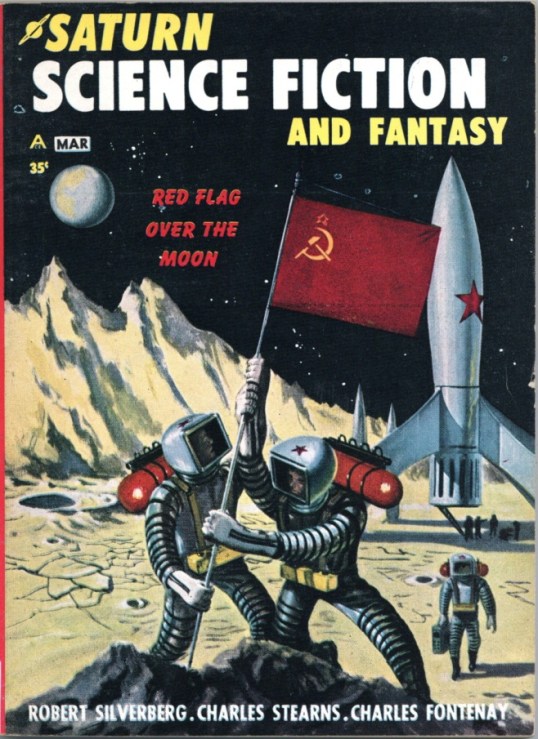
The Covers of Saturn: The Magazine of Science Fiction


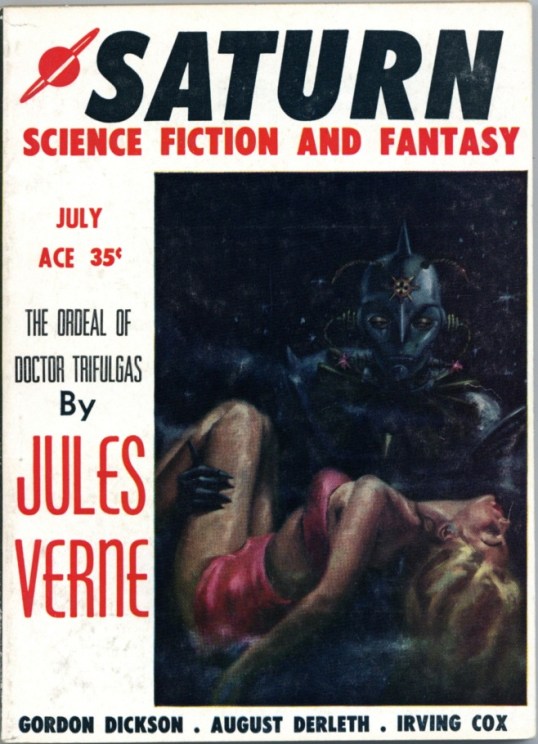
Saturn: The Magazine of Science Fiction was a sci-fi/weird tale themed pulp magazine that was published from 1957 to 1958.  In 1958, the magazine’s name was changed to Saturn Web Detective Stories and then it was changed again to Web Detective Stories once it became obvious that people didn’t think “hardboiled fiction” when they saw Saturn.

Here are the five coves of Saturn, back when it was The Magazine of Science Fiction.

by Leo Summers

Unknown Artist

Unknown Artist

Unknown Artist

Unknown Artist

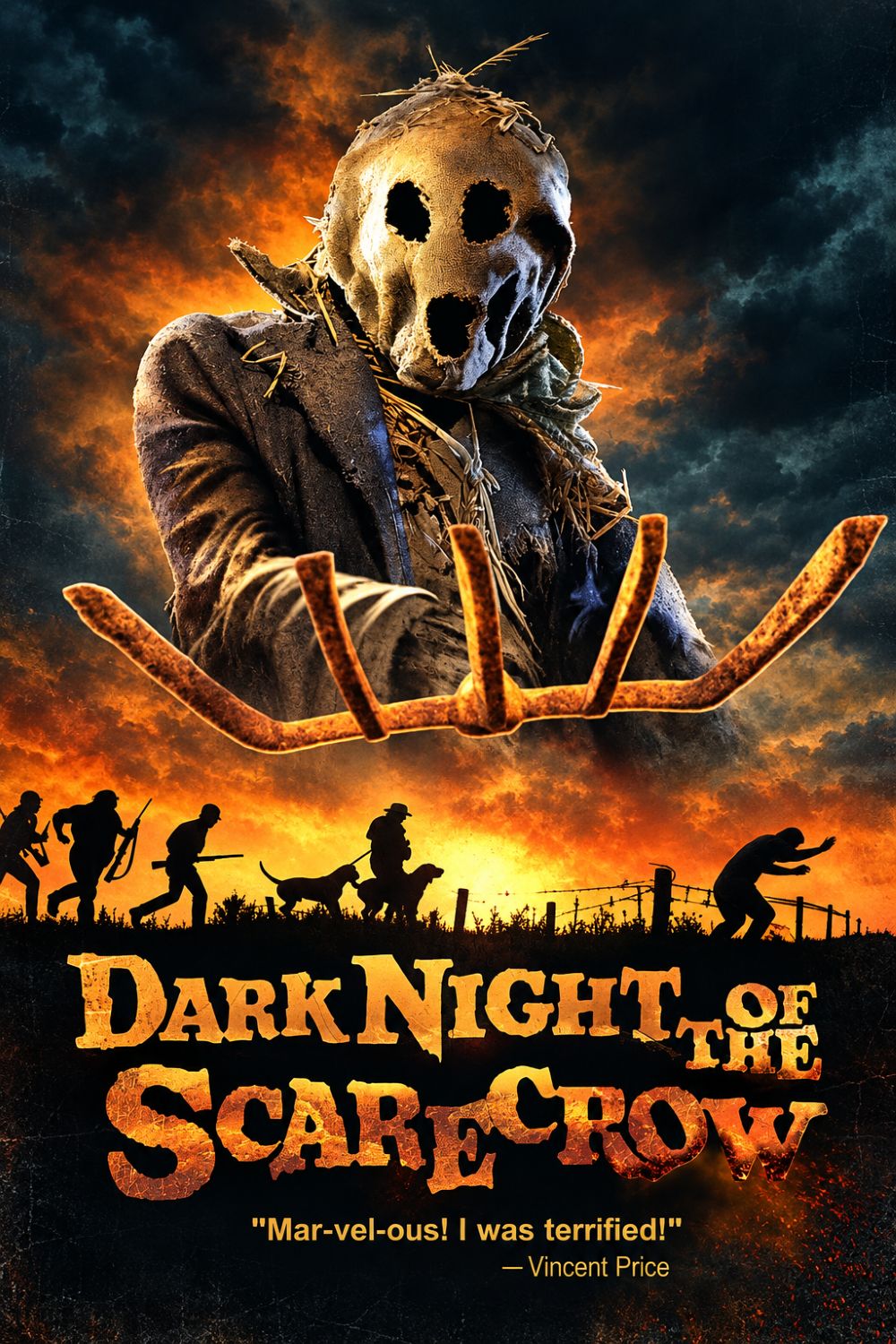
Horror Review: Dark Night of the Scarecrow (dir. by Frank De Felitta)


“You may think you’re getting off free, but there’s other justice in this world besides the law!” — Mrs. Ritter

Frank De Felitta’s Dark Night of the Scarecrow is one of those deceptively modest horror movies that earns its power through atmosphere, patience, and an unusually bitter sense of injustice. Originally made for television in 1981, it has none of the glossy excess or elaborate effects work associated with many theatrical horror releases of its era. What it does have is a sharply constructed premise, a remarkable villain performance from Charles Durning, and a quiet rural setting that becomes steadily more unnerving as the story moves from tragedy into supernatural revenge. It is the kind of film that understands a scarecrow is already an inherently creepy image; it does not need to overexplain or overuse that image to make it work.

The story takes place in a small Southern town where Bubba Ritter, played by Larry Drake, is a gentle, developmentally disabled man whose closest friend is a young girl named Marylee Williams. Their friendship is innocent and affectionate, but it is viewed with suspicion by Otis P. Hazelrigg, a cruel local mail carrier with a personal grudge against Bubba. When Marylee is attacked by a dog and briefly goes missing, Hazelrigg turns the situation into an accusation, convincing three other men that Bubba has harmed the girl. Before anyone bothers to learn the truth, the men hunt Bubba down, shoot him, and stage the scene to make it appear as though he was armed. It is a brutal opening act precisely because the movie refuses to treat its central tragedy as an excuse for cheap melodrama. Bubba is not a monster, and the men who kill him are not panicked heroes making an understandable mistake. They are cowardly, angry men who allow prejudice and resentment to become a death sentence.

That foundation is what separates Dark Night of the Scarecrow from a standard slasher or revenge movie. The supernatural material only becomes effective because the human evil comes first. Bubba’s death is not merely a plot device to unleash a vengeful ghost; it is the film’s moral wound. De Felitta, a veteran novelist as well as the director, approaches the story with an eye for the emotional damage left behind by that act. The film slows down after the killing, allowing the town to sit with the consequences while Hazelrigg becomes increasingly paranoid that Bubba has returned from the grave.

Charles Durning is the movie’s secret weapon. Hazelrigg is one of those villains who is frightening not because he is physically unstoppable, but because he is such a believable bully. Durning gives him a sweaty, blustering confidence that gradually rots into panic. He is the sort of man who believes his position in the community gives him the right to make judgments about everyone else, and he has no trouble manipulating weaker men into sharing responsibility for his own cruelty. Durning never plays Hazelrigg as a cartoonish sadist. Even when he is snarling threats or trying to cover up the murder, there is something painfully recognizable about him: a man who has built his identity around authority and cannot bear the possibility that he has been exposed as morally bankrupt.

Hazelrigg’s hatred of Bubba also has a nasty layer of projection to it. The movie never outright says he is a pedophile, but it heavily implies it through his creepy interest in Marylee, the way he watches her, and Mrs. Ritter’s pointed remarks. That makes his obsessive claim that Bubba is a threat even more grotesque: Hazelrigg seems to be accusing Bubba of the impulses he cannot admit in himself. The implication makes his hostility toward their friendship feel less like misplaced civic concern and more like jealousy, possessiveness, and a desperate effort to hide his own corruption behind moral outrage. It is one of the film’s darkest touches, especially because it remains mostly beneath the surface rather than being presented as a blunt plot revelation.

Larry Drake has a more difficult task because Bubba spends much of the movie absent, concealed, or transformed into a possible supernatural presence. Yet his early scenes are essential. Drake makes Bubba sweet and childlike without turning him into an object of pity or a collection of mannerisms. His relationship with Marylee, played warmly by Tonya Crowe, gives the film its emotional center. There is genuine tenderness in the way Bubba helps her, plays with her, and treats her with uncomplicated kindness. That sweetness makes the later violence feel all the more ugly. Marylee’s grief also carries real weight, because she is one of the only people who completely understands that Bubba was innocent.

The scarecrow itself is used with admirable restraint. There are no elaborate explanations about ancient curses, possession, or elaborate rules governing the entity. The film instead lets the audience wonder whether Bubba’s spirit has actually returned, whether the scarecrow is a physical vessel for vengeance, or whether Hazelrigg is simply losing his mind under the pressure of guilt. That ambiguity gives the movie much of its lasting chill. A scarecrow standing in a distant field, visible at the edge of a frame or appearing where it should not be, is often more frightening than a clearly defined monster charging at the camera. De Felitta recognizes that the image is powerful because it is still, silent, and vaguely human without actually being human.

The television origins are noticeable in some ways. The pacing is deliberate, the violence is largely implied rather than graphic, and the production is understandably small-scale. But those limitations wind up serving the movie. The lack of gore forces the film to emphasize suggestion, shadows, sound, and the ominous openness of its rural setting. Cornfields, dirt roads, farm equipment, abandoned buildings, and dark porches all become part of the film’s horror vocabulary. It feels less like a slick studio shocker and more like a regional ghost story someone might tell you after dark, the kind where the details are simple but the moral is savage.

De Felitta also has a good sense of escalation. The revenge scenes are not huge set pieces, but they are memorable because each one turns something ordinary into a source of menace. The scarecrow’s presence becomes a warning that the men involved in Bubba’s death cannot escape what they did. Instead of relying on body counts alone, the movie builds suspense around Hazelrigg’s growing desperation. Every time he sees the scarecrow—or thinks he sees it—his confidence cracks a little further. The real terror is not just that the dead may be coming for him. It is that there may be no way to outrun the truth.

The ending delivers the kind of grimly satisfying horror-movie justice that the story has earned. It is not triumphant in a cheerful sense, because nothing can undo the tragedy that put the plot in motion. Still, there is a bleak pleasure in watching Hazelrigg finally face the consequences of his actions. The film’s revenge is measured rather than sadistic, and that makes it more effective. It feels like a judgment rather than a spectacle.

Despite its TV roots, Dark Night of the Scarecrow has become a very underrated horror film, with many genre aficionados lauding it as one of the best horror films made, period. That reputation is understandable. It is not the loudest or bloodiest horror film of the early 1980s, and viewers expecting a fast-paced scarecrow slasher may initially be surprised by how much time it spends on character, grief, and small-town malice. But that is exactly why it endures. The film has a soul beneath its scares, and its simple supernatural premise gains force from the cruelty of the world around it.

Ultimately, Dark Night of the Scarecrow works because it never forgets that its monster is born from human wrongdoing. The scarecrow is frightening, but Hazelrigg and the mob that follows him are worse because they are entirely plausible. Frank De Felitta turns a compact television movie into a haunting morality tale about prejudice, guilt, repression, and the terrible cost of refusing to see another person’s humanity. Its effects may be modest, but its mood is potent, its villain is unforgettable, and its final image lingers like something standing motionless at the far end of a field.

Horror On The Lens: The Phantom Of The Opera (dir by Rupert Julian)


Hi there and welcome to October!  This is our favorite time of the year here at the Shattered Lens because October is our annual horrorthon!  For the past several years (seriously, we’ve been doing this for a while), we have celebrated every October by reviewing and showing some of our favorite horror movies, shows, books, and music.  That’s a tradition that I’m looking forward to helping to continue this year!

First released in 1925, The Phantom of the Opera is today best known for both Lon Chaney’s theatrical but empathetic performance as the Phantom and the iconic scene where Mary Philbin unmasks him. However, the film is also a perfect example of early screen spectacle. The Phantom of the Opera was released during that period of time, between Birth of the Nation and the introduction of sound, when audiences expected films to provide a visual feast and Phantom of the Opera certainly accomplishes that. Indeed, after watching this film and reading Gaston Leroux’s original novel, it’s obvious that the musical was inspired more by the opulence of this film than by the book.

This film is also historically significant in that it was one of the first films to be massively reworked as the result of a poor test screening. The film’s ending was originally faithful to the end of the novel. However, audiences demanded something a little more dramatic and that’s what they got.

Lisa Marie Takes A Look At The Amazing Race 39.1 “Sorry, Guys, We Used Our Express Pass”


Of all the reality shows that we watched together, The Amazing Race was always my mom’s favorite. She enjoyed watching the racers as they traveled to different countries and struggled to make their way through new cities without getting eliminated. I’ve always enjoyed it too. If Big Brother is about getting production on your side and Survivor is about strategy, The Amazing Race is often about the importance of just being nice to the people that you meet on your travels. It doesn’t matter how athletic or clever you are. If you tick off your taxi driver by yelling at him, there’s a chance you won’t make it to the next Pit Stop in time to avoid being eliminated.

My mom also always liked Phil Keoghan, the Race’s longtime host. Just as Jeff Probst was once the perfect host for Survivor, Phil is the perfect host for The Amazing Race. Phil is earnest and enthusiastic and, unlike both Probst and Julie Chen Moonves, he seems to actually have a sincere investment in each team of racers. When a team does their best and still gets eliminated, Phil is there to offer comfort. When a team does something sneaky to get to the Pit Stop, Phil is there with a look of disappointment to let them know that they’ve failed to live up to the mission of The Amazing Race.

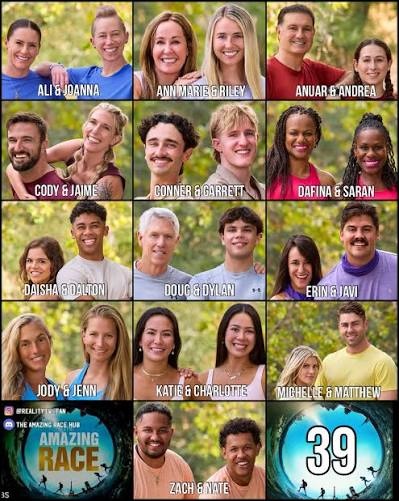
I think my mom would have enjoyed last night’s season premiere. I know I did. At a time when every long-running reality show is piling on twist after twist, The Amazing Race has thrived by keeping things simple. Even when a twist is introduced, it’s usually a fairly straightforward one. This season, every team is starting out with an Express Pass. The Express Pass can be used only once, and it can only be used through the sixth leg. Also, only one team can use an Express Pass per challenge. So, if the team ahead of you uses their Express Pass to get out of doing a Roadblock, you can’t then use your Express Pass to catch up with them. It’s not a bad idea and, by giving all 13 teams a pass, the show keeps things fair. (That’s the sort of thing that Big Brother has still not figured out how to do.)

The first leg took place entirely in Vancouver and, by the end of it, three teams had already used their Express Pass. Erin and Javi used their Express Pass to get out of the season’s first Roadblock. (Personally, I think they’re going to regret using it that early in the season, especially when they probably could have done the Roadblock fairly easily.) Because the Detour featured two tasks to choose from, two teams were able to use their Express Passes. Dylan and Doug used their pass because Doug was exhausted after the Roadblock. Dafina and Saran used their pass because they realized they were running behind.

Here are my thoughts on each team, in the order in which they arrived at the Pit Stop.

Coming in first were Erin and Javi. Erin and Javi are newlyweds. Erin is the self-described “breadwinner” and Javi… well, who knows? Javi seems kind of useless. This team came on strong during this leg, but they’ve already wasted their Express Pass, and they seem like a couple that’s going to end up fighting as soon as they find themselves running behind.

In second place, we’ve got Conner and Garrett. They’re childhood friends! They both seem kind of obnoxious, but they still came in second without wasting an Express Pass, so I think they’re going to be around for a while.

In third place, it was Michelle and Matthew! Michelle owns an auto parts store, and Matthew says that he’s a former R&B singer. I actually think these two are going to do well in the Race. They both seem to be athletic, they worked well together, and they don’t seem to secretly hate each other like Erin and Javi do.

In fourth place, it was Doug and Dylan! Doug is 72 and his grandson Dylan is 18. I liked Doug from the minute he said, “Oh heck yeah,” during the Roadblock. That said, Doug was moving pretty slowly after that Roadblock, and they had to use their Express Pass to come in fourth. I’m hoping for the best for this wholesome team, but I’m not optimistic.

In fifth place, it was the sisters, Katie and Charlotte. I always support the sister teams because Erin Nicole and I often joked about trying out for The Amazing Race. Otherwise, they didn’t make a huge impression this episode. They seem like a middle-of-the-road team.

In sixth place, it was Anaur and his daughter, Andrea. This is another team that just seemed like they were kind of there. They finished right in the middle of the pack, so it’ll be interesting to see if they move up or if they start moving down.

In seventh place, Anne-Marie and Riley! Anne-Marie and Riley are the mother-daughter team. A mother-daughter team has never won The Amazing Race before, and I have a feeling that it’s not going to happen this season either.

In eighth place, Jody and Jenn! They’re best friends and they’re both moms. They didn’t make much of an impression otherwise. I don’t really see them sticking around for too long.

In ninth place, Dafina and Saran. They’re sisters and they seem nice. They had to use their Express Pass to come in ninth. That’s not really a reason for optimism, but it does seem like, every season, there’s a team that surprises the viewers by surviving a bad first leg and then becoming one of the stronger teams. It wouldn’t surprise me if that happened with Dafina and Saran.

In tenth place, Ali and Joanna. Phil introduced them as being “soccer royalty.” Sorry, Phil. The World Cup is over and I’m back to not caring about soccer. Ali was one of the players who took a knee during the national anthem, so I’m actively rooting for this team to be eliminated.

In eleventh place, we’ve got Cody and Jaime. They are a brother/sister team, and I don’t think they’re going to be around that much longer.

In twelfth place, we’ve got Daisha and Dalton, this season’s dating couple. Again, coming in next-to-last is never a good sign as far as the early legs of the Race are concerned. On the plus side, they’ve still got their Express Pass.

And finally, brothers Zack and Nate were the last to reach the Pit Stop, and they were the first to be eliminated. It’s a shame because they did seem nice, but they were also struggling from the start of the leg to the end of it. As soon as they got a lengthy profile about their lives back in Dallas, I knew Zack and Nate were probably going to be eliminated.

I’m happy The Amazing Race is back! Hearing Phil shout, “Go!” was exactly what I needed to hear. Tomorrow, the Race heads to Spain!

Lisa Marie Takes A Look At Survivor 51.2 “Weaponized Honesty”


Who doesn’t enjoy a chaotic Tribal Council?

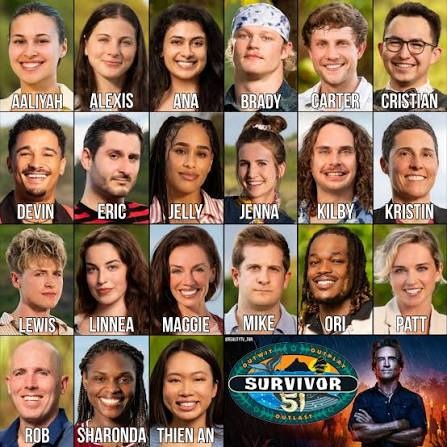
Of course, the interesting thing about last night’s Tribal Council was that it didn’t start out particularly chaotic. It was Savu’s first experience with Tribal, and Jeff Probst guided them through the usual discussion about what was happening at camp. Everyone agreed that the tribe felt like a family. Some people mentioned that they were annoyed with a certain person at camp. (That person was Eric.) Some people mentioned that they weren’t sure they could trust one of their tribemates. (That tribemate was Ana.) We, the viewers, knew that the vote was going to come down to either Eric or Ana, and we knew it would probably be a close one.

Rob, however, did not know that.

Rob, who is a force of chaos if nothing else, went through a remarkable and somewhat implausible transformation this episode. He went from being obsessed with voting Eric out to being obsessed with keeping Eric in the game. Rob told the producers that he felt it was his duty to give someone a second chance at life. (Rob is a bit self-important.) Before Tribal, Rob approached Eric and told him that he couldn’t explain what he was going to do or why, but that Eric had to trust him.

So, what did Rob do? Right before it was time to vote, Rob suddenly asked Probst if he could take Eric to the side and talk to him. As the entire tribe watched, Rob whispered to Eric that everyone was going to vote Eric out and that Eric needed to play his Shot in the Dark. If the Shot in the Dark failed, Rob would use his immunity idol to save Eric. Rob then told the rest of the tribe that he was asking Eric a question to determine whether or not he would vote for him.

When it came time to vote, Rob decided to vote for himself. Presumably, Rob did this so he wouldn’t get on anyone’s bad side during the vote. Production told him that he wasn’t allowed to do that. So Rob instead voted for Eric, the guy he was trying to save.

When it came time to tally the votes, Eric did not play his Shot in the Dark. Rob rolled his eyes and did not play his idol. It turned out, however, that Eric knew more about the vote than Rob did. By a vote of 6-4, Ana was the one voted off the island. Ana looked shocked, despite the fact that she basically spent this entire episode alienating her tribemates by talking about randomly targeting people. Ana was so distrusted that the tribe decided to keep Eric, one of the most socially awkward people to ever play the game, over her.

(In the end, Alexis, Christian, Eric, Kirstin, Linnea, and Sharonda all voted for Ana. Rob, Ana, Ori, and Carter voted for Eric.)

This week’s episode definitely left me smiling. After weeks of unanimous Big Brother votes, it’s always nice to be reminded that anything can happen at a good Tribal Council. Eric, who seemed like a goner, lived to laugh another day. And Rob basically just sabotaged his game for no good reason, because now the most talkative guy on the tribe knows that Rob has an idol.

A few other notes:

“There’s my thumb.” Thanks for sharing, Brady! Actually, for all the hype that Brady’s injury received, hitting his thumb with the axe didn’t seem to slow Brady down at either of last night’s challenges. It was interesting to compare Brady’s reaction to hurting his thumb to Kirstin’s more stoic reaction to spraining her ankle.

The immunity challenge was brutal for the Savu tribe. Jeff Probst loves to say, “You’re still in this!” but it became pretty clear, early on, that Savu was not in it. Savu also lost the reward challenge during this episode. For now, at least, the Toka tribe appears to be working better as a team.

I loved the sight of Probst ranting and yelling at everyone to keep fighting during the immunity challenge. Soaked by the rain, Jeff Probst went from being Survivor’s somewhat goofy host to being an Ahab-like figure, yelling as the tribe tried to move a fake whale through the water. (You probably had to be there.)

Lewis returned from Exile and joined the Toka tribe. Lewis immediately told everyone every single detail about his trip to Exile, including the fact that there’s an immunity idol sitting atop a mast. Lewis — what are you thinking!? Lewis is just trying to be honest, but I could tell that most of the tribe didn’t believe him when he said that he didn’t get the idol. Now he’s got Kilby, of all people, talking about targeting him.

Speaking of idols, Jelly found Toka’s idol. So, as of now, there are three idols in play. Rob has Savu’s idol and, last night, he revealed that fact to Eric. Jelly has Toka’s idol and, so far, only Patt knows that she has it. And the third idol is currently sitting atop a mast on Exile Island.

Finally, the cringiest moment of last night’s episode had to be Eric trying to teach everyone on Savu how to do improv. I kept expecting him to yell, “Michael Scarn — FBI!” To be honest, that was probably enough to justify voting him off the island. I’m actually surprised he survived.

Join Tubi Thursday for Rambo!


(IMPORTANT UPDATE BELOW)

Hi, everyone!  Tonight, on Mastodon, I will be hosting the #TubiThursday watch party!  Join us for the 2008 Stallone masterpiece, Rambo!

You can find the movie on Tubi and you can join us on Mastodon at 9 pm central time!  (That’s 10 pm for you folks on the East Coast.)  We will be using #TubiThursday hashtag!  See you then!

UPDATE: Well, it appears that Tubi has removed Rambo from its service.  So, instead, we will be watching SPACE MUTINY (1988), starring Reb Brown!  Sorry for any inconvenience!

Horror Scenes That I Love: The Opening of Suspiria


The opening of Dario Argento’s 1977 masterpiece, Suspiria, is about as perfect an opening as one could hope for.  American ballet student Suzy Banyon (Jessica Harper) arrives in Freiburg, Germany.  Both Argento and Harper perfectly capture Suzy’s confusion as she makes her way through the airport and, as torrential rain drenches her, attempts to hail a taxi and get a ride to the dance academy.  (What Suzy doesn’t know, of course, is that the dance academy is home to the ancient witch known as The Mother of Sighs.)

With this opening scene, Argento both immediately establishes the off-center, nightmarish atmosphere of Suspiria and establishes Suzy as a character who we, as the audience, relate to and care about.  Suspiria is a great film and it all begins with this brilliant opening.

(And just as Suzy is starting her  journey to the school, we are just starting Horrothon!  Get ready for the best 31 days of the year!)

4 Shots From 4 Horror Films: October 1st


4 Or More Shots From 4 Or More Films is just what it says it is, 4 shots from 4 of our favorite films. As opposed to the reviews and recaps that we usually post, 4 Shots From 4 Films lets the visuals do the talking!

4 Shots From 4 Horror Films

Suspiria (1977, dir by Dario Argento, DP: Luciano Tovoli)

The Shining (1980, dir by Stanley Kubrick, DP: John Alcott)

The Thing (1982, dir by John Carpenter, DP: Dean Cundey)

Day of the Dead (1985, dir by George Romero, DP: Michael Gornick)


Welcome To October On The Shattered Lens!


by Erin Nicole

Welcome to October on the Shattered Lens!

Here’s hoping this month finds you with joy, family, friends, fiends, ghouls, and ghosts!

Today is also the start of the Shattered Lens’s annual horrorthon!  Sit back, enjoy the reviews, the art, and the music videos, and have a great month of ghoulish fun!

by Erin Nicole