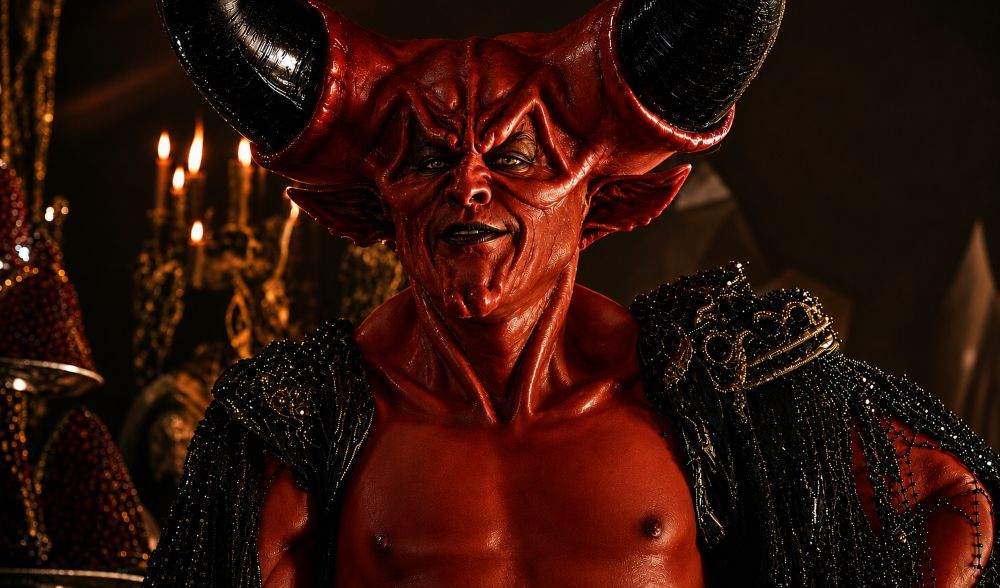
“Dreams are my specialty. Through dreams I influence mankind. My dream is of eternity… with you.” — Darkness
In the hall of fame cinematic evil, few figures loom as large—both literally and figuratively—as Darkness, the demonic antagonist of Ridley Scott’s 1985 fantasy film Legend. While the film itself is a flawed, sumptuous fever dream of unicorns, goblins, and saccharine innocence, its enduring legacy rests squarely on the cloven shoulders of its primary antagonist. Darkness is not merely a monster or a plot obstacle; he is the philosophical and aesthetic center of the film, a being of pure, conscious malevolence who articulates the seductive logic of eternal night. Yet, for all his cosmic horror, he remains a surprisingly relatable figure, a tyrant who exudes weary boredom and theatrical pique. This complexity is entirely the work of Tim Curry, whose performance elevates what could have been a one-note bogeyman into one of the most flamboyant, charismatic, and unforgettable devils ever committed to celluloid.
Tim Curry’s physical transformation into the Lord of Darkness is, in itself, a masterclass in prosthetic commitment, but it is his performance beneath the latex that breathes terrifying life into the horns. Under layers of crimson makeup, sculpted muscle, and ram-like horns, Curry’s most potent weapon is his voice—a resonating, purring baritone that slithers between a seductive whisper and a thunderous roar. He delivers dialogue like a Shakespearean actor chewing rich, decadent scenery, imbuing lines about “the glory of the night” with a sensual, almost poetic conviction. Yet, Curry never lets the grandeur become ponderous. He injects a wicked, knowing levity into the role, a mischievous twinkle in his prosthetic-lidded eyes that suggests the Devil is not just evil, but is having a genuinely good time being so. This is the Tim Curry “sass” in full effect: a raised eyebrow, a sarcastic drawl, and a contemptuous flick of his clawed hand that makes his Darkness feel less like an ancient, faceless god and more like a decadent, immortal rock star who has grown bored with eternity.
What makes Curry’s portrayal so revolutionary is his ability to make Darkness a mesmerizing and charismatic figure who outshines the film’s ostensible hero, Jack, played by a young, earnest Tom Cruise. Cruise’s Jack is the quintessential pure-hearted faerie-tale protagonist—brave, wholesome, and tragically one-dimensional. He fights for love and light with a fervent sincerity that, while admirable, lacks texture or conflict. In contrast, Curry’s Darkness is a creature of profound, articulate desire; he wants to extinguish the sun not out of mindless spite, but to create a world where his aesthetic of shadow and chaos can flourish. He offers Lily (Mia Sara) a crown of stars and an eternity of passion, a temptation far more intellectually and emotionally engaging than Jack’s simple, chaste devotion. When Curry shares the screen with Cruise, the film’s energy shifts palpably; the audience’s attention is irrevocably drawn to the demon’s throne room, leaving the hero’s quest feeling like a tedious errand.
Crucially, Curry’s Darkness transcends mere villainy by possessing a startlingly human vulnerability, a pathos that makes him more than a symbol of absolute evil. He is a creature of immense power, yet he is bound by cosmic rules and frustrated by the very light he seeks to destroy. There is a weary, jaded quality to his performance, a sense that he has been playing this game of cosmic chess for eons and is irritated by its predictability. When he is ultimately defeated, it is not with a grand, defiant curse, but with a quiet, almost melancholic acknowledgment of fate. This fleeting moment of resignation, delivered with Curry’s signature subtlety, adds a layer of tragic grandeur to the character. He is not just a devil; he is a failed artist of darkness, a monarch who has lost his kingdom, and Curry ensures we feel the weight of that loss, even as we cheer for his vanquishment.
In the end, Ridley Scott’s Legend is a flawed tapestry of light and shadow, but Tim Curry’s Darkness is the golden thread that holds it all together. He gave the Devil a flair that was both terrifying and deliciously camp, a combination that has cemented his performance in the horror-fantasy hall of fame. While Tom Cruise’s Jack may be the film’s designated hero, he serves primarily as a straight man to Curry’s operatic villainy. Decades later, audiences may forget the plot’s intricate details or the film’s lush visuals, but they will never forget the sight of Curry rising from his throne, horns silhouetted against the fire, and purring his seductive threats. He proved that the most compelling evil is not a mindless beast, but a charismatic, sassy, and deeply intelligent force of nature—one who makes the eternal struggle between good and evil feel less like a battle and more like a spectacular, unforgettable show.
Villain of the Day
- Anton Chigurh (No Country for Old Men)
- Willie Cicci (The Godfather & The Godfather Part 2)
- Griffith (Berserk)
- Klaus Wortmann (Antropophagus)
- Emilio Barzini (The Godfather)
- Gul Dukat (Star Trek: Deep Space Nine)
- Judge Holden (Blood Meridian)
- Vic Mackey (The Shield)
- Kefka Palazzo (Final Fantasy VI)
- Reinhard Heydrich (Conspiracy)
- Kai Proctor (Banshee)
- Matthew Hopkins (Witchfinder General)
- Boyd Crowder (Justified)

