Review: Legend (dir. by Ridley Scott)


“What is light without dark? What are you without me? I am a part of you all. You can never defeat me. We are brothers eternal!” — Darkness

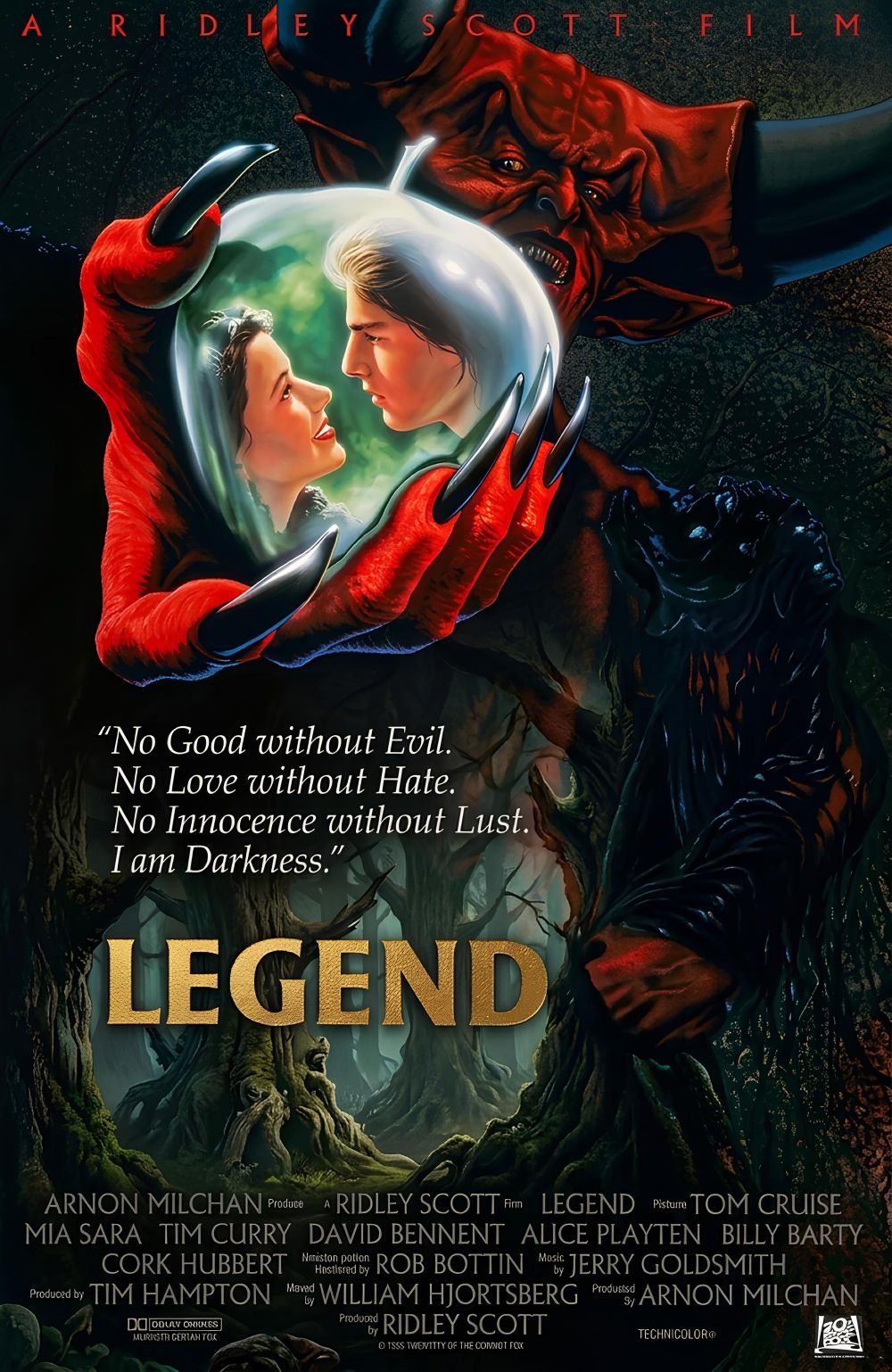
Legend is one of those films that feels like it should be a masterpiece even before it begins. It has Ridley Scott behind the camera, an extravagant fantasy premise, elaborate practical effects, striking production design, and a cast that includes a young Tom Cruise, Mia Sara, and Tim Curry. Released in 1985, the film arrived as a dark fantasy event that had been heavily anticipated, especially because Scott had already earned a reputation for visually stunning films. Alien and Blade Runner had established him as a director who could make entire worlds feel tactile, mysterious, and overwhelming. The idea of Scott applying that sensibility to unicorns, goblins, forest sprites, demonic lords, and fairy-tale mythology was exciting on paper. Unfortunately, while Legend is often gorgeous to look at, it becomes an uneven mess that is only saved from becoming a major disappointment by Tim Curry’s performance as Darkness.

The setup is familiar enough to sound almost deliberately archetypal. In a magical forest, Jack, played by Cruise, is a woodland boy who lives in harmony with nature and has fallen in love with the innocent Princess Lili, played by Sara. The world’s balance is tied to a pair of unicorns, embodiments of purity and light. Darkness, a devil-like ruler who wishes to plunge the world into permanent night, sends his goblin servants to kill the unicorns and take one of their horns. Lili’s fascination with the unicorns sets the tragedy in motion, and once one of the creatures is slain, winter and darkness descend upon the land. Jack must rescue Lili, restore the horn, defeat Darkness, and return light to the world.

There is nothing inherently wrong with a simple fairy-tale plot. In fact, Scott’s strongest instinct in Legend is treating fantasy with a sense of visual seriousness. The forest does not look like a clean studio set built for children; it looks damp, overgrown, foggy, and vaguely dangerous. The trees loom like ancient creatures, shafts of light break through the branches in painterly bursts, and even the beautiful areas of the film carry an eerie quality. Scott and cinematographer Alex Thomson create images that often resemble illustrated storybooks poisoned by a nightmare. The film’s environments are its greatest achievement. Whether it is the glowing forest, the icy wasteland after the unicorn’s death, or Darkness’ fire-lit underworld, Legend makes a serious effort to create a fully realized fantasy space rather than simply dressing actors in costumes and placing them in generic medieval scenery.

That visual commitment is why the film remains so fascinating despite its flaws. You can pause almost anywhere and find something worth admiring: a strange creature in the background, smoke drifting through a cavern, an enormous set textured with roots and stone, or a costume that looks handmade rather than mass-produced. Scott’s eye for atmosphere is undeniable. The film has an unusual physicality, too. Its magic is created through prosthetics, makeup, puppetry, matte work, and elaborate sets, so even when some effects have aged, they retain a handmade charm. Modern fantasy often has the advantage of digital flexibility, but Legend has the kind of tactile design that makes its world feel like it has dirt under its fingernails.

Still, visual beauty cannot completely compensate for a story that never finds a consistent rhythm. Legend often feels less like a fully developed narrative than a collection of spectacular images and half-formed fairy-tale ideas. Characters appear with little introduction, emotional shifts happen abruptly, and major story developments can feel rushed or strangely underexplained. The theatrical cut in particular carries the sense that important connective material has been removed. There are moments when the movie seems to expect emotional investment simply because the images are grand or the music swells, but the script has not done enough to earn that reaction.

Jack is also an unusually bland hero for a film that needs a strong center. Cruise was still early in his career, and there are flashes of the screen presence that would soon make him a major star. He is physically committed and looks believable racing through forests, climbing ruins, and confronting danger. But Jack is written as a generic pure-hearted fantasy protagonist, and Cruise never gets enough material to make him feel specific. He is brave because the story says he is brave, romantic because the story says he loves Lili, and destined to save the world because that is what these stories require. He does not have much inner conflict beyond the expected guilt and determination.

Lili is similarly underwritten, although Mia Sara does bring a dreamy, otherworldly quality to the role. The film wants her to embody innocence, temptation, and romantic idealism, but it does not give her much agency until she becomes corrupted by Darkness’ influence. Her transformation into a dark bride is visually memorable, especially in the elaborate black gown and makeup, but it also highlights the film’s habit of prioritizing imagery over character. The sequence is beautiful, eerie, and loaded with gothic fantasy appeal, yet Lili’s emotional journey into that role feels more decorative than dramatically convincing.

The supporting characters are more colorful but not always more useful. The dwarfs, elves, and forest companions give the story occasional energy, particularly the sarcastic fairy Oona and the armored dwarf Gump. Yet their presence can make the film feel tonally scattered. Sometimes Legend wants to be haunting and mythic; sometimes it wants broad comic relief; sometimes it drifts toward romantic melodrama. Those modes do not always blend. The result is a movie that can move from an ominous demonic ritual to a goofy side-character exchange without establishing a stable tone.

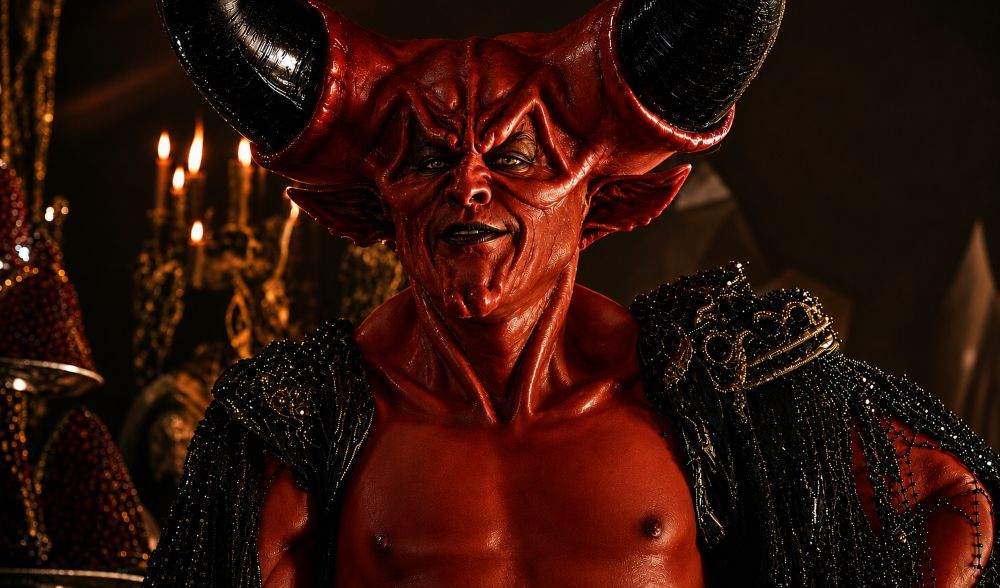
Then there is Tim Curry, who walks into the movie and immediately makes every other problem less important. His Darkness is one of the most iconic fantasy villains ever put on screen, and it is not difficult to understand why. The makeup design alone is astounding: massive horns, red skin, cloven hooves, muscular proportions, and a towering silhouette that makes him look like a medieval illustration of Satan brought to life. But the design would be nothing without Curry’s performance. He does not merely hide beneath the prosthetics; he gives Darkness a voice, posture, and seductive intelligence.

Curry plays Darkness as both monstrous and theatrical. His deep, measured delivery turns lines about night, desire, and evil into something genuinely alluring. He understands that the character should not simply roar or sneer. Darkness is persuasive. He offers Lili beauty, power, and escape from innocence, which makes him more interesting than a villain who only threatens destruction. His scenes with Sara have a strange, almost operatic energy, mixing horror, seduction, and camp in a way that fits the film’s most ambitious visual impulses. Curry makes Darkness feel ancient, vain, cruel, romantic, and weirdly funny all at once. He gives Legend its pulse.

The famous confrontation between Jack and Darkness should be the film’s crowning achievement, and visually it almost is. Darkness’ lair, lit by flames and surrounded by infernal architecture, gives Scott room to indulge his talent for monumental images. Curry’s villain towers over Cruise, making the hero look small and vulnerable. Yet even here, the fight is more memorable for its atmosphere than its dramatic construction. It is a good example of the whole film: rich in aesthetic invention, less persuasive as storytelling.

The music also reflects the movie’s fractured identity. Different versions of Legend are associated with different scores, most notably the Jerry Goldsmith score and the Tangerine Dream soundtrack used in the American theatrical release. The Goldsmith material feels more classically mythic and orchestral, while Tangerine Dream’s electronic music gives the film a distinctly 1980s dream-pop atmosphere. Both have their supporters, and both alter the experience considerably. That split feels appropriate for a movie that has always existed in multiple forms and competing moods. Legend is never quite one thing.

In the end, Legend is a flawed cult fantasy rather than a lost masterpiece. Its reputation rests largely on its imagery, its practical craftsmanship, and Curry’s towering performance, not on the strength of its plot or its emotional depth. Ridley Scott clearly wanted to make a dark fairy tale that felt ancient and sensual, but the finished film too often gets trapped between mythic grandeur, children’s fantasy, gothic romance, and broad adventure comedy. It is an uneven mess, but it is a beautiful one. And every time Tim Curry’s Darkness enters the frame, Legend briefly becomes the extraordinary film it was always trying to be.
Villain of the Day: Darkness (Legend)


“Dreams are my specialty. Through dreams I influence mankind. My dream is of eternity… with you.” — Darkness

In the hall of fame cinematic evil, few figures loom as large—both literally and figuratively—as Darkness, the demonic antagonist of Ridley Scott’s 1985 fantasy film Legend. While the film itself is a flawed, sumptuous fever dream of unicorns, goblins, and saccharine innocence, its enduring legacy rests squarely on the cloven shoulders of its primary antagonist. Darkness is not merely a monster or a plot obstacle; he is the philosophical and aesthetic center of the film, a being of pure, conscious malevolence who articulates the seductive logic of eternal night. Yet, for all his cosmic horror, he remains a surprisingly relatable figure, a tyrant who exudes weary boredom and theatrical pique. This complexity is entirely the work of Tim Curry, whose performance elevates what could have been a one-note bogeyman into one of the most flamboyant, charismatic, and unforgettable devils ever committed to celluloid.

Tim Curry’s physical transformation into the Lord of Darkness is, in itself, a masterclass in prosthetic commitment, but it is his performance beneath the latex that breathes terrifying life into the horns. Under layers of crimson makeup, sculpted muscle, and ram-like horns, Curry’s most potent weapon is his voice—a resonating, purring baritone that slithers between a seductive whisper and a thunderous roar. He delivers dialogue like a Shakespearean actor chewing rich, decadent scenery, imbuing lines about “the glory of the night” with a sensual, almost poetic conviction. Yet, Curry never lets the grandeur become ponderous. He injects a wicked, knowing levity into the role, a mischievous twinkle in his prosthetic-lidded eyes that suggests the Devil is not just evil, but is having a genuinely good time being so. This is the Tim Curry “sass” in full effect: a raised eyebrow, a sarcastic drawl, and a contemptuous flick of his clawed hand that makes his Darkness feel less like an ancient, faceless god and more like a decadent, immortal rock star who has grown bored with eternity.

What makes Curry’s portrayal so revolutionary is his ability to make Darkness a mesmerizing and charismatic figure who outshines the film’s ostensible hero, Jack, played by a young, earnest Tom Cruise. Cruise’s Jack is the quintessential pure-hearted faerie-tale protagonist—brave, wholesome, and tragically one-dimensional. He fights for love and light with a fervent sincerity that, while admirable, lacks texture or conflict. In contrast, Curry’s Darkness is a creature of profound, articulate desire; he wants to extinguish the sun not out of mindless spite, but to create a world where his aesthetic of shadow and chaos can flourish. He offers Lily (Mia Sara) a crown of stars and an eternity of passion, a temptation far more intellectually and emotionally engaging than Jack’s simple, chaste devotion. When Curry shares the screen with Cruise, the film’s energy shifts palpably; the audience’s attention is irrevocably drawn to the demon’s throne room, leaving the hero’s quest feeling like a tedious errand.

Crucially, Curry’s Darkness transcends mere villainy by possessing a startlingly human vulnerability, a pathos that makes him more than a symbol of absolute evil. He is a creature of immense power, yet he is bound by cosmic rules and frustrated by the very light he seeks to destroy. There is a weary, jaded quality to his performance, a sense that he has been playing this game of cosmic chess for eons and is irritated by its predictability. When he is ultimately defeated, it is not with a grand, defiant curse, but with a quiet, almost melancholic acknowledgment of fate. This fleeting moment of resignation, delivered with Curry’s signature subtlety, adds a layer of tragic grandeur to the character. He is not just a devil; he is a failed artist of darkness, a monarch who has lost his kingdom, and Curry ensures we feel the weight of that loss, even as we cheer for his vanquishment.

In the end, Ridley Scott’s Legend is a flawed tapestry of light and shadow, but Tim Curry’s Darkness is the golden thread that holds it all together. He gave the Devil a flair that was both terrifying and deliciously camp, a combination that has cemented his performance in the horror-fantasy hall of fame. While Tom Cruise’s Jack may be the film’s designated hero, he serves primarily as a straight man to Curry’s operatic villainy. Decades later, audiences may forget the plot’s intricate details or the film’s lush visuals, but they will never forget the sight of Curry rising from his throne, horns silhouetted against the fire, and purring his seductive threats. He proved that the most compelling evil is not a mindless beast, but a charismatic, sassy, and deeply intelligent force of nature—one who makes the eternal struggle between good and evil feel less like a battle and more like a spectacular, unforgettable show.

Villain of the Day

Horror Film Review: The Fog (dir by John Carpenter)


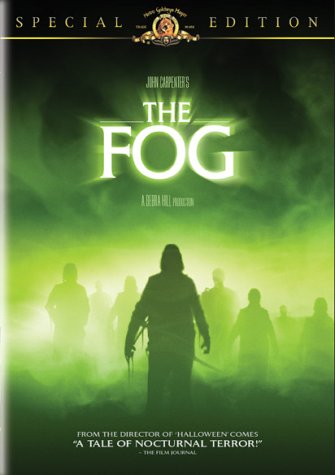
“Time for one more story,” Mr. Machen (John Houseman) declares the beginning of John Carpenter’s 1980 horror film, The Fog.

Mr. Machen is a resident of Antonio Bay, California, a coastal town that was founded with the help of gold stolen from a ship that was owned by a wealthy man named Blake (Rob Bottin). Blake wanted to start a leper colony. Instead, he was betrayed by six sailors who sank Blake’s ship, stole the gold, and used it to start the town of Antonio Bay.

At 12 midnight, on the day that the town is to celebrate its 100 anniversary, strange things start to happen. Windows shatter. Masonry falls from walls. A thick fog rolls across the ocean and seems to move from house to house. Inside the fog are several angry spirits, led by Blake. They not only want their gold back but they also want to take six lives as a way of getting revenge on the six conspirators who stole their gold and sank their ship.

It all starts with knock at the door and, if you look out a window, maybe you’ll see a dark shadow standing in an all-enveloping fog. Answering the door is a mistake. At the same time, so is not answering the door. It’s not easy to escape the vengeful spirits in the fog.

The Fog (1980, dir by John Carpenter, DP: Dean Cudney)

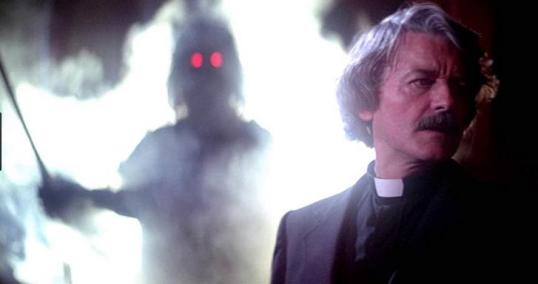
The Fog plays out like a disaster film, albeit one with a supernatural twist. The film follows several characters who are trying to survive the night and the majority of them don’t even meet until the final half of the film. There’s a truck driver (Tom Atkins) and a hitchhiker (Jamie Lee Curtis). There’s the alcoholic priest (Hal Halbrook) and the chairwoman (Janet Leigh) of the anniversary committee. Nancy Loomis, who co-starred with Curtis in Carpenter’s Halloween, plays an administrative assistant while Carpenter’s wife, Adrienne Barbeau, plays the local radio DJ whose son is briefly targeted by the fog. There’s even a coroner named Dr. Phibes!

In fact, the whole film is full of references to other films. The Fog finds John Carpenter in a rather playful mood, with characters named after Carpenter associates like Dan O’Bannon, Tommy Wallace, and Nick Castle. There’s even a mention of Arkham, the fictional New England town that served as the setting for many of H.P. Lovecraft’s stories.

42 years after it was made, The Fog holds up as a very well-told ghost story. I mean, fog is just creepy in itself. Then you add in a bunch of silent shadows standing in the fog and it gets even scarier! For the most part, the actors all do a good job playing rather thinly-drawn characters. Tom Atkins is always fun to watch! The true stars of the film, of course, are the ghosts and they will definitely give you nightmares.

The Fog is a good film for Halloween viewing so watch it and don’t answer the door!

The Fog (1980, dir by John Carpenter, DP: Dean Cundey)

(Don’t just take my word for it!  Be sure to read Leonard’s review of The Fog!)

The Online Film Critics Society Honors Nomadland


Nomadland chalked up yet another victory today as it was named Best Picture by the Online Film Critics Society.

Check out all of the OFCS winners below:

Best Picture
1. Nomadland
2. Da 5 Bloods
3. Promising Young Woman
4. Never Rarely Sometimes Always
5. First Cow
6. Minari
7. Sound of Metal
8. I’m Thinking of Ending Things
9. Soul
10. The Trial of the Chicago 7

Best Animated Feature
Onward
Over the Moon
Soul
The Wolf House
Wolfwalkers

Best Director
Emerald Fennell – Promising Young Woman
Eliza Hittman – Never Rarely Sometimes Always
Spike Lee – Da 5 Bloods
Kelly Reichardt – First Cow
Chloé Zhao – Nomadland

Best Actor
Riz Ahmed – Sound of Metal
Chadwick Boseman – Ma Rainey’s Black Bottom
Anthony Hopkins – The Father
Delroy Lindo – Da 5 Bloods
Steven Yeun – Minari

Best Actress
Jessie Buckley – I’m Thinking of Ending Things
Viola Davis – Ma Rainey’s Black Bottom
Sidney Flanigan – Never Rarely Sometimes Always
Frances McDormand – Nomadland
Carey Mulligan – Promising Young Woman

Best Supporting Actor
Sacha Baron Cohen – The Trial of the Chicago 7
Chadwick Boseman – Da 5 Bloods
Bill Murray – On the Rocks
Leslie Odom Jr. – One Night in Miami
Paul Raci – Sound of Metal

Best Supporting Actress
Maria Bakalova – Borat Subsequent Moviefilm
Olivia Colman – The Father
Talia Ryder – Never Rarely Sometimes Always
Amanda Seyfried – Mank
Youn Yuh-jung – Minari

Best Original Screenplay
Da 5 Bloods – Danny Bilson, Paul Demeo, Kevin Willmott & Spike Lee
Minari – Lee Isaac Chung
Never Rarely Sometimes Always – Eliza Hittman
Promising Young Woman – Emerald Fennell
The Trial of the Chicago 7 – Aaron Sorkin

Best Adapted Screenplay
First Cow – Jonathan Raymond, Kelly Reichardt
I’m Thinking of Ending Things – Charlie Kaufman
Ma Rainey’s Black Bottom – Ruben Santiago-Hudson
Nomadland – Chloé Zhao
One Night in Miami – Kemp Powers

Best Editing
Da 5 Bloods – Adam Gough
Mank – Kirk Baxter
Nomadland – Chloé Zhao
Tenet – Jennifer Lame
The Trial of the Chicago 7 – Alan Baumgarten

Best Cinematography
Da 5 Bloods – Newton Thomas Sigel
First Cow – Christopher Blauvelt
Mank – Erik Messerschmidt
Nomadland – Joshua James Richards
Tenet – Hoyte Van Hoytema

Best Original Score
Da 5 Bloods – Terence Blanchard
Mank – Trent Reznor & Atticus Ross
Minari – Emile Mosseri
Soul – Trent Reznor & Atticus Ross
Tenet – Ludwig Goransson

Best Debut Feature
Radha Blank – The Forty-Year-Old Version
Emerald Fennell – Promising Young Woman
Regina King – One Night in Miami
Darius Marder – Sound of Metal
Andrew Patterson – The Vast of Night

Best Film Not in the English Language
Another Round (Denmark)
Bacurau (Brazil)
Collective (Romania)
La Llorona (Guatemala)
Minari (United States)

Best Documentary
Boys State
Collective
Dick Johnson Is Dead
The Painter and the Thief
Time

Technical Achievement Awards
Sound of Metal – Sound Design
Emma. – Costume Design
Tenet – Visual Effects
Mank – Production Design
The Invisible Man – Visual Effects

BEST NON-UNITED STATES RELEASE
(This award is for the best films released outside the United States in 2020 that were not released in the United States during the eligibility period.)
A Beast in Love (Japan)
The Disciple (India)
Ghosts (Turkey)
Mogul Mowgli (United Kingdom)
New Order (Mexico)
Notturno (Italy)
Rocks (United Kingdom)
Saint Maud (United Kingdom)
Summer of 85 (France)
Undine (Germany)

LIFETIME ACHIEVEMENT AWARDS
Rob Bottin (Makeup Artist)
David Byrne (Composer)
Jane Fonda (Actor)
Jean-Luc Godard (Director)
Frederick Wiseman (Documentarian)

SPECIAL ACHIEVEMENT AWARDS
“Small Axe” — Director Steve McQueen created a series of films for the small screen that rivals the best of the theatrical features of the year, that can be seen individually and yet work together to explore a cultural experience largely unseen on big screens, television, or streaming to date.
Distributor Kino Lorber for being the first company to offer virtual film distribution as a way to help independent theaters during the pandemic through the Kino Marquee.
Kudos to the independent theater entities that participated in presenting “Virtual Cinema” when forced to close due to the pandemic. Films that otherwise may not have been seen were made available through online platforms, with ticket prices shared by the distributor with the theater.

Horror Scenes I Love: The Howling


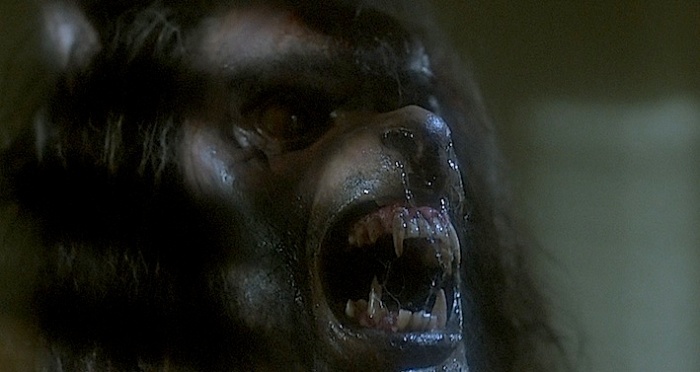
TheHowlingI always thought that Joe Dante’s 1981 horror film, The Howling, has been overlooked just a little bit due to it’s release being the same year as John Landis’ own horror film, An American Werewolf In London. Both were werewolf films and both were good in their own right.

Dante’s film has been called silly by some critics, but it was the more serious of the two with Landis’ own film mixing in more black humor in the narrative than Dante’s which took on a more traditional approach to the werewolf horror. Even the transformation scene from both films took on opposite sides in terms of mood and tone. Where Landis’ film treated the scene with both a mixture of horror and camp (due to the music playing in the background) in The Howling the scene went for full-on horror.

This has been one of my favorite horror scenes and it’s all due to the work of the very person who made John Carpenter’s The Thing such a memorable piece of horror filmmaking: Rob Bottin.

This man should be handed every award for every effects work he has ever done and will continue to do. It’s a shame that he hasn’t done anything of note since 2002’s Serving Sara, but until Hollywood decides that if they want great practical effects paired with advancing CG ones and hire Bottin once again we can always fall back on his past work such as the one’s he did for The Howling.

Quick Horror Review: John Carpenter’s The Fog


I have something of a tradition with John Carpenter’s The Fog. Every year, I try to watch the film on the date and time where the story starts – April 20th, at around 11:55pm. It’s not the scariest of stories, but it does have a spooky atmosphere that lends itself well to Halloween – or any late quiet night. I love this movie.

The Fog marked the first film that John Carpenter worked on after Halloween, collaborating with the late Debra Hill, who also produced the movie. She’d go on to also produce both Escape From New York and Escape from L.A for Carpenter. While it didn’t really have the impact of Halloween, it held up until Escape from New York came out the following year.

Here’s the story:

In the town of Antonio Bay, an old captain (John Houseman) explains to some children about the ill-fated Elizabeth Dane (what a beautiful name, I might add), a ship that belonged a rich of crew of lepers led by someone named Blake. The heads of the town conspired to steal the gold by setting up the ship to crash against the docks. It works out for the Conspirators, as they are “aided by a unearthy fog” that blinds the Leper ship’s navigators. and the gold they collect helps to form the great town the kids play in to this day.

What they don’t realize is that vengeance is coming in the form of that very same fog, as the ghost of the Lepers have come to claim the lives of the six conspirators…or their direct descendants.

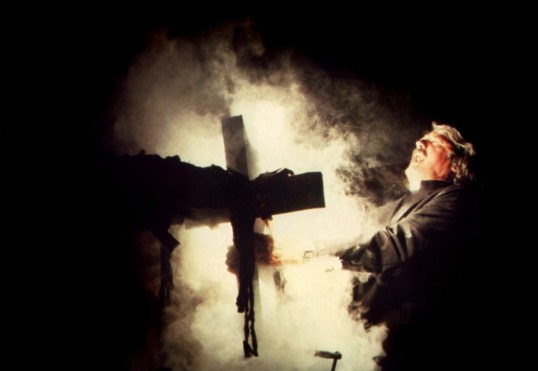
As a kid, I had a problem with that. You mean because my great great grandparents messed up somewhere ages ago, I have to get killed for it? I remember thinking that it really wasn’t fair, but I’m kind of diverging from the topic here. The story gives you four points of view. You have Nick (Tom Atkins, sans his signature mustache) and a hitchhiker he picks up played by then scream queen Jamie Lee Curtis. You have Curtis mother, Janet Leigh, who’s character is working on the anniversary party for the town and her assistant, Sandy, played by Nancy Loomis (who appeared in the first three Halloween films). The third comes from Adrienne Barbeau’s character, Stevie Wayne, who works for the local radio station. Her character acts as the warning voice for the town and she starts to notice that something’s going on when her son gives her a piece of Driftwood that later echoes Blake’s warning. The final viewpoint comes from Father Malone (Hal Holbrook), who discovers Blake’s diary and learns the truth about what happened 100 years ago. His character helps to piece the mystery together, somewhat.

Carpenter and Hill gathered many of their friends, who went on to work on other films for this. Tommy Lee Wallace went on to direct Halloween III: Season of the Witch (and coincidentally did the voice of the Silver Shamrock ad-man in the commercial) and Vampires: Los Muertos. Wallace’s name was given to Carpenter fan favorite Buck Flower. Nick Castle’s name was given to Tom Atkins character. Makeup Wizard Rob Bottin (who also played Blake in the film) went on to do some of the effects in The Thing.

The makeup effects in this film were okay. The lighting and fog did more to obscure than to actually help one see what was doing the attacking, but it really worked for some of the shadowing in the film. If the movie has any drawbacks, it’s that there’s a really low body count to the film. In essence, there are only 6 people the ghosts are after, so these are only the ones they actually get. It would have been interesting if there were a few random deaths, or more individuals in danger, but I supposed it worked out well for the time period.

The Fog is a nice film to catch late at night. You won’t find it at the upper rankings of top horror films, but it’s one to try, at least. Don’t even bother with the Remake for this one. It’s not even work talking about.