Review: Platoon (dir. by Oliver Stone)


“We been kicking other peoples asses for so long, I figured it’s time we got ours kicked.” — Sgt. Elias

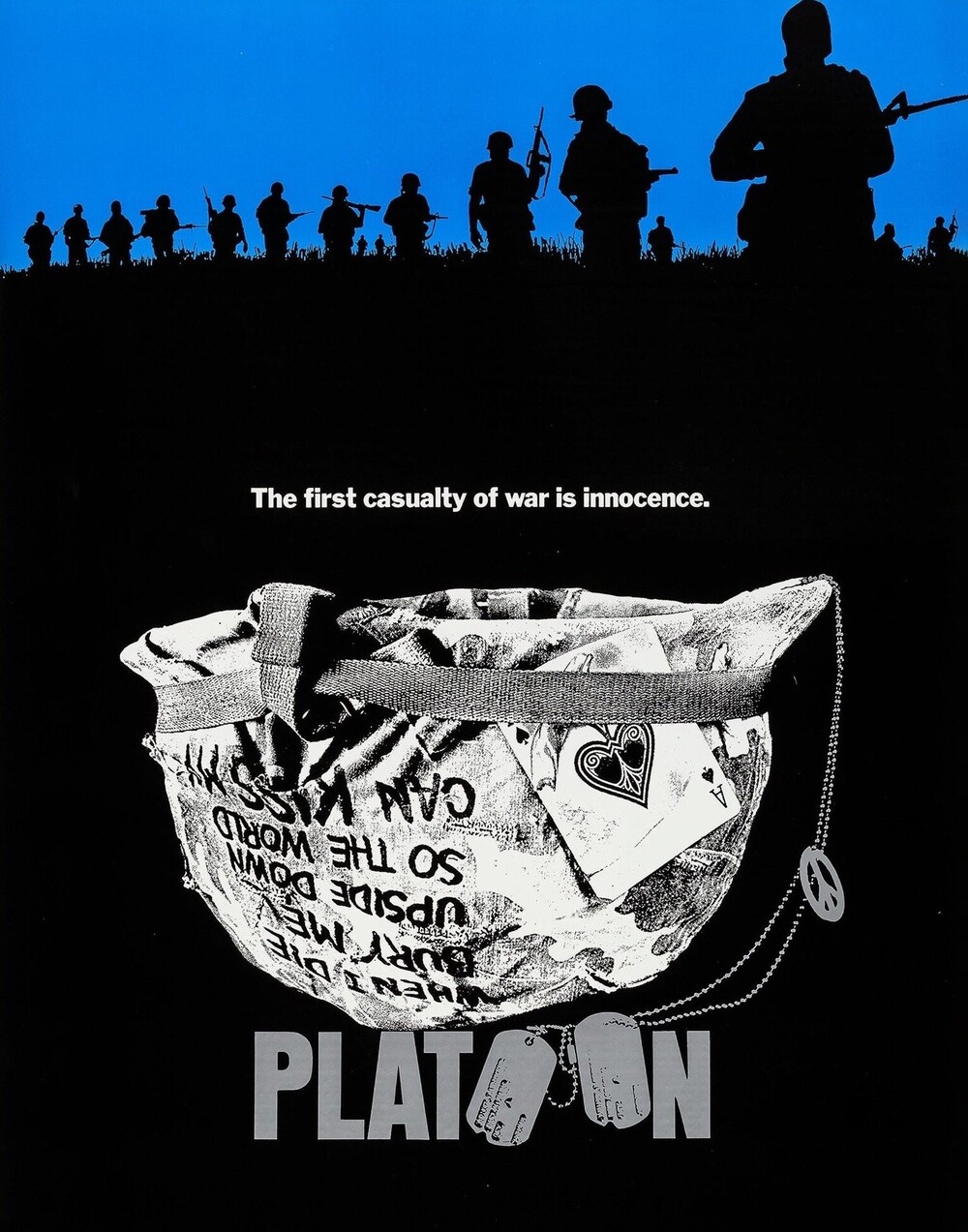
Platoon is one of those war movies that still feels raw, mean, and strangely alive decades later. It is not just a Vietnam movie about combat; it is a movie about confusion, fear, moral collapse, and what happens when young people are dropped into a nightmare with no real sense of why they are there.

What makes Platoon hit so hard is that it never feels polished in a comforting way. Oliver Stone keeps the film close to the mud, sweat, and panic of the battlefield, but he also spends plenty of time on the uglier stuff that happens between firefights: the resentment, the paranoia, the bullying, and the way men start forming little kingdoms inside a war zone. That is where the movie gets its power. The bullets matter, but so do the silences and side glances, because those moments show how war breaks people down before it even kills them.

Charlie Sheen’s Chris Taylor is a smart choice for the center of the film because he starts out as a kind of blank witness. He is young, idealistic in a vague way, and clearly not prepared for what he has walked into. That makes him easy to identify with, but it also makes him useful as a lens for everything around him. We learn the rules of this miserable little ecosystem as he does. Through Chris, the audience is pulled into the same sense of helpless observation that seems to define the whole experience of the platoon.

Stone’s screenplay makes that connection even stronger because he wrote it himself, drawing on his own experience as a young man who volunteered to go to Vietnam instead of being drafted. That detail gives Chris Taylor’s story a personal charge, since Chris feels less like a fictional stand-in and more like Stone working through his own memory and guilt. It adds another layer to the film’s emotional weight, because the perspective feels lived-in rather than invented for dramatic effect.

The film’s real muscle comes from the conflict between Sergeant Elias and Sergeant Barnes, played with complete commitment by Willem Dafoe and Tom Berenger. Elias feels like the last thread of conscience in a collapsing world. Barnes, by contrast, is the kind of man war can easily turn into a weapon: hard, cold, frightening, and convinced that brutality is just realism with the sentiment stripped out. Their conflict gives the movie a mythic quality without draining away its grit. It is not subtle in the usual sense, but it does not need to be. Stone wants these figures to feel bigger than life because that is how they register to a terrified kid in the jungle.

One of the best things about Platoon is how it balances chaos with purpose. A lot of war films either try to turn combat into spectacle or turn it into a lecture. Platoon mostly avoids both traps. The action is ugly, disorienting, and often difficult to follow in exactly the right way. You do not watch these battles and admire the choreography as much as you feel the confusion of everyone inside them. The filmmaking keeps you from getting too comfortable, which is exactly the point. War here is not heroic; it is exhausting, degrading, and terrifying.

That sense of exhaustion matters because the movie understands that war is not made up of only the big moments people remember. It is made up of waiting, heat, boredom, fear, and the slow erosion of judgment. Platoon is at its best when it lingers on that middle ground. The soldiers are not always in immediate danger, but they are always under pressure. That constant tension is what makes the movie feel so oppressive. Even when nothing explodes, it still feels like something bad is about to happen.

Stone also deserves credit for making a Vietnam movie that feels personal without becoming self-congratulatory. You can feel that this comes from experience, but the film never becomes some smug “I was there” statement. Instead, it channels memory into mood, character, and atmosphere. That gives the movie a lived-in authenticity that a lot of war films chase but never quite reach. It feels like a film made by someone trying to tell the truth about a memory that never stopped hurting.

There is also something brutally effective about the way Platoon presents morality as unstable rather than cleanly divided. The movie does not really pretend that everyone is either noble or evil. Instead, it shows how stress, fear, resentment, and power can shove people toward terrible choices. That is a big reason the film still works. It understands that war does not just expose character; it distorts it. Men do things they would never do anywhere else, and the movie keeps asking what is left of a person after that kind of damage.

Still, Platoon is not perfect, and part of its reputation comes from how forcefully it makes its points. Some viewers may find it a little heavy-handed at times, especially in the way it frames innocence, corruption, and betrayal. It is not exactly a subtle film, and it does occasionally aim for emotional impact with both fists. But honestly, that intensity is part of its identity. The movie is not trying to be cool or detached. It wants to wound you a little, and for this material, that approach makes sense.

The performances help keep the film from tipping over into empty grandstanding. Dafoe brings a wounded humanity to Elias that makes him feel like more than just a symbol. Berenger gives Barnes a dangerous stillness that is often more frightening than outright aggression. Sheen, meanwhile, does the important work of holding the center without overpowering the film. He is not the flashiest presence, but he does not need to be. His job is to absorb the madness, and that gives the audience a place to stand inside it.

What lingers most after Platoon is not any single battle scene, but the feeling that the whole movie is about a collapse of trust. Trust in leaders, trust in comrades, trust in the idea that there is some larger meaning to all this suffering. The film strips those things away layer by layer until all that is left is survival and the hope that maybe, somehow, the nightmare will end. That is a bleak place to sit for two hours, but it is also why the film remains so effective. It does not romanticize the experience. It forces you to sit with its mess.

The movie also has a strong visual identity. The jungle is not just background; it feels like an active pressure on every scene. The humidity, the darkness, the mud, and the smoke all help create a world that seems hostile even when nobody is shooting. That physical texture is a huge part of the movie’s success. You can almost feel the environment draining the people inside it. It is less like watching a battle than like watching human beings slowly get swallowed by a swamp of fear and violence.

If there is a reason Platoon still gets talked about so often, it is because it captures a very specific kind of war movie truth: the enemy is not only out there. Sometimes the real damage comes from within the unit, within the chain of command, within the soldier’s own mind. That is a grim idea, but Platoon never feels empty or cynical for saying it. It feels honest. And honesty, in a movie like this, goes a long way.

In the end, Platoon is powerful because it refuses to let war look clean, noble, or emotionally tidy. It is messy, relentless, and often hard to watch, but that is exactly why it matters. It is one of the defining Vietnam films for a reason, and even with its blunt edges, it earns that status through sheer force of feeling, strong performances, and a bleak sense of truth that never really lets up.

Scenes I Love: The Ending of The Thing


From 1982’s The Thing, here is one of the greatest endings in the history of horror.  Kurt Russell and Keith David play two characters who might be the final survivors of the The Thing’s rampage or who might just be one human talking to one alien.  With nothing to do but wait for the inevitable, the two of them share a drink and prepare to freeze.

The scene features great acting from Russell and David and great direction from John Carpenter.  It’s one of those endings that you will never forget.

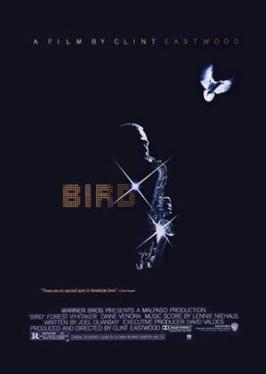
Bird (1988, directed by Clint Eastwood)


Forest Whitaker stars as the legendary saxophonist Charlie “Bird” Parker.  The film, which is structured around flashbacks and time jumps and features some of the most beautifully-done transitions that I’ve ever seen, follows Parker as he plays his saxophone, challenges the jazz purists who his own individual style, and looks for work in both America and France.  Along the way, we watch as he befriends and learns from Dizzy Gillespie (Samuel Wright), mentors a young trumpet player named Red Rodney (Michael Zelniker), and has a complex relationship with a white jazz lover named Chan Parker (Diane Venora).  Throughout his life, Charlie Parker struggles with his addiction to heroin and alcohol, occasionally getting clean to just then fall back into his habit.  To its credit, the film avoids most of the biopic cliches when it comes to portraying Parker’s addiction.  Parker accepts that he’s an addict, just as he accepts that he has a talent that is destined to revolutionize American music.

Director Clint Eastwood has always been a fan of jazz and he actually saw Charlie Parker perform when he was a young man.  His love of jazz had been present in almost every modern-era film that he has directed, staring with Play Misty For Me’s lengthy trip to the Monterey Jazz Festival.  Bird was a passion project for Eastwood, the first film that Eastwood directed without also appearing in.  (Eastwood doesn’t star in his second directorial effort, Breezy, but he does have a brief and silent cameo as a man standing on pier.)  Eastwood takes a nonlinear approach to telling the story, eschewing the traditional bopic format and instead putting the focus on Parker’s music.  Eastwood was able to get several never bef0re-released recordings of Parker performing and, when Whitaker is blowing into his saxophone in the film, we’re actually hearing Parker.  Eastwood’s direction captures the smoky atmosphere of the jazz clubs where Parker and Gillespie made their name while the nonlinear style reflects the feeling of just letting a song take you to wherever it’s going.  This is a movie about jazz that plays out like a jazz improvisation.

Forest Whitaker gives an amiable and charismatic performance as Charlie Parker, playing him as someone who has found both an escape and peace in his music, even as he physically struggles with the ravages of his drug addiction.  Whitaker won the Best Actor at Cannes for his performance in Bird.  Eastwood received the Golden Globe for Best Director.  Bird feels like it was labor of love for both of them.  Bird may not have set the box office on fire when it was originally released but it remains one of the best jazz films.

The Eric Roberts Collection: Assault on Wall Street (dir by Uwe Boll)


2013’s Assault on Wall Street tells the story of Jim Braxford (Dominic Purcell), a security guard who loses all of his money due to some bad investments that he had no control over and whose wife, Rosie (Erin Karpluk), kills herself rather than continue her expensive medical treatments.  Jim snaps and, after listening to a bunch of angry people on MSNBC, he decides to take violent vengeance on Wall Street, targeting brokers and CEOs and ultimately launching an all-out assault on a firm owned by the cartoonishly evil Jeremy Stancroft (John Heard).

Full of anti-capitalist rhetoric and heavy-handed plot developments, Assault on Wall Street finds director Uwe Boll in a political mood.  Because the film deals with economic anxiety to which everyone can relate, this film is slightly more effective than Boll’s usual films but that still doesn’t mean that it’s particularly good.  It’s one of those films that takes forever to get where it’s going and the film also suffers due to Boll’s confounding decision to cast Dominic Purcell in the lead role.  The blank-eyed, flat-voice Purcell gives such a spectacularly dull performance that one wonders if he was constructed out of charisma anti-matter.  It doesn’t help that Purcell’s three best friends are played Edward Furlong, Michael Pare, and Keith David, all of whom come across like they would have been a better pick for the lead role.

The film ends with a spate of violence that I remember that I found to be a bit shocking when I first saw the film on cable in 2013.  Of course, today, such violence has been normalized and is often celebrated on social media.  I imagine that members of the creepy Luigi death cult would probably claim that Jim Braxford didn’t go far enough in his murder spree.

Two of my favorites, Eric Roberts and Lochlyn Munro, have supporting roles in this film.  Munro is Jim’s broker, who makes the mistake of complaining about how he had to cancel his planned vacation to Barbados as a result of the economic meltdown.  Roberts plays the lawyer who agrees to help Jim get justice but who ultimately proves to be no help at all.  Both of them are memorable in their small roles, which once again leaves us to wonder why, with all the talent available, Uwe Boll apparently decided to make Dominic Purcell his muse.  That was a bad investment.

Previous Eric Roberts Films That We Have Reviewed:

  1. Star 80 (1983)
  2. Runaway Train (1985)
  3. Blood Red (1989)
  4. The Ambulance (1990)
  5. The Lost Capone (1990)
  6. Love, Cheat, & Steal (1993)
  7. Voyage (1993)
  8. Love Is A Gun (1994)
  9. Sensation (1994)
  10. Dark Angel (1996)
  11. Doctor Who (1996)
  12. Most Wanted (1997)
  13. Mercy Streets (2000)
  14. Raptor (2001)
  15. Rough Air: Danger on Flight 534 (2001)
  16. Wolves of Wall Street (2002)
  17. Mr. Brightside (2004)
  18. Six: The Mark Unleased (2004)
  19. Hey You (2006)
  20. Amazing Racer (2009)
  21. In The Blink of an Eye (2009)
  22. Bed & Breakfast (2010)
  23. Enemies Among Us (2010)
  24. The Expendables (2010) 
  25. Sharktopus (2010)
  26. Beyond The Trophy (2012)
  27. The Dead Want Women (2012)
  28. Deadline (2012)
  29. The Mark (2012)
  30. Miss Atomic Bomb (2012)
  31. Bonnie And Clyde: Justified (2013)
  32. Lovelace (2013)
  33. The Mark: Redemption (2013)
  34. The Perfect Summer (2013)
  35. Self-Storage (2013)
  36. A Talking Cat!?! (2013)
  37. This Is Our Time (2013)
  38. Inherent Vice (2014)
  39. Road to the Open (2014)
  40. Rumors of War (2014)
  41. Amityville Death House (2015)
  42. Deadly Sanctuary (2015)
  43. A Fatal Obsession (2015)
  44. Las Vegas Story (2015)
  45. Stalked By My Doctor (2015)
  46. Enemy Within (2016)
  47. Joker’s Poltergeist (2016)
  48. Prayer Never Fails (2016)
  49. Stalked By My Doctor: The Return (2016)
  50. The Wrong Roommate (2016)
  51. Dark Image (2017)
  52. Black Wake (2018)
  53. Frank and Ava (2018)
  54. Stalked By My Doctor: Patient’s Revenge (2018)
  55. Clinton Island (2019)
  56. Monster Island (2019)
  57. The Reliant (2019)
  58. The Savant (2019)
  59. Seven Deadly Sins (2019)
  60. Stalked By My Doctor: A Sleepwalker’s Nightmare (2019)
  61. The Wrong Mommy (2019)
  62. Exodus of a Prodigal Son (2020)
  63. Free Lunch Express (2020)
  64. Her Deadly Groom (2020)
  65. Top Gunner (2020)
  66. Deadly Nightshade (2021)
  67. The Elevator (2021)
  68. Just What The Doctor Ordered (2021)
  69. Killer Advice (2021)
  70. Night Night (2021)
  71. The Poltergeist Diaries (2021)
  72. The Rebels of PT-218 (2021)
  73. A Town Called Parable (2021)
  74. Bleach (2022)
  75. My Dinner With Eric (2022)
  76. D.C. Down (2023)
  77. Aftermath (2024)
  78. Bad Substitute (2024)
  79. Devil’s Knight (2024)
  80. The Wrong Life Coach (2024)
  81. When It Rains In L.A. (2025

Guilty Pleasure No. 78: Armageddon (dir by Michael Bay)


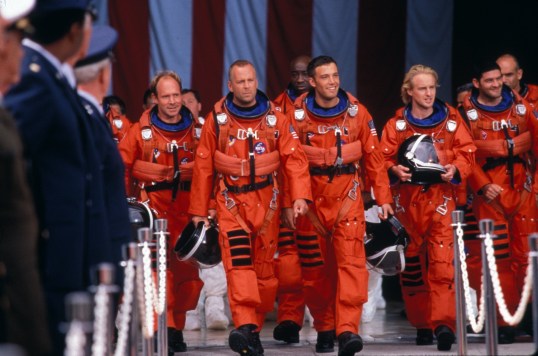
Remember that time that Bruce Willis and a team of oil drillers saved all of humanity from a giant asteroid that was apparently the size of Texas?

Sure, you do!  Everyone remembers Armageddon!

1998’s Armageddon is a film that doesn’t get a lot of respect but which everyone remembers.  There’s been a lot of movies made about giant asteroids on a collision path with the Earth.  Ever since scientists announced that a collision with a comet or an asteroid probably killed the dinosaurs, there’s been a somewhat irrational fear that the same thing could happen to us.  Back in 1978, Sean Connery and Karl Malden tried to stop a Meteor (and failed).  In 1998, the same year that Armageddon came out, Morgan Freeman, Robert Duvall, and Elijah Wood tried to stop an asteroid from causing a Deep Impact (and failed).  Adam McKay made an entire film about everyone saying, “Don’t Look Up,” in an attempt to promote increased panic about climate change (and failed).  (“I’m so scared!” Leonardo DiCaprio shouted and audiences responded, “Oh, calm down.”)  And yet, it’s Armageddon — ridiculed by critics, endlessly parodied by other movies — that people use as their go-to source for commenting on the prospect of a mass extinction event.  Mostly because, in Armageddon, humanity didn’t fail.  Bruce Willis showed that asteroid who was boss!

Why do we love Armageddon?  A lot of it has to do with the cast.  Not only do you have Bruce Willis battling an asteroid but you’ve also got Steve Buscemi, Owen Wilson, Ben Affleck, Will Patton, Michael Clarke Duncan, Peter Stormare, William Fichtner, and a host of others working with him.  You’ve got Billy Bob Thornton working ground control.  You’ve got Liv Tyler, somehow managing to give a decent performance even while Ben Affleck attacks her with animal crackers.  It’s not just the cast is full of familiar and likable actors.  It’s that the members of the cast know exactly what type of film that they’re appearing in and they all give exactly the right type of performance for that film.  They deliver their lines with conviction while not making the mistake of taking themselves too seriously.  Bruce Willis announces that his crew will destroy that asteroid in return for never having to pay taxes again and he announces with just the slightest hint of a smirk, knowing that the audience is going to cheer that moment.

But really, the real reason why Armageddon has survived that test of time is because it’s just so utterly shameless.  Director Michael Bay will never be accused of being a subtle director but Bay instinctively understood that Armageddon was not a film that demanded subtlety.  Armageddon is a film that demands that constantly moving camera and all of those carefully composed scenes that were clearly made so they could be included in the trailer.  It’s a film about big moments and big emotions.  Unlike something like Deep Impact, it doesn’t get bogged down in trying to be better than it actually is.  Unlike Don’t Look Now, it doesn’t degenerate into a bunch of histrionic speeches.  Armageddon exists to make the audience cheer and it succeeds.  It takes guts to include a slow motion scene of a bunch of kids celebrating in front of a faded Kennedy For President poster but Bay is exactly the type of director who can pull that off.  Michael Bay’s style is not right for a lot of films.  But it was perfect for Armageddon.

As I sit here typing this, there are some people panicking because there’s speculation that a meteor is going approach the Earth in the 2030s.  It’ll probably miss us but who knows?  But you know what?  I’m not worried at all.  I’ve seen Armageddon.  So, on this International Earth Day, let’s remember the courageous men who saved this planet back in 1998.

Previous Guilty Pleasures

  1. Half-Baked
  2. Save The Last Dance
  3. Every Rose Has Its Thorns
  4. The Jeremy Kyle Show
  5. Invasion USA
  6. The Golden Child
  7. Final Destination 2
  8. Paparazzi
  9. The Principal
  10. The Substitute
  11. Terror In The Family
  12. Pandorum
  13. Lambada
  14. Fear
  15. Cocktail
  16. Keep Off The Grass
  17. Girls, Girls, Girls
  18. Class
  19. Tart
  20. King Kong vs. Godzilla
  21. Hawk the Slayer
  22. Battle Beyond the Stars
  23. Meridian
  24. Walk of Shame
  25. From Justin To Kelly
  26. Project Greenlight
  27. Sex Decoy: Love Stings
  28. Swimfan
  29. On the Line
  30. Wolfen
  31. Hail Caesar!
  32. It’s So Cold In The D
  33. In the Mix
  34. Healed By Grace
  35. Valley of the Dolls
  36. The Legend of Billie Jean
  37. Death Wish
  38. Shipping Wars
  39. Ghost Whisperer
  40. Parking Wars
  41. The Dead Are After Me
  42. Harper’s Island
  43. The Resurrection of Gavin Stone
  44. Paranormal State
  45. Utopia
  46. Bar Rescue
  47. The Powers of Matthew Star
  48. Spiker
  49. Heavenly Bodies
  50. Maid in Manhattan
  51. Rage and Honor
  52. Saved By The Bell 3. 21 “No Hope With Dope”
  53. Happy Gilmore
  54. Solarbabies
  55. The Dawn of Correction
  56. Once You Understand
  57. The Voyeurs 
  58. Robot Jox
  59. Teen Wolf
  60. The Running Man
  61. Double Dragon
  62. Backtrack
  63. Julie and Jack
  64. Karate Warrior
  65. Invaders From Mars
  66. Cloverfield
  67. Aerobicide 
  68. Blood Harvest
  69. Shocking Dark
  70. Face The Truth
  71. Submerged
  72. The Canyons
  73. Days of Thunder
  74. Van Helsing
  75. The Night Comes for Us
  76. Code of Silence
  77. Captain Ron

Lisa Marie Reviews An Oscar Winner: Platoon (dir by Oliver Stone)


One of my favorite scenes from TV’s King of the Hill occurs in an episode in which Hank and Peggy are celebrating their wedding anniversary.  They’ve sent Bobby and Luanne away for the weekend.  They have the house to themselves but, after their anniversary party, Peggy is feeling depressed.  She tells Hank that, for the first time ever, she feels old and she regrets all the dreams that she had that have yet to come true, like inventing and selling her own barbecue sauce.

Trying to cheer her up, Hank says, “C’mon, Peg.  We got the house to ourselves for weekend …. and I rented an R-rated movie!”

Peggy looks up, briefly hopeful that Hank did something romantic.  “What movie?” she asks.

Hank hesitates, glances down at the floor, and says, “Uhmm …. Platoon.”

It’s funny because it’s true.  Just about every man that I know loves Platoon.  First released in 1986 and reportedly based on Oliver Stone’s own experiences as an infantryman in Vietnam, Platoon is often cited as being one of the greatest war films ever made.  Oddly enough, the film has an anti-war and anti-military message but, in my experience, those who love it talk more about the battle scenes than any message that Stone may have been trying to impart about the futility of war.  Pauline Kael once wrote that Oliver Stone had left-wing politics but a right-wing sensibility and I think you can definitely see that in Platoon.  Despite all of the characters talking about how pointless the war is and how much they resent being forced to risk their lives for no apparent purpose, the film’s energy comes from the scenes of Chris Taylor (Charlie Sheen) stalking through the jungle and, towards the end, losing his mind and giving himself completely over to the adrenaline that comes from being trapped in the middle of a battle.  Throughout the film, we hear Taylor’s rather pedantic thoughts on the military and his fellow soldiers but it’s hard not to notice that his actions and his dialogue are usually far less eloquent.  Taylor may be a rich intellectual (and wow, is Charlie Sheen ever unconvincing when it comes to portraying that part of Taylor’s personality) but when he’s in the jungle, he’s just fighting for survival.

The film’s plot centers around the conflict between two sergeants, the peace-loving Elias (Willem DaFoe) and the war-loving Barnes (Tom Berenger).  Taylor has to decide which one of the two to follow.  The pot-smoking Elias loves his men and goes out of his way to protect them.  The beer-drinking Barnes has a much harsher view of the world but, at the same time, he’s the type of scarred warrior who seems immortal.  One gets the feeling that he’ll never be defeated.  The rest of the platoon is full of familiar faces, with everyone from John C. McGinley to Francesco Quinn to Tony Todd to Forest Whitaker to Johnny Depp to a baby-faced Kevin Dillon showing up.  (Dillon is especially frightening as a psycho who has, for some reason, been nicknamed Bunny.)  The majority of the platoon is dead by the end of the film.  Even with the leadership of Elias and Barnes, the soldiers are stuck in a winless situation.  As Taylor points out, the Americans aren’t just fighting the enemy.  They’re also fighting each other.

Platoon is certainly not my favorite of the film nominated in 1986.  I would have gone with A Room With A View.  (Blue Velvet, which is as influential a film as Platoon, was not even nominated.)  That said, I can’t deny the power of Platoon‘s combat scenes.  Though Stone’s script is didactic and Taylor’s narration is awkwardly deployed throughout the film, Stone’s direction definitely captures the fear and dread of being in a strange place with no idea of whether or not you’re going to survive.  Stone is critical of the military (at one point, an officer calls an air strike on his own men) but seems to love the soldiers, even the ones who have pushed over to the dark side.

Platoon was not the first Best Picture nominee to be made about the Vietnam War.  The Deer Hunter, Coming Home, and Apocalypse Now were all released first.  But both The Deer Hunter and Apocalypse Now are surreal epics that seem to take place in a dream world.  Coming Home, which has a script that somehow manages to be even more didactic than Platoon‘s, focuses on the war back home.  Platoon is far more gritty and personal film.  Watching Platoon, you can smell the gunpowder and the napalm and feel the humidity of the jungle.  I can understand why it won, even if I prefer to watch Helena Bonham Carter and Julian Sands fall in love.

Dead Presidents (1995, directed by the Hughes Brothers)


In 1969, Anthony (Larenz Tate) graduates from high school in the Bronx and shocks his family by announcing that he will not be following in his brother’s footsteps by enrolling in city college but that he will instead be enlisting in the Marines and going off to fight in Vietnam.  While his friends taunt him for choosing to fight in a “white man’s war,” Anthony thinks that serving in the Marines will make him a man.  His two biggest heroes, his father and the local numbers boss, Kirby (Keith David), both served in Korea.  Kirby’s even lost his his leg in the war but he can still keep order in the neighborhood.

Vietnam doesn’t turn out to be what Anthony was expecting.  He serves two tours of duty and becomes an efficient killing machine but he is also forced to do things that will haunt him long after the war is over.  When Anthony finally returns to the Bronx in 1971, the old neighborhood has changed.  Crime, drugs, and poverty are destroying the community and Anthony struggles to support his girlfriend (Rose Jackson) and his daughter.

Finally, with no other opportunities available and feeling as if his country has abandoned him, Anthony agrees to take part in an armored car robbery.  Working with him are a few friends from the old days and a few members of the revolutionary Nat Turner Cadre.  Anthony thinks that he has the robbery planned out perfectly but nothing ever goes as planned.

In 1993, The Hughes Brothers made their directorial debut with Menace II Society, an incendiary film that holds up as one of the best feature debuts of any filmmaker.  Their follow-up to Menace II Society was Dead Presidents.  While Dead Presidents operates on a more epic scale than Menace II Society, it’s also a far more uneven film.  While the first part of the film (which follows Anthony and his friends during their final days of high school) is strong, things start to fall apart once the action moves to Vietnam.  The Hughes Brothers tried to recreate the Vietnam War on a Grenada Invasion budget and the action never feels credible.  When Anthony returns to the Bronx, Dead Presidents regains some of its footing but the eventual armored car heist is never as exciting as it could be.

Still, Dead Presidents has enough good moments that it’s always watchable.  Larenz Tate gives a good performance as Anthony and he’s surrounded by the some of the best black character actors of the 90s.  Keep an eye out for a young and incredibly obnoxious Terrence Howard, playing an aspiring gangster and getting a deserved beating at the hands of Anthony.  Though the movie often bites off more than it can chew, it does do a good job of seriously dealing with the issues that returning vets have to contend with when they come back home.  Anthony suffers from PTSD, which is something that a lot of people didn’t talk about in 1995, and the Hughes Brothers deserve much credit for their sensitive handling of the topic.  Dead Presidents may not be perfect but it’s impossible not to admire the film’s ambition.

Behind Enemy Lines: Colombia (2009, directed by Tim Matheson)


After 40 years of war, the Colombian military and FARC, the cocaine-funded guerrilla insurgency, are finally meeting to discuss peace.  A group of Navy SEALS, led by Lt. Macklin (Joe Manganiello), have been sent into the Colombian jungle to secretly keep an eye on the peace talks and make sure that things don’t get out of hand.  However, as soon as they arrive, the conference is attacked by yet another group of terrorists.  Led by Alvaro Cardona (Yancy Arias), this third group kills the leaders of the Colombian military and FARC and attempts to frame the entire attack on the SEALS!  Now, Macklin and Carter Holt (WWE superstar Mr. Kennedy) are trapped behind enemy lines.  With the Colombian military, FARC, and Cardona after them and the CIA disavowing any knowledge of their existence, the two SEALS have to rescue a captured comrade and prove their innocence before all of South America plunges into war.

This film, which features Keith David recreating his commanding officer role from Behind Enemy Lines II: Axis of Evil, is a standard action movie.  Some of the action scenes are exciting but all too often, BEL: Colombia is done in by its own low budget.  This is especially obvious when the SEALS are parachuting into the jungle and the cheap green screen effects make the movie look like an old 80s tv show, with the SEALS clumsily superimposed over a picture of the sky.  Watching that scene, I wouldn’t have been surprised if the original Magnum P.I. or Simon and Simon suddenly appeared as a member of the team.  Even Jessica Fletcher wouldn’t have been out of place.

On the plus side, the acting actually isn’t bad and Cardona has a little more depth than the usual action movie villain. This is really not the type of film that you would expect to be directed by Otter from Animal House but Tim Matheson doesn’t do a bad job.  Again, the low budget hurts but he gets some decent performances and he shows that he can adequately handle an action scene.   BEL: Colombia isn’t terrible but it’s still not hard to feel that it would have been better if it had been made in 1988 by Chuck Norris and Menahem Golan.

Behind Enemy Lines II: Axis of Evil (2006, directed by James Dodson)


After an intelligence satellite reveals that the North Koreans have built a nuclear missile that can hit anywhere in the world and that they’re currently pointing the missile right at the United States, the President (Peter Coyote) orders a team of Navy SEALs to parachute into North Korea and take out the missile site.  At the last minute, the mission is canceled but two SEALs have already jumped out of the airplane and two more follow because a SEAL leaves no man behind.

While the world sits on the brink of war, the stranded SEALs attempt to reach the missile site and knock it out of commission.  Unfortunately, two of the SEALs get killed by the North Koreans and the two survivors end up getting captured and are forced to undergo extreme torture.  With time running out, the president authorizes a military strike on the missile site, a move that could plunge the world into a nuclear war.  It’s now up to Lt. James (Nicholas Gonzalez) and Master Chief Callaghan (Matt Bushell) to escape from the North Koreans and complete their mission before the stealth bombers show up and do their thing.

Behind Enemy Lines II: Axis of Evil has nothing to do with the previous Behind Enemy Lines film, beyond featuring a Naval officer stranded in enemy territory.  Behind Enemy Lines II: Axis of Evil is one of those films that should be simple and easy to follow but it’s so frantically directed and edited that it’s actually difficult to understand what’s going on from scene to scene.  This isn’t a case where, as in Black Hawk Down, the film is deliberately confusing in order to show what it would be like to be under enemy fire.  Instead, Behind Enemy Lines II feels as if it was edited by someone who was getting paid per jump cut.  It becomes difficult to keep track of who is shooting at who and the overuse of the shaky handheld camera effect didn’t help.  Also, for some reason, there are some fantasy sequences that feel as if they belong in a different movie.

The scenes in Washington D.C., where the President and his advisers debate whether or not to plunge the world into war, are marginally better.  Peter Coyote has the right amount of moral authority to play the president and the great Glenn Morshower (you may remember him as Aaron of the Secret Service on 24) plays the admiral who suggests that maybe it would be a good idea not to hastily destroy the world.  Because this movie was made in 2006, the actress playing the Secretary of State is a dead ringer for Condoleezza Rice.

Behind Enemy Lines II is not a good movie but it made enough money to get a sequel, which I’ll review tomorrow.


A Movie A Day #341: Hot Pursuit (1987, directed by Steven Lisberger)


When high school student Dan Bartlett (John Cusack) is late arriving at the airport, he finds himself watching as the plane taking his girlfriend (Wendy Gazelle) and her parents (Monte Markham and Shelley Fabares) to the Caribbean takes off without him.  Dan catches the next available flight and tries to track down his girlfriend and her family.  Helping him out is a Ganja-smoking islander (Keith David) and a crusty sea captain (Robert Loggia).  Complicating matters is that Dan’s girlfriend has been kidnapped by pirates (Jerry Stiller and his son, Ben)!

John Cusack got his start appearing in dopey 80s teen comedies and Hot Pursuit shows why he eventually declared that he would never appear in another one.  Hot Pursuit relies on the idiot plot.  If everyone in the movie didn’t act like an idiot, there wouldn’t be much of a movie.  Cusack seems bored in his role, only waking up towards the end of the movie when he gets to pick up a machine gun and blow away the pirates’ hideout.  (Cusack even gets to do a Rambo-style yell while riddling the building with bullets.)  This was Ben Stiller’s film debut and he has a few funny scenes.  The movie probably would have worked better if Stiller and Cusack had switched roles.

One final note; Hot Pursuit was produced by Pierre David, who also produced several of David Cronenberg’s early films.  It’s probably not a coincidence that Wendy Gazzelle’s character is named Lori Cronenberg.