From 2012’s Bigfoot:
From 2012’s Bigfoot:
4 Shots From 4 Films is just what it says it is, 4 shots from 4 of our favorite films. As opposed to the reviews and recaps that we usually post, 4 Shots From 4 Films lets the visuals do the talking!
This October, we’ve been using 4 Shots From 4 Films to pay tribute to some of our favorite horror directors! Today, we honor the legacy of the great Tod Browning!
4 Shots From 4 Films

West of Zanzibar (1928, dir by Tod Browning)

Dracula (1931, directed by Tod Browning)

Freaks (1932, dir by Tod Browning)

Mark of the Vampire (1935; dir by Tod Browning)
I’m always a little bit cautious about anthology films. There’s been a few that I’ve liked. (I recently enjoyed Tales From Parts Unknown, for instance.) But most of the time, horror anthology films tend to leave me feeling rather disappointed. The good segments always seem as if they’re too short while the bad segments seem to go on forever and it’s hard not to feel that the only reason the film was made was because the filmmakers couldn’t be bothered to come up with a full-length story. Plus, there’s always some wrap-around segment and, more often than not, it’s usually kind of stupid and it leaves you feeling as if the film wasted the talents of whoever it was they hired to host the film.
And that brings us to American Nightmares.
In American Nightmares, two dorky guys who might as well have millennial tattooed on their foreheads, find their perusal of internet porn interrupted by the appearance of Mr. Malevolent (Danny Trejo), who proceeds to introduce not one, not two, not three, but SEVEN stories about terrible Americans getting their just deserts. The two dorky guys are rather blase about it all, being more concerned with watching twerking videos than really considering Mr. Malevolent’s stories about hypocritical people getting what they deserve.
Some of the stories are okay but there’s seven of them so it’s hard not to feel that the film is overstuffed. Plus, when you’ve got seven stories in one film, it just takes one or two clunkers to make the whole thing feel pointless. For instance, the first story — which deals with the perfect man and what he turns out to be — is okay and the second story — about a D.A. getting bitten by karma — is cartoonish but crudely effective. But then you hit the third story — which is about racists going to a fantasy world where “no blacks” are allowed — and the story is so heavy-handed, poorly acted, and slow that you kind of tune out. You end up ignoring several of the stories that come after because that third one was so dumb and poorly executed.
Danny Trejo is not a bad choice to play the host of a horror anthology. As is always the case with Danny Trejo, he brings a lot of energy to the role and he seems to be having a great time. His co-host is Nicelle Nichols, of Star Trek fame. She doesn’t get to do much other than nod approvingly as Trejo introduces each story. The stories themselves are full of familiar faces, though the film could hardly be called “all-star.” Instead, it’s more like, “Here’s a bunch of people who you might recognize and who needed the money.” In other words, the film is full of people like Jay Mohr, Chris Kattan, Vivica A. Fox, and Brendan Sexton III. Most of them give rather broad performances, as if they want to make sure you know that they’re just appearing in this movie as a favor to someone and not because they were desperate for work. It’s a bit like Movie 43, just with a less prestigious cast and more dead babies.
Anyway. American Nightmares is not particularly good. It’s overstuffed with stories and none of the stories are really as clever as the film seems to think that they are. Danny Trejo, though, is a badass.

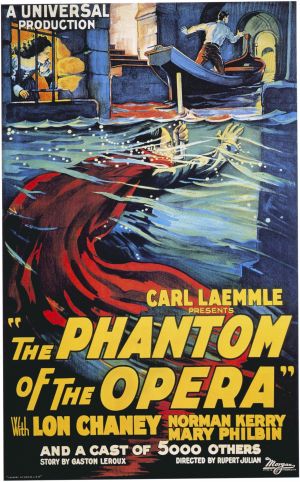
Today’s horror movie on the Shattered Lens is both a classic of silent era and one of the most influential horror films ever made. It’s one that I previously shared in 2013, 2015, 2016, 2108, and 2019 but it’s such a classic that I feel that it is worth sharing a second (or fifth or even a sixth) time.
First released in 1925, The Phantom of the Opera is today best known for both Lon Chaney’s theatrical but empathetic performance as the Phantom and the iconic scene where Mary Philbin unmasks him. However, the film is also a perfect example of early screen spectacle. The Phantom of the Opera was released during that period of time, between Birth of the Nation and the introduction of sound, when audiences expected films to provide a visual feast and Phantom of the Opera certainly accomplishes that. Indeed, after watching this film and reading Gaston Leroux’s original novel, it’s obvious that the musical was inspired more by the opulence of this film than by the book.
This film is also historically significant in that it was one of the first films to be massively reworked as the result of a poor test screening. The film’s ending was originally faithful to the end of the novel. However, audiences demanded something a little more dramatic and that’s what they got.
4 Shots From 4 Films is just what it says it is, 4 shots from 4 of our favorite films. As opposed to the reviews and recaps that we usually post, 4 Shots From 4 Films lets the visuals do the talking!
This October, we’ve been using 4 Shots From 4 Films to pay tribute to some of our favorite horror directors! Today, we recognize the one and only Jesus “Jesse” Franco!
4 Shots From 4 Films
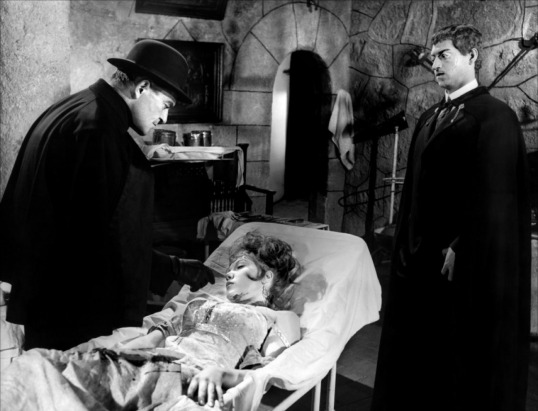
The Awful Dr. Orloff (1962, dir by Jess Franco)
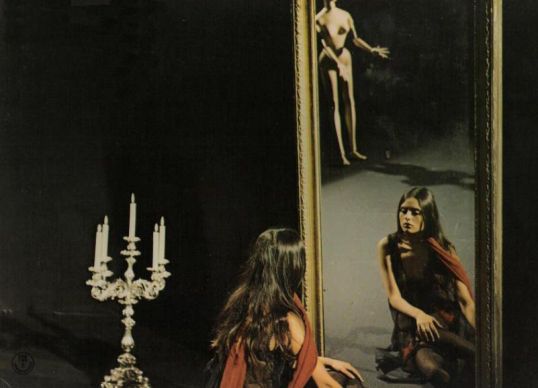
Vampyros Lesbos (1970, dir by Jess Franco)
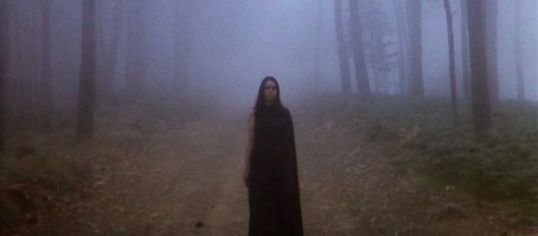
Female Vampire (1973, dir by Jess Franco)
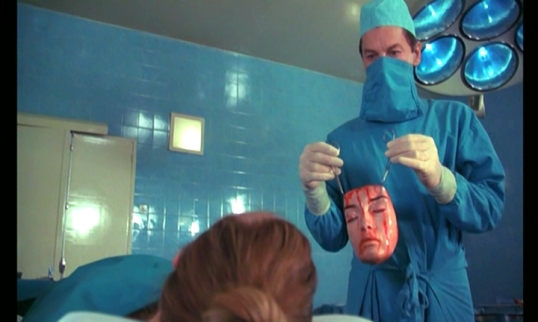
Faceless (1988, dir by Jess Franco)
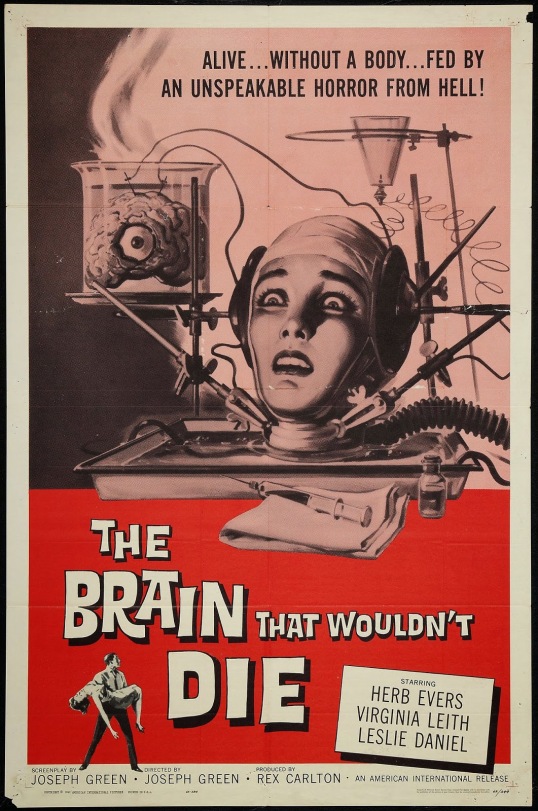
I hate to say it but it’s getting more and more difficult to find public domain horror films on YouTube that we have yet to share on this site. I mean, the fact of the matter is that we’ve been doing these horrorthons for ten years now and there’s definitely a limited supply of films to choose from. (For the most part, I try to pick films that I know aren’t going to get yanked down because of a copyright claim. For instance, you might be able to find something like Hereditary or Midsommar on YouTube but I can guarantee you that it won’t be there long.)
Last night, I was really happy when I came across The Brain That Wouldn’t Die on YouTube. “Finally!” I said, “A film were haven’t used yet!” Then I did some research and I discovered that we did share it, way back in 2011.
Well, guess what. We’re sharing it again. After all, it’s always a good time to watch a movie about a disembodied head, a monster in a closet, and a man losing his arm in a scene that’s surprisingly graphic for 1962. To me, the best thing about this film is just how pissed off that head is at being brought back to life.
So, for a second time, enjoy The Brain That Wouldn’t Die!
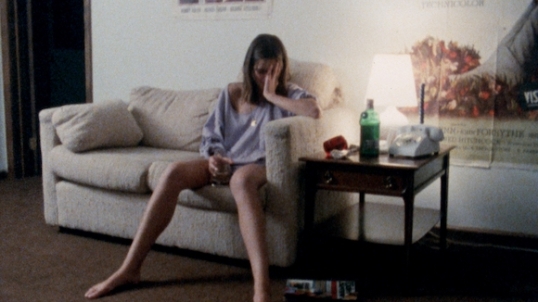
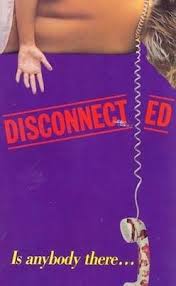
Disconnected, an independent and low-budget horror film from 1984, is an odd one.
Actually, odd might be too mild of a description of this film. It’s about Alicia (Frances Raines, niece of Claude) who works in a video store and who keeps getting strange phone calls. Alicia has a boyfriend named Mike (Carl Koch) and a twin sister named Barbra Ann (Raines, again) and, one night, she answers her landline phone and suddenly hears Mike and Barbara Ann talking about the affair that they’re having! She then starts having nightmares in which Mike and Barbara Ann team up to kill her.
At the same time that Alicia is dreaming about being murdered, Franklin (Mark Walter) actually is murdering women all over town. Franklin also keeps asking Alicia for a date and, after she discovers that Mike has been cheating on her, Alicia finally says yes. One morning, Franklin wakes up in bed, grabs a knife, and attempts to stab Alicia, just to discover that she’s already left for the day. Franklin just ends up stabbing a pillow, which is unfortunate because it was a nice pillow.
Meanwhile, Detective Tremaglio (Carmine Capobianco) is trying to figure out the identity of the serial killer. For some reason, Detective Tremaglio spends a good deal of the film talking directly to the camera, as if he’s being interviewed. Tremaglio is quick to point out how cheap the police station looks and he also says, at one point, that he feels like he’s in a low-budget horror film.
It creates a rather odd atmosphere. On the one hand, you’ve got Franklin wandering around town, hitting the bars and searching for new victims. On the other hand, you’ve got Alicia isolated in her apartment, dealing with the phone constantly ringing and basically having a Repulsion moment. Who is calling Alicia? It’s hard to say. It’s definitely not Franklin. Is Alicia imagining the phone calls? Or is it some sort of a supernatural force? And how is it connected to the mysterious old man who keeps wandering through the film at certain points, popping up like a red herring from the 2nd season of Twin Peaks?
Disconnected raises a lot of questions but it doesn’t answer many of them. And while it’s tempting to suggest that this is just a case of sloppy storytelling, there’s enough intentionally arty moments in the film that I actually think that Disconnected was intentionally designed to be a riddle wrapped in an enigma. For instance, there’s a scene where Alicia answers the phone. For some reason, the camera is placed directly in front of a window. The sun is streaming in through the window, which leads to an almost blinding lens flare. The viewer is vaguely aware of Alicia moving around the room and answering the phone but, due to that lens flare, it’s impossible to actually make out any real details. It sounds like an error in camera placement and yet the scene goes on for so long that there’s no way it wasn’t intentional. (It should also be noted that the scene itself wasn’t particularly important so, if that lens flare was an honest mistake, there’s no reason why the scene couldn’t have been left on the cutting room floor.) Obviously, the director liked the effect and just decided to go with it. And yes, it’s kind of annoying but it’s kind of fascinating too.
The entire plot of Disconnected has a kind of “let’s make this up as we go along” feel to it and it’s hard not to appreciate the film’s enthusiastic incoherence. At its best the film achieves a sort of dream-like intensity. In the end, it all means nothing and yet, thanks to Frances Raines’s better-than-average performance, you are invested in what happens to Alicia. You want to know what it all means, even if it only adds up to the ringing of that cursed phone.
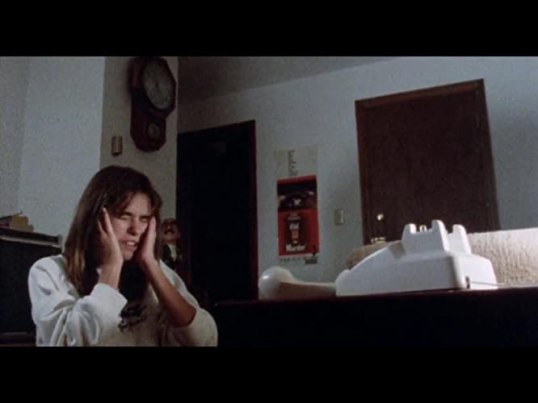
So, does that means I’m recommending Disconnected? Kinda. As I’ve said many times in the past, I have a weakness for low-budget, amateur films. This one was filmed out in the middle of Connecticut and most of the actors were obviously not professionals. There’s something oddly likable about a film like this, one that makes no sense but, at the very least, was still made and — 36 years later — is still being watched and reviewed. So …. yeah, I am kind of recommending this film. It’s weird enough to be worth at least one viewing.

All Joking Aside is a new film from Quiver Pictures, which will be released, on demand, in November. November 13th, to be exact!
It’s a film set in the world of stand-up comedy. Raylene Harewood plays a young, aspiring comedian who develops an unusual friendship with an older, jaded comic after he heckles during her first open mic. The film was directed by Shannon Kohli. To quote Kohli from the film’s press release, “While more and more funny women are breaking through and establishing a presence in popular culture, it’s a trend that needs to be supported and I really hope that this film can play a part in that.” That sounds good to me!
Here’s the trailer!
All Joking Aside will be released on November 13th.
Here’s the trailer for Monster Hunter, which is coming out in December. Personally, I think it looks more like an October release but oh well.
Here’s the trailer for Ron Howard’s Hillbilly Elegy!
This film has been getting some Oscar buzz, which I guess you would expect from a film directed by Ron Howard and starring Glenn Close and Amy Adams. It’ll be released, by Netflix, on November 24th. I’m actually looking forward to it, just because I’ve got relatives who live a similar life to the people in this movie. To be honest, though, the trailer looks almost too Oscar bait-y. Sometimes, when it’s way too obvious that you’re going for the awards, it can backfire.
We’ll see. Amy Adams is one of my favorite actresses. I can’t believe she hasn’t already won an Oscar.
Here’s the trailer:

