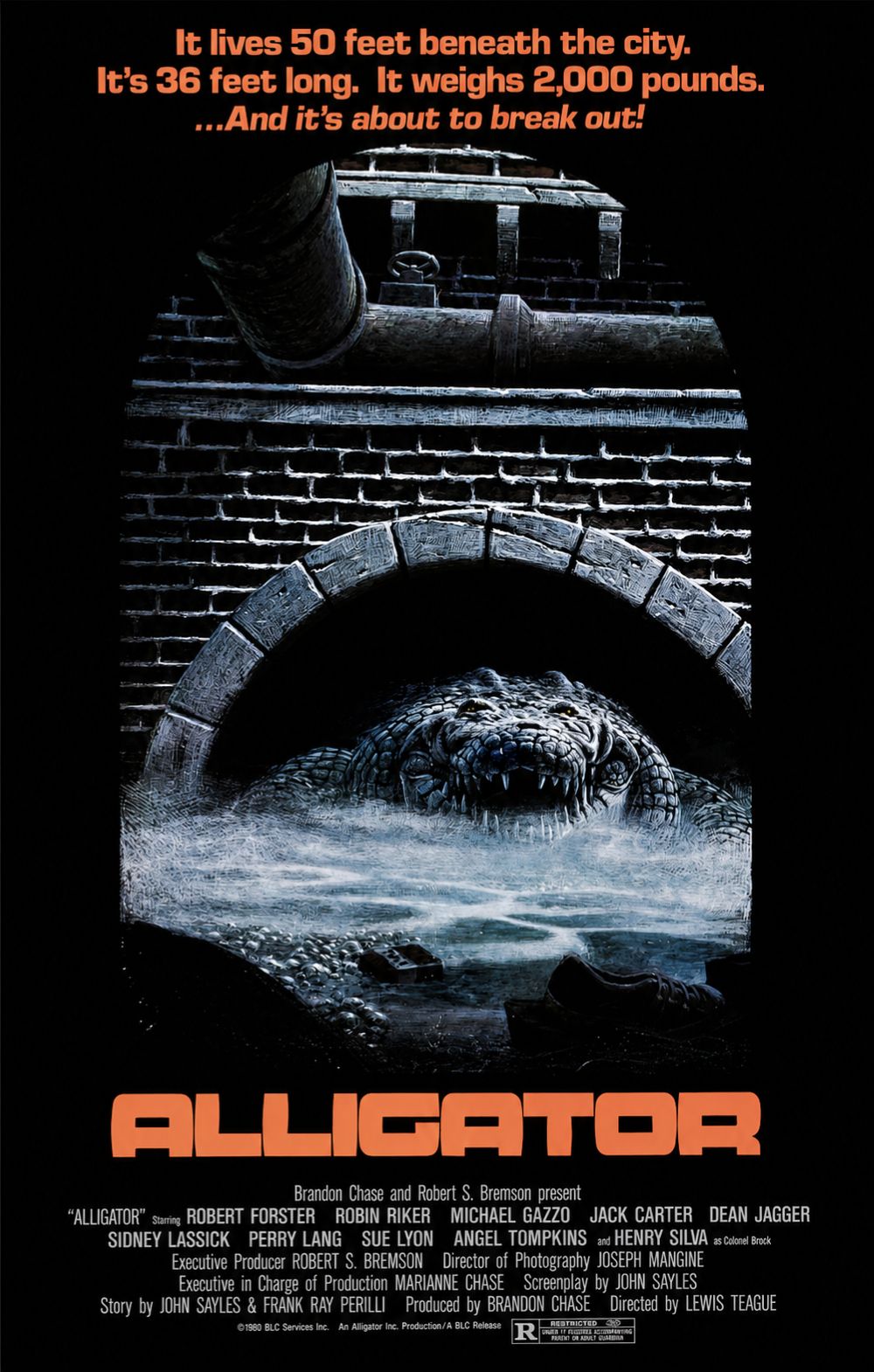
Guilty Pleasure No. 126: Alligator (dir. by Lewis Teague)


Lewis Teague’s Alligator is exactly the sort of movie that sounds like a bad joke until you sit down with it and realize it is having a much better time than most “serious” creature features. The premise is pure drive-in delirium: a baby alligator is flushed down a toilet, survives in the sewer system beneath St. Louis, Missouri, feeds on discarded laboratory animals pumped full of experimental growth hormones, and eventually becomes a gigantic, people-eating urban nightmare. It is absurd from the start, but that absurdity is the movie’s best asset. Alligator is not a good film in the polished, tightly controlled sense. It is too clunky, too broad, and too openly ridiculous for that. But it is never boring, and it understands that a movie about a giant alligator stalking the sewer tunnels under St. Louis should be grimy, nasty, funny, and just a little bit stupid.

The film arrives in that sweet spot between the straightforward animal-attack movies of the 1970s and the increasingly self-aware horror comedies of the 1980s. It has some of the structure of a Jaws knockoff, of course: authorities dismiss warnings, a difficult investigator takes the danger seriously, and a creature grows into an outsized public threat before the final confrontation. But Alligator does not have the resources, atmosphere, or aquatic terror of Spielberg’s film, and to its credit, it does not really pretend to. Instead, it leans into the cheapness of its materials. The alligator is mostly an oversized practical effect, sometimes convincing enough to be threatening and sometimes looking like the kind of thing that should be knocking over miniature buildings in a 1950s monster movie. The difference is that Teague knows how to frame the thing. He keeps the creature partly hidden when that helps, lets the sewer setting do much of the atmospheric heavy lifting, and saves the full ridiculousness of the monster for when ridiculousness is exactly what the audience wants.

There is an immediately appealing trashy logic to the story. The alligator is not simply an animal that wandered into the wrong place; it is a product of environmental carelessness, corporate experimentation, and the city’s tendency to throw its problems underground. The movie opens with a young girl’s pet alligator being flushed away after it bites someone, a cruelly comic act that functions as the film’s entire moral universe in miniature. Humans dispose of an inconvenient creature, neglect the consequences, and then act shocked when the creature becomes a gigantic murderous problem. The idea is broadly ecological and vaguely anti-corporate, but Alligator never becomes preachy. It keeps those elements in the background as an excuse for gore, sewer crawling, and a steadily escalating body count.

Robert Forster plays David Madison, a St. Louis cop with the permanently tired demeanor of someone who has been forced to listen to too many witnesses describe impossible things. Forster is a major reason the movie works as well as it does. He does not play the material like a joke, but he also does not strain to elevate it into prestige horror. His performance is dry, irritated, and completely appropriate for a man investigating missing-person cases that increasingly point toward a subterranean reptile large enough to eat a car. Madison is not a particularly complicated protagonist, but Forster gives him enough weary professionalism that the audience can follow him through the nonsense. His deadpan approach also makes the film funnier without turning it into outright parody.

The supporting cast is a strange, entertaining mixture of familiar character-actor energy and exploitation-movie weirdness. Robin Riker plays Marisa, a reptile expert and Madison’s eventual love interest, and she is better than the role strictly requires. She has a brisk, practical presence, which is useful in a movie where most characters either refuse to believe the obvious or exist to become alligator food. The romance between her and Madison is thin, but it is handled with enough low-key charm that it does not stop the movie cold. It feels like a necessary B-movie ingredient rather than a desperate attempt to convince viewers that they are watching something emotionally profound.

Then there is Henry Silva. Honestly, the presence of Henry Silva alone tells you what kind of movie Alligator is trying to be. Silva plays Colonel Brockman, a professional hunter hired by the evil pharmaceutical company to find and kill Ramon, the giant gator created by its illegal growth-hormone dumping. He is not the mastermind behind the scientific mess; he is the company’s hired cleanup crew, brought in once the whole operation has become too big and too toothy to bury. Silva approaches the role with exactly the degree of swaggering, oily menace it needs. He is here to be Henry Silva in a monster movie, which means glaring, sneering, and acting as though the chance to hunt a massive sewer reptile is simply another profitable afternoon at work. Every time he shows up, the movie gets a little more fun.

The screenplay comes from John Sayles, which is almost comically overqualified on paper, though it makes more sense once the dialogue starts landing. Sayles gives the movie flashes of wit and an edge of social satire that keep it from being totally disposable. There are jokes about cops, politicians, wealthy elites, and corporate corruption, and while none of them are especially subtle, they have the right bite for a film this grubby. The story’s best satirical impulse is its refusal to make the rich and powerful merely unlucky victims of the monster. The alligator’s rampage eventually collides with a wealthy social gathering, and the movie takes obvious pleasure in turning a fancy event into a feeding ground. It is not exactly The Texas Chain Saw Massacre in its class consciousness, but it does understand that watching an enormous reptile crash through the polished facade of upper-class respectability is satisfying.

Teague directs with the workmanlike confidence of someone who knows that the material only needs to get from one entertaining set piece to another. The sewer scenes are the film’s strongest visual material. They are damp, shadowy, cluttered, and full of the sort of industrial grime that exploitation cinema loves. The setting is inherently creepy because it is both unreal and plausible: everyone knows a city like St. Louis has tunnels, pipes, forgotten chambers, and places where things can disappear, even if nobody really believes a giant alligator lives down there. The movie uses that unease effectively. When characters descend into the darkness, the tension is simple but real. You know something huge is moving nearby, and you know the special effects are not going to hold up to close inspection, but the atmosphere carries you through.

The attacks are uneven, but that is part of the charm. Some are genuinely nasty, particularly when the movie lets the creature strike suddenly from the shadows. Others are so exaggerated that they become funny in ways the filmmakers likely anticipated. There is a particularly memorable moment involving a child and a swimming pool that has the gleefully tasteless punch of old-school grindhouse horror. Alligator is never as graphic as the nastier exploitation films of its era, but it has enough blood, torn bodies, and monstrous chomping to satisfy an audience looking for low-rent carnage. It knows the basic rule of this kind of movie: if you are going to ask viewers to accept a mutant sewer alligator, you had better let it eat some people.

What makes Alligator last beyond its premise is that it does not seem embarrassed by what it is. There are many creature features that feel apologetic, as if the filmmakers know they are making junk and are waiting for the audience to laugh at them. Teague’s film is junk, absolutely, but it is crafted junk. It has actual pacing, committed actors, useful atmosphere, and a screenplay that occasionally has more on its mind than the average monster-on-the-loose picture. It is bad enough that its flaws become part of the entertainment, especially whenever the huge reptile lumbers into view or the plot makes a leap that only makes sense if nobody involved pauses to think for ten seconds. Yet it is not so bad that it becomes a chore. That is the crucial distinction.

By the time Alligator reaches its climax, it has delivered nearly everything its title promises: sewers, corrupt businessmen, cops with guns, practical monster effects, socialites getting their comeuppance, and Henry Silva looking like he would gladly accept a corporate paycheck to hunt an enormous mutant reptile. It is the kind of film best watched with an appreciation for grime, excess, and the noble tradition of exploitation cinema turning a ridiculous idea into a perfectly decent Saturday-night monster movie. Alligator will not make anyone forget the great creature features, but it earns its place as a scrappy, trashy, oddly lovable B-movie. It is not awful. It is not even truly bad. It is just delightfully cheap, mean, and goofy enough to remind you why bad movies can sometimes be more fun than good ones.

Previous Guilty Pleasures

  1. Half-Baked
  2. Save The Last Dance
  3. Every Rose Has Its Thorns
  4. The Jeremy Kyle Show
  5. Invasion USA
  6. The Golden Child
  7. Final Destination 2
  8. Paparazzi
  9. The Principal
  10. The Substitute
  11. Terror In The Family
  12. Pandorum
  13. Lambada
  14. Fear
  15. Cocktail
  16. Keep Off The Grass
  17. Girls, Girls, Girls
  18. Class
  19. Tart
  20. King Kong vs. Godzilla
  21. Hawk the Slayer
  22. Battle Beyond the Stars
  23. Meridian
  24. Walk of Shame
  25. From Justin To Kelly
  26. Project Greenlight
  27. Sex Decoy: Love Stings
  28. Swimfan
  29. On the Line
  30. Wolfen
  31. Hail Caesar!
  32. It’s So Cold In The D
  33. In the Mix
  34. Healed By Grace
  35. Valley of the Dolls
  36. The Legend of Billie Jean
  37. Death Wish
  38. Shipping Wars
  39. Ghost Whisperer
  40. Parking Wars
  41. The Dead Are After Me
  42. Harper’s Island
  43. The Resurrection of Gavin Stone
  44. Paranormal State
  45. Utopia
  46. Bar Rescue
  47. The Powers of Matthew Star
  48. Spiker
  49. Heavenly Bodies
  50. Maid in Manhattan
  51. Rage and Honor
  52. Saved By The Bell 3. 21 “No Hope With Dope”
  53. Happy Gilmore
  54. Solarbabies
  55. The Dawn of Correction
  56. Once You Understand
  57. The Voyeurs 
  58. Robot Jox
  59. Teen Wolf
  60. The Running Man
  61. Double Dragon
  62. Backtrack
  63. Julie and Jack
  64. Karate Warrior
  65. Invaders From Mars
  66. Cloverfield
  67. Aerobicide 
  68. Blood Harvest
  69. Shocking Dark
  70. Face The Truth
  71. Submerged
  72. The Canyons
  73. Days of Thunder
  74. Van Helsing
  75. The Night Comes for Us
  76. Code of Silence
  77. Captain Ron
  78. Armageddon
  79. Kate’s Secret
  80. Point Break
  81. The Replacements
  82. The Shadow
  83. Meteor
  84. Last Action Hero
  85. Attack of the Killer Tomatoes
  86. The Horror at 37,000 Feet
  87. The ‘Burbs
  88. Lifeforce
  89. Highschool of the Dead
  90. Ice Station Zebra
  91. No One Lives
  92. Brewster’s Millions
  93. Porky’s
  94. Revenge of the Nerds
  95. The Delta Force
  96. The Hidden
  97. Roller Boogie
  98. Raw Deal
  99. Death Merchant Series
  100. Ski Patrol
  101. The Executioner Series
  102. The Destroyer Series
  103. Private Teacher
  104. The Parker Series
  105. Ramba
  106. The Troubles of Janice
  107. Ironwood
  108. Interspecies Reviewers
  109. SST — Death Flight
  110. Undercover Brother
  111. Out for Justice
  112. Food Wars!
  113. Cherry
  114. Death Race
  115. The Beast Within
  116. Girl Series
  117. Gone in 60 Seconds
  118. Swordfish
  119. Marked For Death
  120. The Internship
  121. The Angry Red Planet
  122. 2012
  123. Old School
  124. No Escape
  125. In Death Series

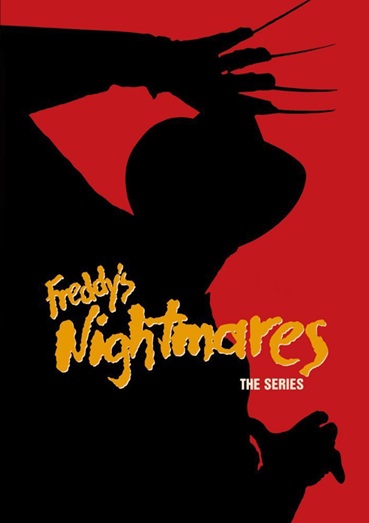
Late Night Retro Television Review: Freddy’s Nightmares 2.7 “Silence is Golden”


Welcome to Late Night Retro Television Reviews, a feature where we review some of our favorite and least favorite shows of the past! On Fridays, I will be reviewing Freddy’s Nightmares, a horror anthology show which ran in syndication from 1988 to 1990. The entire series can be found on Tubi!

Mimes are evil!

Episode 2.7 “Silence Is Golden”

(Dir by Charles Braverman, originally aired on November 19th, 1989)

“Here’s what on my mind tonight!” Freddy Krueger tells us as this episode starts.

Our first story is about radio DJ Rick Rake (Jeff Yagher), who has a mullet, a leather jacket, and a bad attitude.  “I say what I think and I think what I say,” Rick says.  When he’s visiting the park with his wife, Sheila (Sherry Hursey), a listener attempts to pick a fight with Rick.  Rick throws a punch and accidentally hits a mime (Abie Selznick).

Eh, who cares?  We all hate mimes, right?

Unfortunately, The mime carries a silent grudge and soon, Rick is haunted by visions of the mime everywhere.  When Sheila is sucked into the ground and buried alive, the police say it was a sinkhole but Rick knows that it was the mime.  Rick goes on the radio and announces that all mimes should be hunted down and killed.  Rick sees the mime in the studio and, going after him, ends up taking a literal rake to the throat.  Rick survives but he can no longer speak …. JUST LIKE A MIME!

In the second story, we discover that the mime is named Kip and he’s also a professional burglar.  He steals to keep his girlfriend (Kim Morgan Greene) happy but he’s haunted by nightmares involving mistakes and death.  When he learns that the last two people he robbed have turned up dead, Kip worries that he’s being set up.  And, of course, he is.

At the end of the episode, Freddy reminds us that he’s dead so he can never be a mime or a DJ.  Sorry, Freddy.  You kind of brought it on yourself, though.

The first story actually worked fairly well, just because mimes are creepy.  The second story was basically a noir with nightmares.  I think it might have worked a bit better if Kip had just been an ordinary guy as opposed to a mime.  The show never really explained if he was the same mime who killed Sheila and silenced Rick or was he just another mime in Springwood.

How many mimes are there in that town?  No wonder Freddy went crazy.

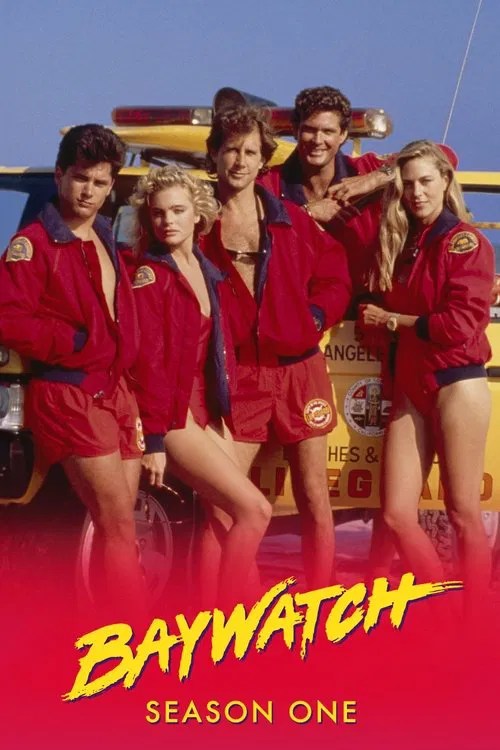
Retro Television Review: Baywatch 1.2 “Heat Wave”


Welcome to Retro Television Reviews, a feature where we review some of our favorite and least favorite shows of the past!  On Saturdays, I will be reviewing Baywatch, which ran on NBC and then in syndication from 1989 to 2001.  The entire show can be purchased on Tubi.

Save me!

Episode 1.2 “Heat Wave”

(Dir by Gus Trikonis, originally aired on September 29th, 1989)

Not much of an episode this week, I’m afraid.

California is dealing with a heat wave and no one has air conditioning (really?) so everyone in Los Angeles is heading down to the beach so that they can relax in the hot sand.  Eddie and Trevor keep giving each other the side eye because Eddie is a Baywatch lifeguard and Trevor is a country club life guard.  Eddie tries to hit on a woman who has spent the entire day relaxing near his tower but it turns out that she’s visiting from Australia and only has eyes for Trevor.  “Maybe next time,” she tells Eddie.

Craig is told by his boss that he has to choose between being a lawyer at a big firm or a lifeguard.  Craig’s wife, Gina, suggests that Craig quit the law firm and become a beachfront lawyer.  She says that he can still be a lifeguard and he can just use their kitchen table as his desk.  I don’t know if I would be as understanding as Gina.  Craig was making a lot of money as a big corporate lawyer, even if he apparently couldn’t afford to get an air conditioner.

(What the Heck, California?  How are you surviving with air conditioning!?)

Meanwhile, two stupid kids get trapped in a storm drain.  Mitch sends the junior lifeguards out to look for them.  Hobie asks, “What can a bunch of junior lifeguards do?”  Mitch replies that this is an opportunity for the junior lifeguards to go to all the places that they’re usually not allowed to go.  So, basically, Mitch’s plan to find the missing kids is to put a bunch of other kids at risk.  I guess that’s why he’s the lieutenant.

Luckily, the two dumb kids are rescued.  One of the kids is the son of Steve Humboldt (Jeffrey Byron), a former Baywatch lifeguard.  It turns out that Steve lost custody of his kid in a court case and he basically abducted him.  But, after the kid nearly dies, Steve is like, “We’re going to call your mom and go home!” and that apparently makes everything okay under the “He Changed His Mind Afterwards” clause.

This was all pretty dumb.  Stay out of the storm drain, kids!  It’s not that difficult.

Horror Film Review: Alligator (dir by Lewis Teague)


1980’s Alligator begins in 1968.  While on vacation in Florida, a teenage girl named Marisa Kendall purchases a baby alligator named Ramon.  When she returns home to Chicago, her jerk of a father flushes Ramon down the toilet.

12 years pass.  Marisa (Robin Riker) becomes a herpetologist.  As for Ramon, he actually survives being flushed down the toilet and thrives in the sewer.  He eats the carcasses of animals that had been a part of an experiment involving a growth serum.  The serum had the desired effect of making the animals bigger but it also increased their metabolism to the extent that they became aggressive and had to eat constantly.  Evil industrialist Slade (Dean Jagger) is convinced that, by tossing the carcasses in the sewer, he’s ensured that no one will ever find out about the experiments.  Instead, he’s turned Ramon into a giant alligator who is always hungry.  Soon, the super-intelligent alligator is ambushing and eating sewer workers.

Burned-out Detective Dave Madison (Robert Forster) teams up with Marisa to solve the mystery of why so many body parts are turning up in the sewers.  It’s not easy.  No one wants to admit that there might be a giant alligator living under the city.  Everyone wants to believe that’s just an urban legend.  But, after a tabloid reporter (Bart Braverman) manages to snap a few photographs of Ramon before being devoured, the police are forced to deal with the fact that they’ve got an alligator on their hands.  As Slade continues to try to cover up his involvement, big game hunter Colonel Brock (Henry Silva) comes to town and announces that he will be capturing the alligator.

Directed by Lewis Teague and written by John Sayles, Alligator is a dark comedy disguised as a horror film.  While numerous people get eaten and the film ends on a properly ominous note, Alligator is obviously not meant to be taken seriously.  The cast is full of good actors who send up their own images.  That’s especially true in the case of Henry Silva, who appears to be having a blast as the hyper macho Colonel Brock.  Robert Forster, meanwhile, delivers his lines with a self-aware weariness that seems a bit more appropriate for a noir hero than a film about a detective investigating a giant alligator.  One reason why the film works is because Forster, Silva, and the rest of the cast understood exactly what type of film they were appearing in and they delivered their overheated lines with just enough wit to let the viewer know that the film was in on the joke.  The big and somewhat stiff-looking alligator may not look entirely real and it may move somewhat awkwardly but ultimately, it’s the most likable character in the movie.  It just wants to relax in the sewers but, every few minutes, someone else is bugging him.

When first released, Alligator struggled at the box office but it has since gone on to become a cult favorite.  Quentin Tarantino is a self-described fan and he had said he was inspired to cast Robert Forster as Max Cherry in Jackie Brown after seeing him as Dave Madison in this film.  That’s not bad for a movie about a giant alligator!

Retro Television Review: Fantasy Island 5.3 “Cyrano/The Magician”


Welcome to Retro Television Reviews, a feature where we review some of our favorite and least favorite shows of the past!  On Tuesdays, I will be reviewing the original Fantasy Island, which ran on ABC from 1977 to 1984.  Almost the entire show is currently streaming on Daily Motion, YouTube, Plex, and a host of other sites.

This week …. someone’s missing!

Episode 5.3 “Cyrano/The Magician”

(Dir by Dan Chaffey, originally aired on October 24th, 1981)

Hey, where’s Tattoo!?

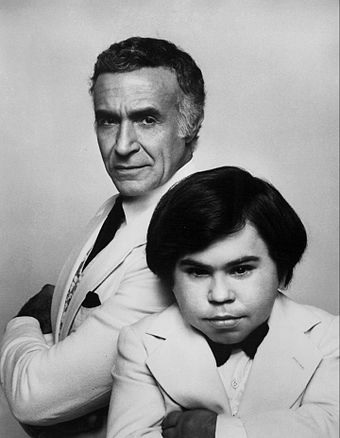
Technically, Tattoo does appear in this episode but it’s only in the stock footage that appeared at the start of every episode.  Tattoo rings the bell and announces, “Da plane …. da plane!” but that’s it.  He does not meet Mr. Roarke outside of the bungalow.  He is not present to greet the guests.  He’s not present to say goodbye to the guests.  Tattoo is nowhere to be seen and, somewhat disconcertingly, no mention is made of why he’s missing.  Instead, Mr. Roarke and Julie handle the fantasies in this episode.

If I had to guess, I’d say that Herve Villechaize was having a salary dispute with the producers.  It seems obvious that Julie was brought in as a way to tell Villechaize that he was replaceable.  However, Tattoo’s absence is felt so strongly in this episode that it seems likely that all the producers did was prove Villechaize’s point about why he deserved more money.  Wendy Schaal is a likable performer but she had close to no real chemistry with Ricardo Montalban and Julie was such a blandly-written character that there was no way she could replace the enigmatic and rather cynical Tattoo.

Sad to say, one of this episode’s fantasies feels as if it would have been perfect for Tattoo’s commentary.  Marjorie Denton (Carol Lynley) is a bus driver who wants to go back to a time when men were at their most chivalrous.  She finds herself back in 17th century France, a time when men were chivalrous but woman had absolutely no rights.  At first, she is thrilled to be the subject of the attentions of both the handsome Gaston (Simon MacCorkindale) and the poetic Cyrano de Bergerac (John Saxon).  She is less thrilled to catch the eye of the Marquis de Sade (Lloyd Bochner).  It’s not a bad fantasy, though Cyrano and De Sade were not quite contemporaries.  But it’s hard not to think about how Villechaize was always at his best when dealing with wounded romanticism.  Since Cyrano himself turned out to be a guest having a fantasy, it’s hard not to regret that Tattoo was not around to encourage him.

As for the other fantasy, it’s one of those silly and kind of boring comedic fantasies that was obviously included for the kids.  (“Mommy, who is the Marquis De Sade?”)  Timothy Potter (Bart Braverman), no relation to Harry, is a bad magician who wants to be a great magician.  Mr. Roarke gives him a collection of old spell books and an assistant named Suva (Judy Landers), whom Timothy proceeds to fall in love with.  Unfortunately, Timothy doesn’t bother to study the books like Roarke told him to and he accidentally makes Suva disappear.  In the end, though, Roarke assures Timothy that he just sent her to Cleveland, which just happens to be his hometown.  There’s a chimpanzee in this fantasy and the chimp gives the most compelling performance.  The only thing that could have saved this fantasy would have been some snarky Tattoo commentary.

Is it possible to have Fantasy Island without Tattoo?  Based on this episode, the answer would be no.  Let’s hope he returns next week.

Retro Television Review: The Love Boat 4.5 and 4.6 “The Mallory Quest/Julie, the Vamp/The Offer”


Welcome to Retro Television Reviews, a feature where we review some of our favorite and least favorite shows of the past!  On Wednesdays, I will be reviewing the original Love Boat, which aired on ABC from 1977 to 1986!  The series can be streamed on Paramount Plus!

This week, it’s a special two-hour episode of The Love Boat!

Episodes 4.5 and 4.6 “The Mallory Quest/Julie, The Vamp/The Offer”

(Dir by Richard Kinon, originally aired on November 15th, 1980)

This week, The Love Boat heads off on a two-week cruise that will take the ship, its crew, and its passengers through the Panama Canal.  There will also be stops at all the various islands on the way.  This is important because this is one of the episodes that was actually filmed on location.  Instead of the usual sets, we get to watch the action play out on an actual cruise ship.

Unfortunately, the actual cruise ship is kind of …. well, tacky.  Seriously, it’s hard not to notice that the hallways and the front lobby all look considerably more cramped and weathered than they have in other episodes of The Love Boat.  It’s also hard not to notice that the extras (who were apparently actual passengers) are all considerably older than the usual Love Boat background actors.

In fact, with the ship in such disrepair, it is any shocked that Captain Stubing is thinking of leaving?  When his old friend, Charlie (Dick Van Patten), boards the ship, he brings him a job offer.  If Stubing accepts the offer, he’ll be living in New York, he’ll be making three times the money, and Vicki will get to have a normal life.  Stubing loves the sea but he also wants Vicki to have a good future.  Vicki — in a scene that was well-acted by both Jill Whelan and Gavin MacLeod — tells him not to worry about her and that he needs to do what makes him happy.  And so, the Captain stays with the boat and I presume Vicki will continue to be taught by the tutor that we occasionally hear about but never actually see.

Meanwhile, Julie McCoy has been accused of being a vamp!  Maude Victor (Lani O’Grady) is convinced that Julie is trying to steal her fiancé, Roger (Bart Braverman).  Eventually, Roger himself become confused and Julie pretends to be interested in Roger just to get Roger and Maude back together again.  This was a dumb story and I don’t want to waste any more time on it.

Indeed, for all the Stubing drama and Julie silliness, this two-hour episode was dominated by one story.  Arrogant novelist Brian Mallory (Pernell Roberts) boards the boat with his long-suffering wife, Janet (Gayle Hunnicutt).  Brian has secretly bought tickets for three other passengers.  Peter (Skip Stephenson) is an insurance agent who is due to donate a kidney to his brother.  Marvin (Jimmie Walker) owns a bookstore.  Marcia Rand (Connie Stevens) brings along her fitness-obsessed boyfriend, Dave Porter (Peter Lupus).  Mallory reveals that Peter, Marvin, Marcia, and Gopher were the last four people to see his nephew, Tom.  Mallory has never met his nephew but he wants to track him down and apparently, Tom is living on one of the islands that the cruise is scheduled to visit.  Brian wants the four of them to help him look for Tom and he offers a $10,000 reward to make things interesting.  Why does Brian want to find his nephew?  Eventually, it is revealed that Tom is in possession of a family heirloom that Brian feels is rightfully his.  Sinister Lucius Kergo (Sorrell Brooke) is also on the cruise and he is determined to get the heirloom for himself.

Janet grows so tired of Brian’s arrogance and his obsession with finding his nephew that she declares that she’s leaving him.  Since the cruise is booked up, she ends up staying with Doc Bricker.  Doc falls for Janet but he realizes that she truly loves Brian and, when Brian starts to show some humility and some remorse for the way that he’s treated her, Doc encourages her to go back to him …. which she does because this is The Love Boat, not The Divorce Boat.

Anyway, Tom Mallory is eventually tracked down to a monastery in Puerto Rico.  Tom gives Brian the heirloom but the newly kind Brian gives it back to him so that he can sell it and use the money to build a free clinic.  Good for Brian!

Disheveled cruise ship aside and ignoring that terrible Julie plot, this was a fun episode.  The island scenery was gorgeous and the mystery of Tom’s location actually turned out to be a lot more intriguing than I was expecting it would.  Watching this episode made me want to take a cruise, even if it is a tacky one.

Retro Television Reviews: Lookwell 1.1 “The Pilot”


Welcome to Retro Television Reviews, a feature where we review some of our favorite and least favorite shows of the past!  On Thursdays, I will be reviewing Lookwell, which aired on NBC in 1991.  The entire show is currently streaming on YouTube!

Adam West is an actor who solves crimes …. kind of.

Episode 1.1 “Lookwell”

(Dir by E.W. Swackhamer, originally aired on July 28th, 1991)

Ty Lookwell (Adam West) was once the biggest star in Hollywood.

Well, maybe not the biggest star.  But, in the 70s, he did have his own cop show.  It was called …. BanacekMannix?  No, that’s not it.  Oh …. BRANNIGAN!  Ty Lookwell starred on a show called Brannigan and he was even given his own honorary police badge in 1972.  It was presented to him at a ceremony in Television City.

However, nearly 20 years later, things have changed.  Brannigan is no longer on the air and Ty Lookwell has been reduced to wearing a wig and a leather jacket in an attempt to get a role in a revival of Happy Days.  (He not only doesn’t get the role but he doesn’t even get to audition.)  When he returns to his home, he is informed that his favorite hairspray has been discontinued (“Those fools!”) and that all the messages on his machine are for his nephew.  Kevin Costner calls looking for Lookwell’s nephew.  Francis Ford Coppola calls for Lookwell’s nephew and leaves a message in which he promises to call back.  No one calls for Ty Lookwell.

Lookwell, however, still has a steady gig teaching an acting class and his students not only look up to him  but also help him out whenever he decides that there’s a crime he has to solve.  This apparently happens frequently as Lookwell takes his honorary badge very seriously.

“Remember how we talked about how you don’t have to come around here?” Detective Kennery (Ron Frazier) asks Lookwell at one point.

The pilot follows Lookwell as he investigates a series of car thefts.  Helping him out is his favorite student, Jason (played by future director Todd Field).  Lookwell’s investigative techniques are not particularly complicated.  He puts on a disguise and attempts to go undercover.  It never quite works, largely because everyone that Lookwell meets is smarter than Lookwell.  Lookwell’s attempt to disguise himself as a Grand Prix racer fails because the security guard takes one look at him and sees that he’s obviously not a Grand Prix racer.  His attempt to conduct a stakeout on a fancy diner is nearly thwarted by his bizarre decision to disguise himself as a hobo.  His attempt to go undercover at a garage is thwarted by the other mechanics misunderstanding his leading questions.

(“Who beat you up, Mr. Lookwell?” his students ask at the start of class.)

As the investigation continues, Jason wonders if they’re just wasting time.

“You do not waste time,” Lookwell corrects him, “Time wastes you.”

Lookwell was written by Conan O’Brian and Robert Smigel, long before either one of them became famous, and the humor is definitely the humor of a generation who grew up watching network television, especially the cop shows of the 70s and the 80s.  While the dialogue is clever and definitely funny, it’s really Adam West who makes the pilot work.  West delivers all of his line with such conviction and confidence that it doesn’t matter that he only plays a peripheral role in solving the case and, in fact, usually makes things worse for everyone involved.  As played by West, Lookwell is so confident in his abilities and so blithely unaware of his limitations that it’s hard not to admire his spirit.

Unfortunately, the spirit was not admired by NBC and Lookwell only aired once.  But it has since developed a cult following.  Adam West described it as being his favorite of the various shows that he did.  I enjoyed the pilot, though I do think the premise was perhaps a bit too thin to support an actual series.  (It would have made a great recurring SNL bit, though.)  Thanks to YouTube, everyone can now watch what NBC passed up.