Late Night Retro Television Review: Highway to Heaven 5.12 “It’s A Dog’s Life”


Welcome to Late Night Retro Television Reviews, a feature where we review some of our favorite and least favorite shows of the past!  On Thursdays, I will be reviewing Highway to Heaven, which aired on NBC from 1984 to 1989.  The entire show is currently streaming on Tubi and several other services!
This week’s episode is a strange one.

Episode 5.12 “It’s A Dog’s Life”

(Dir by Michael Landon, originally aired on July 28th, 1989)

One night, after Jonathan foils a mugging by using “the stuff” to turn the mugger’s gun into a water pistol, Mark sits down on a curb, lies down in the grass, and bemoans that he never gets to do anything on his own.  He never gets “the stuff.”  He has to worry about his health while Jonathan, already being dead, cannot be hurt again.  Why, he wonders aloud, does he always have to be “Jonathan’s dog?”

When Mark opens his eyes, Jonathan is gone.  However, there is a dog sitting next to him.  Convinced that the Boss has 1) turned Jonathan into a dog and 2) given Mark “the stuff,” Mark proceeds to reunite a runaway with his family and he also thwarts a convenience store robbery.  When the dog indicates that it wants to live with the runaway and his family, Mark sadly returns to the shabby hotel where he and Jonathan were staying.  He sees a man standing out on a ledge, threatening to jump.

“My first solo assignment!” Mark says.

Mark runs upstairs and climbs out onto the ledge.  He tells the suicidal man that he has no fear of falling because he has the stuff.  Suddenly, Jonathan appears and tells Mark to get back inside before he falls.  Jonathan reveals that Mark never  had the stuff and that Jonathan was never a dog.  Instead, Jonathan was just off on another assignment.

Mark falls off the ledge.

Oh no, Mark’s dead!

No, actually Mark is dreaming.  Mark wakes up in his hotel room and realizes that Jonathan is gone.  But the dog is taking a bath….

And the episode ends!

The second-to-last episode of Highway to Heaven is an odd one.  With Jonathan gone for the majority of the episode, Victor French gets the opportunity to carry a story on his own.  Sadly, French himself would die before this episode aired.  Unfortunately, while French is fine in this episode, the story itself is presented in the rather cartoonish style that Highway to Heaven always used whenever it featured a comedic episode.  The runaway’s mother is portrayed as being such a loon that’s hard not to think that the kid would be better off on his own.  As well — is Jonathan a dog or not!?  The episode’s refusal to answer this question is a bit annoying.

Next week, we will finish up Highway to Heaven with the show’s final episode.

Retro Television Review: Decoy 1.25 “High Swing”


Welcome to Retro Television Reviews, a feature where we review some of our favorite and least favorite shows of the past!  On Thursdays, I will be reviewing Decoy, which aired in Syndication in 1957 and 1958.  The show can be viewed on Tubi!

This week, Casey investigates an elderly crime lord.

Episode 1.25 “High Swing”

(Dir by David Alexander, originally aired on March 31st, 1958)

Casey rides to the hospital with a young woman named Anne (Zohra Lampert).  Anne has overdosed on heroin.  Before she dies, Anne tells that Casey that she was poisoned by an old man named Otto Flagler (Albert Dekker).  After learning that Anne was a pickpocket, Casey goes undercover as a thief until Otto Flagler approaches her and invites her to come live and work with him and his wife, Lily (Edith Atwater).

Casey is shocked to discover that Lily is in a wheelchair, the result of an accident that occurred when Lily was a trapeze artist.  Otto is a mugger because he needs the money to take care of his wife.  Casey even starts to feel sorry for Oto and Lily.  That said, Casey is still a cop and she has a job to do.  When Otto realizes that he and his wife are about to be arrested, he slips heroin into their coffee.  By the time the police arrive, both Otto and Lily are dead.

Casey is upset.  One of the other cops offers to buy her a cup of coffee.  Casey says that she won’t be drinking coffee for a while.

This was a sad episode.  Casey didn’t really have to do much to solve the mystery.  The whole point of the episode was that Otto and Lily were not master criminals.  They were two people who loved each other and found themselves in a desperate situation.  That said, Otto did murder Anne so let’s not feel too sorry for him.

Albert Dekker and Edith Atwater both gave good performances and, as always, Beverly Garland was excellent in the role of Casey.  This was a good episode.

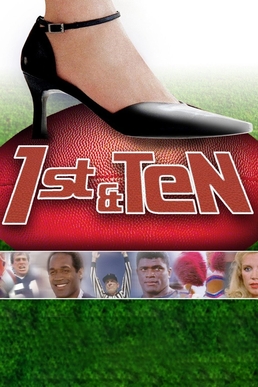
Late Night Retro Television Review: 1st & Ten 3.9 “The Brink of Death”


Welcome to Late Night Retro Television Reviews, a feature where we review some of our favorite and least favorite shows of the past! On Wednesdays, I will be reviewing 1st and Ten, which aired in syndication from 1984 to 1991. The entire series is streaming on Tubi.

This week, OJ has some wisdom to share.

Episode 3.8 “The Brink of Death”

(Dir by Bruce Seth Green, originally aired on November 4th, 1987)

There’s a lot happening in this week’s episode.

For instance, Bubba and Jethro now own the bar where all of the Bulls hang out.  To be honest, I thought they always owned the bar but apparently, they didn’t.  As I’ve said a few times in the past, the way these episodes were edited for syndication occasionally makes it a bit difficult to actually follow the storyline.

Wide receiver Billy Cooper (Michael Toland) was kidnapped by Stuart (Richard Tanner), the nerdy guy whose girlfriend Billy stole.  Stuart wrapped up Billy in a straight jacket, forced him to wear a “Dumb Jock” label on his forehead, and then filmed him screaming in fear of a bunch of fire ants.  Billy’s girlfriend dumped him because Stuart was “more interesting.”

But the main plotline dealt with Dr. Death, the defensive player who was played by Donald Gibbs.  While playing against Oakland, many of the Bulls were tackled by Joe “The Terminator” Morgan (Andre Newman), a notoriously dirty player.  Dr. Death decided to get revenge by tackling Joe Morgan during a kick return, even though Joe had signaled for something called a fair catch.  (I guess that meant that no one was supposed to touch Joe.)  Joe Morgan ended up in the hospital.  The owner of the Oakland team pressured Joe to press assault charges against Dr. Death, who was already feeling guilty about injuring Joe as severely as he did.

It was up to O.J. Simpson to talk some sense into Joe Morgan.  O.J. went to the hospital and told Joe that football was all about getting injured.  O.J. asked Joe if this was the way he wanted to go out.

By appealing to Joe’s desire to be remembered as a killer football player, OJ is able to convince Joe to drop the charges.

(I should mention that OJ himself was an early contender for the role of the actual Terminator.)

O.J. Simpsons saved the day again!

Retro Television Review: The Love Boat 7.13 “The Misunderstanding/Love Under The Decks/The End Is Near”


Welcome to Retro Television Reviews, a feature where we review some of our favorite and least favorite shows of the past!  On Wednesdays, I will be reviewing the original Love Boat, which aired on ABC from 1977 to 1986!  The series can be streamed on Paramount Plus!

And love won’t hurt anymore….

Episode 7.13 “The Misunderstanding/Love Below Decks/The End Is Near”

(Dir by Robert Scheerer, originally aired on December 10, 1983)

There’s all sorts of misunderstandings on this week’s cruise.

Karen Stevens (Morgan Brittany) is convinced that her mother, film star Nancy Fairchild (Clair Trevor), didn’t want her or love her.  Nancy appeals to Karen’s husband (James Houghton) to help bring about a reconciliation.  Karen apparently did her research because there’s something about the Pacific Princess that always helps retired film stars to either find love or fix their familial relationships.

“Dutch” Boden (Vic Tayback) is the rough and plain-spoken ship’s engineer.  He thinks that Ellen Kirkwood (Arlene Dahl) is the Captain’s girlfriend.  Instead, Ellen is the widow of one of Stubing’s old friends.  Stubing worries that Dutch is bothering Ellen.  Instead, Dutch and Ellen are falling in love.  This is one of the rare episodes where we get to see how the crew lives on the below decks.  Their cabins are really small!

Finally, newlywed Felix (Lou Richards) and Andrea (Delta Burke) are worried that the world is going to end.  When the world doesn’t end at the appointed time, Felix fears that maybe he based his calculations on Eastern Time.  Since the Love Boat was on the Pacific Coast, that would have meant the world would have ended three hours before Felix expected.  Maybe Felix’s problem is that he doesn’t understand time zones.  I’m the same way.  They confuse the heck out of me.

This week’s cruise was a little bland.  The guest cast was charming but two of the stories felt very familiar.  But I did like the storyline with the paranoid newlyweds.  Lou Richards and Delta Burke really threw themselves into their somewhat ludicrous characters.  I laugh more than I thought I would.

This was a pleasant if not extremely memorable cruise.

Late Night Retro Television Review: Pacific Blue 3.19 “Heat of the Moment”


Welcome to Late Night Retro Television Reviews, a feature where we review some of our favorite and least favorite shows of the past! On Tuesdays, I will be reviewing Pacific Blue, a cop show that aired from 1996 to 2000 on the USA Network!  It’s currently streaming everywhere, though I’m watching it on Tubi.

This week, Chris has a crisis.

Episode 3.19 “Heat of the Moment”

(Dir by Terrence H. Winkless, originally aired on March 22nd, 1989)

Chris and TC respond to reports of a robbery occurring at a jewelry store.  One of the robbers, carrying a shotgun, makes a run for it.  TC goes after him.  The other robber is easily captured and handcuffed by Chris.  Chris calls for backup and then leaves the store to help TC, despite the owner of the store begging her to stay.  As soon as Chris leaves, it is revealed that a third robber was hiding in the backroom.  He proceeds to beat up the owner and then free his partner.  Meanwhile, the other robber manages to escape from Chris and TC.  When Chris returns to the store, she is shocked to learn about the third robber.

Chris is also shocked that anyone could think that she made the wrong decision.  She didn’t know there was another robber in the store.  As she explains it, TC was out there, chasing a guy with a shotgun.  She made the right decision!  Not everyone agrees and soon, Chris starts to wonder if maybe her relationship with TC clouded her judgment.

Uhmm …. yeah, Chris, that’s pretty much what happened.  I mean, Chris basically abandoned an innocent woman to two psychotic criminals just because she was worried about TC.  It would have taken Chris just a few seconds to check the backroom.  Add to that, the owner was obviously terrified and begged Chris not to leave.  Chris’s response was to be rude.  Even if there hadn’t been a third robber, Chris still left the owner alone with the second robber and didn’t bother to secure the crime scene.

This is another episode of Pacific Blue where the viewer is expected to not dwell on the fact that Chris is terrible at her job.  Chris being bad at her job has pretty much been her defining characteristic.  Even before she started sleeping with TC, Chris was regularly rude to crime victims and frequently violated the constitutional rights of the people she arrested.  She also spent a lot of time complaining nonstop about going from being a Navy pilot to being a bicycle cop.  By any standard, Chris should have been fired a long time ago.  She certainly should have been fired for not checking the backroom of that jewelry store.

But this is Pacific Blue.  And, on Pacific Blue, no one with a badge is ever held accountable for screwing up.  The bike patrol captures the main robber and his girlfriend.  Chris shoots and kills the other robbers.  And she decides that maybe she and TC should just be honest about their relationship.

“I know this week has been tough on you,” Chris tells TC.

Actually, you know who this week was hard on?  The poor jewelry store owner who got beaten up because Chris is terrible at her job!

Ugh.  Bicyclists just think the world revolves around them.


Retro Television Review: Saved By The Bell: The New Class 1.9 “Good-Bye, Megan”


Welcome to Retro Television Reviews, a feature where we review some of our favorite and least favorite shows of the past!  On Tuesdays, I will be reviewing Saved By The Bell: The New Class, which ran on NBC from 1993 to 2o00.  The show is currently on Prime.

Can the gang convince Megan’s father not to improve her life?

Episode 1.9 “Good-Bye Megan”

(Dir by Don Barnhart, originally aired on November 6th, 1993)

Megan is frustrated by the fact that, unlike her, the rest of the gang at Bayside has no plans for the future.  She even imagines coming to the 20-year reunion in her medical scrubs (complete with facemask) and discovering that Tommy is a mechanic, Lindsay is a waitress, Vicki is still watching soap operas, Weasel plays video games for a living, and Scott is a lifeguard.

In other words, Megan is a snob.  In her fantasy, it doesn’t matter that it’s been previously established that Tommy is actually a very good auto mechanic and that he could probably make a lot of money fixing other people’s cars.  It doesn’t matter that Lindsay is married to Tommy and appears to be very happy.  It doesn’t matter that Scott also appears to be good at his job (and the world does need lifeguards) and that Weasel is apparently now some sort of video game celebrity.  All that matters is that Megan is a doctor and they’re …. not.

Like, seriously, what type of petty person even has a fantasy like that?  Are all of her friends supposed to become doctors?  The fantasy is inspired by her friends just wanting to enjoy their high school years so, to me, it seems like Megan is just jealous that other people are having a good time while she spends her nights studying.  I certainly wouldn’t want Megan to be my doctor.  She’d probably judge me for caring more about movies than lectures.

Megan’s father (Richard Lawson) is a judge who is able to pull some strings and get Megan accepted to exclusive Willowbrook Academy.  Megan is superexcited about leaving her dumb friends behind but then she meets with two Willowbrook girls and discovers that they are too snobby for her–

Really?  Because I think this episode already established that no one is a bigger snob than Megan.

Megan changes her mind about going to Willowbrook.  She wants to stay at Bayside with her loser friends.  When her father comes to Bayside to give a speech about his life as a judge, Megan’s friends try to convince him that Bayside is a wealthy school, just like Willowbrook.  It’s pretty dumb — for one thing, it’s already been established that the judge knows all of Megan’s friends so why would he suddenly believe that Tommy D was a sophisticated entrepreneur-in-the-making — but it works.  The judge is so moved by the gang’s attempts to lie to him that he allows Megan to stay at Bayside.

Yay, I guess.

This first season is pointless.  There’s no continuity from one episode to the next.  One episode ended with Megan and Scott walking off with each other while the audience went, “Wooooo!”  Another episode has Scott trying to break up Lindsay and Tommy.  Now, suddenly Tommy and Scott are best friends.  Weasel had a crush on Megan but now he doesn’t.  It’s a mess but, on the plus side, most of these people will be gone once season 2 begins.

As for season one, we’ve only got four more episodes to go!

Late Night Retro Television Review: CHiPs 5.13 “Breaking Point”


Welcome to Late Night Retro Television Reviews, a feature where we review some of our favorite and least favorite shows of the past!  On Mondays, I will be reviewing CHiPs, which ran on NBC from 1977 to 1983.  The entire show is currently streaming on Prime!

This week, Ponch worries that he’s lost his touch.

Episode 5.13 “Breaking Point”

(Dir by Leslie H. Martinson, originally aired on January 3rd, 1982)

While pursuing a car thief, Ponch loses control of his motorcycle and crashes through the glass door of a jewelry store.  He smashes into a display case and finds himself trapped underneath a shelf of jagged glass.  One wrong move and he could lose his head!

Now, Baker and the other cops are able to rescue Ponch and move the display case.  Still, the experience leaves Ponch so shaken that he starts to doubt himself.  He starts to find excuses to not go out on his bike.  He does paperwork back at headquarters.  He claims that his bike has a vibration.  The other members of the Highway Patrol start to whisper that Ponch is not pulling his weight.  Getraer tells Ponch to take some vacation time and to get his head together.

Ponch’s sister, Patti (Maria O’Brien), is visiting.  She’s a nurse but, like Ponch, she’s having doubts about her job.  She would rather be a model, despite not being particularly attractive.  Ponch isn’t happy about Patti giving up her career but he does arrange for Patti to spend some time with Jon’s model girlfriend, Christy (Mary Angela Young).  While Patti and Christy are chatting, a man has a heart stroke and Patti saves his life.  Patti realizes that her job is important and this leads to Ponch deciding that his job is important too.

I’m going to guess that this was designed to be Erik Estrada’s Emmy episode.  Estrada does his best to capture Ponch’s uncertainty and his conflicted emotions but the thing with Erik Estrada is that you look at him and you just can’t believe he’s ever had a moment of self-doubt in his entire life.  By the end of the episode, Ponch is back on his bike and flashing his big smile and there was never any doubt that he would be.

Even with Estrada hamming it up for the Emmy judges, this episode found room for two slo mo of doom accidents.  How anyone could have survived the second accident, I have no idea.  And yet, it appears that there weren’t any serious injuries.  I guess we should be thankful for that!

Retro Television Review: Miami Vice 5.19 “Miracle Man”


Welcome to Retro Television Reviews, a feature where we review some of our favorite and least favorite shows of the past!  On Mondays, I will be reviewing Miami Vice, which ran on NBC from 1984 to 1989.  The entire show can be purchased on Prime!

This week, the Miracle Man arrives in Miami!

Episode 5.19 “Miracle Man”

(Dir by Alan Myerson, originally aired on June 21st, 1989)

Who is the Miracle Man?

The Miracle Man (played by Jose Perez) is an overweight, middle-aged man who sometimes wears an eye mask and a t-shirt with a big M on it.  He rallies the good people of Miami to take back their neighborhoods from the drug dealers.  He thwarts drug deals, even the ones that are actually a part of an undercover operation.  He’s something of a pest.  The cops wants to stop him.  The criminals want to kill him.  A news reporter (Zach Grenier) wants to make him a star.

In real life, he’s actually Gregory Esteban and he is Izzy’s cousin.  A former junkie, he blames himself for the overdose death of his daughter and he’s now determined to launch a one-man war against crime.  He’s also bipolar and running low on his meds, which makes him unpredictable.  Switek and Tubbs eventually catch the Miracle Man but he still manages to escape from the safehouse.  His actions lead to the death of this week’s drug dealers but they also lead to him getting killed as well.  That’s not really a surprise.  Guest stars almost always died on Miami Vice.

This episode didn’t work for me.  The Miracle Man character was too over-the-top to be taken seriously and, as a result, his story and his death didn’t have the emotional impact that it should have.  As well, the villains were forgettable and generic.  Considering how surreal Miami Vice could be, one would be justified in expecting this episode to be much more stylized than it was.  Unfortunately, it was just dull.  The Miracle Man could not save it.

Don Johnson is only in this episode for the first two minutes.  Edward James Olmos isn’t in it at all.  (Crockett and Castillo are described as being absent to prepare for a trial.)  The whole episode feels like filler.  I can kind of understand why it wasn’t aired during season 5’s original run.

Sorry, Miracle Man.

Late Night Retro Television Review: Degrassi: The Next Generation 2.9 “Mirror In The Bathroom”


Welcome to Late Night Retro Television Reviews, a feature where we review some of our favorite and least favorite shows of the past!  On Sunday, I will be reviewing the Canadian series, Degrassi: The Next Generation, which aired from 2001 to 2015!  The series can be streamed on YouTube and Tubi.

Don’t watch this episode if you have a weak stomach.

Episode 2.9 “Mirror In The Bathroom”

(Dir by Paul Fox, originally aired on July 18th, 2003)

This is the one where Toby decides that the only way to get people to notice him in school is to join the wrestling team.  However, when he discovers that he and Sean are in the same weight class (and there’s no way that Toby could ever beat Sean), Toby decides to lose a lot of weight in a very short amount of time.

Yep, this is the episode were Toby starts taking laxatives and throwing up his lunch.

Ugh.  Yes, I know that eating disorders are serious.  It’s nice that Degrassi did an episode about a guy doing something stupid instead of a girl.  If there’s anything I get sick of, it’s the assumption that some people have that any woman who isn’t fat must have an eating disorder.  Seriously, you can’t win.  If you gain weight, you endanger your health.  If you don’t gain weight, everyone assumes you’re throwing up everything you eat.  This episode featured a guy struggling with body issues and I appreciated the change of pace.

That said …. ugh!  Toby using laxatives!  Ugh, ugh, ugh!

While Toby is losing weight, Terri is using her weight to get rich as a plus-sized model.  Good for her, I guess.  Terri’s kind of a boring character so, for now, it’s difficult to really care about her storylines.  In season 3, she’ll start dating Rick Murray and everything will change.  But we’ve still got a while to go.

Anyway, as always happens when someone gets an eating disorder, Toby ends up fainting in front of the entire school.  He’s off the wrestling team but at least he’ll never take another laxative.

Seriously, ugh!


Review: Frank Herbert’s Children of Dune


“To know the future is to be trapped by it.” — Leto II Atreides

Children of Dune is one of those sci-fi miniseries that feels a little rough around the edges, but still manages to hit with real ambition, atmosphere, and a lot more emotional weight than its modest TV budget might suggest. It is based on Frank Herbert’s Dune Messiah and Children of Dune, aired on the Sci Fi Channel in 2003 as a three-part miniseries, and it serves as a continuation of the 2000 Frank Herbert’s Dune adaptation.

What makes this version stand out is that it doesn’t just try to retell a story about desert politics and giant worms. It digs into legacy, prophecy, religious fanaticism, and the terrifying cost of being treated like a messiah. That sounds heavy, and it is, but the miniseries keeps moving with enough drama, betrayals, and strange mythic energy that it rarely feels static.

The opening section works especially well because it immediately reminds you that Paul Atreides’ victory was never a clean one. By the time the story gets going, his empire is already rotting from the inside, and the series makes a strong case that power on Arrakis is always poisoned by something, whether it is politics, faith, or the sand itself. The shift from Paul’s once-legendary rise to the unraveling of the world around his children gives the story a tragic tone that fits Herbert’s universe perfectly.

A big reason the miniseries works is that it understands Dune is not really about flashy action, even though it has some. It is about ideas, and this adaptation is willing to spend time on them. The show’s best material comes from the way it frames religion as both weapon and trap, especially once the myth of Muad’Dib starts consuming the people who worshiped him. That theme gives the whole thing a haunted feeling, like everyone is living inside a prophecy they do not fully understand.

The cast does a lot of heavy lifting, too. Alec Newman brings a wounded, exhausted quality to Paul that fits the role well, and his scenes carry real sadness because he feels like a man who has seen too far and cannot unsee it. Jessica Brooks, James McAvoy, and Julie Cox all help ground the family drama, while Susan Sarandon brings a cold intensity that gives the political side of the story some bite. Even when the dialogue gets stiff, the actors usually sell the material better than the script itself does.

One of the most interesting choices in Children of Dune is how it treats the twins, Leto II and Ghanima, as more than just plot devices. Their importance is obvious from the beginning, but the series gradually builds them into the real center of gravity. That works because the story is partly about inheritance, and these kids are inheriting not just a throne, but a nightmare of destiny, expectation, and manipulation. The series knows that the most dangerous thing in this universe is not a blade or a bomb, but a future someone insists is already written.

The production design is another area where the miniseries earns a lot of goodwill. It has that early-2000s TV look, sure, and some effects are clearly limited by the era, but the sets, costumes, and overall visual imagination give it a strong sense of place. Arrakis feels harsh and ceremonial at the same time, which is exactly what it should feel like. The costumes also help sell the political divide between factions, making the whole thing look more like a living empire than a generic sci-fi stage.

There are moments where the miniseries feels very theatrical, almost to a fault. Characters occasionally deliver lines with so much seriousness that the show risks sounding like it is declaring its themes instead of dramatizing them. That said, this is also part of the charm. Children of Dune is not embarrassed by its own scale or its own weirdness, and that confidence helps it pull off material that could easily have collapsed under a more self-conscious approach.

The pacing is mostly solid across the three parts, though it does have the usual miniseries issue of compressing a very large story into a limited runtime. Because it covers most of Dune Messiah in the first installment and then adapts Children of Dune in the later parts, some transitions feel abrupt and some developments move faster than they probably should. Still, the adaptation largely keeps its focus, and it is impressive how much story it packs in without turning into total chaos.

If there is a weakness here, it is that the miniseries can sometimes feel like it is working harder to explain the mythology than to make you feel it. Herbert’s world is notoriously dense, and this version does not always smooth that out for viewers who are not already familiar with the books. A newcomer could easily feel like they have been dropped into the middle of a dynastic collapse with very little hand-holding. But for a follow-up to Frank Herbert’s Dune, that density is more of a feature than a bug.

The best compliment I can give Children of Dune is that it respects the seriousness of its material without becoming completely lifeless. It has the courage to be grand, strange, and a little mournful all at once. Even when the execution is uneven, the miniseries understands that the heart of this saga is not a simple battle for power. It is the burden of seeing the future and realizing it may be worse than the present.

As a sequel, it improves on the sense of scale and emotional consequence from the earlier adaptation. It feels less like an introduction to a universe and more like the tragic fallout of one. That makes it a more satisfying watch for viewers who want Dune to feel like an epic family tragedy instead of just a sand-covered political thriller. The fact that it does this on TV, with all the limitations that implies, makes the achievement even more impressive.

In the end, Children of Dune is a flawed but memorable miniseries that succeeds because it commits to its own strange seriousness. It may not be sleek, and it may not always be easy to follow, but it has ideas, mood, and a genuine sense of doom that suits Herbert’s universe. For fans of the books, it is one of the more interesting screen adaptations because it is willing to lean into the philosophical and tragic side of the saga rather than sanding it down into something safer. For everyone else, it is still a fascinating piece of early-2000s sci-fi television that swings bigger than most shows of its era.