Retro Television Review: Homicide: Life On The Street 5.3 “Prison Riot”


Welcome to Retro Television Reviews, a feature where we review some of our favorite and least favorite shows of the past!  On Sundays, I will be reviewing Homicide: Life On The Street, which aired from 1993 to 1999, on NBC!  It  can be viewed on Peacock.

This week, we have one of Homicide’s best episodes.

Episode 5.3 “Prison Riot”

(Dir by Kenneth Fink, originally aired on October 18th, 1996)

At the Maryland State Prison, convicted murderer Claude Vetter (Mark Rogers) accidentally bumps into another murderer, James Douglas (Tim McAdams), in the cafeteria.  James pulls a knife and stabs Vetter in the stomach.  As Vetter collapses, a riot breaks out.  By the time the guards have forcefully restored order, Vetter and James Douglas are dead.  Everyone knows who killed Vetter.  But who stabbed James in the back?

Lewis, Munch, Howard, Bayliss, Kellerman and Giardello head down to the scene.  (Pembleton, who is still struggling with his up-coming shooting test, is left behind.)  Munch and Lewis don’t care about solving Douglas’s murder.  As far as they’re concerned, both Claude Vetter and James Douglas got what they deserved.  Munch gets annoyed and returns to the station.  Lewis sticks around to help Bayliss with a few interrogations before he also leaves.  Bayliss, however, is determined to solve the murder of James Douglas and Kellerman, looking to make up all the ill will that has existed between him and Bayliss, does his best to help.

Bayliss is convinced that Elijah Sanborn (Charles S. Dutton) saw who killed James.  Sanborn is serving a life sentence for shooting a drug dealer who previously shot and killed Elijah’s wife in drive-by.  (Elijah’s wife was an innocent bystander.)  Elijah has been in prison for 14 years.  He’s never getting out and he sees no reason why he should help the police.  However, when Elijah’s 14 year-old son is arrested for a petty theft, Bayliss offers a deal.  If Elijah tells Bayliss who killed James Douglas, Elijah’s son will only do 6 months at a juvenile facility.  If Elijah refuses to talk, his son will be charged as an adult.

Elijah is outraged that Bayliss would “use my own son against me!”  It’s only after his estranged daughter (Heather Alicia Simms, giving a wonderful performance) visits that Elijah agrees to share what he knows.  He has one condition.  He wants to see his son.  When Elijah’s son turns out to be a sullen and uncommunicative wannabe gangster who tells his father that he doesn’t care about him, Elijah announces, “I killed James Douglas.”

Bayliss knows that Elijah is lying but he also knows that Elijah’s confession is enough to send him to the gas chamber.  With no prospects of ever walking free and having been rejected by both his daughter and his son, Elijah has decided to use the system to kill himself.

Fortunately — or unfortunately, depending on how you look at things, another prisoner, Tom Marans (Dean Winters), beats Trevor Douglas (John Epps) into a coma.  Trevor was James’s cousin and Marans reveals that Trevor is also the one who killed James because he thought James had stolen a carton of cigarettes from him.  Marans explains that he was James’s “wife” in prison.

As the episode ends, Giardello congratulates Bayliss before adding that it’ll only be a matter of time before Trevor’s people seek revenge and they all have to return to the prison to investigate the murder of Tom Marans.

This was a great episode.  After spending the past few seasons as Pembleton’s sidekick, Bayliss finally got a chance to step up and show off his own abilities as a homicide detective.  Kellerman assisting him turned out to be an inspired move, as it allowed Kellerman to finally be something more than just a kind of goofy frat boy detective.  Working together, Kyle Secor and Reed Diamond had great comedic timing, which kept this rather grim episode from getting too dark.  (Kellerman: “Do you want a hug?”  Bayliss: “Do you and Lewis often hug?”)

One thing that made this episode interesting was that the victims, the suspects, and most of the witnesses were all murderers who were previously arrested on this show.  It was interesting to see how prison had changed or, in some cases, not changed them.  The once preppy Tom Marans now had bright yellow hair, scarred knuckles, and some really nasty facial sores.  Meanwhile, James and Trevor Douglas were still the same punks that they were on the outside, when they used to film themselves committing murder.

Finally, what made this episode truly powerful was the performance of Charles S. Dutton.  A Baltimore native who served time in prison before becoming an acclaimed stage actor, Dutton has not always been served well by television and the movies.  He’s very much a theatrical actor and, when cast in the wrong role, he can come across as being a bit over-the-top.  In this episode, though, Dutton is perfectly cast and he gives a truly moving performance of as an inherently decent man who does what he has to do in order to survive as a prisoner in a system that has been constructed specifically to break and destroy him.  Elijah’s fury feels earned and deserved but, in the end, he’s ultimately just a father who wants things to be better for his son and his daughter.  When Elijah’s son rejected him, it was one of Homicide’s most heart-breaking moments.

Prison Riot has a reputation for being one of Homicide’s best episodes.  The reputation is very much deserved.

Late Night Retro Television Review: Saved By The Bell 1.16 “King of the Hill”


Welcome to Late Night Retro Television Reviews, a feature where we review some of our favorite and least favorite shows of the past!  On Saturdays, I will be reviewing Saved By The Bell, which ran on NBC from 1989 to 1993.  The entire show is currently streaming on Prime and Tubi!

It’s time to start the school year!  Zack gets ready for his first day …. wait a minute, hasn’t school already started?

Episode 1.16 “King of the Hill”

(Dir by Gary Shimokawa, originally aired on December 9th, 1989)

I’ll never forget the day Slater showed up….

For the longest time, I believed that this was the first episode of Saved By The Bell.  I mean, the episode features Zack meeting Slater for the first time, Slater meeting Kelly for the first time, and it introduces all of the regulars.  We discover that Zack, somehow, has a life-sized cardboard cut-out of Kelly in his bedroom.  That’s weird and kind of disturbing.

However, I have since learned that, while this was indeed the pilot for Saved By The Bell, it wasn’t actually aired until halfway through the first season.  That’s why we hear an older sounding Zack say, “I’ll never forget the day Slater showed up….”  We’re watching a flashback.  But if it’s a flashback, why is Zack talking directly to the audience?  I mean, if the audience was there when it happened the first time, why would Zack be telling them about it a second time?  For that matter, why — if this is Zack’s first day as a high school freshman — is he already a legendary troublemaker at the school?  Mr. Belding remembers him from Good Morning Ms. Bliss but that show was set in Junior High and in Indiana! And before anyone says that they’re two different shows, allow me to point out that the Ms. Bliss episode were later reshown in syndication as Saved By The Bell episodes, complete with Zack introducing them by saying, “Here’s a story that happened in junior high….”

My personal theory about all this?  Saved By The Bell was a Peter Engel show and, like most Peter Engel shows, no one cared much about continuity.  Ironically, that sloppiness is a huge part of the show’s continuing popularity.  People like me are still trying to make some sort of logical sense out of how Ms. Bliss and Saved By The Bell could both exist in the same universe.

As for this pilot …. well, for the most part, it’s not very good.  Of the young actors, only Mario Lopez really seems to have any idea as to who his character should be.  Mark-Paul Gosselaar, who would develop into a very good actor, overacts a bit in the pilot.   He, Dustin Diamond, and Lark Voorhees were all still giving the same performances that they gave in Ms. Bliss and they didn’t quite feel right for what would become Saved By The Bell.  Really, the only scene that truly works is when Mr. Belding puts on a sweater and attempts to “understand” why Zack is acting out before finally snapping as Zack makes a mess of his office.  From the start, Dennis Haskins and Mark-Paul Gosselaar made for a good comedy team.

One final note: This episode aired nearly 37 years ago.  Mario Lopez has aged, at most, ten years since then.  He has got to have a haunted painting in his attic.

Lisa Marie’s Week In Television: 3/22/26 — 3/28/26


1st & Ten (Tubi)

I reviewed 1st & Ten here!

The Addams Family (YouTube)

Cousin Itt came to visit!  I watched an episode of this classic sitcom on Wednesday with my friend Dani.  She was celebrating John Astin’s birthday.

Baywatch (Tubi)

I reviewed Baywatch here!

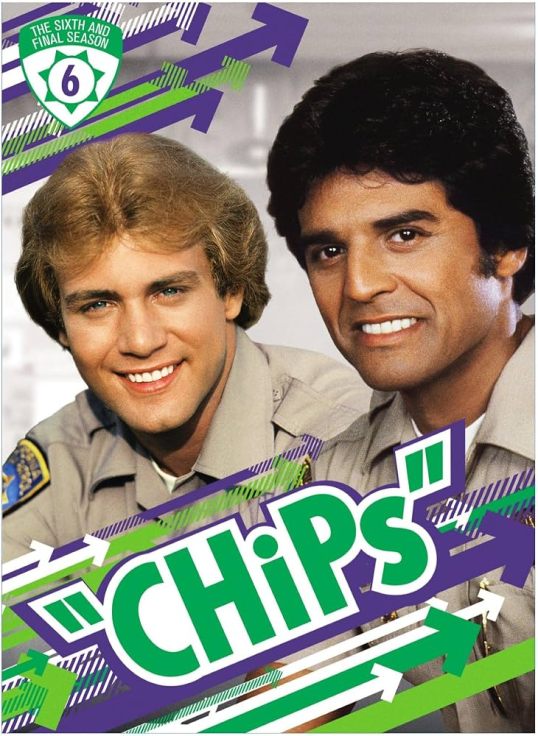
CHiPs (Prime)

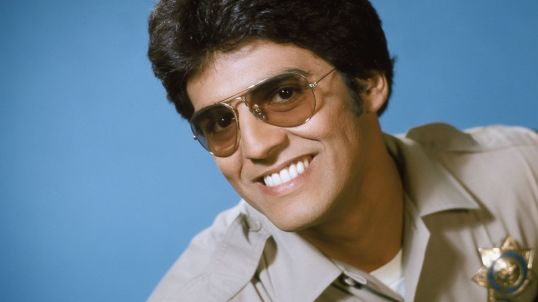
I reviewed CHiPs here!

Dance International Magazine (NightFlight+)

Everyone on the program was dancing and I danced while watching.

Decoy (Tubi)

I reviewed Decoy here!

Degrassi: The Next Generation (Tubi)

Look for my Degrassi review tomorrow!

Diff’rent Strokes (Tubi)

Tubi showed me a random episode on Thursday.  Arnold and his stupid friend Dudley took up smoking.  Dudley’s father went to the hospital to have a lung removed.  I think there was a message in there somewhere.

Freddy’s Nightmare (Tubi)

I reviewed Freddy’s Nightmares here!

Highway to Heaven (Tubi)

I reviewed Highway to Heaven here!

Homicide: Life On The Street (Peacock)

Look for my Homicide review tomorrow!

Lonesome Dove (Tubi)

I binged Lonesome Dove on Wednesday, as a tribute to both Texas and the late Robert Duvall.  It was a great adaptation of a great book.

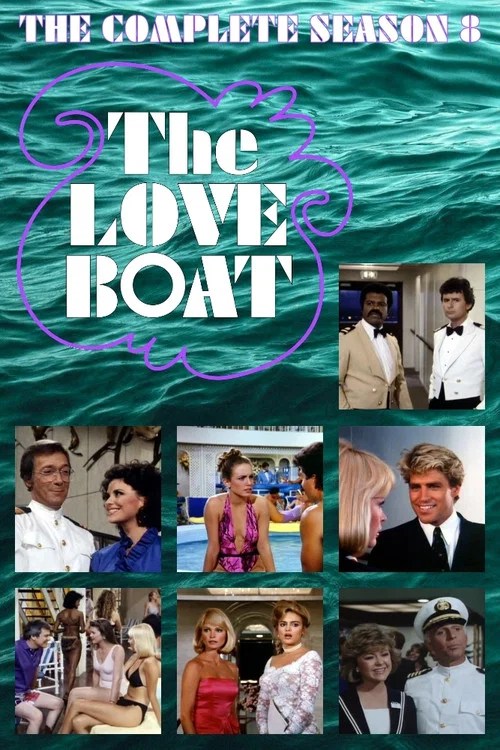
The Love Boat (Paramount Plus)

I reviewed The Love Boat here!

Miami Vice (Prime)

I reviewed Miami Vice here.

Nero Wolfe (YouTube)

I watched two episodes of Nero Wolfe on Tuesday.  These episodes featured Maury Chaykin as Nero Wolfe and Timothy Hutton as Archie Goodwin.  Seymour Cassel was in one of the episodes.  I enjoyed the episodes, even if I did have a hard time following the twists and turns of the mysteries.

Night Flight (NightFlight+)

On Saturday, I watched an episode of this old music video program.  It was a countdown of the top music videos of 1983.  I like the music of the 80s.  It was very energetic.

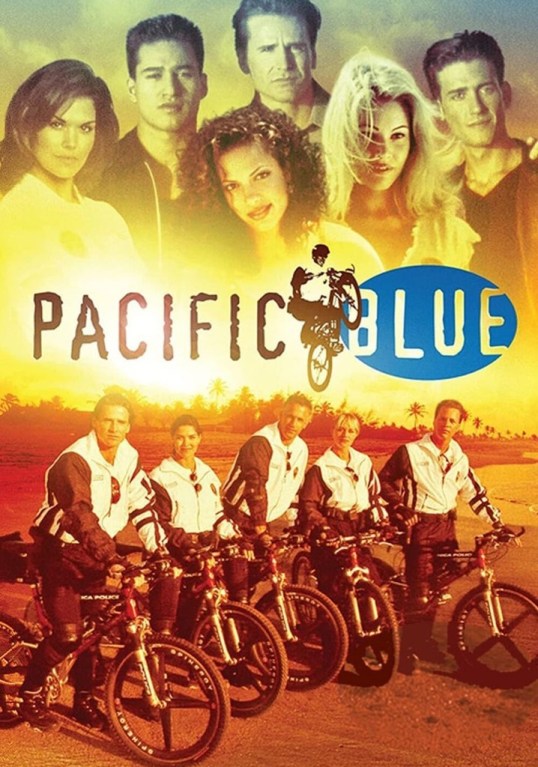
Pacific Blue (Tubi)

I reviewed Pacific Blue here!

Saved By The Bell (Tubi)

This week’s review will drop in 90 minutes.

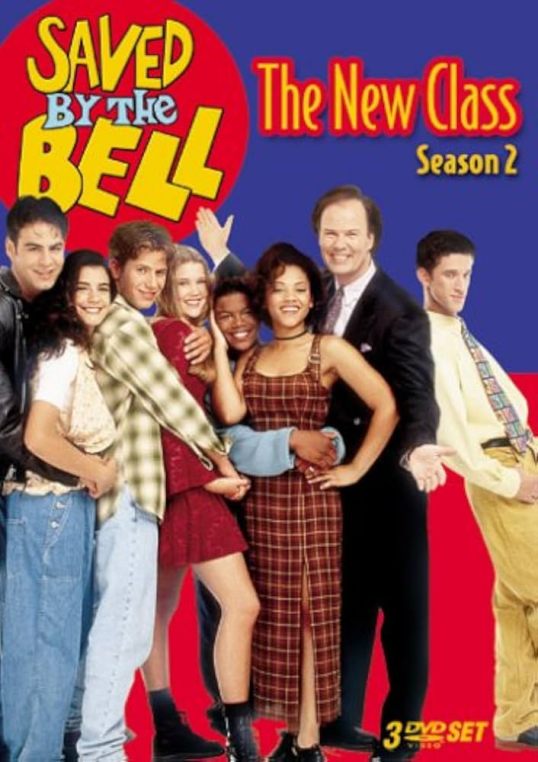
Saved By The Bell: The New Class (Prime)

I reviewed this week’s episode here!

St. Elsewhere (Daily Motion)

I reviewed St. Elsewhere here!

Review: Frank Herbert’s Dune


“Mercy is a word I no longer understand.” — Paul Atreides

Frank Herbert’s Dune, the 2000 Syfy Channel miniseries, stands as a scrappy yet heartfelt attempt to tame the untamable beast that is Frank Herbert’s sprawling sci-fi epic Dune. Clocking in at nearly four hours across three parts, it doesn’t pretend to be the cinematic knockout punch of Denis Villeneuve’s Dune: Part One and Dune: Part Two, nor does it dive headfirst into the psychedelic rabbit hole of David Lynch’s notoriously bonkers 1984 film. Instead, it carves out its own lane as the faithful workhorse adaptation—the one that prioritizes stuffing in every major plot thread, faction rivalry, and philosophical nugget from the novel without apology. That dogged completeness earns it major points from book purists, even if the early-2000s TV production values leave it looking like a glorious mess next to today’s blockbuster standards. It’s the version you revisit when you want Dune’s full political chessboard laid bare, rough edges and all.

Right from the opening narration, you sense this miniseries is playing a different game. While Villeneuve hooks you with those thunderous sandworm roars and vast desert expanses that make Arrakis feel like a character unto itself, and Lynch blasts you with industrial-gothic sets and nose-plug close-ups that scream “weird,” the Syfy take eases in with expository voiceover and sweeping shots of Caladan’s misty nobility. The budget screams made-for-TV: thopters wobble like cheap models on strings, sandworms shimmer with dated CGI that wouldn’t pass muster even in 2000, and interstellar travel feels more like a quick fade than a hyperspace spectacle. Yet there’s charm in the earnestness—the ornate costumes drip with imperial excess, from House Atreides’ regal blues to the Harkonnens’ sickly pallor, capturing Herbert’s baroque universe better than Lynch’s fever-dream excess or Villeneuve’s minimalist severity. It’s alien and opulent without trying to reinvent the wheel visually, letting the story’s inherent strangeness do the heavy lifting.

What truly sets this adaptation apart is its unhurried commitment to Dune’s core as a tale of interstellar realpolitik, not just laser swords and monster chases. The miniseries luxuriates in the scheming: extended scenes of Bene Gesserit whispering manipulations across generations, Emperor Shaddam IV plotting from his golden throne, and the Spacing Guild’s monopoly stranglehold get room to breathe. Lynch crammed this into a frantic 137 minutes, resorting to on-screen crawls and “the spice must flow” explainers that border on parody, while Villeneuve elegantly implies much of it through mood and subtext, trimming for pace. Here, the trap closes deliberately—Duke Leto’s honorable doom unfolds with all its tragic inevitability, Paul’s Fremen transformation simmers with ecological and messianic tension, and the Baron’s depravity feels like a rotting empire’s symptom. It’s talkier, sure, but that density mirrors the novel’s heady mix of ecology, religion, and colonialism, making the good-vs-evil surface hide a much murkier power grab.

Faithfulness is the miniseries’ superpower, and stacking it against the films drives that home. Lynch’s Dune is a directorial fever dream—brilliant in bursts (those Guild Navigators floating in spice tanks are iconic), but it mangles the timeline, invents “weirding modules” and pain boxes that Herbert never dreamed of, and caps with a cheesy resurrection and empire-toppling finale that feels like fanfic. Villeneuve’s duology is a masterclass in restraint and awe: Part One builds unbearable dread through silence and scale, Part Two unleashes Paul’s holy war turn with chilling clarity, but both demand sequels and sacrifice chunks like Thufir Hawat’s full betrayal arc or the ecological long-view for runtime efficiency. The Syfy version? It hits about 90% of the book’s beats in one self-contained package—Paul drinks the Water of Life, rides the first worm, unites the tribes, all while fleshing out Yueh’s guilt, Gurney’s survival, and Irulan’s expanded role as a scheming narrator who spies on the action. Smart tweaks like inner-monologue voiceovers clarify the mental gymnastics without Lynch’s exposition overload.

The ensemble punches above the production’s weight, delivering performances that ground the sprawl. Alec Newman’s Paul Atreides evolves from callow youth to burdened Kwisatz Haderach with a steely intensity—more seasoned than Kyle MacLachlan’s wide-eyed innocent in Lynch’s film or Timothée Chalamet’s introspective minimalist in Villeneuve’s, but convincingly haunted by prescient visions. William Hurt’s Duke Leto radiates quiet nobility, a paternal rock that Oscar Isaac matches with fiercer charisma but less screen time. Saskia Reeves’ Lady Jessica is a coiled operative, mastering the Voice while Rebecca Ferguson brings feral maternal fire and Francesca Annis floats as an ethereal priestess. Ian McNeice’s Baron Harkonnen oozes grotesque glee, echoing Kenneth McMillan’s scenery-chewing blimp but with slyer malice; Stellan Skarsgård’s version chills as a tactical monster sans the floating fat-suit camp. Chani fares best as Barbora Kodetová’s fierce Fremen equal, outshining Lynch’s rushed Sean Young and edging Zendaya’s mythic close-ups with raw tribe loyalty. Even bit players like Robert Wisdom’s Idaho shine brighter than their film counterparts.

Directorial choices by John Harrison emphasize theatricality over cinema flair, turning court scenes into operatic standoffs that suit Dune’s ritualistic pomp. Princess Irulan’s upgrade—from bookend quotes to active imperial intriguer—adds a vital scheming perspective Lynch ignored and Villeneuve teases for later. The gom jabbar test throbs with intimate terror, Fremen sietches pulse with cultural depth, and the final duel crackles despite modest effects. Pacing lags in spots—the Atreides downfall stretches, subplots like Feyd-Rautha’s gladiatorial intro feel obligatory—but that thoroughness lets overlooked gems like the dinner-table tensions and spice-blow ecology lectures land fully. Brian Tyler’s score swells bombastically, aping Zimmer’s primal dread without the subtlety, yet it propels the saga forward.

Flaws glare under modern scrutiny: effects age like milk (those ornithopters!), editing chops unevenly between threads, and some line deliveries veer stagey next to Villeneuve’s hushed precision or Lynch’s unhinged energy. It lacks the 1984 film’s quotable weirdness (“The sleeper must awaken!”) or the recent epics’ IMAX transcendence, feeling more like a filmed audiobook than immersive event cinema. Still, that scrappiness fits Dune’s prickly soul—ornate yet precarious, cerebral yet visceral. Herbert crafted a warning about heroes and empires; this miniseries trusts you to unpack it, preserving the unsettling texture the smoother films sometimes polish away.

Revisiting after the others clarifies its niche perfectly. Lynch’s Dune is the cult oddity—fractured, visionary, endlessly memeable despite narrative chaos. Villeneuve’s saga is prestige sci-fi at its peak: disciplined, subversive, a slow-burn symphony begging Part Three. The Syfy miniseries? Your completist’s deep cut—comprehensive, unpretentious, ideal for dissecting the guilds, houses, and prophecies on a rainy weekend. Constraints hobble the spectacle, but the ambition to honor Herbert’s labyrinthine blueprint shines through.

Ultimately, Frank Herbert’s Dune miniseries claims no crowns as the ultimate adaptation—that debate rages between Lynch’s deranged heart, Villeneuve’s cool mastery, or the book itself. At around 1150 words, it’s a worthy underdog: earnest, exhaustive, and true to the novel’s tangled genius. Fire it up if you crave Dune’s unfiltered intrigue over heart-pounding visuals. It respects the spice’s full flow, worms and all.

Retro Television Review: Baywatch 1.17 “Eclipse”


Welcome to Retro Television Reviews, a feature where we review some of our favorite and least favorite shows of the past!  On Saturdays, I will be reviewing Baywatch, which ran on NBC and then in syndication from 1989 to 2001.  The entire show can be viewed on Tubi.

This week, Eddie’s incompetence continues.

Episode 1.17 “Eclipse”

(Dir by Paul Schneider, originally aired on February 23rd, 1990)

After Kirby (Lance Wilson-White), the lifeguard that Eddie was supposed to be training, mysteriously drowns, Eddie loses his job and is shunned by every lifeguard in California.

Well, that’s what should have happened.  Instead, everyone tells Eddie that it wasn’t his fault and goes out of their way to make sure that Eddie isn’t beating himself up over one unfortunate death.  We don’t actually see Mitch or Captain Thorpe calling up Kirby’s family to offer condolences.  We don’t see Kirby’s funeral or Kirby getting the traditional fallen lifeguard salute.  Kirby?  Who’s Kirby?

Instead, Eddie meets with a psychiatrist (Dr. Joyce Brothers) and later admits that his sister drowned when he was a child and that’s why he feels so guilty about what happened to Kirby.  Everyone is more upset about Eddie’s sister than they are Kirby.

Meanwhile, Eddie searches the beach for a ghostly woman in a white nightgown.  Eddie and Craig’s wife, Gina (Holly Gagnier), speculate that the woman is the ghost of someone who burned down the lighthouse decades ago.  Mitch theorizes that the woman is an escaped mental patient.  The woman later turns up on the beach, dead from drowning.  Again, nobody seems to be too upset.  Aren’t these people supposed to be lifeguards?

While this is going on, Hobie discovers that his friend Katie (Hayley Carr) is going to have to euthanize her dog because it bit her family’s landlord.  Katie runs away and Hobie hides both her and the dog at his house.  Mitch is not happy about this but he does agree to adopt the dog so it won’t be killed.  Yay!

This episode was dumb.  Apparently, as long as Eddie’s feeling better, it doesn’t matter that two people drowned.  Stay away from Malibu, folks.

Late Night Retro Television Review: Freddy’s Nightmares 2.6 “Lucky Stiff”


Welcome to Late Night Retro Television Reviews, a feature where we review some of our favorite and least favorite shows of the past! On Fridays, I will be reviewing Freddy’s Nightmares, a horror anthology show which ran in syndication from 1988 to 1990. The entire series can be found on Tubi!

This week, a lottery ticket leads to misery.

Episode 2.6 “Lucky Stiff”

(Dir by William Malone, originally aired on November 12th, 1989)

After the lottery-obsessed Lenny Nordhoff (David L. Lander) has a heart attack and dies, his widow, Greta (Mary Crosby), marries her brutish boyfriend, Hank (Richard Eden). Haunted by nightmares of Lenny holding out his bloody heart and accusing her of having broken it, Greta is not happy with her new marriage. When she and Hank realize that Lenny was buried with a winning lottery ticket, they break into the mausoleum, open his coffin, and retrieve the ticket. Then, Greta pushes Hank into the coffin and seals him up.

Months later, Greta is wealthy but now she’s haunted by visions of Hank and threatening phone calls. Eventually, she is confronted by a gravedigger (Tracey Walter), who blackmails her into marrying him.

This episode’s only memorable moment was an outdoor scene that was apparently filmed on a windy day, resulting in Mary Crosby having to awkwardly reach down to keep her dress from blowing up. (I supposed it says something about the show’s budget and production schedule that, rather than reshoot this scene, they just went with it.) Crosby didn’t do a bad job in this episode. She had the right neurotic femme fatale look.

Otherwise, this episode was pretty forgettable. The first story featured Greta having nightmares about a dead man and marrying a loser. The second story featured Great having nightmares about a dead man and marrying a loser. Even Freddy, in his reduced host role, looked pretty bored with the whole thing.


Retro Television Review: St. Elsewhere 3.13 “Dr. Wyler, I Presume”


Welcome to Retro Television Reviews, a feature where we review some of our favorite and least favorite shows of the past! On Fridays, I will be reviewing St. Elsewhere, a medical show which ran on NBC from 1982 to 1988.  The show can be found on Daily Motion.

This week, a famous doctor comes to St. Eligius.

Episode 3.13 “Dr. Wyler, I Presume”

(Dir by Mark Tinker, originally aired on December 19th, 1984)

This week’s episode opens in the hospital gift shop. Dr. Craig is excited because a Nobel Prize-winning surgeon, Dr. George Wyler (David Wayne), is traveling from Africa to St. Eligius. Wyler is bring along a man who needs a kidney transplant. They are hoping to find a donor in Boston.

Dr. Auschlander, who is an old friend of Wyler’s, is a bit more nervous. Craig tells him not to worry so much and then grabs a carnation that he puts on Auschlander’s lapel.
As Auschlander starts to leave the gift shop, Craig says, “Don’t forget to pay for that.”

It’s a brilliant opening for a pretty good episode of St. Elsewhere. It’s always interesting to see the usually arrogant Dr. Craig in fanboy mode and one gets the feeling that, if he’s impressed by Dr. Wyler, than Wyler really must be as brilliant as everyone says.
And maybe he is! It’s hard to say for sure. When Wyler arrives at the hospital, he’s avuncular and obviously intelligent but we really don’t learn much about him, beyond the fact that he’s an old friend of Auschlander’s. The rest of Wyler’s scenes feature him and Auschlander sitting around and talking about how they’re both getting older. It’s not boring, largely due to the performances of Norman Lloyd and David Wayne. But, after all of the build-up, it’s a bit anti-climatic. That said, according to the imdb, Dr. Wyler appeared in a total of three episodes so I imagine things will develop.

While this is going on, Nurse Rosenthal is having a mid-life crisis. Her 45th birthday is coming up and she doesn’t want to celebrate it. She’s not amused when the nurses get her a stripper. Usually, I would have sympathy for a character who hates the idea of getting older but I’m a little bit tired of Nurse Rosenthal and her poor-me attitude. I get that she’s upset that her adulterous affair hasn’t been going well but maybe she should take that as a sign to stop sleeping with married men.

Meanwhile, Mrs. Hufnagle, the patient that no one likes, continues to get on everyone’s nerves. She’s even managed to alienate Elliott! I actually feel bad for Mrs. Hufnagle. Yes, she complains a lot but being in a hospital is a scary thing. I get the feeling that the doctors and nurses getting annoyed with her is probably the most realistic part of the series. Dr. Morrison is now Hufnagle’s doctor and that worries me. Morrison’s stories always end in the most depressing way possible.

At the tv station, Victor is told that his medical segments are not popular with viewers and that he needs to make being sick sound more pleasant than it is. Victor records an upbeat segment about how wonderful it is to go the hospital.

At the hospital, Victor assists Dr. Craig in removing an live exploding bullet from a woman who was shot in a robbery. Victor worries that the bullet could explode as he removes it and end his medical career. Fortunately, the operation is successful but Craig still tells Ehrlich that he’s a disgrace.

Ouch!

Hey, this was a really good episode. It was well-acted. It wasn’t too depressing. Dr. Craig got to snap at a lot of people. The best episodes always feature Dr. Craig going off on someone. St. Eligius may not be the best hospital but, this week, it was the most entertaining.

Late Night Retro Television Review: Highway to Heaven 5.11 “The Inner Limits”


Welcome to Late Night Retro Television Reviews, a feature where we review some of our favorite and least favorite shows of the past!  On Thursdays, I will be reviewing Highway to Heaven, which aired on NBC from 1984 to 1989.  The entire show is currently streaming on Tubi and several other services!

This week, Jonathan and Mark are speech therapists.

Episode 5.11 “The Inner Limits”

(Dir by Michael Landon, originally aired on July 21st, 1989)

George (Tim Choate) has spent years speechless and paralyzed.  However, after George’s brother, Paul (Joseph Culp), has a chance meeting with speech therapist Jonathan Smith, it is discovered that George is actually a genius who can communicate through blinking and who hopes to write a book.  Paul goes from wanting to move out of his childhood home and into an apartment with his girlfriend, Jessica (Lorie Griffin) to feeling like he has a duty to spend the rest of his life helping his mother (Julianna McCarthy) take care of George.

I’ve been crying a lot this year.  I lost my Dad in 2024.  Exactly one year later, I lost the aunt who helped to raise me when I was a child.  I didn’t really get a chance to mourn my Dad because I immediately became one of my aunt’s caregivers.  I thought that if I couldn’t save my Dad from Parkinson’s, I could at least save my aunt from Alzheimer’s.  After my aunt passed, I threw myself into the holidays and I dealt with my emotions by buying lots of presents for other people.  It’s only now, in the light of 2026, that it’s all truly hitting me.  I cry very easily right now and I cried while watching this episode.  There’s a sincerity and earnestness to Highway to Heaven that gets to me, despite how corny the show could sometimes be.

That said, this episode had the same flaws as most of season 5’s episodes.  Jonathan and Mark were only in a few scenes and the majority of the episode was carried by Joseph Culp and Julianna McCarthy, both of whom tended to overact during their big emotional scenes.  Culp eventually won me over but McCarthy’s performance was so theatrical and over-the-top that it really did take you out of the story.

That said, I did cry.  Would I have cried if I wasn’t currently in mourning?  I think I would have, actually.  The final shot of a young boy reading George’s book while sitting in a wheelchair earned those tears.  We never really know how many people we help, do we?


Retro Television Review: Decoy 1.24 “Saturday Lost”


Welcome to Retro Television Reviews, a feature where we review some of our favorite and least favorite shows of the past!  On Thursdays, I will be reviewing Decoy, which aired in Syndication in 1957 and 1958.  The show can be viewed on Tubi!

This week, Casey learns about the dangers of reefer!

Episode 1.24 “Saturday Lost”

(Dir by Stuart Rosenberg, originally aired on March 24th, 1958)

Casey and her partner-of-the-week (played by Simon Oakland) are investigating the death of Geraldine “Geri” Wilson, a quiet and studious college student who was found dead on the side of the road after attending a college football game with her sister, Beth (Barbara Lord).  Beth, who couldn’t even remember her own name when she was first found the morning after, isn’t much of a witness.  She can’t remember what happened that night but, as she and Casey sit in one Geri’s old hangouts, she recognizes Ken Davidson (Larry Hagman), a student who was with them at the football game.  Beth remembers that Ken and Geri had a fight.

The stunned Ken says that he had no reason to kill Geri.

Casey replies, “Marijuana gave you a reason!”

Casey has figured out, from listening to the way the spacey Beth talks, that Beth and Geri smoked “reefer” the night of the football game.  Casey is convinced that, in a marijuana-crazed state, Ken tossed Geri out of the car.  To help jog Beth’s memory, she has her partner drive Beth, Ken, and Casey along the same route where Geri’s body was found.

“Where did you get the reefers, sonny!?” Casey demands of Ken.

Beth suddenly remembers that she’s the one who bought the marijuana.  Beth says that it only cost a dollar and that Ken himself didn’t indulge.  Instead, it was just Beth and Geri who got stoned.  Beth was driving when Geri opened the car door and fell out.  “Faster!  Faster!” Beth says, a line that immediately brings to mind the 30s anti-drug film, Reefer Madness.

(Why wasn’t Ken driving if he was the only one who wasn’t stoned?)

Back at police headquarters, Casey looks at the camera and tell us that the case has been dismissed.  However, Beth will never forget that her sister died because Beth bought “reefer.”

Beverly Garland is, as always, excellent and a young Larry Hagman does well as Ken.  But Barbara Lord overacts to such an extent that you really find yourself wondering if maybe she actually popped a bunch of amphetamines as opposed to smoking weed.  Indeed, Beth and Geri’s story would be plausible with a lot of different drugs but it’s not particularly plausible with marijuana.  There’s also a rather bizarre cameo from a young William Hickey (you’ll recognize the voice), playing a hipster who spouts a lot of nonsense.  If anything, Hickey’s hipster comes across as if he’d be more likely to know where to get weed on campus than Ken but Casey just lets him wander off.  In the end, this episode feels like a version of the urban legend about the girl who walked into an airplane propeller because she took too many pills.

Larry Hagman, I should mention, was a proud member of the Hollywood counter-culture and was very open about his own use of marijuana.  (Apparently, he was introduced to it by Jack Nicholson, who felt it would help Hagman cut back on his drinking.)  I wonder if anyone ever asked him about this episode.

I Watched 2026 Opening Night On Netflix


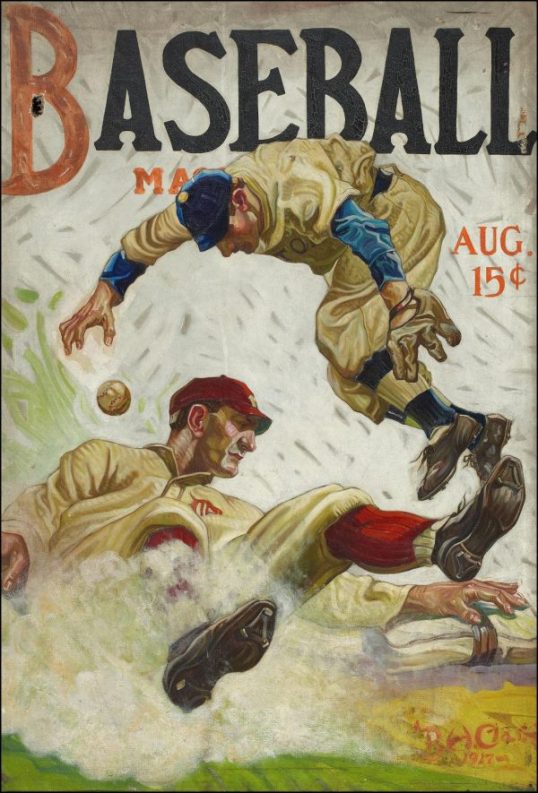
Last night, I watched Major League baseball’s Opening Night on Netflix.

As a baseball fan, streaming the first game of the major league season on only one service didn’t really sit well with me but, with the way things are going, everything is eventually going to be exclusively on streaming and Disney, Prime, and Netflix will probably all merge to become one gigantic, extremely expensive streaming service.  I did feel bad for the baseball fans who might not have or even want Netflix and who didn’t want to have to get it for just one night.  The Home Run Derby and the Field of Dreams Game are going to be Netflix exclusives as well.

The game was blow-out.  The Yankees won 7-0 and, after the second inning, it was pretty clear who was going to win the game.  The Giants didn’t have it last night but you should never try to predict an entire baseball season based on just one game.  Take it from someone who has spent many seasons getting way too excited just because the Rangers won their first few games.  Baseball isn’t like football.  In football, you only have to survive a handful of games.  Baseball requires endurance, commitment, and patience.

I liked Netflix’s production of the game, even the parts that were a little corny.  The Giants jumping over a trolley to run out onto the field?  The Yankees surrounded by taxis as they were introduced to the crowd?  It’s baseball.  It’s the American pastime.  It’s okay if it’s silly sometimes.

So far, seven runs have been scored in the regular 2026 baseball season and they were all scored by Yankees.  That’s going to change later today, though.

Go Rangers!