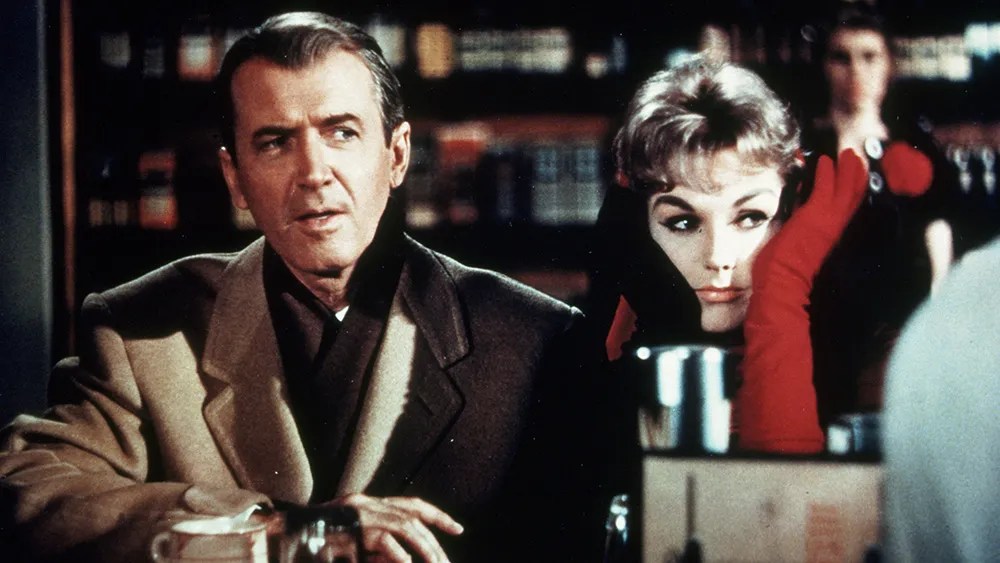
I love Jimmy Stewart. He’s one of my favorite actors. If Charles Bronson had never existed, there’s a chance he could be my all-time favorite. I watch IT’S A WONDERFUL LIFE (and cry) every holiday season, and I believe his series of westerns with Anthony Mann in the 1950s are some of the best ever made. And then there’s his work with Alfred Hitchcock. REAR WINDOW and VERTIGO are movies I discovered as a young and impressionable movie lover. They helped cement Stewart, and Hitchcock, as legends in my mind. In 1958, the same year that he made VERTIGO, Stewart starred in BELL, BOOK AND CANDLE with his VERTIGO co-star Kim Novak. I’ve owned the movie on DVD for years, but I’ve never sat down and watched it before. That changed today!
In this supernatural, romantic comedy, Stewart stars as Shep Henderson, an engaged publisher in New York City who finds himself falling for his beautiful neighbor, Gillian Holroyd (Kim Novak). The problem is that Gillian just happens to be a witch, and she has a bad past with Shep’s fiancé, Merle (Janice Rule). What starts as a ruse to get back at an old rival eventually turns into true love and Gillian doesn’t know how to handle these new feelings. Is she willing to confess what she’s done and give up her powers for a chance at love? I guess you’ll just have to watch and see!
Stewart makes almost anything enjoyable just by being himself. That amazing voice, combined with his natural humor and charm, gives me something I can latch ahold of, and I always pull for his characters. Kim Novak is just so beautiful, and downright sexy, as Gillian. This character has spent her life operating by one set of rules and all of a sudden, she’s trying to figure out how to deal with feelings she hasn’t dealt with before. Her ability to cast spells and work magic takes on a different meaning when the hearts of people she loves are at stake, and Gillian soon has a crisis of conscience. Stewart and Novak have incredible chemistry, which goes a long way in helping this complicated romance work.
And then there’s the movie’s setting. I came in October for a romantic story involving witches and warlocks, but I ended up with characters falling in love in New York City at Christmastime. I could see this as a movie I watch every year over the holidays moving forward, especially since Stewart is the star. I know my mom will love it!!
The film also features an incredible supporting cast that includes Jack Lemmon, Ernie Kovacs, Hermione Gingold, Howard McNear and Elsa Lanchester, who’s especially effective as Gillian’s Aunt Queenie. If you leave the movie feeling like you want to go back and watch the old show BEWITCHED, starring Elizabeth Montgomery, I’ll just let you know that makes perfect sense. This movie was actually an acknowledged inspiration for that classic series.
BELL, BOOK AND CANDLE may feature a witch as a main character, but this story doesn’t feature any scares. It’s a fun romance with a charming premise and a great cast. Even a witch has a chance for love, and when that chance is with someone played by Jimmy Stewart, that’s about as magical as it gets!
“Ignore It” hit home. For the uninitiated, it was a story about alcoholism, abuse, and the pathological need to ignore it. I know this because I lived it. I can spot an alcoholic miles away. I was so afraid of my father, who was a car guy, that even today, when I smell motor oil or a garage, an icy chill shoots down my spine. He was the beat the snot out of his son type and I ended up being the party guy or isolation varietal.
I watched the film and then confirmed it with the short story “You’re going to notice a woman in your home, you must ignore her” by Jeff Speziale that the story was about a different alcoholic than my dad. In this story, the alcoholic abuser was the mother. An alcoholic mom hits harder because she’s supposed to protect you from everyone. Women are the foundation of a civilized society and family that’s why when men are dying on the battlefield, they cry for their mothers. We see this evidenced in psychology because female psychopaths are underdiagnosed; it is too hard even for a mental health professional to admit that a woman could be an evil pathological liar. We could always accept evil men, but evil women were portrayed as lacking agency- they were possessed or a succubus. In other words, it either was not their fault or they weren’t really human in the first place. Denial, the absolute rejection of an obvious fact, rules the day. Alcoholism lives in denial because it the perfect form of secrecy.
In this short, the father explains to the son that the monster is back and it has to be ignored; so, I read this as mom is on a bender again -the monster is back. During dinner, the father tries to maintain order, but the mother finally gets up and goes to the kitchen because it is the favorite place of the hidden stash. There is also a moment where there is a monster hand on the daughter’s shoulder; it is not a claw. It is a caress, but still terrifying because a drunk mom is unpredictable like dynamite. When the daughter sees the monster and she lets a tear out; it is shame falling down her face, causing an immediate and violent reaction from the monster.
The narrator in the short story tells the reader to share the infection. The narrator’s request has two interpretations: a positive one and a real one. The positive one is that we need to out the disease and take power from it to stop it. The real one is that the pain is too great for him to experience alone; so, if you share it, you lessen his own burden.
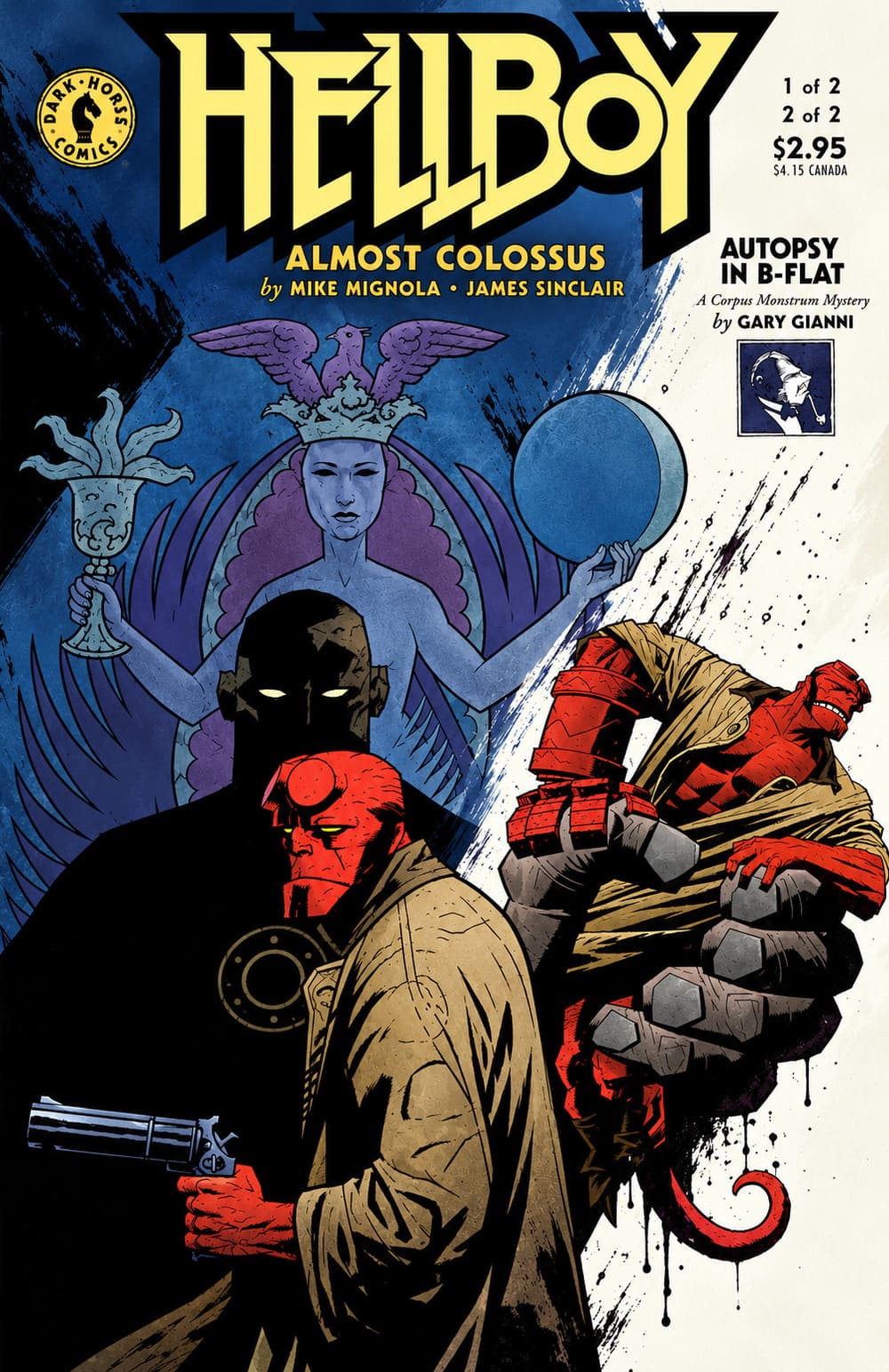
Mike Mignola’s Hellboy: Almost Colossus gets its best mileage out of a simple question: what makes someone a monster once you look past the body they were born—or built—into? This two-issue miniseries takes the unfinished business of Hellboy: Wake the Devil and turns it into a compact Gothic adventure with a surprisingly tender center. There are disturbed graves, shadowy ruins, unnatural bodies, and a villain whose ambitions are considerably bigger than his conscience. But underneath that familiar horror setup is a story about two artificial beings who respond to their existence in very different ways. One wants to make the world suffer. The other barely knows how to face it.
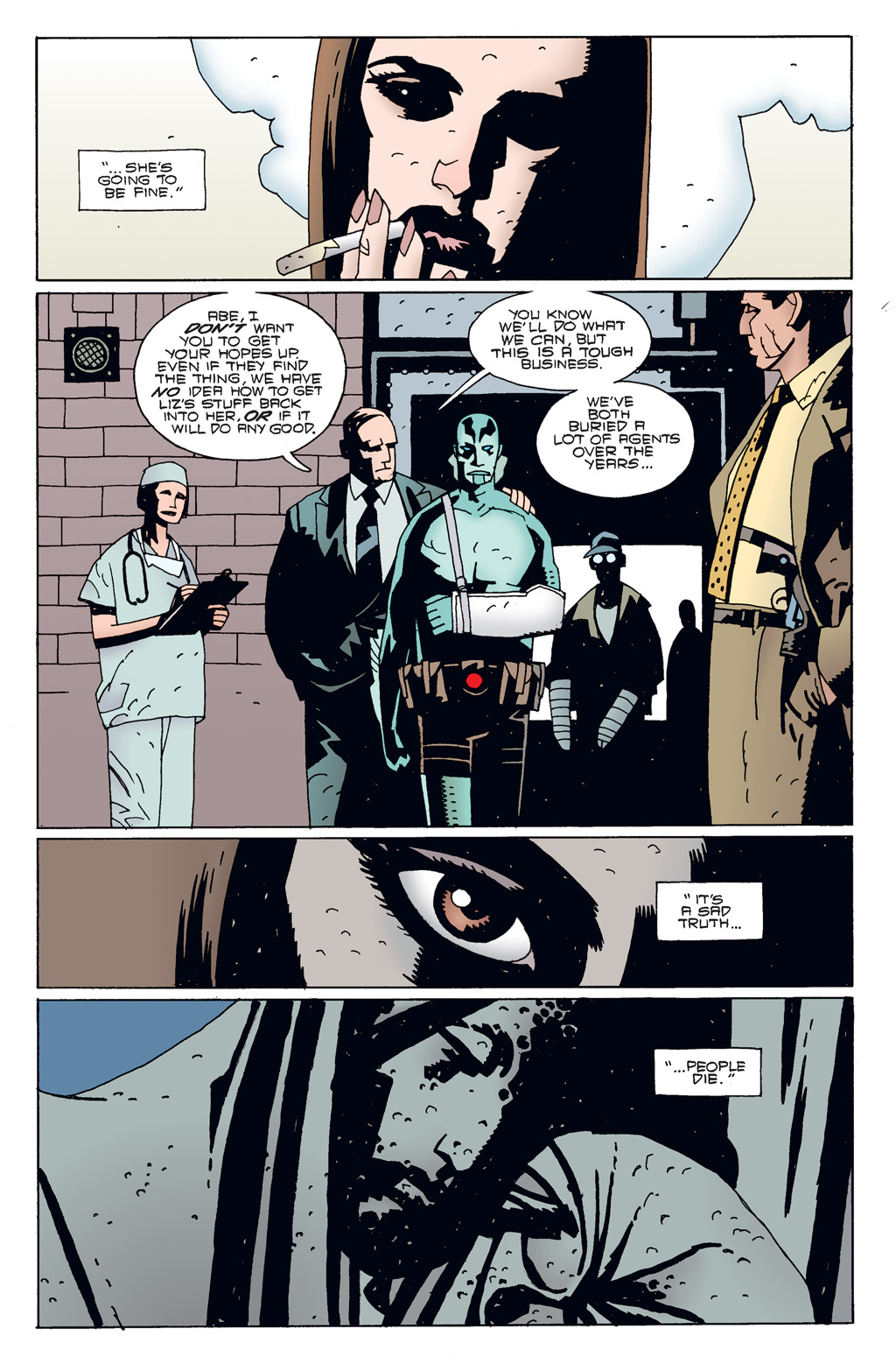
The immediate problem is Liz Sherman’s deteriorating condition. During Hellboy: Wake the Devil, her fire brought an ancient homunculus to life, but the transfer left her without the powers that had sustained her. Now Hellboy and Kate Corrigan need to find the creature and discover whether that process can be reversed. It is a clean, urgent premise that gives the story direction without requiring another elaborate explanation of Hellboy’s destiny. The stakes are personal rather than cosmic. Liz is dying, and Hellboy is not about to stand around waiting for someone else to fix it.
That smaller scale is one of the comic’s biggest strengths. Hellboy: Wake the Devil has the pleasure of watching several supernatural threats overlap, but Hellboy: Almost Colossus benefits from having less to juggle. Mignola takes an incident that could have remained a disturbing subplot and follows its consequences. Liz’s awakening of the homunculus was not just another strange encounter in a haunted castle. It created a life while endangering another, and the people involved now have to deal with that imbalance. The supernatural events feel consequential because they leave emotional damage behind.
The homunculus, Roger, is the heart of the story. His physical appearance initially places him within the familiar territory of the lumbering artificial monster, but Mignola quickly complicates that impression. Roger is not thrilled to be alive. He is frightened, confused, and overwhelmed by guilt over the suffering connected to his awakening. His desire for death gives the story an unsettling sadness. Life has arrived before understanding, and he has no idea what to do with either. Rather than making him immediately lovable, Mignola allows his distress to remain awkward and uncomfortable, which makes his eventual choices more affecting.
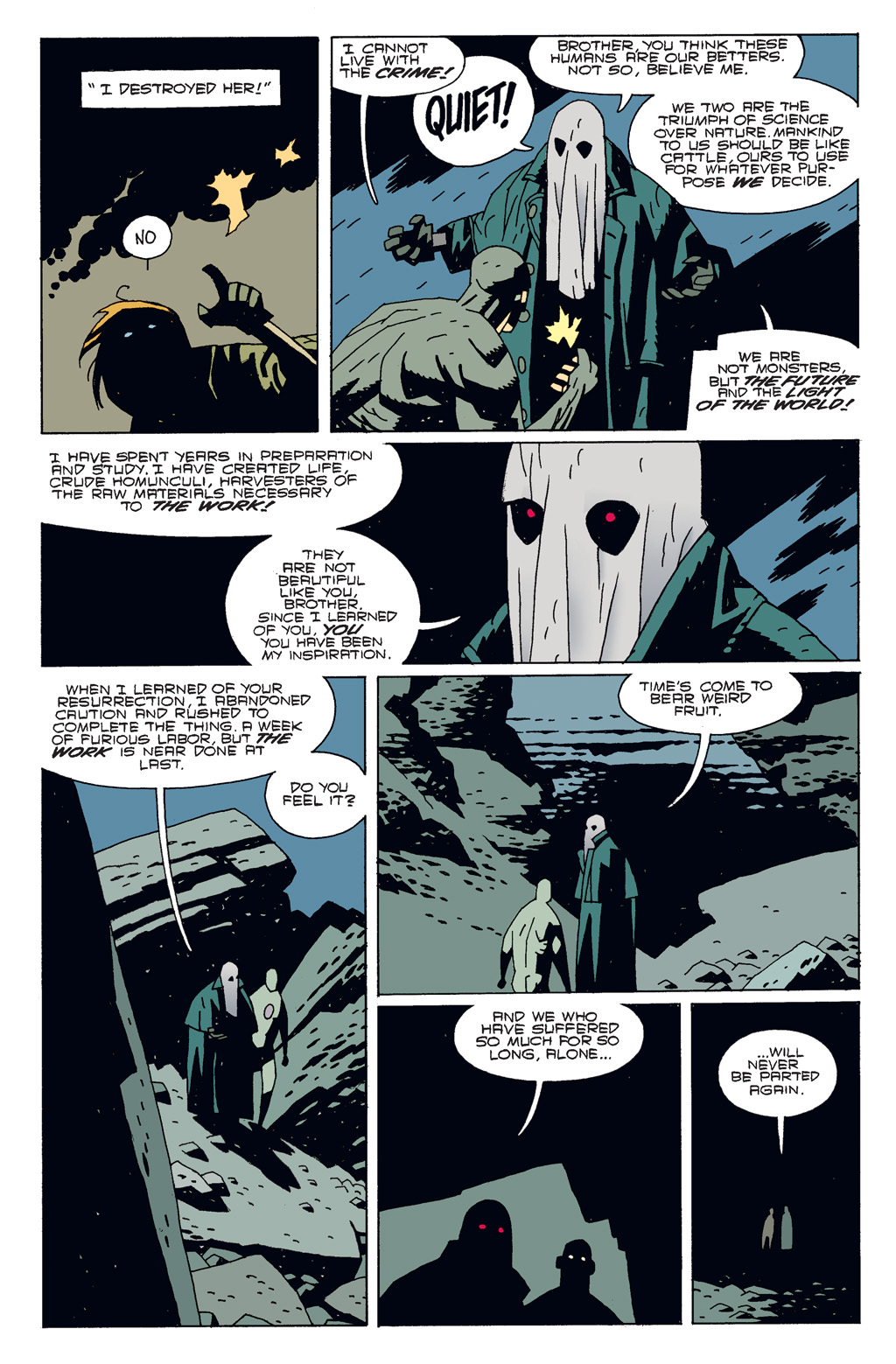
Roger’s older brother provides the nasty counterpoint. Another homunculus created through alchemy, he has responded to his origins with resentment and grandiosity. His solution to feeling wronged is to build himself into something powerful enough to dominate everyone else. Other bodies become material for his ambitions, and other lives become expendable. He is grotesque not simply because of what he is, but because of how casually he reduces people to things. The contrast with Roger is sharp: one brother is horrified by the possibility of causing harm, while the other treats harm as a necessary step toward greatness.
That distinction gives the comic its moral backbone. Mignola does not suggest that unnatural creation automatically produces evil, nor does he make suffering an excuse for cruelty. Both brothers have reasons to feel alienated, but they still make different decisions. Roger’s brother converts his grievances into a claim of superiority. Roger must learn that guilt does not have to end in surrender or self-destruction. It can become responsibility. That is a substantial idea for such a short adventure, and the story makes it tangible through the brothers’ behavior rather than stopping to explain its own message.
The Frankenstein influence is easy to recognize, particularly in the loneliness and resentment surrounding manufactured life. What makes this more than a familiar variation is how naturally those concerns fit Hellboy himself. His appearance suggests danger, and his origins carry implications he refuses to accept as instructions. Roger’s predicament echoes that larger conflict without turning the miniseries into another extended discussion of prophecy. Hellboy becomes an example of the difference between what someone looks like and what someone chooses to do. He is not delivering inspirational speeches, either. He is simply trying to save a friend.
His blunt attitude helps keep the material from becoming too mournful. Hellboy can move through an ancient horror as though it is an especially irritating assignment, and that practical impatience gives the comic some welcome personality. The humor does not erase the danger; it makes his concern feel less theatrical. Kate also helps ground the investigation. Her presence supplies a human perspective beside Hellboy’s familiarity with the bizarre, and her vulnerability gives the confrontation immediate stakes beyond the brothers’ argument. Their partnership makes the supernatural setting feel inhabited rather than merely arranged for atmosphere.
Visually, Mignola makes the ruins and artificial bodies feel like parts of the same uneasy world. His heavy blacks and simplified forms give stonework a looming presence, while the homunculi look assembled, weighty, and uncomfortable in their own shapes. The pages do not need elaborate detail to suggest history. A dark opening or a fragment of architecture can imply whole rooms of forgotten experiments. James Sinclair’s coloring supports that starkness, allowing the drawing’s silhouettes and shadows to carry the mood. The result feels closer to a grim illustrated folktale than a glossy superhero adventure.
The two-issue format does leave some limitations. Liz functions mainly as the reason for the mission, and the older brother’s ambitions could have supported more development. Reading Hellboy: Wake the Devil first also gives the opening greater emotional weight. Still, the brevity keeps the story from diluting its strongest material. The climax matters because Roger has to decide what kind of being he will become, not simply because something enormous needs to be punched. Hellboy: Almost Colossus delivers the Gothic spectacle, but its real achievement is making compassion feel like an active choice. The most human figure in the story may be the one who has the least idea how to be human.
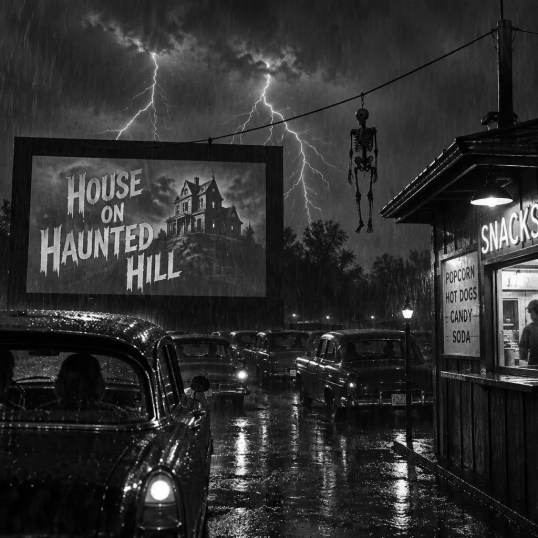
Watching the original House on Haunted Hill is a bit of a Halloween tradition here at the Shattered Lens.
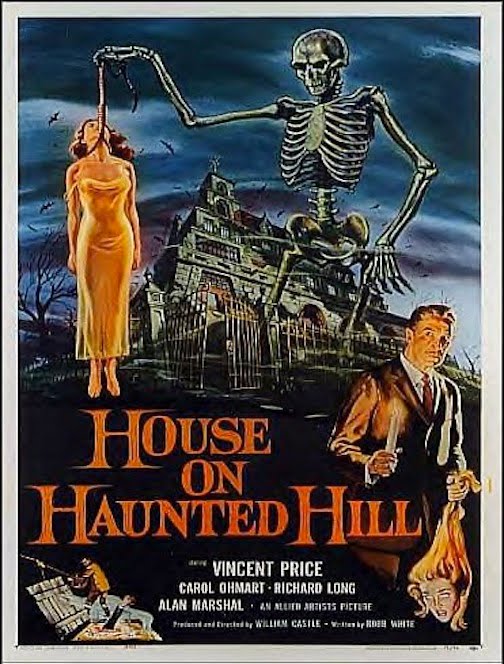
First released in 1959, The House on Haunted Hill features Vincent Price as a millionaire who invites five people to a party that he and his wife are throwing in a supposedly haunted house. Price explains that anyone who can actually make it through the entire night will receive $10,000. (That’s the equivalent of a $110,000 today.) Is the house truly haunted? The groundskeeper (Elisha Cook, Jr.) certainly seems to think so!
This is a classic haunted house movie, featuring Price at his best and a number of genuinely fun twists. Even if you’ve seen it a hundred times, you need to watch it again. Here is …. THE HOUSE ON HAUNTED HILL!
Inferno (1980, dir by Dario Argento, DP: Romana Albano)
Today’s horror song of the day comes from Keith Emerson’s soundtrack of Dario Argento’s Inferno. Emerson did not have an enviable task, having to follow up Goblin’s soundtrack for Suspiria. But Emerson pulled it off, crafting a score that compliments Goblin’s earlier work while maintaining an identity of its own.
Today’s horror scene that I love comes from 1959’s House on Haunted Hill. As the film opens, Vincent Price takes a moment to speak directly to the audience and introduce the characters who are coming to spend the night at the house. Price, who is one of the patron saints of October, delivers his lines with such relish that it’s impossible not to stick around to see who survives the night.
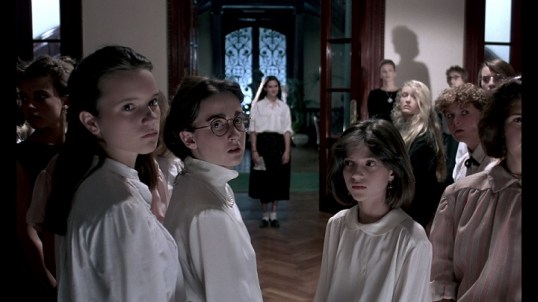
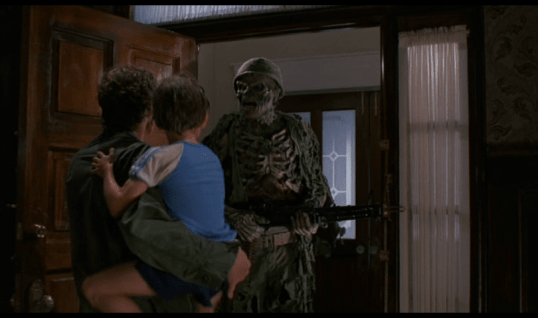
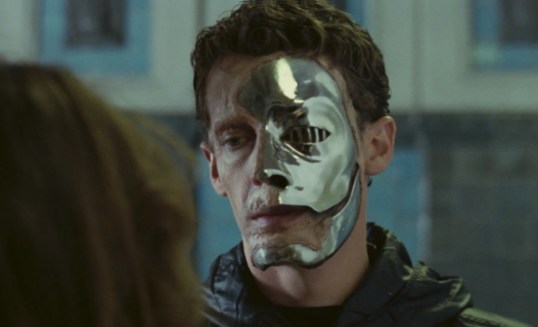
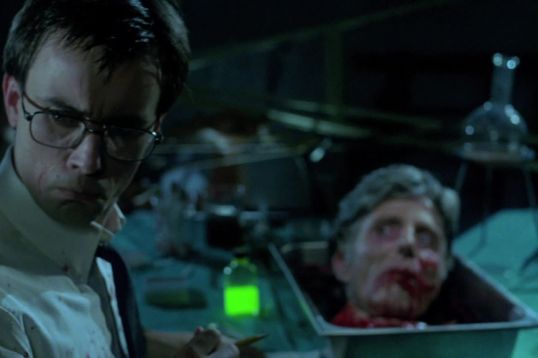
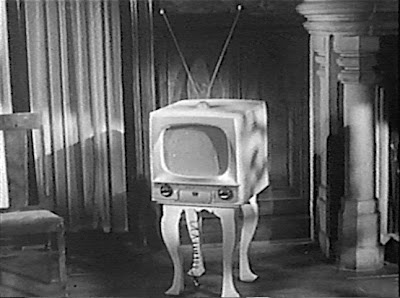
4 Or More Shots From 4 Or More Films is just what it says it is, 4 shots from 4 of our favorite films. As opposed to the reviews and recaps that we usually post, 4 Shots From 4 Films lets the visuals do the talking!
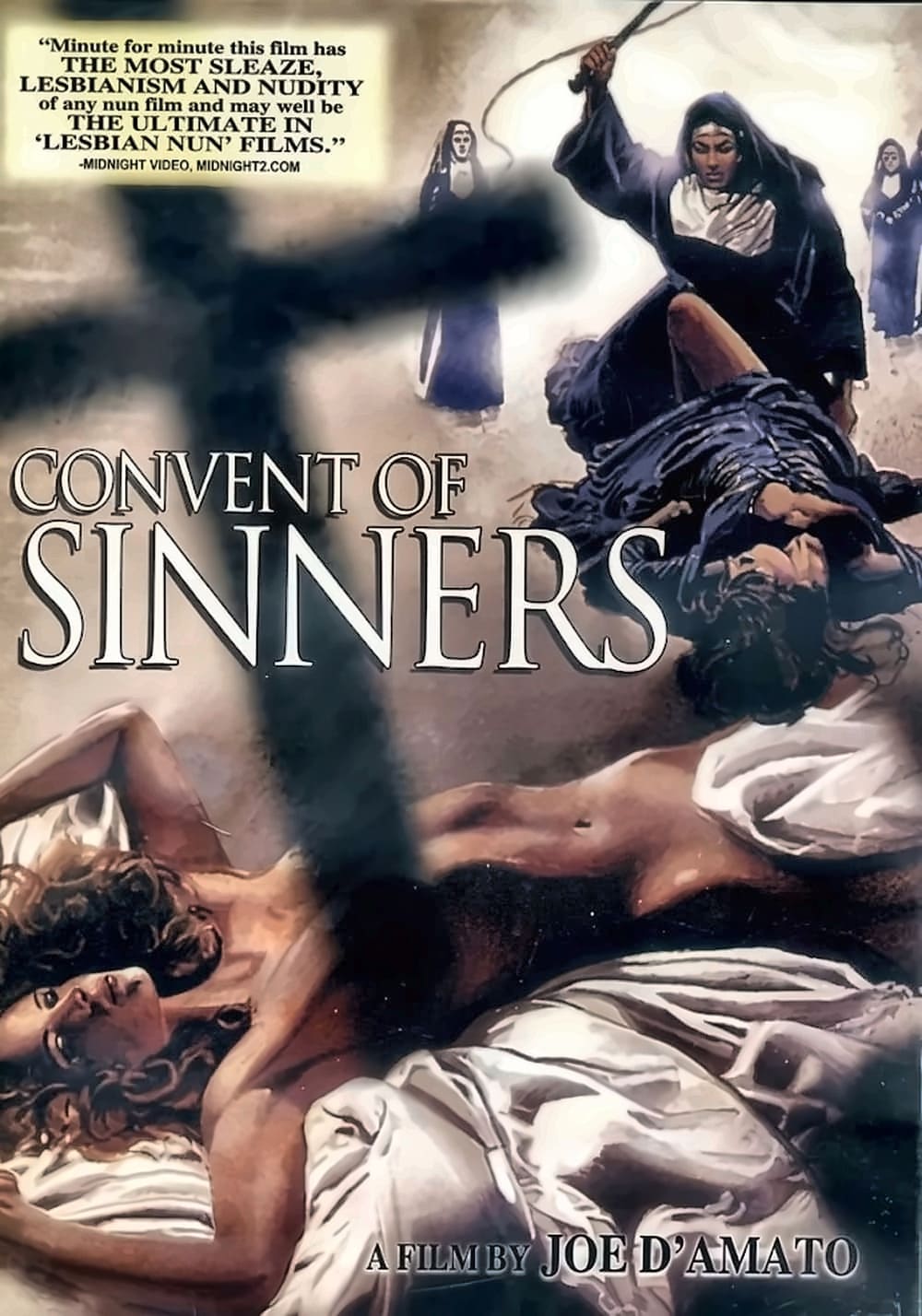
Convent of Sinners (1986) wants to expose the corruption behind convent walls, but Joe D’Amato keeps getting distracted by what he can undress inside them. That tension defines this erotic nunsploitation horror film, an atmospheric guilty pleasure with enough religious hypocrisy and malicious intrigue to suggest a sharper movie buried beneath the sleaze. D’Amato recognizes the dramatic possibilities of an institution where frustrated desire disguises itself as moral authority. He also leans so heavily on sexual titillation that his criticism struggles to compete with his exploitation instincts. The result is entertainingly disreputable, occasionally disturbing, and considerably less insightful than its premise promises.
Susanna, played by Eva Grimaldi, enters the convent after suffering sexual abuse at home, only to discover that her supposed sanctuary contains another collection of people determined to control her. The Mother Superior develops an attachment to her, a priest offers forbidden affection, and Sister Teresa resents the attention she receives. Loosely adapted from Denis Diderot’s La Religieuse, the story follows a vulnerable woman whose needs remain secondary to the desires of those claiming to protect her. Susanna becomes the object of affection, suspicion, and punishment without gaining much say in any of it. Escape from one abusive environment simply delivers her into another.
There is a strong foundation here for a bitter examination of institutional corruption. The convent’s inhabitants cannot acknowledge their feelings honestly, so attraction becomes favoritism, jealousy becomes accusation, and cruelty becomes spiritual correction. Susanna exposes tensions that already exist, but blaming her allows everyone else to avoid examining themselves. Religious authority gives ordinary resentment extraordinary reach. Someone who merely dislikes you can make life unpleasant; someone who claims your suffering serves God can make resistance look like further evidence against you. The film understands that distinction, even if it does not consistently develop it beyond another opportunity for humiliation.
Its place within the nunsploitation tradition makes that limitation especially noticeable. Ken Russell’s The Devils combines sexual obsession, religious hysteria, and institutional violence with a larger examination of political power. D’Amato uses related ingredients without approaching Russell’s ambition or furious visual imagination. Convent of Sinners concentrates on private jealousies and forbidden attachments, which could have supported a more intimate account of how authority becomes abusive. Instead, its serious implications repeatedly compete with scenes designed primarily to provoke or titillate. The comparison is useful because it demonstrates that lurid material and meaningful criticism can coexist, provided the filmmaking gives both a purpose.
Bruno Mattei’s The Other Hell offers the trashier comparison, turning a convent into a breeding ground for sinister secrets, violence, and supernatural horror. Both films exploit the reversal of sacred refuge into dangerous confinement, but Mattei foregrounds the horror-show possibilities while D’Amato emphasizes erotic melodrama. Convent of Sinners builds on this established genre territory through its mixture of religious imagery, repressed appetites, and punitive authority. Yet its reliance on sexual spectacle makes the corruption feel less like something being investigated than something supplying the next scandalous situation. The convent is an effective setting, but D’Amato does not always look beyond its exploitation value.
Karin Well’s Sister Teresa gives the persecution a concrete emotional motive. She resents the Mother Superior’s interest in Susanna, and her wounded pride feeds her vindictiveness. Underneath the religious vocabulary is someone furious about losing influence. The institution lets her disguise retaliation as moral responsibility, making her more dangerous than an openly spiteful rival. These dynamics provide some of the film’s strongest material because they reveal how easily a hierarchy can accommodate personal grudges. Teresa does not need to confess her jealousy when she can insist that Susanna is the problem. Her authority supplies the explanation her conscience ought to question.
Grimaldi gives Susanna a sympathetic presence, but the screenplay is far more interested in what happens to her than in who she is. Her longing for tenderness is understandable, and apparent affection offers a believable temptation in such an oppressive environment. Unfortunately, every refuge becomes another trap, and the repeated victimization eventually starts to flatten her character. D’Amato leans way too heavily on the sexual titillation and lurid exploitation of Susanna, weighing down whatever commentary he is attempting about religious hypocrisy and institutional corruption. Her suffering becomes an attraction in itself. The film wants us to condemn those treating her as an object while rarely resisting that temptation itself.
That mixture also connects it to The Convent of Hell, the erotic graphic novel written by Ricardo Barreiro and illustrated by Ignacio Noé. Its forbidden appetites, convent confinement, cruelty, and supernatural grotesquerie belong to the same imaginative tradition. Whether or not its creators would acknowledge these particular predecessors, the family resemblance to The Devils, The Other Hell, and Convent of Sinners is persuasive. This is a critical reading of their shared sensibility rather than a documented claim of direct influence from every film. Still, the progression makes sense: sacred imagery becomes a framework for escalating erotic excess, sometimes overshadowing whatever criticism accompanies it.
Ultimately, Convent of Sinners works better as an uneven guilty pleasure than as a convincing indictment of religious abuse. Its period atmosphere and enclosed setting lend weight to the melodrama, while its malicious characters keep the intrigue moving even when the pacing sags. There is enough solemn hypocrisy and shameless sleaze to satisfy a taste for Italian exploitation, but Susanna’s treatment grows repetitive and uncomfortable. D’Amato has found a subject with genuine dramatic bite; he simply keeps sacrificing that bite to another dose of titillation. The film peers behind the convent’s respectable façade, then becomes so absorbed in the scandal that it neglects the corruption it originally promised to expose.
In 2012’s Abel’s Field, Kevin Sorbo plays the role of Abel. He’s the new groundskeeper at a small town high school, one of those places where football is king. No one in town really seems to know much about Abel and that’s fine with Abel. He keeps to himself and he prefers not have long conversations with people. He works hard, he tries to stay out of trouble, and he spends a lot time writing in a notebook on which he keeps a very close eye.
And let’s give credit where credit is due. Kevin Sorbo actually gives a very good performance as Abel. I know that some people will snicker when they read that. At this point, Kevin Sorbo is so associated with a certain type of politics and a certain type of religion and a certain type of movie that merely mentioning his name will send some self-appointed cultural critics into a frothing rage. That said, Sorbo is one of the better actors to have found a niche in the faith-based film industry and he does a good job playing the role of Abel. He’s convincing as a man who doesn’t want to get close to anyone but who is still kind enough to reach out to people who need help.
Seth McArdle (Samuel Davis) is someone who could definitely use some help. A 17 year-old high school senior, Seth has had to step up and take on an enormous amount of responsibility. With his father having vanished and his mother having died, Seth is taking care of his two younger sisters. He attends high school, he works two jobs, and then when he finally returns home, he just hopes that he has enough money to pay the babysitter.
When Seth yells at the arrogant high school quarterback after the latter runs a stop sign and nearly hits Seth’s sisters, the entire football team starts to target Seth. The team is struggling on the field this season so they decide to take their frustrations out on Seth. Seth can’t even walk down the school hallway without the team attacking him. Because Seth fights back, he’s the one who ends up getting in trouble. Seth is told that he has two options. He can either help Abel install a new sprinkler system for the football field or he can just drop out of school.
(Wow, that’s harsh.)
You can guess where this is going. After an awkward beginning, Abel eventually becomes a mentor to Seth. Abel and Seth discover they have something in common. They’re both down-on-their luck and their both kind of miserable. When the bank threatens to foreclose on Seth’s house, Abel is there to try to keep Seth from breaking the law in order to pay. They share a lot of pain but they also share a common faith and, eventually, Abel even shares the dark secret from his past. How much that secret surprises you will depend on how much you know about the stories of the Biblical Cain and Abel and Seth.
Abel’s Field is a surprisingly effective film. Yes, it’s a religious film but it’s nowhere near as preachy as some of the other films of the genre that I’ve seen. The characters are portrayed as being flawed individuals who are trying to do their best in difficult situations. Both Davis and Sorbo give good strong performances. Believe it or not, it’s a good movie.
1957’s Final Curtain is a short, 22-minute film in which a mysterious man (Duke Moore) wanders around a creepy and seemingly abandoned theater. While Dudley Manlove (who played Eros the Alien in Plan Nine From Outer Space) provides narration, the man sees many strange things in the theater. What is real and what is merely a hallucination? Watch to find out!
Final Curtain was envisioned, by director Edward D. Wood, as being the pilot for a horror anthology series. Though none of the networks were interested in buying Wood’s proposed series, Wood considered Final Curtain to be his finest film and it certainly is a bit more atmospheric than the typical Wood film. The role of the mysterious man was written for Bela Lugosi but, after Lugosi passed away, Duke Moore was cast in the role instead.