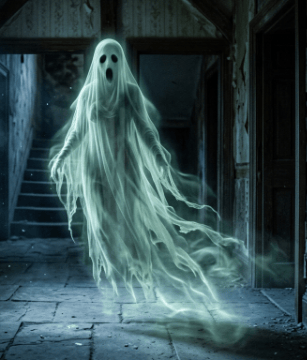
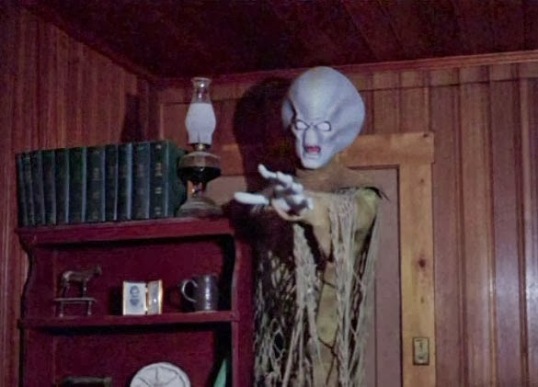
The youtuber didn’t have a title card; so, I made a scary ghost. I hope that it didn’t scare you too much! This is a parody of “It Follows”, the horror movie based on an STD that follows the next person and kills them. I always liked “It Follows” because if you were a child of the 90s, AIDS always the big warning that if you had sex, you would die. I would always ask; “why can’t I just use a condom?” and the response was always the same- “You’d risk your life for sex?” and me being me, I would respond with – “I thought that I already established that?” and they would pearl clutch.
In this short, the protagonist is a virgin who no one wants; so, he befriends the “It Follows” puritanical evil spirit and does ride-alongs with it as it explodes its victims. I thought it was fairly funny. There were some actual stars in the films and it appeared to have an actual budget, which gave me some nepobaby vibes. The films were ok, but I couldn’t understand how the budget would be this big, but then I saw that the channel has 1 million subscribers and 1 million views even for this short; so, I guess people have low standards.
I mean, it’s not horrible- just aggressively mediocre. If you’re a wonder bread as a burger bun kind of guy, this is for you.
Hi, everyone! Tonight, on twitter, I will be hosting one of my favorite films for #MondayMania! Join us for 2021’s Cheer For Your Life!
You can find the movie on Prime and then you can join us on twitter at 9 pm central time! (That’s 10 pm for you folks on the East Coast.) See you then!
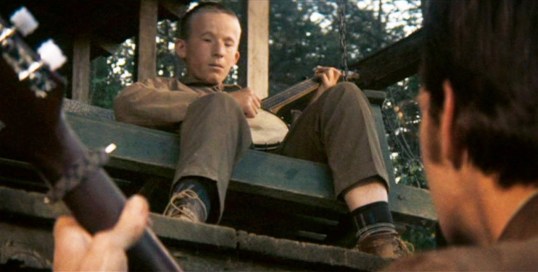
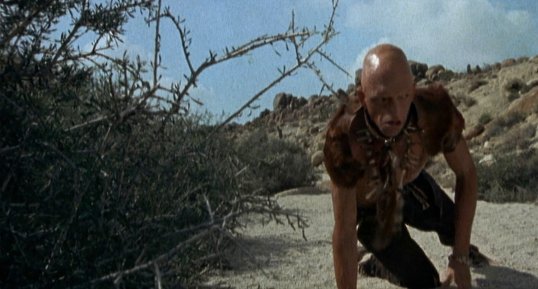
4 Or More Shots From 4 Or More Films is just what it says it is, 4 shots from 4 of our favorite films. As opposed to the reviews and recaps that we usually post, 4 Shots From 4 Films lets the visuals do the talking!
4 Shots From 4 Horror Films
Diliverance (1972,dir by John Boorman, DP: Vilmos Zsigmond)
The Hills Have Eyes (1977, dir by Wes Craven, DP: Eric Saarinen)
Friday the 13th (1980, dir by Sean S. Cunningham, DP: Barry Abrams)
Without Warning (1980, dir by Greydon Clark, DP: Dean Cundey)
As some of our regular readers undoubtedly know, I am involved in hosting a few weekly live tweets on twitter and occasionally Mastodon. I host #FridayNightFlix every Friday, I co-host #ScarySocial on Saturday, and I am one of the five hosts of Mastodon’s #MondayActionMovie! Every week, we get together. We watch a movie. We snark our way through it.
Tonight, for #MondayActionMovie, the film will be 2002’s The Stickup!
If you want to join this watch party, just hop onto Mastodon, pull up The Stickup on YouTube, start the movie at 8 pm et, and use the #MondayActionMovie hashtag!
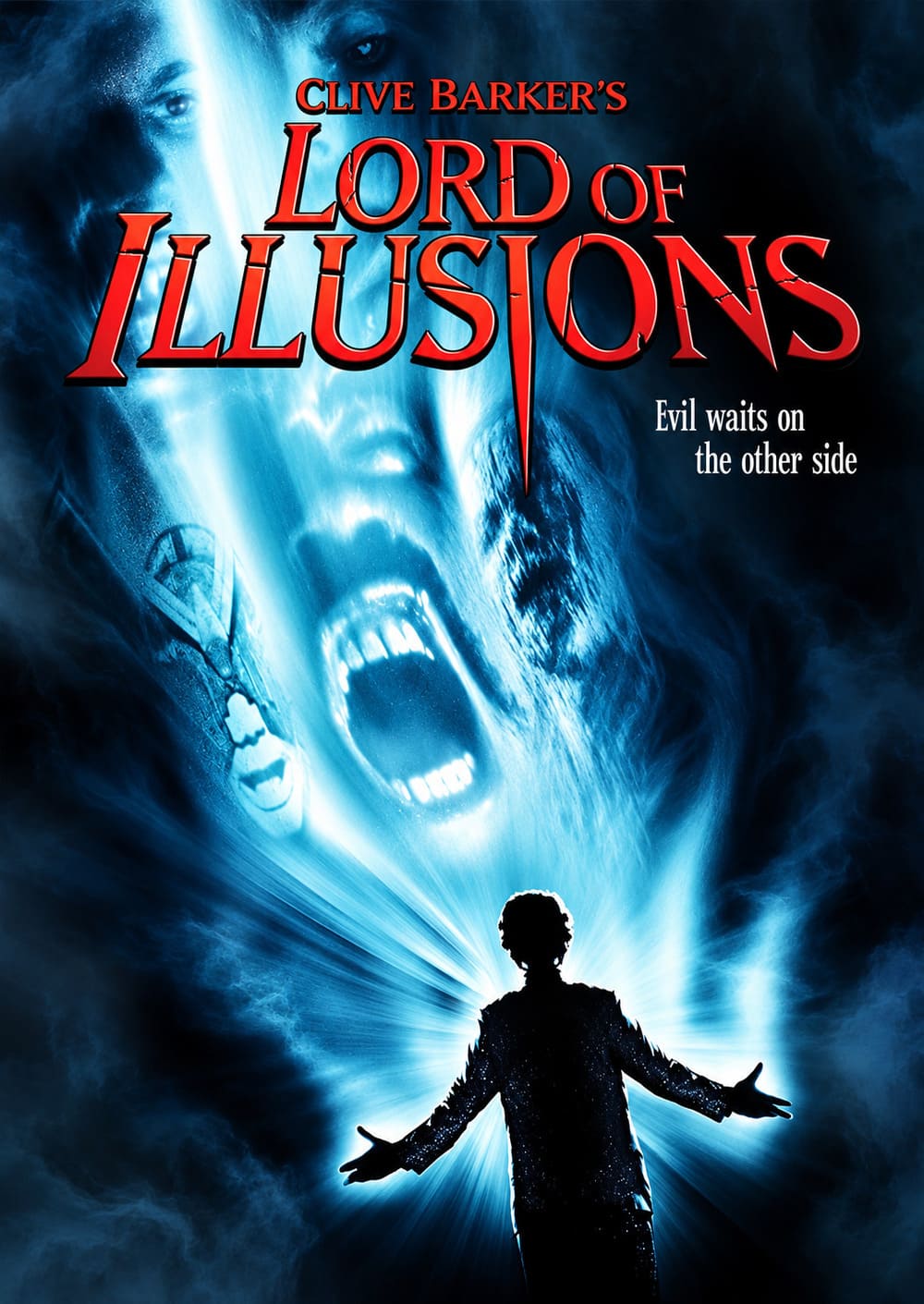
There’s a version of Lord of Illusions that exists only in Clive Barker’s head, and it’s probably a masterpiece. The version that actually made it to theaters in 1995 is something else entirely: a fascinating, frustrating, occasionally brilliant mess of a movie that tries to fuse film noir with cosmic horror and only partially succeeds. Barker wrote and directed the film based on his own 1985 short story The Last Illusion, and while he clearly understands the material better than anyone else could, his direction is surprisingly by the numbers, playing it safe when the source material practically begs for supernatural insanity.
The plot, such as it is, kicks off with a prologue in 1982 at a Mojave Desert cult compound run by a genuinely terrifying figure named William Nix, played with unsettling intensity by Daniel Von Bargen. Nix calls himself “The Puritan,” which is a nice bit of irony given that he’s basically Charles Manson with actual supernatural powers, and he’s about to sacrifice a young girl when a group of his own followers, led by a man named Philip Swann, stage a violent coup. They shoot Nix, screw an iron mask onto his face, and bury him in the desert, assuming that’s the end of it. It’s a strong opening, full of the kind of visceral, apocalyptic imagery that Barker does better than almost anyone, and it sets up a genuinely intriguing mystery about what happened to this cult and why its members turned on their leader.
Thirteen years later, we meet Harry D’Amour, a New York private detective played by Scott Bakula, who has a habit of stumbling into the supernatural the way other noir detectives stumble into dames with secrets. Harry gets pulled into a case in Los Angeles that leads him to Swann, now a world-famous illusionist, and his wife Dorothea, played by Famke Janssen, who seems to know more about the danger lurking around her husband than she’s letting on. When Swann dies on stage in a spectacularly grisly accident involving suspended swords, Harry finds himself drawn deeper into a world where the line between stage magic and genuine sorcery has been blurred past the point of no return. The investigation takes him through a strange subculture of professional magicians, each with their own secrets and rivalries, and gradually reveals that Swann’s death was not an accident but the opening move in a larger, darker game.
What works best about Lord of Illusions is its atmosphere. Barker has always had an eye for the grotesque and the baroque, and here he leans hard into the noir trappings to ground the supernatural stuff in something that feels almost noir-ish in its fatalism. Harry D’Amour is a classic archetype, a rumpled, world-weary guy who’s seen too much but keeps going anyway, and Bakula plays him with a likable, low-key charm that keeps the film from drowning in its own self-seriousness. The Los Angeles setting is used well, too, with the stark contrast between the sun-drenched surface and the darkness lurking beneath feeling very much in line with classic noir like Chinatown or The Long Goodbye. The film’s visual palette is appropriately moody, all shadows and neon and rain-slicked streets, and there are moments where it genuinely feels like it could be a lost noir from the 1940s, just with more blood and occult symbolism.
The thing is, though, Barker’s directing here is quite by the numbers. He knows the material inside and out, obviously, since he wrote the short story and the screenplay, but as a director he plays it safe instead of leaning into the supernatural insanity of the source material. There’s nothing wrong with the film on a technical level, but there’s also nothing that really grabs you by the throat the way Barker’s best work does. It’s competent, it’s professional, and it’s ultimately a little bit forgettable in a way that a Clive Barker movie really shouldn’t be. For a filmmaker whose whole reputation is built on pushing boundaries and going places other horror directors won’t, Lord of Illusions feels oddly restrained, like Barker was holding something back.
And that’s what makes the film so bewildering. Barker definitely knows how to direct a film that matches the over-the-top imagery and narrative of his source material. If his work on Hellraiser is any indication, he’s more than capable of translating his own literary excesses to the screen with style and confidence. Hellraiser is a film that fully commits to its own weirdness, that doesn’t apologize for its cenobites or its flesh-and-blood aesthetics or its genuinely transgressive themes. It’s a movie that knows exactly what it is and leans into it with everything it’s got. So why does Lord of Illusions, which comes from a story that’s every bit as strange and ambitious as The Hellbound Heart, feel so much more pedestrian? It’s not a question of budget or resources, because Lord of Illusions actually had a bigger budget than Hellraiser. It’s not a question of experience, because Barker had already directed one genuinely great film by this point. It’s a question of nerve, and for whatever reason, Barker just doesn’t seem to have the same nerve here that he did with Hellraiser.
Would leaning harder into the weirdness have made the film better? Maybe, maybe not. But here’s the thing: like most of Barker’s stories, Lord of Illusions works best when it goes over the top. Barker’s whole deal as an artist is excess. His best work, whether it’s The Hellbound Heart or Weaveworld or The Great and Secret Show, is unapologetically maximalist, throwing ideas at the wall with reckless abandon and trusting that the sheer force of imagination will carry the reader through. The short story The Last Illusion is no exception. It’s a wild, hallucinatory piece of work, full of reality-bending weirdness that feels like it could have been a genuinely unhinged horror film in the right hands. The movie version sands off a lot of those rough edges in favor of something more conventional, and while that makes the film more accessible, it also makes it less memorable.
The film’s biggest problem, and it’s a substantial one, is its pacing and structure. Barker has always been a writer with more ideas than he knows what to do with, and Lord of Illusions is stuffed to the gills with concepts and imagery that never quite cohere. The theatrical cut, which runs about 109 minutes, is notoriously choppy, jumping from scene to scene with a kind of frantic energy that leaves the audience scrambling to keep up. Characters appear and disappear without much explanation, plot threads are introduced and abandoned, and the whole thing has a rushed, unfinished quality that makes it feel like a much longer film that was hacked down in the editing room. There’s a director’s cut that runs about 121 minutes and restores a lot of the character development and thematic material, and while it doesn’t magically turn the film into a masterpiece, it does make it feel considerably more coherent. If you’re going to watch Lord of Illusions, do yourself a favor and track down the director’s cut. It won’t fix all the film’s problems, but it at least gives you a better sense of what Barker was going for.
The performances are a mixed bag in a way that’s almost charming. Bakula is genuinely good as Harry, bringing a kind of earnest decency to a role that could easily have been a Bogart impression. He’s not the most hard-boiled guy in the world, but that’s part of the point; Harry D’Amour is a detective who keeps finding himself in supernatural situations not because he’s special but because he’s unlucky, and Bakula sells that beautifully. He’s the kind of guy you’d want on your side in a crisis, even if he’s not entirely sure what he’s doing half the time, and that makes him a surprisingly effective audience surrogate for a film this strange.
Famke Janssen, in one of her earliest major roles, is somewhat underused as Dorothea, but she has a presence that makes you wish the film had given her more to do. She’s got the kind of old-Hollywood glamour that fits the noir aesthetic perfectly, and there are hints of a much more interesting character buried in there somewhere. Kevin J. O’Connor as Swann is the weak link; he’s supposed to be a charismatic showman hiding a dark secret, but he mostly comes across as twitchy and unfocused, which undercuts the tragedy of his character. The real standout among the supporting cast is Barry Del Sherman as Butterfield, one of Nix’s acolytes, who brings a genuinely unsettling energy to every scene he’s in. He’s the kind of henchman who seems like he’s enjoying himself a little too much, and that makes him far more memorable than the film’s actual villain.
Then there’s Nix himself. Barker has said that he deliberately made Nix uncharismatic, wanting to subvert the expectation of the magnetic cult leader by making him genuinely pathetic and repellent. The intention, clearly, was to evoke the real-world evil of figures like Jim Jones and Charles Manson, those charismatic monsters whose power came from their ability to bend other people’s wills to their own. It’s an interesting idea in theory, a deliberate rejection of the idea that evil has to be seductive to be dangerous.
But here’s the thing: it doesn’t really work. Nix is meant to be a Jim Jones or Charlie Manson type of evil, a man whose sheer force of personality could convince people to hand over their lives and their sanity, but he comes off as uninspired instead. Von Bargen is a fine actor and he does what he can with the role, but the character as written lacks the magnetic pull that made those real-life figures so terrifying. He’s not a seducer, he’s not a manipulator, he’s just a guy in a mask shouting about being a god. The film tells us he had followers, tells us he was dangerous, but it never really shows us why anyone would have followed him in the first place. And that’s a problem, because if you’re going to build a horror movie around a cult leader, the one thing you absolutely have to nail is the cult leader’s charisma. Nix should be the kind of villain who makes your skin crawl because you can almost understand why people fell under his spell. Instead, he’s just a snarling figurehead.
The film’s climax, where Nix is resurrected and goes on a rampage, is where the movie loses a lot of its goodwill. The special effects, which were probably decent for 1995, have not aged well, and the sequence where Nix buries his followers in the desert via a torrential downpour is more silly than scary. The famous “Origami Man” chase sequence, where Harry is pursued by a creature made of folding paper and a dog made of fire, is similarly unconvincing, looking more like a mid-90s CD-ROM cutscene than anything genuinely threatening. It’s the kind of scene that probably looked great on paper but just doesn’t work in execution, and it ends up undermining the film’s attempts at genuine dread.
And yet, despite all its flaws, I can’t bring myself to dismiss Lord of Illusions. There’s something genuinely compelling about a film that tries this hard to be something different, to blend genres in a way that studio horror almost never does. Barker’s vision, even when it’s undercut by dated effects or its own uneven execution, is always interesting. The film’s central idea, that the difference between a magician and a sorcerer is the difference between someone who entertains and someone who actually traffics with dark forces, is a genuinely good one, and the way it plays out through Swann’s character arc is the film’s strongest thematic thread. Swann, who possesses real power but chooses to use it for fame and fortune, is a more interesting figure than the film sometimes knows what to do with. His decision to hide his abilities behind the veneer of stage magic feels like a commentary on something, maybe on the compromises artists make, maybe on the way we all hide the parts of ourselves that are too dangerous or too strange for polite society.
The first two-thirds of the film, with Harry navigating the strange world of professional magicians and slowly uncovering the truth about Swann and Dorothea’s past, is genuinely engaging. It’s when the film shifts into full-on horror mode that it loses its footing, trading atmosphere for spectacle in a way that feels like a concession to the genre’s demands rather than a natural progression of the story. That’s a shame, because the noir elements are what make Lord of Illusions feel unique. There are plenty of horror films about cults and demons and dark magic, but there aren’t many that approach those subjects through the lens of a hard-boiled detective story, and the tension between those two modes is what gives the film its distinctive flavor.
In the end, Lord of Illusions is entertaining enough for what it is, but it’s hindered by a filmmaker well-known for swinging for the fences who, for some reason, holds himself back here when the source material, one he himself wrote, pretty much begs for it. This isn’t a movie that swings and misses; it’s one that never really swings at all, settling for competent when it could have been fearless.
In this odd 65-minute film from 1983, Michael David Simms stars John “Zack” Zachary.
Zack is a private investigator, though he’s not the hard-drinking, hard-smoking type that you typically expect to see in the movies or on television. Instead, he’s rather mild-mannered and polite. He goes to church every Sunday. Throughout the film, people from his church pop up and try to convince him to start coming on Saturday at well. Zack has to work though. He’s got an important case.
(The only thing that really makes Zack look like a typical television detective is that he has a really nice car. However, that car spends most of this movie “in the shop.” As a result, Zack has to drive a broken-down pink car.)
You would think that the case would have some sort of religious angle, given that this is a faith-based film. That’s certainly what I was expecting and I was kind of looking forward to it. I thought it would be entertaining to watch Zack uncover a cult of atheists and maybe discover that the fire was actually the first sign of the apocalypse. However, it just turns out to be an ordinary case. He’s been hired to investigate whether or not a recent fire in Malibu was an accident or a case of arson. Someone may have committed insurance fraud and Zack is going to help the insurance company by finding out if they did. (The fact that the hero works for an insurance company is a big clue that this movie was made a long time ago.)
Early on, Zack is approached by a young man named Jeremy Logan (Matthew Shaker), who says that he wants to be a private detective and that he he would appreciate the chance to work with Zack. Zack agrees, largely because Jeremy and he go to the same church. Jeremy helps out with the investigation and he also spends a lot of time talking about all of the various church projects that he’s involved with. About halfway through the film, they meet a woman (Stephani Hardy) who needs help and they take on her case without payment because it’s the right thing to do. Luckily, the woman has a clue that helps Jeremy and Zack solve the case of the fire. The solution to the case doesn’t make much sense but it feels kind of inevitable due to the fact that there aren’t that many characters in the film and, therefore, there weren’t that many possible suspects.
This is an example of an attempt to meld faith-based filmmaking with an established genre. It’s not just a religious film. It’s a TV-style mystery! The mystery really isn’t that interesting, though and the solution is a bit unsatisfying, That said, Michael David Simms gives a surprisingly good performance as Zack. I personally have a weakness for low budget films from the 70s and 80s because they were usually shot on location and, as a result, they provide a chance to see what the world used to look like. If nothing else, Zack works as a time capsule.
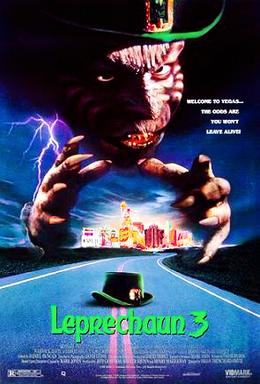
This time, the Leprechaun (Warwick Davis) is in Las Vegas! At the start of the movie, he’s been turned into a statue but that doesn’t last long. This time, his lucky coin is found by a college student named Scott (John Gatins) who has stupidly gambled away all of his tuition money. What I always wonder with these films is why the Leprechaun is so careless with his coins. They’re the only thing that he really cares about but he’s always dropping one and leaving it behind. Scott and Tammy (Lee Armstrong), herself a recent Vegas arrival, are pursued not just by the Leprechaun but also by a host of other greedy humans who all have wishes of their own to make. It’s Vegas and everyone has a game going.
Yesterday, I stated that Leprechaun 2 was the best of the Leprechaun films but Leprechaun 3 is a close runner-up. Leprechaun 3 has the strongest sense of humor of the series and some of the best and most creative kills. Scott starts to turn into a leprechaun himself, complete with a craving for potatoes, which adds something new to the proceedings. Leprechaun 3 may not have as good a lead as Jennifer Aniston and Shevonne Durkin but it does have the great Caroline Williams as a casino employee who makes the mistake of wishing for a younger, more voluptuous figure. Thanks to Warwick Davis and director Brian Trenchard-Smith, this Leprechaun film is mean, humorous, and more fun than it probably should be.
Today, Lis and I continued to rewatch the Twilight movies on Netflix.
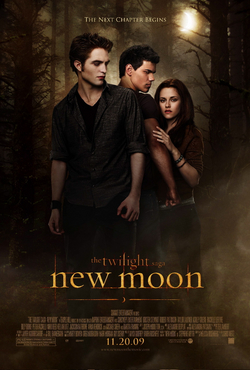
New Moon was the second part of the Twilight Saga. Because people in town are starting to notice that he hasn’t aged in ten years, Carlisle (Peter Facinelli) decides that the Cullens need to move to a new location. Edward explains to Bella that the worst thing a vampire can do is allow humans to discover that they exist. Edward also says that Bella can’t come with the Cullens because it would raise suspicion and it would also put Bella in danger, since even the members of his family are tempted to drink her blood. Bella says, “Change me!” and Edward says not unless they’re married.
The Cullens leave and Bella has a breakdown, and even her father wants to send her back to Florida to live with her mother. Finally, Bella starts hanging out with Jacob (Taylor Lautner), a member of the Quileute Tribe who is also revealed to be a werewolf. Werewolves and vampires hate each other, but the Forks werewolves had arranged a truce with the Cullens where they wouldn’t attack them as long as the Cullens didn’t bite any humans. If Edward had changed Bella, the truce would have been canceled and the werewolves would have had to attack Bella.
When Alice (Ashley Greene) misinterprets a vision of the future and thinks that Bella is dead, Edward leaves wherever it is he’s living and goes to Italy to ask the ruling vampire council to destroy him. Even though Jacob’s in love with her, Bella goes to Italy to try to save Edward’s life.
I remember really liking New Moon when I saw it because I was in a long-distance relationship and I could relate to what Bella was going through. When we rewatched it, I had forgotten how long the movie was and how little actually happens until Bella goes to Italy, which doesn’t even happen until the movie’s nearly over. The other thing I forgot about this one was that they really overdid the vampire makeup on Robert Pattinson at the start of the movie. He was so pale and wearing so much lipstick that everyone should have been able to figure out that he was a vampire just by looking at him.
When this movie came out, everyone was either Team Jacob or Team Edward. I was Team Edward because, again, I was in a long-distance relationship. But rewatching it, I realized that I should have been Team Jacob because he really was nicer to Bella and he wasn’t constantly sulking about everything like Edward. Jacob came with a lot less baggage and he was part of that tribe where you’re apparently not allowed to wear a shirt. No one in the tribe wore a shirt and they all looked like models. They probably all were models. This movie knew what we wanted to see.
I still enjoyed rewatching the movie. The men were all sexy and brooding. Anna Kendrick was funny. Dakota Fanning had red eyes and sent psychic pain waves. Bella said, “Change me,” and Edward looked tortured. It wasn’t as good as I remembered and it probably could have been cut down to 30 minutes without really losing much of the plot but it’s Twilight. If you know, you know.