Review: The Highwaymen (dir. by John Lee Hancock)


“People don’t always know who they are… ’til it’s too late.” — Frank Hamer

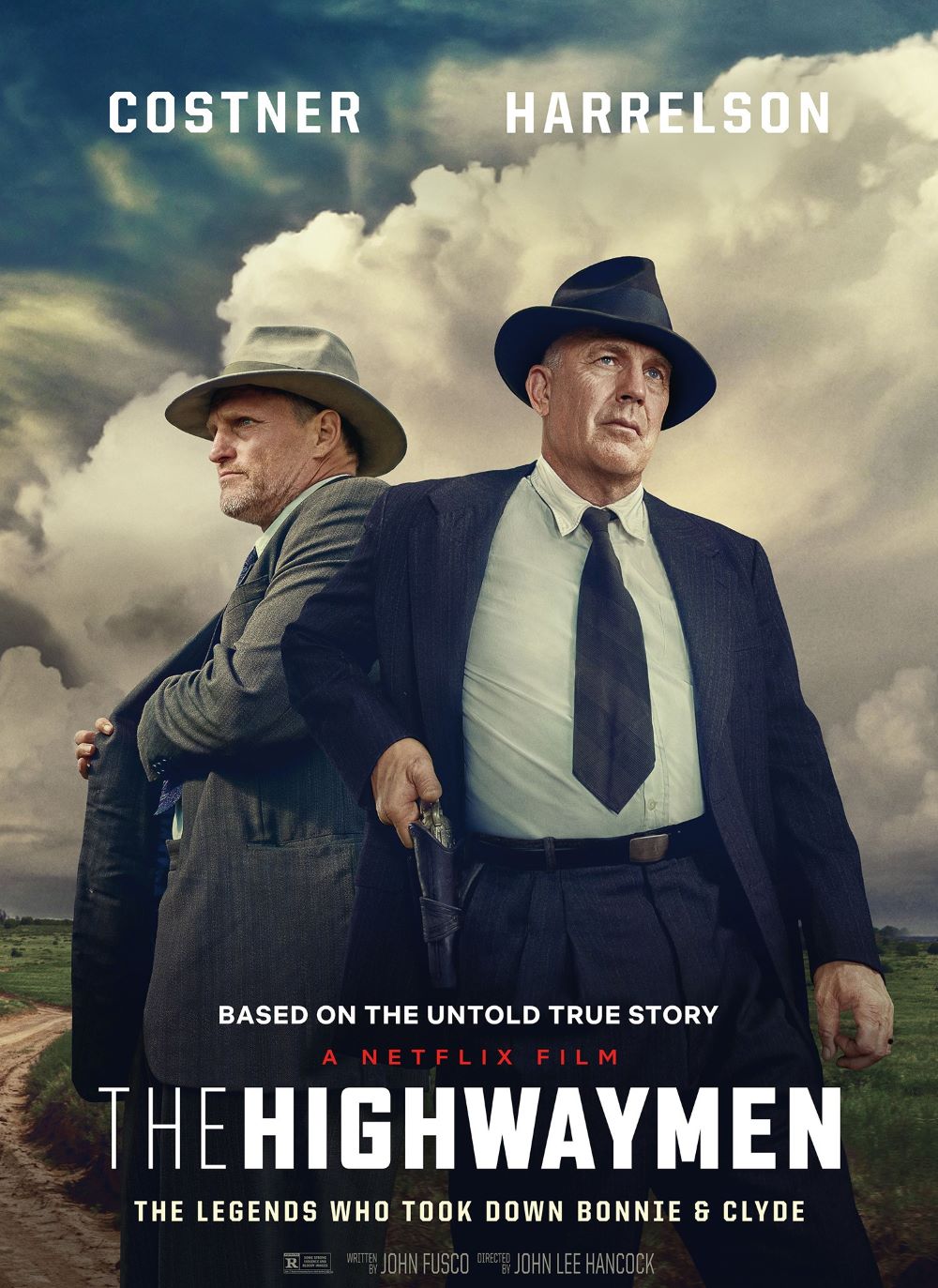
The Highwaymen, as directed by John Lee Hancock, delivers a character-driven, period crime drama that refreshes a story so often mythologized in American pop culture. Instead of glamorizing Bonnie and Clyde, the film spotlights the two former Texas Rangers tasked with ending their crime spree: Frank Hamer (played by Kevin Costner) and Maney Gault (played by Woody Harrelson). Set against the bleak dustbowl landscape of 1934, the film opens with the criminal duo breaking their associates out of Eastham Prison, setting the state of Texas into a panic. In desperation, Governor “Ma” Ferguson authorizes the return of Hamer, a seasoned lawman whose old-school methods have largely been left behind in modern policing.

From the start, The Highwaymen takes its time, inviting viewers into a slower, more contemplative chase rather than the kinetic action often associated with outlaw stories. Hamer, long retired and resistant to rejoining the fight, is persuaded both by the severity of Bonnie and Clyde’s violence and the humiliation his state faces in failing to catch them. Gault, for his part, is recruited despite his own personal struggles, adding a layer of regret and weariness to their partnership. Their pursuit is marked by straightforward detective work—staking out small towns, following trails, and confronting a public that is strangely captivated by the criminals they hunt. The film repeatedly draws attention to the way crowds and the press elevate Bonnie and Clyde, reflecting on an early version of true crime celebrity culture.

The dynamic between Hamer and Gault forms the emotional core of the movie. Their bond is shaped by years of experience, mistakes, and a real sense of being out of place in a society that now doubts their relevance. There’s plenty of banter and friction, but also reflective moments that dig into the costs of life spent in pursuit of justice. Throughout the investigation, the film uses the Texas and Louisiana landscape as a powerful backdrop—the vast, windswept highways underscore the isolation and existential gravity faced by these lawmen. The cinematography favors wide shots and muted colors, giving the chase a feeling of endlessness and melancholy.

Instead of showcasing Bonnie and Clyde as glamorous anti-heroes, the film keeps them at a distance, rarely granting much screen time or dialogue. Violence is handled abruptly and unsentimentally. When it finally arrives, most notably in the climactic ambush, it is portrayed as brutal and inevitable, reminding the viewer that myths are built on blood and public spectacle. The lawmen’s final confrontation results in the infamous shootout, depicted with documentary-like restraint. The aftermath involves a bullet-riddled car towed through throngs of onlookers—an eerie scene that highlights how tragedy becomes spectacle.

One of the film’s greatest strengths is in its portrayal of moral ambiguity. Both Hamer and Gault operate by principles shaped in a different era. Their methods can be rough and unorthodox; they clash with younger law enforcement and the FBI, whose approaches are more bureaucratic, less personal. The film hints at the toll violence and a lifetime in law enforcement has taken on them, including a poignant story from Gault about a tragic accident in his past. These reflections draw out the muted sadness underlying their pursuit, exploring themes of justice, changing times, and what remains after one’s era passes.

Performance-wise, Costner and Harrelson bring authenticity and gravity to their roles. Their chemistry is quiet and real, developed largely through understated scenes—silent drives, awkward motel breakfasts, and occasional arguments broken up by mutual respect. Supporting roles, like Kathy Bates’s steely governor and John Carroll Lynch’s earnest corrections chief, flesh out the historical setting and institutional pressures.

The film doesn’t always dig as deep as it could into the complexities of Depression-era justice, but its restraint and focus on character make up for that. Rather than indulging in nostalgia or sensationalizing violence, it keeps its lens on the human cost—the consequences for the victims, the weariness of the men trying to restore order, and the strange cultural fascination with outlaws. If you’re looking for a grounded historical drama that trades fast action for thoughtful pacing, and puts working-class grit front and center, The Highwaymen is worth the ride.

Richard Jewell (2019, directed by Clint Eastwood)


In 1996, a security guard named Richard Jewell should have been proclaimed a hero.  He spotted an abandoned backpack in Centennial Park during the Atlanta Summer Olympics.  Thinking that it could be a bomb, Jewell, insisting the proper security protocols be followed even though there was a concert going on, moved as many people as he could away from the backpack before it exploded.  Two people died as a result of the explosion and 111 were injured.  The number would have been much more catastrophic if not for Jewell’s actions.

Jewell saved lives but he soon found himself the number one suspect.  Overweight, a little bit nerdy, Southern accented and possessing a spotty work history, Richard Jewell did not fit the popular conception of a hero.  After the FBI leaked that Jewell was their number one suspect, the press literally reported as if Jewell’s arrest was imminent.  I’m old enough to remember the way that, for a month, the nightly news seemed like the counting the days until Jewell was charged.  Jewell, however, was never arrested and eventually, he sued several media outlets for libel.  After anti-abortion fanatic Eric Rudolph emerged as the number one suspect in the bombing, the three FBI agents who attempted to railroad Jewell were disciplined.  One was suspended for five days without pay, which seems a light punishment for ruining a man’s life.

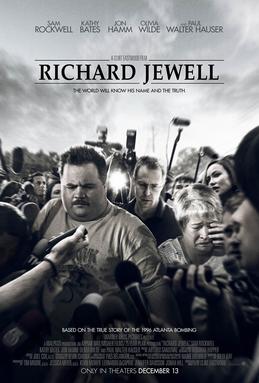
Clint Eastwood’s Richard Jewell was about the persecution of the title character, with Paul Walter Hauser playing Jewell, Kathy Bates playing his mother, Jon Hamm playing the arrogant FBI agent, Olivia Wilde playing the unethical journalist who first reported that Jewell was a suspect, and Sam Rockwell playing Jewell’s attorney.  When Richard Jewell was released in 2019, there was a lot of debate about the way it presented both the media and the FBI.  This was during the first Trump presidency and many critics felt that it was not the right time for a film about an irresponsible reporter and a corrupt FBI agent.  But Eastwood’s film isn’t about the reporter or the FBI.  Instead, like many of his films, it’s about a loner who does the right thing, refuses to compromise, and suffers for it.  If the FBI and the media didn’t want to be presented as being villains in a movie about Richard Jewell, they should have thought twice before announcing to the the world that they thought he was a murderer.

Because of the controversy, Richard Jewell is one of Eastwood’s unfairly overlooked films.  Along with directing in his usual straightforward manner, Eastwood gets a great performance out of Paul Walter Hauser and reminds us that not every hero looks like the Man With No Name.  Even more importantly, Eastwood pays tribute to a man who deserved better than he was given by the world.  Richard Jewell died 12 years before the film that was named after him was released.  A lot of people wanted to sweep what happened to Richard Jewell under the rug.  Eastwood, in one of the best of his later films, refused to let that happen.

Paul Walter Hauser and Clint Eastwood

Dick Tracy (1990, directed by Warren Beatty)


The year is 1937 and “Big Boy” Caprice (Al Pacino) and his gang of flamboyant and often disfigured criminals are trying to take over the rackets.  Standing in their way is ace detective Dick Tracy (Warren Beatty), the yellow trench-wearing defender of the law.  Tracy is not only looking to take down Caprice but he and Tess Trueheart (Glenne Headly) are currently the guardians of The Kid (Charlie Korsmo), a young street kid who witnessed one of Caprice’s worst crimes.  Tracy’s investigation leads him through a rogue’s gallery of criminals and also involves Breathless Mahoney (Madonna), who has witnessed many of Caprice’s crimes but who also wants to steal Tracy’s heart from Tess.

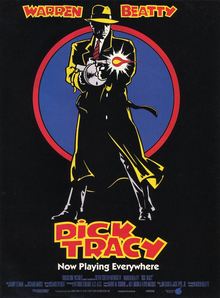
Based on the long-running comic strip, Dick Tracy was a labor of love on the part of Warren Beatty.  Not only starring but also directing, Tracy made a film that stayed true to the look and the feel of the original comic strip (the film’s visual palette was limited to just seven colors) while also including an all-star cast the featured Madonna is an attempt to appeal to a younger audience who had probably never even heard of Dick Tracy.  When Dick Tracy was released, the majority of the publicity centered around Madonna’s participation in the film and the fact that she was dating Beatty at the time.  Madonna is actually probably the weakest element of the film.  More of a personality than an actress, Madonna is always Madonna no matter who she is playing and, in a film full of famous actors managing to be convincing as the members of Dick Tracy’s rogue gallery, Madonna feels out of place.  Michelle Pfeiffer would have been the ideal Breathless Mahoney.

It doesn’t matter, though, because the rest of the film is great.  It’s one of the few comic book films of the 90s to really hold up, mostly due to Beatty’s obvious enthusiasm for the material and the performances of everyone in the supporting cast who was not named Madonna.  Al Pacino received an Oscar nomination for playing Big Boy Caprice but equally good are Dustin Hoffman as Mumbles, William Forsythe as Flaptop, R.G. Armstong as Pruneface, and Henry Silva as Influence.  These actors all create memorable characters, even while acting under a ton of very convincing makeup.  I also liked Dick Van Dyke as the corrupt District Attorney.  Beatty knew audience would be shocked to see Van Dyke not playing a hero and both he and Van Dyke play it up for all its worth.  Beatty embraces the comic strip’s campiness while still remaining respectful to its style and the combination of Danny Elfman’s music and Stephen Sondheim’s songs provide just the right score for Dick Tracy’s adventures.  The film can be surprisingly violent at times but the same was often said about the Dick Tracy comic strip.  It wasn’t two-way wrist radios and trips to the Moon.  Dick Tracy also dealt with the most ruthless and bloodthirsty gangsters his city had to offer.

Dick Tracy was considered to be a box office disappointment when it was originally released.  (Again, you have to wonder if Beatty overestimated how many fans Dick Tracy had in 1990.)  But it holds up well and is still more entertaining than several of the more recent comic book movies that have been released.

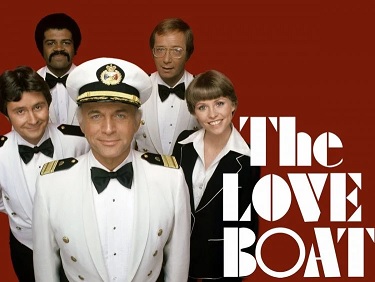
Retro Television Reviews: The Love Boat 1.13 “Too Hot to Handle / Family Reunion / Cinderella Story”


Welcome to Retro Television Reviews, a feature where we review some of our favorite and least favorite shows of the past!  On Wednesdays, I will be reviewing the original Love Boat, which aired on ABC from 1977 to 1986!  The series can be streamed on Paramount Plus!

It’s Love!

Episode 1.13 “Too Hot to Handle / Family Reunion / Cinderella Story”

(Dir by James Sheldon and Richard Kinon, originally aired on January 7th, 1978)

It’s time for another cruise with three separate stories!

Newlyweds George (John Rubinstein) and Sally Allison (a youngish Kathy Bates) board the Pacific Princess, hoping to enjoy the ideal honeymoon.  Instead, it turns out to be one disaster after another.  Sally gets sunburned.  George gets poison ivy.  Having gotten off the boat in Mexico, Sally returns to discover a totally different couple staying in what she thinks is her cabin.  Uh-oh.  It turns out that Sally accidentally got on the Sun Princess and the Pacific Princess has already set sail without her!  This was a pretty simple storyline and, if anything, it mostly seemed to exist so that the show’s writers could see how many bad things that they could do to one perfectly innocent couple.  But John Rubinstein and Katy Bates are so likable as George and Sally that the story works.  You can’t help but hope the cruise gets a little better for them.  Kathy Bates was 29 when she appeared on The Love Boat and there’s nothing about her performance that would necessarily make you say, “Hey, that’s a future Oscar winner!”  But still, both she and John Rubinstein do a good job with the material that they’ve been given.

Meanwhile, Tommy (Bob Crane) is a middle-aged man who has been hired to work as a steward on the ship.  Captain Stubing takes an immediate dislike to the irresponsible, womanizing Tommy.  When he discovers that Tommy has been drinking on the job, Stubing comes close to firing him.  However, Tommy confesses that he’s drinking because he’s just discovered that the daughter who he abandoned years ago is on the cruise.  Wendy (Dori Brenner) has always believed that her father died in a shipwreck and she hopes that Stubing might know something about the wreck.  Seeking to help out Tommy, Stubing tells a lot of lies about Wendy’s “deceased” father but Tommy finally breaks down and confesses the truth.  At first, Wendy rejects Tommy but, with the help of her understanding husband (Robert Hays), she eventually forgives her father.

This storyline hinges on a huge coincidence.  What are the chances that Tommy and Wendy would just happen to end up on the same cruise together and that Tommy would be assigned to serve as Wendy’s steward?  On top of that, what are the chances that Wendy would just happen to have a picture of her mother sitting out where Tommy could see it?  It’s all fairly predictable but, if you’ve seen Auto Focus, it’s interesting to watch Crane’s performance here.  This episode aired just a few months before Crane was murdered in Arizona and it’s easy to see the charismatic but irresponsible and self-destructive Tommy as being a reflection of who Bob Crane himself had reportedly become at the time of his death.  Tommy is a character who lives with a lot of emotional pain and regret and Crane is so surprisingly effective in the role that it’s hard not to wonder if perhaps, on some level, he related to Tommy.

Finally, in the show’s final storyline, Bill Edwards (Bruce Solomon) is a supermarket manager who has booked a cruise with his wife, Doreen (Judy Luciano).  When a wealthy advertising exec cancels his trip, Julie and Gopher decide to let Bill and Doreen stay in the man’s luxury cabin.  This, of course, leads to Stubing mistaking Bill for the ad exec!  Suddenly, Bill and Doreen are sitting at the captain’s table and competing for an advertising contract!  Eventually, the truth comes out but business tycoon Greg Beatty (David White) is so impressed with Bill’s ideas that he arranges for Bill to get a job with an actual advertising company.  Mad Men it’s not!  However, it’s still a charming little story, largely due to the performances of Bruce Solomon and Judy Luciano.

If last week’s episode was a “lesser Love Boat,” this week’s episode show just how much fun The Love Boat could be.  Yes, all of the stories are fairly predictable but the guest stars all perform their roles with a lot of energy.  Bob Crane brings a poignant sense of regret to his performance as Tommy while Bruce Solomon and Judy Luciano are exactly the type of attrative couple that you would want to meet on a cruise.  And, as I said already, it’s impossible not to like John Rubinstein and Kathy Bates as the newlyweds who just can’t catch a break.  The regular cast is used sparingly but effectively in this episode.  Fred Grandy gets a nice scene where he has to explain to John Rubinstein that Kathy Bates got on the wrong boat.  Bernie Kopell plays Doc Bricker as being an agent of chaos.  It’s a fun episode and what more can you ask for?

The Late Shift (1996, directed by Betty Thomas)


Want to relive the public battle over whether David Letterman or Jay Leno would be Johnny Carson’s successor?

Then The Late Shift is the film for you!

Though it pales when compared to the subsequent battle between Leno and Conan O’Brien, the competition between Letterman and Leno to succeed Johnny Carson as host of The Tonight Show riveted America in the early 90s.  Most media critics (and, reportedly, Carson himself) felt that Letterman had not only earned the right to host The Tonight Show but that he represented the future of late night comedy.  The NBC network execs, however, preferred Leno, who had served for years as Carson’s permanent guest host and who was viewed as being more of a team player than Letterman.  The end result, of course, was that Leno got The Tonight Show, Letterman switched networks, and for years the country was separated into Leno people and Letterman people.  (Letterman got the critical acclaim but Leno got the ratings.)

The Late Shift opens with the unexpected retirement of Johnny Carson (played, as an enigma, by Rich Little) and then follows Letterman (John Michael Higgins) and Leno (Daniel Roebuck) as they maneuver their way to become his successor.  Unfortunately, neither Higgins nor Roebuck are particularly believable in their roles, though Roebuck does get to wear a truly impressive fake chin.  Far more impressive are Kathy Bates as Leno’s manager and Treat Williams as Mike Ovitz.  Bates rips through her scenes, destroying anyone standing in the way of Jay Leno while Williams is cool, calm, and menacing as the agent who was, at the time the film was made, the most powerful man in Hollywood.

The main problem with The Late Shift is that, when it went into production, Letterman was ahead in the ratings and the film is clearly sympathetic to him.  Leno comes across as a weasel while Letterman is portrayed as being neurotic but brilliant.  But, shortly before the film made its debut on HBO, Leno landed the first interview with Hugh Grant after the latter’s arrest with a prostitute.  Leno not only won that night in the ratings but he won every subsequent night and soon, Letterman was the one who was forever stuck in second place.  A title card was added to the end of  The Late Shift, admitting that Leno was now winning the war for the late night.  Since every minute of the film was designed to make Letterman appear to the winner, it’s hard not to be let down by the ending.

Despite the disappointing ending, The Late Shift is an entertaining look at network politics.  (Seinfeld fans will note that, after playing a version of Warren Littlefield during the show’s 4th season, Bob Balaban was cast as the real thing in The Late Shift.)  After watching the movie, be sure to read the Bill Carter book on which it’s based.

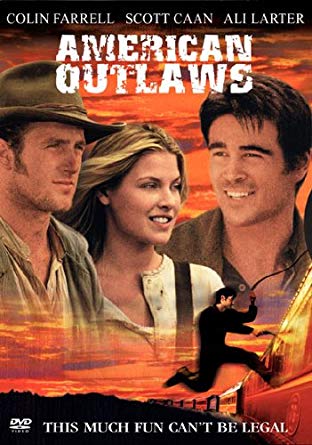
American Outlaws (2001, directed by Les Mayfield)


Returning to their hometown in Missouri in the days following the end of the Civil War, former Confederate guerrillas Jesse James (Colin Farrell) and Cole Younger (Scott Caan) are disgusted to discover that the railroad companies are trying to take over everyone’s land.  After Cole’s cousin and Jesse’s mother are killed by railway thugs, Jesse and Cole take revenge by forming the James/Younger Gang and robbing banks.  Soon, the members of the James/Younger Gang become folk heroes and the railroad company resorts to bringing in Alan Pinkerton (Timothy Dalton) to track the outlaws down.  However, even as they try to remain out of the clutches of Pinkerton’s men, there is growing dissension in the ranks of the James/Younger Gang.  Cole feels like Jesse doesn’t respect his opinions while Jesse is falling in love with Zee (Ali Larter) and it’s hard to court a girl when you’re constantly having to hide out from Alan Pinkertson.  Meanwhile, the other members of the gang wonder why their wanted posters never look as good as Jesse’s and Cole’s.

There have been many movies made about the James/Younger Gang and this is certainly one of them.  What sets this telling apart from other versions of this familiar tale is that American Outlaws is the feel-good version of the story.  Bob and Charley Ford are nowhere to be seen in American Outlaws and Jesse James doesn’t get shot in the back while straightening a picture.  This approach misses the point of what makes the legend of Jesse James so memorable in the first place.  Jesse James was the greatest outlaw in the west but he was ultimately taken down by a coward who shot him in the back.  Take out that part of the story and the story loses all of its power.  Jesse James just becomes another outlaw.

In real life, the James/Younger Gang were reportedly a rough group of outlaws who didn’t hesitate when it came to killing.  In American Outlaws, they come across more like a boy band with a side hustle robbing banks.  Jesse is the soulful leader, Cole is the rebel, and the other members of the gang are the interchangeable backup vocalists.  There’s been many good and even great films made about the James/Younger Game.  American Outlaws is not one of them.  For a good movie about the life and times of Jesse James and his associates, I would suggest checking out Walter Hill’s The Long Riders or Andrew Dominik’s The Assassination of Jesse James by the Coward Robert Ford.

The North Texas Film Critics Association Selects The Irishman As The Best of 2019!


The North Texas Film Critics Association announced their picks for the best of 2019 earlier today.  Speaking as a North Texas film critic, I’m a bit annoyed that I wasn’t consulted but oh well!  (To quote King of the Hill, “North Texas?  More like South Oklahoma!”)  Here are their winners:

BEST FILM

Winner: THE IRISHMAN

Runners-up: 1917; PARASITE; THE FAREWELL; MARRIAGE STORY; JOJO RABBIT; THE PEANUT BUTTER FALCON; A BEAUTIFUL DAY IN THE NEIGHBORHOOD; ONCE UPON A TIME…IN HOLLYWOOD; FORD V FERRARI; JOKER

BEST ACTOR

Winner: Joaquin Phoenix, JOKER

Runners-up: Robert De Niro, THE IRISHMAN; Adam Driver, MARRIAGE STORY; Adam Sandler, UNCUT GEMS and Leonardo DiCaprio, ONCE UPON A TIME…IN HOLLYWOOD

BEST ACTRESS

Winner: Charlize Theron, BOMBSHELL

Runners-up: Scarlett Johansson, MARRIAGE STORY; Renée Zellweger, JUDY; Awkwafina, THE FAREWELL and Lupita Nyong’o, US

BEST SUPPORTING ACTOR

Winner: Tom Hanks, A BEAUTIFUL DAY IN THE NEIGHBORHOOD

Runners-up: Joe Pesci, THE IRISHMAN; Brad Pitt, ONCE UPON A TIME…IN HOLLYWOOD; Al Pacino, THE IRISHMAN and Song Kang-Ho, PARASITE

BEST SUPPORTING ACTRESS

Winner: Zhao Shuzhen, THE FAREWELL

Runners-up: Laura Dern, MARRIAGE STORY; Scarlett Johansson, JOJO RABBIT; Kathy Bates, RICHARD JEWELL and Annette Bening, THE REPORT

BEST DIRECTOR

Winner: Sam Mendes, 1917

Runners-up: Martin Scorsese, THE IRISHMAN; Quentin Tarantino, ONCE UPON A TIME…IN HOLLYWOOD; Noah Baumbach, MARRIAGE STORY and Lulu Wang, THE FAREWELL

BEST FOREIGN LANGUAGE FILM

Winner: PARASITE (South Korea)

Runners-up: PAIN AND GLORY (Spain) and LES MISÉRABLES (France)

BEST DOCUMENTARY

Winner: APOLLO 11

Runners-up: AMERICAN FACTORY; ONE CHILD NATION; DAVID CROSBY: REMEMBER MY NAME and ROLLING THUNDER REVUE: A BOB DYLAN STORY

BEST ANIMATED FILM

Winner: TOY STORY 4

Runners-up: ABOMINABLE and HOW TO TRAIN YOUR DRAGON: THE HIDDEN WORLD

BEST CINEMATOGRAPHY

Winner: Roger Deakins, 1917,

Runner-ups: Jarin Blaschke, THE LIGHTHOUSE; Rodrigo Prieto, THE IRISHMAN; Hoyte Van Hoytema, AD ASTRA; Robert Richardson, ONCE UPON A TIME…IN HOLLYWOOD and Phedon Papamichael, FORD V FERRARI

BEST NEWCOMER

Winner: Roman Griffin Davis was awarded Best Newcomer for JOJO RABBIT

GARY MURRAY AWARD (Best Ensemble)

Winner: KNIVES OUT

Here Are The 2019 Nominations of the Detroit Film Critics Society!


Earlier on Friday, the Detroit Film Critics Society released their nominations for the best of 2019!

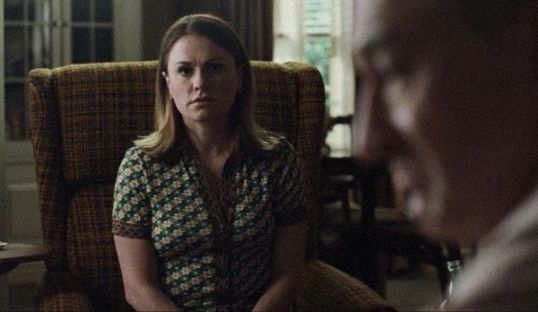
Now, back in 2018, the DFCS honored some great films that were overlooked by the Academy, films like Eighth Grade, A Quiet Place, and First Reformed.  I mean, I really, really loved the 2018 DFCS awards.  And you know what?  I’m pretty happy with what they came up with for 2019 as well!  I especially like the nomination for Anna Paquin in The Irishman.  With all the overblown controversy about how many lines she spoke in the film, it is often overlooked that she gave a great performance and, with just the power of her withering glare, pretty much transformed Peggy into the conscience of the film.

Here are the DFCS nominees for the best of 2019!  The winners will be announced on December 9th!

BEST PICTURE
The Irishman
Jojo Rabbit
Marriage Story
Once Upon a Time… in Hollywood
Parasite

BEST DIRECTOR
Noah Baumbach – Marriage Story
Bong Joon-ho – Parasite
Martin Scorsese – The Irishman
Quentin Tarantino – Once Upon a Time… in Hollywood
Taika Waititi – Jojo Rabbit

BEST ACTRESS
Scarlett Johansson – Marriage Story
Julianne Moore – Gloria Bell
Lupita Nyong’o – Us
Charlize Theron – Bombshell
Renee Zellweger – Judy

BEST ACTOR
Robert De Niro – The Irishman
Adam Driver – Marriage Story
Robert Pattinson – The Lighthouse
Joaquin Phoenix – Joker
Adam Sandler – Uncut Gems

SUPPORTING ACTOR
Willem Dafoe – The Lighthouse
Tom Hanks – A Beautiful Day in the Neighborhood
Joe Pesci – The Irishman
Brad Pitt – Once Upon a Time… in Hollywood
Sam Rockwell – Richard Jewell
Wesley Snipes – Dolemite Is My Name

SUPPORTING ACTRESS
Kathy Bates – Richard Jewell
Laura Dern – Marriage Story
Scarlett Johansson – Jojo Rabbit
Anna Paquin – The Irishman
Florence Pugh – Little Women

BEST SCREENPLAY
The Irishman
The Lighthouse
Marriage Story
Once Upon a Time… in Hollywood
Parasite

BEST ANIMATED FILM
Frozen II
How to Train Your Dragon: The Hidden World
I Lost My Body
Klaus
Toy Story 4

BEST USE OF MUSIC
1917
Once Upon a Time… in Hollywood
Rocketman
Uncut Gems
Wild Rose

BEST ENSEMBLE
Dolemite Is My Name
The Farewell
The Irishman
Once Upon a Time… in Hollywood
Parasite

BEST DOCUMENTARY
Amazing Grace
Apollo 11
Horror Noire: A History of Black Horror
Knocking Down the House
Rolling Thunder Review: A Bob Dylan Story by Martin Scorsese

BREAKTHROUGH
Ana de Armas – actress (Knives Out, The Informer, Yesterday)
Jessie Buckley – actress (Wild Rose, Judy)
Kaitlyn Dever – actress (Booksmart, Them That Follow)
Aisling Franciosi – actress (The Nightingale)
Paul Walter Hauser – actor (Richard Jewell)
Florence Pugh – actress (Fighting with My Family, Midsommar, Little Women)
Lulu Wang – director (The Farewell)
Olivia Wilde – director (Booksmart)

The National Board of Review Selects The Irishman and Adam Sandler


The National Board of Review, which is generally considered to be the first major precursors of the Awards Season, announced their picks for the best of 2019 earlier today and it was a good day for both The Irishman and Adam Sandler.

I haven’t seen Uncut Gems yet but, from a historical point of view, I’d love to see Adam Sandler pick up an Oscar nomination because that would seriously be the plot twist that, just a few months ago, no one saw coming.

Here are the National Board of Review’s selections!

  • Best Film:  THE IRISHMAN
  • Best Director:  Quentin Tarantino, ONCE UPON A TIME…IN HOLLYWOOD
  • Best Actor:  Adam Sandler, UNCUT GEMS
  • Best Actress: Renée Zellweger, JUDY
  • Best Supporting Actor: Brad Pitt, ONCE UPON A TIME…IN HOLLYWOOD
  • Best Supporting Actress:  Kathy Bates, RICHARD JEWELL
  • Best Original Screenplay:  Josh Safdie, Benny Safdie, Ronald Bronstein, UNCUT GEMS
  • Best Adapted Screenplay:  Steven Zaillian, THE IRISHMAN
  • Breakthrough Performance: Paul Walter Hauser, RICHARD JEWELL
  • Best Directorial Debut:  Melina Matsoukas, QUEEN & SLIM
  • Best Animated Feature:  HOW TO TRAIN YOUR DRAGON: THE HIDDEN WORLD
  • Best Foreign Language Film: PARASITE
  • Best Documentary:  MAIDEN
  • Best Ensemble:  KNIVES OUT
  • Outstanding Achievement in Cinematography: Roger Deakins, 1917
  • NBR Icon Award: Martin Scorsese, Robert De Niro, Al Pacino
  • NBR Freedom of Expression Award:  FOR SAMA
  • NBR Freedom of Expression Award:  JUST MERCY

Top Films (in alphabetical order)

  • 1917
  • Dolemite is My Name
  • Ford v Ferrari
  • Jojo Rabbit
  • Knives Out
  • Marriage Story
  • Once Upon a Time…in Hollywood
  • Richard Jewell
  • Uncut Gems
  • Waves

Top 5 Foreign Language Films (in alphabetical order)

  • Atlantics
  • Invisible Life
  • Pain and Glory
  • Portrait of a Lady on Fire
  • Transit

Top 5 Documentaries (in alphabetical order)

  • American Factory
  • Apollo 11
  • The Black Godfather
  • Rolling Thunder Revue: A Bob Dylan Story by Martin Scorsese
  • Wrestle

Top 10 Independent Films (in alphabetical order)

  • The Farewell
  • Give Me Liberty
  • A Hidden Life
  • Judy
  • The Last Black Man in San Francisco
  • Midsommar
  • The Nightingale
  • The Peanut Butter Falcon
  • The Souvenir
  • Wild Rose

Lisa Marie’s Oscar Predictions For November


Well, here we are!

We’re on the verge of the official start of Oscar season.  The Spirit Nominations have been announced.  The National Board of Review will be announcing their picks on December 3rd (I believe).  In just about a week from now, we’re going to be flooded by hundreds of different guilds and critics groups handing out awards and it will be a struggle to keep up.  With so many strong contenders this year, it’ll be interesting to see who actually emerges with the momentum.

(For instance, I don’t think anyone really took Mad Max: Fury Road seriously as an Oscar contender until it started sweeping all the critics groups in December.  And then we were all like, “Well, of course it’s going to be nominated for best picture….”)

With all that in mind, I’m going to go out on a limb with a few of my predictions below.  I mean, why not?  At this point, anything could happen.

To see how my thinking has evolved over time, be sure to check out my predictions for January, February, March, April, May, June, July, August, September, and October!

Without further ado, here are my predictions for November:

Best Picture

1917

Bombshell

The Irishman

Joker

Little Women

Marriage Story

Once Upon A Time In Hollywood

Parasite

Richard Jewell

Uncut Gems

Best Director

Noah Baumbach for Marriage Story

Joon-Ho Bong for Parasite

Clint Eastwood for Richard Jewell

Jay Roach for Bombshell

Martin Scorsese for The Irishman

Best Actor

Paul Walter Hauser in Richard Jewell

Eddie Murphy in Dolemite is My Name

Joaquin Phoenix in Joker

Jonathan Pryce in The Two Popes

Adam Sandler in Uncut Gems

Best Actress

Scarlett Johansson in Marriage Story

Saoirse Ronan in Little Women

Charlize Theron in Bombshell

Alfre Woodard in Clemency

Renee Zellweger in Judy

Best Supporting Actor

Jamie Foxx in Just Mercy

Anthony Hopkins in The Two Popes

Al Pacino in The Irishman

Joe Pesci in The Irishman

Brad Pitt in Once Upon A Time In Hollywood

Best Supporting Actress

Kathy Bates in Richard Jewell

Jennifer Lopez in Hustlers

Thomasin McKenzie in JoJo Rabbit

Margot Robbie in Bombshell

Zhao Shuzhen in The Farewell