Icarus File No. 33: A Chorus Line (dir by Richard Attenborough)


A Chorus Line always leaves me feeling angry.

Now, I should make clear that I’m talking about the 1985 film adaptation and not the show that ran for 6,137 performances on Broadway.  The original show was a tribute to the so-called Broadway gypsies, the dancers who went from show to show and performed anonymously behind the star.  It was a portrait of both the veteran performers and the young up-and-comers who still dreamed of someday moving out of the chorus and becoming stars on their own.  When it opened in 1975, it was considered to be groundbreaking in its frankness about things like sexuality and aging.  It featured heartbreaking monologues and, even more importantly, amazing songs.  The show was a true tribute to people who lived to be on stage.

The movie, on the other hand, is about a jerk of a director named Zack (Michael Douglas) and his ex-girlfriend, a rather self-absorbed dancer named Cassie (Alyson Reed).

My main issue with the film can be seen right at the start.  We watch as a large group of dancers are put through a strenuous audition process.  Everyone is working hard, trying to make an impression on Zack in the little time that they have.  Zack sits in the darkness of the theater, a malevolent presence with a sharp, cigarette-shaped voice.  Most of the dancers will only know him as the pitiless voice that dismisses them from the audition.  We watch as everyone pushes themselves.  The older dancers try to ignore the aches and pain that come with age.  The younger dancers are desperate to finally get their big break.  It’s an exciting sequence, one that shows just how much hard work goes into even getting through the auditions to be a finalist for a part in the chorus.

The only dancer who isn’t there is Cassie.  Cassie has just flown into New York.  She’s stuck in traffic.  She doesn’t arrive until towards the end of the initial eliminations.  She is greeted by the assistant choreographer, Larry (Terrence Mann, who gives one of the better performances in the film).  At first, Zack refuses to allow Cassie to audition.  Cassie says she needs the job.  Zack replies that she’s too good to just be a member of the Chorus Line.

Now, actually, Zack is right about one thing.  Cassie should not be allowed to audition.  But it’s not because she’s too good to be in the chorus.  She shouldn’t be allowed to audition because she didn’t show up on time!  She’s showed up late!  There are sixteen finalists and only 8 spots available.  The other finalists showed up on time and have spent the entire day dancing and proving themselves.  They’ve worked hard for their spot.  They fought for the opportunity.  Cassie just shows up late and basically acts as if she’s entitled to take away one of their spots.

We’re continually told that Cassie is special but we don’t really see any evidence of it.  A lot of that is because the film was rather stodgily directed by Richard Attenborough, who stages each scene in a way that makes everyone — including Cassie — seem rather bland.  One wishes the film could have been directed by a Bob Fosse or a Stanley Donen or a Vincente Minnelli or even a Rob Marshall.  All four of those director knew (or, in Marshall’s case, know) how to shoot a dance number so that the dancer’s personality and skill comes through.  Under Attenborough’s direction, everyone comes across as being vaguely generic.  Indeed, Attenborough focuses the film so much on Zack and Cassie’s relationship that the other performers get pushed to the side.  Some of the show’s best songs are either not featured or just occur in the background.  Attenborough’s film takes a show that was meant to be a celebration of an ensemble and instead turns it into a star vehicle.

Both the film and the show end with a rather heart-breaking scene in which 8 dancers are told to step forward before Zack thanks them for their time and sends them home.  In the show, it’s reflection of life on Broadway.  The director picks who he thinks is best for the show.  Sometimes, that means that a likable or talented actor is still not cast.  In the film, it feels cruel because we notice that Zack sent home 8 dancers who showed up on time and worked hard but still made room for Cassie, who didn’t.  (Notably, in the show, Cassie and Zach had the same relationship as in the film but Cassie also showed up on time for the audition.)  Now, I will say that Zach casting someone with whom he had a personal relationship over someone who he didn’t is probably realistic but it’s still annoying.

It’s debatable whether A Chorus Line could have ever been made into an effective film.  That said, picking Richard Attenborough to direct and an apparently disinterested Michael Douglas to star certainly didn’t help matters.

Previous Icarus Files:

  1. Cloud Atlas
  2. Maximum Overdrive
  3. Glass
  4. Captive State
  5. Mother!
  6. The Man Who Killed Don Quixote
  7. Last Days
  8. Plan 9 From Outer Space
  9. The Last Movie
  10. 88
  11. The Bonfire of the Vanities
  12. Birdemic
  13. Birdemic 2: The Resurrection 
  14. Last Exit To Brooklyn
  15. Glen or Glenda
  16. The Assassination of Trotsky
  17. Che!
  18. Brewster McCloud
  19. American Traitor: The Trial of Axis Sally
  20. Tough Guys Don’t Dance
  21. Reach Me
  22. Revolution
  23. The Last Tycoon
  24. Express to Terror 
  25. 1941
  26. The Teheran Incident
  27. Con Man
  28. Looker
  29. 1776
  30. Here
  31. The Adventures of Brisco County, Jr.
  32. The Cable Guy

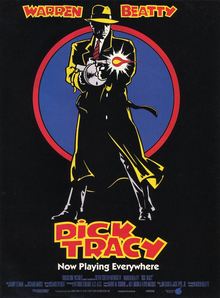
Dick Tracy (1990, directed by Warren Beatty)


The year is 1937 and “Big Boy” Caprice (Al Pacino) and his gang of flamboyant and often disfigured criminals are trying to take over the rackets.  Standing in their way is ace detective Dick Tracy (Warren Beatty), the yellow trench-wearing defender of the law.  Tracy is not only looking to take down Caprice but he and Tess Trueheart (Glenne Headly) are currently the guardians of The Kid (Charlie Korsmo), a young street kid who witnessed one of Caprice’s worst crimes.  Tracy’s investigation leads him through a rogue’s gallery of criminals and also involves Breathless Mahoney (Madonna), who has witnessed many of Caprice’s crimes but who also wants to steal Tracy’s heart from Tess.

Based on the long-running comic strip, Dick Tracy was a labor of love on the part of Warren Beatty.  Not only starring but also directing, Tracy made a film that stayed true to the look and the feel of the original comic strip (the film’s visual palette was limited to just seven colors) while also including an all-star cast the featured Madonna is an attempt to appeal to a younger audience who had probably never even heard of Dick Tracy.  When Dick Tracy was released, the majority of the publicity centered around Madonna’s participation in the film and the fact that she was dating Beatty at the time.  Madonna is actually probably the weakest element of the film.  More of a personality than an actress, Madonna is always Madonna no matter who she is playing and, in a film full of famous actors managing to be convincing as the members of Dick Tracy’s rogue gallery, Madonna feels out of place.  Michelle Pfeiffer would have been the ideal Breathless Mahoney.

It doesn’t matter, though, because the rest of the film is great.  It’s one of the few comic book films of the 90s to really hold up, mostly due to Beatty’s obvious enthusiasm for the material and the performances of everyone in the supporting cast who was not named Madonna.  Al Pacino received an Oscar nomination for playing Big Boy Caprice but equally good are Dustin Hoffman as Mumbles, William Forsythe as Flaptop, R.G. Armstong as Pruneface, and Henry Silva as Influence.  These actors all create memorable characters, even while acting under a ton of very convincing makeup.  I also liked Dick Van Dyke as the corrupt District Attorney.  Beatty knew audience would be shocked to see Van Dyke not playing a hero and both he and Van Dyke play it up for all its worth.  Beatty embraces the comic strip’s campiness while still remaining respectful to its style and the combination of Danny Elfman’s music and Stephen Sondheim’s songs provide just the right score for Dick Tracy’s adventures.  The film can be surprisingly violent at times but the same was often said about the Dick Tracy comic strip.  It wasn’t two-way wrist radios and trips to the Moon.  Dick Tracy also dealt with the most ruthless and bloodthirsty gangsters his city had to offer.

Dick Tracy was considered to be a box office disappointment when it was originally released.  (Again, you have to wonder if Beatty overestimated how many fans Dick Tracy had in 1990.)  But it holds up well and is still more entertaining than several of the more recent comic book movies that have been released.

Embracing the Melodrama Part II #90: Showgirls (dir by Paul Verhoeven)


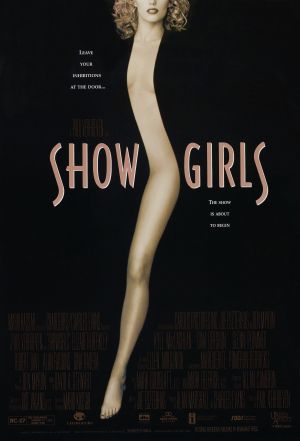
ShowgirlsWell, this is it!

Showgirls in the 1995 film that, 20 years after it was first released, is still held up as the standard by which all subsequent bad films are judged.  The story behind the production is legendary.  Screenwriter Joe Ezsterhas was paid a then-record sum to write a script that ripped off All About Eve and featured lines like, “Come back when you’ve fucked some of that baby fat off,” and “You’re the only who can get my tits poppin’ right!”  (And let’s not forget the heroine’s oft-repeated catch phrase, “It doesn’t suck.”)  A major studio specifically hired Paul Verhoeven with the understanding that he was going to give them an NC-17 rated film.  And finally, the lead role was given to Elizabeth Berkley, an actress whose previous experience amounted to co-starring on Saved By The Bell.

(And, let’s be honest, the only reason Jessie Spano was a tolerable character was because she wasn’t Screech.)

Berkley plays Nomi Malone, a sociopath who wants to be a star.  She hitchhikes her way to Las Vegas where, as is destined to happen to anyone who shows up in Vegas or New York with a clunky suitcase, she is promptly robbed of all of her possessions.  “Fuck!  Fuck!  Fuck!  Fuck!” she yells, showing off the very expensive dialogue that was written for her by Joe Ezsterhas.  Eventually, Nomi starts to take her frustration out on a random car.  The car, it turns out, belongs to sweet-natured Molly (Gina Revara), who is a seamstress for a tacky Vegas show called Goddess.  

(Seriously, Goddess makes Satan’s Alley from Staying Alive look like a work of quiet genius.)

Soon, Nomi is living in Molly’s trailer and working as a stripper at the Cheetah Club.  The Cheetah Club is owned by Al, who is amazingly sleazy but who is also played by Robert Davi.  Robert Davi is one of those actors who knows how to make terrible dialogue interesting and it’s instructive to watch him perform opposite Elizabeth Berkley and the rest of the cast.  Whereas the majority of the cast  always seems to be desperately trying to convince themselves that their dialogue is somehow better than it actually is, Davi knows exactly what he’s saying.  Watching his performance, it’s obvious that Davi understood that he was appearing in a bad film so he figured that he might as well enjoy himself.

The same can be said of Gina Gershon, who plays Cristal Connors, the star of Goddess.  Sexually voracious Cristal is basically a male fantasy of what it means to be bisexual.  Cristal hires Nomi to give a lapdance to her sleazy boyfriend, Zack (Kyle MacLachlan, giving a good performance despite having to spend the entire film with hair in his eyes) and then arranges for her to be cast in the chorus of Goddess.  There’s absolutely nothing subtle about Gershon’s performance and that’s why it’s perfect for Showgirls.  It’s been argued that Showgirls is essentially meant to be a huge in-joke and, out of the huge cast, only Gershon, Davi, and occasionally MacLachlan seem to be in on it.

Certainly, it’s apparent that nobody bothered to tell Elizabeth Berkley.  Berkley gives a performance of such nonstop (and misdirected) intensity that you end up feeling sorry for her.  She’s just trying so hard and she really does seem to think that she can somehow make Nomi into a believable character.  And it’s actually a bit unfair that Elizabeth is always going to be associated with this film because I doubt any actress could have given a good performance in a role as inconsistently written as Nomi.  One second, Nomi is a wide-eyed innocent who is excited about living in Las Vegas.  The next second, she’s screaming, “FUCK OFF!” and threatening strangers with a switch blade.  She may be a survivor (and I imagine that’s why we’re supposed to root for her) but she’s also humorless, angry, and apparently clinically insane.

Hilariously, we’re also continually told, by literally everyone else in the movie, that she’s a great dancer, despite the fact that we see absolutely no evidence of this fact.  Check out this scene below, where Nomi dances with a lot of enthusiasm and little else.

Once Nomi is cast in Goddess, she promptly sets out to steal both the starring role and Zack from Cristal.  Nomi’s cunning plan, incidentally, amounts to fucking Zack in his pool and shoving Cristal down a flight of stairs.  Nomi’s finally a star but when a Satanic rock star named Andrew Carver (William Shockley) comes to town, Nomi is confronted with the sordid truth about Las Vegas and, because this long film has to end at some point, Nomi must decide whether to take a stand or…

Well, you can guess the rest.

(Incidentally, I like to assume that Andrew Carver was meant to be a distant cousin of the great short story writer Raymond Carver.)

There seems to be two schools of thought when it comes to Showgirls.

Some critics claim to Showgirls is just crap.  They say that it’s a terrible film with bad dialogue, bad acting, and terrible direction.  These critics view Joe Eszterhas as being the villain of this tale, a misogynist who conned the studios into paying two million dollars for a terrible script.

And then other critics claim that Showgirls is crappy on purpose.  They claim that Verhoeven meant for the film to be a satire of both American culture and Hollywood showbiz dramas.  For these critics, Verhoeven used Eszterhas’s terrible script and Elizabeth Berkley’s inexperience to craft a subversive masterpiece.

Myself, I fall somewhere in between.  Based on Verhoeven’s other films — Starship Troopers comes immediately to mind — I think his intent with Showgirls probably was meant to be satirical and subversive.  But, at the same time, I would argue that Verhoeven’s intent doesn’t change the fact that Showgirls is a surprisingly boring film.  For all the sex and the nudity and the opulent costumes and sets and all of the over-the-top dialogue, Showgirls is never really that interesting of a film.  It barely even manages to reach the level of being so-bad-that-it’s-good.  Instead,  it’s slow, it’s draggy, and — satiric or not — the bad performance, the bad dialogue, and the nonstop misogyny get a bit grating after a few minutes.

Of course, that’s why you should never watch Showgirls alone.  Showgirls is a film that you have to watch as a part of a group of friends so that you can all laugh together and shout out snarky comments.  The first time I ever saw Showgirls was at a party and it was a lot of fun.  But, for this review, I rewatched the film on Netflix and I was surprised by how much of a chore it was to sit through the entire running time.  This is one of those films — like Birdemic and The Room — that you have to watch with a group.  You watch for the experience, not the film.