Two days ago, the North Texas Film Critics Association announced their nominations for the best of 2017!
On twitter, there’s been a lot of speculation as to why the NTFCA totally snubbed Call Me By Your Name in their nominations. Hilariously, some people — all from out-of-state, of course — are assuming that the NTFCA must be made up of evangelical, right-wingers because it’s a Texas organization. Seriously, those people have no idea how left-wing most members of the Texas media are. Texas may be a Republican state but most of our native film critics are somewhere to the left of Bernie Sanders.
Anyway, here are the nominees:
BEST PICTURE “Baby Driver”
“The Big Sick”
“Dunkirk”
“Get Out”
“The Florida Project”
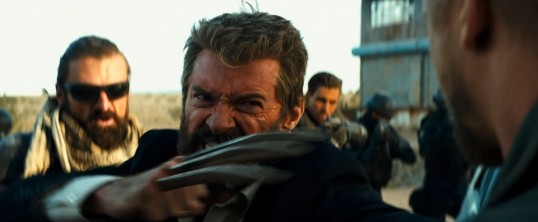
“Lady Bird” “Logan”
“The Post”
“The Shape of Water”
“Three Billboards Outside Ebbing, Missouri”
BEST ACTOR
James Franco, “The Disaster Artist”
Jake Gyllenhaal, “Stronger”
Tom Hanks, “The Post”
Hugh Jackman, “Logan”
Daniel Kaluuya, “Get Out”
James McAvoy, “Split”
Kumail Nanijiani, “The Big Sick”
Gary Oldman, “Darkest Hour”
Robert Pattinson, “Good Time”
Jeremy Renner, “Wind River”
Andy Serkis, “War for the Planet of the Apes”
BEST ACTRESS
Jessica Chastain, “Molly’s Game”
Judi Dench, “Victoria & Abdul”
Gal Gadot, “Wonder Woman”
Jennifer Lawrence, “mother!”
Frances McDormand, “Three Billboards Outside Ebbing, Missouri”
Brooklynn Prince, “The Florida Project”
Margot Robbie, “I, Tonya”
Saoirse Ronan, “Lady Bird”
Emma Stone, “Battle of the Sexes”
Meryl Streep, “The Post”
BEST SUPPORTING ACTRESS
Mary J. Blige, “Mudbound”
Holly Hunter, “The Big Sick”
Allison Janney, “I, Tonya”
Nicole Kidman, “The Killing of a Sacred Deer”
Tatiana Maslany, “Stronger”
Laurie Metcalf, “Lady Bird”
Octavia Spencer, “The Shape of Water”
Tilda Swinton, “Okja”
Kristin Scott Thomas, “Darkest Hour”
Bria Vinaite, “The Florida Project”
Allison Williams, “Get Out”
BEST SUPPORTING ACTOR
Steve Carell, “Battle of the Sexes”
Daniel Craig, “Logan Lucky”
Bryan Cranston, “Last Flag Flying”
Willem Dafoe, “The Florida Project”
Idris Elba, “Molly’s Game”
Will Poulter, “Detroit”
Sam Rockwell, “Three Billboards Outside Ebbing, Missouri”
Ray Romano, “The Big Sick”
Mark Rylance, “Dunkirk”
Patrick Stewart, “Logan”
BEST DIRECTOR
Sean Baker, “The Florida Project”
Guillermo del Toro, “The Shape of Water”
Greta Gerwig, “Lady Bird”
Patty Jenkins, “Wonder Woman”
Christopher Nolan, “Dunkirk”
Jordan Peele, “Get Out”
Steven Spielberg, “The Post”
Aaron Sorkin, “Molly’s Game”
Denis Villeneuve, “Blade Runner 2049”
Joe Wright, “Darkest Hour”
BEST CINEMATOGRAPHY
Thimios Bakatakis, “The Killing of a Sacred Deer”
Roger Deakins, “Blade Runner 2049”
Hoyte Van Hoytema, “Dunkirk”
Matthew Jensen, “Wonder Woman”
Dan Laustsen, “The Shape of Water”
Janusz Kaminski, “The Post”
Michael Seresin, “War for the Planet of the Apes”
BEST FOREIGN LANGUAGE FILM
“First They Killed My Father”
“In the Fade”
“Menashe” “Raw”
“The Square”
BEST DOCUMENTARY
“Abacus: Small Enough to Jail”
“Chasing Coral”
“City of Ghosts”
“Cries from Syria”
“An Inconvenient Sequel: Truth to Power”
“Jane”
“Step”
BEST ANIMATED FEATURE
“The Breadwinner”
“Cars 3”
“Coco”
“Despicable Me 3: “The LEGO Batman Movie”
“Loving Vincent”
Here’s the trailer for Wind River, a crime thriller that has gotten good reviews at both Sundance and Cannes.
Here are a few things to know about Wind River:
First off, a lot of people are pointing out that it stars two members of the MCU, Jeremy Renner and Elizabeth Olsen. At this point, however, the MCU is so big — with the movies and Netflix and the tv shows — that it’s hard to think of a recent or upcomng film that doesn’t feature at least one actor from the MCU. At this point, MCU actors running into each other in non-MCU movies is no longer as big a surprise as it may have once been. It’s kind of unavoidable.
For me, the most intriguing thing about Wind River is that it is the directorial debut of Taylor Sheridan, who previously wrote the amazing screenplays for both Sicario and Hell or High Water. I’ll be curious to see if Sheridan is as good and unpredictable a director as he is a writer.
Arrival was one of the best films of 2016. In fact, I would argue that it’s one of the best science fiction films that I’ve ever seen. There were a lot of reasons for that, of course. There was the brilliant script by Eric Heisserer. There was the starring performance of Amy Adams, who is one of the best actresses working today. There was a surprise and thought-provoking twist, one that forced you to reconsider everything that you previously believed. There were so many reasons why Arrival was a great film but, ultimately, it call came down to Denis Villeneuve.
Working with material that would have led most directors down the road to bombast, Villeneuve instead took a deliberately low-key approach. Whereas most directors would have encouraged their cast to play up the drama, Villeneuve encourages his actors to take a more inward and cerebral approach to the material. Arrival is a rarity — a film about smart people in which the people actually seem to be smart. For once, we don’t need expositionary characters to pop up and tell us that Louise Banks (Amy Adams) and Ian Donnelly (Jeremy Renner) are brilliant. Instead, we simply believe they are from what we see on the screen. Much like last year’s Sicario, Arrival proves that Villeneuve is a visionary director.
Arrival is a hard film to describe, not because it’s overly complicated but because there’s a huge twist that I really can’t reveal. Before the twist, Arrival is simply a well-directed sci-fi film. After the twist, it is something all together different, an intense meditation on faith, love, language, and destiny. Since I’m reviewing the film late, chances are that you already know about the twist but I’m still not going to spoil it.
What I can tell you is that Arrival opens with the arrival of twelve spaceships, all of which land at different places across the world. The Chinese have a spaceship. The British have a spaceship. I imagine that the Canadians have a spaceship, because who wouldn’t want to hang out with the Canadians? And, of course, the Americans have a spaceship. The aliens are inside the spaceships. They’re octopus-like creatures, ones that almost look as if they could have come from one of Lovecraft’s Cthulhu stories. The aliens may appear to be fearsome but they actually seem to be rather benevolent. No one’s quite sure because the aliens communicate through a complex series of symbols and nobody can understand what those symbols mean.
Louise Banks is a linguist. Ian Donnelly is a physicist. The Americans bring both in to help translate the symbols. Of course, the rest of the world has their own linguists and physicists working to translate the symbols and, humans being humans, it often seems that the Americans and the Chinese are less concerned with translating what the aliens are saying and more concerned with being the first to understand. While Louise works, she continues to be haunted by dreams and visions of her daughter’s death from cancer.
And that’s really all I can tell you without spoiling the film and potentially making myself cry. But I will say that if you haven’t seen Arrival, you must go out and see it now. It’s one of the most thought-provoking and emotionally wrenching films of the past year.
Add to that, it’s probably going to be nominated for best picture. It’s been overshadowed a bit by all the attention paid to La La Land, Moonlight, and Manchester By The Sea. But Arrival is just as good a film as any of them. In fact, in the future, we’ll probably look at Arrival and say that it was better than all of them.
Amy Adams and Jeremy Renner in a movie directed by Denis Villeneuve? Could Arrival be this year’s sci fi best picture nominee? Or will it turn out to be more like Interstellar?
What’s an Insomnia File? You know how some times you just can’t get any sleep and, at about three in the morning, you’ll find yourself watching whatever you can find on cable? This feature is all about those insomnia-inspired discoveries!
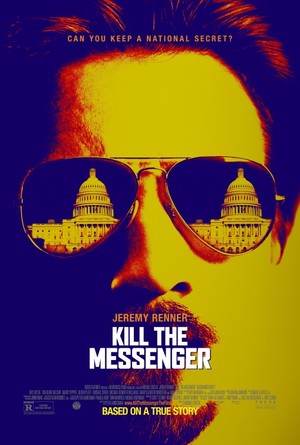
Last night, if you were awake and unable to get any sleep at 1:45 in the morning, you could have turned over to Cinemax and watched the 2014 conspiracy thriller, Kill The Messenger.
Kill The Messenger opens with one of those title cards that assures us that the movie we’re about to see is based on a true story. We are then introduced to Gary Webb (Jeremy Renner), a California-based reporter who we know is a rebel because he has a precisely trimmed goatee. Gary is interviewing a suspected drug smuggler (Robert Patrick) at the smuggler’s luxurious mansion. Suddenly, the DEA storms the house, shouting insults and roughly throwing everyone to the ground, including Gary. It’s actually exciting and promising opening, one that perfectly establishes both Gary as a truth seeker and the U.S. government as an invading army that’s fighting a war that’s full of collateral damage.
Gary, of course, has nothing to do with smuggling drugs. He was just in the wrong place at the wrong time. If he was treated unfairly by the DEA, it’s just because the government is serious about winning the war on drugs!
Or is it?
Following up on a tip, Gary comes across evidence that, in order to raise money for pro-Amercian rebels in Central America, the CIA not only helped to smuggle drugs into the U.S. but also arranged for the drugs to largely be sold in poor, minority neighbors where, in theory, no one would notice or care.
When the story is finally published, Gary is briefly a celebrity. Not surprisingly, the government denies his accusations and start tying to discredit him. However, Gary also finds himself being targeted by his fellow journalists. Angry over being outscooped by a relatively unknown reporter, The Los Angeles Times and The Washington Post both launch their own investigations. Instead of investigating Gary’s allegations, they jealously and viciously investigate Gary himself.
Soon, both Gary’s career and his family are falling apart and Gary finds himself growing more and more paranoid…
Remember when everyone was expecting Kill The Messenger to be a really big deal? It was due to come out towards the end of 2014, right in the middle of Oscar season. Jeremy Renner was being talked up as a contender for best actor. Then the film came out, it played in a handful of theaters for a week or two, and then it sunk into obscurity. Some commentators even complained that Focus Features buried the release of Kill The Messenger and that the film was ignored because of its leftist politics…
Of course, it’s just as probable that Focus Features realized that The Theory of Everything was more likely to charm audiences than a movie that suggested the U.S. government was behind the drug epidemic.
Or it could have just been that, despite telling a potentially intriguing story, Kill The Messenger was an oddly bland film. Other than one scene in which he admits to cheating on his wife, Gary Webb is portrayed as being such a saint that it actually causes the film to lose credibility. (Don’t get me wrong. For all I know, he was a saint. But, from a cinematic point of view, sainthood is never compelling.) This is one of those earnest films that gets so heavy-handed that, even if you agree with what the movie is saying, you still resent being manipulated. (Of course, some of us have grown so cynical about the media that we automatically doubt the veracity any movie that opens with those dreaded words: “Based on a true story.”) Watching Kill The Messenger, one gets the feeling that a documentary about Gary Webb would probably be more compelling (and convincing) than a fictionalized dramatization.
(Unfortunately, if you think it’s difficult to get an audience to watch a movie that suggested the U.S. government was behind the drug epidemic, just try to get them to watch a documentary about … well, anything. I know most of our readers would probably happily watch a documentary but that’s because y’all are the best and a thousand times better than the average person. Love you!)
Here’s what did work about Kill The Messenger: the performances. Jeremy Renner, who also produced this film, gives an excellent performance as Gary, especially in the scenes where he realizes that both the government and the press are now conspiring about him. Rosemarie DeWitt has the traditionally thankless role of being the supportive wife but she still does a good job. And finally, Ray Liotta shows up for one scene and is absolutely chilling in that way that only Ray Liotta can be.
Kill The Messenger doesn’t quite work but, thanks to the cast, it is, at the very least, a watchable misfire.
That, in a nutshell, is my main thought when it comes to Captain America: Civil War. It’s a movie that we spent a year anticipating. It’s a movie that we were continually assured would be great. And it’s a movie that, unlike Batman v Superman, actually lived up to all the hype. It’s also a movie that has already been reviewed here on the Shattered Lens. Check out Arleigh’s review by clicking here and be sure to check out Gary’s review as well.
So, what’s really left for me to say about Captain America: Civil War? Beyond, of course, that it was freaking awesome.
Of course, it’s hard to talk about Captain America: Civil War without also talking about Batman v Superman. Both films start with the same basic idea: the heroic activities of super heroes has led to cities being destroyed and innocent people dying. In Batman v. Superman, Batman takes it open himself to avenge the destruction of Metropolis and expose Superman as being the biggest false God since Baal. In Civil War, the United Nations announces that, from now on, all super hero activity has to be cleared with them. In Batman v. Superman, Batman and Superman are manipulated into fighting each other. In Captain America: Civil War, Captain America and Iron Man are manipulated into fighting each other. In Batman v Superman, Jesse Eisenberg plays a neurotic villain. In Captain America: Civil War, Daniel Bruhl plays a neurotic villain. Batman v Superman features more heroes than just Batman and Superman. Civil War features more heroes than just Captain America and Iron Man. Batman v Superman ends with a promise of more films to come. So does Civil War. Both films are huge and expensive star-filled spectacles and both of them are a part of a larger cinematic mythology. They both even have roughly the same running time. Of course, Batman v Superman seems even longer while Civil War is over far too quickly.
And yet, Civil War is a thousand times better than Batman v Superman. For all of its sound and fury, Batman v Superman is ultimately an empty shell. I left the film feeling not at all emotionally moved but definitely deafened by all the explosions and the yelling and the ranting and the pounding score. As I left the theater, the world sounded like it was underwater. Batman v Superman opens with the world exploding and the explosion continues for another two and a half hours. Civil War, on the other hand, takes its time. After the initial battle scene (which features a nice cameo from the great Frank Grillo), Civil War slows down. It explores its characters and their relationships and their motivations. The first hour of Civil War may be dominated by people debating but its compelling to watch because, after 8 years, the MCU and the characters within feel as alive as the world outside the theater.
In Batman v Superman, Henry Cavill and Ben Affleck appeared to be acting in separate films. That’s not a problem in Civil War. When you watch Chris Evans and Robert Downey, Jr., you believe that they are friends and, when they fight, you don’t just thrill at the action. You mourn the end of a friendship. If Batman v Superman‘s battle ultimately felt hollow, the final battle in Civil War leaves you wincing in pain.
Which is not to say that Civil War is not a fun movie. It’s the most genuinely fun film that I’ve seen so far this year. There’s a joy to the best films of the MCU, a joy that — with the exception of Gal Gadot’s cameo — was totally lacking from the somber and self-important mess that Batman v Superman. I have never heard an audience applaud more than they did while watching Civil War. The film may have been dominated by Evans and Downey but every citi of thzene MCU got a chance to shine. Scarlett Johansson, Paul Rudd, Sebastian Stan, Anthony Mackie, Don Cheadle, Jeremy Renner, Chadwick Boseman, Paul Bettany, and Elizabeth Olsen all proved their worth to this new cinematic mythology. After years of using Halloween to pay homage to Scarlett Johansson, I may have to go as Wanda Maximoff this year. After seeing Hollywood waste her off-center and damaged talent in films like Godzilla, it was good to see Elizabeth Olsen playing Wanda as if she could have been a cousin to her character from Martha Marcy Mae Marlene.
The audience saved their loudest and most enthusiastic cheers for Tom Holland, who claimed the role of Spiderman as his own and thankfully freed AndrewGarfield to go back to being the intriguing actor that we all remember from The Social Network and Never Let Me Go.Holland doesn’t have a large role in Civil War but he’s still well-served by the film and the script makes great use of the character and Holland’s energetic performance. As opposed to the super hero cameos in Batman v Superman, Spiderman’s appearance didn’t just feel like merely a teaser for a future film. He belonged in the story.
Of course, Civil War is dominated by the battle between Iron Man and Captain America and it says something about how successful the MCU has been that the battle feels less like a marketing gimmick and more like the natural result of what happens when two differing worldviews come into conflict. When Tony Stark sides with the UN, it makes sense. Ever since the very first Iron Man, Tony has been motivated by both guilt over making weapons and a fear that he doesn’t deserve his success. Of course Tony would side with the UN. Doing so not only allows him to alleviate his guilt but it also frees him of responsibility for any future actions that the Avengers may take. It makes just as much sense that Captain America would feel the exact opposite. His name is Captain America, not Captain United Nations. When the UN was founded, he was still frozen in a block of ice.
(Also interesting to note: Civil War was the first MCU film that I could follow without once having to ask my boyfriend for any background info on who all the characters were. The MCU has become such a part of our culture that we all know the characters, regardless of whether we have ever read a Marvel comic or not.)
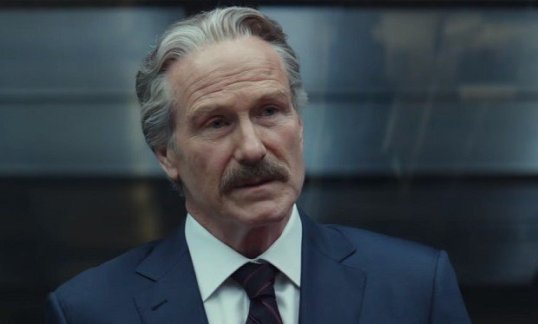
There is a nominal villain. Daniel Bruhl plays Zemo and his role is actually pretty small. That said, Zemo is definitely more interesting than the typical MCU villain (he’s certainly more memorable than Corey Stoll was in Ant-Man) and Bruhl does a good job playing him. (Watching Civil War, it was hard not to think about how much better SPECTRE would have been if Bruhl, as opposed to Christoph Waltz, had played Blofeld.) But, for me, the real villain of the film was the U.S. Secretary of State (played by William Hurt). The character represented everything that all good people hate about the power structure. William Hurt turned him into the epitome of unthinking and unreasonable authority.
After Civil War was released, Salon’s Amanda Marcotte (who, let’s just be honest, ceased to be interesting the minute that she sold out and briefly worked for John Edwards in 2007) complained that Captain America had become “a douchey Libertarian.” I would argue that 1) Captain America is definitely not douchey and 2) it’s his “libertarian” stance that makes him a hero. Captain America does not represent any institution or ideology and he doesn’t take orders from faceless bureaucrats. Captain America doesn’t need permission to do the right thing. As played by Chris Evans, there’s something undeniably poignant about Captain America attempting to cling onto his idealism and his belief in personal freedom in an increasingly complicated and totalitarian world. When told that he has a duty to become an anonymous, order-taking drone, Captain America says, “NO!”
(As a sidenote: If you want to see what the world expects Captain America to become, check out William Klein‘s Mr.Freedom.)
I know that some are claiming that Civil War is the best MCU film so far. I wouldn’t quite go that far. The film never quite reaches the lunatic heights of Guardians of the Galaxy nor does it match the subversive glee of Winter Soldierrevealing that smug old Robert Redford is an agent of HYDRA. But, no matter! Captain America: Civil War is pretty freaking great!
Here are the other MCU reviews that have appeared here on the Shattered Lens:
Captain America: The Winter Soldier wasn’t just a surprise hit for Marvel Studios and parent company Disney in 2014, it also showed the general public that there was more to Captain America than just a flag-waving symbol of America’s past glory. Captain America was a character that wasn’t the hip, wisecracking Tony Stark. He wasn’t the tortured soul in a monster’s body like Bruce Banner as the Hulk. He didn’t have the Shakespearean gravitas that was always lurking behind Thor and his complicated Asgardian family. No, Captain America was considered too straight-laced, blonde and blue-eyed goody two-shoes.
Captain America: The First Avenger focused on those very qualities. Steve Rogers was just a skinny, asthmatic young man from Brooklyn who wanted to do his part during World War II. It would be thanks to an experimental super-soldier serum that Steve Rogers’ body finally matched the inherent goodness and will to defend the little guy. For some, this initial introduction to Captain America was too hokey, but was entertaining enough. His next appearance in 2012’s game-changing superhero team-up The Avengers saw him be part tactician for a burgeoning superhero team and part comedy relief.
It would be with The Winter Soldier that the rest of the general public finally got to what comic book fans have known for years. This is a badass man, out of his time but always fighting the good fight and staying true to his convictions and principles. What was seen as hokey idealism became something of a beacon of selflessness and the moral center in a modern world that was steeped in shades of grey. It helped that writing team of Stephen McFeely and Christopher Markus (who wrote The First Avenger) finally found a pair of directors in the Russo Brothers (Anthony and Joe) who understood just what made Captain America relevant in this day and age of cynical anti-heroes.
It’s no surprise that the Russo Brothers were tasked with continuing the work they began in the Winter Soldier with McFeely and Markus with the film that would complete the Captain America trilogy in the Marvel Cinematic Universe. It would be quite a task in getting Captain America: Civil War off the ground and moving forward under all the weight of nearly every MCU superhero (minus Thor, Hulk and Nick Fury) in attendance and the introduction of two new ones to the universe.
Did the Anthony and Joe Russo pull off this massive undertaking? Or did they stumble to not just the huge cast and many storyline threads the way Joss Whedon did with the ambitious, but flawed The Avengers: Age of Ultron?
I’m happy to say that the Russo Brothers did better than succeed but may have just made the best film in the Marvel Cinematic Universe and proved that Marvel Studios head honcho Kevin Feige was correct in placing the brothers as the new captain of the massive thing called the Marvel Cinematic Universe as it enters Phase 3.
Captain America: Civil War is set just a year after the events of Age of Ultron where the Avengers barely defeated Tony Stark’s mad A.I. Ultron and it’s decision to wipe humanity from the planet. While the team did save the world from global extinction they also didn’t save everyone. there were still hundreds, if not, thousands of Sokovians who died during the battle. The same could be said for all the battles since the alien invasion over New York. The Avengers, led by Captain America, have saved the world from invading aliens, world-dominating terrorist group and killer A.I robots. Yet, the collateral damage caused by these battles have begun to weigh not just on some of the Avengers, but has made the governments of the world see the team as a sort of super-powered private military group who don’t obey international laws and borders. Yes, they’ve saved humanity many times from destruction, but at what cost.
It’s during a battle early in the film as Captain America and his team stop the theft of a biological weapon in the city of Lagos, Nigeria that collateral damage and deaths rear it’s head once more as Wanda Maximoff (aka the Scarlet Witch) accidentally allows a suicide bomb vest explode too close to a nearby high-rise causing the deaths of several aide workers from Wakanda.
It’s from this event that the world finally have reached a tipping point and want to put the team under U.N. control with Tony Stark agreeing to the plan to help assuage his guilt over the deaths caused by him creating Ultron. Some of the team understands that government oversight that the Sokovian Accords puts on the team is the right thing to do. While others, especially Captain America, think it’s best to leave the team to continue to be their own masters instead of beholden to a bureaucracy whose agenda may not be conducive to saving lives.
It’s a subject matter that was explored in some fashion in an earlier superhero mash-up but one that failed to stick the landing. Yet, even this battle of differing ideologies between Captain America and Iron Man only becomes part of the foundation to the true narrative for Civil War. It’s the friendship between Captain America and Bucky aka the Winter Soldier and how the former must try to prove the latter innocent of another terrorist attack the world thinks he’s responsible for. Those Avengers who signed the Accords must now bring in Bucky dead or alive while Captain America with the help of those who didn’t sign try to prove his innocence and find the true architect of the terrorist bombing.
Captain America: Civil War succeeds where the earlier superhero film failed because of the groundwork laid down by the 12 previous films released to make up the current Marvel Cinematic Universe. From Iron Man all the way up to Age of Ultron, these twelve films flesh out the backstory and characters that make up these heroes. We’ve gotten to know what motivates them to risk their lives for the greater good, but we also see glimpses of the inter-personal conflicts that looks to tear the team apart from within.
There’s not enough that could be said about the masterful work done by the Russo Brothers in juggling the personalities of twelve superheroes (two getting their initial introduction to the MCU) and giving them enough to do in the film to make them relevant to the proceedings instead of just becoming glorified cameos. The actors playing these characters have had many films to own the roles and each and everyone hits it out of the park. The stand out from the veterans in the ensemble cast still remains Chris Evans and Robert Downey, Jr as Captain America and Iron Man, respectively. Yet, it would be the arrival of the two new heroes into the mix with Chadwick Boseman as the newly-crowned king of the technologically-advanced nation of Wakanda, T’Challa and Tom Holland as the teenage chatterbox and dumpster diving tech genius Peter Parker aka Spider-Man.
Boseman as the Black Panther adds a certain level of gravitas and regal fury to the proceedings which balances the edge between serious to comedic. His Black Panther has his own agenda in getting involved in this intra-familial squabble. He has his own agenda and if it means siding with Iron Man against Captain and his team then he would do so if it succeeds in helping him finish his mission. It helps that he looks damn cool in what has to be the best superhero costume thought up by the designers in Marvel Studios.
It would be Tom Holland as the young Peter Parker and Spider-Man who steals the show whenever he’s on-screen. This is the Peter Parker and Spider-Man that comic book fans have been waiting for. While Tobey Maguire and Andrew Garfield succeeded in portraying some of the character’s personality, they could never fully capture what made Spider-Man such a favorite amongst comic book readers. This Spider-Man is geeky and not at all hip and cool, but with a sense of right and wrong that comes having great power means shouldering the responsibility to use it for good.
Captain America: Civil War, with its exploration of many profound ideas and themes, is still a superhero film and a tentpole blockbuster at that and audiences still want to see the action up on the big screen. Boy, does this film have action and enough of them to spare. The action scenes range from the grounded hand-to-hand fighting the Russo Brothers used to great effect in The Winter Soldier (this time around with the help from Chad Stahelski and David Leitch, directors of John Wick to provide 2nd Unit Directing help) up to the superhero battle that raises the bar on such things set at an evacuated airport in Leipzig, Germany.
This 6-on-6 tête-à-tête between friends and colleagues takes the climactic battles in both Avengers films and does them better. With each hero using their abilities to great effect in conjunction with their allies and against those they are fighting. There was never a time during this near on 20-minute action scene did it ever get confusing. Many filmmakers doing superhero (or just plain old action films) could learn a thing or two from how the Russo Brothers and 2nd Unit directors Spiros Razatos, Stahelski and Leitch choreographed and filmed all the action sequences in Civil War. It was near-perfect with only wishful thinking that Gareth Evans from The Raid films could’ve been asked to help out to make things perfect.
As huge and bombastic the film gets with this airport fight, it would be the final throw down between Captain America and Iron Man at the end of the film that we get the emotional heft the film needs to keep itself from becoming just another loud and explosive superhero film. This fight becomes personal and shows how fights between close friends become the most brutal and heartbreaking. Neither combatants are wrong about their stances in the fight, but they’re also wrong in not being able to think things through. These two alpha males who have a friendship full of respect but also combativeness throughout the years of the MCU that finally explodes into all-out war when a tragic secret from both Tony Stark’s and Bucky’s past come to light.
It’s a fight that has no winners and for a superhero film that is a major change from the usual narrative (especially within the MCU storytelling playbook). The film ends with the very team created to save the world from all threats even more unsure of their place in the ever-changing and ever-judging world. It’s a bold move by Marvel Studios to start their Phase 3 that would culminate in the battle to end all battles with the two Avengers: Infinity War films (soon to be retitled) which happen to be under the master-class guiding hands of the Russo Brothers in the directors’ chair and the writing duo Stephen McFeely and Christopher Markus.
In the end, Captain America: Civil War manages to capture not just what made comic books and films adapted from them fun and exhilarating, but also able to tackle some serious ideas and themes both existential and personal. It just goes to show that one doesn’t need to sacrifice one to have the other. One can have serious and dark but also be fun. It’s a balance that’s difficult to do, but when the people involved in creating such a story stick the landing then we a classic in the making. It bodes well for the rest of the films in Phase 3 to have such a great beginning, but also raises the bar for the other filmmakers following in the wake of what Anthony and Joe Russo have concocted. Let’s hope they are all up to the task.
We are just two weeks away from the release of Batman v. Superman: Dawn of Justice and just a week from the premiere of Netflix’s Daredevil Season 2. What better way to remind people that there is another hero vs hero film coming out to start off the summer than with the final full trailer for Captain America: Civil War.
One things which distinguishes this latest and final trailer happens right at the very end. One could almost say that this was the trailer’s post-credit sequence.
Captain America: Civil War swings into action on May 6, 2016.
It’s that time of the year when the country (to some extent the world) witness a sporting event that’s become almost ritualistic in how it gathers it’s audience. I’m talking about the yearly Super Bowl pitting the NFC champions against the AFC champs. Even if one wasn’t a huge fan of football, the Super Bowl has become such an event day not just for the game, but the half-time show. Then there are the commercials which has become just as anticipated as the game itself.
It’s this day that we get major studios plying their upcoming films for the summer blockbuster season and Disney is not a studio to let this day pass without showing something new regarding one of their biggest films this summer.
The first Captain America: Civil War trailer a couple months ago got everyone anticipating the film. Now we have the Super Bowl TV spot to fan the flame of hype for the film that dared to go up against Batman v. Superman: Dawn of Justice when they both had the same release date: May 6, 2016. The latter film blinked and opted to dominate the film landscape a couple months earlier.
This tv spot emphasizes the fractured nature of Avengers that lends to the film’s title of civil war.
So, which team are you on? Are you on Team Captain America? Or are you more the Team Iron Man?
Captain America: Civil War is the opening shot of Marvel’s Phase 3 for their cinematic universe. The huge success of Captain America: The Winter Soldier, both in the box-office and among critics, even convinced Marvel Studios and Disney to pit this upcoming sequel against DC’s own Batman v. Superman: Dawn of Justice. One of the two had to blink and move their release date and it ended up being DC.
In what many have called Avengers 2.5 due to the amount of Marvel superheroes involved in the story, Captain America: Civil War will look to explore the consequences of the collateral damage incurred by Captain America and his teammates in the Avengers whenever they fight it out in public. The destruction of Midtown Manhattan during the Battle of New York was the start. The wreckage of three advanced SHIELD Helicarriers in the Potomac was another. Yet, it looks like the destruction of the capital city of Sokovia during the team’s fight against Ultron may have been the straw that broke the global governments’ back.
So, will Tony Stark and his team of Pro-Registration win out over the out-gunned Team Captain America who do not want to be beholden to the agendas of any world government?
We shall find out when Captain America: Civil War drops on everyone on May 6, 2016.





 Through the Shattered Lens