Horror Series Review: Below (by Jesse McKeown)


“I can’t just roll over, I need to see this thing through.” — Calvin Penney

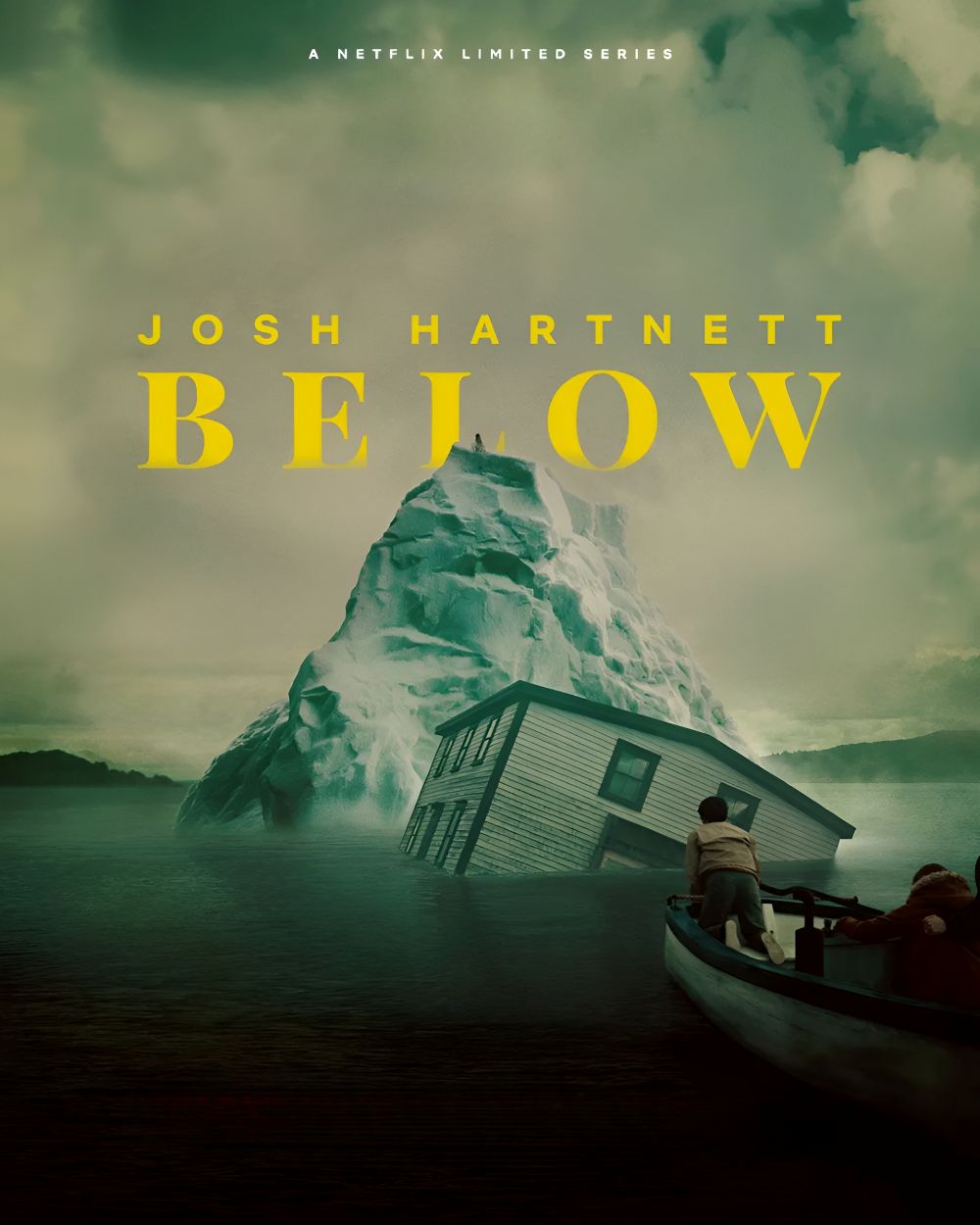
The scariest thing in Netflix’s Below might be the possibility that the place you call home no longer has a future. Sure, there’s a monster lurking offshore, and the series isn’t shy about putting its characters through some nasty situations. But beneath the creature-feature setup is a more personal story about people struggling to recognize when holding on becomes its own kind of danger. Created by Jesse McKeown, this six-episode series mixes coastal horror, family baggage, and small-town stubbornness into something engaging, even when its storytelling gets a little tangled. It works best when those elements feel like different parts of the same problem.

Set in the Newfoundland community of Snook’s Arm, Below follows Calvin Penney, a widower played by Josh Hartnett whose attachment to the town runs deep. A childhood tragedy involving relocation and the death of his father has left him with understandable reasons to distrust the idea of starting over. Now he makes ends meet alongside his son Wade, harvesting iceberg ice and renting out a room. With his other children coming home for a visit, there’s an opportunity for the family to reconnect. Naturally, this being a monster series, the reunion comes with some unpleasant complications waiting in the water.

That setup gives the show something more substantial than the usual group of strangers stumbling into danger. Calvin already has things to lose before the creature becomes a threat, and not all of them can be protected by simply surviving. His family’s relationship with Snook’s Arm isn’t necessarily the same as his own, which creates tension without requiring anyone to behave like an obvious villain. For Calvin, leaving means surrendering something essential. For others, staying might mean sacrificing a chance at a different life. The monster doesn’t create those disagreements so much as make them impossible to keep putting off.

Hartnett gives the series a reliable emotional anchor. Calvin is warm enough to make his devotion appealing, but he’s also capable of turning that devotion into a burden for everyone around him. Hartnett understands that balance, playing him as someone whose good intentions don’t automatically make his decisions reasonable. You can sympathize with his fear of losing another home while still wanting him to listen when someone challenges him. His Newfoundland accent occasionally becomes a distraction, but the performance underneath it feels grounded. Calvin’s grief matters because it influences how he behaves, not just because the script tells us he has a painful past.

Charlie Heaton adds a useful edge as Wade, whose relationship with his father carries both affection and frustration. Their shared routine suggests closeness, but it also raises questions about how much room either has to move forward. The family material is strongest when it lets those mixed feelings sit without immediately explaining them away. Mackenzie Davis brings a different energy as marine researcher Fonda Howander, giving the mystery an investigative thread beyond Calvin’s personal concerns. She helps connect the disturbing events to something the characters can begin to understand, while the family drama keeps the consequences from becoming purely theoretical.

Snook’s Arm itself is one of the show’s biggest assets. The coastal scenery has an appealing harshness, making it easy to understand both why someone would love living there and why someone else would want out. The town feels isolated before the horror really gets going, and that isolation becomes more oppressive as familiar surroundings turn threatening. There’s a difference between being somewhere quiet and realizing help might be a long way off. Below makes good use of that distinction. Its setting isn’t just attractive background scenery; it shapes the characters’ options and gives their reluctance to leave a believable emotional foundation.

The horror is especially effective when it grows out of ordinary details becoming wrong. Foul-smelling ice, disappearances, and unsettling changes create the sense that something has worked its way into the community before anyone understands its scale. The ocean has always been unpredictable, but now that uncertainty feels actively hostile. Mark Korven’s score helps sustain the unease, while the more grisly material supplies the creature-feature payoff. When the water becomes dangerous, it doesn’t just interrupt the characters’ plans. It undermines the relationship that makes the town possible. Later, the creature side of the story takes some interesting turns that complicate the initial setup without abandoning its sense of danger.

That’s why resettlement is such an effective idea to build the drama around. Residents are considering whether to accept money to leave, and the series gives that decision emotional weight rather than treating it as a simple question of common sense. Calvin’s resistance comes from experience, but experience can also trap someone in an old way of understanding a new crisis. The ecological themes fit naturally alongside that conflict. This is a story about a community facing the possibility that its surroundings can no longer support the life it knows, with a monster giving that anxiety a much more immediate form.

The danger also grows as it becomes clear that certain characters have agendas they aren’t sharing. Without giving away who wants what, those competing interests make an already desperate situation worse for the people still stuck on Snook’s Arm. Surviving isn’t simply a matter of figuring out what’s in the water; it also means navigating people whose priorities may not line up with everyone else’s safety. That adds welcome tension, although the accumulation of secrets and revelations sometimes crowds the storytelling. The later episodes reach for bigger emotional and thematic payoffs, and a little more breathing room would have helped some of those developments land more naturally.

Even with those weaknesses, Below offers more than a disposable run through familiar monster-movie territory. Hartnett holds the emotional center, the coastal atmosphere gives the horror texture, and the town’s uncertain future makes survival mean something beyond escaping the next attack. Its late turns give the creature story another dimension, while the human conflicts keep the threat from feeling comfortably predictable. The strongest material remains the people trying to protect a home while disagreeing about what protecting it actually requires. The creature gives that struggle teeth, but the harder question remains human: how do you know when staying is an act of love, and when it’s just fear of letting go?

Capsized:Blood in the Water, Review by Case Wright, Dir: Roel Reine’


blood.jpg

Capsized: Blood in the Water- It’s Lifetime with Sharks! I’ve watched Shark Week since I was a wee lad and in all of my years this is the first MOW for Shark Week that didn’t have any narration explaining/teaching about sharks. This was a movie that could’ve just been on Lifetime and it would’ve fit right in if they threw in a creepy babysitter or doctor.

The characters were a crew of five VERY stupid people.  I don’t just mean kinda dumb. I mean they should’ve been monitored in daily life on sea and on land.  Mark (Josh Duhamel) is the captain who makes nothing but bad decisions.  Mark (Joshua Close) is the first mate who is a self-centered alcoholic. Meg (Rebekah Graf) – the captain’s girlfriend who spends most of the film not doing much.  Brad and Deborah who don’t really do much either.

The director does try to build suspense, but all of the character’s decisions are so dumb that it makes you really lose sympathy.  The death scenes are also a little light on the gore.  I know this is a true story and all, but Shark Week- you root for the sharks (at least, I do).

They set sail, which I gotta say is a little weird to me.  I never understood the allure of sailing when wind powered vessels became obsolete since the steam age.  Once at sea, we learn that Mark is a stubborn, alcoholic, and incompetent first mate.  He drinks himself into a stupor so they miss the storm warning.  Meg is supposed to go to safe place down below during the storm, but she ignores everyone and gets injured.  Eventually, this injury is both life threatening and attract LOTS of sharks. Then, they get the storm warning, but John ignores the Coast Guard’s instructions to stay put, causing them to get capsized.

They manage to get a raft, but don’t go into it and attract lots of sharks with Meg’s open wound.  Why don’t they go inside the raft? Who knows?  John tries to apply a tourniquet to Meg’s wound, but Mark tells everyone that Meg gonna die anyway and starts fighting everyone.  John goes nuts and starts swimming for a mirage and gets eaten.  Mark gets the great idea to drink the ocean.  I say, Let Mark Be Mark! Drink That Water! Fly Mark Fly! Live Your Saltwater Drinking Truth!

Of course, the saltwater makes Mark go crazier and he tries to knock the boat over.  Mark falls out of the boat and we watch him slowly get eaten, but not enough really.  This is just too light on the gore for me. I want some Giallo levels of gore, but nope. I gotta wonder if IRL Mark really fell out of the boat.  Hmmmm.

They remain adrift for a long long long time more and Meg succumbs to her wound and the last two survivors toss her out of the raft as we see a shark coming up to I guess her remains… we don’t know for sure because they don’t show it.  UGHHH.

The Coast Guard stops looking for them and the last two survivors decide to flip the raft over because there’s water in the boat, which is making them cold, but they were adrift for over a week- how didn’t it dry out? A Russian freighter finds them, but as they swim for the boat Deb gets tire and Brad’s like – Sucks to be you! He eventually decides to help her, but that was coooold blooded.

I enjoyed this.  It was Lifetime on the waves.


The TSL’s Horror Grindhouse: Diary of the Dead (dir by George Romero)


I have to admit that I was a little bit hesitant about watching the 2007 film, Diary of the Dead.

It wasn’t that I don’t like zombie movies.  In fact, it was the complete opposite.  I love zombie films and Night of the Living Dead is one of my favorites.  George Romero, of course, went on to make several sequels to Night of the Living Dead.  Dawn of the Dead, Day of the Dead, and Land of the Dead are certifiable horror classics.  However, I had heard mixed things about the two zombie films that Romero directed after Land of the Dead.  Seeing as how Diary of the Dead was Romero’s second-to-last film before he passed away in 2017, I was worried that I would watch the film and discover that I hated it.  I didn’t want experience anything that would tarnish Romero’s cinematic legacy.  It didn’t help my expectations that Diary of the Dead is a found footage film and the conventions of the found footage genre tend to get on my last nerve.

(Seriously, nothing makes me throw a shoe at a screen quicker than the sound of someone in a horror movie saying, “Are you filming this?”)

But you know what?

I did watch Diary of the Dead and it’s actually not bad.  It may not reach the heights of Romero’s other zombie films but it’s definitely a worthwhile companion piece.  It opens with news reports about the start of the zombie apocalypse, meaning that Diary of the Dead is meant to take place at roughly the same time as Night of the Living Dead.  (Never mind that Diary of the Dead is full of references to YouTube and blogs and other things that most people probably couldn’t even imagine when Night of the Living Dead first came out.)  A group of film students are in the woods, filming a terrible mummy movie when they first hear reports of the dead coming back to life.  Some say that there’s no way it could be true.  Others say that something must be happening but surely the dead aren’t actually coming back to life.  They soon discover that the dead have indeed returned.

We follow the students as they travel across Pennsylvania, trying to find a place that’s safe from the Dead and discovering that there’s literally no such place left in America.  Along the way, they also discover that the government has no intention of telling the people the truth about what’s happening.  In fact, a group of national guardsmen turn out to be just as dangerous as the zombies.  In their efforts to survive, the students are forced to rely on an underground network of bloggers and video makers.

Diary of the Dead has all of the usual zombie mayhem that you would expect from a film like this but, at the same time, it’s got a lot more on its mind than just the dead returning to life.  Much as he did with Land Of The Dead, Romero uses Diary of the Dead to comment on the state of America under the Patriot Act.  With the government using the zombie apocalypse as an excuse to suspend civil liberties and increase their own power, the film’s characters are forced to depend on new and independent information sources.  It’s not hard to see the parallel that Romero is making between the War on the Living Dead and the War on Terror.  As well, making all of the characters film students allows for some discussion about whether or not horror films should simply concentrate on being scary or whether they should also attempt to deal with real-world issues.  The film leaves little doubt where Romero came down on that issue.

On the negative side, Diary of the Dead struggles a bit to overcome the limitations of its low budget and none of the characters are as compelling as Ben in Night of the Living Dead or Fran in Dawn of the Dead.  At times, you find yourself wishing that Diary of the Dead featured just one actor who was as into their role as Duane C. Jones or Ken Foree were in Night of the Living Dead and Dawn of the Dead, respectively.  But Diary of the Dead still features enough zombies and enough of Romero’s trademark political subtext to be an acceptable addition to Romero’s vision of the apocalypse.

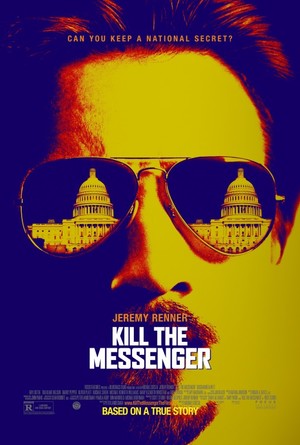
Insomina File No. 16: Kill The Messenger (dir by Michael Cuesta)


What’s an Insomnia File? You know how some times you just can’t get any sleep and, at about three in the morning, you’ll find yourself watching whatever you can find on cable? This feature is all about those insomnia-inspired discoveries!

Kill_the_Messenger_poster

Last night, if you were awake and unable to get any sleep at 1:45 in the morning, you could have turned over to Cinemax and watched the 2014 conspiracy thriller, Kill The Messenger.

Kill The Messenger opens with one of those title cards that assures us that the movie we’re about to see is based on a true story.  We are then introduced to Gary Webb (Jeremy Renner), a California-based reporter who we know is a rebel because he has a precisely trimmed goatee.  Gary is interviewing a suspected drug smuggler (Robert Patrick) at the smuggler’s luxurious mansion.  Suddenly, the DEA storms the house, shouting insults and roughly throwing everyone to the ground, including Gary.  It’s actually exciting and promising opening, one that perfectly establishes both Gary as a truth seeker and the U.S. government as an invading army that’s fighting a war that’s full of collateral damage.

Gary, of course, has nothing to do with smuggling drugs.  He was just in the wrong place at the wrong time.  If he was treated unfairly by the DEA, it’s just because the government is serious about winning the war on drugs!

Or is it?

Following up on a tip, Gary comes across evidence that, in order to raise money for pro-Amercian rebels in Central America, the CIA not only helped to smuggle drugs into the U.S. but also arranged for the drugs to largely be sold in poor, minority neighbors where, in theory, no one would notice or care.

When the story is finally published, Gary is briefly a celebrity.  Not surprisingly, the government denies his accusations and start tying to discredit him.  However, Gary also finds himself being targeted by his fellow journalists.  Angry over being outscooped by a relatively unknown reporter, The Los Angeles Times and The Washington Post both launch their own investigations.  Instead of investigating Gary’s allegations, they jealously and viciously investigate Gary himself.

Soon, both Gary’s career and his family are falling apart and Gary finds himself growing more and more paranoid…

Remember when everyone was expecting Kill The Messenger to be a really big deal?  It was due to come out towards the end of 2014, right in the middle of Oscar season.  Jeremy Renner was being talked up as a contender for best actor.  Then the film came out, it played in a handful of theaters for a week or two, and then it sunk into obscurity.  Some commentators even complained that Focus Features buried the release of Kill The Messenger and that the film was ignored because of its leftist politics…

Of course, it’s just as probable that Focus Features realized that The Theory of Everything was more likely to charm audiences than a movie that suggested the U.S. government was behind the drug epidemic.

Or it could have just been that, despite telling a potentially intriguing story, Kill The Messenger was an oddly bland film.  Other than one scene in which he admits to cheating on his wife, Gary Webb is portrayed as being such a saint that it actually causes the film to lose credibility.  (Don’t get me wrong.  For all I know, he was a saint.  But, from a cinematic point of view, sainthood is never compelling.)  This is one of those earnest films that gets so heavy-handed that, even if you agree with what the movie is saying, you still resent being manipulated.  (Of course, some of us have grown so cynical about the media that we automatically doubt the veracity any movie that opens with those dreaded words: “Based on a true story.”)  Watching Kill The Messenger, one gets the feeling that a documentary about Gary Webb would probably be more compelling (and convincing) than a fictionalized dramatization.

(Unfortunately, if you think it’s difficult to get an audience to watch a movie that suggested the U.S. government was behind the drug epidemic, just try to get them to watch a documentary about … well, anything.  I know most of our readers would probably happily watch a documentary but that’s because y’all are the best and a thousand times better than the average person.  Love you!)

Here’s what did work about Kill The Messenger: the performances.  Jeremy Renner, who also produced this film, gives an excellent performance as Gary, especially in the scenes where he realizes that both the government and the press are now conspiring about him.  Rosemarie DeWitt has the traditionally thankless role of being the supportive wife but she still does a good job.  And finally, Ray Liotta shows up for one scene and is absolutely chilling in that way that only Ray Liotta can be.

Kill The Messenger doesn’t quite work but, thanks to the cast, it is, at the very least, a watchable misfire.

Previous Insomnia Files:

  1. Story of Mankind
  2. Stag
  3. Love Is A Gun
  4. Nina Takes A Lover
  5. Black Ice
  6. Frogs For Snakes
  7. Fair Game
  8. From The Hip
  9. Born Killers
  10. Eye For An Eye
  11. Summer Catch
  12. Beyond the Law
  13. Spring Broke
  14. Promise
  15. George Wallace