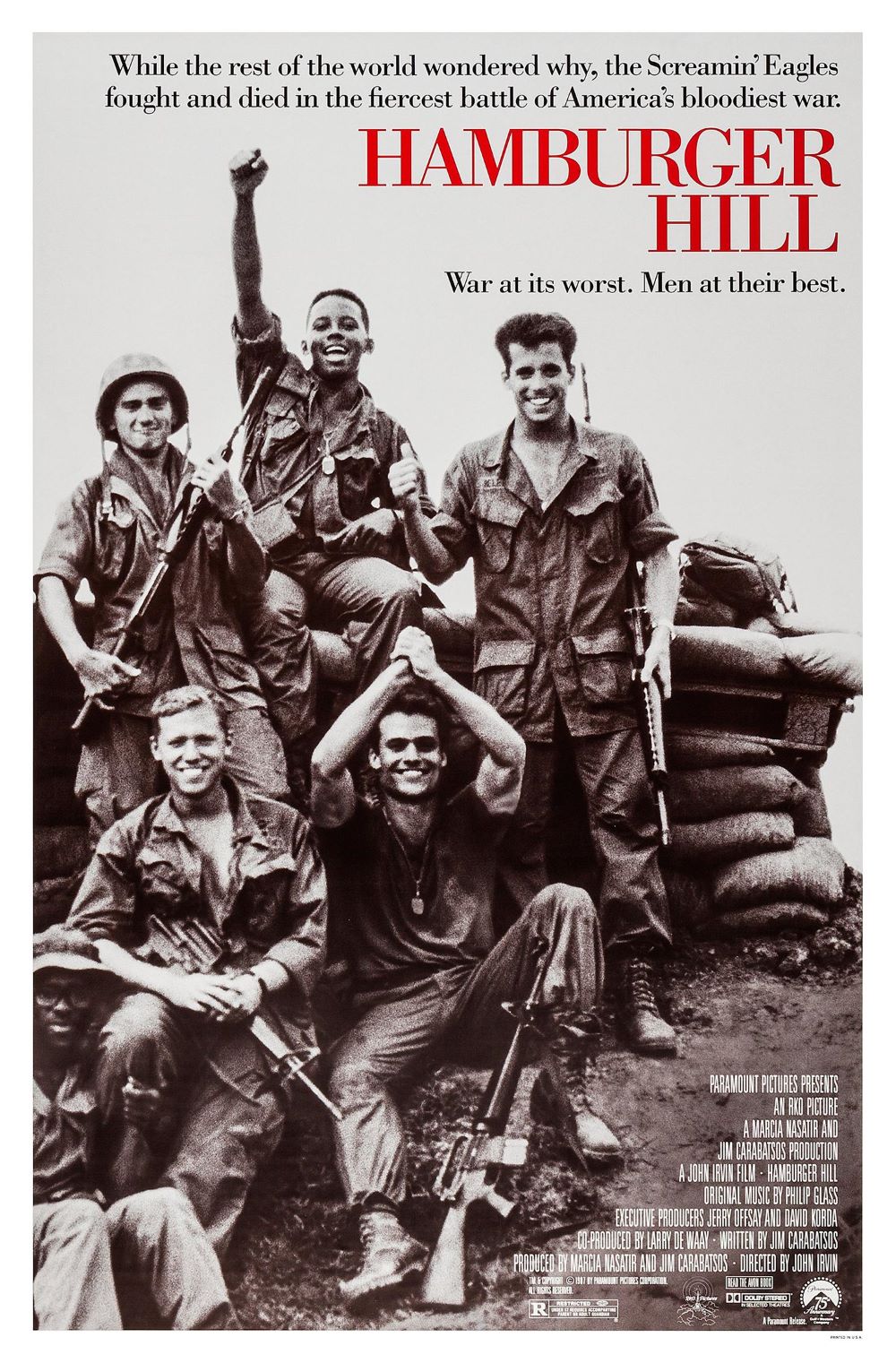
Review: Hamburger Hill (dir. by John Irvin)


“If you want to walk out of this fucking place, you will listen to people who know!” — Spc. Abraham “Doc” Johnson

Hamburger Hill is one of those Vietnam War movies that doesn’t really bother decorating the war with grand metaphors or tortured soul‑searching; it just puts you on the hill with the grunts and makes you feel every miserable inch of the climb. Released in 1987 and directed by John Irvin, the film is a fictionalized but tightly focused take on the real week‑long “Battle of Hamburger Hill” in the A Sầu Valley, a piece of rugged terrain in central Vietnam that saw some of the bloodiest fighting between U.S. and North Vietnamese Army (NVA) forces in May 1969. The movie dramatizes the 101st Airborne’s 3rd Battalion, 187th Infantry Regiment as they’re ordered to assault a heavily fortified hill over and over again, and it leans hard into the idea that the battle is less about grand strategy and more about raw endurance and attrition.

One of the first things that strikes you about Hamburger Hill is how deliberately it avoids big stars and splashy heroics. The ensemble is made up mostly of young, relatively unknown actors, which ironically makes the cast feel more authentic. You’re not watching a famous movie star playing a grunt; you’re watching a squad of guys who could actually be kids your age sent halfway across the world to die in the mud. The central figure is second‑lieutenant Al Frantz, played by a young Dylan McDermott, who’s stepping up from a desk job into direct combat command. He’s not some infallible war‑hero archetype; he’s earnest, nervous, and visibly out of depth, which makes his slow hardening under fire feel earned rather than heroic. Watching him wrestle with guilt, responsibility, and the absurdity of the orders he’s obeying gives the film a quiet moral backbone without sliding into preachy territory.

The movie is structured around roughly ten days of repeated assaults on “Hamburger Hill,” a soggy, razor‑sharp ridge in the A Sầu Valley that the NVA had turned into a killing zone. Each push uphill is more brutal than the last, and the film doesn’t soften the violence. When someone gets hit, they don’t go down in a graceful slow‑motion shot; they drop suddenly, sometimes mid‑sentence, in a spray of gore that feels uncomfortably real. The script doesn’t fetishize the blood and mud, but it refuses to look away from it either, which makes the whole thing feel like a visceral anti‑glory tract. By the time audiences get to the tenth assault, trudging through torrents of rain and mud while bullets stitch the air around them, the sequence has the effect of a slow, grinding nightmare. It’s less about who’s “winning” and more about the fact that everyone involved is being slowly chewed up by the same machine.

What really keeps Hamburger Hill from feeling like a simple, grim slaughter‑fest is its attention to the characters in the squad. The film invests time in a handful of men—White, Black, and Latino—whose camaraderie, tensions, and private doubts slowly emerge between patrols and firefights. There’s Doc Johnson, the company medic played by Courtney B. Vance, who holds himself together with a veneer of calm professionalism while quietly absorbing the emotional toll of patching up one friend after another. Doc becomes a kind of moral anchor, someone who sees the humanity in every soldier while still recognizing the war’s dehumanizing logic. His presence also lets the film quietly deal with racial friction and class differences without turning them into tidy, feel‑good sermons. The way the soldiers talk over each other, argue about politics back home, and joke about their own fear turns squad life into a cramped, sweaty microcosm of America itself.

The political backdrop of the late‑Vietnam era is always in the background, too. The men occasionally hear distorted chunks of anti‑war protests and news coverage over the radio, and you can see how that information chips away at their sense of purpose. Some of the older soldiers, like the gruff Sgt. Worcester played by Steve Weber, have already lost whatever idealism they might have had and just want to get through the next day. Newer guys, meanwhile, are still wrestling with why they’re there at all, and whether the hill they’re dying for means anything to anyone back in the States. The film doesn’t answer those questions directly; it just lets you feel the uncertainty. That ambivalence is part of what makes Hamburger Hill feel historically grounded. It’s less interested in telling you who was right or wrong in the Vietnam War and more interested in showing what it actually felt like to be a small‑arms infantryman in late‑1969, during one of the bloodiest stretches of fighting in the A Sầu Valley.

Visually, the movie leans into a muddy, washed‑out palette that makes the Philippines‑standing‑in‑for‑Vietnam locations feel appropriately oppressive. The hill itself—the real‑life “Hamburger Hill” in the A Sầu Valley—is a constant, looming presence: slick with rain, choked with barbed wire, and studded with foxholes and bunkers. The camera often stays at ground level, jostling with the soldiers as they crawl, scramble, and stumble upward, which makes the terrain feel like an active enemy. The sound design is similarly unglamorous—gunfire isn’t especially stylized, explosions are chaotic rather than cool, and the constant hiss of rain and distant artillery keeps the film in a state of low‑grade dread. Even the score, a Philip Glass–style arrangement of repetitive, slightly unnerving motifs, adds to the feeling of being trapped in a loop of violence you can’t escape. Everything in the film is built to make the combat feel routine, exhausting, and numbing, rather than spectacular.

Another thing Hamburger Hill handles surprisingly well is the way it dovetails the physical horror of the battle with the men’s private lives back home. In quieter moments between attacks, the soldiers talk about girlfriends, family, and their plans for “after the war,” even though, for some of them, those plans are clearly not going to happen. The film doesn’t milk this stuff for melodrama; instead, it floats just beneath the surface, turning every casual conversation into a quiet pre‑eulogy. When someone makes a joke about getting back to Chicago or New York or wherever they’re from, the line feels both genuine and heartbreaking, because you know the movie might quietly erase that future a few scenes later. That low‑key sense of fragility makes the emotional impact of each death feel more personal, because the film has already taken the time to show you who these guys are when they’re not being shot at.

Narratively, the film doesn’t try to convince you that taking the hill is some great strategic triumph. If anything, it’s openly skeptical about the rationale behind the whole operation. The soldiers keep getting told to “take it, hold it, then fall back,” and the repetition of that order drives home the sense that the hill is more of a symbolic goal than a tactical necessity. The film doesn’t stage a big, dramatic monologue about this; it just lets the repetition of the mission, the rising body count, and the unanswered questions hang in the air. That choice aligns Hamburger Hill more with a film like Apocalypse Now or Full Metal Jacket in spirit, even though its tone is far more straightforward and less stylized. It’s less interested in mythmaking and more interested in capturing the eerie timelessness of infantrymen being sent to die for reasons they don’t fully understand, during one of the fiercest set‑pieces of the Vietnam War.

In terms of its legacy, Hamburger Hill often gets overshadowed by Oliver Stone’s Platoon, which came out a year earlier and snagged the Oscars’ attention. But in a lot of ways, Irvin’s film is a grittier, more unsentimental companion piece. It doesn’t try to map the Vietnam War onto a single moral allegory, and it doesn’t give you a hero to latch onto and cheer for. Instead, it gives you a squad of men, flaws and all, and asks you to watch them go through hell while trying to keep their foothold on each other. That ensemble‑driven approach, combined with the unrelenting realism of the battle sequences, is what makes Hamburger Hill feel like less of a “movie” and more like a grim, ground‑level documentary rooted in the real‑world horror of the Battle of Hamburger Hill.

By the end, the film doesn’t offer a clean sense of resolution. The soldiers do eventually take the hill, but the victory is so hollow and so costly that it hardly feels like a win at all. The last few scenes linger on survivors looking shell‑shocked and exhausted, many of them quietly wondering what the point of it was. The movie doesn’t spell that out in a clumsy voice‑over; it trusts you to feel the absurdity and the weight of what they’ve been through. That refusal to wrap things up with a neat moral bow is one of Hamburger Hill’s strengths. It understands that sometimes the most honest thing a war film can do is show you the damage and then leave you with the questions.

In the crowded field of Vietnam War movies, Hamburger Hill stands out because it strips away the spectacle and just focuses on the brutal, day‑to‑day reality of trying to take a piece of ground that probably shouldn’t matter as much as it does. It’s not a flashy, revolutionary film, but it’s a stubbornly honest one, anchored in the real‑world carnage of the week‑long Battle of Hamburger Hill in the A Sầu Valley. It’s a movie that would rather make you feel the mud squeeze between your toes, hear the too‑close sound of automatic fire, and watch the faces of guys who’ve run out of explanations for why they’re still climbing. If you’re looking for a Vietnam film that doesn’t sugarcoat the war or overdress it in symbolism, Hamburger Hill is the kind of movie that sticks with you precisely because it doesn’t try to be anything more than what it is: a raw, claustrophobic portrait of a squad walking into a meat grinder, one rain‑soaked step at a time.
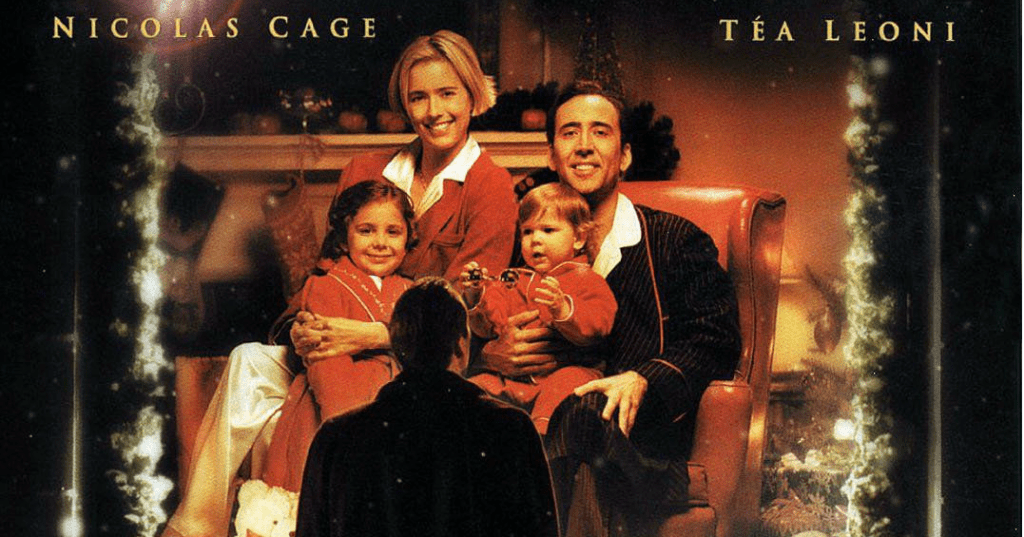
THE FAMILY MAN (2000) – Nicolas Cage gets a “glimpse” into a different life!


Nicolas Cage stars as Jack Campbell, a Wall Street hot shot, who puts his success in the business world above everything else in his life. We meet him on Christmas Eve as he’s trying to close a multi-billion dollar merger. He’s making everyone work late and even calls for a work session on Christmas Day. Jack’s administrative assistant gives him a phone message from his former girlfriend Kate (Tea Leoni), who he almost married about 15 years earlier. He’s surprised to hear from her, especially since he essentially chose his career over her all those years ago. That night as he stops at a grocery store on his way home, events transpire so that a desperate man named Cash (Dan Cheadle) pulls a gun on the clerk. Jack is able to use a calm demeanor and business sense to talk to Cash in a way that diffuses the situation and the two leave the store together. As they walk down the street, Jack tries to talk to Cash and help him. When Cash starts asking Jack about his life, Jack indicates that his life is great and he has everything he needs. Interestingly, this is where Cash mysteriously tells Jack that he’s going to do something for him, something he really needs…

The next morning, Christmas morning, Jack wakes up in a different home, he’s married to Kate, and they have two kids and a dog. He’s no longer an investment banker; now he’s a tire salesman. He no longer drives a Ferrari; now he’s drives a mini-van. In panic-mode, Jack runs out of the house as his in-laws arrive, fires up the mini-van, and drives to his office on Wall Street where nobody knows him, and they kick him out of the building. About that time, Cash pulls up in Jack’s Ferrari and tells him that he’s giving him the gift of a “glimpse” into what his life could have been if he had married Kate instead of focusing on himself and his career. So Jack heads back to try life in Jersey, wondering when the glimpse will come to an end. 

My wife and I are continuing to watch Christmas movies throughout the month of December to stay in the holiday spirit. THE FAMILY MAN is not necessarily a movie we watch every year, but I’m a fan of Nicolas Cage. I enjoy these types of films where a person sees what their lives could have been like if they had made different decisions at certain key points along the way. An easy comparison can be made to Frank Capra’s IT’S A WONDERFUL LIFE, which is my personal favorite Christmas movie, and it’s in my top 10 movies of all time. It’s not really an appropriate comparison though. These stories encounter their subjects in two very different places. In IT’S A WONDERFUL LIFE, George Bailey is at the end of his rope and thinking his family would have been better off if he had never been born. It takes Clarence to reveal just how important George has been to those he loves. In THE FAMILY MAN on the other hand, Jack Campbell is at the top of the world and standing at the precipice of his crowning achievement in his career. He believes his life is wonderful. Cash decides to teach him a lesson by offering a “glimpse” into a life that he could have had if he had chosen Kate and a family over his career. Would life with her be more fulfilling than all the money in the world? I think the sale is a lot easier for Clarence than Cash, and I also think that’s why I found the film to be less compelling. George Bailey’s decision was literally life with a family who dearly loves him, or death. Jack Campbell’s decision is if he wants a middle class life with a loving wife and two precious kids that he only just met, or if he wants to continue his prior life as the multi-millionaire mover and shaker with his pick of beautiful women.  It doesn’t help the film’s case either that Jack’s never really presented as being completely empty on the inside or unhappy, say, the way Bill Murray is in SCROOGED. While I personally enjoy the type of life that Jack is able to glimpse, his character’s specific choice is not as obvious, or earned, the way George Bailey’s is. 

Overall, as a man who wouldn’t trade my family for all the money in the world, I do appreciate what THE FAMILY MAN is going for. The execution doesn’t quite pull it off in a way that is completely satisfying, and ultimately explains why I don’t watch it every year as a holiday staple. 

Space Jam – A New Legacy (Dir. by Malcolm D. Lee)


Basketball’s not exactly my sport. I’ve always been a fan of Hockey, but I understand that I’m not the target audience for Space Jam – A New Legacy. Watching the movie, I get the feeling that Warner Bros. finally figured out just how large it is. Just as Disney did with Ralph Breaks the Internet, there are tons of references to the WB’s home grown content. Castles from Harry Potter, outfits from The Matrix, Mad Max: Fury Road, Game of Thrones and even Pennywise the Clown make an appearance in the movie. It’s nice to see, but a lot of it pulls away from the story in the same fashion that Ready Player One did. I found I was so busy watching the background that I didn’t care too much about LeBron James and his kid.

Space Jam – A New Legacy does have some new elements. LeBron James (playing himself) is a little at odds with his son, Dom (Cedric Joe). Dom really isn’t into basketball, though he does have a basketball themed video game he’s designing. LeBron would rather he be into the actual sport. When the WB’s AI, known as Al G. Rhythm (Don Cheadle, Avengers: Endgame) makes a failed pitch to LeBron on behalf of the Warner Bros, he decides to get revenge (and recognition) by way of pulling both Dom and LeBron into the Warnerverse for a basketball game to end all games. If LeBron wins, he gets his son back (who happens to be playing against him), and if he loses, he and the entire audience – everyone – will be trapped inside of the Warnerverse, forever.

Just writing that feels a little strange. Stuck in HBO Max because of a bad basketball game?

Either way, he finds Bugs Bunny and together, they form an All Star team based off of the other Looney Tunes. The film does address one thing I liked. Since they had the entire Warnerverse at their disposal, it would be easier to build a team off of superheroes. The story finds a way around this.

Now, let’s not act like the original Space Jam was ever part of the Criterion Collection. It was a fun film with a major star playing among cartoons. There wasn’t a whole lot to expect, though it was enjoyable and I have the soundtrack for it. Michael Jordan had the benefit of Danny DeVito, Wayne Knight and Bill Murray to help him out for comic relief. Here, it’s more or less just LeBron vs the Goon Squad. When it comes to acting, LeBron James is okay. Most of his lines are centered around informing the toons and the audience that he has to get him back.

I do have to say that Don Cheadle does great here, which is expected. The same can be said for Sonequa Martin-Green (Star Trek: Discovery) and Lil Rel Howry (Get Out)There are some moments in A New Legacy that do work (Granny’s scenes in particular are standouts that made me laugh, along with a great Wile E. Coyote Fury Road moment), but that’s only because of the connection between all of the other WB franchises. It’s as if they didn’t feel comfortable enough with the story they had, so they said “Why not just litter the screen with everything we’ve got – King Kong, It, The Matrix, Harry Potter, and see what we get?”

Warner Animation Group does appear to be getting better over their previous attempt in Tom & Jerry. Maybe it’s because it’s easier to interact with cartoon characters that can talk back, but some of the animations (particularly the CGI ones) are good. They’re just incredibly overused. Malcolm D. Lee’s direction is also good, for what he’s given. It’s not Roll Bounce or Undercover Brother, but the flow of the story moves well. Before you know it, you’re in the Big Game.

Space Jam – A New Legacy isn’t the worst thing out there, it’s just stuffed with more content than it needs. It’s not on Tom & Jerry’s level of bad. Besides, it’s for Kids. If you love Basketball, LeBron, Looney Tunes or anything Warner’s Related, you should be good here. Just take it for what it is and enjoy. Thankfully, if you have HBO Max, it’s free to watch for the next 30 days (as of this writing). It just don’t see myself running back to it.

LeBron James steps onto the Court in the Space Jam: A New Legacy trailer!


I’ll admit to being a little excited for this newest generation of 1996’s Space Jam. I love cartoon / live action mashups, and Space Jam: A New Legacy looks like it’s all that and then some. Director Malcolm D. Lee (Roll Bounce, Night School) leads the update with LeBron James taking center stage. In this version, LeBron’s son is trapped in a different dimension. To save him, LeBron has to play against the Monstars, much like Michael Jordan did in the previous film. He won’t be playing alone, however, as he has various Looney Tunes characters to assist him.

Space Jam: A New Legacy also stars Sonequa Martin-Green (Star Trek: Discovery), Don Cheadle (Avengers: Endgame), along with a series of cameos from some of the NBA’s finest. The film, produced by Ryan Coogler (Black Panther) is set to release in theatres and on HBO Max on July 16.

Here Are The 78th Annual Golden Globe Nominations!


I’m totally turned off by the self-importance of the Golden Globes and I resent every time that I have to write about them.

That said, despite the fact that no one is quite sure who actually votes for the damn things and stories of corruption in the Hollywood Foreign Press Association have been rampant for years, the Golden Globes have still emerged as one of the main Oscar precursors.  So, you kind of have to pay attention to them.  Bleh.

There really aren’t any huge shocks in the list of nominees below, with the exception of maybe Jared Leto for Best Supporting Actor and James Corden’s Prom nomination.  I mean, if you’re that determined to nominate someone for The Prom, why would you go for James Corden as opposed to Meryl Streep?  That’s just odd.

Anyway, here are the nominations:

Best Motion Picture, Drama
“The Father”
“Mank”
“Nomadland”
“Promising Young Woman”
“The Trial of the Chicago 7”

Best Motion Picture, Musical or Comedy
“Borat Subsequent Moviefilm”
“Hamilton”
“Music”
“Palm Springs”
“The Prom”

Best Director, Motion Picture
Emerald Fennell, “Promising Young Woman”
David Fincher, “Mank”
Regina King, “One Night In Miami”
Aaron Sorkin, “The Trial of the Chicago 7”
Chloé Zhao, “Nomadland”

Best Performance by an Actress in a Motion Picture, Drama
Viola Davis, “Ma Rainey’s Black Bottom”
Andra Day, “The United States vs. Billie Holiday”
Vanessa Kirby, “Pieces of a Woman”
Frances McDormand, “Nomadland”
Carey Mulligan, “Promising Young Woman”

Best Performance by an Actress in a Motion Picture, Musical or Comedy
Maria Bakalova, “Borat Subsequent Moviefilm”
Kate Hudson, “Music”
Michelle Pfeiffer, “French Exit”
Rosamund Pike, “I Care a Lot”
Anya Taylor-Joy, “Emma”

Best Performance by an Actress in a Supporting Role in any Motion Picture
Glenn Close, “Hillbilly Elegy”
Olivia Colman, “The Father”
Jodie Foster, “The Mauritanian”
Amanda Seyfried, “Mank”
Helena Zengel, “News of the World”

Best Performance by an Actor in a Motion Picture, Drama
Riz Ahmed, “Sound of Metal”
Chadwick Boseman, “Ma Rainey’s Black Bottom”
Anthony Hopkins, “The Father”
Gary Oldman, “Mank”
Tahar Rahim, “The Mauritanian”

Best Performance by an Actor in a Motion Picture, Musical or Comedy
Sacha Baron Cohen, “Borat Subsequent Moviefilm”
James Corden, “The Prom”
Lin-Manuel Miranda, “Hamilton”
Dev Patel, “The Personal History of David Copperfield”
Andy Samberg, “Palm Springs”

Best Performance by an Actor in a Supporting Role in any Motion Picture
Sacha Baron Cohen, “The Trial of the Chicago 7”
Daniel Kaluuya, “Judas and the Black Messiah”
Jared Leto, “The Little Things”
Billy Murray, “On the Rocks”
Leslie Odom Jr., “One Night In Miami”

Best Screenplay, Motion Picture
Emerald Fennell, “Promising Young Woman”
Jack Fincher, “Mank”
Aaron Sorkin, “The Trial of the Chicago 7”
Florian Zeller and Christopher Hampton, “The Father”
Chloé Zhao, “Nomadland”

Best Original Score, Motion Picture
Alexandre Desplat, “The Midnight Sky”
Ludwig Göransson, “Tenet”
James Newton Howard, “News of the World”
Trent Reznor and Atticus Ross, “Mank”
Trent Reznor, Atticus Ross and Jon Batiste, “Soul”

Best Original Song, Motion Picture
“Fight For You,” Judas and the Black Messiah”
“Hear My Voice,” The Trial of the Chicago 7”
“Io Sì (Seen),” The Life Ahead”
“Speak Now,” One Night In Miami”
“Tigress & Tweed,” The United States Vs. Billie Holiday”

Best Motion Picture, Animated
“The Croods: A New Age”
“Onward”
“Over the Moon”
“Soul”
“Wolfwalkers”

Best Motion Picture, Foreign Language
“Another Round”
“La Llorona”
“The Life Ahead”
“Minari”
“Two Of Us”

Best Television Series, Drama
“The Crown”
“Lovecraft Country”
“The Mandalorian”
“Ozark”
“Ratched”

Best Television Series, Musical or Comedy
“Emily in Paris”
“The Flight Attendant”
“The Great”
“Schitt’s Creek”
“Ted Lasso”

Best Limited Series, Anthology Series or a Motion Picture made for Television
“Normal People”
“The Queen’s Gambit”
“Small Axe”
“The Undoing”
“Unorthodox”

Best Performance by an Actress in a Television Series, Drama
Olivia Colman, “The Crown”
Jodie Comer, “Killing Eve”
Emma Corrin, “The Crown”
Laura Linney, “Ozark”
Sarah Paulson, “Ratched”

Best Performance by an Actress in a Television Series, Musical or Comedy
Lily Collins, “Emily In Paris”
Kaley Cuoco, “The Flight Attendant”
Elle Fanning, “The Great”
Jane Levy, “Zoey’s Extraordinary Playlist”
Catherine O’Hara, “Schitt’s Creek”

Best Performance by an Actress in a Limited Series, Anthology Series or a Motion Picture Made for Television
Cate Blanchett, “Mrs. America”
Daisy Edgar Jones, “Normal People”
Shira Haas, “Unorthodox”
Nicole Kidman, “The Undoing”
Anya Taylor-Joy, “The Queen’s Gambit”

Best Performance by an Actress in a Television Supporting Role
Gillian Anderson, “The Crown”
Helena Bonham Carter, “The Crown”
Julia Garner, “Ozark”
Annie Murphy, “Schitt’s Creek”
Cynthia Nixon, “Ratched”

Best Performance by an Actor in a Television Series, Drama
Jason Bateman, “Ozark”
Josh O’Connor, “The Crown”
Bob Odenkirk, “Better Call Saul”
Al Pacino, “Hunters”
Matthew Rhys, “Perry Mason”

Best Performance by an Actor in a Television Series, Musical or Comedy
Don Cheadle, “Black Monday”
Nicholas Hoult, “The Great”
Eugene Levy, “Schitt’s Creek”
Jason Sudeikis, “Ted Lasso”
Ramy Youssef, “Ramy”

Best Performance by an Actor in a Limited Series or a Motion Picture Made for Television
Bryan Cranston, “Your Honor”
Jeff Daniels, “The Comey Rule”
Hugh Grant, “The Undoing”
Ethan Hawke, “The Good Lord Bird”
Mark Ruffalo, “I Know This Much is True”

Best Performance by an Actor in a Television Supporting Role
John Boyega, “Small Axe”
Brendan Gleeson, “The Comey Rule”
Daniel Levy, “Schitt’s Creek”
Jim Parsons, “Hollywood”
Donald Sutherland, “The Undoing”

Here Are The Major 72nd Emmy Nominations!


Usually, when it’s time for the Emmy nominations to be announced, I’ll post what I personally would have nominated.  I didn’t do it this year because, for whatever reason, I didn’t watch as much TV last season as I have in the past so I felt like, if I had done a Lisa Has All The Power post for the Emmy nominations, I would have ended up just nominating a bunch of shows that I hadn’t actually watched and that would just be wrong.

I will say that I was hoping to see nominations for Bad Education and Unbelievable.  Both did receive nominations, though not as much as they should have.  Bad Education was nominated for Best TV Movie and Hugh Jackman received a nomination but it deserved so much more.  (It’s the best film that I’ve seen so far this year and it bugs the Hell out of me that it was sold to HBO and not Netflix because Bad Education is the type of movie that should get Oscar recognition.)  Unbelievable was nominated for Best Limited Series but Kaitlyn Dever and Merritt Weaver deserved nominations as well.  I was also disappointed that neither Aaron Paul nor Robert Forster were nominated for El Camino.  I’m also upset that my favorite comedy series — Medical Police — was totally snubbed but I’m not really surprised.  Medical Police is hilarious but it’s not self-important enough for the Emmys.  Still, considering that Curb Your Enthusiasm was kind of terrible this year, it’s a shame that Medical Police couldn’t sneak in there.

(This year still isn’t as bad as the year that Twin Peaks: The Return was snubbed in all the major categories.)

Anyway, here are the major nominees.  At least The Mandalorian got some recognition.  GO BABY YODA!

Drama Series

“Better Call Saul” (AMC)
“The Crown” (Netflix)
“The Handmaid’s Tale” (Hulu)
“Killing Eve” (BBC America/AMC)
“The Mandalorian” (Disney Plus)
“Ozark” (Netflix)
“Stranger Things” (Netflix)
“Succession” (HBO)

Comedy Series

“Curb Your Enthusiasm” (HBO)
“Dead to Me” (Netflix)
“The Good Place” (NBC)
“Insecure” (HBO)
“The Kominsky Method” (Netflix)
“The Marvelous Mrs. Maisel” (Amazon Prime Video)
“Schitt’s Creek” (Pop TV)
“What We Do in the Shadows” (FX)

Limited Series

“Little Fires Everywhere” (Hulu)
“Mrs. America” (Hulu)
“Unbelievable” (Netflix)
“Unorthodox” (Netflix)
“Watchmen” (HBO)

Televison Movie

“American Son” (Netflix)

“Bad Education” (HBO)

“Dolly Parton’s Heartstrings: These Old Bones” (Netflix)

“El Camino: A Breaking Bad Movie” (Netflix)

Unbreakable Kimmy Schmidt: Kimmy vs. The Reverend (Netflix)

Lead Actor in a Drama Series

Jason Bateman (“Ozark”)
Sterling K. Brown (“This Is Us”)
Steve Carell (“The Morning Show”)
Brian Cox (“Succession”)
Billy Porter (“Pose”)
Jeremy Strong (“Succession”)

Lead Actress in a Drama Series

Jennifer Aniston (“The Morning Show”)
Olivia Colman (“The Crown”)
Jodie Comer (“Killing Eve”)
Laura Linney (“Ozark”)
Sandra Oh (“Killing Eve”)
Zendaya (“Euphoria”)

Lead Actor in a Comedy Series

Anthony Anderson (“Black-ish”)
Don Cheadle (“Black Monday”)
Ted Danson (“The Good Place”)
Michael Douglas (“The Kominsky Method”)
Eugene Levy (“Schitt’s Creek”)
Ramy Youssef (“Ramy”)

Lead Actress in a Comedy Series

Christina Applegate (“Dead to Me”)
Rachel Brosnahan (“The Marvelous Mrs. Maisel”)
Linda Cardellini (“Dead to Me”)
Catherine O’Hara (“Schitt’s Creek”)
Issa Rae (“Insecure”)
Tracee Ellis Ross (“Black-ish”)

Lead Actor in a Limited Series or Movie

Jeremy Irons (“Watchmen”)
Hugh Jackman (“Bad Education”)
Paul Mescal (“Normal People”)
Jeremy Pope (“Hollywood”)
Mark Ruffalo (“I Know This Much Is True”)

Lead Actress in a Limited Series or Movie

Cate Blanchett (“Mrs. America”)
Shira Haas (“Unorthodox”)
Regina King (“Watchmen”)
Octavia Spencer (“Self Made”)
Kerry Washington (“Little Fires Everywhere”)

Supporting Actor in a Drama Series

Giancarlo Esposito (“Better Call Saul”)
Bradley Whitford (“The Handmaid’s Tale”)
Billy Crudup (“The Morning Show”)
Mark Duplass (“The Morning Show”)
Nicholas Braun (“Succession”)
Kieran Culkin (“Succession”)
Matthew Macfadyen (“Succession”)
Jeffrey Wright (“Westworld”)

Supporting Actress in a Drama Series

Laura Dern (“Big Little Lies”)
Meryl Streep (“Big Little Lies”)
Helena Bonham Carter (“The Crown”)
Samira Wiley (“The Handmaid’s Tale”)
Fiona Shaw (“Killing Eve”)
Julia Garner (“Ozark”)
Sarah Snook (“Succession”)
Thandie Newton (“Westworld”)

Supporting Actor in a Comedy Series

Andre Braugher (“Brooklyn Nine-Nine”)
William Jackson Harper (“The Good Place”)
Alan Arkin (“The Kominsky Method”)
Sterling K. Brown (“The Marvelous Mrs. Maisel”)
Tony Shalhoub (“The Marvelous Mrs. Maisel”)
Mahershala Ali (“Ramy”)
Kenan Thompson (“Saturday Night Live”)
Dan Levy (“Schitt’s Creek”)

Supporting Actress in a Comedy Series

Betty Gilpin (“GLOW”)
D’Arcy Carden (“The Good Place”)
Yvonne Orji (“Insecure”)
Alex Borstein (“The Marvelous Mrs. Maisel”)
Marin Hinkle (“The Marvelous Mrs. Maisel”)
Kate McKinnon (“Saturday Night Live”)
Cecily Strong (“Saturday Night Live”)
Annie Murphy (“Schitt’s Creek”)

Supporting Actor in a Limited Series or Movie

Dylan McDermott (“Hollywood”)
Jim Parsons (“Hollywood”)
Tituss Burgess (“Unbreakable Kimmy Schmidt: Kimmy vs. the Reverend”)
Yahya Abdul-Mateen II (“Watchmen”)
Jovan Adepo (“Watchmen”)
Louis Gossett Jr. (“Watchmen”)

Supporting Actress in a Limited Series or Movie

Holland Taylor (“Hollywood”)
Uzo Aduba (“Mrs. America”)
Margo Martindale (“Mrs. America”)
Tracey Ullman (“Mrs. America”)
Toni Collette (“Unbelievable”)
Jean Smart (“Watchmen”)

Reality Competition

“The Masked Singer” (FOX)
“Nailed It” (Netflix)
“RuPaul’s Drag Race” (VH1)
“Top Chef” (Bravo)
“The Voice” (NBC)

Variety Sketch Series

“A Black Lady Sketch Show” (HBO)
“Drunk History” (Comedy Central)
“Saturday Night Live” (NBC)

Variety Talk Series

“Daily Show with Trevor Noah” (Comedy Central)
“Full Frontal with Samantha Bee” (TBS)
“Jimmy Kimmel Live” (ABC)
“Last Week Tonight with John Oliver” (HBO)
“Late Show with Stephen Colbert” (CBS)

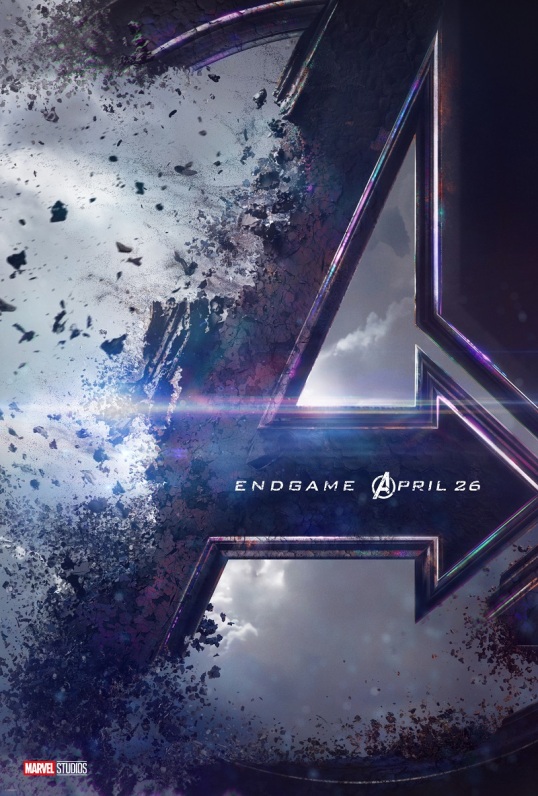
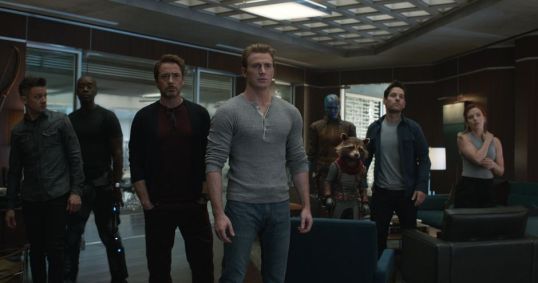
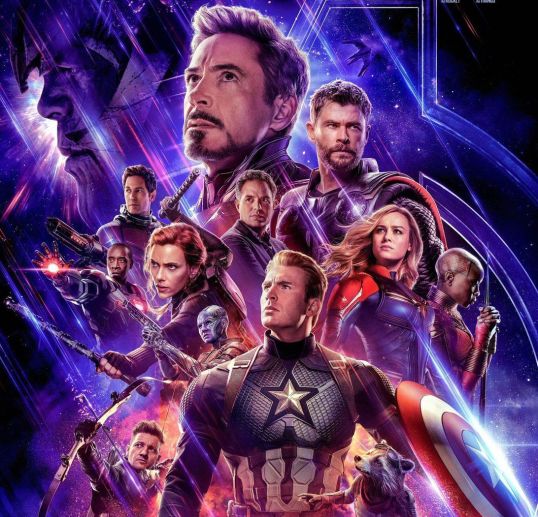
Film Review: Avengers: Endgame (dir by the Russo Brothers)


(Minor Spoilers Below!  Read at your own risk.)

So, how long does the no spoiler rule for Avengers: Endgame apply?  There’s so much that I want to say about this film but I know that I shouldn’t because, even though it had a monstrous opening weekend, there are still people out there who have not had a chance to see the film.  And while this review will have minor spoilers because, otherwise, it would be impossible to write, I’m not going to share any of the major twists or turns.

I will say this.  I saw Avengers: Endgame last night and it left me exhausted, angry, sad, exhilarated, and entertained.  It’s a gigantic film, with a plot that’s as messy and incident-filled as the cinematic universe in which it takes place.  More than just being a sequel or just the latest installment in one of the biggest franchises in cinematic history, Avengers: Endgame is a monument to the limitless depths of the human imagination.  It’s a pop cultural masterpiece, one that will make you laugh and make you cheer and, in the end, make you cry.  It’s a comic book film with unexpected emotional depth and an ending that will bring a tear to the eye of even the toughest cynic.  By all logic, Avengers: Endgame is the type of film that should collapse under its own weight but instead, it’s a film that thrives on its own epic scope.  It’s a three-hour film that’s never less than enthralling.  Even more importantly, it’s a gift to all of us who have spent the last ten years exploring the Marvel Cinematic Universe.

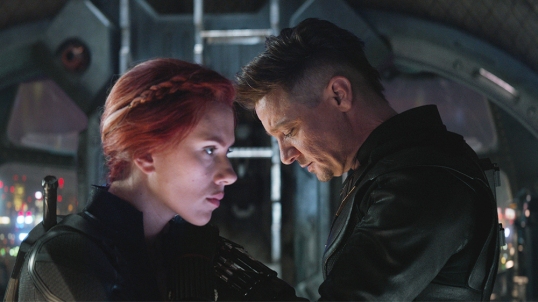
The film itself starts almost immediately after the “Snap” that ended Avengers: Infinity War and we watch as Clint Barton (Jeremy Renner, returning to the franchise after being absent in the previous film) finds himself powerless to keep his family from disintegrating.  After often being dismissed as the Avengers’s weak link, both Clint Barton and Jeremy Renner come into their own in the film.  As one of two members of the Avengers who does not have super powers, Clint serves as a everyperson character.  He’s a reminder that there’s more at stake in Endgame than just the wounded pride of a few super heroes.  When Thanos wiped out half the universe, he didn’t just wipe out Spider-Man, Doctor Strange, and Groot.  He also left very real wounds that will never be healed.

When the film jumps forward by five yeas, we discover that the world is now a much darker place.  When we see New York, the once vibrant city is now gray and deserted.  Our surviving heroes have all dealt with the Snap in their own way.  Clint is now a vigilante, killing anyone who he feels should have been wiped out by Thanos but wasn’t.  Thor (Chris Hemsworth) drinks and eats and feels sorry for himself.  Captain America (Chris Evans) attends support groups and, in one nicely done scene, listens as a man talks about his fear of entering into his first real relationship in the years since “the Snap.”  Tony Stark (Robert Downey, Jr.) is living as a recluse and is still blaming himself.  Hulk (Mark Ruffalo) is now an avuncular, huge, and very green scientist.  Only Natasha (Scarlett Johansson) remains convinced that the Snap can somehow be undone.  She’s right, of course.  But doing so will involve some unexpected sacrifices and a lot of time travel….

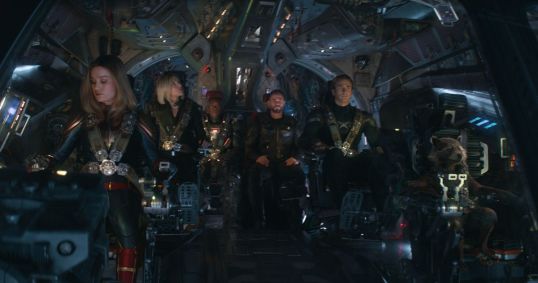
And that’s as much as I can tell you, other than to say that the film takes full advantage of both the time travel aspects (yes, there are plenty of Back to the Future jokes) and its high-powered cast.  With our heroes — which, along with the usual Avengers, also include Ant-Man (Paul Rudd) and Rocket Racoon (Bradley Cooper) — hopping through time and space, we get a chance to revisit several of the films that led up to Endgame and it’s a thousand times more effective than it has any right to be.  Yes, one could argue that the cameos from Robert Redford, Tom Hiddleston, Hayley Atwell, and others were essentially fan service but so what?  The fans have certainly earned it and the MCU has earned the chance to take a look back at what it once was and what it has since become.

Indeed, Avengers: Endgame would not work as well as it does if it hadn’t been preceded by 21 entertaining and memorable movies.  It’s not just that the MCU feels like a universe that it as alive as our own, one that is full of wonder, mystery, sadness, and love.  It’s also that we’ve spent ten years getting to know these characters and, as a result, many of them are much more than just “super heroes” to us.  When Tony Stark and Captain America argue over whether it’s even worth trying to undo the Snap, it’s an effective scene because we know the long and complicated history of their relationship.  When the Avengers mourn, we mourn with them because we know their pain.  We’ve shared their triumphs and their failures.  Tony Stark may be a guy in an iron suit but he’s also a man struggling with his own demons and guilt.  Steve Rogers may be a nearly 100 year-old super solider but he’s also every single person who has struggled to make the world a better place.  As strange as it may be to say about characters known as Iron Man, Captain America, and the Black Widow, we feel like we know each and every one of them.  We care about them.

Needless to say, the cast is huge and one of the great things about the film is that previously underused or underestimated performers — like Jeremy Renner, Scarlett Johansson, Paul Rudd, Don Cheadle, and Karen Gillan — all finally get a chance to shine.  As always, the heart of the film belongs to Chris Evans while Robert Downey, Jr. provides just enough cynicism to keep things from getting to superficially idealistic.  Chris Hemsworth and Mark Ruffalo get most of the film’s big laughs, each playing their borderline ludicrous characters with just the right combination of sincerity and humor.  Of course, Josh Brolin is back as well and he’s still perfectly evil and arrogant as Thanos.  But whereas Thanos was the focus of Infinity War, Endgame focuses on the heroes.  If Infinity War acknowledged that evil can triumph, Endgame celebrates the fact that good never surrenders.

As Endgame came to an end, I did find myself wondering what the future is going to hold for the MCU.  A part of me wonders how they’re going to top the past ten years or if it’s even possible to do so.  Several mainstays of the MCU say goodbye during Endgame and it’s hard to imagine the future films without their presence.  It’s been hinted that Captain Marvel is going to be one of the characters holding the next phase of the  MCU together and, fortunately, Brie Larson is a quite a bit better in Endgame than she was in her previous MCU film.  Hopefully, regardless of what happens in the future, Marvel and Disney will continue to entrust their characters to good directors, like the Russo Brothers, James Gunn, and Taika Waititi.  (Wisely, Disney reversed themselves and rehired James Gunn for the next Guardians of the Galaxy film.  Of course, Gunn never should have been fired in the first place….)

And that’s really all I can say about Avengers: Endgame right now, other than to recommend that you see it.  In fact, everyone in the world needs to hurry up and see it so we can finally start talking about the film without having to post spoiler warnings!

For now, I’ll just say that Avengers: Endgame is a powerful, emotional, and entertaining conclusion to one of the greatest cinematic sagas ever.

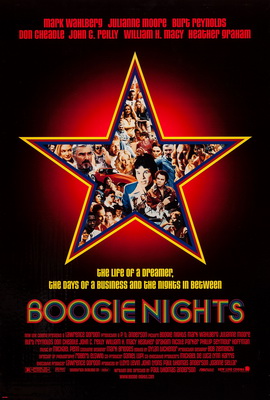
Scenes That I Love: The Awards Ceremony From Boogie Nights


I would like to think that when the Palme d’Or is awards in Cannes, it’ll be half as exciting as when Dirk Diggler (Mark Wahlberg) picked up his second Best Actor trophy in Paul Thomas Anderson’s Boogie Nights.

Now, the scene below is actually the extended version of the scene that actually appeared in the movie.  In the movie, you just see Jack Horner (Burt Reynolds) watching his latest film and then cut to Dirk picking up his award.  In the extended version, we get to see everyone’s reaction to Dirk winning.  They’re all there — Burt Reynolds, William H. Macy, Nina Hartley, John C. Reilly, Melora Waters, Luis Guzman, Julianne Moore, Heather Graham, Don Cheadle, Robert Ridgely (as the memorably corrupt Colonel), and, of course, the dearly missed Philip Seymour Hoffman.

I can understand why Anderson chose to go with a shortened version of this scene.  Boogie Nights is a long film and obviously, it wasn’t totally necessary to see how everyone reacted to Diggler’s victory.  (By that point, in the film, we already knew how everyone felt about him.)  That said, I do prefer the extended version.  If nothing else, it’s a reminder that Boogie Nights was more than just the story of Dirk Diggler.  Instead, it was the story of a group of outcasts who became a family.

Anyway, let’s hope that whoever wins the Palme d’Or will be a bit more enthusiastic about it than Dirk.

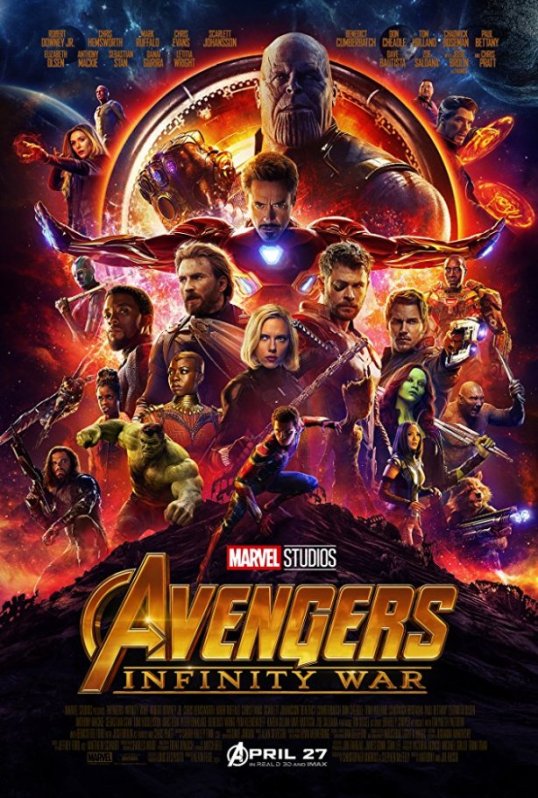
Lisa Reviews Avengers: Infinity War (dir by Joe and Anthony Russo)


(Warning: There are spoilers in this review.  They’re not necessarily huge spoilers but they’re there.  Read at your own risk.)

Avengers: Infinity War is a lot of things.  It’s big, it’s thrilling, it’s emotional, it’s colorful, it’s loud, it’s flamboyant, and, clocking in at two and a half hours, it’s occasionally a bit exhausting.  It’s overwhelming but it’s never boring.  It’s a nearly perfect example of pure cinema, where the story is less about what happens and more how it’s told. It’s a tribute to not just the Marvel Cinematic Universe but also to the audiences who have been flocking to each movie since Iron Man was first released way back in 2008.  Avengers: Infinity War is a pop art masterpiece, one that provides the first part of a climax to a saga that’s been unfolding for ten years.

In the days leading up to the release of Avengers: Infinity War, the main selling point was the assumption that this movie would feature every single character that’s been introduced as a citizen of the MCU so far.  Though the film comes close to including everyone, there are still a few characters who are notable for their absence.  Ant-Man and the Wasp are nowhere to be seen.  None of the Marvel Television characters show up, which is a shame because I’m sure Jessica Jones would have had some choice words about the potential end of the universe.  Two familiar SHIELD agents make a brief appearance, though you have to wonder where they were when New York and Wakanda were being invaded.

That said, all of the big heroes show up.  Tony Stark (Robert Downey, Jr.) flies into space with Dr. Strange (Benedict Cumberbatch) and Spider-Man (Tom Holland).  Thor (Chris Hemsworth) teams up with Rocket Racoon and Groot (voiced by Bradley Cooper and Vin Diesel, respectively).  When Wakanda is attacked, Black Panther (Chadwick Boseman), Captain America (Chris Evans), The Falcon (Anthony Mackie), White Wolf (Sebastian Stan), the Hulk (Mark Ruffalo), Rhodey (Don Cheadle), and Natasha (Scarlett Johansson) are all present to defend it.  Meanwhile, Vision (Paul Bettany) and Wanda (Elizabeth Olsen) continue to pursue their odd relationship while Peter Quill (Chris Pratt) and Gamora (Zoe Saldana) search for Gamora’s father, Thanos (Josh Brolin).

It’s a packed film and the fact that it works as well as it does is a testament to the power of perfect casting and movie star charisma.  At this point, we feel as if we know these characters.  We know that Tony Stark is going to be haunted by what happened the last time Thanos’s minions involved New York.  We know that Spider-Man is going to be desperate to prove that he belongs with the adults, just as we know that Dr. Strange isn’t going to be particularly impressed with anyone he meets.  Needless to say, some characters get more screen time than others.  Despite a good deal of the film taking place in Wakanda, Black Panther largely stays in the background.  I personally wish that both Natasha and Captain America had been given a bit more to do.  Considering just how talented both Anthony Mackie and Don Cheadle are, it’s a shame that neither one of them ever gets to do much in these films.  At the same time, Infinity Wars allows both Elizabeth Olsen and Paul Bettany to come into their own and Chris Hemsworth again shows that he may be the most underrated star in the MCU.  I’ve read a lot of criticism of certain actions taken by Peter Quill towards the end of the film but actually, it’s exactly what you would expect his character to do in the situation and, up until that moment, Chris Pratt is a welcome presence.  It’s important to have someone around who appreciates good music and who can make you laugh, especially considering that Thanos is planning to wipe out 50% of the universe’s population…

Oh yes, Thanos.  After spending years lurking in the background, Thanos finally steps forward in Infinity War.  In fact, it can be argued that Avengers: Infinity War is actually much more of a Thanos film than an Avengers film.  While our heroes are continually spending the film trying to catch up to Thanos and reacting to his latest action, Thanos is always one step ahead.  Thanos is the one who steers the narrative and, for once, you really do believe that an MCU villain views the heroes as being mere distractions.  Thanos is the one on a quest and the film follows him through every step of his search.  In fact, the film’s most emotional moments belong to Thanos.  For all the death and destruction to be found in the film’s surprisingly dark narrative, Thanos is the only character to ever shed a tear.  Like all great villains, Thanos doesn’t view himself as being evil.  Instead, Thanos speaks very sincerely of his desire to bring balance to the universe.  The scary thing about Thanos isn’t that he claims that he’s being merciful when he slaughters millions of beings.  The scary thing about Thanos is that believes it.

Thanos, you see, is a bit of an intergalactic environmentalist.  As he explains it, the universe only has a finite number of resources.  By killing half of the universe’s population, he is ensuring that the other half will be able to survive in peace and harmony.  Most people would call Thanos’s actions genocidal but Thanos would probably say that he’s merely making the difficult decisions that others don’t have the courage or intelligence to make.  It may all sound rather far-fetched and melodramatic until you consider that, just last week, bureaucrats and doctors in the UK decided it would be better to starve a sick infant to death rather than allow his parents to take him to be treated in another country.  With his mix of narcissism and absolutely belief in his own moral certitude, Thanos is a far more familiar villain than a lot of viewers might want to admit.  As opposed to the forgettable villains who have appeared in so many MCU films, Thanos is a compelling and complicated figure.  It’s interesting to note that two of the best performances of the year so far were given by actors appearing as villains in MCU films, Michael B. Jordan in Black Panther and Josh Brolin in this one.

As befits the film’s subject matter, Infinity War is a sprawling film, one that skips from world to world.  The visuals are frequently spectacular, as are the many battles.  From the opening attack on New York to the final battles in Wakanda and in space, the action is non-stop and thrilling.  (It helps that, as opposed to some of the previous MCU films, it’s always clear who is fighting who and why they’re fighting.)  For me, though, the most memorable scenes are the scenes where Thanos looks and considers the worlds that he’s destroyed.  There’s a scene where an exhausted Thanos rests on a placid planet and it’s one of the strongest images in the history of the MCU.

I’ve been told that I shouldn’t worry too much about all of the characters who are killed over the course of Infinity War.  From what I’ve been told, it’s apparently something of a tradition in Marvel comics to kill off a bunch of recognizable characters and then have them come back to life an issue or two later.  And the fact that the sequel to Infinity War has already been filmed and is set to released next year leads me to suspect that nothing’s permanent.  I mean, if all of these people are really dead, there aren’t going to be many heroes left to make any more movies about.  That said, I still got far more emotional than I probably should have at some of the unexpected demises.  Especially … well, no.  I won’t say the name.  But seriously, it was upsetting.

2018 is shaping up to be the year of Marvel.  So far, Marvel has released two of the best films of the year.  To be honest, a film as huge as Infinity War shouldn’t have worked and yet, it does.  It’s a masterpiece of pop art.*

* For a totally different response to Avengers: Infinity War, check out Ryan’s review by clicking here!

Check Out These Avengers: Infinity War Character Posters!


With the release of Avengers: Infinity War right around the corner, Marvel has released a whole new collection of character posters!  Just in case you were wondering who, from the MCU, is going to show up in Infinity War, here’s a partial reminder!

(By the way, the answer  would appear to be just about everyone who has ever appeared in an MCU film!)

Iron Man (Robert Downey, Jr)

Hulk (Mark Ruffalo)

Thor (Chris Hemsworth)

War Machine (Don Cheadle)

Black Widow (Scarlett Johansson)

Captain America (Chris Evans)

White Wolf (Sebastian Stan)

Falcon (Anthony Mackie)

Star-Lord (Chris Pratt)

Rocket and Groot (Bradley Cooper and Vin Diesel)

Gamora (Zoe Saldana)

Nebula (Karen Gillan)

Drax (Dave Bautista)

Scarlet Witch (Elizabeth Olsen)

Vision (Paul Bettany)

Black Panther (Chadwick Boseman)

Spider-Man (Tom Holland)

Doctor Strange (Benedict Cumberbatch)

Wong (Benedict Wong)

Mantis (Pom Klementieff)

Okoye (Danai Gurira)

Shuri (Letitia Wright)