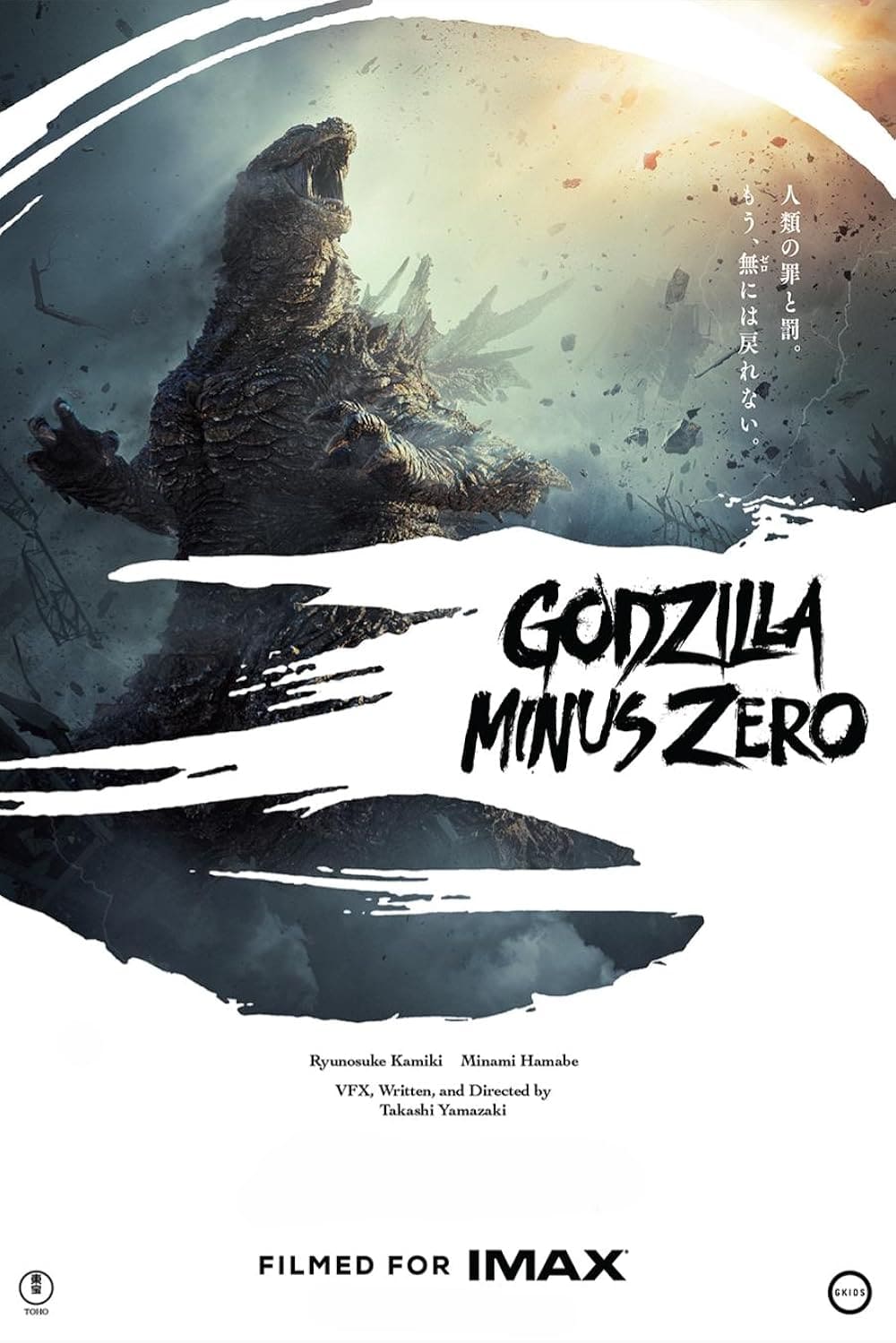
Film Review: Godzilla Minus Zero (dir. by Takashi Yamazaki)


“Fight fire with fire.” — Kanji Murakami

Godzilla Minus Zero understands that surviving the apocalypse is only the beginning of the problem. Eventually, somebody has to rebuild the house, raise the kids, and figure out whether the next rumble outside is ordinary bad weather or another civilization-ending nightmare. Takashi Yamazaki’s follow-up to Godzilla Minus One takes that fragile recovery and puts it under spectacular pressure. Set in 1949, two years after its predecessor’s devastation, the film brings back Kōichi Shikishima, Noriko, and their adopted daughter Akiko, then drops another monster into their hard-earned domestic stability. It’s a bigger premise, but the most interesting stakes remain painfully small: can this family actually keep its future?

That continuity gives the sequel something more valuable than simple audience familiarity. Kōichi and Noriko aren’t just returning characters waiting for another round of destruction; their household represents the ordinary life that catastrophe keeps interrupting. Ryunosuke Kamiki and Minami Hamabe return to roles built around the difficult business of carrying on, while Akiko makes the question of survival extend beyond the adults’ unresolved wartime experiences. The setup creates an effective emotional contradiction. We want these people to have an uneventful life, even though an uneventful life would make for a very different kind of Godzilla movie. Their happiness matters precisely because it seems so vulnerable to forces they can neither predict nor control.

Still, Godzilla Minus Zero isn’t quite as emotionally grounded as Godzilla Minus One. The first film had a beautifully direct connection between one man’s survivor’s guilt and a country’s struggle to recover. Its enormous scale never obscured the intimate story holding everything together. The sequel has a wider field of interests, and its attention moves between family drama, occupation politics, scientific problem-solving, and escalating kaiju conflict. That expansion sometimes makes the emotional material feel less concentrated. There’s more happening, but not every development has the same room to settle. The difference isn’t that the sequel stops caring about people; it’s that more things are competing for our attention.

What keeps that shift from becoming a serious problem is the emotional foundation Yamazaki has already established. Kōichi, Noriko, and Akiko don’t need to start from scratch to make us care. We understand what their home means and what another catastrophe could take away. Returning characters like Kenji Noda extend that sense of connection, while newcomer Makoto Aoyama brings another human perspective to the effort to survive. The emotional stakes remain high even when the storytelling gets busier. These people aren’t simply trying to escape a monster’s path. They’re trying to preserve relationships, reclaim a sense of security, and believe that rebuilding wasn’t just an exercise in postponing the next loss.

That’s especially important as Yamazaki increases the kaiju action. More destruction can easily make a sequel feel less consequential: after enough collapsing buildings, the damage starts looking like scenery. Here, the returning characters give that spectacle a point of reference. We know there are lives beyond the immediate emergency, and that surviving an attack doesn’t mean walking away untouched. The film’s emotional pull may be broader and less piercing than its predecessor’s, but it remains strong enough to keep the monster action from becoming detached from the people experiencing it. Bigger fights don’t automatically mean smaller feelings, even if the balance occasionally wobbles.

Writer-director Yamazaki also once again makes a Godzilla film look beautiful through the way he integrates its visual effects. His background in effects work—and his triple duty here as visual effects supervisor—helps explain why the imagery feels like part of the filmmaking rather than something layered over it. He understands how the technology can push and support the story, not just provide an opportunity to showcase the latest technical achievement. The creatures’ scale, the destruction around them, and the vulnerability of the people below all belong to the same dramatic picture. The spectacle communicates fear and awe while reminding us how precarious everything the characters have rebuilt really is.

That distinction matters in a sequel with this much more monster action. There’s plenty to admire as a technical accomplishment, but Yamazaki doesn’t seem interested in treating the human drama as an obligatory pause between effects sequences. His strongest images connect those two sides of the movie: the enormous force occupying the frame and the ordinary lives threatened by it. Even when the action gets extravagant, there’s a sense of weight behind it. The effects aren’t simply asking us to appreciate what the team can create. They help us feel what it means to live beneath something that powerful, keeping the film’s visual ambition connected to its emotional stakes.

Yamazaki’s smartest narrative expansion is to make the surrounding country feel as unsettled as the family. This is a Japan rebuilding under American occupation, where recovery doesn’t necessarily mean independence or even control over the next emergency. The occupation hangs over the story as another source of pressure, complicating the usual business of scientists, soldiers, and civilians deciding how to confront a monster. Godzilla’s return and the arrival of a new kaiju are immediate dangers, but they unfold within a political situation that already limits Japan’s freedom to respond. The country is threatened from outside while still struggling to determine its own direction.

That makes the American military presence function as a secondary antagonist. Not because occupying forces are interchangeable with a radioactive creature, but because their authority adds another obstacle between vulnerable people and meaningful security. The tension is more interesting than a straightforward humans-versus-monsters arrangement: assistance and domination can occupy uncomfortably similar territory when the people offering protection also hold power over you. The occupation isn’t merely period decoration. It sharpens the film’s anxiety about who gets to make decisions, whose suffering counts, and whether a devastated nation can protect itself without becoming dependent on another destructive force. There’s a bitter irony in being promised stability while having so little say in what that stability looks like.

Then there’s Ghidorah, whose arrival changes the equation from “How do we survive Godzilla?” to the considerably less comforting “Do we actually need Godzilla?” The new creature brings an extraterrestrial dimension to the crisis, while its manipulation of the elements gives the threat a different character from the devastation Japan already knows. Yamazaki isn’t simply replacing one enormous problem with another. He’s creating circumstances in which yesterday’s nightmare starts looking like today’s best available option. That’s a wonderfully nasty foundation for a sequel, because it makes the audience’s anticipation of Godzilla’s return feel morally uneasy rather than automatically triumphant.

The monster-versus-monster premise also gives Godzilla’s changing role a useful dramatic foundation. He doesn’t have to become harmless, friendly, or conveniently misunderstood for people to hope he wins. He just has to be the only force capable of stopping something worse. That distinction matters. A protector who can flatten your city remains a terrifying protector, and dependence on him isn’t the same thing as safety. The film’s movement toward Godzilla as Japan’s defender therefore carries an uncomfortable bargain: survival may require inviting back the very power that made survival so difficult in the first place. You can cheer his arrival without forgetting why everyone should still be afraid.

This is where the film’s concern with weapons of mass destruction becomes more interesting than a familiar nuclear warning. The issue isn’t only that humanity has built weapons capable of annihilating cities. It’s that, confronted with another source of overwhelming destruction, people immediately begin imagining how to direct it. Murakami’s scheme to control Godzilla through the “Resonance Wave,” including his desire to attack New York in revenge for his family’s deaths in Hiroshima, turns the monster into a potential delivery system for human grievance. The kaiju aren’t merely consequences of catastrophe anymore. They’re candidates for the next arsenal.

That possibility makes the proliferation theme especially bleak. A weapon doesn’t stop being a weapon because it breathes, regenerates, or refuses to fit inside a missile silo. Once a creature can be controlled—or someone believes it can—the same arguments about deterrence, retaliation, and national survival become available. Murakami embodies the danger of letting justified grief harden into permission for another mass killing. His history makes the impulse understandable without making its intended consequences defensible. The disturbing question isn’t simply whether humanity can defeat these monsters. It’s whether humanity can resist reproducing its own worst habits through them.

The occupation storyline and the possibility of weaponized kaiju also reinforce each other. Both raise questions about the difference between having protection and possessing power. If another country controls your security, your choices are already constrained. But acquiring an overwhelming destructive force of your own doesn’t necessarily resolve that imbalance in a humane way. It may just give you the means to impose a similar terror on somebody else. The film is most interesting when it sits with that contradiction rather than treating access to greater firepower as an uncomplicated victory. Being vulnerable doesn’t automatically make every response to vulnerability a good one.

Fortunately, the human response isn’t limited to revenge. Noda’s return as the head of the Large-Scale Disaster Response Bureau, alongside meteorologist Aoyama, preserves an appealing counterweight to the film’s destructive imagination: knowledge can serve collective survival rather than domination. Their involvement gives the scientific problem-solving more than a mechanical function. It offers another way of responding to helplessness, one based on cooperation rather than possession of the biggest weapon. Aoyama also helps the sequel’s expanded cast feel like more than a reunion. The future belongs not only to the people who survived the previous disaster, but to those now joining the effort to prevent another.

The bigger mythology does bring a trade-off. Compared with the direct emotional hook of Godzilla Minus One, this sequel has considerably more machinery to keep running. Some viewers will understandably miss the first film’s tighter focus, and the increased action can’t entirely replace that particular emotional intensity. But the expansion isn’t empty escalation. The family story, the occupation, the new monster, and the temptation to weaponize Godzilla all circle the same problem: everyone wants security, and the real conflict lies in what they’re prepared to sacrifice, unleash, or excuse to obtain it.

Godzilla Minus Zero doesn’t quite recapture the emotional precision of Godzilla Minus One, but it finds a worthwhile direction of its own: bigger, stranger, and more uneasy about what survival might demand. Yamazaki delivers the kaiju spectacle without letting the people underneath it become an afterthought, using his command of visual effects to support both the action and its human cost. What lingers isn’t just the thrill of watching enormous creatures collide. It’s the discomfort of watching people look at something capable of destroying their world and wonder how they might use it. The monsters may have changed the balance of power, but the temptation to turn destruction into security remains all too human.
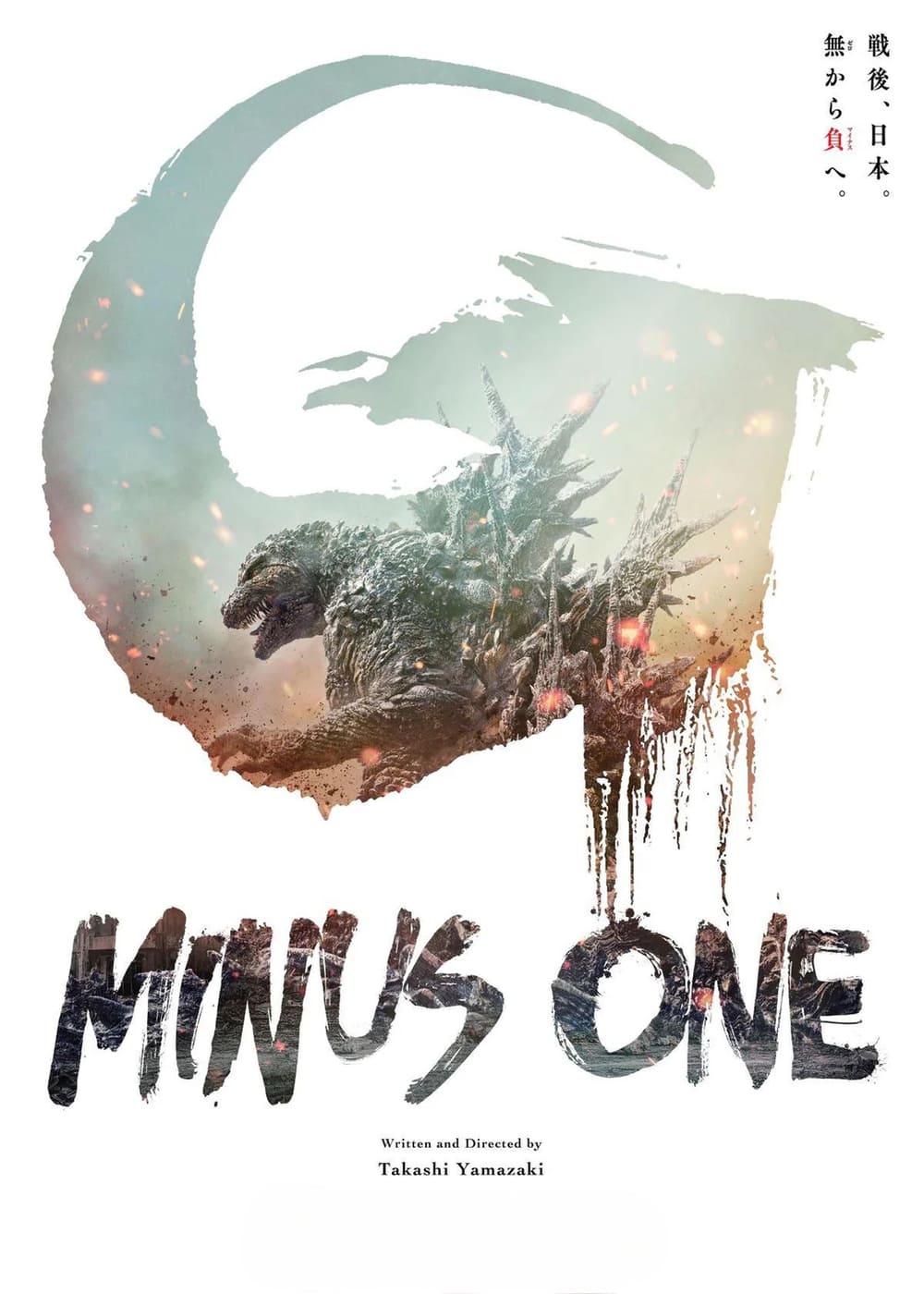
Film Review: Godzilla Minus One (dir. by Takashi Yamazaki)


“Everyone who survived the war is meant to live.” — Noriko

The most terrifying thing in Godzilla Minus One isn’t necessarily the monster’s roar. It’s the anticipation—the awful stretch of time when people realize something unstoppable is coming and there’s nowhere safe to go. Takashi Yamazaki’s 2023 film understands that dread, but its real trick is making the quieter scenes feel just as haunted. Godzilla threatens a country already struggling to recover from catastrophe. For the people trying to rebuild their lives, the creature brings another unbearable possibility: that everything they’ve survived, and everything they’ve managed to put back together, could disappear all over again. The destruction matters because the movie takes the time to show us what’s being destroyed.

The film follows Koichi Shikishima, a young kamikaze pilot who lands on Odo Island in the closing months of World War II, claiming his plane needs repairs. The mechanics find nothing wrong with it; he’s trying to escape a mission that demands his death. That night, Godzilla attacks the base. Koichi freezes when he has an opportunity to fire the plane’s guns, and only he and lead mechanic Sosaku Tachibana survive. When Koichi returns to a Tokyo devastated by firebombing, he carries that failure home like luggage he can’t put down. His parents are dead, his neighborhood is barely recognizable, and being alive feels less like good fortune than another reason for shame.

Ryunosuke Kamiki makes Koichi’s suffering convincing without turning him into an endlessly sympathetic victim. He can be distant, defensive, and frustratingly unwilling to accept the affection offered to him. There’s something painfully believable about that. His problem isn’t that nobody cares whether he lives; it’s that he can’t understand why they should. Kamiki gives the impression of someone who is constantly holding part of himself back, as though fully participating in life would mean forgetting the dead. Even in moments of relative comfort, Koichi seems prepared for happiness to be taken away—or to discover that accepting it was a mistake.

That discomfort becomes especially affecting when he shares his damaged home with Noriko, played by Minami Hamabe, and Akiko, an orphaned baby she has taken into her care. Their household begins as an improvised arrangement, but gradually develops the rhythms of a family. Yamazaki understands how much emotional weight ordinary routines can carry in a story like this. Having someone to feed, somewhere to sleep, and a reason to come home becomes meaningful precisely because those things are no longer guaranteed. Koichi helps create that security, yet struggles to recognize himself as someone entitled to enjoy it. He’s building a future while keeping himself at a distance from it.

The brilliance of Yamazaki’s script is that Godzilla isn’t Koichi’s only enemy. There’s also his guilt—the corrosive belief that because he lived when others died, he has forfeited the right to happiness. The film doesn’t treat that belief as evidence of hidden nobility. It shows how guilt can become a closed system, turning every good thing into another accusation. If Koichi finds work, companionship, or affection, he’s reminded that others never got the same chance. Survival stops being an event and becomes a debt he can never repay. That makes his struggle more complicated than simply finding the courage he lacked during the attack on Odo Island.

His experience also opens onto the larger emotional landscape of a nation’s survivors. The people around him are rebuilding in spaces defined as much by absence as by what remains. Homes, families, and entire neighborhoods have been broken apart, leaving the living to decide what can be recovered and what must be carried. Not everyone expresses Koichi’s particular shame, and that distinction matters. The film doesn’t need every survivor to respond identically for his anguish to have collective resonance. Instead, his story offers one way into the question that can haunt people after mass catastrophe: why did I get another day when so many others didn’t?

That question gives the film a particular connection to the survivors of Hiroshima and Nagasaki. Koichi and Noriko aren’t identified as survivors of those atomic bombings; their immediate losses belong to Tokyo’s destruction. Still, the radioactive monster invites a broader reading that reaches beyond their individual experiences. Godzilla becomes a way of imagining the terror of catastrophic violence returning, even after people have begun trying to live with its consequences. The collective survivor’s guilt suggested here isn’t a claim that every Japanese person felt the same thing. It’s an acknowledgment that rebuilding a country also means living beside losses that reconstruction alone cannot repair.

The Ginza attack brings that historical shadow into terrifying focus. Godzilla’s heat ray produces a blinding explosion and devastating shock wave, making the sequence feel less like a conventional monster rampage than an eruption of atomic nightmare. The spectacle is overwhelming, but its emotional force comes from how suddenly a populated place becomes a landscape of destruction. Yamazaki makes the connection through imagery rather than stopping the movie to explain it. Godzilla’s radioactive origins preserve the atomic horror associated with the original Godzilla, while Koichi’s story brings us close to the burden left with the living. The catastrophe doesn’t end when the immediate violence stops.

It’s important, though, not to confuse survivor’s guilt with collective responsibility for Japan’s wartime aggression. Yamazaki concentrates on ordinary people’s suffering rather than offering a comprehensive historical reckoning. That gives the film a clear emotional focus, although it also leaves difficult parts of the larger picture outside the frame. Its strongest criticism concerns the treatment of human lives as expendable. Koichi has absorbed the idea that his death would have been more valuable than his continued existence. The movie asks us to recognize the cruelty of that assumption. A country cannot genuinely rebuild if its people are still being taught that dying is the best thing they have to offer.

What keeps these ideas from becoming abstract is the companionship Koichi finds among his mine-clearing crew. Their work is dangerous, but their conversations and contrasting personalities give the film room to relax. The humor doesn’t erase what they’ve experienced; it shows that grief and ordinary human silliness can occupy the same space. These men offer Koichi something different from either pity or judgment. They give him a place in a group, practical responsibilities, and relationships that aren’t entirely organized around his worst memories. Recovery starts to look less like a private breakthrough and more like the slow experience of being needed by other people.

Of course, none of this would work as well if Godzilla weren’t genuinely frightening. Yamazaki strips away the comfortable familiarity that can come with such a recognizable screen icon. This creature feels brutally indifferent to the people below him. His lumbering movement gives him weight, while his capacity for sudden destruction makes that apparent sluggishness deceptive. The sea sequences are particularly effective because they make the imbalance so clear: a small boat, a handful of men, and an enormous animal that renders their equipment almost laughably inadequate. The tension comes from that vulnerability, not simply from the size of the effects.

The visual work is impressive beyond its reported budget of less than $15 million, and the film’s Oscar for Best Visual Effects feels easy to understand. But “good for the money” is too small a compliment. What matters is how the effects serve the staging. Yamazaki keeps finding human perspectives that make Godzilla’s scale legible and frightening. The monster isn’t just a large object occupying the frame; he changes the meaning of everything around him. A boat becomes a fragile shell. A street becomes a trap. Buildings that might have suggested the return of normal life become reminders of how quickly security can vanish.

The eventual operation against Godzilla brings the film’s practical and emotional concerns together. With direct American intervention withheld amid tensions with the Soviet Union, civilian initiative and the experience of former naval personnel become crucial. Kenji Noda’s plan depends on cooperation, specialized knowledge, and people willing to trust one another under extraordinary pressure. Just as importantly, the film questions the assumption that taking on a dangerous task requires embracing death. Its emphasis on trying to bring people home gives the mission a different character from the wartime thinking that has damaged Koichi. Ingenuity matters, but so does refusing to treat participants as disposable.

The film isn’t flawless. Some speeches underline themes that the performances have already made clear, and the final operation asks for a generous attitude toward its logistics. Noriko also deserves more development beyond her importance to Koichi’s emotional journey. Her presence is affecting, but there are moments when the film seems more interested in what she represents to him than in her own interior life. Even so, its sincerity carries considerable weight. Yamazaki isn’t embarrassed by tenderness or afraid to let an emotional moment land without cushioning it with a joke. The movie earns much of its intensity by allowing us to care openly.

That’s what gives Godzilla Minus One its staying power. The monster supplies the terror, but the people give that terror meaning. Every fragile connection they form becomes an argument against the idea that the war has already decided the rest of their lives. Yamazaki delivers the destruction expected of a kaiju movie while making an ordinary future feel like its greatest imaginable prize: a home, a family, work to do, someone waiting for you. Beneath all the noise is a gentler, more difficult question: how do you honor the people who never came home without surrendering your own chance to live? The film is strongest when it gives that question room to linger.

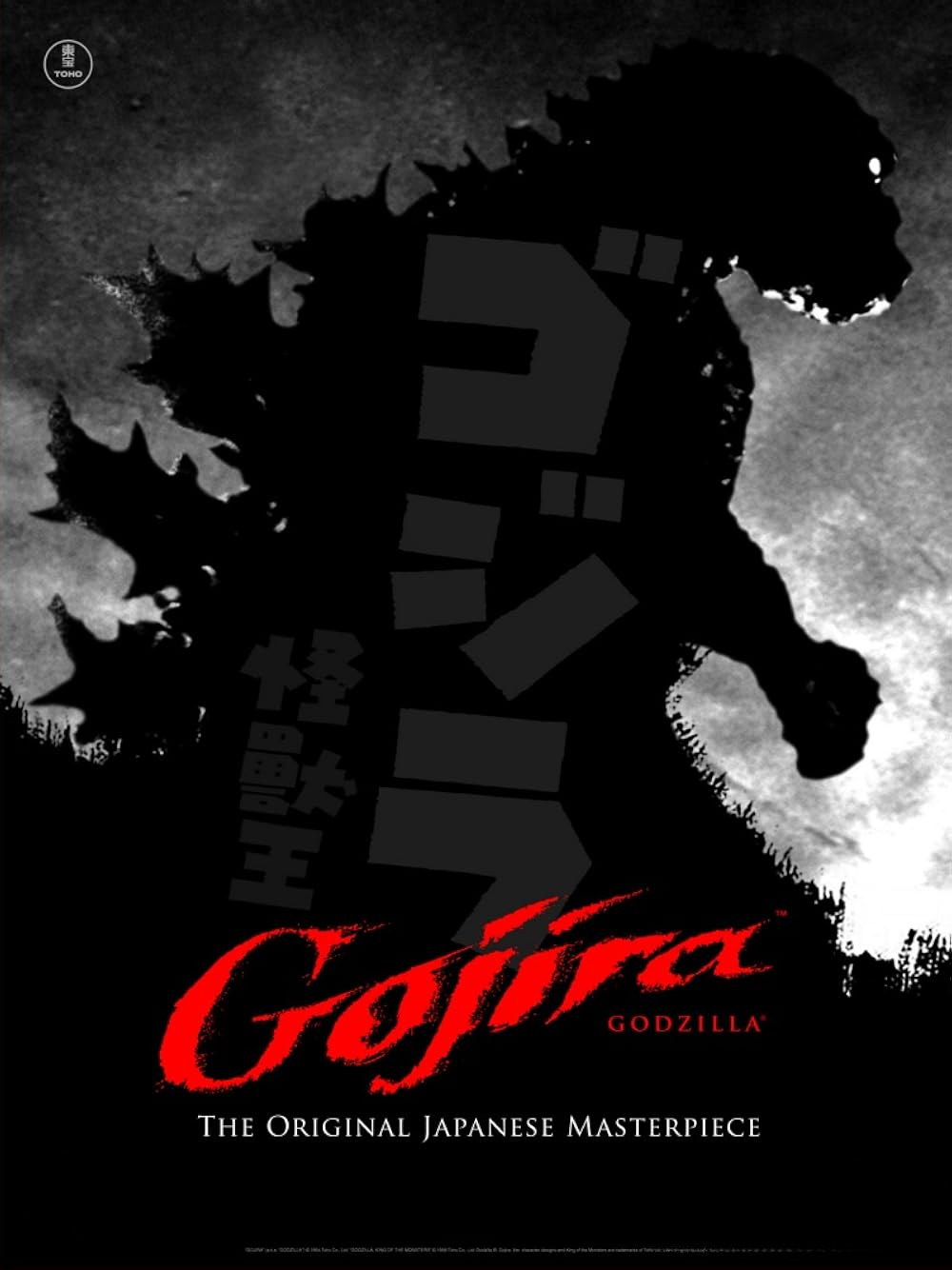
Film Review: Godzilla (dir. by Ishirō Honda)


“Godzilla was baptized in the fire of the H-bomb and survived. What could kill it now?” — Dr. Yamane

If your only exposure to Godzilla is the big guy body-slamming other monsters while kids cheer, the original 1954 Japanese Godzilla—titled Gojira in Japan—is going to hit you like a ton of bricks. Directed by Ishirō Honda, this isn’t a lighthearted monster romp. It’s a funeral procession in disguise, soaked in grief and dread, that happens to feature a radioactive giant stomping Tokyo into paste. Importantly, this is not the 1956 Americanized version, Godzilla, King of the Monsters!, which inserted newly filmed scenes of Raymond Burr as reporter Steve Martin, making him the central viewpoint character. Honda’s original is a different, heavier experience.

The setup is simple enough. Ships keep sinking, an island community connects the disasters to an old legend, and a prehistoric creature disturbed by hydrogen-bomb testing emerges from the sea. What follows builds toward one of the most devastating stretches of monster-movie filmmaking ever put to celluloid. When Godzilla attacks Tokyo, Honda shoots the rampage like a war picture, not a creature feature. There’s no wink, no reassuring invitation to laugh at the destruction. Night falls, the city burns, and civilians flee through the streets in scenes that are hard to shake. That’s clearly the point.

Here’s the thing you can’t separate from this movie: Japan was less than a decade removed from the end of World War II. Tokyo’s destruction onscreen bears an eerie resemblance to the aftermath of the American firebombing campaign of 1945, particularly the devastating March 9–10 raid. The burning neighborhoods, shattered buildings, and displaced civilians evoke a catastrophe that contemporary audiences didn’t need help imagining. Calling these sequences archival footage would go too far; they’re carefully constructed effects and dramatic scenes. But their emotional force comes partly from how closely this imagined disaster brushes against living memory. Honda makes the destruction feel remembered rather than merely invented.

The political undercurrent is what elevates Godzilla from an impressive genre exercise to something more troubling. The film is an unmistakable response to nuclear weapons and testing, made when hydrogen-bomb explosions in the Pacific were immediate public concerns. Its opening evokes the Lucky Dragon No. 5 incident, in which Japanese fishermen were exposed to radioactive fallout from an American hydrogen-bomb test at Bikini Atoll earlier that year. That wasn’t distant history to the original audience. It was the news. Godzilla turns that fear into a physical presence: something humanity has disturbed but cannot control.

The film’s concern with proliferation becomes clearest through Dr. Serizawa and his Oxygen Destroyer. He possesses a discovery that could kill Godzilla, but he understands that demonstrating its power could open the door to another arms race. The question isn’t simply whether this weapon can solve today’s emergency. It’s what happens when governments demand more of it tomorrow. That’s a sharper dilemma than the usual hunt for a monster-killing gadget. The proposed solution belongs to the same destructive cycle as the problem, and Serizawa knows that good intentions won’t keep his invention out of dangerous hands.

Dr. Yamane, played by a wonderfully grave Takashi Shimura, complicates things further by wanting Godzilla studied rather than destroyed. His position can seem maddening when people are dying, but it gives the creature an identity beyond walking target practice. Godzilla is dangerous, yet he’s also a living consequence of human interference. That doesn’t make killing him unnecessary, but it makes the victory harder to celebrate. Honda lets scientific curiosity, public safety, and moral responsibility pull against each other. The film’s strongest human conflict isn’t really about who gets the girl. It’s about what people owe one another when knowledge becomes destructive.

Special credit goes to Eiji Tsuburaya’s effects work. The creature suit, miniature buildings, and optical effects can look rough now, but dismissing them as cheap misses the ambition involved. This was a substantial production by contemporary Japanese standards, not a tiny-budget throwaway. The physical weight of the collapsing structures gives the rampage a tactile quality, while the black-and-white photography helps hold the illusion together. Akira Ifukube’s score supplies another crucial layer: those heavy rhythms and mournful passages make Godzilla feel less like an attraction than an approaching calamity. The images and music work together to give the monster tragic gravity.

Honda’s willingness to linger on suffering is even more important than the effects. A mother clutching her children and telling them they’ll soon join their father is a brutal interruption of anything resembling uncomplicated monster-movie fun. The hospital scenes refuse to let the attack end when Godzilla leaves the frame. Injured people remain, children face radiation examinations, and survival looks nothing like relief. These moments make the film’s anti-nuclear concerns inseparable from its storytelling. Honda doesn’t merely tell you that destruction is terrible. He keeps looking at the people who have to endure it.

Is the movie perfect? Not entirely. The love triangle between Emiko, Ogata, and Serizawa is more functional than riveting, and some explanatory passages slow the momentum. A few effects shots expose the gap between the filmmakers’ ambitions and their available techniques. But the sincerity carries it through. There’s no ironic safety net, and that directness becomes a strength. The same applies to the ending: Serizawa’s sacrifice is moving because it answers a moral crisis, not just a tactical one. He wants to stop the immediate catastrophe without leaving humanity another means of creating the next.

The American version deserves a little more fairness than simply calling it worthless: it retains powerful material, and Burr’s performance isn’t the problem. Still, its cuts and added viewpoint weaken the original’s political and emotional coherence. Honda’s Godzilla is the fuller experience, and one of science fiction’s enduring achievements. It helped define the modern kaiju film, but its importance goes beyond launching a franchise. Underneath the creature suit and miniature tanks is a serious film about wartime trauma, nuclear fear, and whether humanity can survive its own inventions. That’s a lot for a monster movie to carry. Honda makes it hurt.

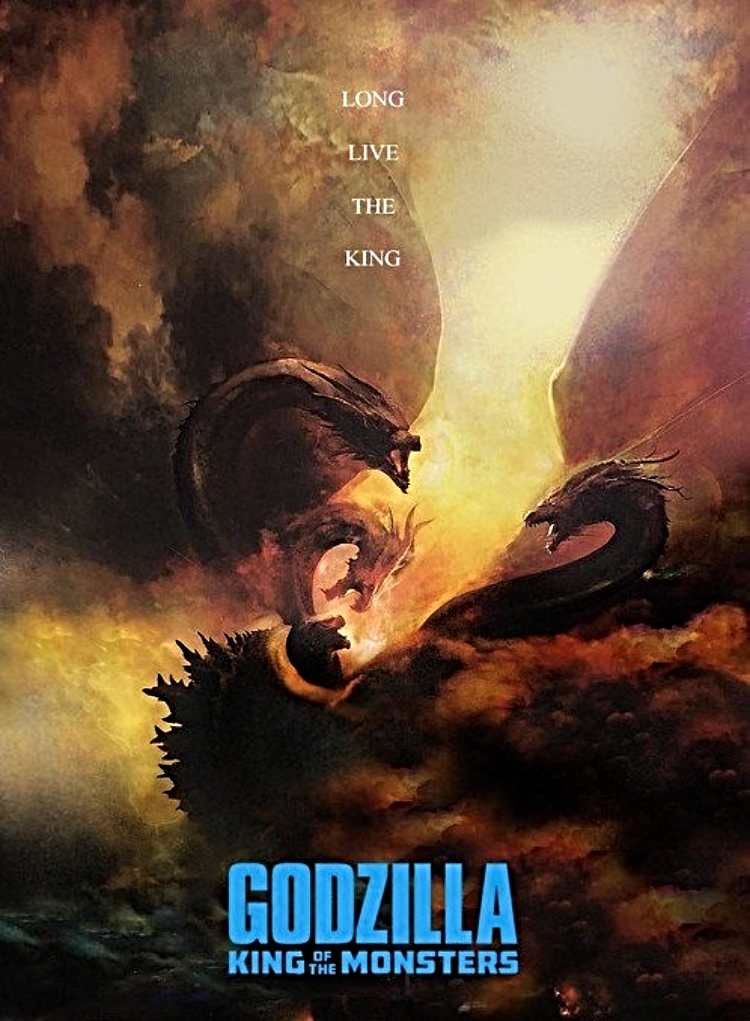
Godzilla: King of Monsters 2nd Official Trailer


Godzilla King of Monsters

This past summer we saw the first trailer to Godzilla: King of Monsters. To say that the reaction to that trailer was positive would be an understatement. It was one of the highlights of San Diego Comic-Con 2018.

Now, Warner Brothers Pictures saw fit to release the second trailer for the film. This time with less classical music and more Kaiju mayhem visuals instead. Michael Dougherty takes over directing duties from Gareth Edwards and this time it shows as the film stresses the action in the film rather than the human interactions underfoot.

Kaiju films have been fan-favorites for decades upon decades because of the monsters and less about the humans. The humans really were just there to give voice to the different factions of monsters duking it out. It looks like this time this sequel will follow the same formula.

Godzilla: King of Monsters is set for May 31, 2019.