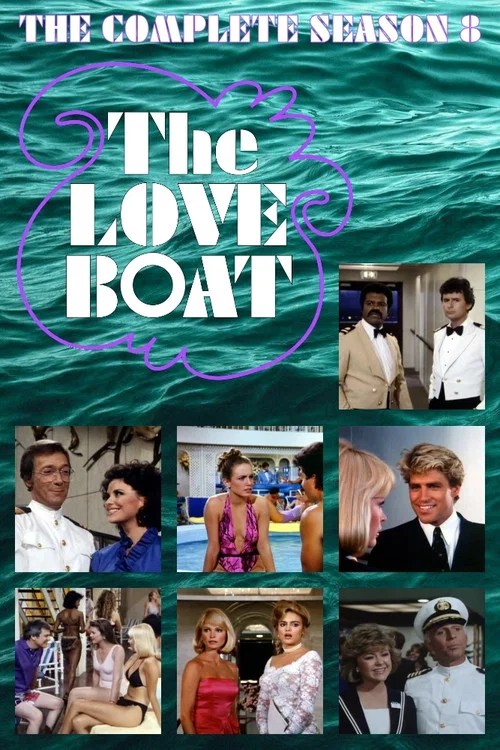
Welcome to Retro Television Reviews, a feature where we review some of our favorite and least favorite shows of the past! On Wednesdays, I will be reviewing the original Love Boat, which aired on ABC from 1977 to 1986! The series can be streamed on Paramount Plus!
This week, we’ve got a special two-hour episode of The Love Boat!
Episodes 8.19 and 8.20 “Scandinavia Cruise: Girl of the Midnight Sun/There’ll Be Some Changes Made/Too Many Isaacs/Mr. Smith Goes to Stockholm”
(Dir by Robert Scheerer, originally aired on February 2nd, 1985)
The Love Boat is going to Oslo and Stockholm!
This is another one of those two-hour episodes that largely served as a travelogue. Let’s just say that there are a lot of scenes of the crew members wandering around Oslo and Stockholm and pointing out all of the historic buildings. That said, there is the usual collection of guest stars.
Jack Klugman plays a man who wants to reduce the size of his nose. He meets and falls for Susannah York. In one of those mix-ups that could only happen on a sitcom, she gets it into her head that he’s going to Sweden to get a sex-change operation, and she makes it her mission to change his mind.
John Davidson plays the vice president of a suntan lotion company who has been tasked with finding a Scandinavian model to pose for the company’s ads. He thinks that he’s found the perfect candidate in Greta (Christopher Norris). How will he react when he discovers that Greta is actually just an American pretending to be Swedish? Do you think they’ll fall in love?
Priscilla Barnes plays a Swedish actress who appears to be fascinated with Gopher. Gopher briefly resigns from the cruise to join her father’s company. Don’t worry, he comes back.
Here’s the thing, though. While all of this is going on, Telly Savalas is playing a mad scientist who has built a robot that looks exactly like Isaac. He has hired Janet Jackson to distract the real Isaac so that the robot Isaac can commit a daring daylight robbery. His plan is for the real Isaac to be arrested. He almost succeeds until the robot Isaac malfunctions in a hallway. “That’s not Isaac!” Doc Bricker says.
Remarkably, Isaac is amazingly untraumatized by all of this. He even pretends to act like a robot after Savalas and Janet Jackson are arrested. The entire crew laughs. It really seems like this story should have left everyone feeling a bit more uneasy than it did.
Still, the Scandinavian countries were lovely to look at, and watching this old episode of The Love Boat on Wednesday helped to distract me from the fact that a political party that doesn’t have the guts to condemn anti-Semitism swept the midterms. That’s really the best thing that a show like this can do. That’s why I love The Love Boat.
“We all see what we want to see. Coffey looks and he sees Russians. He sees hate and fear. You have to look with better eyes than that.” — Lindsey Brigman
James Cameron has never seemed particularly interested in keeping things small, but The Abyss gets much of its power from people who can barely move. They’re trapped in tight compartments, weighed down by equipment, and forced to make decisions while the ocean presses in around them. His 1989 underwater adventure turns those restrictions into gripping entertainment, then asks the story to carry a troubled marriage and a message about humanity’s future. It’s an uneven combination, but an engaging one. This review covers the 171-minute extended Special Edition, which can be considered Cameron’s preferred cut, with its fuller character development and substantially expanded ending.
The story begins with an American nuclear submarine sinking after an encounter with something unexplained. A civilian drilling crew is recruited to assist a Navy SEAL team, turning its underwater platform into the headquarters for a tense recovery operation. Bud Brigman, played by Ed Harris, runs the civilian side with the weary confidence of someone accustomed to solving problems without outside help. Then his estranged wife, Lindsey, arrives because she designed the platform and understands its capabilities. That’s good news for the operation, less welcome news for Bud, and an effective way to make an already uncomfortable workplace even more volatile.
Cameron gives that workplace enough personality that the danger matters before the plot gets especially strange. The crew members tease each other, complain about instructions, and handle complicated machinery with practiced familiarity. Their conversations don’t always advance the story, which is part of why they work. These people seem to have lives and routines beyond whatever emergency the movie has prepared for them. Some supporting characters remain broad sketches, but their reactions help establish the group’s identity. You believe they’ve spent enough time together to recognize when an argument is harmless and when someone has become a genuine problem.
The platform itself contributes just as much to that credibility. Its passageways, working areas, and sleeping quarters feel designed around necessity rather than comfort. Cameron gives you enough familiarity with the space that damage has consequences beyond the immediate thrill of water bursting through an opening. A flooded room means a route lost, equipment gone, or another reduction in the crew’s already narrow options. Outside, lights reveal only fragments of an environment that remains overwhelmingly dark. The contrast is unsettling: the platform is claustrophobic, but leaving it means entering a space so vast and indifferent that the cramped interior starts looking reassuring.
Harris anchors the film by making Bud capable without making him invulnerable. He has the authority of a man who will take the difficult job himself, but that same stubbornness causes problems when persistence isn’t the answer. You can see why the crew trusts him and why living with him might be exhausting. Harris lets those qualities coexist rather than separating Bud into admirable and flawed versions. His warmth doesn’t erase his defensiveness, and his courage doesn’t mean he always knows what he’s doing. That makes him a useful center for a story that eventually moves far beyond anything its characters can reasonably understand.
Mary Elizabeth Mastrantonio gives Lindsey the sharp edges needed to make their relationship convincing. She isn’t simply waiting for Bud to demonstrate his worth, and her professional confidence doesn’t disappear whenever the film wants an emotional moment. She can be impatient and cutting, sometimes unnecessarily so, but Mastrantonio allows concern to surface beneath the defensiveness. Her scenes with Harris suggest arguments repeated so often that both people know their parts. They’re good at identifying each other’s weaknesses and less accomplished at acknowledging their own. The affection remains visible, though neither seems eager to make the first move toward admitting it.
The extended edition gives that conflict more room, which matters because the romance needs to function as more than an interruption between emergencies. Bud and Lindsey don’t resolve their differences through one convenient conversation. Instead, the situation gradually exposes how much attention they still pay to each other. Irritation and concern keep occupying the same moments. The wedding ring becomes a particularly effective detail, connecting the marriage to the physical action without requiring another argument about what commitment means. Cameron isn’t always subtle, but he understands the value of giving an emotional idea a concrete object that can matter within a scene.
Michael Biehn’s Lieutenant Coffey brings a more dangerous response to uncertainty. Biehn plays him with a rigid intensity that becomes increasingly unsettling as his judgment deteriorates. Coffey responds to confusion by tightening control, even when that response makes the situation worse. There’s something frightening about a man who mistakes escalating fear for clear thinking, especially when he retains the authority and weapons to act on it. The writing occasionally leans too heavily on the contrast between aggressive soldiers and adaptable civilians. Still, Biehn gives Coffey enough nervous physicality that he registers as an immediate threat rather than merely the representative of a bad idea.
As an action director, Cameron understands how to make a simple objective feel almost impossible. A character has to reach a doorway, repair a system, or cover a distance with too little air. The underwater setting adds resistance to everything, and the film makes that resistance tangible. People struggle with equipment, lose visibility, and spend precious time doing things that would be easy on land. The sequences generally establish their geography and stakes clearly, so suspense comes from anticipating failure rather than trying to understand the editing. Even success rarely brings much relief. Everyone looks increasingly exhausted, and the next task always seems to demand energy nobody has left.
That exhaustion becomes emotionally devastating in the resuscitation sequence. Cameron keeps the scene going long enough to strip away the reassurance that a movie usually offers when a major character is in danger. Harris lets Bud’s practical determination collapse into desperation, exposing feelings he has struggled to express in ordinary conversation. It’s forceful, openly manipulative filmmaking, and not everyone will welcome how hard it pushes. But the intensity has a foundation. The relationship has established what could be lost, while the crew’s helpless presence makes the moment feel painfully public. People accustomed to fixing problems reach the limit of what effort and expertise can accomplish.
The visitors offer something beyond another threat, and the water-tentacle encounter works beautifully because curiosity briefly takes over from fear. There’s humor in it, and an intimacy that feels surprising after so much noise and conflict. The effect matters because it allows a strange intelligence to interact with people on a recognizable emotional level. For a moment, the movie stops treating the unknown as an obstacle. The extended ending then expands that possibility into a confrontation with human violence, bringing international tensions and enormous thousand-foot waves into the resolution. It gives the visitors a clearer purpose, but turns suggestion into a rather blunt explanation. Cameron’s sincerity remains appealing even when his argument becomes too simple.
What makes The Abyss memorable is the way its tenderness survives all that machinery, noise, and pressure. The extended edition occasionally explains what its strongest scenes have already made clear, and its global ambitions aren’t as persuasive as its intimate observations. Yet Harris and Mastrantonio keep pulling it toward something believable: two difficult people discovering that their attachment still matters. Cameron gives that possibility the same attention he gives a failing oxygen supply, treating trust as something that requires effort and carries consequences. Not every grand statement lands, but the quieter feeling underneath does. After so much struggle just to stay alive, having someone worth reaching for feels like a convincing reward.
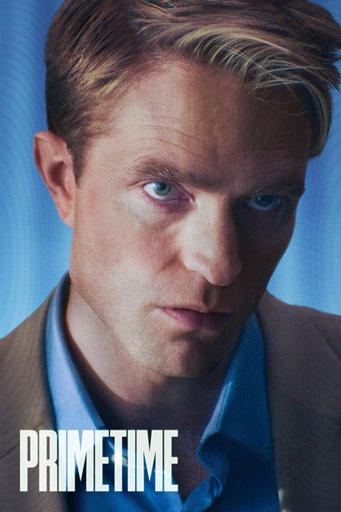
“What are you doing here?” Chris Hansen (Robert Pattinson) asks a man in a kitchen at the start of Primetime.
What are you doing here? That’s a question that several people struggle to answer over the course of the film. The man in the kitchen really doesn’t have an answer, though we know that he’s there because he thought he would be meeting an underage person for sex. And we know that Hansen is there because he’s the host of To Catch a Predator, a show that a lot of people now pretend they didn’t watch even though we all did.
What are you doing here? That’s a question that Dan Plum (Skyler Gisondo) also struggles to answer throughout the film. When we first see Dan, he’s being filmed as he explains that he doesn’t have an agent and that he’s not in the union but he has done some commercial work. Dan doesn’t know what he’s auditioning for. It’s only after he’s cast that he learns that he’s been cast not for his musical theater background but instead because he can convincingly pass for a 13-year-old. While the members of an organization called Perverted Justice entice pedophiles to come visit them at their “home,” Dan is the one who actually greets them at the door and gets them to come inside so that they can be confronted by Chris Hansen and his camera crew. At first, Dan feels awkward about being a decoy. Then, after one pedophile exposes himself, Dan is frightened by it. Chris’s producer, Andie (Merritt Wever), encourages Chris to take Dan under his wing as a protégé in order to keep Dan with the show. Soon, Dan is approaching his decoy work like an actor preparing for a great stage role.
What are we doing here? That’s the question that Andie wonders when Chris insists on filming an episode in the suburbs of Texas instead of on the then-hot Jersey Shore. Chris has been told by Xavier Von Erck (Matthew Maher), the founder of Perverted Justice, that he’s tracked down a pedophile who has political connections. Chris and Xavier are hoping for a Congressman or maybe someone even bigger. (When Andie expresses some reservations at not knowing for sure who they’re going after, “sensitive” guy Xavier descends very quickly into misogyny.) Instead, they have to settle for an assistant district attorney named Bill Conradt (Alex Winter). When Conradt, after talking to Dan on the phone and promising to come meet him at the house, fails to show up, Chris and Andie decide to confront Conradt at his home.
What am I doing here? Andie asks herself perhaps more than anyone else in the film. Having been with To Catch a Predator since the beginning, she’s been offered a chance to skip over to another network and produce a show called What Would You Do?What Would You Do? copies To Catch a Predator‘s humiliation format but instead of targeting pedophiles, it targets people who fail to return a wallet or who don’t speak up when an actor says something insensitive. If To Catch A Predator can at least claim to be putting bad people in jail, What Would You Do? can’t even pretend that it’s making the world a better place. Primetime suggests that humiliation, and not justice, was the true lifeblood of To Catch a Predator.
What are we doing here? That’s the question that the audience is forced to consider. Did we watch To Catch a Predator because we wanted to see bad people arrested or did we watch it because we enjoyed watching someone realize, on camera, that his life was essentially over? And are we watching Primetime because we’re interested in what it has to say about the show and the man at the center of it or are we watching because we’re nostalgic for the show that abruptly ended after Bill Conradt shot himself in his home? Did we watch originally because we were worried about the dangers of online predators or did we watch so we could laugh?
Primetime raises a lot of questions and, to its credit, it doesn’t offer up any easy answers. Indeed, it’s brave enough to admit that there is no either/or. Yes, To Catch a Predator‘s main appeal might be the spectacle of humiliation but that doesn’t mean that the men who appeared on the show weren’t deserving of it. The film’s ambiguity extends to its portrayal of Bill Conradt, who talks to someone whom he believes to be underage on the phone but who apparently changes his mind about going to the address that he’s given. Conradt suddenly finds himself staring out of his office window at an army of cops and cameramen. Earlier one of those cops is shown getting a Subway sandwich and glancing at a poster celebrating Jared Fogle. As Jeff Zucker (poorly playing himself) puts it to Chris Hansen, To Catch a Predator may be a sleazy show but it’s what America wants.
With the exception of Zucker, the entire cast is impressive. Not surprisingly the film is dominated by Robert Pattinson, who plays Chris Hansen as being neurotic and obsessive. While Hansen grills the men unlucky enough to be caught on camera and asks them how their families would feel, he cheats on his wife with another woman and his idea of a family night is to gather his kids in the living room so they can watch him on TV. Hansen enjoys his fame and he enjoys playing the righteous avenger but he’s full of envy for “serious” journalists like Stone Phillips (played, with the appropriate amount of smug smarminess, by Bill Heck). In one of the film’s strangest moments, he tells Dan about going to India and confronting an “ancient evil” that retreated into a cave only after the villagers that it tormented started to kill each other. Is Hansen telling the truth or is he playing a role? Even he doesn’t seem to know for sure.
The film starts out as a stylized and darkly humorous look at fame and the media in America. However, as it progresses, Primetime takes on the elements of a filmed nightmare, with Hansen moving through the shadows like an almost soulless demon. What is he doing there? By the end of the movie, not even Chris Hansen seems to know for sure.
Oh, how I love this song. It brings tears to my mismatched eyes. If you’re even driving on a country road at either sunrise or sunset, play this song. It’ll change your life.
I sang this song last night when Texas went blue, my own private message to anyone thinking of trying to amend the state constitution to allow an income tax. Come after my money and one of these mornings, I’ll be gone.
4 Shots From 4 Films is just what it says it is, 4 shots from 4 of our favorite films. As opposed to the reviews and recaps that we usually post, 4 Shots From 4 Films lets the visuals do the talking!
Today, we wish a happy birthday to cinematographer Frederick Elmes! It’s time for….
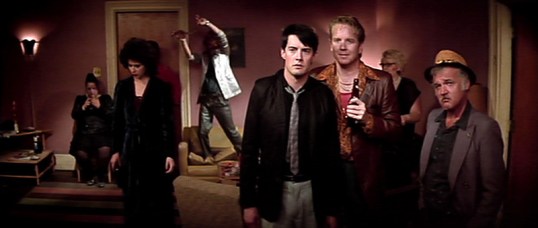
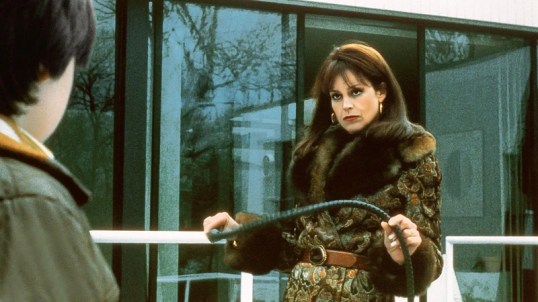
4 Shots From 4 Frederick Elmes Films
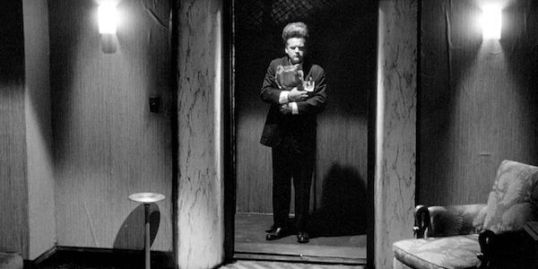
Eraserhead (1977, directed by David Lynch, DP: Frederick Elmes and Herbert Cardwell)
Blue Velvet (1986, dir by David Lynch, DP: Frederick Elmes)
Wild At Heart (1990, dir by David Lynch, DP: Frederick Elmes)
The Ice Storm (1997, dir by Ang Lee, DP: Frederick Elmes)
According to the comments on YouTube, this was filmed at the Media Arts Department at Jersey City State College. Also according to the video’s description, the woman in the video was named Gena Marel but the actual vocals were performed by Ellen Gannon Leeds.
“This world fits you, Bangley. Wake up, defend, survive.” — Hig
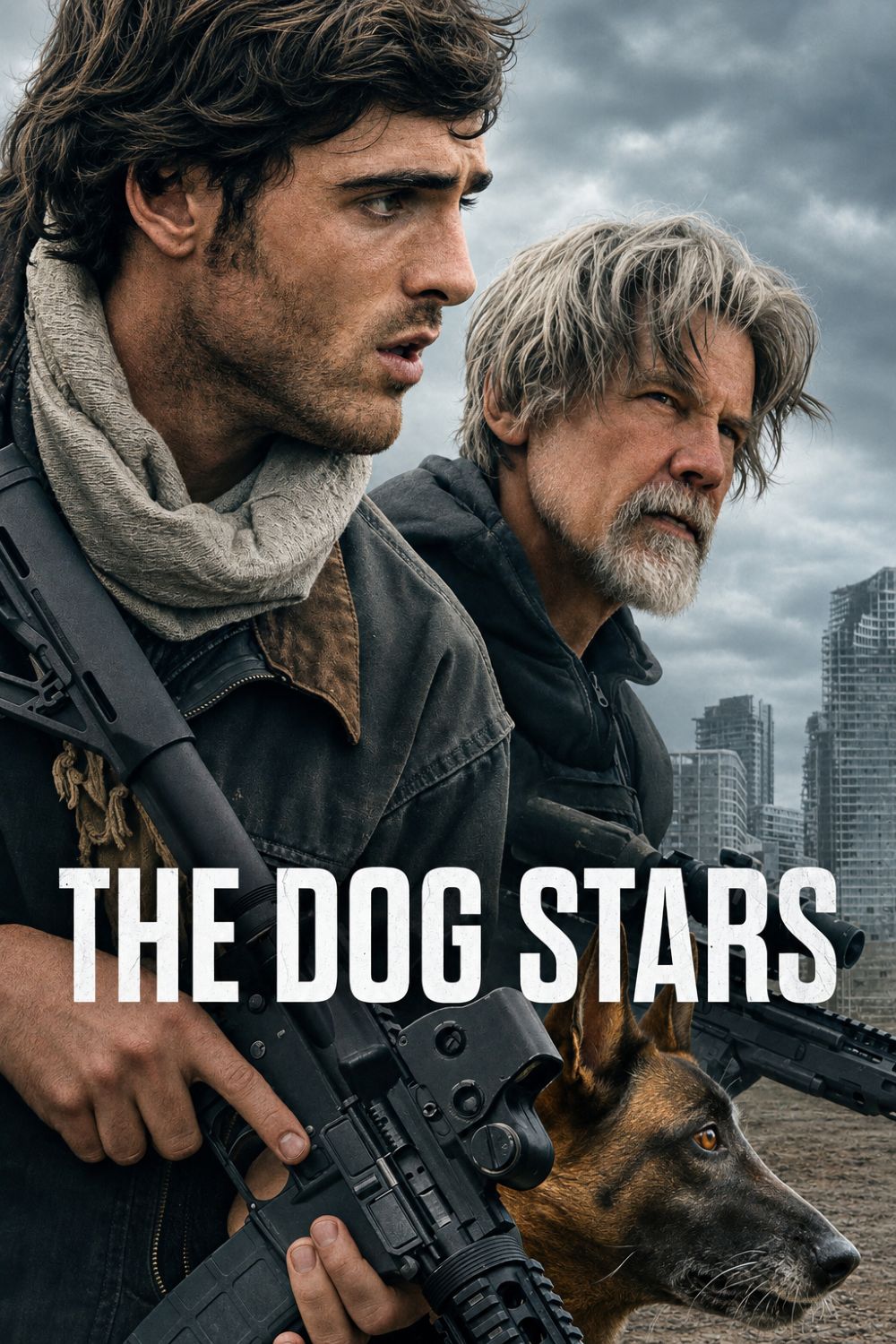
Ridley Scott’s The Dog Stars has the scenery of an epic and the energy of someone still deciding whether to get out of bed. There is something potentially compelling about that mismatch: the world has ended, the survivors are exhausted, and being alive no longer means having much to live for. But Scott leans so heavily into melancholy that the film gradually becomes underwhelming. Even when violence interrupts the quiet, it rarely shakes the movie out of its mournful drift. What should feel like a journey through a frightening new world often plays more like a post-apocalyptic travelog, with beautiful views and occasional armed interruptions.
Adapted by screenwriter Mark L. Smith from Peter Heller’s 2012 novel The Dog Stars, the film follows Hig, played by Jacob Elordi, a pilot and mechanic living in Colorado after a pandemic has wiped out most of humanity. His wife is gone, and his remaining companions are his dog, Jasper, and Bangley, a heavily armed former military man played by Josh Brolin. Together, they occupy an abandoned airfield, where practical survival has replaced anything resembling a normal life. Hig eventually follows the possibility of a radio transmission toward other survivors, hoping there might be something beyond the routine of scavenging and keeping strangers at gunpoint.
That setup gives the film a useful emotional conflict. Bangley considers their arrangement a success because they have food, shelter, weapons, and a defensible position. Hig sees the same situation as a slower version of dying. Brolin’s hardened survivor and Elordi’s wounded optimist represent two different responses to catastrophe: shut everyone out, or risk getting hurt by reaching for someone. The problem is that the movie makes this contrast clear fairly early and then struggles to deepen it. Hig’s dissatisfaction supplies a reason to leave, but Scott’s languid treatment makes the journey feel less urgent than the decision behind it ought to be.
Elordi fits the film’s mood, giving Hig the presence of someone carrying grief through every ordinary task. His youth also makes the character’s emotional exhaustion potentially affecting: this is a man who should have decades ahead of him but cannot imagine what those years would contain. Still, the movie relies too much on the appeal of a handsome, sorrowful figure moving through picturesque emptiness. There is a difference between showing a character who feels hollow and allowing that hollowness to become the film’s dominant dramatic quality. Too often, Hig’s sadness is the atmosphere rather than something the story meaningfully tests.
Visually, Scott certainly understands the attraction of a world that has started growing over humanity’s leftovers. The landscapes are expansive, and the production uses Italian locations to stand in for Colorado, with the Dolomites taking the place of the Rockies. Yet the beauty creates its own problem. The more inviting the countryside becomes, the harder the film has to work to make its underlying danger feel immediate. Scott keeps reaching for the scale of an epic, but scale alone cannot make a succession of lonely vistas emotionally expansive. Sometimes the apocalypse looks less like a catastrophe than an unusually exclusive outdoor getaway.
There is also the unavoidable resemblance to HBO’s The Last of Us. The overgrowth, decaying infrastructure, wary survivors, and uneasy movement through abandoned spaces belong to a familiar visual vocabulary by now. The Dog Stars seems eager to exploit the appeal of that look without finding enough fresh perspective to make it distinctive. That is an aesthetic criticism, not a claim that Scott literally copied the series; Heller’s novel has its own history. But the film arrives in a crowded genre, and its lush decay too often prompts recognition rather than discovery. You know the scenery, and you can usually guess the emotional weather.
The violence should complicate that prettiness, and occasionally it does. Raiders and hostile survivors puncture Hig’s wandering with reminders that an empty world is not necessarily a peaceful one. But these bursts of brutality often feel like interruptions rather than pressure building naturally inside the story. Scott alternates reflective stretches with sudden threats, yet the two modes do not consistently strengthen each other. The action briefly wakes the movie up, then the prevailing sadness settles back into place. Instead of making the quieter passages more tense, the attacks can feel like scheduled reminders that this is still supposed to be a dangerous survival thriller.
The arrival of Margaret Qualley’s Cima, a widow living with her protective father, played by Guy Pearce, gives the film a more intimate direction. Hig’s search stops being purely geographical and becomes a question of whether he can permit himself another attachment. There is a genuinely appealing idea here: after civilization collapses, rebuilding might begin with something as small as admitting what you miss. A scene involving remembered pleasures and the rediscovery of recorded music points toward a warmer, more specific film. These moments work because they give loss a recognizable shape rather than treating sadness as a general condition.
Unfortunately, the tenderness never fully resolves the film’s unevenness. Its late detour involving Allison Janney pushes toward a much stranger, more extravagant register, making the surrounding restraint feel even more conspicuous. A movie can certainly contain romance, grief, savage violence, and grotesque eccentricity, but those elements need a stronger dramatic connection than they receive here. Harry Gregson-Williams’s acoustic guitar-laden score reinforces the reflective mood, though that gentleness also contributes to the sense that the film is cushioning experiences that should leave sharper marks. Scott wants contemplation and danger to coexist; too often, they simply take turns.
What makes The Dog Stars frustrating is not its refusal to turn the apocalypse into nonstop combat. Its interest in companionship, grief, and the possibility of hope is welcome. The disappointment is that Scott gives those ideas such a uniformly subdued treatment that they lose force. This should be a story about discovering reasons to live in a world organized around staying alive. Instead, it too often settles for attractive desolation, familiar threats, and sadness presented as depth. There are touching moments and striking landscapes along the way, but the journey promises a greater emotional destination than it finally reaches.
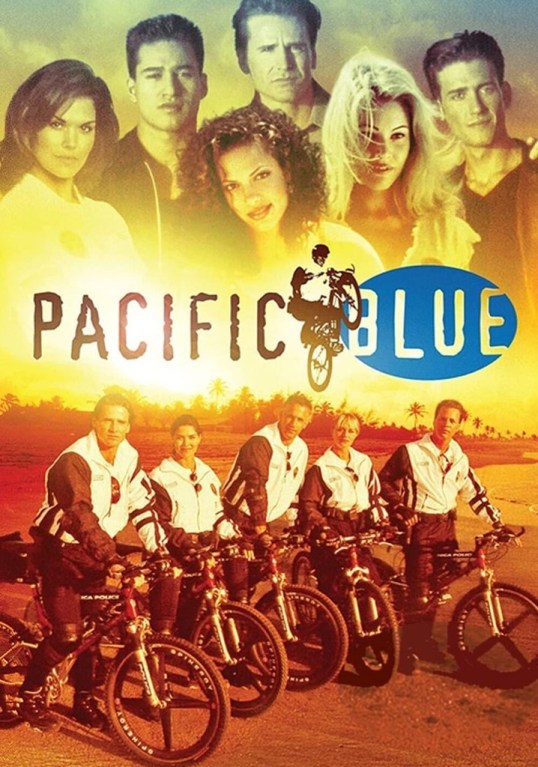
Welcome to Late Night Retro Television Reviews, a feature where we review some of our favorite and least favorite shows of the past! On Tuesdays, I will be reviewing Pacific Blue, a cop show that aired from 1996 to 2000 on the USA Network! It’s currently streaming everywhere, though I’m watching it on Tubi.
This week, things wrap up in Hawaii.
Episode 5.4 “Blue Hawaii: Part Two”
(Dir by Michael Levine, originally aired on August 8th, 1999)
In Hawaii, the California bike cops and the Hawaiian anti-drug task force decide to work together to get revenge for the death of Officer Peter Cho. “For Peter,” the bike cops say, obviously moved by the death of someone who they barely knew. They decide that the best way to take down drug dealer Michael Shane (Shawn Michaels) is with an undercover operation. Of course, the last time they tried to take down Shane with an undercover operation, Peter got shot. I swear, these idiots never learn anything. They’re kind of like the people in Michigan who are incapable of understanding that a senatorial candidate who spends the majority of his time voluntarily hanging out with anti-Semites is probably a rabid anti-Semite himself.
Luckily, Shane doesn’t learn anything either. When Cory presents herself as being a former bank employee who can hack into a bank and steal a lot of money, Shane falls for it. Or, at least, he does for a few minutes. Eventually, he figures out what’s going on and, after a tense standoff with the other cops, he makes a run for it. In one of the dumbest scenes I have ever seen, TC borrows a stranger’s bicycle so he can pedal it through the hotel while chasing Shane. I mean, I get that this is a show about bicycle cops but I’m starting to feel that TC uses bicycles the way that some people use a security blanket.
While that’s going on, Bobby considers staying in Hawaii with Claire (Kristanna Loken) but eventually, he decides not to because I imagine the only reason people were watching this show in 1999 was to see Mario Lopez chase after the bad guys. Just as with last week’s episode, this was clearly meant to be a pilot for a series that would have followed the Hawaiian cops. (Baywatch relocated to Hawaii around the same time.) As such, it’s not like Claire could have followed Bobby to California. So, I guess Bobby and Claire are done.
There is one odd moment where Bobby and Claire are talking about the undercover operation that got their colleague Peter killed. Bobby says that all he could think about was that, if anything happened to Claire, he’d never forgive himself. Claire says she was thinking the same thing about Bobby. Umm, hello? Peter’s dead! Remember all of that “For Peter” nonsense? I swear, bicyclists are so self-centered.
There’s another moment where TC gets a call from Monica, who is still in California. She informs him that there’s a guy running for mayor who says he’s going to eliminate the bicycle patrol because it’s a waste of money. I want to vote for him!