Film Review: The Abyss (dir. by James Cameron)


“We all see what we want to see. Coffey looks and he sees Russians. He sees hate and fear. You have to look with better eyes than that.” — Lindsey Brigman

James Cameron has never seemed particularly interested in keeping things small, but The Abyss gets much of its power from people who can barely move. They’re trapped in tight compartments, weighed down by equipment, and forced to make decisions while the ocean presses in around them. His 1989 underwater adventure turns those restrictions into gripping entertainment, then asks the story to carry a troubled marriage and a message about humanity’s future. It’s an uneven combination, but an engaging one. This review covers the 171-minute extended Special Edition, which can be considered Cameron’s preferred cut, with its fuller character development and substantially expanded ending.

The story begins with an American nuclear submarine sinking after an encounter with something unexplained. A civilian drilling crew is recruited to assist a Navy SEAL team, turning its underwater platform into the headquarters for a tense recovery operation. Bud Brigman, played by Ed Harris, runs the civilian side with the weary confidence of someone accustomed to solving problems without outside help. Then his estranged wife, Lindsey, arrives because she designed the platform and understands its capabilities. That’s good news for the operation, less welcome news for Bud, and an effective way to make an already uncomfortable workplace even more volatile.

Cameron gives that workplace enough personality that the danger matters before the plot gets especially strange. The crew members tease each other, complain about instructions, and handle complicated machinery with practiced familiarity. Their conversations don’t always advance the story, which is part of why they work. These people seem to have lives and routines beyond whatever emergency the movie has prepared for them. Some supporting characters remain broad sketches, but their reactions help establish the group’s identity. You believe they’ve spent enough time together to recognize when an argument is harmless and when someone has become a genuine problem.

The platform itself contributes just as much to that credibility. Its passageways, working areas, and sleeping quarters feel designed around necessity rather than comfort. Cameron gives you enough familiarity with the space that damage has consequences beyond the immediate thrill of water bursting through an opening. A flooded room means a route lost, equipment gone, or another reduction in the crew’s already narrow options. Outside, lights reveal only fragments of an environment that remains overwhelmingly dark. The contrast is unsettling: the platform is claustrophobic, but leaving it means entering a space so vast and indifferent that the cramped interior starts looking reassuring.

Harris anchors the film by making Bud capable without making him invulnerable. He has the authority of a man who will take the difficult job himself, but that same stubbornness causes problems when persistence isn’t the answer. You can see why the crew trusts him and why living with him might be exhausting. Harris lets those qualities coexist rather than separating Bud into admirable and flawed versions. His warmth doesn’t erase his defensiveness, and his courage doesn’t mean he always knows what he’s doing. That makes him a useful center for a story that eventually moves far beyond anything its characters can reasonably understand.

Mary Elizabeth Mastrantonio gives Lindsey the sharp edges needed to make their relationship convincing. She isn’t simply waiting for Bud to demonstrate his worth, and her professional confidence doesn’t disappear whenever the film wants an emotional moment. She can be impatient and cutting, sometimes unnecessarily so, but Mastrantonio allows concern to surface beneath the defensiveness. Her scenes with Harris suggest arguments repeated so often that both people know their parts. They’re good at identifying each other’s weaknesses and less accomplished at acknowledging their own. The affection remains visible, though neither seems eager to make the first move toward admitting it.

The extended edition gives that conflict more room, which matters because the romance needs to function as more than an interruption between emergencies. Bud and Lindsey don’t resolve their differences through one convenient conversation. Instead, the situation gradually exposes how much attention they still pay to each other. Irritation and concern keep occupying the same moments. The wedding ring becomes a particularly effective detail, connecting the marriage to the physical action without requiring another argument about what commitment means. Cameron isn’t always subtle, but he understands the value of giving an emotional idea a concrete object that can matter within a scene.

Michael Biehn’s Lieutenant Coffey brings a more dangerous response to uncertainty. Biehn plays him with a rigid intensity that becomes increasingly unsettling as his judgment deteriorates. Coffey responds to confusion by tightening control, even when that response makes the situation worse. There’s something frightening about a man who mistakes escalating fear for clear thinking, especially when he retains the authority and weapons to act on it. The writing occasionally leans too heavily on the contrast between aggressive soldiers and adaptable civilians. Still, Biehn gives Coffey enough nervous physicality that he registers as an immediate threat rather than merely the representative of a bad idea.

As an action director, Cameron understands how to make a simple objective feel almost impossible. A character has to reach a doorway, repair a system, or cover a distance with too little air. The underwater setting adds resistance to everything, and the film makes that resistance tangible. People struggle with equipment, lose visibility, and spend precious time doing things that would be easy on land. The sequences generally establish their geography and stakes clearly, so suspense comes from anticipating failure rather than trying to understand the editing. Even success rarely brings much relief. Everyone looks increasingly exhausted, and the next task always seems to demand energy nobody has left.

That exhaustion becomes emotionally devastating in the resuscitation sequence. Cameron keeps the scene going long enough to strip away the reassurance that a movie usually offers when a major character is in danger. Harris lets Bud’s practical determination collapse into desperation, exposing feelings he has struggled to express in ordinary conversation. It’s forceful, openly manipulative filmmaking, and not everyone will welcome how hard it pushes. But the intensity has a foundation. The relationship has established what could be lost, while the crew’s helpless presence makes the moment feel painfully public. People accustomed to fixing problems reach the limit of what effort and expertise can accomplish.

The visitors offer something beyond another threat, and the water-tentacle encounter works beautifully because curiosity briefly takes over from fear. There’s humor in it, and an intimacy that feels surprising after so much noise and conflict. The effect matters because it allows a strange intelligence to interact with people on a recognizable emotional level. For a moment, the movie stops treating the unknown as an obstacle. The extended ending then expands that possibility into a confrontation with human violence, bringing international tensions and enormous thousand-foot waves into the resolution. It gives the visitors a clearer purpose, but turns suggestion into a rather blunt explanation. Cameron’s sincerity remains appealing even when his argument becomes too simple.

What makes The Abyss memorable is the way its tenderness survives all that machinery, noise, and pressure. The extended edition occasionally explains what its strongest scenes have already made clear, and its global ambitions aren’t as persuasive as its intimate observations. Yet Harris and Mastrantonio keep pulling it toward something believable: two difficult people discovering that their attachment still matters. Cameron gives that possibility the same attention he gives a failing oxygen supply, treating trust as something that requires effort and carries consequences. Not every grand statement lands, but the quieter feeling underneath does. After so much struggle just to stay alive, having someone worth reaching for feels like a convincing reward.

Review: Pacific Rim (dir. by Guillermo Del Toro)


PacificRimIMAX“2,500 tons of awesome” — Newton Geizler

I’ll just say it outright and get it out of the way and say that Guillermo Del Toro is one of the few filmmakers whose body of work has earned him my admiration. The Mexican-born filmmaker has made some of the most fully-realized and visually-beautiful films of the last twenty years. It doesn’t matter whether its genre staples like Blade II and the two Hellboy films or arthouse fares like The Devil’s Backbone and Pan’s Labyrinth, Del Toro has a unique talent for making one believe in the world his films inhabit. This is probably the reason why Peter Jackson had tapped him to direct the film adaptation of J.R.R. Tolkien’s The Hobbit. The man just has an eye for every detail, no matter how big or small, that he believes will add to the overall experience of watching his films.

When delays and behind-the-scenes studio bickerings kept the production of The Hobbit from moving forward Del Toro was already two years into pre-production of the long-awaited new trilogy, but finally backed out. He would try to make one of his dream projects his next move with the film adaptation of H.P. Lovecraft’s classic At the Mountain of Madness. This was a film that looked to set the horror and genre scene by storm. It was a story that was right in Del Toro’s wheelhouse. The film would require him to create a believable world where cosmic Elder Gods and Old Ones existed and still make it terrifying and awe-inspiring. But once again his ideas would require a huge budget from the studios and his stance on making the film an R-rated one finally shelved it (though hopefully not for good).

With two major productions either cancelled or dropped out of, Guillermo Del Toro was now without a film to direct and it’s been years since his last (Hellboy II: The Golden Army). Maybe it was providence or just plain ol’ dumb luck, but in comes a screenplay from Travis Beacham which included such terms as “Jaegers” and “Kaiju” and Del Toro finally got a film that wasn’t an adaptation of someone elses work, but something he could build from the ground up and make his own. That film was and is Pacific Rim.

Pacific Rim finally arrives in cinemas around the world and it couldn’t come at a better time. The last couple years have seen summer blockbusters get bigger and bigger. Each new blockbuster tried to outdo the next with something more extravagant, louder and, to their detriment, more complex and convoluted in their storytelling. This is not the case for Pacific Rim which comes in with a simple premise that managed to stay together from start to finish: giant robots fighting giant monsters.

1039653_533768193356149_960692317_o

From that idea was born a film that lends itself well into Guillermo Del Toro’s visual and world-building talent. He had to find a way to make this film, that harkens back to the old kaiju films from Japan’s Toho studio and its mecha/giant robot anime genre, a believable world where adventure and spectacle ruled and not post-modern deconstruction and cynical characters and storytelling. It’s an endeavor that succeeds, though not perfectly, to do more than just entertain but also show that sometimes the old ways of telling a story does belong in this new world of hi-tech filmmaking.

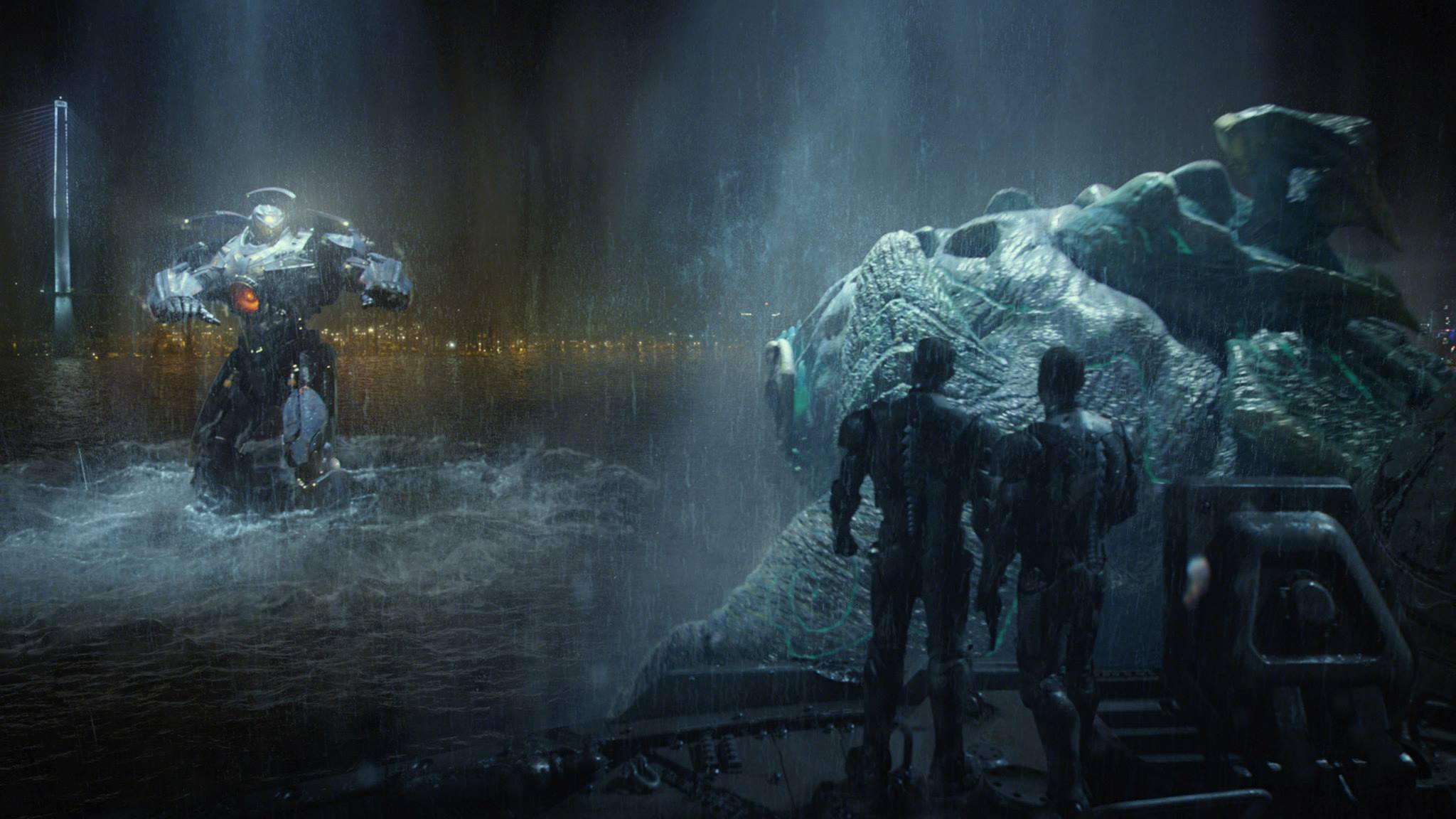
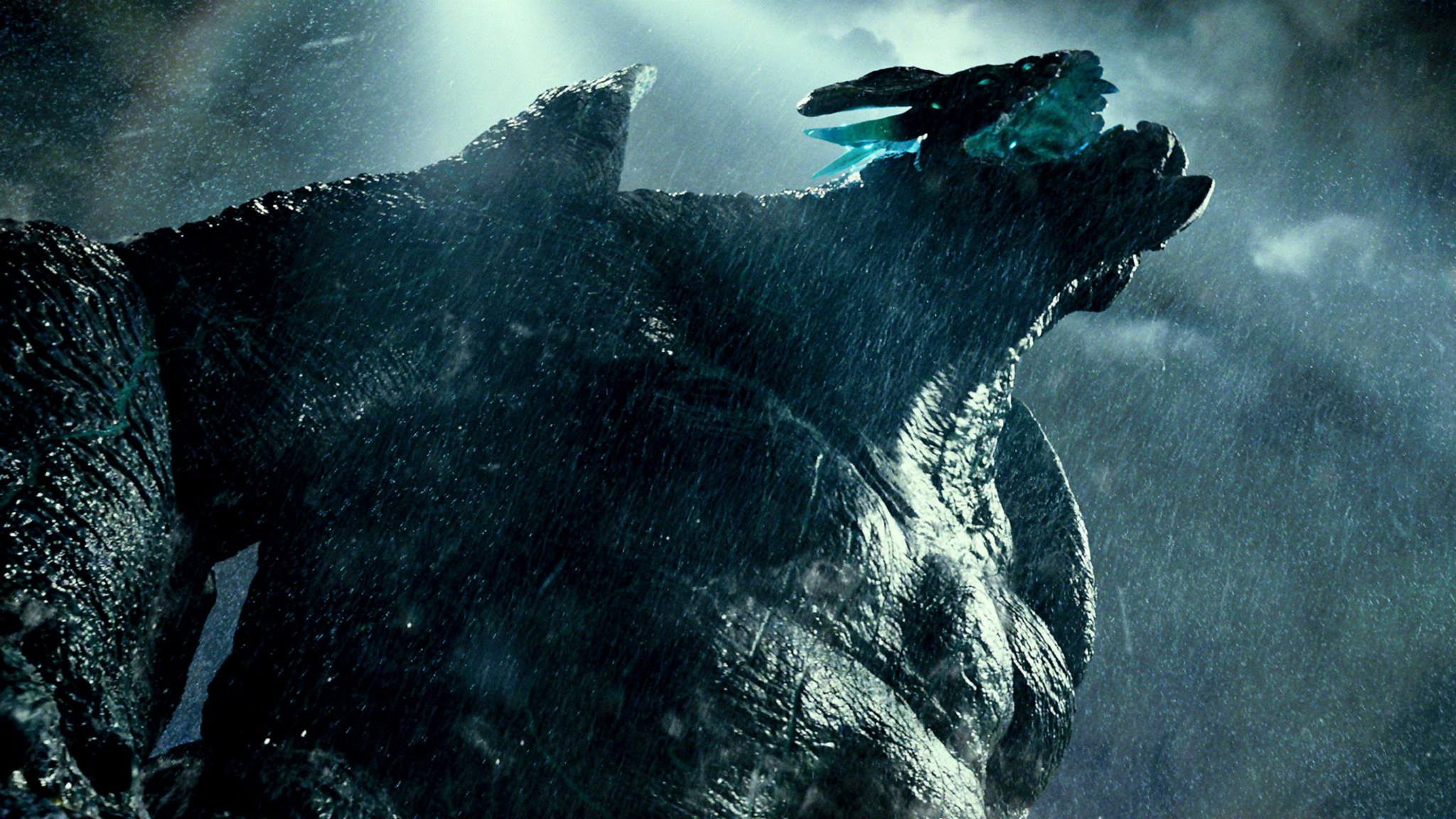
The plot to Pacific Rim is simple enough and an extended opening prologue narrated by one of it’s lead character (Charlie Hunnam of Sons of Anarchy fame playing the role of Jaeger pilot Raleigh Becket). Sometime in the very near future an interdimensional rift (called The Breach) in the Pacific Ocean where two tectonic plates meet open up to allow gigantic creatures dubbed by people as “kaiju”. These kaiju wreak destruction and havoc on a massive scale to the world’s Pacific coastline cities like San Francisco, Manila, Cabo and Tokyo. When conventional military means take too long and and only nuclear options remain on the table the world’s governments band their resources and technical know-how to find a new weapon to combat these kaiju. In comes the “Jaeger Program” where two pilots control 25-story tall giant robots through a “dark science” called “The Drift” to finally fight the kaiju on even terms.

We see through this prologue how the “Jaegers” and their pilots have become rock stars in the eyes of the public as their successes stems and stops the tide that’s been destroying cities in the Pacific Rim for years. It’s also in this prologue that we get to the point of the film where this success has led to overconfidence and the beginning of the end of not just the “Jaeger Program” but that gradual slope that leads to humanity’s inevitable extinction.

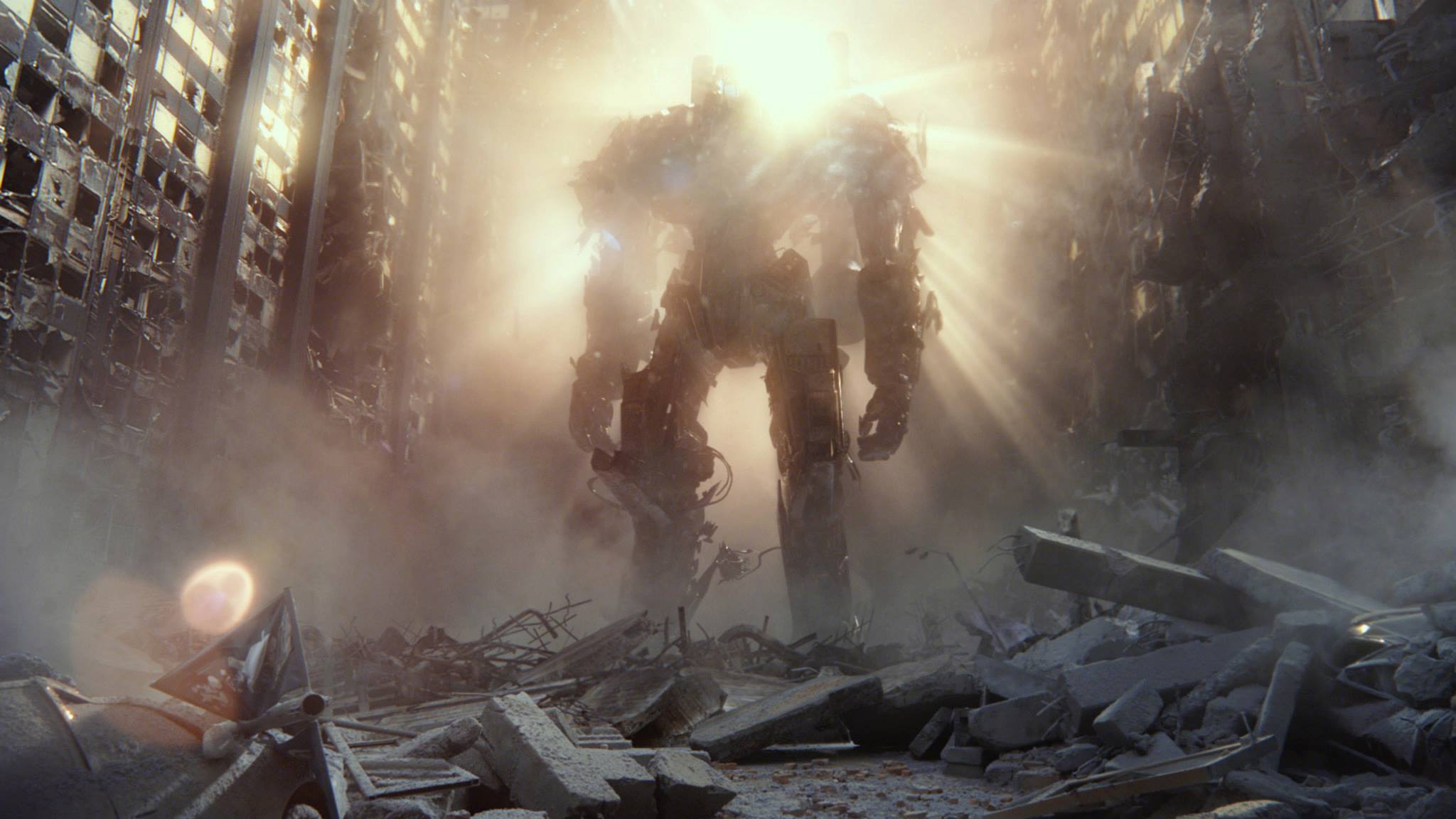
The bulk of the film deals with the last few days of the war when the world’s government have stopped funding the Jaeger Program and instead have pooled all resources and manpower towards building massive anti-kaiju walls along city coastlines as a measure of defense. The Jaeger Programs leader, Marshal Stacker Pentecost (played by the ever-present Idris Elba who seem to live the role), believes that his Jaegers and the Rangers piloting them still can finish the war once and for all with a final strike on The Breach with the remaining four Jaegers left in his arsenal. When the politicians tell him no he resorts to dealing with the less than legitimate sector to fund this final strike. But for this last mission to succeed he needs one of his best pilots back from the brink of remorse and mourning to pilot an older, refurbished Jaeger by the name of Gipsy Danger.

From then on the film takes on the premise that Del Toro promised when he first took on the project. We finally get to see giant robots fighting giant monsters.

1075469_533768066689495_419368227_o

Pacific Rim lives on it’s simplicity. Whether the simplicity of it’s story, dialogue, characters and themes. The film works within those parameters and does it well. One never feels lost with in the film’s narrative. There’s nothing convoluted with this film’s story. Some have said this need to be simple is an inherent flaw. I would agree with this if someone with less talent took on the job. Del Toro understands that keeping the story simple doesn’t mean dumbing it down, but keeping the promise of what the audience expects from a genre film of giant robots fighting giant monsters needs to deliver. The film’s simplicity allows for the story to flow from it’s hi-octane action sequences to it’s more personal moments without having it seemed forced.

Even the characters themselves come off as the archetypes of past adventure films. Whether it’s the stern father figure leading the pack to the hot-shot hero looking to redeem himself for a past failure to the cocky rival whose hothead personality acts as a counter-balance to the hero’s. Even the mysterious newcomer whose past acts as one of the film’s central emotional anchors harkens back to an earlier era of storytelling that preceded the more realistic and gritty era of film narrative born during the late 60’s and 70’s.

These characters some would call one-dimensional or plain cardboard cutouts, but in the context of the film being seen they work. We get enough of what motivates each character to fully understand why their characters do what they do in the film. The motivations range from honor-bound duty to accomplishing the mission, to revenge, redemption and just plain old-school heroism. Yes, this film brings back heroism minus the recent trend to downplay such an archaic notion. The film treats heroism as something noble born out of the shared sacrifice and the need to do what’s right and to protect not just the person next to them but everyone else who cannot fight the monsters that are at their doors.

The characters of Raleigh Becket, Stacker Pentecost, Mako Mori (played by Oscar-nominatedted actress Rinko Kikuchi who channels her inner anime not just in her attitude but even her appearance) and even the dueling scientists Newton Geizler and Gottlieb (played with manic and eccentric enthusiasm by Charlie Day and Burn Gorman respectively) all come off as heroes who accepts the challenge and nobility inherent in the term. They don’t balk at the duty put on their shoulders, but go full-bore in making sure what they do doesn’t have any moments of self-doubt or cynicism. These are characters who don’t become heroes because they were forced into it. They’ve made their choice and thus have to realize that taking on the mantle of heroism would mean making the ultimate sacrifice.

1025926_533768173356151_13577345_o

Yet, for all the talk of themes and narrative styles the film will ultimately live or die on the film’s promise. Does the giant robot fighting giant monsters hold up?

I can honestly say that it does and goes beyond what the studios have been hyping it up to be.

The action sequences between the Jaegers and the kaiju have to be some of the best action sequences of the past decade if not even farther back. It’s a loving homage to the classic daikaiju and mecha of old from Japan that Westerners grew up watching on Saturday mornings on the local UHF channels. It’s mecha anime like Mazinger Z, Macross, Gundam, Neon Genesis Evangelion, Tetsujin-28, Tengen Toppa Gurren Lagann and many others seamlessly melded with the old-school monsters flicks from the Toho Studios with kaiju bearing the iconic names of Godzilla, Gamera, Rodan, Mothra, King Ghidorah and many more. Pacific Rim is a film aimed at the inner-child of men and women who grew up watching these films and shows, but also one that seeks to fire up the imagination of the current generation of children who have been fed on the latest trend of snarky and self-doubting heroes.

The fights between the the jaegers and kaiju also does one thing that most Hollywood filmmakers who make action films have been unable to pull off. I’m talking about action sequences that remains as kinetic and explosive as any we’ve seen in the past but also aware of it’s space and environment. Pacific Rim’s action sequences never come off as being confusing. There’s no hand-held, cinema verite stylistic choices when it came to filming these sequences. We know exactly which jaeger is doing to fighting and which kaiju is fighting back. Even while set mostly at night and in the rain (or in some cases in the water and underneath in ocean), these fights and the digital effects created by ILM (with some practical ones from Legacy Effects) come off just as clear as if they were done for daytime. In fact, having them set at night with the many differing kinds of light sources available in the scene sometimes gave the fight scenes an almost psychedelic look with Hong Kong’s neon-lit streets and cityscape to the reflected bio-luminescence of the kaiju to the utilitarian lights on the jaegers themselves.

1074205_533767976689504_764647807_o

Yet, it still all comes down on whether the promised throwndown delivers and yes it does. We’ve come to learn that even ILM can make the most awesome looking digital effect visuals but still having them end up being confusing because of the filmmaker involved. Some have called this the Michael Bay Effect. Even some of today’s most visually talented filmmakers have fallen prey to it, but not Del Toro who eschews rapid-fire editing and shaky-cam moves. He instead goes from strady shots both close-up and wide to show the battle progress from one move to the next as we see each counter-move develop into more counter-moves. These jaeger-kaiju fight scenes have an almost balletic grace to them despite the massive amount of destruction heaped not just on each other but their surrounding environment as well. They also have a sense of weight to both jaeger and kaiju. With each step, punch, crash and bodyslam there’s a sense of real actual weight being protrayed on the screen unlike films like the Transformers trilogy and, more recently, Man of Steel during some of it’s major action sequences.

Once again this boils down to the simplicity of the scenes and how this choice makes the fights more exciting and thrilling than anything we’ve seen this summer. Up-and-coming filmmakers looking to find out how to set, block and choreograph action scenes could find no better filmmaker than Guillermo Del Toro to learn from.

So, does this mean that Pacific Rim is a perfect film which has no flaws and can do no wrong. It’s a question that probably splits critics and those who talk endlessly about film, but the simple answer is that Pacific Rim is not a perfect film. It does have it’s faults that’s born out of it’s simple narrative and simple-drawn characters. Yet, these flaws also comes across as strengths depending on who ones asks. But as a piece of action-adventure filmmaking that promised the simple idea of giant robots fighting giant monsters the film was perfect.

Pacific Rim reminds us that Guillermo Del Toro is one of the few filmmakers who definitely earns the label of genius. It’s not hyperbole. It’s just fact. It takes a genius filmmaker to do the sort of varied films as he has done throughout his career both as director and producer and still have each and everyone of them feel original (whether they are or not), thought-provoking and just plain old fun. Pacific Rim may be Del Toro’s love letter to his childhood loves of mecha anime and daikaiju films from Toho and other such studios, but it’s really a rallying cry to audiences both young and old that blockbuster filmmaking doesn’t have to be gritty, journeys through psychological darkness to be successful. He’s brought the fun back in epic, grandiose filmmaking that hopefully becomes a trend and not a one-shot.

P.S.: Also, make sure to stay to watch the end title sequence that was created by Imaginary Forces to make a sequence similar to the awesome end titles for The Avengers last year. Plus, there’s a small scene mid-credits at the end that ends the film on the proper note.

Trailer: Pacific Rim (Wonder-Con Exclusive)


PacificRim

July 12, 2013 will be the date that will go down in otaku history when anime and live-action finally come together to prove that dreams of a live-action versions of some of the most beloved anime titles can work outside the animator’s studio. Guillermo Del Toro may not admit it but this Wonder-Con exclusive trailer for his upcoming Pacific Rim is chock full of anime influences.

Giant mecha aka Giant robots piloted by humans: CHECK

Giant monsters alien or interdimensional in origin: CHECK

Humanity brought to the brink of extinction and living in fortified cities: CHECK

It sounds like the basic outlines for anime of the past 30 or so years. There’s a bit of Neon Genesis Evangelion. There’s definitely a healthy dosage of the Mazinger Z DNA in this film. We can’t forget the classic Voltron that introduced many young people in the West in the 80’s to the joy of ultra-violent anime. Outside of anime there’s the Ultraman versus  kaiju live-action Saturday serials that continues to be popular in Japan to this day and was a staple of any growing boy’s entertainment agenda on Saturday mornings.

Whether this film lives up to the hype it’s been gaining since the first teaser was shown late last year is still an unanswered question, but for fans of action anime this film looks like a love-letter to us and everyone else should just hang on for the ride whether they want to or not.

Plus, for those not steeped in otaku culture it has something for you as well: Jax Teller, Luther, Clay Morrow and Charlie “Kitten Mittens” Kelly.

On July 12, 2013 will be the date to cancel the apocalypse.

Source: Joblo Movie Network