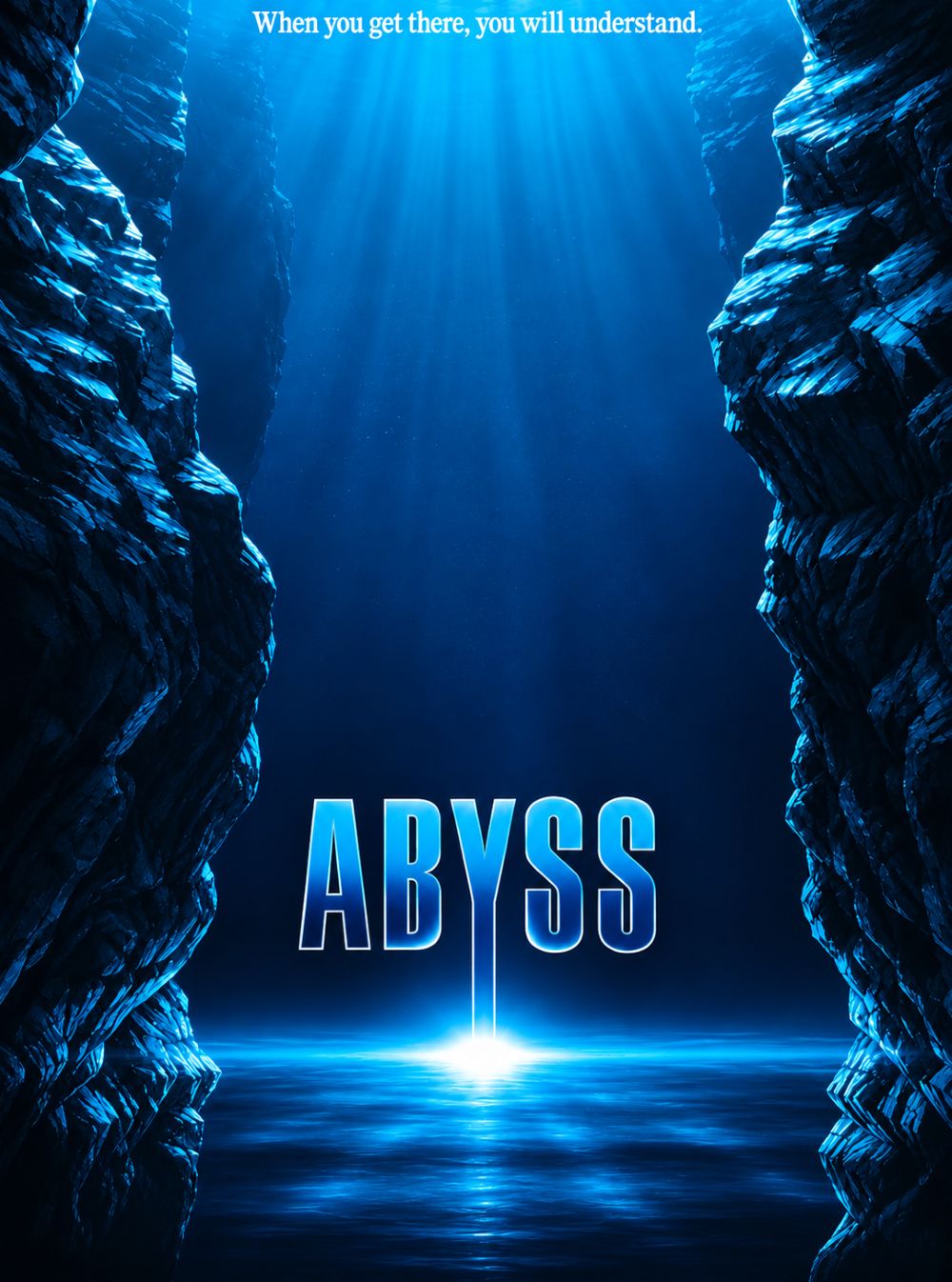
“We all see what we want to see. Coffey looks and he sees Russians. He sees hate and fear. You have to look with better eyes than that.” — Lindsey Brigman
James Cameron has never seemed particularly interested in keeping things small, but The Abyss gets much of its power from people who can barely move. They’re trapped in tight compartments, weighed down by equipment, and forced to make decisions while the ocean presses in around them. His 1989 underwater adventure turns those restrictions into gripping entertainment, then asks the story to carry a troubled marriage and a message about humanity’s future. It’s an uneven combination, but an engaging one. This review covers the 171-minute extended Special Edition, which can be considered Cameron’s preferred cut, with its fuller character development and substantially expanded ending.
The story begins with an American nuclear submarine sinking after an encounter with something unexplained. A civilian drilling crew is recruited to assist a Navy SEAL team, turning its underwater platform into the headquarters for a tense recovery operation. Bud Brigman, played by Ed Harris, runs the civilian side with the weary confidence of someone accustomed to solving problems without outside help. Then his estranged wife, Lindsey, arrives because she designed the platform and understands its capabilities. That’s good news for the operation, less welcome news for Bud, and an effective way to make an already uncomfortable workplace even more volatile.
Cameron gives that workplace enough personality that the danger matters before the plot gets especially strange. The crew members tease each other, complain about instructions, and handle complicated machinery with practiced familiarity. Their conversations don’t always advance the story, which is part of why they work. These people seem to have lives and routines beyond whatever emergency the movie has prepared for them. Some supporting characters remain broad sketches, but their reactions help establish the group’s identity. You believe they’ve spent enough time together to recognize when an argument is harmless and when someone has become a genuine problem.
The platform itself contributes just as much to that credibility. Its passageways, working areas, and sleeping quarters feel designed around necessity rather than comfort. Cameron gives you enough familiarity with the space that damage has consequences beyond the immediate thrill of water bursting through an opening. A flooded room means a route lost, equipment gone, or another reduction in the crew’s already narrow options. Outside, lights reveal only fragments of an environment that remains overwhelmingly dark. The contrast is unsettling: the platform is claustrophobic, but leaving it means entering a space so vast and indifferent that the cramped interior starts looking reassuring.
Harris anchors the film by making Bud capable without making him invulnerable. He has the authority of a man who will take the difficult job himself, but that same stubbornness causes problems when persistence isn’t the answer. You can see why the crew trusts him and why living with him might be exhausting. Harris lets those qualities coexist rather than separating Bud into admirable and flawed versions. His warmth doesn’t erase his defensiveness, and his courage doesn’t mean he always knows what he’s doing. That makes him a useful center for a story that eventually moves far beyond anything its characters can reasonably understand.
Mary Elizabeth Mastrantonio gives Lindsey the sharp edges needed to make their relationship convincing. She isn’t simply waiting for Bud to demonstrate his worth, and her professional confidence doesn’t disappear whenever the film wants an emotional moment. She can be impatient and cutting, sometimes unnecessarily so, but Mastrantonio allows concern to surface beneath the defensiveness. Her scenes with Harris suggest arguments repeated so often that both people know their parts. They’re good at identifying each other’s weaknesses and less accomplished at acknowledging their own. The affection remains visible, though neither seems eager to make the first move toward admitting it.
The extended edition gives that conflict more room, which matters because the romance needs to function as more than an interruption between emergencies. Bud and Lindsey don’t resolve their differences through one convenient conversation. Instead, the situation gradually exposes how much attention they still pay to each other. Irritation and concern keep occupying the same moments. The wedding ring becomes a particularly effective detail, connecting the marriage to the physical action without requiring another argument about what commitment means. Cameron isn’t always subtle, but he understands the value of giving an emotional idea a concrete object that can matter within a scene.
Michael Biehn’s Lieutenant Coffey brings a more dangerous response to uncertainty. Biehn plays him with a rigid intensity that becomes increasingly unsettling as his judgment deteriorates. Coffey responds to confusion by tightening control, even when that response makes the situation worse. There’s something frightening about a man who mistakes escalating fear for clear thinking, especially when he retains the authority and weapons to act on it. The writing occasionally leans too heavily on the contrast between aggressive soldiers and adaptable civilians. Still, Biehn gives Coffey enough nervous physicality that he registers as an immediate threat rather than merely the representative of a bad idea.
As an action director, Cameron understands how to make a simple objective feel almost impossible. A character has to reach a doorway, repair a system, or cover a distance with too little air. The underwater setting adds resistance to everything, and the film makes that resistance tangible. People struggle with equipment, lose visibility, and spend precious time doing things that would be easy on land. The sequences generally establish their geography and stakes clearly, so suspense comes from anticipating failure rather than trying to understand the editing. Even success rarely brings much relief. Everyone looks increasingly exhausted, and the next task always seems to demand energy nobody has left.
That exhaustion becomes emotionally devastating in the resuscitation sequence. Cameron keeps the scene going long enough to strip away the reassurance that a movie usually offers when a major character is in danger. Harris lets Bud’s practical determination collapse into desperation, exposing feelings he has struggled to express in ordinary conversation. It’s forceful, openly manipulative filmmaking, and not everyone will welcome how hard it pushes. But the intensity has a foundation. The relationship has established what could be lost, while the crew’s helpless presence makes the moment feel painfully public. People accustomed to fixing problems reach the limit of what effort and expertise can accomplish.
The visitors offer something beyond another threat, and the water-tentacle encounter works beautifully because curiosity briefly takes over from fear. There’s humor in it, and an intimacy that feels surprising after so much noise and conflict. The effect matters because it allows a strange intelligence to interact with people on a recognizable emotional level. For a moment, the movie stops treating the unknown as an obstacle. The extended ending then expands that possibility into a confrontation with human violence, bringing international tensions and enormous thousand-foot waves into the resolution. It gives the visitors a clearer purpose, but turns suggestion into a rather blunt explanation. Cameron’s sincerity remains appealing even when his argument becomes too simple.
What makes The Abyss memorable is the way its tenderness survives all that machinery, noise, and pressure. The extended edition occasionally explains what its strongest scenes have already made clear, and its global ambitions aren’t as persuasive as its intimate observations. Yet Harris and Mastrantonio keep pulling it toward something believable: two difficult people discovering that their attachment still matters. Cameron gives that possibility the same attention he gives a failing oxygen supply, treating trust as something that requires effort and carries consequences. Not every grand statement lands, but the quieter feeling underneath does. After so much struggle just to stay alive, having someone worth reaching for feels like a convincing reward.


