Film Review: Flight of the Intruder (dir. by John Milius)


“I do know the difference between dying for something and dying for nothing.” — Jake Grafton

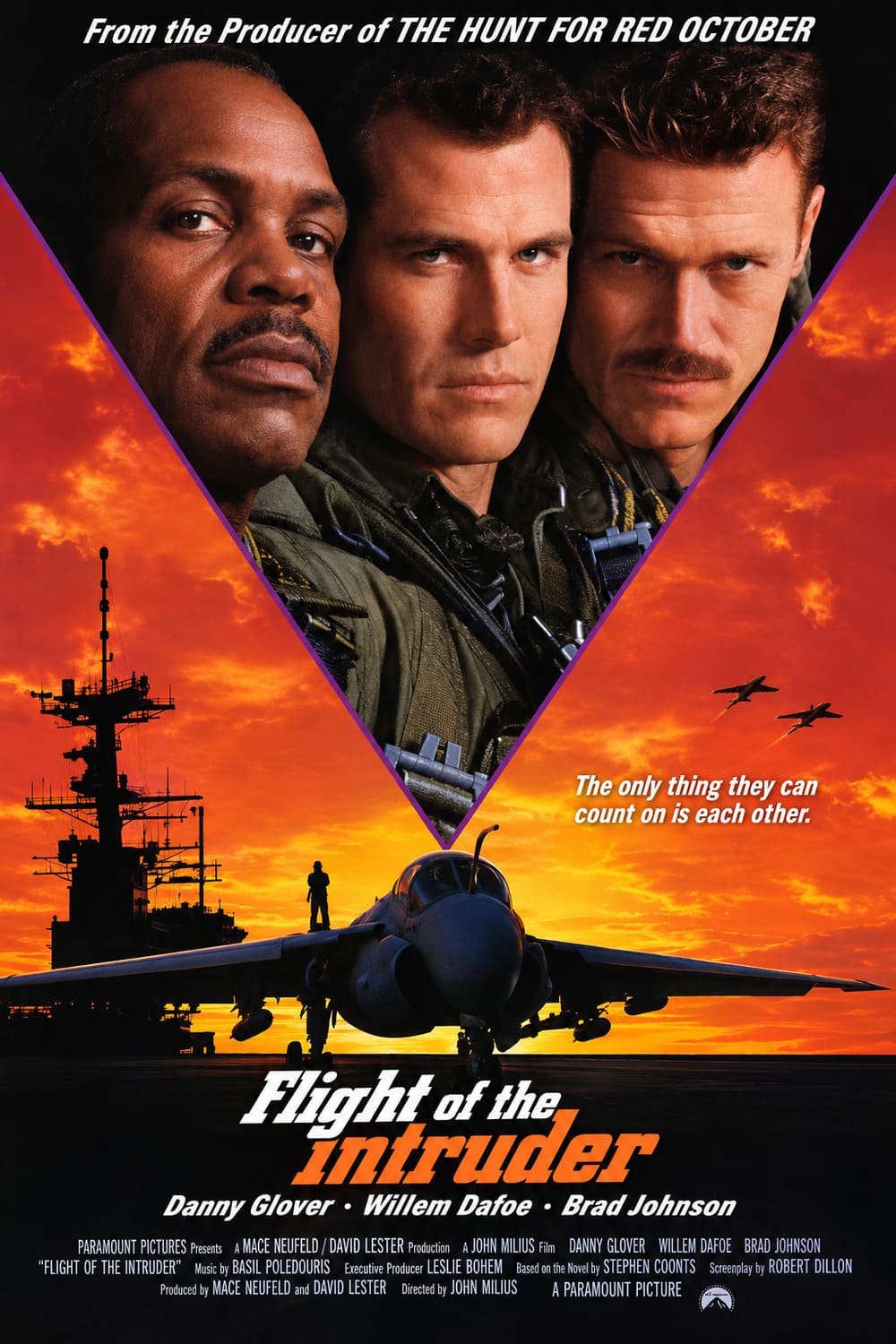
There is a difference between knowing how to fly into danger and knowing what that danger is supposed to accomplish. That gap gives Flight of the Intruder its most interesting material. John Milius’s 1991 war film follows men who trust their training, their aircraft, and each other far more than they trust the decisions sending them into combat. Adapted from Stephen Coonts’s novel of the same name, it mixes a story of wartime disillusionment with an old-fashioned action adventure. Those two sides do not always fit together, but the friction gives this uneven movie more personality than a routine military thriller.

Brad Johnson plays Lieutenant Jake Grafton, a Navy pilot flying an A-6 Intruder during the Vietnam War. When his bombardier is killed on a mission against a seemingly worthless target, Grafton begins questioning the purpose behind the daily cycle of takeoffs, bombing runs, and dangerous returns. He is not afraid of doing his job. He is angry that doing it well might make no difference. That distinction gives the character an accessible emotional foundation. Even when the screenplay pushes him toward predictable acts of rebellion, his initial frustration feels like something more substantial than the usual action hero’s dislike of authority.

The film’s central idea is that Grafton needs to recover a sense of purpose, but it gets into trouble when it starts treating that need as its own justification. His answer is an unauthorized strike against a missile depot in Hanoi, undertaken with veteran bombardier Virgil Cole. It is an exciting premise because the mission carries both military danger and personal consequences. As an answer to Grafton’s disillusionment, though, it feels suspiciously convenient. The movie raises difficult questions about waste and obedience, then suggests that choosing a better target might settle them. The action becomes clearer just as the thinking becomes fuzzier.

Johnson gives Grafton a restrained, earnest quality that generally suits the role. He looks comfortable playing someone who expresses himself more easily through work than conversation. That reserve helps sell the character’s professionalism, although it also limits the emotional impact of scenes that need him to reveal more. There are moments when Grafton seems less like a man struggling with grief than a leading man waiting for the next plot development. Johnson is never a fatal weakness, but he does not consistently provide the intensity needed to make every stage of Grafton’s transformation feel fully earned.

Willem Dafoe is much more immediately engaging as Cole. He brings an unpredictable edge that keeps their partnership from becoming a simple arrangement between an inexperienced hothead and a wise veteran. Cole has experience, certainly, but Dafoe makes that experience look potentially dangerous rather than automatically reassuring. His confidence suggests someone who has spent enough time around death to develop an unusual relationship with it. That gives his scenes with Johnson a welcome tension. Grafton wants reassurance that his anger means something, while Cole seems ready to turn that anger into action without offering much comfort about the consequences.

Danny Glover gives the movie another useful source of resistance as commanding officer Frank Camparelli. His job is partly to stand between frustrated men and the decisions they might make when frustration takes over. Glover brings enough authority to prevent Camparelli from feeling like a cardboard obstacle placed in the heroes’ path. You can understand why Grafton resents restrictions while also recognizing that somebody has to think beyond the emotional needs of one crew. The film is more interesting whenever it allows that disagreement to remain unresolved. It becomes less interesting when military discipline is treated mainly as something adventurous men must work around.

Once the aircraft leave the carrier, the movie becomes noticeably more assured. The cockpit sequences give the action a sense of process: these men have equipment to manage, threats to interpret, and very little time to make decisions. That practical detail makes the danger engaging. Instead of relying entirely on spectacle, the better scenes build suspense around what the crews can see, what they cannot see, and how quickly their situation might change. Some effects have aged better than others, but the flying still supplies the film’s strongest argument for watching it. Competence under pressure remains compelling even when the visuals look dated.

The ground-level material is considerably patchier. Drinking, banter, and romantic interludes are meant to show what these men do with the time between missions, but too much of it feels borrowed from other military movies. The romantic subplot involving Rosanna Arquette is especially thin, offering a softer side of Grafton without developing much emotional momentum of its own. These scenes should make the next flight matter more by showing what exists outside the cockpit. Instead, they sometimes make you impatient for another launch. The issue is not that a combat film needs constant action; its quieter moments simply need more individuality.

Milius is better at conveying loyalty than examining the assumptions behind it. The bonds between the aviators have weight, and the later rescue-centered action draws real energy from their refusal to abandon one another. Yet the film’s perspective stays narrow. Vietnamese lives remain largely outside its emotional focus, while American courage receives sustained attention. That imbalance matters because the story wants its heroes’ frustration to carry moral significance, not merely dramatic interest. It understands how war damages these men, but seems less curious about what their determination might cost anyone else. The result is emotionally direct without being especially searching.

By the end, Flight of the Intruder has made a stronger case for the men’s devotion to each other than for the decisions they make. That is both its saving grace and its limitation. Dafoe’s sharp presence, Glover’s authority, and the tense flying sequences give it enough substance to remain watchable through the slower stretches. Still, the film keeps reaching for complicated questions and accepting action-movie answers. It is worth seeing as an imperfect combat adventure, especially for its cockpit tension, but its most revealing moments occur when skill and courage stop being enough—when getting home safely cannot explain why the mission mattered.
Film Review: The Abyss (dir. by James Cameron)


“We all see what we want to see. Coffey looks and he sees Russians. He sees hate and fear. You have to look with better eyes than that.” — Lindsey Brigman

James Cameron has never seemed particularly interested in keeping things small, but The Abyss gets much of its power from people who can barely move. They’re trapped in tight compartments, weighed down by equipment, and forced to make decisions while the ocean presses in around them. His 1989 underwater adventure turns those restrictions into gripping entertainment, then asks the story to carry a troubled marriage and a message about humanity’s future. It’s an uneven combination, but an engaging one. This review covers the 171-minute extended Special Edition, which can be considered Cameron’s preferred cut, with its fuller character development and substantially expanded ending.

The story begins with an American nuclear submarine sinking after an encounter with something unexplained. A civilian drilling crew is recruited to assist a Navy SEAL team, turning its underwater platform into the headquarters for a tense recovery operation. Bud Brigman, played by Ed Harris, runs the civilian side with the weary confidence of someone accustomed to solving problems without outside help. Then his estranged wife, Lindsey, arrives because she designed the platform and understands its capabilities. That’s good news for the operation, less welcome news for Bud, and an effective way to make an already uncomfortable workplace even more volatile.

Cameron gives that workplace enough personality that the danger matters before the plot gets especially strange. The crew members tease each other, complain about instructions, and handle complicated machinery with practiced familiarity. Their conversations don’t always advance the story, which is part of why they work. These people seem to have lives and routines beyond whatever emergency the movie has prepared for them. Some supporting characters remain broad sketches, but their reactions help establish the group’s identity. You believe they’ve spent enough time together to recognize when an argument is harmless and when someone has become a genuine problem.

The platform itself contributes just as much to that credibility. Its passageways, working areas, and sleeping quarters feel designed around necessity rather than comfort. Cameron gives you enough familiarity with the space that damage has consequences beyond the immediate thrill of water bursting through an opening. A flooded room means a route lost, equipment gone, or another reduction in the crew’s already narrow options. Outside, lights reveal only fragments of an environment that remains overwhelmingly dark. The contrast is unsettling: the platform is claustrophobic, but leaving it means entering a space so vast and indifferent that the cramped interior starts looking reassuring.

Harris anchors the film by making Bud capable without making him invulnerable. He has the authority of a man who will take the difficult job himself, but that same stubbornness causes problems when persistence isn’t the answer. You can see why the crew trusts him and why living with him might be exhausting. Harris lets those qualities coexist rather than separating Bud into admirable and flawed versions. His warmth doesn’t erase his defensiveness, and his courage doesn’t mean he always knows what he’s doing. That makes him a useful center for a story that eventually moves far beyond anything its characters can reasonably understand.

Mary Elizabeth Mastrantonio gives Lindsey the sharp edges needed to make their relationship convincing. She isn’t simply waiting for Bud to demonstrate his worth, and her professional confidence doesn’t disappear whenever the film wants an emotional moment. She can be impatient and cutting, sometimes unnecessarily so, but Mastrantonio allows concern to surface beneath the defensiveness. Her scenes with Harris suggest arguments repeated so often that both people know their parts. They’re good at identifying each other’s weaknesses and less accomplished at acknowledging their own. The affection remains visible, though neither seems eager to make the first move toward admitting it.

The extended edition gives that conflict more room, which matters because the romance needs to function as more than an interruption between emergencies. Bud and Lindsey don’t resolve their differences through one convenient conversation. Instead, the situation gradually exposes how much attention they still pay to each other. Irritation and concern keep occupying the same moments. The wedding ring becomes a particularly effective detail, connecting the marriage to the physical action without requiring another argument about what commitment means. Cameron isn’t always subtle, but he understands the value of giving an emotional idea a concrete object that can matter within a scene.

Michael Biehn’s Lieutenant Coffey brings a more dangerous response to uncertainty. Biehn plays him with a rigid intensity that becomes increasingly unsettling as his judgment deteriorates. Coffey responds to confusion by tightening control, even when that response makes the situation worse. There’s something frightening about a man who mistakes escalating fear for clear thinking, especially when he retains the authority and weapons to act on it. The writing occasionally leans too heavily on the contrast between aggressive soldiers and adaptable civilians. Still, Biehn gives Coffey enough nervous physicality that he registers as an immediate threat rather than merely the representative of a bad idea.

As an action director, Cameron understands how to make a simple objective feel almost impossible. A character has to reach a doorway, repair a system, or cover a distance with too little air. The underwater setting adds resistance to everything, and the film makes that resistance tangible. People struggle with equipment, lose visibility, and spend precious time doing things that would be easy on land. The sequences generally establish their geography and stakes clearly, so suspense comes from anticipating failure rather than trying to understand the editing. Even success rarely brings much relief. Everyone looks increasingly exhausted, and the next task always seems to demand energy nobody has left.

That exhaustion becomes emotionally devastating in the resuscitation sequence. Cameron keeps the scene going long enough to strip away the reassurance that a movie usually offers when a major character is in danger. Harris lets Bud’s practical determination collapse into desperation, exposing feelings he has struggled to express in ordinary conversation. It’s forceful, openly manipulative filmmaking, and not everyone will welcome how hard it pushes. But the intensity has a foundation. The relationship has established what could be lost, while the crew’s helpless presence makes the moment feel painfully public. People accustomed to fixing problems reach the limit of what effort and expertise can accomplish.

The visitors offer something beyond another threat, and the water-tentacle encounter works beautifully because curiosity briefly takes over from fear. There’s humor in it, and an intimacy that feels surprising after so much noise and conflict. The effect matters because it allows a strange intelligence to interact with people on a recognizable emotional level. For a moment, the movie stops treating the unknown as an obstacle. The extended ending then expands that possibility into a confrontation with human violence, bringing international tensions and enormous thousand-foot waves into the resolution. It gives the visitors a clearer purpose, but turns suggestion into a rather blunt explanation. Cameron’s sincerity remains appealing even when his argument becomes too simple.

What makes The Abyss memorable is the way its tenderness survives all that machinery, noise, and pressure. The extended edition occasionally explains what its strongest scenes have already made clear, and its global ambitions aren’t as persuasive as its intimate observations. Yet Harris and Mastrantonio keep pulling it toward something believable: two difficult people discovering that their attachment still matters. Cameron gives that possibility the same attention he gives a failing oxygen supply, treating trust as something that requires effort and carries consequences. Not every grand statement lands, but the quieter feeling underneath does. After so much struggle just to stay alive, having someone worth reaching for feels like a convincing reward.

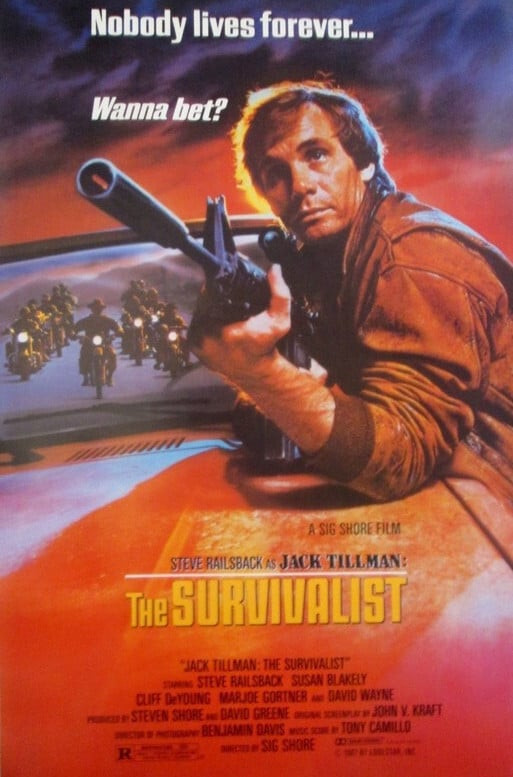
The TSL Grindhouse: The Survivalist (dir by Sig Shore)


1987’s The Survivalist opens with a mushroom cloud forming over a frozen landscape.

In America, a nervous-looking newscaster announces that someone has set off a nuclear bomb in Siberia.  The bomb was apparently a “suitcase bomb” and it was probably set off by a group of terrorists who figured bombing one of the most desolate and sparsely-populated places on Earth would make their point.  However, the Russians are convinced that America was behind the bomb.  Nuclear war is eminent.

People go into a panic.  Civil disorder breaks out.  Even a small town in South Texas finds itself in the grip of societal collapse.  Fortunately, independent builder Jack Tilman (Steve Railsback) has spent his life preparing for this moment.  He has hundreds of guns and explosives and he’s prepared to take his family into the desert while civilization collapses.  When a desperate neighbor comes back Jack’s house and asks for a gun, Jack gives him a shotgun and then reacts with shocks when his friend reveals that he’s never fired a gun before.  Considering that they live in South Texas, I’m surprised too.

(Seriously, how do they scare off the coyotes?)

Jack leaves his home to get some gasoline for their trip.  While he’s out, he’s harassed by the motorcycle riding Lt. Youngman (Marjoe Gortner).  Youngman is with the National Guard and, apparently, the National Guard has turned into a motorcycle gang.  Youngman is declaring martial law and setting himself up as a warlord.  With his perpetual smirk and his feathered hair, Lt. Youngman epitomizes the arrogance of authority.  Jack has no use for him.  Jack also has no use for anyone who wants to keep him from getting his money out of the bank.  Jack has access to a bulldozer, after all.

Unfortunately, while Jack is arguing with Youngman and smashing into the bank, a group of hippies are breaking into his house and killing his family.  A half-crazed Jack kidnaps two of his friends — Dr. Vincent Ryan (Cliff DeYoung) and his wife, Linda (Susan Blakely) — and he takes them into the desert with him.  When Vincent demands to know why they’ve been kidnapped, Jack says that he’s trying to protect them.  Linda gets it.  Unfortunately, Vincent doesn’t.

Last night, I was searching for some Marjoe Gortner films to review.  I came across The Survivalist on Letterboxed and I also came across some amazingly vitriolic reviews, largely from Leftists who accused the film of being a paranoid right-wing fantasy.  I read those reviews and I thought to myself, “It stars Steve Railsback and Marjoe Gortner and it annoys the commies?  I have to watch this!”  I was able to track the film down on YouTube and I proceeded to spend 90 minutes watching civilization collapse.

Is it a good film?  It depends on how you define good.  It’s a low-budget, unashamedly trashy film that was clearly meant to appeal to people with a very definite worldview, one that the filmmakers may not have shared.  (Most films are made solely to make money and any message that is selected is selected out of the hope that it will be profitable.)  The government is corrupt.  Most of the citizens have become complacent and aren’t prepared to handle any sort of crisis.  When civilization collapses, only men like Jack Tilman and Lt. Youngman will thrive because they’re willing to be ruthless.  To try to rationalize the situation, as Dr. Ryan does, is an often fatal mistake.  In short, The Survivalist is a very paranoid film.  That said, its story and its worldview really isn’t all that different from One Battle After Another.  

I enjoyed The Survivalist, precisely because it is such a shameless film.  This is the type of movie where the National Guard rides motorcycles and blow up random buildings for fun.  It’s the type of film where one gunshot can cause a car to explode.  It’s the type of film where actors like Cliff DeYoung and Susan Blakeley attempt to find some sort of deeper meaning in their awkward dialogue while Steve Railsback does his Clint Eastwood impersonation.  Best of all, it’s got Marjoe Gortner going totally over-the-top as a smug authority figure.  It’s a fun movie, a trashier version of Red Dawn.

What’s not to love?

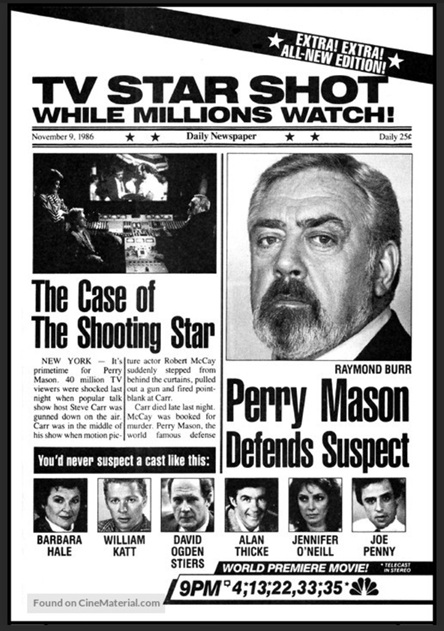
So, I Watched Perry Mason: The Case Of The Shooting Star (1986, Dir. by Ron Satlof)


Actor Robert McCay (Joe Penny) decides that it would be hilarious to shoot talk show host Steve Carr (Alan Thicke) on live television.  McCay thinks that the gun is loaded with blanks but, before he goes on the show, someone slips a live round into the gun.  McCay kills Steve Carr and there are a million witnesses who see him do it.  Time to call in Perry Mason (Raymond Burr)!

The third Perry Mason movie isn’t as good as the first two.  Shooting someone on television as a joke and then leaving the studio immediately afterwards is a really stupid thing to do.  As my sister pointed out while we were watching, even if Robert McCay wasn’t guilty of premeditated murder, he was probably guilty of negligent homicide for not bothering to double check whether or not there was a live round in the gun.  McCay goes right back to shooting his movie, even while he’s on trial for murder.  As for the trial, it was ridiculous.  How many people can confess under cross examination in one trial?  “Mistrial!” my sister yelled whenever Perry pulled one of his stunts and I agreed.

Paul (William Katt) teams up with a photojournalist (Wendy Crewson) and his investigation somehow leads to him playing a priest in a cheap vampire movie.  For once, Perry didn’t give Paul a hard time about anything.  Maybe he realized Paul’s scenes were the best part of The Case of the Shooting Star.

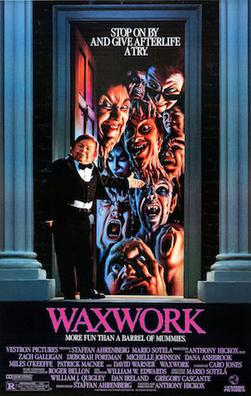
Horror Film Review: Waxwork (dir by Anthony Hickox)


First released in 1988, Waxwork asks the audience with a very important question.

Let’s say that you and your best friend were walking to school one day when you suddenly noticed a gigantic mansion that you had never seen before, sitting in the middle of your neighborhood.  And what if a tall, somewhat sinister Englishman (played by David Warner, none the less) suddenly appeared out of nowhere and told you that the mansion was actually a waxwork.  And what if that Englishman than invited you to come to the waxwork at midnight and specifically asked you to come in a group of 6.  Would you do it?

Now, I know that your first instinct is to say, “Of course, I wouldn’t!”  That’s the type of answer that we’ve been conditioned to give because no one wants to admit that they can be as dumb as a character in a horror movie.  But really, I would go.  Especially if, like the characters in Waxwork, I was a teenager.  (Actually, most of the characters in Waxwork are described as being college students but they all act like high school students and their college appears to be a high school so draw your own conclusions.)  When you’re a certain age, you feel like you’re immortal and an invitation to hang out in a creepy building with a bunch of strangers at midnight feels totally reasonable.

Anyway, four rich kids — Mark (Zach Galligan), China (Michelle Johnson), Sarah (Deborah Foreman), and Tony (Dana Ashbrook, a year before he was cast as Laura Palmer’s boyfriend in Twin Peaks) — visit the waxwork at midnight.  What they discover is that the building is full of macabre exhibits that recreate various moments from horror history.  There’s werewolves, vampires, and Jack the Ripper.  There’s also the Marquis de Sade, a figure that the seemingly innocent Sarah becomes fascinated with.  And, as two of the visitors discover, stepping past the red rope and entering an exhibit transports them into an alternate world where they become the victim of the star of each display.

Not surprisingly, the film is at its best when imagining the world inside each exhibit.  Each exhibit has its own backstory and its own set of guest stars.  John Rhys-Davies shows up as a werewolf.  Miles O’Keeffe is a properly urbane Count Dracula.  J. Kenneth Campbell plays the Marquis de Sade, who the film imagines as a swashbuckling sadist.  That said, I think the most effectively frightening exhibit was one that featured no special guest stars but a very determined and very strong mummy.

What’s going on at the waxwork!?  As explained by Sir Wilfred (Patrick Macnee, bringing some welcome wit and style to the film), it’s all a part of a scheme to bring the most evil beings ever back into existence so that they can conquer the world.  It’s important that none of the waxworks be allowed to enter the real world and soon, Sir Wilfred and his ragtag army are laying siege to the waxwork and bringing things to an apocalyptic conclusion.  The final battle is a bit haphazardly edited and it’s impossible to really keep track of who is fighting on which side.  (Indeed, I’m still not sure where Sir Wilfred even found his army.)  But it does feature plenty of in-jokes for horror fans, including a cameo appearance by the carnivorous plant from Little Shop of Horrors.

Waxwork is entertaining film.  It doesn’t take itself particularly seriously and, indeed, Mark, China, Sarah, Tony, and all of their friends feel as if they could just as easily have been found in the pages of a Bret Easton Ellis novel about pretty but vapid alcoholics.  Mark is the type who gets his maid to write his term papers.  Tony just wants to drink (but, because he’s played by the adorable Dana Ashbrook, he’s still the most likable character in the film).  China says, “I do what I want, when I want,” when confronted about cheating on her boyfriend.  Sarah is the “innocent” one but just seeing the words “Marquis de Sade” causes her to swoon.  Dropping these four idiots into a situation where the fate of the world is at stake feels like a wonderfully sardonic cosmic joke.

In the end, the true pleasure of Waxwork is watching old pros like David Warner, Patrick Macnee, and the exhibit guest stars hamming it up.  Macnee, in particular, seems to enjoy leading the final charge against the forces of evil and, indeed, it’s hard not to wish that he had even more screen time than he did.  David Warner, meanwhile, rolls his eyes at just how difficult it can be to bring the 18 most evil figure in history back to life.  It’s hard work but I guess someone has to do it!