First released in 1982, Piranha II takes place at a Caribbean resort. It’s a great vacation spot. There’s a beautiful beach. There are lots of boats. The locals are friendly and eager to take your money. Chief Steve Kimbrough (Lance Henriksen) does his best to maintain law and order and keep the tourists safe. There’s a shipwreck nearby, and Steve’s estranged wife, Anne (Tricia O’Neill), leads regular underwater tours. Just watching the first few minutes of Piranha II, I was totally prepared to book a vacation, despite the fact that those Trivago commercials have left me somewhat fearful of the whole resort experience. (“You didn’t use Trivago.” And how is that any of your business?)
Then the piranhas arrived.
Yes, the water is soon full of piranhas, the sharp-toothed fish that look scary in 3D and that destroyed an entire resort in the first Piranha film. However, these new piranhas are even worse than the ones that came before them. These piranhas can fly! Someone has been performing gene-splitting experiments and now, as a result, the piranhas not only have sharp teeth—they have wings! And they can even survive inside the bodies of their victims. (One poor morgue attendant discovers this to her own grave misfortune.) Why would anyone put wings on a piranha? I mean, seriously, who thought that was a good idea? Is that what my parents’ tax dollars were going to during the Carter years? Putting wings on piranhas?
Soon, both the water and the air are full of blood. Can Captain Kimbrough save some lives? Even more importantly, can he save the lives of his family? This is one of those movies where we’re really not supposed to care about anyone other than the main characters. A lot of people die, but what matters is whether or not they’re a Kimbrough.
This film, which is not particularly good, is infamous for being the first film on which James Cameron was credited as director. Cameron himself has said that he had little to do with the content of the film and therefore considers The Terminator to be his first real film. According to Cameron, he had nothing to do with editing the film and the majority of the scenes were directed by the film’s producer, Ovidio G. Assonitis. Cameron requested that his name be removed from the film’s credits, but the production company declined to do so because they were contractually obligated to have an American director. Now, how much of this is true and how much of it’s Cameron not wanting to be associated with something as bad as Piranha II is anyone’s guess. I will say that, watching the film, I saw absolutely nothing that would make me say, “Hey, I bet James Cameron directed this!” The only real thing that this film had in common with Cameron’s other early films was the presence of Lance Henriksen. (Tricia O’Neill did go on to have a small role in Titanic.)
Henriksen is the best thing about Piranha II. No matter how ludicrous the story or bad the special effects, Henriksen keeps a straight face and takes the film seriously. There’s a fairly nonsensical moment where Henriksen jumps out of a helicopter to rescue someone, despite the fact that this causes the unpiloted helicopter to then crash and explode, leaving everyone stranded in the ocean. Somehow, Henriksen sells the moment and makes ditching a helicopter seem like the most natural, common-sense thing in the world. That takes skill. That’s the sign of a good actor, and one can see why Cameron continued to work with him even after Piranha II.
4 Or More Shots From 4 Or More Films is just what it says it is, 4 shots from 4 of our favorite films. As opposed to the reviews and recaps that we usually post, 4 Shots From 4 Films lets the visuals do the talking!
Today, the Shattered Lens wishes a happy birthday to director James Cameron. It’s time for….
4 Shots From 4 James Cameron Films
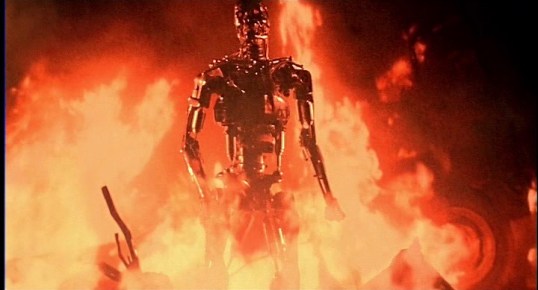
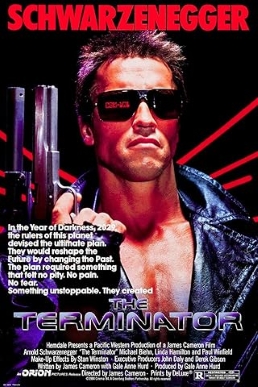
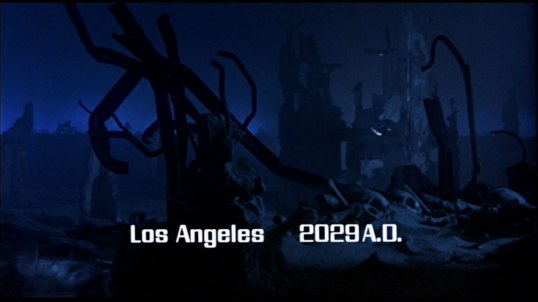
The Terminator (1984, dir. James Cameron)
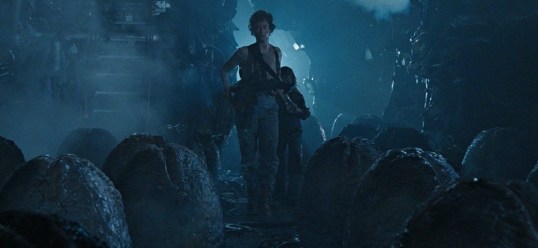
Aliens (1986, dir by James Cameron)
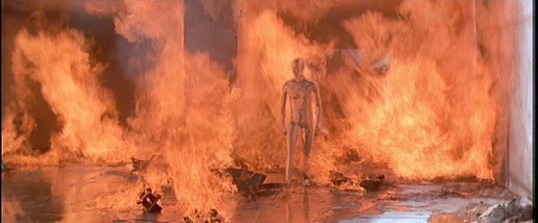
Terminator 2: Judgment Day (1991, dir. James Cameron)
“Memories are meant to fade, Lenny. They’re designed that way for a reason.” — Lornette “Mace” Mason
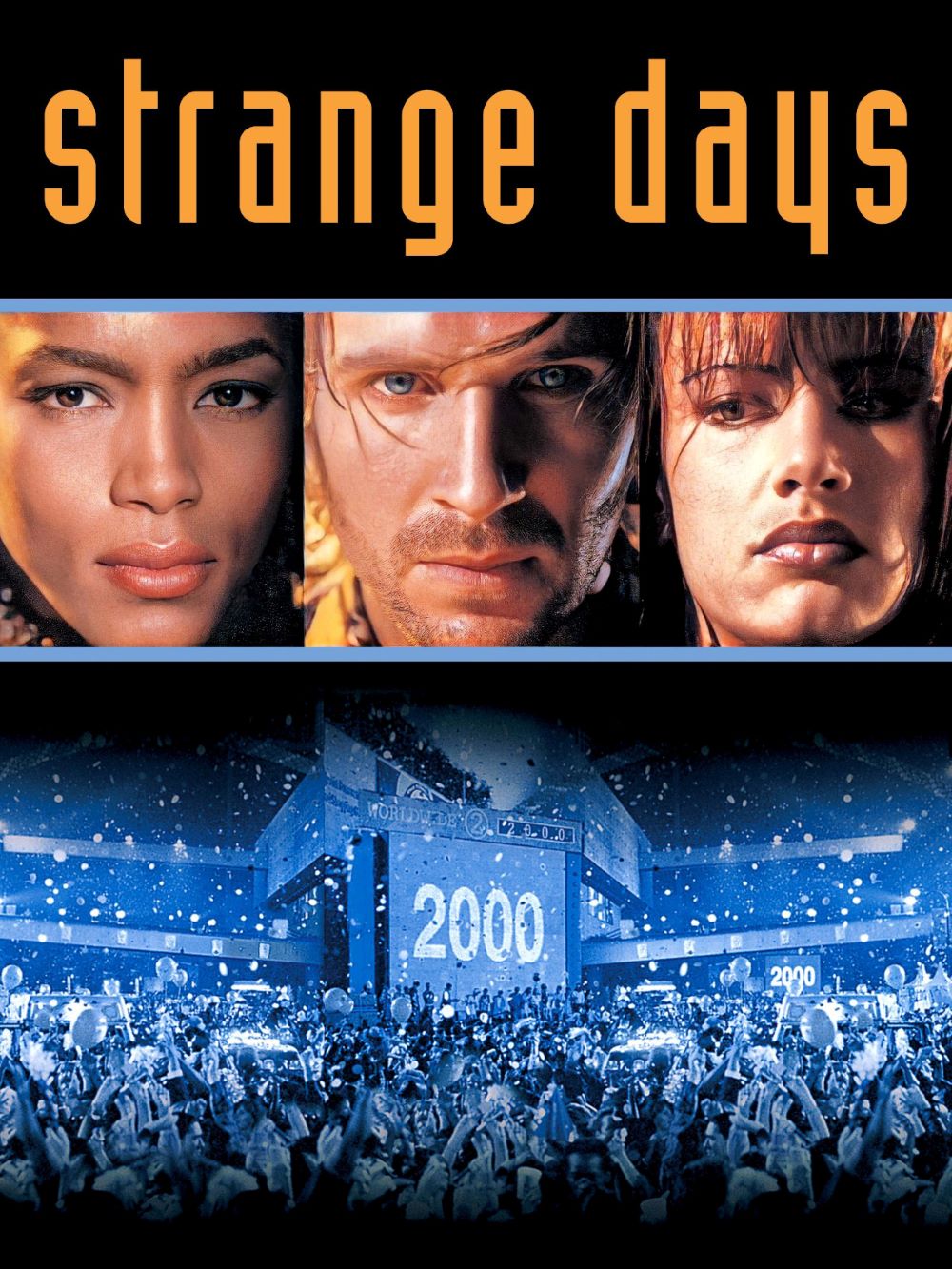
Kathryn Bigelow’s Strange Days plunges into a gritty, near-future Los Angeles teetering on the edge of the millennium, where illegal “SQUID” technology lets people hijack others’ sensory experiences, fueling a black-market addiction to raw thrills. Released in 1995 with a screenplay by James Cameron and Jay Cocks, the film stars Ralph Fiennes as Lenny Nero, a shady ex-cop dealing these clips amid escalating racial tensions and urban chaos. At over two hours, it mixes cyberpunk visuals with thriller tension, crafting an immersive world that pulses with sensory overload and moral ambiguity.
The story opens with a heart-pounding sequence—a robber’s point-of-view heist captured in one seamless, breathless shot that drops you right into the adrenaline-fueled action, setting a template for the film’s signature subjective dives into chaos. Lenny navigates this underworld, peddling clips of highs and dangers to escape his own regrets, especially over a past love, singer Faith Justin, brought to life by Juliette Lewis with vulnerable intensity that captures the pull of faded dreams. He pulls in his loyal bodyguard Mace, Angela Bassett delivering a fierce, grounded performance, as a mysterious clip hints at deeper corruption involving cops and power players in the city, drawing them into a web of intrigue that tests loyalties amid the neon haze. Bigelow leans into the tech’s seductive pull, where users feel every rush or rush of emotion, blurring lines between observer and participant in uncomfortably real ways that linger long after the credits roll.
Visually, the film explodes off the screen, with cinematographer Matthew Leonetti’s dynamic camera and Bigelow’s high-octane style painting L.A. as a neon-drenched maze of helicopters, crowds, and holographic distractions that feel alive and oppressive. That kinetic opening blends POV chaos with slick editing that amps the disorientation, making every frame pulse with urgency. The world feels authentically grimy and multicultural, alive with New Year’s Eve energy in clubs and streets, evoking millennial anxiety through thumping sound design and distorted audio bleeds that heighten the sensory assault. Bigelow channels her action roots into visceral set pieces that turn the future into something tangible and tense, rewarding close attention to the details that build immersion, from flickering holograms to rain-slicked streets buzzing with tension.
Fiennes captures Lenny’s sleazy charisma perfectly—a sweaty, chain-smoking hustler whose charm masks desperation, keeping him oddly relatable even as his flaws pile up in moments of quiet vulnerability. Bassett dominates as Mace, a tough wheelwoman with unshakeable integrity, her presence anchoring the frenzy and elevating every exchange with quiet strength that cuts through the chaos like a blade. Lewis adds raw edge to Faith, trapped in a web of influence and ambition, her scenes crackling with desperation and fire. Tom Sizemore brings twitchy noir flavor as Max, Lenny’s private investigator buddy who adds layers of unreliable grit to their partnership, his manic energy bouncing off Fiennes in tense, believable banter. The cast meshes well in the overload, though some peripheral figures lean into cyberpunk stereotypes like street dealers and digital oddities, occasionally stretching the vibe thin without fully fleshing out their roles amid the relentless pace.
At its core, Strange Days digs into tech’s grip on empathy in a numb world, where SQUID clips turn voyeurism into full-body complicity, raising tough questions about detachment, consent, and the thrill of borrowed lives. Lenny’s habit of replaying personal moments underscores the addictive pull of reliving the past, turning memory into a dangerous escape that erodes real connections. Bigelow threads in sharp commentary on racism and authority, drawing from real ’90s unrest, with Mace pushing for truth amid systemic shadows in ways that feel urgent and unflinching, her moral compass a steady force against the moral rot. The infamous rape scene stands out as a gut-wrenching pinnacle of this approach, forcing viewers into the perpetrator’s twisted perspective via SQUID playback, amplifying the victim’s terror and the assailant’s depravity to confront voyeuristic horror and power imbalances head-on without pulling punches or easy outs—its raw intensity is jarring, deliberately so, to expose the ethical rot at the tech’s heart. The female-led perspective highlights abuses thoughtfully, adding layers to the spectacle and giving the film a distinctive edge that balances exploitation with unflinching critique.
That said, the film isn’t without bumps, as the plot weaves a tangled web of alliances and betrayals that can feel convoluted under the sensory barrage, occasionally losing focus amid the noise and demanding sharper clarity to match its ambition. Its 145-minute runtime sags midway with Lenny’s brooding and repetitive demos, testing patience before ramping up to its feverish peaks, where the editing could trim some fat for tighter momentum. The climax aims for catharsis amid riots and revelations but lands unevenly, with a hopeful turn that feels rushed or tidy in spots, underplaying certain social threads post-buildup and diluting their harder-hitting potential just when they build to a roar. Some effects show their age, like glitchy clip transitions that disrupt rather than enhance the immersion at times.
Still, these rough edges can’t overshadow the film’s bold highs. Bigelow’s direction thrives on discomfort, using the SQUID concept to mirror how media desensitizes us, making every clip a window into ethical quicksand. The sound design deserves special mention—bass-heavy tracks and visceral screams that bleed from headsets create a claustrophobic intensity, amplifying the tech’s invasive allure. Action beats, from high-speed chases to brutal confrontations, showcase Bigelow’s knack for kinetic choreography, with Bassett’s physicality in the driver’s seat stealing the show. Lenny’s arc, flawed as it is, lands with pathos, his hustler’s denial cracking under pressure to reveal flickers of redemption tied to loyalty and loss.
Strange Days delivers highs that exhilarate and lows that challenge, mirroring its own addictive clips—a raw, uneven ride pulsing with Bigelow’s bold vision that thrives on discomfort and connection. Mace’s decency offers human spark amid the dystopia, balancing provocation with heart in a way that elevates the whole, her bond with Lenny grounding the spectacle in something real. It’s provocative cyberpunk for those craving immersion with bite, a film that doesn’t just show a future but makes you live it, flaws and all, leaving you wired and wary. Fire it up if you’re ready to jack in and feel the rush—just brace for the crash.
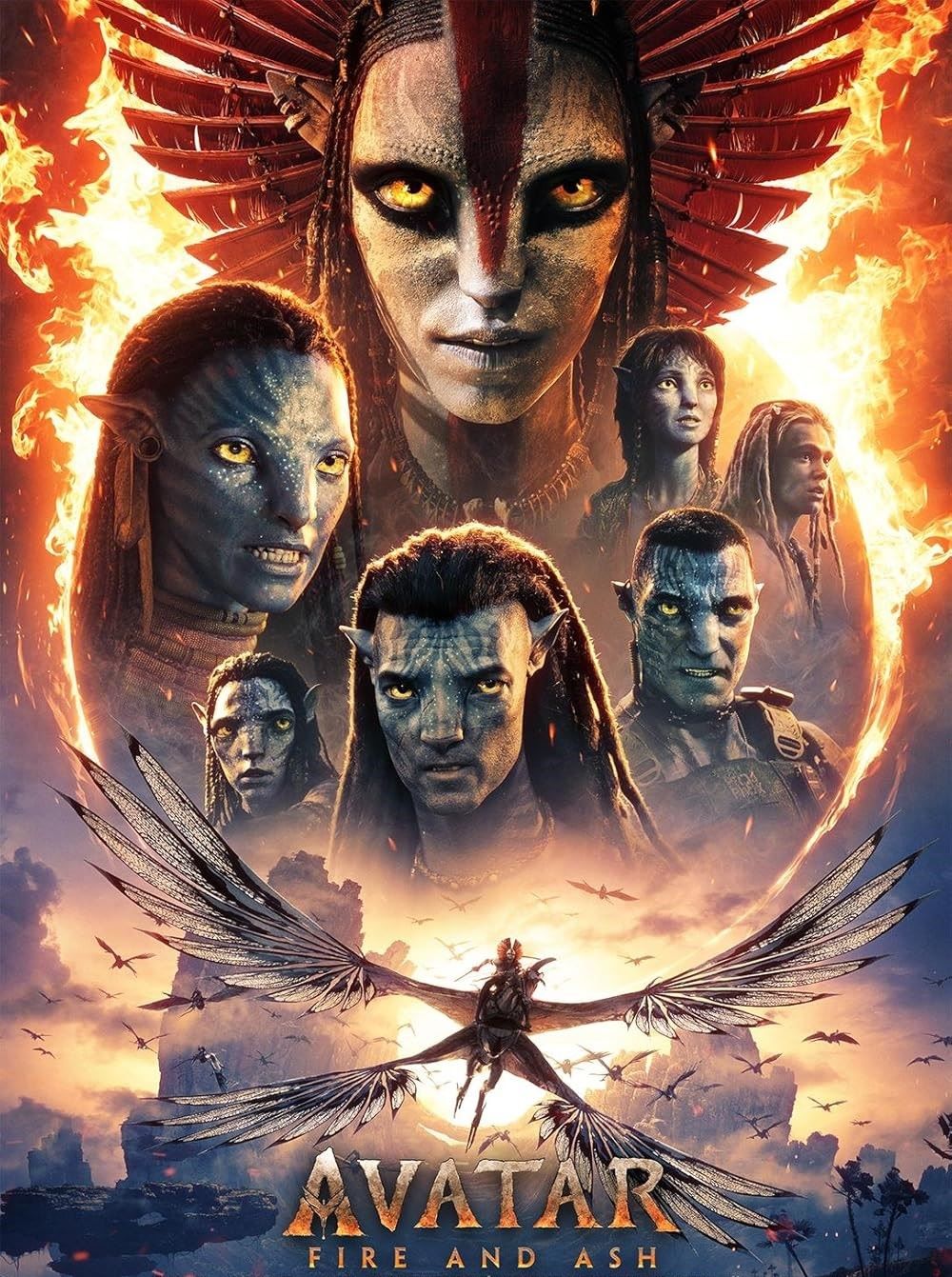
“The fire came from the mountain… Eywa did not come. So I went to the fire, and I learned its way” – Varang
Avatar: Fire and Ash plays like a massive, molten crescendo for Cameron’s Pandora saga—visually overwhelming, emotionally heavier than the last two entries, but also very familiar in ways that will either feel comfortingly mythic or a little déjà vu, depending on your tolerance for repetition. The ash-choked skies, lava rivers, and volcanic Na’vi clans are often more compelling than some of the story beats, and the final stretch delivers the kind of operatic, war-movie scale that makes the three-plus-hour runtime go down easier than it should, even though the film clearly didn’t need to run this long.
This time around, the series leaves behind the cool blues and oceanic calm of the previous chapter for a harsher, volcanic corner of Pandora that feels like a nature documentary shot in a furnace. Jagged black rock, roiling lava, and smoke-stained skies dominate the frame, with creatures and plant life that look as if they evolved to survive heat and ash rather than coral reefs and open water, giving the movie an immediately distinct visual identity even when the story rhythms feel familiar.
At the center of this environment are the Ash People, or Mangkwan clan, a Na’vi group shaped by relentless scarcity and violence. They ride creatures adapted to fire and ash instead of waves, cover themselves in soot-black markings, and fight using a deliberate blend of traditional Na’vi weaponry and repurposed human tech, putting them ideologically at odds not just with the human invaders, but with other Na’vi clans who still cling to older, more spiritual ways of living with Eywa.
The story picks up with Jake and Neytiri’s family still reeling from Neteyam’s death, and the film leans hard into unresolved grief as its emotional baseline. Jake doubles down on his protector persona, treating every decision as a matter of survival, while Neytiri’s pain expresses itself as barely controlled rage, and that emotional weather trickles down to their children, who are increasingly frustrated at being treated like liabilities. The problem is that a lot of this family dysfunction was already unpacked in the second film, so instead of evolving those arcs, the script often feels like it is rehashing earlier conflicts.
The dynamic between Jake and Lo’ak is the clearest example of this repetition. Jake’s exasperation with Lo’ak’s impulsive, run-toward-the-bullets mentality resurfaces again and again, echoing arguments audiences have already seen: the father insisting his son isn’t ready, the son bristling at never being trusted. These moments still have emotional sting, but they circle the same drain so often that entire conversations could have been trimmed or removed without sacrificing character depth, and tightening that thread alone would have shaved a noticeable chunk off the runtime.
Where the film becomes more thematically interesting is in how it reframes Pandora’s conflict. Instead of a simple “Na’vi versus humans” setup, it pits the more traditional Na’vi clans—those still committed to a symbiotic relationship with Eywa—against the Ash People, whose warlike nature and embrace of human weaponry make them ideological outliers. That split plays as a pointed echo of historical events in the Americas, where European colonial powers armed and favored specific Indigenous nations to fight their neighbors, turning native communities into proxies in conflicts that ultimately benefitted outsiders more than the people doing the actual bleeding.
The analogy becomes sharper in how human forces hang back and quietly exploit these new divisions. By giving the Ash People access to superior firepower and nudging them toward confrontation, the outsiders effectively inflame existing grievances and reshape local power dynamics, much like colonial regimes once did by supplying guns and promises to one group while framing another as the enemy. The result is a Pandora that feels more fractured and politically complex, where internal Na’vi conflict is as dangerous as external invasion.
Varang, the leader of the Ash People, is one of the film’s strongest assets. She’s portrayed as a true believer who has taken real suffering and twisted it into a doctrine of purifying destruction, convinced that burning the world is the only way to save it. The character blends zealotry and charisma in a way that makes her both frightening and compelling, and she wields faith, desire, and fear as weapons with unnerving ease, giving the movie a volatile energy whenever she’s on-screen.
Her alliance with Quaritch pushes the story into darker, more uncomfortable territory. What begins as a pragmatic arrangement—a trade of firepower and influence for help tracking Jake—evolves into a twisted, intimate partnership that underlines just how far both are willing to go to achieve their goals. Their connection is meant to feel toxic and predatory, and it succeeds on that front, though some viewers may find the intensity of those scenes off-putting compared with the relatively straightforward romance and family dynamics of earlier entries.
On a craft level, the film is almost absurdly polished. Even if it no longer feels like a quantum leap in visual effects, the execution is meticulous: volcanic vistas glow with molten light, ash storms swirl with tactile grit, and the interplay of fire, smoke, and bioluminescence gives many shots a painterly quality. The action sequences rely on clear geography and patient staging, so even when the screen is full of creatures, machines, and chaos, it remains surprisingly easy to track who is where and what’s at stake.
The final act is where the movie unleashes everything it has: parallel battles on land, in the air, and over volatile seas, stitched together into a long, escalating crescendo. Familiar James Cameron signatures return—heroic last-second saves, nature itself intervening, climaxes that mirror earlier films—but the pacing of these sequences is handled with enough control that they rarely collapse into pure noise. Still, you can’t help but feel that with a leaner, more disciplined buildup, that climax would have hit even harder.
Structurally, the story leans heavily on patterns that loyal viewers will recognize. There is yet another relocation to a new culture, another period of uneasy assimilation, another slow slide into open warfare, and another sacrificial, emotionally charged finale. Whether that comes across as mythic repetition or simple recycling depends on how patient you are with Cameron’s tendency to “rhyme” his narratives rather than reinvent them.
Most of the main character arcs feel like refinements rather than reinventions. Jake remains the guilt-ridden warrior father terrified of losing his children; Lo’ak edges closer to full-on protagonist status as the reckless but big-hearted son; Kiri’s mystical bond with Eywa deepens while remaining intentionally enigmatic; and Quaritch once again fills the role of relentless, personal antagonist. With the same father–son friction repeatedly dragged back into the spotlight, the emotional landscape can feel stuck in place, and a stricter editorial hand might have refocused attention on the fresher elements—like Varang and the Ash People’s worldview.
Tonally, the film pushes into darker territory while still staying within a mainstream rating. The battles feel more brutal, with a greater emphasis on the physical cost of arrows, explosions, and close-quarters fighting, and there’s a persistent sense that no one is truly safe. That harshness extends to the emotional side as well, as the Sully family finds itself cornered into choices where every option exacts a price, reinforcing the idea that survival in this version of Pandora demands constant compromise.
Thematically, Avatar: Fire and Ash weaves together ideas about faith, extremism, and the way trauma can be weaponized. The Ash People act as a distorted mirror of earlier Na’vi cultures: a society that has taken genuine pain and turned it into an excuse for cruelty, abandoning balance in favor of cleansing violence. Layered on top of that is the divide-and-rule dynamic, where more technologically advanced outsiders stoke internal conflicts for their own advantage, mirroring how colonial powers in the Americas encouraged Indigenous groups to fight one another while expanding their control and extracting resources.
Despite all the digital wizardry, the performances still manage to cut through. Jake and Neytiri’s scenes carry the weight of years of loss and sacrifice, and there’s a believable exhaustion in the way they argue and compromise. The younger characters, especially Lo’ak and Kiri, feel more rooted and central than they did before, which helps sell the gradual shift toward a new generation, even if the script keeps dragging them back through conflicts that feel like reruns instead of genuine evolution.
At the same time, the movie sometimes undercuts its best character work in its rush to reach the next big set piece. Quieter moments that might have deepened side characters or given the Ash People’s beliefs more nuance are often compressed or sidelined, while scenes rehashing Jake and Lo’ak’s issues are allowed to run long. If the film had trusted audiences to remember the family dysfunction carried over from the second installment and cut down on repeated arguments, those smaller, richer beats could have had more space—and the whole piece would likely feel tighter and more focused.
For viewers already invested in Pandora, Avatar: Fire and Ash is clearly built for the biggest screen available: the volcanic vistas, layered sound design, and carefully staged action set pieces are all engineered to overwhelm in the best way. It delivers a darker chapter without abandoning the earnest, sometimes corny sincerity that has always defined this series, and as a conclusion to this phase of the story, it feels emotionally full even as it insists on revisiting familiar territory and stretching its narrative longer than necessary.
For more casual viewers or anyone who found the earlier films predictable, this is unlikely to be the conversion point. The structure is recognizable, the dialogue is often workmanlike rather than sharp, and the movie leans so hard into repeating certain family conflicts that it can feel like the story is padding itself instead of evolving. But if you can live with those flaws—the repetition, the length, the occasional heavy hand—the combination of technical craftsmanship, volcanic imagery, heavy emotional stakes, and that quietly pointed commentary on colonial-era divide-and-rule tactics makes Avatar: Fire and Ash a fiery, flawed, but undeniably impressive ride.
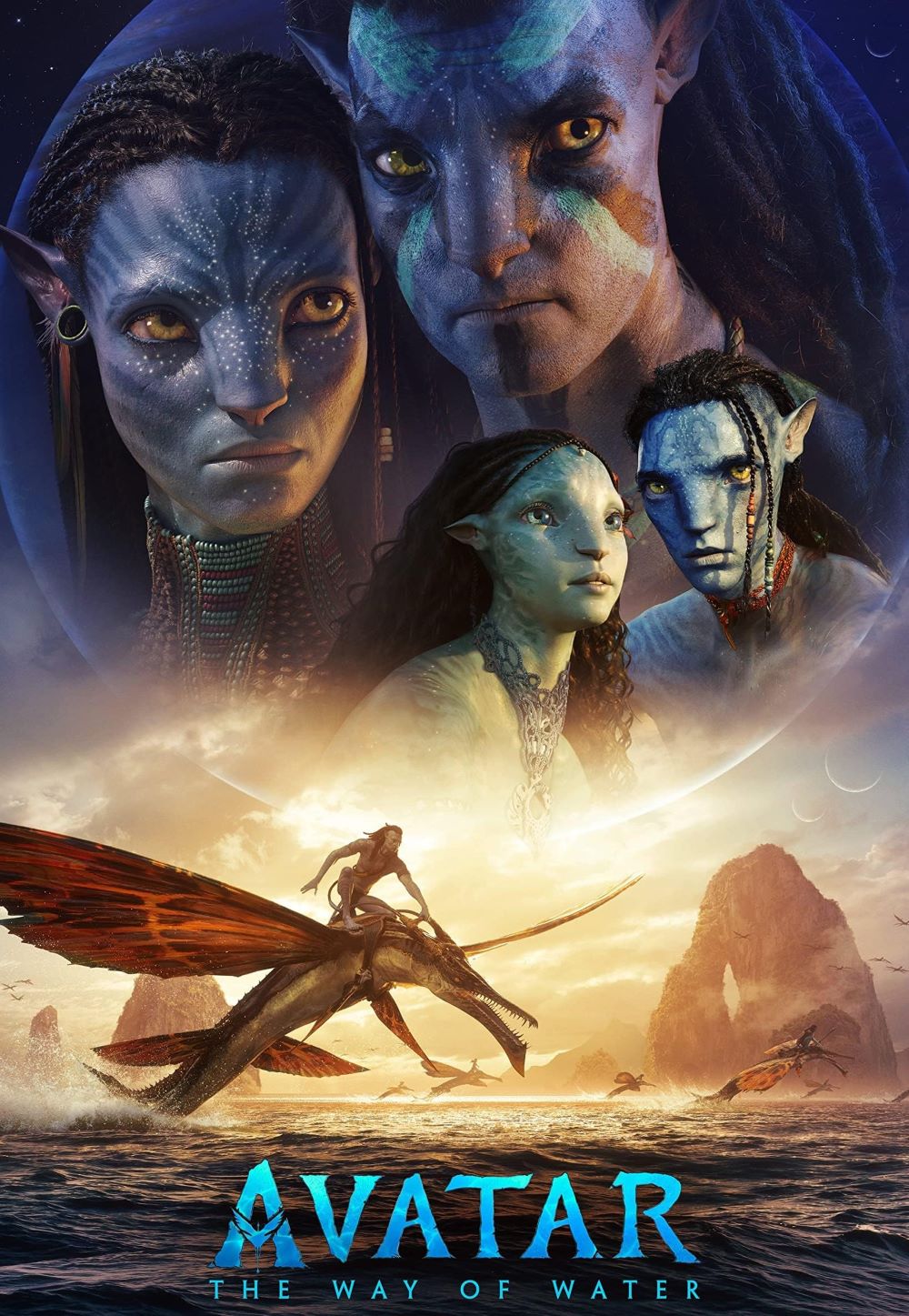
“I see now. I can’t save my family by running. This is our home. This is our fortress. This is where we make our stand.” — Jake Sully
Avatar: The Way of Water delivers jaw-dropping visuals and a sincere dive into family struggles, but it drags under its three-hour weight with repetitive plotting and uneven character depth that keeps it from breaking truly new ground.
James Cameron returns to Pandora over a decade after the original Avatar, catching up with Jake Sully and Neytiri as they’ve built a sprawling family amid fragile peace—only for human colonizers, the so-called Sky People, to crash back with upgraded tech, ruthless determination, and a deeply personal grudge led by a vengeful Colonel Quaritch reborn in Na’vi avatar form. This forces the Sullys into a desperate flight to the Metkayina, a reef-dwelling Na’vi clan whose ocean-adapted physiology and customs—broader tails for swimming, gill-like breathing aids, a deep spiritual bond with marine life—present a whole new cultural and environmental challenge, transforming the story from the first film’s jungle rebellion into a watery survival tale laced with themes of displacement and adaptation.
What truly sets the film apart, even if the story treads familiar “pursued heroes vs. imperial baddies” territory without bold twists, is how it masterfully expands the Avatar universe’s worldbuilding, turning Pandora from a singular bioluminescent jungle into a teeming planet with diverse ecosystems and cultures. The Metkayina villages perch on floating lattices of woven kelp and coral, lit by phosphorescent anemones pulsing like underwater stars, while daily life revolves around symbiotic ties with ilu (skittish six-finned mounts) and skimwings (leathery ocean skimmers); nomadic Tulkun society—intelligent, philosophical whale-like beings communicating via sonic songs—clings to a strict non-violence “tulkun way” brutally shattered by human whalers.
These layers emerge organically through the Sullys’ awkward integration, like mastering fluid sign language or breath-holds for deep dives, and the spectacle dazzles relentlessly, powered by advancements in hyperrealistic CG that continue to erode the uncanny valley effect on characters—Na’vi faces now convey micro-expressions of pain, joy, and exhaustion with lifelike subtlety, their skin textures responding to water and light in ways that feel organic rather than synthetic.
Bioluminescent reefs glow in electric blues and greens, iridescent fish schools dart through sun-dappled shallows, and massive Tulkun glide with skyscraper grace and scarred hides. Cameron’s pioneering underwater motion capture—actors in massive tanks layered with tactile CG—makes every bubble, flipper stroke, and coral sway palpably real, as Na’vi teens free-dive twisting kelp forests and maze-like atolls in lung-burning tension. The film also pushes 3D technology to new heights since the first film, baked natively into every frame rather than tacked on as a post-production gimmick—this integral approach ensures depth pops organically, from swirling plankton clouds enveloping swimmers to layered reef foregrounds framing distant horizons.
The action peaks in the third-act frenzy of ship crashes against waves, flare-lit dogfights, Tulkun rams crumpling hulls, and a claustrophobic flooding vessel breach where air dwindles second-by-second. Cameron’s chaos clarity—echoing The Abyss or Titanic—ties stakes to family peril, amplified by thundering sound (crashing surf, whale calls, Na’vi gasps) and Jon Landau’s IMAX polish into sensory overload.
Family drives the lived-in, flawed emotional core: Jake (Sam Worthington’s gravelly gravitas) wrestles fatherhood’s math—stern orders backfiring into guilt—as he clashes with impulsive Lo’ak (Britain Dalton’s sulky edge), whose outsider rage forges a bond with scarred Tulkun Payakan, flipping “monster” tropes for real agency; dutiful Neteyam buckles under expectations, innocent Tuk (Trinity Jo-Li Bliss) witnesses horrors, and mystic Kiri—Grace’s avatar-born daughter linked to Eywa—teases lore like planetary souls, while Neytiri (Zoe Saldana’s fiery sorrow) simmers with grief-fueled, mama-bear savagery, her outbursts piercing deeper than rifles.
These arcs convert invasions into gut punches on protection, belonging, parental failures, and war’s selfish costs—specific melodrama over generic heroism. Yet simplicity amplifies flaws over runtime: a chase loop (hunts, hides, teen trouble, repeat) grates, with middle sags of cultural lessons (sign language, ilu taming, Tulkun reverence) feeling like filler; humans are greed caricatures—whalers gutting pacifists for longevity goo amrita, suits enabling genocide—lacking nuance despite Earth’s biosphere desperation nods, preaching eco-colonialism to the choir. Neytiri gets benched post-roars (a co-lead letdown), Quaritch dangles complexity (death memories, Spider ties) but snarls relentlessly; reef archetypes (wise Tonowari, omen-Ronal, bully-to-ally Aonung) lopsided the cast, Tulkun elders out-nuancing humans.
The film’s themes land with sincere force: whaling atrocities, from harpooned flesh and bloodied seas to a mother’s primal rage, hammer home human irredeemability without much subtlety, while family adaptation explores “forest people” taunts, strained bonds, and Eywa’s mystical interventions that weave personal growth into planetary balance—heartfelt without ironic quips, either refreshing in its earnestness or manipulative depending on your taste. Pacing remains deeply polarizing, offering immersive vibes for world-huggers who savor the slow builds but feeling bloated and front/back-loaded for plot purists impatient with the expansion-heavy middle.
Ultimately, Avatar: The Way of Water triumphs as a visual banquet and saga extender, hooking viewers with its aquatic marvels, raw parental fears, peerless craft (hyperreal CG and improved 3D elevating it), and smart universe growth through new clans, beasts, and lore seeds—all sans true narrative reinvention, as bloated length, repetitive echoes, and flat foes keep it from pantheon status. Fans of Pandora dive in sated; skeptics surface impressed by the technical wizardry yet impatient with the sprawl. It’s pure Cameron—huge swings promising more sequels ahead. Worth submerging for the spectacle.
I’m not really sure why the Satellite Awards are a still a thing but they are. (Peanut gallery: “Jokes on you, Lisa! You’re still writing about them!”) Here are their 2025 film nominations.
Best Picture (Drama) Avatar: Fire And Ash Frankenstein Hamnet One Battle After Another Sinners Sentimental Value Train Dreams
Best Picture (Comedy or Musical) Bugonia Father Mother Sister Brother Marty Supreme Nouvelle Vague Novocaine Sorry, Baby
Best Director Chloé Zhao – Hamnet Guillermo del Toro – Frankenstein Jafar Panahi – It Was Just an Accident James Cameron – Avatar: Fire And Ash Joachim Trier – Sentimental Value Paul Thomas Anderson – One Battle After Another Ryan Coogler – Sinners
Best Actor (Drama) Joel Edgerton – Train Dreams Leonardo DiCaprio – One Battle After Another Michael B. Jordan – Sinners Oscar Isaac – Frankenstein Wagner Moura – The Secret Agent
Best Actress (Drama) Chase Infiniti – One Battle After Another Diane Lane – Anniversary Jessie Buckley – Hamnet Leonie Benesch – Late Shift Renate Reinsve – Sentimental Value
Best Actor (Comedy or Musical) Ethan Hawke – Blue Moon George Clooney – Jay Kelly Jesse Plemons – Bugonia Liam Neeson – The Naked Gun Timothée Chalamet – Marty Supreme
Best Actress (Comedy or Musical) Cynthia Erivo – Wicked: For Good Emma Stone – Bugonia Eva Victor – Sorry, Baby Rose Byrne – If I Had Legs I’d Kick You
Best Supporting Actor Benicio del Toro – One Battle After Another Jacob Elordi – Frankenstein Paul Mescal – Hamnet Sean Penn – One Battle After Another Stellan Skarsgård – Sentimental Value
Best Supporting Actress Amy Madigan – Weapons Ariana Grande – Wicked: For Good Elle Fanning – Sentimental Value Inga Ibsdotter Lilleaas – Sentimental Value Teyana Taylor – One Battle After Another Wunmi Mosaku – Sinners
Best Original Screenplay Eskil Vogt & Joachim Trier – Sentimental Value Jafar Panahi – It Was Just an Accident Noah Baumbach & Emily Mortimer – Jay Kelly Ronald Bronstein & Josh Safdie – Marty Supreme Ryan Coogler – Sinners
Best Adapted Screenplay Clint Bentley & Greg Kwedar – Train Dreams Chloé Zhao – Hamnet Park Chan-wook, Lee Kyoung-mi, Don McKellar & Lee Ja-hye – No Other Choice Paul Thomas Anderson – One Battle After Another Will Tracy – Bugonia
Best Animated Feature Arco Elio KPop Demon Hunters Little Amélie or the Character of Rain Zootopia 2
Best Documentary 2000 Meters to Andriivka Becoming Led Zeppelin Come See Me in the Good Light Cover-Up Deaf President Now! Ocean with David Attenborough Orwell: 2+2=5 The Alabama Solution The Librarians The Perfect Neighbor
Best International Film It Was Just an Accident Late Shift Little Trouble Girls No Other Choice Sentimental Value Sirât The Secret Agent The Voice of Hind Rajab
Best Cinematography Adolpho Veloso – Train Dreams Autumn Durald Arkapaw – Sinners Claudio Miranda – F1: The Movie Dan Laustsen – Frankenstein Łukasz Żal – Hamnet Michael Bauman – One Battle After Another
Best Editing Affonso Gonçalves & Chloé Zhao – Hamnet Andy Jurgensen – One Battle After Another Kirk Baxter – A House of Dynamite Michael P. Shawver – Sinners Ronald Bronstein & Josh Safdie – Marty Supreme Stephen Mirrione – F1: The Movie
Best Production Design Avatar: Fire And Ash Frankenstein Hamnet Marty Supreme Sinners Wicked: For Good
Best Costume Design Kate Hawley – Frankenstein Malgosia Turzanska – Hamnet Miyako Bellizzi – Marty Supreme Paul Tazewell – Wicked: For Good Ruth E. Carter – Sinners
Best Original Score Alexandre Desplat – Frankenstein Hans Zimmer – F1: The Movie Jonny Greenwood – One Battle After Another Ludwig Göransson – Sinners Max Richter – Hamnet Volker Bertelmann – A House of Dynamite
Best Original Song “Dreams as One” – Avatar: Fire And Ash “Golden” – KPop Demon Hunters “I Lied to You” – Sinners “No Place Like Home” – Wicked: For Good “The Girl in the Bubble” – Wicked: For Good “Train Dreams” – Train Dreams
Best Makeup & Hair Bugonia Frankenstein Sinners The Smashing Machine Tron: Ares Wicked: For Good
Best Sound (Editing & Mixing) Avatar: Fire And Ash F1: The Movie Mission: Impossible – The Final Reckoning One Battle After Another Sinners Wicked: For Good
Best Visual Effects Avatar: Fire And Ash F1: The Movie Frankenstein Mission: Impossible – The Final Reckoning Sinners Superman
Best Ensemble Wake Up Dead Man: A Knives Out Mystery
I was just a kid, probably too young for the movie. My father rented Aliens from the local Blockbuster. It had been years since the movie had first come out but my father, who went to every Star Trek movie premiere and who still knows the lore of Star Wars better than I do, had never seen it and he was planning on correcting that oversight. My family gathered in the living room. We turned out all the lights. The tape was slipped into the VCR. Play was hit. Our boxy television turned into a movie screen and Aliens began.
And it scared the Hell out of me.
Today, I think people forget just how scary both Alien and Aliens are the first time that you watch them. After the first time, you at least know when the aliens are going to jump out at people and you also know who is going to survive. Today, if I rewatch Aliens, I know not to get to attached to the any of the Colonial Marines. I also know not to trust Carter Burke, even if he is played by Paul Reiser. I watch the movie in anticipation of Bill Paxton’s “Game over, man,” instead of dreading it. When I first watched it, all I knew is that the screen suddenly went dark, the soundtrack was full of screeches and the deaths of the Marines, and that the only thing scarier then being confronted with one alien was being confronted with a hundred of them at once. When I watch today, I know Bishop (Lance Henriksen) is going to prove to be a good android. I didn’t have the assurance when I first watched the movie. For all I knew, he was going to just abandon Ripley (Weave), Newt (Carrie Henn),and Hicks (Michael Biehn) on the planet.
Sigourney Weaver was the heart of that film. She went from being angry and bitter over what happened during then first Alien to still being angry and bitter but willing to risk her life to save Newt. From the start, she alone understood the Xenomorph threat and she was ultimately victorious because she was not only as determined and ruthless as the Queen but she actually had the heart that her opponent lacked. Ripley won because she was actually fighting for something more than just conquest. She was fighting to save Newt from becoming an incubator.
I usually think of Aliens as being the last Ripley film. I don’t acknowledge the third film because I find the idea of killing Newt and Hicks to be a betrayal of what made the first Aliens more than just a scary action movie. The fourth film, I don’t acknowledge because it asks me to believe that Winona Ryder would still be acting like Winona Ryder in the 23rd century. Aliens is a scary movie but it’s also a movie that ends with the promise of hope. After all that she’s been through, Ripley finally has a chance to start again with Newt, Hicks, and Bishop. That hope is something that is too often missing from the follow-ups.
Happy birthday, Sigourney Weaver! I’m going to go watch Aliens.
4 Or More Shots From 4 Or More Films is just what it says it is, 4 shots from 4 of our favorite films. As opposed to the reviews and recaps that we usually post, 4 Shots From 4 Films lets the visuals do the talking!
Today, the Shattered Lens wishes a happy birthday to director James Cameron. It’s time for….
4 Shots From 4 James Cameron Films
The Terminator (1984, dir. James Cameron)
Aliens (1986, dir by James Cameron)
Terminator 2: Judgment Day (1991, dir. James Cameron)
Though the Academy of Motion Picture Arts and Sciences claim that the Oscars honor the best of the year, we all know that there are always worthy films and performances that end up getting overlooked. Sometimes, it’s because the competition too fierce. Sometimes, it’s because the film itself was too controversial. Often, it’s just a case of a film’s quality not being fully recognized until years after its initial released. This series of reviews takes a look at the films and performances that should have been nominated but were, for whatever reason, overlooked. These are the Unnominated.
First released in 1984, TheTerminator was the one of the top box office hits of the year. It’s the film that established James Cameron as a filmmaker. It’s the film that made a bona-fide star out of Arnold Schwarzenegger. It’s a film that was imitated a thousand times before it even got its first official sequel. It’s a film that’s still celebrated today. 41 years later, people are still saying, “I’ll be back.” Would Arnold Schwarzenegger ever have become governor of California if he hadn’t first played a killing machine? There’s a reason why his political nickname was the Governator.
And yet, TheTerminator was not nominated for a single Oscar. For all of the explosions and the gunfire and the screaming, it wasn’t even nominated for Best Sound. Some of the special effects may now seem a bit hokey in this age of rampant CGI but it’s still a surprise that TheTerminator was not nominated for Best Visual Effects. The breath-taking action scenes did not result in a nomination for Best Editing. Linda Hamilton was not nominated for her fantastic performance as Sarah Connor, a young woman who finds herself being pursued by a killer cyborg from the future. Arnold Schwarzenegger was not nominated for playing one of the most memorable villains of the past 40 years. Those who claim that Schwarzenegger was just playing himself are being overly glib. Anyone could have said, “I’ll be back.” It took Schwarzenegger’s delivery to make it a great line.
The lack of nominations aren’t really not a surprise, of course. The Academy has only recently started to show an openness to nominating genre films for major awards and, even now, a genre film has to be considered a “cultural event” to even get a nomination. Black Panther, Get Out, and even Mad Max: Fury Road and Dune were all nominated because it was felt that they had transcended their genre origins. TheTerminator is a sci-fi action movie and it’s proud to be a sci-fi action movie. (Terminator 2: Judgment Day, it could be argued, transcended its genre origins but it was released in 1991 and Silence of the Lambs was destined to be the genre nominee that year.) It’s also so relentlessly paced and intelligently written and directed that it’s a film that, even after all these years, it can still leave you breathless. Nominated or not, The Terminator is a film that grabs your attention and holds it for a full 107 minutes. There’s not many films that can make that claim.
TheTerminator is a film that has held up surprisingly well. (It’s certainly held up better than some of its more recent sequels.) The performances of Linda Hamilton, Michael Biehn, and Arnold Schwarzenegger still work. It’s still terrifying to watch as The Terminator relentlessly kills everyone that he comes into contact with. (One thing that always gets me about the Terminator is that, even though he’s huge and superstrong and could probably physically rip anyone he wanted to apart, he still carries and uses a gun. This makes him seem like even more of a bully.) The Terminator is a machine and what makes him especially intimidating is that he doesn’t care if people see him coming or if they witness his crimes. He has one function and that’s all he worries about. When Michael Biehn first shows up, you can’t help but wonder why this guy, with his slight build and his somewhat nervous mannerisms, would be sent to try to stop the Terminator. Of course, by the end of the movie, you understand.
(And what an ending! The sight of those clouds, Linda Hamilton’s delivery of her final line, and the feeling that the future has already been determined, it all definitely makes an impression that has managed to survive every sequel after JudgmentDay. There’s a reason why Skynet — much like “I’ll be back” — has taken on a cultural life of its own.)
There were a lot of very good films that were nominated for Oscars in 1984. The Terminator, much like Once Upon A Time In America, was not one of them but it will still never be forgotten.
4 Or More Shots From 4 Or More Films is just what it says it is, 4 shots from 4 of our favorite films. As opposed to the reviews and recaps that we usually post, 4 Shots From 4 Films lets the visuals do the talking!