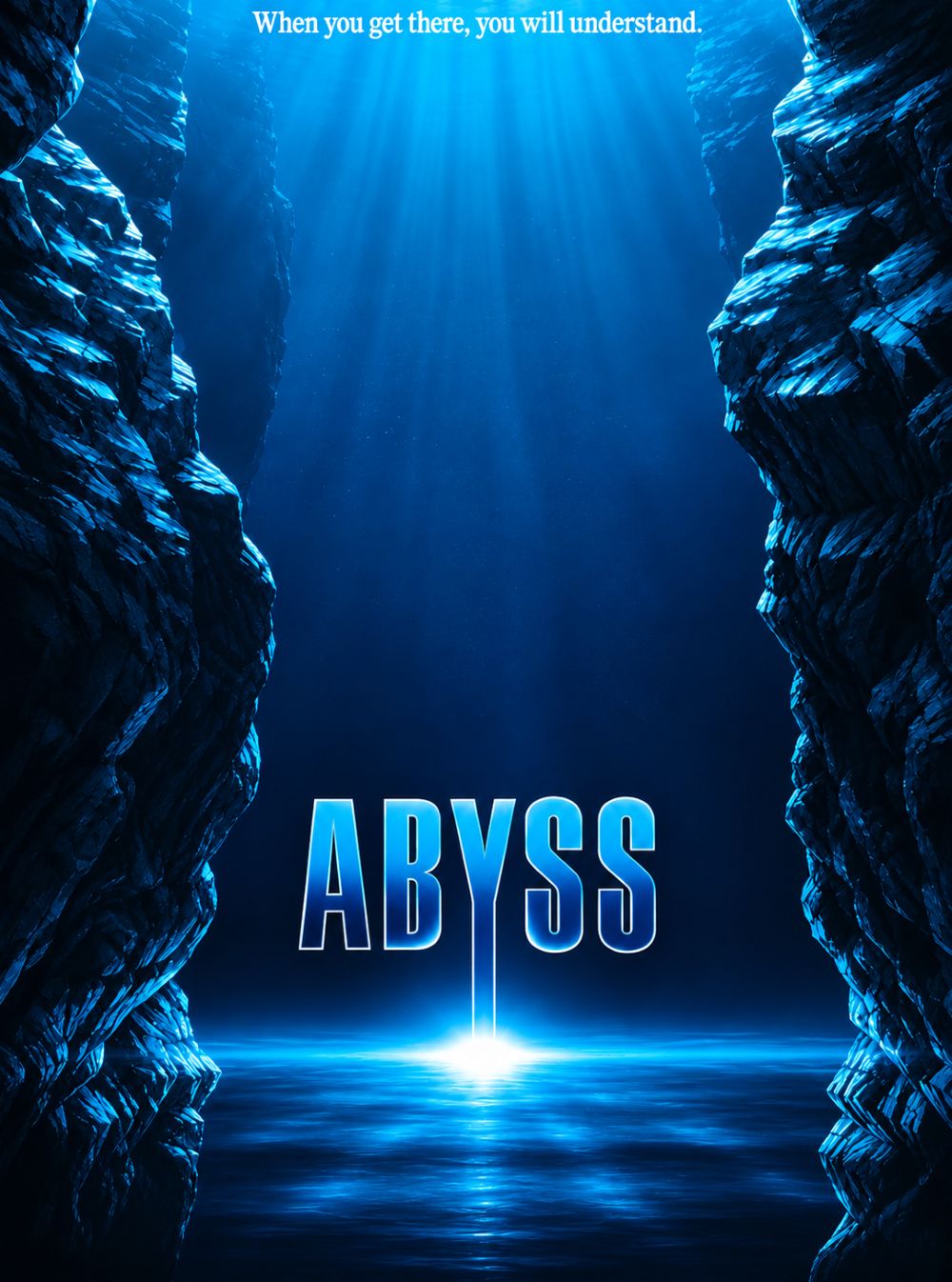
Film Review: The Abyss (dir. by James Cameron)


“We all see what we want to see. Coffey looks and he sees Russians. He sees hate and fear. You have to look with better eyes than that.” — Lindsey Brigman

James Cameron has never seemed particularly interested in keeping things small, but The Abyss gets much of its power from people who can barely move. They’re trapped in tight compartments, weighed down by equipment, and forced to make decisions while the ocean presses in around them. His 1989 underwater adventure turns those restrictions into gripping entertainment, then asks the story to carry a troubled marriage and a message about humanity’s future. It’s an uneven combination, but an engaging one. This review covers the 171-minute extended Special Edition, which can be considered Cameron’s preferred cut, with its fuller character development and substantially expanded ending.

The story begins with an American nuclear submarine sinking after an encounter with something unexplained. A civilian drilling crew is recruited to assist a Navy SEAL team, turning its underwater platform into the headquarters for a tense recovery operation. Bud Brigman, played by Ed Harris, runs the civilian side with the weary confidence of someone accustomed to solving problems without outside help. Then his estranged wife, Lindsey, arrives because she designed the platform and understands its capabilities. That’s good news for the operation, less welcome news for Bud, and an effective way to make an already uncomfortable workplace even more volatile.

Cameron gives that workplace enough personality that the danger matters before the plot gets especially strange. The crew members tease each other, complain about instructions, and handle complicated machinery with practiced familiarity. Their conversations don’t always advance the story, which is part of why they work. These people seem to have lives and routines beyond whatever emergency the movie has prepared for them. Some supporting characters remain broad sketches, but their reactions help establish the group’s identity. You believe they’ve spent enough time together to recognize when an argument is harmless and when someone has become a genuine problem.

The platform itself contributes just as much to that credibility. Its passageways, working areas, and sleeping quarters feel designed around necessity rather than comfort. Cameron gives you enough familiarity with the space that damage has consequences beyond the immediate thrill of water bursting through an opening. A flooded room means a route lost, equipment gone, or another reduction in the crew’s already narrow options. Outside, lights reveal only fragments of an environment that remains overwhelmingly dark. The contrast is unsettling: the platform is claustrophobic, but leaving it means entering a space so vast and indifferent that the cramped interior starts looking reassuring.

Harris anchors the film by making Bud capable without making him invulnerable. He has the authority of a man who will take the difficult job himself, but that same stubbornness causes problems when persistence isn’t the answer. You can see why the crew trusts him and why living with him might be exhausting. Harris lets those qualities coexist rather than separating Bud into admirable and flawed versions. His warmth doesn’t erase his defensiveness, and his courage doesn’t mean he always knows what he’s doing. That makes him a useful center for a story that eventually moves far beyond anything its characters can reasonably understand.

Mary Elizabeth Mastrantonio gives Lindsey the sharp edges needed to make their relationship convincing. She isn’t simply waiting for Bud to demonstrate his worth, and her professional confidence doesn’t disappear whenever the film wants an emotional moment. She can be impatient and cutting, sometimes unnecessarily so, but Mastrantonio allows concern to surface beneath the defensiveness. Her scenes with Harris suggest arguments repeated so often that both people know their parts. They’re good at identifying each other’s weaknesses and less accomplished at acknowledging their own. The affection remains visible, though neither seems eager to make the first move toward admitting it.

The extended edition gives that conflict more room, which matters because the romance needs to function as more than an interruption between emergencies. Bud and Lindsey don’t resolve their differences through one convenient conversation. Instead, the situation gradually exposes how much attention they still pay to each other. Irritation and concern keep occupying the same moments. The wedding ring becomes a particularly effective detail, connecting the marriage to the physical action without requiring another argument about what commitment means. Cameron isn’t always subtle, but he understands the value of giving an emotional idea a concrete object that can matter within a scene.

Michael Biehn’s Lieutenant Coffey brings a more dangerous response to uncertainty. Biehn plays him with a rigid intensity that becomes increasingly unsettling as his judgment deteriorates. Coffey responds to confusion by tightening control, even when that response makes the situation worse. There’s something frightening about a man who mistakes escalating fear for clear thinking, especially when he retains the authority and weapons to act on it. The writing occasionally leans too heavily on the contrast between aggressive soldiers and adaptable civilians. Still, Biehn gives Coffey enough nervous physicality that he registers as an immediate threat rather than merely the representative of a bad idea.

As an action director, Cameron understands how to make a simple objective feel almost impossible. A character has to reach a doorway, repair a system, or cover a distance with too little air. The underwater setting adds resistance to everything, and the film makes that resistance tangible. People struggle with equipment, lose visibility, and spend precious time doing things that would be easy on land. The sequences generally establish their geography and stakes clearly, so suspense comes from anticipating failure rather than trying to understand the editing. Even success rarely brings much relief. Everyone looks increasingly exhausted, and the next task always seems to demand energy nobody has left.

That exhaustion becomes emotionally devastating in the resuscitation sequence. Cameron keeps the scene going long enough to strip away the reassurance that a movie usually offers when a major character is in danger. Harris lets Bud’s practical determination collapse into desperation, exposing feelings he has struggled to express in ordinary conversation. It’s forceful, openly manipulative filmmaking, and not everyone will welcome how hard it pushes. But the intensity has a foundation. The relationship has established what could be lost, while the crew’s helpless presence makes the moment feel painfully public. People accustomed to fixing problems reach the limit of what effort and expertise can accomplish.

The visitors offer something beyond another threat, and the water-tentacle encounter works beautifully because curiosity briefly takes over from fear. There’s humor in it, and an intimacy that feels surprising after so much noise and conflict. The effect matters because it allows a strange intelligence to interact with people on a recognizable emotional level. For a moment, the movie stops treating the unknown as an obstacle. The extended ending then expands that possibility into a confrontation with human violence, bringing international tensions and enormous thousand-foot waves into the resolution. It gives the visitors a clearer purpose, but turns suggestion into a rather blunt explanation. Cameron’s sincerity remains appealing even when his argument becomes too simple.

What makes The Abyss memorable is the way its tenderness survives all that machinery, noise, and pressure. The extended edition occasionally explains what its strongest scenes have already made clear, and its global ambitions aren’t as persuasive as its intimate observations. Yet Harris and Mastrantonio keep pulling it toward something believable: two difficult people discovering that their attachment still matters. Cameron gives that possibility the same attention he gives a failing oxygen supply, treating trust as something that requires effort and carries consequences. Not every grand statement lands, but the quieter feeling underneath does. After so much struggle just to stay alive, having someone worth reaching for feels like a convincing reward.
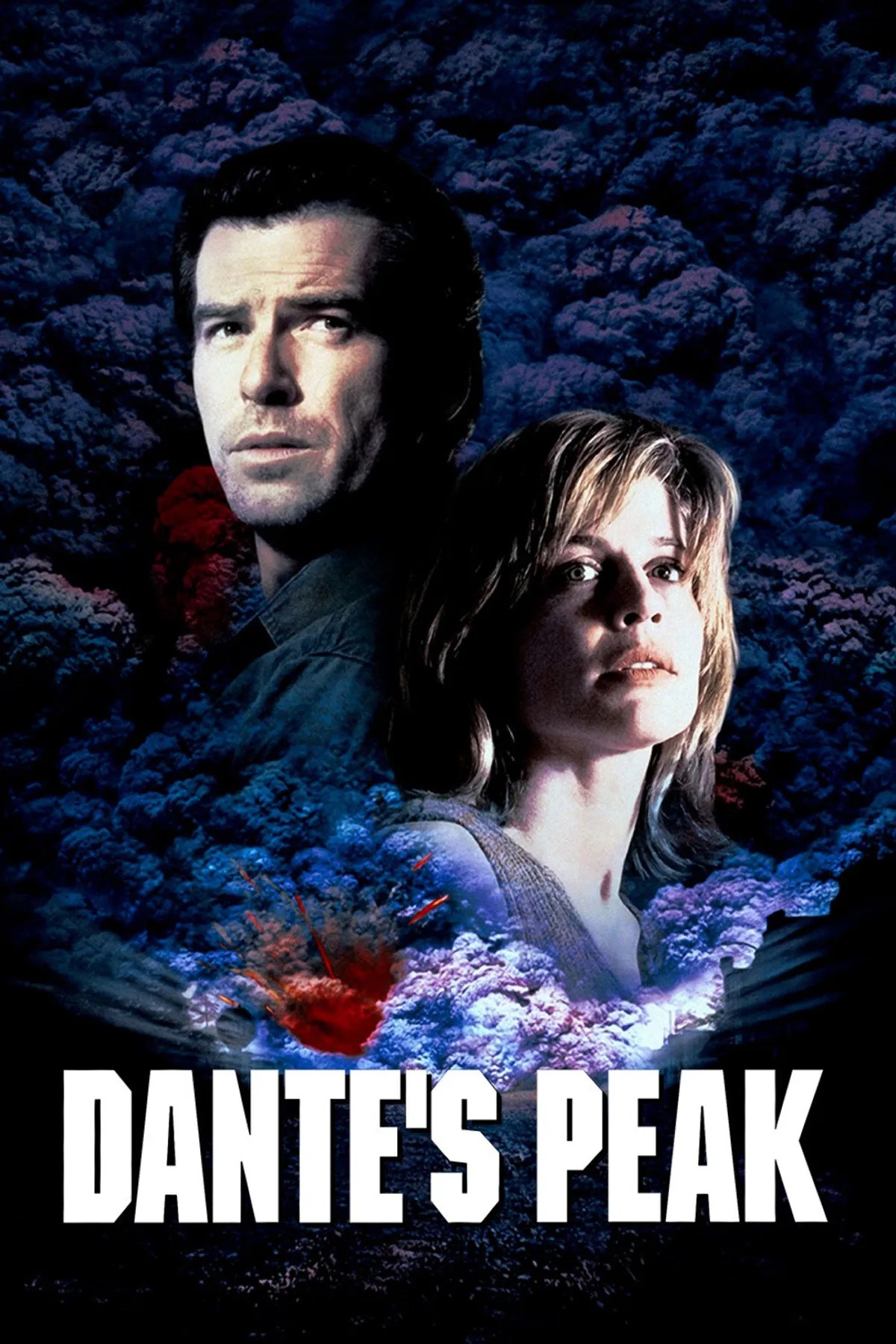
Review: Dante’s Peak (dir. by Roger Donaldson)


“Not extinct, just dormant… as in sleeping. And your volcano might just be waking up.” — Harry Dalton

Dante’s Peak takes a simple but reliable disaster-movie setup—a quiet town sitting beneath a volcano that is very much not as dormant as everyone hopes—and turns it into a tense, highly watchable piece of 1990s spectacle. Directed by Roger Donaldson, the 1997 film is hardly subtle, and its character work can be pretty thin, but it remains an unusually watchable entry in the genre because it takes its central threat seriously. The movie spends enough time establishing the town and its people that, once the mountain finally blows, the destruction has some weight behind it. It is a familiar formula, but Dante’s Peak executes it with enough sincerity and old-school craftsmanship to stay entertaining.

Pierce Brosnan stars as Harry Dalton, a volcanologist for the U.S. Geological Survey who is still carrying the emotional scars of a prior eruption that killed his fiancée. Harry is sent to the picturesque Pacific Northwest town of Dante’s Peak after unusual seismic and chemical activity suggests that its supposedly dormant volcano may be waking up. His assignment initially sounds routine: inspect the mountain, collect some samples, talk to local officials, and determine whether there is any reason for concern. Naturally, there is. The water supply starts showing signs of dangerous acidity, tremors grow more frequent, steam vents become harder to ignore, and the mountain begins sending increasingly blunt warnings that it is ready to erupt.

The central tension is not whether the volcano will blow. The title alone pretty much gives that away. Instead, the first half works because of the fight over how seriously the warning signs should be taken. Dante’s Peak has just received national attention as one of the best small towns in America, and Mayor Rachel Wando, played by Linda Hamilton, is understandably hesitant to cause mass panic and wreck the town’s economy over an uncertain prediction. Harry believes the danger is real, but he also knows from painful experience that hesitation can get people killed. That conflict gives the movie a decent human foundation before the large-scale effects take over.

Brosnan is a good fit for Harry Dalton. This was the same period when he was newly established as James Bond, and Dante’s Peak makes smart use of his natural screen presence without turning Harry into an outright action hero. He is calm, capable, handsome, and articulate, but he is also clearly rattled by the possibility of repeating a tragedy he could not prevent. The role is not especially demanding on paper, yet Brosnan gives Harry enough fatigue and frustration that he comes across as a real professional rather than just a disaster-movie scientist whose only job is to shout warnings at dismissive bureaucrats.

Hamilton is arguably even more important to the movie’s success. Rachel could have been written as a generic authority figure who slows down the plot by refusing to believe the expert, but Hamilton makes her more sympathetic than that. She is not ignoring Harry because she is foolish or selfish. She has a town to protect, businesses that depend on tourism, residents who do not want to abandon their homes, and two children who become central to the film’s increasingly dangerous rescue mission. Hamilton had already cemented her action credentials in Terminator 2: Judgment Day, but here she plays a more grounded version of strength. Rachel is practical, stubborn, and brave without ever feeling like she has wandered in from another franchise with a shotgun and a leather jacket.

The supporting cast is more uneven. Charles Hallahan gets the familiar disaster-movie role of Paul Dreyfus, the superior whose skepticism creates a frustrating delay in the evacuation. Elizabeth Hoffman is memorable as Rachel’s grandmother, Ruth, even though the movie leans hard into the “stubborn elderly relative refuses to leave” setup. Rachel’s children, Lauren and Graham, mostly function as a way to push the adults back into danger after the eruption begins, and their choices can be maddening. Still, the cast sells the stakes well enough that the film avoids feeling completely mechanical.

Where Dante’s Peak really delivers is in its escalation. The first clear sign that things have gone wrong is genuinely creepy: the town’s supposedly pristine water supply turns corrosive. That detail is one of the movie’s best touches because it makes the volcano feel dangerous before it becomes visually spectacular. Then the film starts layering hazards on top of each other. There are earthquakes, falling volcanic debris, ash clouds, mudslides, a collapsing bridge, boiling water, and eventually a full eruption. It is an impressively varied disaster package. Rather than relying on one big explosion and calling it a day, the movie treats the volcano as a chain reaction that attacks the town from every direction.

The standout sequence is the drive across the lake after volcanic material has made the water acidic. It is ridiculous in the specific, memorable way that disaster cinema often is: a family in a damaged vehicle tries to outrun a lake that is essentially eating the vehicle out from under them. The science of the scene has been criticized plenty over the years, and fairly so, but it works as suspense filmmaking. Donaldson understands how to stage the moment visually, showing the immediate effects on the vehicle while keeping the characters trapped in a situation that gets worse by the second. It is the kind of scene people remember long after forgetting much of the dialogue.

Visually, the movie has aged better than some of its late-1990s peers because it balances computer-generated imagery with practical destruction, physical sets, and real locations. The effects do not always look flawless now, especially in wider shots of the erupting mountain, but the overall physicality helps. Buildings shake, roads split open, ash hangs in the air, and characters actually look buried in the mess rather than pasted in front of it. The town itself is also nicely chosen. Dante’s Peak looks like the sort of clean, friendly, postcard-perfect place that a disaster movie needs to destroy. The contrast between its calm opening scenes and its ash-covered final act is one of the film’s strongest visual ideas.

Roger Donaldson directs efficiently, even if he never quite gives the film a distinctive personality. He keeps the geography clear during most of the action, which matters a lot in a movie built around people trying to flee shifting dangers. You usually understand where Harry and Rachel are, what obstacle is in front of them, and why they cannot simply drive away. The pacing is a little slow in the middle, particularly when the scientific warnings begin repeating themselves, but that patience pays off once the final act kicks in. The movie takes a while to get to the eruption, then makes sure the eruption earns its screen time.

The screenplay by Leslie Bohem is where Dante’s Peak shows its limitations. The dialogue is often blunt, the romance between Harry and Rachel is predictable, and several characters exist mainly to make unwise decisions at the exact moment the plot needs more danger. The film also has a habit of making Harry right about nearly everything, which can flatten the debate around whether to evacuate. Still, there is something likable about how earnestly it embraces its own premise. It never winks at the audience or tries to become ironic. It wants viewers to care about the town, fear the mountain, and cheer when people narrowly escape certain death.

That sincerity is probably why Dante’s Peak has endured better than its mixed critical reputation might suggest. It is not a great disaster movie in the way that The Poseidon Adventure or The Towering Inferno can be called great, and it does not have the full-throttle spectacle of Twister. But it is dependable comfort-viewing for anyone who enjoys this particular brand of high-stakes Hollywood nonsense. The movie’s science is questionable in spots, its family drama can get corny, and its plot follows the disaster handbook almost page for page. Yet Brosnan and Hamilton give it enough credibility, Donaldson keeps it moving, and the volcanic destruction is still satisfying.

In the end, Dante’s Peak is a solid, unpretentious disaster thriller that understands the appeal of watching ordinary people try to outrun an extraordinary catastrophe. It may not reinvent the genre, but it delivers the basics with conviction: a looming natural threat, decent leads, escalating tension, and a finale full of lava, ash, and desperate escapes. Sometimes that is more than enough.