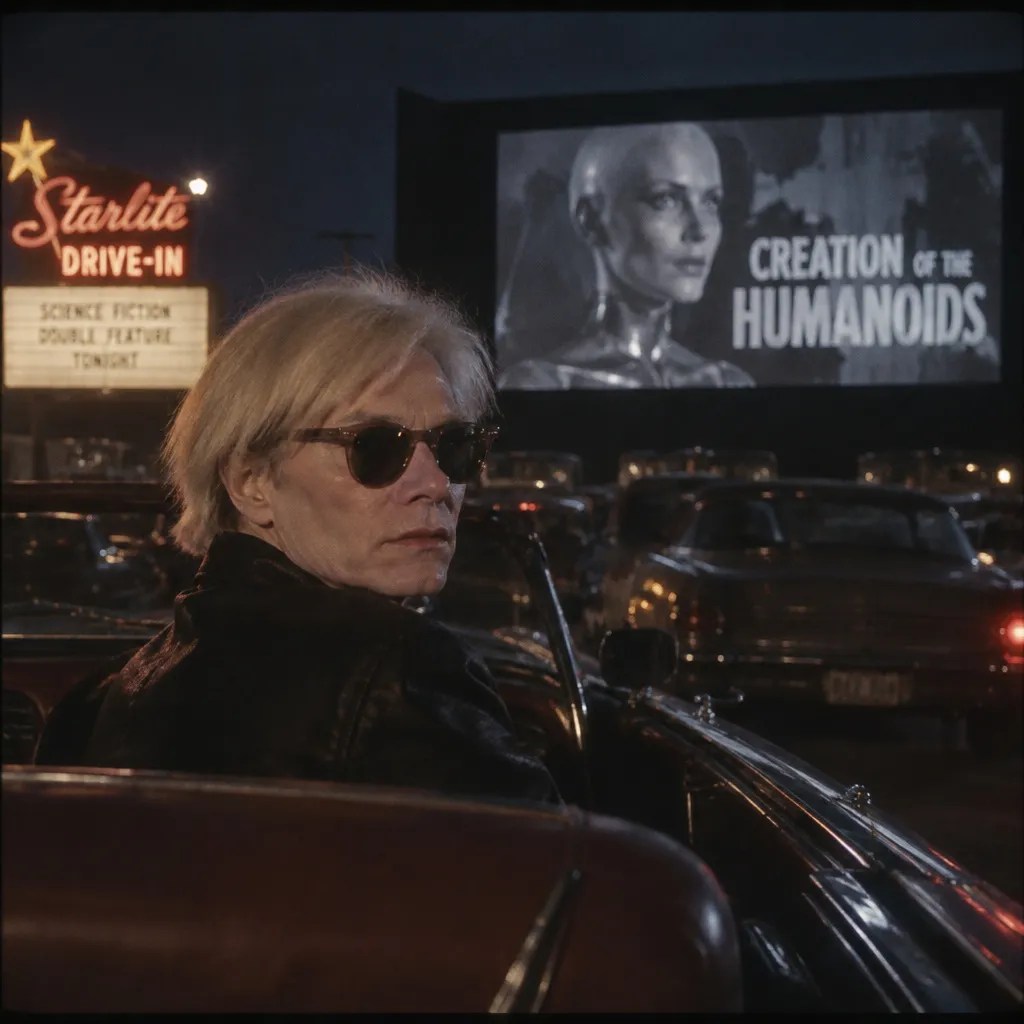
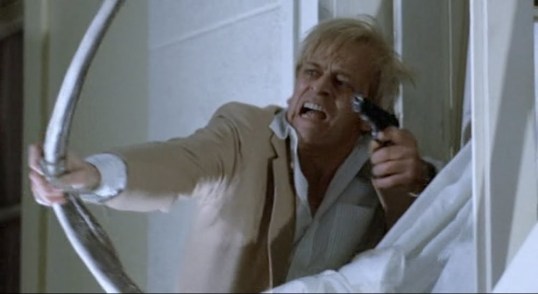
What makes us human? What does it mean to have free will? What is love? What is freedom? The questions and more are asked in the low-budget (and rather odd) science fiction epic The Creation of the Humanoids, which you can view below!
Now, I should warn that Creation of the Humanoids is an extremely talky film. And the plot is occasionally difficult to follow. There’s a lot of ennui to be found in this particular film, both from the humans and those who have been built to serve them However, I find it impossible not to love this one because it’s just such a strange movie. I love it for the colorful set design, the contrast between the resentful robots and the paranoid humans, and the fact that the film — despite being made for next to nothing — actually has more ambition than anything ever made by several of the more successful directors working today. And, while it may not really be a horror film in the way that some of our other October films are, it still feels appropriate for the Halloween season. It just has the perfect holiday atmosphere.
First released in 1962, Creation of the Humanoids was reportedly one of Andy Warhol’s favorite films. Keep an eye out for Plan 9 From Outer Space‘s Dudley Manlove.
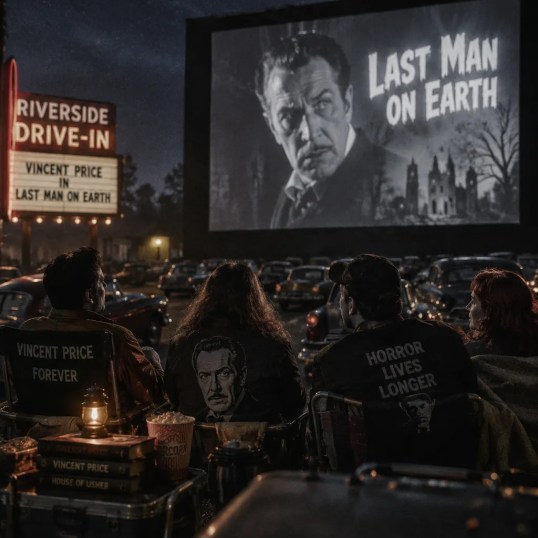
Today, I present to you one of the most important films in horror history. Though it wasn’t appreciated when it was first released back in 1964, The Last Man On Earth was not only the 1st Italian horror film but George Romero has also acknowledged it as an influence on his own Night of the Living Dead.
It’s easy to be a little bit dismissive of The Last Man On Earth. After all, the low-budget is obvious in every scene, the dubbing is off even by the standards of Italian horror, and just the name “Vincent Price” in the credits leads one to suspect that this will be another campy, B-movie. Perhaps that’s why I’m always surprised to rediscover that, taking all things into consideration, this is actually a pretty effective film. Price does have a few over-the-top moments but, for the most part, he gives one of his better performances here and the black-and-white images have an isolated, desolate starkness to them that go a long way towards making this film’s apocalypse a convincing one. The mass cremation scene always leaves me feeling rather uneasy.
The film is based on Richard Matheson’s I Am Legend and no, it’s nowhere as good as the book. However, it’s still a worthy adaptation and one that stays true to the tone of the text, including the fact that Price’s main tormenter was also once his neighbor and best friend. This is one of those films that just hits differently in the wake of 2020’s COVID hysteria.
And now, it’s time for The Last Man On The Earth….
Today’s song comes the hypnotic soundtrack of Paul Schrader’s Cat People. This song was so good that it later showed up and was used to equally strong effect in Quentin Tarantino’s Inglourious Basterds.
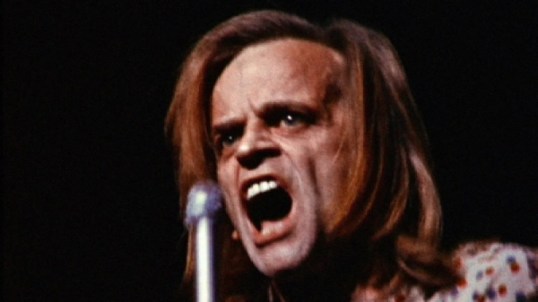
From the 1960s until his death in the early 90s, German actor Klaus Kinski was known for being the enfantterrible of world cinema. Kinski was a volatile talent, an often angry and occasionally violent performer who specialized in playing extreme characters and who reportedly took pride in his ability to drive directors crazy. Kinski appeared in good films and bad films and, in every one of them, he gave the type of unique performance that only he was cable of giving.
Kinski is best-remembered for his work with his frenemy, Werner Herzog. When Herzog and Kinski weren’t making films together, they were often criticizing each other in the press and sending one another death threats. In the documentary My Best Fiend, Herzog documented his partnership with Kinski. Even while Herzog talked about the time that he went to Kinski’s home with the intent of killing him, Herzog’s affection for his frequent star was obvious. Klaus Kinski was one of an unhinged kind.
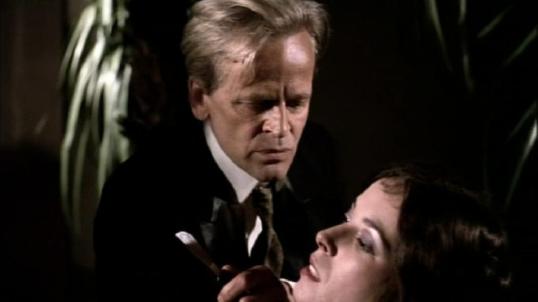
In Werner Herzog’s 1980 film, Nosferatu, Kinski played the role of Dracula. In this scene, he comes to visit Isabelle Adjani’s Lucy.
4 Shots From 4 Films is just what it says it is, 4 shots from 4 of our favorite films. As opposed to the reviews and recaps that we usually post, 4 Shots From 4 Films lets the visuals do the talking!
100 years ago today, Klaus Kinski was born in Poland. Kinski was a brilliant actor who, by all accounts, was an absolute monster in his private life. Werner Herzog worked with him on several films and reportedly considered murdering him on more than a few occasions. Herzog, himself, wrote about the time that he had spent in a mental asylum and the time that was diagnosed as being a psychopath. Because of his talent, he appeared in many great films. Because of his reputation for being a literal madman, he also missed out on a lot of great roles and spent much of his career appearing in low-budget exploitation flicks. Many of those films were in the horror genre.
Today, on the anniversary of Kinski’s birth, TSL presents….
4 Shots From 4 Klaus Kinski Films
Count Dracula (1970, dir by Jess Franco, DPs: Manuel Merino and Luciano Trasatti)
Jack the Ripper (1976, dir by Jess Franco, DPs: Peter Baumgartner and Peter Spoerri)
Nosferatu The Vampyre (1979, dir by Werner Herzog, DP: Jörg Schmidt-Reitwein)
Venom (1981, dir by Piers Haggard, DPs: Denys Coop and Gilbert Taylor)
If you’re suffering from anxiety, it is nothing to be ashamed of. As today’s music video of the day shows, even Pat Benatar can get nervous! Of course, when your dentist is named Dr. Pain, who can blame you for getting nervous?
This video was directed by Mark Robinson, who also did videos for The Pretenders, Tina Turner, and Eddie Money.
“Never trick the treat. You never break a deal in Halloween because it’s the one night the devil can come for you.” — Sam Daniels
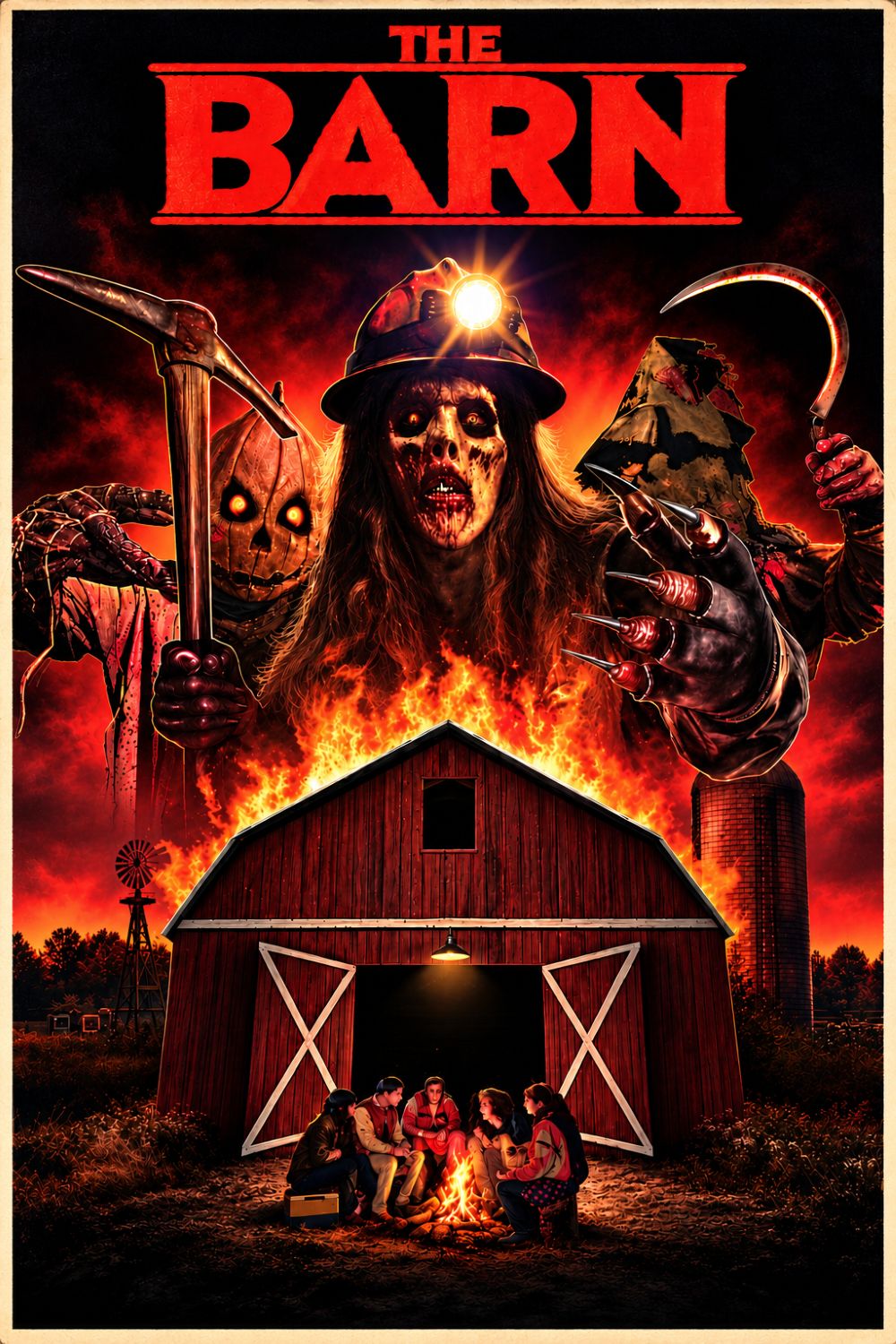
Horror fans who grew up renting VHS tapes from the local video store will find a lot to love in The Barn, a 2016 indie horror film that wears its ’80s influences on its sleeve with pride. Directed by Justin M. Seaman, this scrappy, affectionate throwback to the VHS-era Halloween slasher is built from rural legends, practical monsters, teenage misadventures, and a small-town setting soaked in October. It is not flawless, but it is sincere, energetic, and far more fun than its rough production values might initially suggest.
The story begins long before the main events of the film, in the small town of Wheary Falls, where a local tragedy involving children and a church sets the stage for an evil that has been waiting in an old barn. Decades later, it is Halloween 1989, and high school seniors Sam and Josh are determined to make the most of their final Devil’s Night before graduation. Their plan involves a road trip to a rock concert, but as often happens in horror movies, the night takes a turn. They and their friends encounter the forbidden barn, ignore the obvious danger, and awaken three supernatural killers: a scarecrow, a pumpkin-headed creature, and a miner boogeyman. What follows is a night of stalking, chasing, and bloodletting as the group realizes that the local legend is very real.
The premise is intentionally simple, and that simplicity is both a strength and a limitation. On one hand, it gives the movie a clear, classic horror structure: teenagers venture somewhere they should not, ancient evil awakens, and survival becomes the only goal. On the other hand, the plot does not offer many surprises. You can probably guess who will die, when the monsters will strike, and how the final confrontation will unfold. But The Barn does not seem especially interested in subverting expectations. It wants to deliver a familiar kind of Halloween fun, and in that respect, it succeeds more often than not.
The film’s greatest asset is its atmosphere. Seaman clearly understands that Halloween horror is about more than just a masked killer or a bloody kill scene. It is about the feeling of the season: dead leaves, cold nights, cornfields, porch decorations, costumes, campfires, and the sense that the world becomes a little stranger after dark. The Barn captures that feeling with impressive commitment. The rural Pennsylvania setting gives the movie a natural autumnal texture, while the period details help establish its late-’80s identity. The film does not have a huge budget, but it uses its resources well, creating a world that feels handmade and lived-in rather than sterile or overly polished.
The monsters are another major highlight. The three creatures at the center of the film are not especially complex, but they are memorable. The scarecrow has the classic rural-horror menace of a figure that should be harmless but is anything but. The pumpkin man is goofy in the best possible way, with a design that feels like it came straight from an old horror poster or a particularly ambitious haunted attraction. The miner is perhaps the most unsettling of the three, bringing a grimy, folkloric quality to the group. Together, they form a fun monster squad that gives the movie its personality. They are not trying to be terrifying in a modern, realistic sense; they are trying to be the kind of creatures you would rent a VHS tape to see, and they absolutely achieve that.
The practical effects and makeup work add a lot to their appeal. The blood and gore are not especially sophisticated, but they are tangible, messy, and playful. There is a physicality to the kills that modern horror often loses when it relies too heavily on digital effects. You can tell that people built these costumes, applied this makeup, and staged these effects with limited money but plenty of enthusiasm. That handmade quality gives The Barn a charm that bigger productions often lack. Even when a gag does not fully work, it feels like it was made by people who care about what they are doing.
The soundtrack also deserves praise. Rocky Gray’s score blends synth-driven horror music with a rock and metal edge that fits both the film’s setting and its tone. The music gives the movie momentum, especially during the early stretches when the group is heading toward the barn and the sense of danger is still building. It also reinforces the retro feel, echoing the kind of pulsing, atmospheric scores that defined so much of 1980s horror. The soundtrack helps The Barn feel less like a modern movie set in the past and more like an actual artifact from the era it is imitating.
The cast also gives the film some genuine ’80s horror credibility, most notably through the appearance of Linnea Quigley. As one of the definitive scream queens of the era, thanks to roles in films like The Return of the Living Dead and Night of the Demons, Quigley brings an instant connection to the kind of horror The Barn is trying to honor. Her presence may be brief, but it gives the movie real genre bona fides and makes the retro homage feel more authentic. Ari Lehman, the original Jason from Friday the 13th, adds another layer of fan-friendly horror history to the proceedings. These appearances do not transform the film, but they reinforce the sense that Seaman knows exactly whose legacy he is celebrating.
The acting is where the film’s limitations become most apparent. Mitchell Musolino and Will Stout, as Sam and Josh, have a likable enough friendship, but the performances around them vary in quality. Some lines are delivered awkwardly, some characters feel more like archetypes than people, and the dialogue occasionally lands with a thud. However, this is not necessarily a dealbreaker for a movie like this. The Barn is not aiming for naturalistic drama. It is aiming for the heightened, slightly wooden energy of low-budget ’80s horror, where teenagers often speak in a way that feels more like a movie version of teenagers than real people. If you accept that style, the acting becomes part of the movie’s charm rather than a distraction.
The screenplay is similarly uneven. Seaman gives the characters more personality and backstory than many microbudget horror films bother with, which is admirable. Sam and Josh are not just anonymous victims; they have goals, frustrations, and a sense of history with each other. The supporting characters also get enough definition to make their fates matter, at least a little. However, the movie sometimes tries to do too much. The road trip to a metal concert and the subplot involving a church food drive add texture and opportunities for cameos, but they also slow the pacing and make the story feel a little loose. The film is strongest when it focuses on the group, the barn, and the monsters. When it spreads its attention across too many threads, it loses some of its momentum.
The first two acts are where The Barn really comes alive. The buildup is fun, the atmosphere is strong, and the movie has a playful sense of discovery as the teens stumble deeper into danger. There is genuine excitement when the creatures begin appearing, and the film does a good job of making the barn and surrounding countryside feel like a place where bad things have always happened. The kills are inventive enough to keep things lively, and the movie’s sense of humor prevents it from becoming too grim. It is not trying to frighten you on a deep psychological level. It is trying to entertain you with spooky monsters, Halloween chaos, and a healthy dose of nostalgia, and for most of its runtime, it does exactly that.
The final act is where the movie loses some of its steam. The last half hour feels longer than it should, partly because the film keeps teasing an ending before gearing up for another confrontation. The methods the characters use to fight back are not as creative or satisfying as the buildup promised. Instead of escalating into a truly wild climax, the movie becomes more straightforward, and some of the fun drains out of it. The pacing issues are noticeable, especially after such an energetic first hour. It is not a disastrous ending, but it is the weakest part of the film, and it keeps The Barn from reaching the level of the best Halloween-themed horror movies.
Still, it is hard to stay mad at a movie this sincere. The Barn was made on a very small budget, and you can see the limitations in the production values, sound, and acting. But you can also see the passion in every frame. Seaman is not cynically imitating the ’80s to cash in on nostalgia; he is building the kind of movie he clearly wishes had existed on his shelf growing up. That enthusiasm matters. It gives the film a warmth that many more technically competent horror movies lack. The flaws feel like the flaws of a friend’s homemade haunted house: crooked signs, questionable acting, cheap props, but undeniable fun.
Comparisons to Trick ’r Treat are inevitable because both films treat Halloween as a night governed by rules, legends, and supernatural consequences. But The Barn is smaller, rougher, and more rooted in the slasher tradition. It is less polished than Michael Dougherty’s film, but it has its own scrappy personality. It is also more focused on monsters and practical effects than on anthology-style storytelling. If Trick ’r Treat is the polished Halloween party, The Barn is the slightly chaotic neighborhood haunt run by someone who really loves scaring people.
By the time the credits roll, The Barn has proven that a horror movie does not need a huge budget or a flawless script to leave a lasting impression; it just needs heart, atmosphere, and a clear sense of what it loves about the genre. Seaman’s film delivers all three, wrapping its flaws in enough retro charm, practical effects, and Linnea Quigley-powered ’80s credibility to make them feel like part of the package rather than detractions. It is a movie that knows what it wants to be and delivers it with a grin, even when the acting or pacing stumbles. The Barn may not replace the classics in your annual rotation, but it earns a place alongside them as a fun, scrappy Halloween treat.