Having left the X-Men after the death of Jean Grey (Famke Janssen), Logan (Hugh Jackman) is now living as a hermit in the Canadian wilderness. He is haunted by dreams of his past and visions of Jean. (In the X-Men comic books, Scott Summers was the one who went off to live as a hermit and was haunted by memories of Jean, but since Scott was killed off in X-Men: The Last Stand, Logan was the one who got this story and the visions of lingerie-clad Jean, despite never having been in a truly romantic relationship with her.) Logan is drawn out of hiding by Yukio (Rila Fukushima), a mutant who can predict when people are going to die. Yukio works for Ichiro Yashida (Haruhiko Yamanouchi), a Japanese industrialist who first met Logan during World War II. Logan saved Yashida’s life when Nagasaki was bombed.
Logan and Yukio return to Japan, where Logan discovers that Yashida is on the verge of death. Yashida and Dr. Green (Svetlana Khodchenkova) have apparently developed a way to transfer Logan’s self-healing powers to Yashida, but Logan refuses to cooperate, explaining that immortality is a curse. When Yashida dies, Logan finds himself at war with the Yakuza and also without his power of self-regeneration.
The Wolverine isn’t bad. Even though Logan is no longer as interesting a character as he was when he made his first film appearance in X-Men, the film features some of the best action sequences to be found in the entire X-Men franchise. The extended fight sequence that takes place on top of a bullet train is especially exciting, and it holds up even when you watch it a second time. Unlike the previous X-Men film, The Wolverine makes good use of its characters. The Silver Samurai may be a lesser villain in the comic books, but in this movie, he was one of the few opponents who seem able to match Logan’s combat skills. For the most part, the movie respects the lore of the comic books without getting bogged down in mythology.
Wolverine finally makes peace with himself at the end of this movie. Of course, as soon as he does, Ian McKellen and Patrick Stewart show up with a new mission for him. A hero’s work is never done.
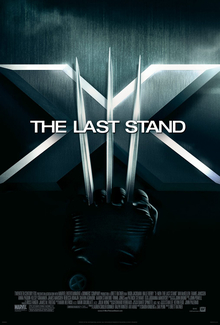
Just as the world seems to be finally on the verge of accepting mutants, industrialist Warren Worthington II (Michael Murphy) announces that he has developed a shot that will suppress the X-gene, therefore “curing” mutants of their mutation. Magneto (Ian McKellen), Mystique (Rebecca Romijn), and a host of other mutants break out of prison to try to stop Worthington from offering up his cure. Meanwhile, at Charles Xavier’s school, Rogue (Anna Paquin) wonders if maybe she should take the shot and become a “normal” person.
Professor Xavier (Patrick Stewart) and Logan (Hugh Jackman) have an even bigger concern than Magneto and the cure. Jean Grey (Famke Janssen), thought to have died at the end of the previous movie, has returned but has given in to her dark side, the so-called Phoenix. She’s already destroyed Scott (James Marsden), and it doesn’t take her long to disintegrate Professor X. Can Logan and the Beast (Kelsey Grammer) rally what’s left of the X-Men to defeat both Magneto and the Dark Phoenix?
I can still remember seeing X-Men: The Last Stand on the day that it was first released. As an X-Men fan, I was excited to see how the Dark Phoenix storyline would be adapted for the big screen. It’s difficult to put into words how disappointed I was when Jean killed Scott. That one scene told me that X-Men: The Last Stand was not going to do the story justice. In the comic books, Jean and Scott’s relationship was the heart of the X-Men. When Jean became the Dark Phoenix, she proved herself capable of destroying an entire planet, but she couldn’t bring herself to kill Scott. She chose to destroy herself rather than him. (Marvel being Marvel, Jean was resurrected a few years later.) The X-Men films never really knew what to do with the characters of Scott and Jean. They weren’t as flamboyant as Logan or even Rogue, but fans of the comic knew who Scott and Jean were and understood their importance to the series, and having Jean destroy Scott showed that, unlike the previous two films, the third X-Men film was not being made for the fans.
A large part of the problem was that director Brett Ratner didn’t seem to be interested in the characters. X-Men: The Last Stand is a collection of action scenes with none of the small character moments that made the first two films memorable. Kelsey Grammer is a welcome addition to the cast as the Beast. (The Beast always was basically Frasier Crane with blue fur.) Otherwise, this is the most forgettable of all the X-Men films.
Even though the Dark Phoenix saga is one of the key X-Men storylines, it’s never really been given its due onscreen. A second attempt to tell the story, in Dark Phoenix, also failed to capture the drama and emotion of Jean’s transformation. The X-Men are now officially a part of the MCU, so I imagine the story will probably be told again. Maybe the third time will be the charm.
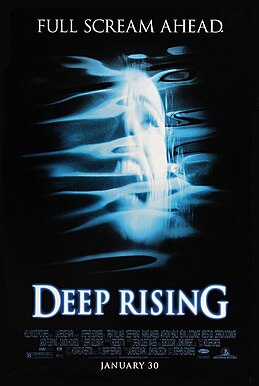
A group of mercenaries led by Hanover (Wes Studi) hires Captain John Finnegan (Treat Williams) and his crew to pilot their boat across the South China Sea so that they can loot a luxury cruise ship on its maiden voyage. The ship has been sabotaged by its owner, Simon Canton (Anthony Heald), who is hoping to collect a big insurance payment after Hanover and his men sink the boat. But before Finnegan, Hanover, and everyone else arrives, an undersea monster attacks the cruise ship and most of the crew and passeners end up dead. Finnegan, his crew, the mercenaries, Canton, and professional thief Trillian St. James (Famke Janssen) find themselves trapped on the ship and fighting to survive the chaos.
A B-movie that was made with an A-budget, Deep Rising never gets enough respect for being an enjoyable if mindless monster film. When it was released, it was dismissed as just being another Alien rip-off. While it does have some Alien DNA, the film really has more in common with the monster movies of the 50s and 60s. Treat Williams even looks like a leading man from that era, and his performance suggests that he was in on the joke. Famke Janssen is incredibly sexy as the incredibly named Trillian St. James. Anthony Heald and Wes Studi play two very different villains, and Studi gets a great final scene. There are also plenty of disposable characters who get picked off one by one. Some people will be disappointed that Finnegan’s comic relief sidekick (played by Kevin J. O’Connor) was not one of those characters, but these films always need an annoying sidekick. Someone has to make the audience laugh before the monster jumps out of nowhere.
Deep Rising is a entertainingly simple monster movie that doesn’t ask too much of its audience and delivers an entertaining 106 minutes of creature mayhem.
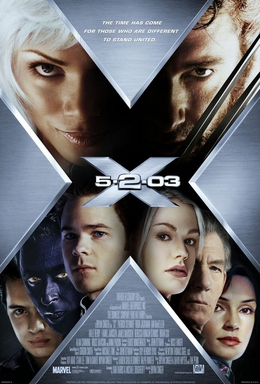
After Nightcrawler (Alan Cumming) causes a national security crisis by teleporting into the White House, Colonel William Stryker (Brian Cox) is given the authority to invade Professor Xavier’s School and investigate its connection to the mutants. Stryker, who not only wants to investigate the mutants but also destroy them by manipulating the same technology that Xavier uses to find them, just happens to be an old enemy of Logan’s (Hugh Jackman). In fact, Stryker is responsible for Logan fusing the adamantium to his bones. That’s a hell of a coincidence.
A sequel to X-Men, X2 tells a bigger and more complex story than the first film. Professor Xavier’s students are spread out by the chaos. Rogue (Anna Paquin) sees prejudice firsthand when Bobby Drake (Shawn Ashmore) is betrayed by his own family. Pyro (Aaron Stanford) is tempted to reject the X-Men’s philosophy of coexistence. After being underused in the first film, both Scott (James Marsden) and Jean Grey (Famke Janssen) are key players here. Magneto (Ian McKellen) and Mystique (Rebecca Romijn-Stamos) return, this time temporarily allying with Professor X (Patrick Stewart) to stop Stryker. Logan has his own reasons to go after Stryker. Surprisingly, X2 is not only bigger than the first film but it’s also better. The actors are more convincing in their roles, the action is more exciting, and director Bryan Singer capably juggles all of the different parts without losing the plot. He even manages to ably set up the Dark Phoenix Saga. In the first film, the X-Men had it almost too easy when it came to battling opponents like Toad and Sabretooth. This film has not only Brian Cox’s William Stryker but also Kelly Hu’s Deathstrike.
Those of us who were shocked when X-Men turned out to be good were even more shocked when X2 turned out to be even better. For a little while, it seemed like there would never be a bad X-Men movie! Later, that’s the way a lot of us would also feel about the Marvel movies. Those were good days.
I’m a big fan of Robert De Niro, and I think it all started because of the movie MIDNIGHT RUN (1988). I was only 14 years old when it came out, but it was everything I wanted in a movie, which was primarily great action, with a dash of fun comedy. I was soon seeking out all of his great work, whether it be with Coppola, Scorsese, De Palma, or even Roger Corman. Well, just this evening, as I was browsing through Amazon Prime’s selection of horror films, I came across HIDE AND SEEK. Since I’d never seen it before, and it looked kind of creepy, I thought I’d give it a chance.
De Niro plays David Callaway, a psychologist who is struggling to cope with the death of his wife. He moves with his young daughter, Emily (Dakota Fanning), to a house out in the country in upstate New York, hoping that a change of scenery will help them both recover from their loss. Unfortunately, Emily begins acting strangely, talking about an imaginary friend named Charlie. Before long, David finds himself dealing with a series of increasingly disturbing events that seem to have something to do with this mysterious friend.
I’ve always enjoyed a good psychological thriller, especially one that keeps you guessing about what’s going on. HIDE AND SEEK is one of those movies that wants to freak you out and make you question whether or not you can trust what you’re seeing, or any of the people involved. Of course this being a psychological thriller, you can’t really trust anyone, especially the people who pretend to care the most.
Dakota Fanning is excellent as Emily. I’ve always held her performance in the great Denzel Washington film, MAN ON FIRE (2004), in high regard as an example of how great a child actress can be. Here, I think she does a good job of making Emily seem both vulnerable and a little scary at times. De Niro is also effective, particularly as the story gradually reveals more about the relationship between him and his daughter. The supporting cast, which includes Famke Janssen, Amy Irving, and especially Elisabeth Shue, adds to the mystery surrounding the film. I just like seeing Elisabeth Shue in any film, because I’ve had a crush on her since the fifth grade.
HIDE AND SEEK is the kind of thriller that depends on its twists and turns, and whether or not we’re willing to go along. I will say that I enjoyed the watching the story unfold, even when the ending doesn’t come off quite as clever as the filmmakers had hoped. My final verdict is that it’s an entertaining film with strong central performances from De Niro and Fanning. I enjoy movies that give me something to think about while I’m watching them, and this one kept me interested in finding out what was really going on. It was a fun watch on dark night in October.
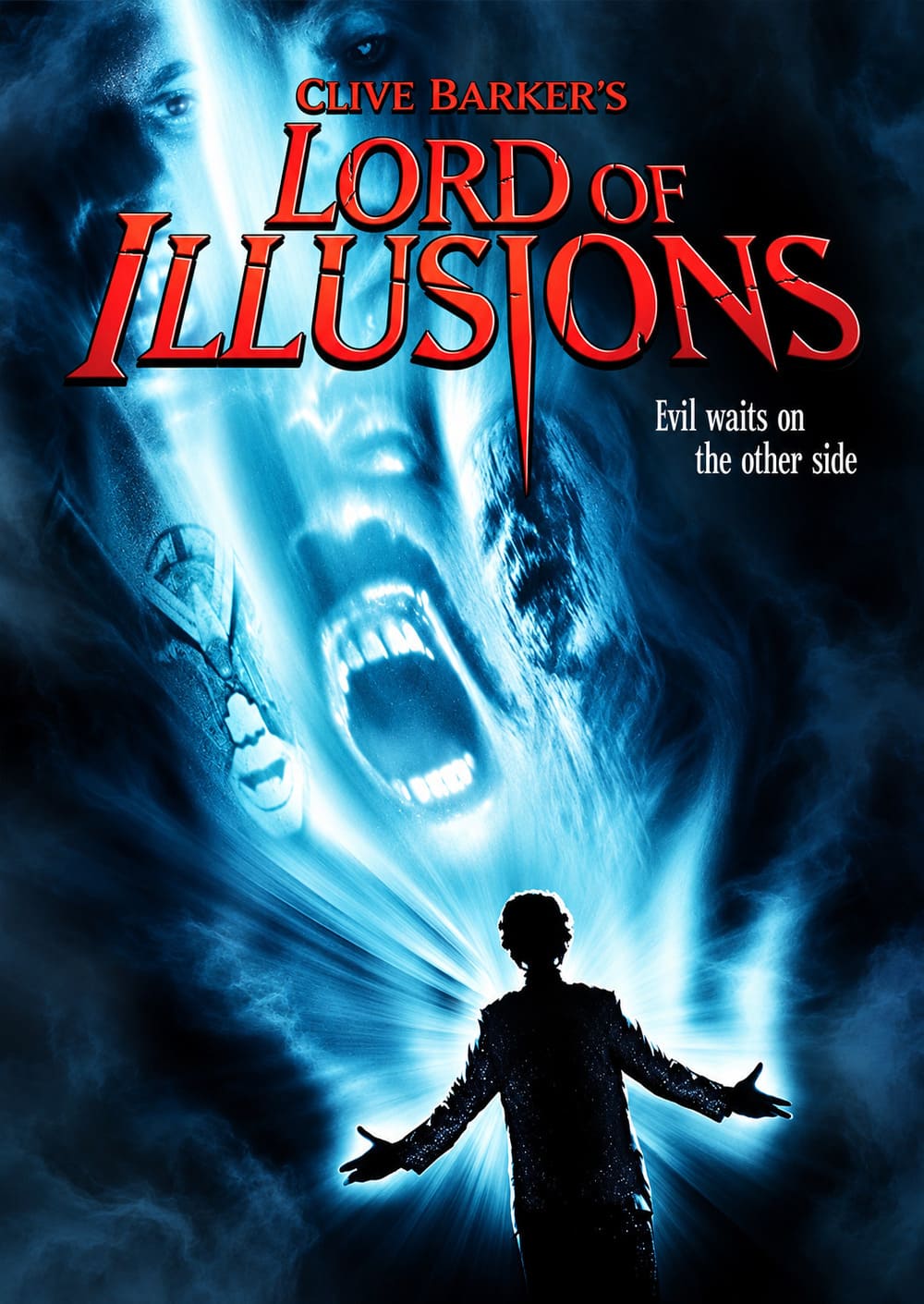
There’s a version of Lord of Illusions that exists only in Clive Barker’s head, and it’s probably a masterpiece. The version that actually made it to theaters in 1995 is something else entirely: a fascinating, frustrating, occasionally brilliant mess of a movie that tries to fuse film noir with cosmic horror and only partially succeeds. Barker wrote and directed the film based on his own 1985 short story The Last Illusion, and while he clearly understands the material better than anyone else could, his direction is surprisingly by the numbers, playing it safe when the source material practically begs for supernatural insanity.
The plot, such as it is, kicks off with a prologue in 1982 at a Mojave Desert cult compound run by a genuinely terrifying figure named William Nix, played with unsettling intensity by Daniel Von Bargen. Nix calls himself “The Puritan,” which is a nice bit of irony given that he’s basically Charles Manson with actual supernatural powers, and he’s about to sacrifice a young girl when a group of his own followers, led by a man named Philip Swann, stage a violent coup. They shoot Nix, screw an iron mask onto his face, and bury him in the desert, assuming that’s the end of it. It’s a strong opening, full of the kind of visceral, apocalyptic imagery that Barker does better than almost anyone, and it sets up a genuinely intriguing mystery about what happened to this cult and why its members turned on their leader.
Thirteen years later, we meet Harry D’Amour, a New York private detective played by Scott Bakula, who has a habit of stumbling into the supernatural the way other noir detectives stumble into dames with secrets. Harry gets pulled into a case in Los Angeles that leads him to Swann, now a world-famous illusionist, and his wife Dorothea, played by Famke Janssen, who seems to know more about the danger lurking around her husband than she’s letting on. When Swann dies on stage in a spectacularly grisly accident involving suspended swords, Harry finds himself drawn deeper into a world where the line between stage magic and genuine sorcery has been blurred past the point of no return. The investigation takes him through a strange subculture of professional magicians, each with their own secrets and rivalries, and gradually reveals that Swann’s death was not an accident but the opening move in a larger, darker game.
What works best about Lord of Illusions is its atmosphere. Barker has always had an eye for the grotesque and the baroque, and here he leans hard into the noir trappings to ground the supernatural stuff in something that feels almost noir-ish in its fatalism. Harry D’Amour is a classic archetype, a rumpled, world-weary guy who’s seen too much but keeps going anyway, and Bakula plays him with a likable, low-key charm that keeps the film from drowning in its own self-seriousness. The Los Angeles setting is used well, too, with the stark contrast between the sun-drenched surface and the darkness lurking beneath feeling very much in line with classic noir like Chinatown or The Long Goodbye. The film’s visual palette is appropriately moody, all shadows and neon and rain-slicked streets, and there are moments where it genuinely feels like it could be a lost noir from the 1940s, just with more blood and occult symbolism.
The thing is, though, Barker’s directing here is quite by the numbers. He knows the material inside and out, obviously, since he wrote the short story and the screenplay, but as a director he plays it safe instead of leaning into the supernatural insanity of the source material. There’s nothing wrong with the film on a technical level, but there’s also nothing that really grabs you by the throat the way Barker’s best work does. It’s competent, it’s professional, and it’s ultimately a little bit forgettable in a way that a Clive Barker movie really shouldn’t be. For a filmmaker whose whole reputation is built on pushing boundaries and going places other horror directors won’t, Lord of Illusions feels oddly restrained, like Barker was holding something back.
And that’s what makes the film so bewildering. Barker definitely knows how to direct a film that matches the over-the-top imagery and narrative of his source material. If his work on Hellraiser is any indication, he’s more than capable of translating his own literary excesses to the screen with style and confidence. Hellraiser is a film that fully commits to its own weirdness, that doesn’t apologize for its cenobites or its flesh-and-blood aesthetics or its genuinely transgressive themes. It’s a movie that knows exactly what it is and leans into it with everything it’s got. So why does Lord of Illusions, which comes from a story that’s every bit as strange and ambitious as The Hellbound Heart, feel so much more pedestrian? It’s not a question of budget or resources, because Lord of Illusions actually had a bigger budget than Hellraiser. It’s not a question of experience, because Barker had already directed one genuinely great film by this point. It’s a question of nerve, and for whatever reason, Barker just doesn’t seem to have the same nerve here that he did with Hellraiser.
Would leaning harder into the weirdness have made the film better? Maybe, maybe not. But here’s the thing: like most of Barker’s stories, Lord of Illusions works best when it goes over the top. Barker’s whole deal as an artist is excess. His best work, whether it’s The Hellbound Heart or Weaveworld or The Great and Secret Show, is unapologetically maximalist, throwing ideas at the wall with reckless abandon and trusting that the sheer force of imagination will carry the reader through. The short story The Last Illusion is no exception. It’s a wild, hallucinatory piece of work, full of reality-bending weirdness that feels like it could have been a genuinely unhinged horror film in the right hands. The movie version sands off a lot of those rough edges in favor of something more conventional, and while that makes the film more accessible, it also makes it less memorable.
The film’s biggest problem, and it’s a substantial one, is its pacing and structure. Barker has always been a writer with more ideas than he knows what to do with, and Lord of Illusions is stuffed to the gills with concepts and imagery that never quite cohere. The theatrical cut, which runs about 109 minutes, is notoriously choppy, jumping from scene to scene with a kind of frantic energy that leaves the audience scrambling to keep up. Characters appear and disappear without much explanation, plot threads are introduced and abandoned, and the whole thing has a rushed, unfinished quality that makes it feel like a much longer film that was hacked down in the editing room. There’s a director’s cut that runs about 121 minutes and restores a lot of the character development and thematic material, and while it doesn’t magically turn the film into a masterpiece, it does make it feel considerably more coherent. If you’re going to watch Lord of Illusions, do yourself a favor and track down the director’s cut. It won’t fix all the film’s problems, but it at least gives you a better sense of what Barker was going for.
The performances are a mixed bag in a way that’s almost charming. Bakula is genuinely good as Harry, bringing a kind of earnest decency to a role that could easily have been a Bogart impression. He’s not the most hard-boiled guy in the world, but that’s part of the point; Harry D’Amour is a detective who keeps finding himself in supernatural situations not because he’s special but because he’s unlucky, and Bakula sells that beautifully. He’s the kind of guy you’d want on your side in a crisis, even if he’s not entirely sure what he’s doing half the time, and that makes him a surprisingly effective audience surrogate for a film this strange.
Famke Janssen, in one of her earliest major roles, is somewhat underused as Dorothea, but she has a presence that makes you wish the film had given her more to do. She’s got the kind of old-Hollywood glamour that fits the noir aesthetic perfectly, and there are hints of a much more interesting character buried in there somewhere. Kevin J. O’Connor as Swann is the weak link; he’s supposed to be a charismatic showman hiding a dark secret, but he mostly comes across as twitchy and unfocused, which undercuts the tragedy of his character. The real standout among the supporting cast is Barry Del Sherman as Butterfield, one of Nix’s acolytes, who brings a genuinely unsettling energy to every scene he’s in. He’s the kind of henchman who seems like he’s enjoying himself a little too much, and that makes him far more memorable than the film’s actual villain.
Then there’s Nix himself. Barker has said that he deliberately made Nix uncharismatic, wanting to subvert the expectation of the magnetic cult leader by making him genuinely pathetic and repellent. The intention, clearly, was to evoke the real-world evil of figures like Jim Jones and Charles Manson, those charismatic monsters whose power came from their ability to bend other people’s wills to their own. It’s an interesting idea in theory, a deliberate rejection of the idea that evil has to be seductive to be dangerous.
But here’s the thing: it doesn’t really work. Nix is meant to be a Jim Jones or Charlie Manson type of evil, a man whose sheer force of personality could convince people to hand over their lives and their sanity, but he comes off as uninspired instead. Von Bargen is a fine actor and he does what he can with the role, but the character as written lacks the magnetic pull that made those real-life figures so terrifying. He’s not a seducer, he’s not a manipulator, he’s just a guy in a mask shouting about being a god. The film tells us he had followers, tells us he was dangerous, but it never really shows us why anyone would have followed him in the first place. And that’s a problem, because if you’re going to build a horror movie around a cult leader, the one thing you absolutely have to nail is the cult leader’s charisma. Nix should be the kind of villain who makes your skin crawl because you can almost understand why people fell under his spell. Instead, he’s just a snarling figurehead.
The film’s climax, where Nix is resurrected and goes on a rampage, is where the movie loses a lot of its goodwill. The special effects, which were probably decent for 1995, have not aged well, and the sequence where Nix buries his followers in the desert via a torrential downpour is more silly than scary. The famous “Origami Man” chase sequence, where Harry is pursued by a creature made of folding paper and a dog made of fire, is similarly unconvincing, looking more like a mid-90s CD-ROM cutscene than anything genuinely threatening. It’s the kind of scene that probably looked great on paper but just doesn’t work in execution, and it ends up undermining the film’s attempts at genuine dread.
And yet, despite all its flaws, I can’t bring myself to dismiss Lord of Illusions. There’s something genuinely compelling about a film that tries this hard to be something different, to blend genres in a way that studio horror almost never does. Barker’s vision, even when it’s undercut by dated effects or its own uneven execution, is always interesting. The film’s central idea, that the difference between a magician and a sorcerer is the difference between someone who entertains and someone who actually traffics with dark forces, is a genuinely good one, and the way it plays out through Swann’s character arc is the film’s strongest thematic thread. Swann, who possesses real power but chooses to use it for fame and fortune, is a more interesting figure than the film sometimes knows what to do with. His decision to hide his abilities behind the veneer of stage magic feels like a commentary on something, maybe on the compromises artists make, maybe on the way we all hide the parts of ourselves that are too dangerous or too strange for polite society.
The first two-thirds of the film, with Harry navigating the strange world of professional magicians and slowly uncovering the truth about Swann and Dorothea’s past, is genuinely engaging. It’s when the film shifts into full-on horror mode that it loses its footing, trading atmosphere for spectacle in a way that feels like a concession to the genre’s demands rather than a natural progression of the story. That’s a shame, because the noir elements are what make Lord of Illusions feel unique. There are plenty of horror films about cults and demons and dark magic, but there aren’t many that approach those subjects through the lens of a hard-boiled detective story, and the tension between those two modes is what gives the film its distinctive flavor.
In the end, Lord of Illusions is entertaining enough for what it is, but it’s hindered by a filmmaker well-known for swinging for the fences who, for some reason, holds himself back here when the source material, one he himself wrote, pretty much begs for it. This isn’t a movie that swings and misses; it’s one that never really swings at all, settling for competent when it could have been fearless.
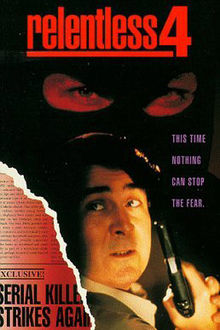
Sam Deitz (Leo Rossi) is back to hunt one last serial killer in this, the last of the Relentless films.
This time the killer is a boring nonentity. He’s not as interesting as the killers played by Miles O’Keeffee or William Forsythe. Nor is he as unintentionally funny as the one played by Judd Nelson in the first Relentless film. Instead, he’s just your run-of-the-mill religious fanatic, killing sinners and performing rituals. His trademark is that he only kills the person that he wants to kill. Anyone else who might be around is just taken out with a stun gun. That’s a boring if considerate trademark.
Deitz is assigned to track down the killer, along with his new partner, Jessica Pareti (Colleen Coffey). While Deitz is trying to solve the case, he’s also having to deal with his rebellious teenage son (Christopher Pettiet). Between this film and the last, Deitz’s ex-wife died and now Deitz is a single father. He and his son barely know each other. Deitz tries to keep his son under control while all his son wants to do is spend time with his girlfriend, Sherrie (Lisa Robin Kelly).
Relentless IV is the least interesting of the Relentless film. It’s so trapped by the now-stale Relentless formula that not even the casting of Famke Janssen as a possible femme fatale can save it. Janssen is a psychiatrist who is connected not only to one of the victims but possibly to the killer as well. She and Deitz are obviously attracted to each other and Deitz is torn between that attraction and treating her like a possible suspect. The relationship between Deitz and the doctor has potential but it keeps getting sidetraced by scenes of Deitz trying to deal with his teenage son and it never really lives up to what it could have been. Janssen is beautiful and Rossi gives a typically good performance but watching the film, it’s obvious that there wasn’t much left to do with the character of Detective Sam Deitz.
Direct-to-video mainstay Oley Sassone directs in a flat and unmemorable manner and the entire film just seems tired. When the best your serial killer can do is kill someone with a Campbell’s soup can, you know you’re running on empty. There would not be a Relentless V. Hopefully, Sam Deitz finally found some peace and figured out how to balance being an intense New Yorker with living in laid back California.
(Lisa is currently in the process of trying to clean out her DVR by watching and reviewing all 40 of the movies that she recorded from the start of March to the end of June. She’s trying to get it all done by July 10th! Will she make it!? Keep visiting the site to find out!)
The 19th film on my DVR was Jack of The Red Hearts, which I recorded off of the Lifetime Movie Network on April 27th.
I have to admit that I was a little bit surprised as I watched Jack of the Red Hearts. While it seemed to have a typical Lifetime premise — a runaway fakes her identity and moves in with a troubled family — it didn’t feel like a typical Lifetime film. For one thing, the cast was made up of actors like Soul Surfer‘s AnnaSophia Robb, The Bling Ring‘s Israel Broussard, and the X-Men‘s Famke Janssen. None of these people are exactly big stars but they’re still not Lifetime regulars. While the premise may have been Lifetime-friendly, the portrayal of an 11 year-old autistic girl (played by Taylor Richardson) definitely seemed a bit more realistic than one would usually expect from a made-for-TV movie. Finally, there were more than a few occasions when it was obvious that some of the dialogue had been overdubbed, in order to make the language more appropriate for television.
So, I did some research and I discovered that Jack of the Red Hearts was not originally made for Lifetime. Instead, it’s an indie film that was directed by Janet Grillo and written by Jennifer Deaton, both of whom drew on their own experiences of raising an autistic child. Jack of the Red Hearts did the festival circuit in 2015 and even got a very limited theatrical release back in February.
Jack of the Red Hearts tells the story of Jack (AnnaSophia Robb), an 18 year-old high school drop out who is on probation. When we first meet Jack, she’s helping her younger sister, Coke (Sophia Anna Caruso), break out of foster care. AnnaSophia and Sophia Anna are both totally believable as sisters and their scenes together are so believable that you even forgive the fact that they’re named Jack and Coke. Jack wants to take care of her sister but she’s broke and she’s homeless. In order to rescue Coke from the foster home, Jack has to get a job and enough money to rent an apartment.
And what better way to get a job than by stealing someone else’s identity! After Jack sees some flyers asking “Are you good with children?,” she shows up at the home of Kay (Famke Janssen) and Mark (Scott Cohen). Jack claims that her name is Donna and that she’s the nanny that Kay previously hired over the telephone. Despite having neither training nor a high school degree, Jack is soon taking care of autistic Glory (Taylor Richardson).
Glory is nonverbal and sometimes violent and her family, while loving, struggles to adjust to not only her behavior but also their inability to understand what the world is like for her. (The film occasionally tries to show us the world through Glory’s eyes and it works a lot better than you might expect.) When Jack initially reacts to Glory’s behavior by snapping at her and occasionally getting rough (at one point, she slaps away Glory’s hand when Glory suddenly tries to grab food off her plate), you wince but at the same time, you understand Jack’s frustration. Richardson, who is not autistic in real life, fully commits herself to the role and the film deserves a lot of credit for not sentimentalizing her condition or its effect on her family. Unlike most Lifetime films, this one takes place in a frequently cluttered and chaotic house and Kay is portrayed as literally being on the verge of a neurotic meltdown.
Though it takes a while, Jack starts to care about Glory and finally, she even starts to make some progress with Glory. And again, it should be pointed out that the film does not portray Jack as a miracle worker, though Jack does watch The Miracle Worker on television at one point. The progress is slow but, the film says, it is progress and that’s the important thing. Jack also develops an attraction to Glory’s brother, Robert (Israel Broussard). Robert, however, is the only member of the family to suspect that Jack may not be telling the truth about who she is…
Because Jack of the Red Hearts was on the Lifetime Movie Network, I kept waiting for the scene in which Jack would either seduce Kay’s husband or try to kidnap Glory. Thankfully, that scene never came, though the film still has its share of melodramatic moments. Jack of the Red Hearts is, in many ways, a predictable film but it’s also an achingly sincere film and Robb, Broussard, Janssen, and especially Taylor Richardson all give excellent and empathetic performances.
This is a sweetly well-intentioned and bravely unsentimental film and definitely one to keep an eye out for.
Here are 6 more reviews of 6 other films that I watched this year. Why six? Because Lisa doesn’t do odd numbers, that’s why.
The Big Game (dir by Jalmari Helander)
In The Big Game, Samuel L. Jackson plays the President of the United States and you would think that fact alone would make this film an instant classic. Unfortunately, this film never really takes advantage of the inherent coolness of Samuel L. Jackson playing the leader of the free world. When Air Force One is sabotaged and crashes in the wilderness of Finland, President Jackson has to rely on a young hunter (Onni Tommila) from a group of CIA agents disguised as terrorists. Tommila does a pretty good job and the scenery looks great but at no point does Samuel L. Jackson says, “Check out this executive action, motherfucker,” and that’s a huge missed opportunity. As for the rest of the film, it takes itself a bit too seriously and if you can’t figure out the big twist from the minute the movie starts, you obviously haven’t seen enough movies.
The Connection (dir by Cedric Jiminez)
Taking place over the 1970s, the French crime thriller tells the largely true story of the efforts of a French judge (played by Jean Dujardin) to take down a ruthless gangster (Gilles Lellouche) who is the head of one of the biggest drug cartels in the world. The Connection run for a bit too long but, ultimately, it’s a stylish thriller that does a very good job of creating a world where literally no one can be trusted. Dujardin, best known here in the States for his Oscar-winning role in The Artist, does a great job playing an honest man who is nearly driven to the point of insanity by the corruption all around him.
Graduation Day (dir by Chris Stokes)
Hey, it’s another found footage horror film! Bleh! Now, I should admit that this horror film — which is NOT a remake of that classic 1980s slasher — does have a fairly clever twist towards the end, that goes a long way towards explaining a lot of the inconsistencies that, up until that point, had pretty much dominated the film. But, even with that in mind and admitting that Unfriended and Devil’s Due worked wonders with the concept, it’s still hard to feel any enthusiasm about yet another found footage horror film.
McFarland USA (dir by Niki Caro)
McFarland USA is an extremely predictable but likable movie. Kevin Costner plays a former football coach who, while teaching at a mostly Latino high school, organizes a cross country team that goes on to win the state championship. It’s based on a true story and, at the end of the film, all of the real people appear alongside the actors who played them. There’s nothing about this film that will surprise you but it’s still fairly well-done. Even Kevin Costner, who usually gets on my last nerve, gives a good performance.
Taken 3 (dir by Olivier Megaton)
Bryan Mills (Liam Neeson) is back and he’s killing even more people! Fortunately, they’re all bad people but you really do have to wonder what type of dreams Bryan has whenever he goes to sleep. In Taken 3, Bryan’s wife (Famke Janssen) has been murdered and Bryan has been framed. He has to solve the case and kill the bad guys while staying one step ahead of the police (represented by a bored-looking Forest Whitaker). Neeson does all of his usual Taken stuff — the intense phone conversation, the steely glare, and all the rest — but at this point, it has literally been parodied to death. If you’re into watching Liam Neeson kill ugly people, Taken 3 will provide you with adequate entertainment but, for the most part, it’s but a shadow of the first Taken.
War Room (dir by Alex Kendrick)
I saw the War Room in Oklahoma. It was being shown as part of a double feature with The Martian, of all things! Anyway, this film is about an upper middle class family that hits rock bottom but they’re saved by the power of prayer! Lots and lots of prayer! Seriously, this film almost qualifies as “prayer porn.” Anyway, the film was badly acted, badly written, incredibly heavy-handed, and ran on way too long but, on the plus side, it did eventually end.
Why are bad guys still messing with Liam Neeson…I mean Bryan Mills. He literally took on an Albanian gang in Paris (of all places) who were kidnapping young, female tourists to sell to Parisian sex-slave auctioneer who only did business with a very exclusive clientele. Then the hometown relatives of said Albanian gangsters tried to take him out. That didn’t work out so well.
Now, this coming January just when Bryan thought his life as a retired government worker with a unique set of skills can finally enjoy retirement with his lovely daughter and rekindle his relationship with his ex-wife people are out to be quite the killjoy once again.
Taken 3 will see Liam Neeson back as Bryan Mills, Maggie Grace as his daughter Kimmy and joined by Forest Whitaker as an LAPD inspector tasked with taking him down for a murder he didn’t commit. Once again this sequel will be helmed by that French director with the awesome name: Olivier Megaton.
Some people say Taken 3 (will not call it Tak3n) is just a rehash of The Fugitive, but I disagree. Richard Kimble never broke people’s throats and shot many people in their heads to find those responsible. The throat breaking alone puts Bryan Mills heads above Richard Kimble.
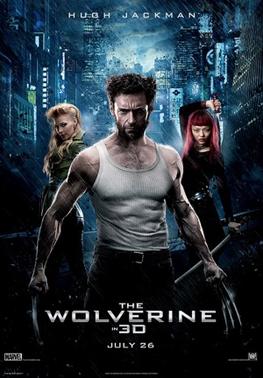 Having left the X-Men after the death of Jean Grey (Famke Janssen), Logan (Hugh Jackman) is now living as a hermit in the Canadian wilderness. He is haunted by dreams of his past and visions of Jean. (In the X-Men comic books, Scott Summers was the one who went off to live as a hermit and was haunted by memories of Jean, but since Scott was killed off in X-Men: The Last Stand, Logan was the one who got this story and the visions of lingerie-clad Jean, despite never having been in a truly romantic relationship with her.) Logan is drawn out of hiding by Yukio (Rila Fukushima), a mutant who can predict when people are going to die. Yukio works for Ichiro Yashida (Haruhiko Yamanouchi), a Japanese industrialist who first met Logan during World War II. Logan saved Yashida’s life when Nagasaki was bombed.