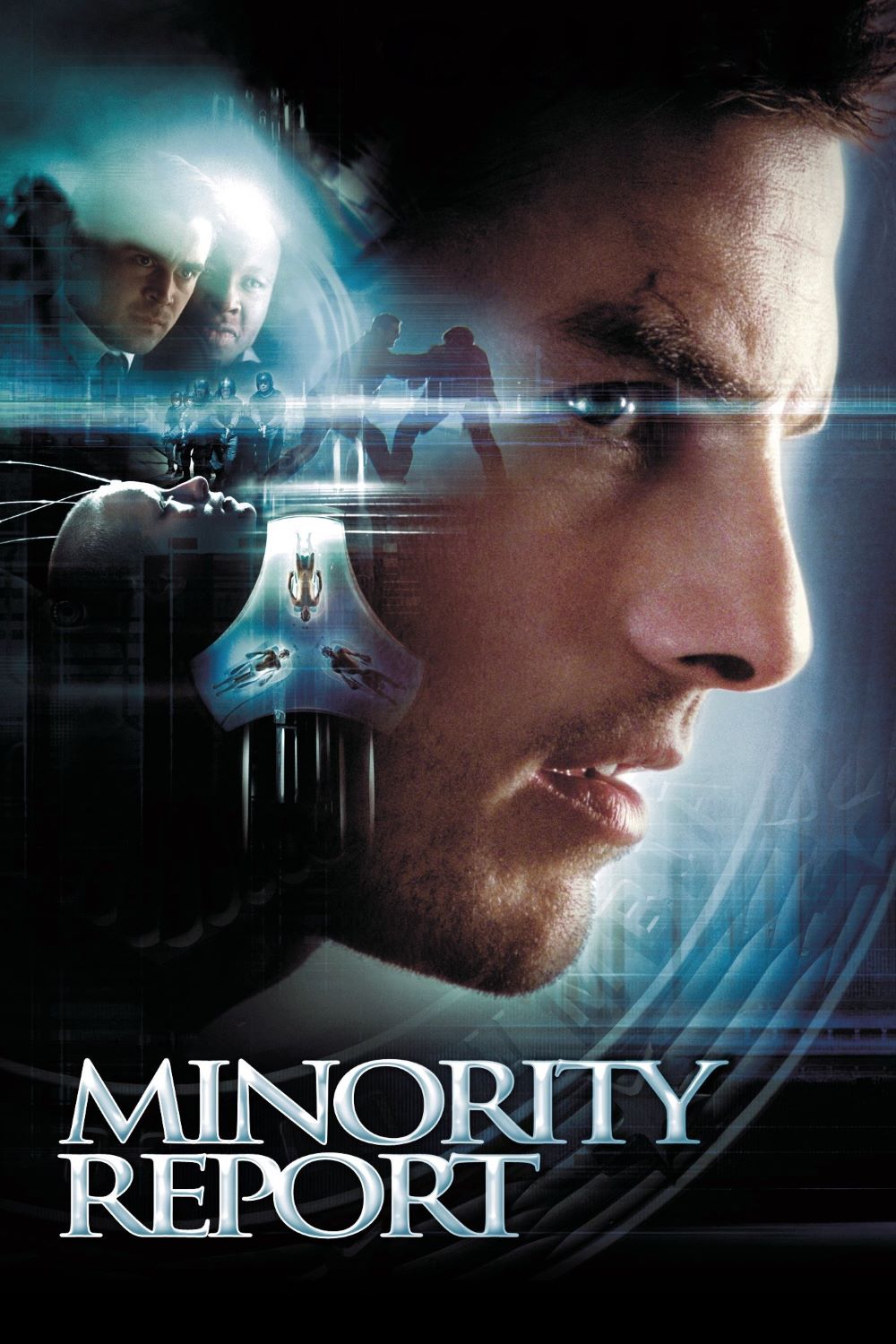
Review: Minority Report (dir. by Steven Spielberg)


“Sometimes, in order to see the light, you have to risk the dark.” — Dr. Iris Hineman

There’s a particular pleasure in revisiting Minority Report now, decades removed from its 2002 release, because it’s aged in the strangest possible way: it hasn’t dated so much as it’s caught up to us. Steven Spielberg’s adaptation of Philip K. Dick’s short story plays like a glossy, big-budget action thriller on the surface, all sleek gestural interfaces and Tom Cruise sprinting across rooftops, but underneath that polish is a film that’s quietly become one of the most unnervingly accurate predictions of how surveillance, data, and policing would actually evolve in the real world.

The premise is simple enough to fit on a poster. In a near-future Washington D.C., a special police unit called PreCrime uses three psychic “precogs” to see murders before they happen, allowing cops to arrest people for crimes they haven’t committed yet. John Anderton, played by Cruise with a kind of haunted, grief-soaked intensity, is the unit’s star detective, a true believer in the system who lost his son years earlier and has thrown himself into the work as a substitute for healing. Then the precogs name him as a future murderer, and the rest of the film is Anderton on the run, trying to prove his innocence inside a system explicitly designed to make innocence irrelevant. It’s a clever structural trick because it forces the audience to watch the hero discover, in real time, all the holes in a system he’s spent his career defending.

What makes the film work as more than just a stylish chase movie is how seriously Spielberg and his screenwriters, Scott Frank and Jon Cohen, take the philosophical rot at the center of the premise. PreCrime isn’t framed as a dystopian villain organization; it’s framed as something genuinely good and genuinely popular, a program that’s driven murder rates to near zero and that ordinary citizens are grateful for. That’s the unsettling part. The film isn’t asking you to be afraid of an obviously evil system. It’s asking you to be afraid of aSteve Harris system that works, that delivers real safety, and that nonetheless requires you to accept punishment without due process, fate without appeal, guilt assigned before the act. Cruise’s Anderton spends the film discovering that the machinery he trusted contains exactly the kind of ambiguity and abuse it was built to eliminate, and the film never lets you forget that the most dangerous systems are the ones that feel necessary.

Visually, this is one of Spielberg’s most distinct collaborations with cinematographer Janusz Kamiński, who bleached the color out of nearly every frame to give the film a cold, overexposed, almost silvery look. It’s a future that feels lived-in and grubby rather than chrome and gleaming, which was a deliberate choice; Spielberg and his production designers consulted with actual futurists and technologists to imagine a 2054 that felt plausible rather than fantastical. That’s part of why the gestural data interfaces Anderton uses, swiping and conducting evidence in midair like an orchestra conductor, became such a cultural touchstone; they didn’t feel like science fiction gadgetry so much as a believable next step from where computing was already heading.

And that brings us to the part of the film’s legacy that’s only grown more pointed with time. Minority Report arrived in June 2002, less than a year after September 11th, and it’s impossible to separate the film’s anxieties from that specific American moment. This was the period when the Patriot Act had just been signed, when warrantless surveillance and preventive detention were being normalized in the name of safety, when the entire architecture of American security policy pivoted toward stopping threats before they materialized rather than responding after the fact. Minority Report dramatizes that exact logic and then methodically exposes its flaws, showing a security state so committed to preventing harm that it’s willing to imprison the innocent, manipulate evidence, and treat dissent as a structural malfunction.

It’s worth situating the film alongside the other two movies Spielberg made in the years immediately following 9/11, because together they form a loose, unofficial triptych about post-9/11 American fear. War of the Worlds, his 2005 alien invasion film, restaged the trauma of a sudden, incomprehensible attack on home soil, with Tom Cruise again playing an ordinary man trying to shepherd his children through a landscape of falling ash, mass panic, and faceless threats descending from above, imagery that’s hard not to read as a direct echo of lower Manhattan that morning. Munich, released the same year, dug into the moral wreckage of a state’s decision to respond to terrorism with a covert campaign of targeted assassination, asking hard questions about whether vengeance dressed up as justice actually makes anyone safer or just perpetuates the cycle. Minority Report is the third leg of that stool, the one concerned not with the attack itself or the retaliation but with the surveillance and preemption apparatus built in the name of preventing the next one. Together, the three films trace a kind of emotional arc through American anxiety in that period: the shock of the unknown threat, the morally compromised vengeance that follows, and the paranoid, technologically enabled security state erected to make sure it never happens again. None of the three films name 9/11 directly, but all three are unmistakably shaped by it, by a culture suddenly suspicious of the outsider, willing to trade liberty for the promise of safety, and uncertain whether the institutions built to protect them could be trusted.

What’s remarkable is how much more relevant the surveillance angle feels today than it did in 2002. Predictive policing software is real now, with departments across the country having actually used algorithms to flag individuals or neighborhoods as high risk for future crime, often with the same built-in biases and feedback loops the film gestures at. Data brokers and advertising networks track movement and behavior with a granularity that makes the film’s retina-scanning ad billboards look almost quaint by comparison. The conversation about predictive algorithms making consequential decisions about people’s freedom, hiring, credit, and policing based on probabilistic models of future behavior is now a mainstream policy debate rather than science fiction. Watching the film now, the gap between its imagined 2054 and our actual 2026 feels uncomfortably narrow, less a futuristic warning than a documentary about tendencies we’re already deep inside of.

That’s what makes Minority Report so achingly prophetic, not just in its prediction of our tech, but in its prediction of our mindset. We live in a world now where predictive policing algorithms are actually being used, where social credit scores are a reality in some places, and where the debate over privacy versus security is a constant, exhausting hum in the background. We’re not at the level of precogs, but we don’t need to be. We have big data, machine learning, and a populace that’s been slowly conditioned to accept that if you have nothing to hide, you have nothing to fear. The film is a warning shot across the bow of that complacency. It asks us to consider the cost of a crime-free society, and it suggests that the price might be our very souls. Spielberg, ever the optimist even in his darkest films, ultimately comes down on the side of human fallibility. He prefers a world with crime and free will to a world of perfect, totalitarian peace. And watching it today, in an age of deepfakes, biometric tracking, and algorithm-driven justice, that preference feels less like a luxury and more like an urgent, desperate necessity. It’s a hell of a ride, with more twists than a pretzel factory and a car chase that still holds up, but the real thrill of Minority Report isn’t the action—it’s the haunting feeling that we’re not watching a dystopian future anymore. We’re watching the news.

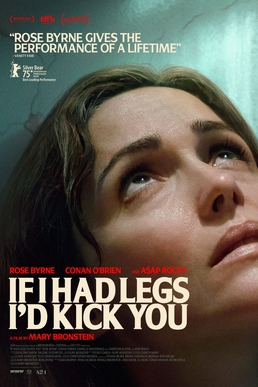
The Women Film Critics Circle Honors If I Had Legs I’d Kick You


The Women Film Critics Circle has announced its picks for the best of 2025.  And here they are:

Best Movie About Women
Winner: If I Had Legs I’d Kick You
Runners Up: Hamnet, Eleanor the Great & Sorry, Baby

Best Movie by a Woman
Winner: Chloé Zhao (Hamnet)
Runners Up: Eva Victor (Sorry, Baby), Lynne Ramsay (Die My Love) & Mary Bronstein If I Had Legs I’d Kick You)

Best Woman Storyteller (Screenwriting Award)
Winner: Chloé Zhao, Maggie O’Farrell (Hamnet)
Runners Up: Eva Victor (Sorry, Baby), Lynne Ramsay, Alice Birch (with Enda Walsh) (Die My Love) & Mary Bronstein (If I Had Legs I’d Kick You)

Best Actress
Winner: Jessie Buckley (Hamnet)
Runners Up: Rose Byrne (If I Had Legs I’d Kick You), Amanda Seyfried (The Testament of Ann Lee) & Jennifer Lawrence (Die My Love)

Best Actor
Winner: Ethan Hawke (Blue Moon)
Runners Up: Michael B. Jordan (Sinners), Leonardo DiCaprio (One Battle After Another) & Timothée Chalamet (Marty Supreme)

Best Supporting Actress
Winner: Regina Hall (One Battle After Another)
Runners Up: Andrea Riseborough (Goodbye June), Odessa A’zion (Marty Supreme) & Samantha Morton (Anemone)

Best Foreign Film by or About Women
Winner (tie): Left-Handed Girl
Winner (tie): The Voice of Hind Rajab
Runners Up: All That’s Left of You & Belén

Best Documentary by or About Women
Winner: My Mom Jayne
Runners Up: The Perfect Neighbor, Put Your Soul on Your Hand and Walk & The Librarians

Best Equality of the Sexes
Winner: Sinners
Runners Up: The Testament of Ann Lee, Lilly & Tatami

Best Animated Female
Winner: Rumi (K-Pop Demon Hunters)
Runners Up (tie): Amélie (Little Amélie or the Character of Rain) & Judy Hopps (Zootopia 2)
Runner Up: Scarlet (Scarlet)

Best Screen Couple
Winner: Wunmi Mosaku and Michael B. Jordan (Sinners)
Runners Up: Jessie Buckley and Paul Mescal (Hamnet), Elizabeth Olsen and Miles Teller (Eternity) & Laura Dern and Will Arnett (Is This Thing On?)

Best TV Series
Winner: Hacks (Season 4)
Runners Up: Dying for Sex, The Girlfriend & The White Lotus (Season 3)

Adrienne Shelly Award*
For a film that most passionately opposes violence against women
Winner: Sorry, Baby
Runners Up: Christy, Companion & Lilly

Josephine Baker Award*
For best expressing the woman of color experience in America
Winner: Sinners
Runners Up: Hedda, Rosemead & Wicked: For Good

Karen Morley Award*
For best exemplifying a woman’s place in history or society, and a courageous search for identity
Winner: Eleanor the Great
Runners Up (tie): Die My Love & The Testament of Ann Lee
Runner Up: Familiar Touch

Acting and Activism Award
America Ferrera

Lifetime Achievement Award
Diane Keaton

Catching Up With The Films of 2022: She Said (dir by Maria Schrader)


To put it lightly, I had mixed feelings about She Said.

On the one hand, the downfall of Harvey Weinstein is an important story and it’s one that should never be forgotten.  It wasn’t that long ago that Weinstein was one of the most powerful people in Hollywood.  Many of the people who now regularly talk about how much they hated him had no problem working for him, taking his money, and thanking him whenever they won an award.  She Said focuses on the work of the two New York Times reporters, Jodi Kantor (Zoe Kazan) and Megan Twohey (Carey Mulligan), who wrote the initial article that detailed the allegations against Weinstein.  (Ronan Farrow’s New Yorker piece was published shortly afterwards.)  The film is not only about the article but it’s also about women working together and supporting each other.  Kazan and Mulligan both do a good job of portraying Jodi and Megan, bringing some nuance to a script that is full of dialogue that is occasionally a bit too on-the-nose.

On the other hand, it’s hard not to feel that She Said lets a lot of people off the hook.  While Jodi does originally pitch her story as dealing with systemic sexism, there’s actually very little examination of how the system enabled a monster like Harvey Weinstein.  Mention is made of Weinstein having powerful friends but few of those friends are called out by name and there’s very little discussion about how Weinstein used his money to become a player in Washington as well as Hollywood.  It leads to some odd narrative choices.  For instance, both Jodi and Megan are shocked to discover that Harvey is being represented by prominent feminist attorney Lisa Bloom, the daughter of Gloria Allred.  Jodi later talks about an off-screen conversation that she had with Bloom, in which Bloom tried to use a number of personal, political, and professional appeals to convince Jodi to drop the story.  It sounds like an interesting conversation but why don’t we get to see it?  Would it have cast Bloom in too negative of a light?  The film’s approach leaves it open to such accusations.  Indeed, it’s hard not to be reminded of the way that Rose McGowan was shunned when she (correctly) pointed out that a lot of the people celebrating Weinstein’s downfall were the same people who spent years ignoring what was an open secret in Hollywood.  The film tells us that Harvey Weinstein is a monster but we already know that.  What the film does not tell us is how he came to power and why he was protected for decades.

Thematically, She Said attempts to be a celebration of journalism, in the style of recent films like The Post, Truth, and Spotlight.  Like those films, it shares the same flat visual style.  There’s nothing particularly cinematic about it which is unfortunate as, with everyone already knowing how the story ends, She Said could have used some stylistic flair.  To a certain extent, I can understand the logic.  The emphasis is supposed to be on the reporters doing the hard work of getting the story and all of the recent films about journalism take a straight-ahead, by-the-numbers approach.  The problem with using this approach for She Said is that it leads to a lot of static, poorly framed shots of people talking on the phone, sitting at their desks, and staring at computer screens.  It may be a realistic depiction of modern journalism but it’s not particularly compelling to watch.  If anything, the film’s depiction of clean offices, supportive co-workers, and fair-minded editors makes the film feel like a testimonial about how The New York Times is the best workplace in America.  As opposed to the reporters in Spotlight, one never feels that Jodi and Megan are in danger of losing their jobs.  Unlike The Post or Shattered Glass, there’s no conversations about how the media establishment is often guilty of initially enabling the same behavior that it later condemns.  The New York Times never feels alive in the way that The New Republic did in Shattered Glass.  There’s not even a moment that’s as ludicrously over-the-top as the scene in Truth where Cate Blanchett argues that she shouldn’t be criticized for producing an obviously false story because it could have, in theory, been true.  Instead, She Said is very respectable and very dignified and a little too safe.  There’s not much going on beneath the surface. 

The film drops a lot of famous names.  Ashley Judd plays herself while Gwyneth Paltrow provides her voice for a scene in which she calls Jodi and says that Harvey has shown up at her house.  (Again, this is a scene that would probably have been more effective if we had seen it happen as opposed to just hearing about it.)  Lena Dunham is given a shout-out as someone who (off-screen) called and offered to help.  Someone casually mentions that Martin Scorsese hates Harvey Weinstein.  And yet, the film’s most powerful moments come when Jodi and Megan talk to the women who weren’t famous but who were still traumatized and victimized by Harvey Weinstein.  Samantha Morton and Jennifer Ehle play two former Miramax employees, both of whom eventually tell their stories to Jodi and Megan.  Morton and Ehle both give heart-felt performances and, during their scenes, She Said finds its reason for existing.  The performances of Samantha Morton and Jennifer Ehle both capture the real-life damage caused by men like Harvey Weinstein and the systems that enable them.

In the end, She Said is a film that I wanted to like more than I did.  It tells a compelling story in the least compelling way possible and, unlike Kitty Green’s The Assistant, it lets far too many people off the hook.


Comic-Con 2022: Here’s The Trailer For Tales Of The Walking Dead


The Walking Dead may be coming to a close but the zombie apocalypse will continue in Tales of The Walking Dead, a new anthology series.  

Here’s the first trailer, featuring Terry Crews and Samantha Morton.  This actually dropped yesterday but, again, I was so overwhelmed by the cuteness of I am Groot that it took me 24 hours to get around to sharing it.  Don’t worry, though.  The Dead aren’t going anywhere.


Lisa Marie’s Way Too Early Oscar Predictions for May


It’s that time of the month again!

It’s time for me to once again try to predict what will be nominated for the Oscars.  If you had to told me, at this time last year, that Top Gun: Maverick would emerge as an Oscar contender, I would have said that you were crazy but here we are.  Admittedly, it is early in the year and I think there’s always going to be some ambivalence towards honoring Tom Cruise.  (You just know that someone is having nightmares about him thanking David Miscavige in his Oscar speech.)  But with the reviews and the box office success that Top Gun: Maverick is getting, it would be a mistake to dismiss it.  After all, Mad Max: Fury Road came out around this same time of year in 2015.  As well, one can be sure that A24 will be giving Everything Everywhere All At Once a heavy awards push as well.  This could very well be the year of the genre blockbuster as far as the Oscars are concerned.

As for Cannes, it’s come and gone.  George Miller’s Three Thousand Years of Longing got some good reviews, even if those reviews didn’t translate into awards at the end of the Festival.  David Cronenberg’s Crimes of the Future sounds like it’s going to be too divisive for the Academy and really, the thought of Cronenberg winning an Oscar has always been a bit implausible, regardless of how much he may or may not deserve one.  As for James Gray’s Armageddon Time, Gray has always been more popular with critics than with audiences or Academy voters.  If Gray couldn’t break through with something like The Lost City of Z, I doubt he’s going to do so with an autobiographical film about his life in private school.  Steven Spielberg already has the autobiography slot wrapped up with The Fabelmans. 

Of course, there’s still many films left to see and many more film festivals to be held.  Let us not forget that Martin Scorsese is bringing us Killers of the Flower Moon.  Personally, I’m looking forward to Damien Chazelle’s Babylon.  In short, nothing has been settled yet.  For all the acclaim that Top Gun and Everything are getting, who knows how the race is going to look at the start of the Fall season?

Anyway, here are my predictions for May.  Be sure to check out my predictions for February and March and April as well!

Best Picture

Amsterdam

Babylon

Everything Everywhere All at Once

The Fabelmans

I Want To Dance With Somebody

Killers of the Flower Moon

Next Goal Wins

Rustin

She Said

Top Gun: Maverick

Best Director

Damien Chazelle for Babylon

Kasi Lemmons for I Want To Dance With Somebody

Martin Scorsese for Killers of the Flower Moon

Steven Spielberg for The Fabelmans

Taika Waititi for Next Goal Wins

Best Actor

Tom Cruise in Top Gun: Maverick

Colman Domingo in Rustin

Idris Elba in Three Thousand Years of Longing

Brendan Fraser in The Whale

Brad Pitt in Babylon

Best Actress

Naomi Ackie in I Want To Dance With Somebody

Cate Blanchett in Tar

Margot Robie in Babylon

Tilda Swinton in Three Thousand Years of Longing

Michelle Yeoh in Everything Everywhere All At Once

Best Supporting Actor

John Boyega in The Woman King

Leonardo DiCaprio in Flowers of the Killer Moon

Tom Hanks in Elvis

David Lynch in The Fabelmans

Tobey Maguire in Babylon

Best Supporting Actress

Jessie Buckley in Women Talking

Tantoo Cardinal in Flowers of the Killer Moon

Li Jun Li in Babylon

Samantha Morton in She Said

Michelle Williams in The Fabelmans

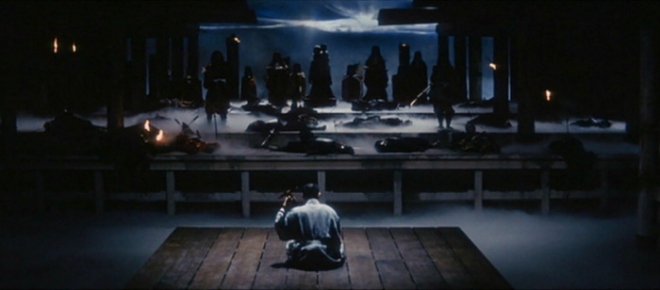
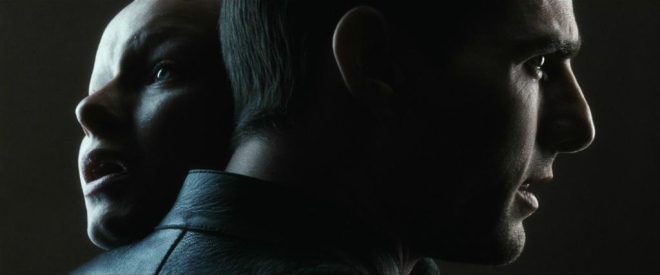
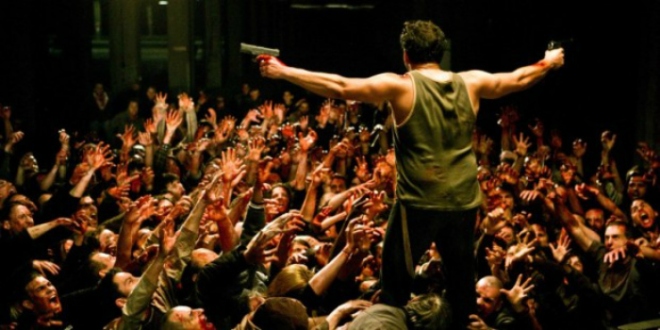
4 Shots From 4 Films: Kwaidan, Minority Report, La Horde, The Exorcist


A new feature that I thought was a nice way to introduce not just our readers, but also fellow site writers to some films we love, admire and think worthy of checking out.

It won’t be any sort of review or recap of what the film is about, but just a simple, single shot from the film itself that the individual writer considers an worthy and interesting glimpse of the film.

To start off “4 Shots From 4 Films” here’s the first 4 shots. Moving forward it will be just 4 screenshots and the title of the film they belong to.

4 SHOTS FROM 4 FILMS

Kwaidan

Kwaidan (dir. by Masaki Kobayashi – 1964)

MinorityReport

Minority Report (dir. by Steven Spielberg – 2002)

Quick Review: John Carter (dir. by Andrew Stanton)


John CarterThe First Impression:

John Carter is a cute Disney film that you may enjoy more than you’d thought you would. It’s lively like The Rocketeer was and really has some great moments and interesting characters. Both the leads carry their roles well, and are eye candy for the audience. It’s worthy of all of the love it should get, but obvious comparisons to movies that came before it (even though the story predates those films), along with a shockingly forgettable score by Michael Giacchino may actually hurt it. If you’re expecting blood and guts, not so much. It’s a Disney film. The kids should love it, though the pace of the film in the beginning may seem a little slow for younger audiences. Skip the 3D version and go for the 2D instead.

The Longer Version:

It’s really sad when you see a movie that deserves all the love in the world, but for some reason just doesn’t quite hit the mark. Part of that is due to the way this was marketed. It really didn’t feel to me that Disney was putting their all behind this. When you look at how heavily marketed Tron: Legacy was, this seemed like a “Hey, we made it, just give us money.” kind of push.

As far as John Carter is concerned, maybe it’s better to look at it like this. We tend to compare things to make sense of them:

This object reminds me of that object.

All of James Cameron’s Avatar reminds me of Ferngully.

Remember, Short Controlled Bursts. What movie comes to mind when I say that?

This is ultimately the problem with Andrew Stanton’s John Carter. In watching it, you’ll end up making comparisons to so many other films that came before it. However, knowing that it was based on the stories of Edgar Rice Burroughs, it’s a lot like seeing Lord of the Rings for the first time when all you know of Elves and Dwarves comes from Dungeons & Dragons, The Elder Scrolls games or World or Warcraft. Burroughs’ material predates just about everything it showcases, from a pop culture standpoint. Hell, for all I know, John Carter was probably the original inspiration for the Kwisatz Haderach in Frank Herbert’s Dune (though that’s just my speculation). The problem is, with comparisons being what they are, audiences may view John Carter as a copycat of all the movies that were probably influenced by it.

I didn’t walk into John Carter with a lot of expectations. Andrew Stanton, for me, has the track record of being Pixar’s Dark Horse. This is the same guy that killed off a mother and a hundred of her babies in the opening moments of Finding Nemo. A man who gave a bleak, dirty and desolate future in Wall-E. Yet, both of those films had a theme of love and of heroes that rose to the occasion, so seeing the previews for John Carter told me enough.

John Carter is the story of a man in search of a cave full of gold. He wants no part of anyone’s battles and when he’s asked to join a faction, he does his best to avoid it. This leads him to a situation where he’s transported to another world. Just as it was with Earth, he encounters a number of different factions (all of which seem to feel he could aid them), but he simply wishes to return home. When he meets a fierce female fighter (who also happens to be a scientist), they work on figuring out how he arrived on Barsoom and how to get back.

The beautiful thing about John Carter is that it really feels like one of those old serials, or to make a more modern comparison, like an adventure film on the Indiana Jones level of things. There are a number of scenes where I found myself genuinely laughing at what was on screen. The visuals could be better in some places, but it’s nothing that’s groundbreaking. I look at John Carter as a pop culture lesson. You can see where other stories have used elements in the Burroughs tale. In that, it worked for me. The action scenes were really enjoyable for me, but some of the scenes between that could have been tighter. When you find out the reasoning behind Carters arrival, you may end up wondering why more wasn’t done with it with that story arc (on a technical level, anyway). As I’m unfamiliar with the original John Carter stories, I watched a few interviews of the cast and Taylor Kitsch noted that in the books themselves, Carter was pretty much the same person through every one. Stanton added a bit of character depth to him, with a little help from Spider-Man 2 scribe Michael Chabon. Chabon’s also responsible for the great Wonder Boys and The Adventures of Kavalier and Clay, which I still haven’t finished as of this writing. Carter is a conflicted individual for Disney purposes, but you shouldn’t expect Oscar performances here. It’s far better then Immortals was, in that sense.

Both Taylor Kitsch and Lynn Collins do well with their roles. Having worked together for about a hiccup in X-Men Origins: Wolverine, they have a good chemistry together. Kitsch is gruff with his mannerisms, and I can almost forgive him for playing Gambit. Collins is beautiful, statuesque even, and her character really does a lot of damage, fight wise. She’s very strong in some areas, though later on in the film, it felt like they may have eased that down a bit. Willem Dafoe has an inspired role in the leader of one of the alien groups that find Carter first when he arrives in Barsoom. Of course, no film would be complete without a villain and John Carter features two in Dominic West (Zack Snyder’s “300”) and Mark Strong (who’s almost always a go to bad guy). West’s character is more of the take action baddie, while Strong’s character is more of a calculating, behind the scenes one. Of note are Samantha Morton (“Minority Report”) as Sola and a little creature called Woola, that really reminded me a lot of Dug from Disney / Pixar’s Up. I wouldn’t mind having a few of those around the house.

The music for this film worked when the scenes were slow. However, when it called for action, I really didn’t feel anything special about it. I stayed to watch the credits only to find that it was Michael Giacchino’s work, who’s normally really good. I don’t know, this one seemed like it was phoned in for the action scenes. It’s okay, but I didn’t have that urge to buy the soundtrack afterward (which I have done for more memorable scores after leaving the theatre).

Overall, John Carter was a fun film in the vein of Disney’s earlier movies, but it’s not anything you absolutely have to run out to the theatre for. I’d love to see it do well and hope that there’s a sequel on the way, but when you’re paying a good $15 dollars for a 3D movie ticket ($20 for an IMAX 3D showing), the visual return on investment isn’t all that great. The story was enjoyable and didn’t slow down too much, but you may find yourself thinking that you’ve seen this film before in the way that so many other movies reference Burrough’s tale.

As a bonus, Disney released 10 minutes of the film. Enjoy:

Trailer: John Carter (Official)


Walt Disney Pictures has finally released the first official trailer for their upcoming sci-fi, action-adventure film John Carter (film was originally titled John Carter of Mars). The film is based on the Edgar Rice Burroughs novel, A Princess of Mars, which would go one to become the first in Burroughs’ Barsoom series.

The film will star Taylor Kitsch (last seen in X-Men Origins: Wolverine as Gambit) in the title role and Lynn Collins (also from Wolverine as Silver Fox) as the aforementioned princess from the original novel. John Carter looks to be a mixture of live-action and fully-realized CGI characters who make up some of the inhabitants of Mars.

It will be interesting how Disney will market this film with little to no big stars and with a director more known for directing Pixar animated films like Finding Nemo and Wall-E in Andrew Stanton.

John Carter is set to have a March 9, 2012 release date.