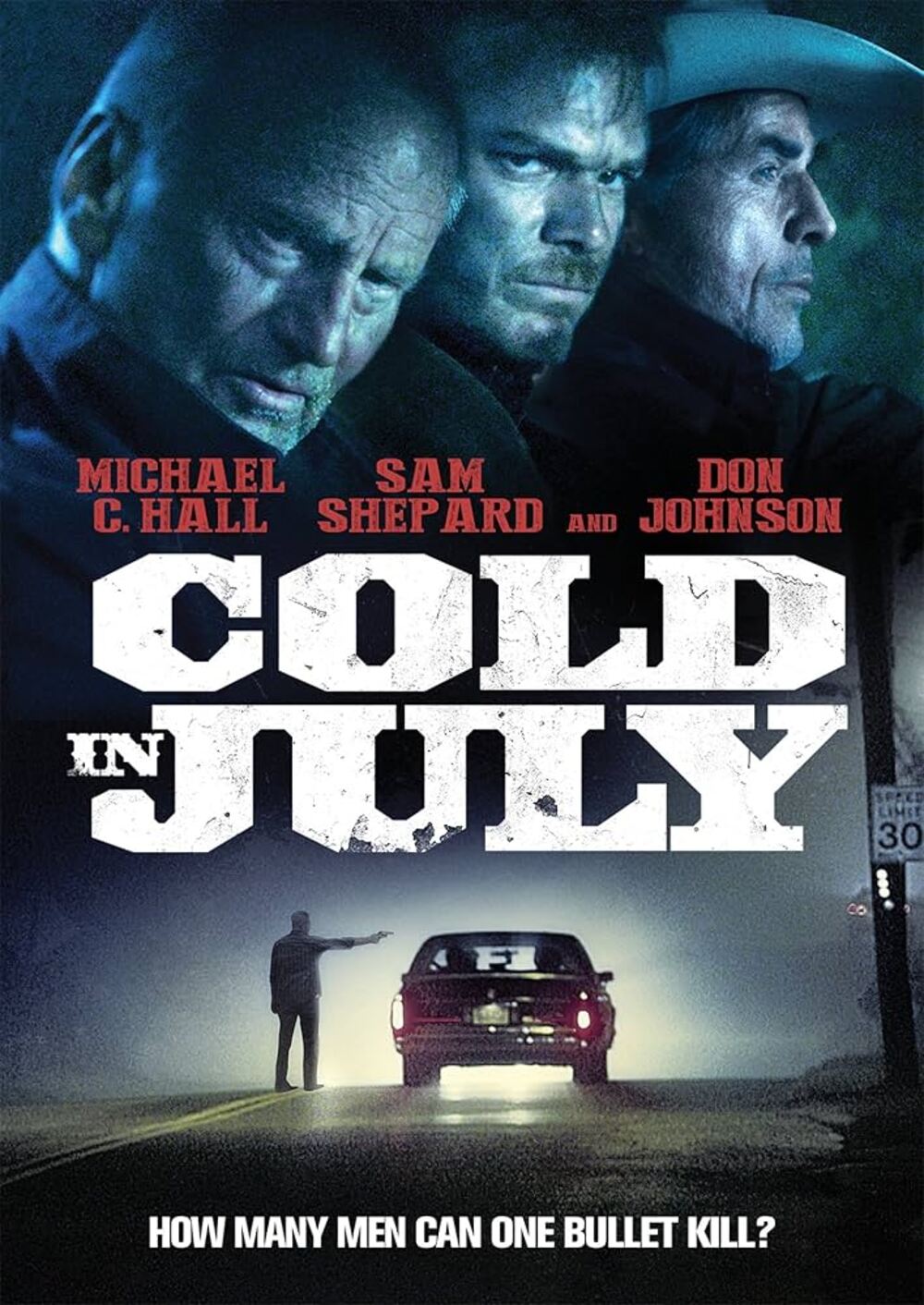
Review: Cold in July (dir. by Jim Mickle)


“What are you going to do when a dog goes bad on you… bites somebody or hurts somebody? There’s only two things you can do, right? You either chain him up… or put him down. But which do you think is more cruel?” — Ben Russell

Cold in July opens with a jolt of primal terror, the kind that shatters the fragile illusion of safety in one’s own home. It’s the sticky summer of 1989 in small-town East Texas, where Richard Dane, a soft-spoken picture framer embodied with exquisite restraint by Michael C. Hall, stirs from sleep to the creak of floorboards under an intruder’s weight. No time for second thoughts; his hand finds the .38 revolver under the pillow, and in the inky darkness of his living room, he fires. The body hits the carpet with a thud, blood pooling like spilled ink. The local law rolls up, commends him under Castle Doctrine—self-defense sanctified by statute—and hauls the corpse away. But Richard can’t wash away the echo of that shot. Hall captures the everyman’s unraveling with microscopic precision: the thousand-yard stare at family photos, the hesitant touch of his wife Ann’s shoulder, the way he now checks locks twice before bed. He’s no vigilante archetype; he’s a man whose moral compass, once pointed true north, now spins wildly in the aftermath, haunted by the ghost of a kid he never knew.

Into this fragile peace stalks Ben Russell, the dead boy’s father, a parolee fresh from Huntsville’s iron grip, played by Sam Shepard as a specter of weathered fury. Shepard infuses Ben with that laconic Texan menace, eyes like weathered shale, voice gravel ground under boot heels. He doesn’t roar threats; he etches them into Richard’s walls—”YOU TOOK MY BOY”—and reduces Richard’s beloved Cadillac to a smoldering husk in the driveway. Ben’s grief manifests as a slow siege: parked across the street, watching Richard’s young son Jordan pedal his bike, a predator’s patience masking paternal devastation. The sheriff dismisses it; Ben’s alibis are airtight, greased by unseen hands. Richard’s domestic idyll fractures—nights fractured by paranoia, meals choked down in silence, a marriage straining under unspoken blame. Here, director Jim Mickle, adapting Joe R. Lansdale’s novel with co-writer Nick Damici, pivots from chamber-piece tension to a labyrinthine noir, peeling back layers of small-town complacency to expose the rot beneath. The film’s ’80s patina is immersive: wood-paneled walls sweating humidity, CRT screens buzzing with local news, Jeff Grace’s synth pulses throbbing like a migraine.

Enter Jim Bob Luke, Don Johnson’s hurricane in cowboy boots—a private investigator with a cherry-red Cadillac horned like a longhorn bull, Stetson cocked at a defiant angle, and patter slick as spilled bourbon. Johnson channels pure Miami Vice charisma, but earthier, a good-ol’-boy philosopher packing heat and homilies in equal measure. Hired by Richard to shadow Ben, Jim Bob unearths the seismic twist: the corpse in Richard’s living room wasn’t Freddy Russell, Ben’s son. The real Freddy lurks alive, ensnared in a subterranean web of illicit recordings peddled to depraved collectors, tentacles reaching into Dixie Mafia coffers. Those grainy tapes—clandestine glimpses of human extremity, captured in derelict husks of industry—form the film’s shadowy core, a vortex pulling the trio into moral freefall. Mickle evokes the era’s snuff hysteria without exploitation: no money shots of viscera, just the implication of captured agony, faces contorted in private hells, traded like contraband smokes. Freddy’s not victim but architect, his boyish features warped in the flicker of self-made damnation, a progeny turned parasite on society’s underbelly.

This revelation refracts the narrative through fractured prisms of identity and inheritance. Ben’s vendetta, born of purest paternal fire, curdles into horror as he beholds his bloodline’s perversion—proof that nurture’s failures can birth monsters no paternal love can redeem. Shepard’s performance peaks in silent devastation, a father unmade by the reel spinning his failure. Richard, the reluctant catalyst, crosses his own Rubicon; the man who fired in panic now shoulders a rifle into the fray, his arc tracing the corrosion of innocence by complicity. Jim Bob, ever the fulcrum, tempers the descent with levity—quips about hog-tying demons, a portable TV blasting The Three Stooges amid stakeouts—yet his bravado masks a code, a line drawn against the abyss. Their alliance, uneasy as oil and water, embodies the film’s thesis on makeshift brotherhood: strangers forged in crisis, bound by shared outrage against systemic blindness.

Deeper still, the forbidden footage interrogates voyeurism’s seductive poison. Richard’s first encounter with the tapes mirrors our own—initial revulsion yielding to morbid pull, the screen a portal to unfiltered id. Mickle frames it as cultural id, echoing ’70s/’80s panics over bootleg horrors like Faces of Death, where myth blurred into reality, VHS democratizing depravity. The mansion raid—a decaying palace of vice, corridors echoing with muffled cries—confronts not just Freddy but the machinery of consumption: projectors whirring, stacks of cassettes labeled in code, a clientele shielded by badges and bribes. Ben’s Oedipal climax shatters illusions; he doesn’t save his son but euthanizes the illusion, a mercy killing of legacy. Richard emerges scarred, paternal instincts twisted—he shields Jordan not from burglars now, but from the world’s hidden reels. Jim Bob’s fate underscores sacrifice’s cost, his flair extinguished in gunfire’s roar.

Thematically, Cold in July wrestles with manhood’s brittle myths in Reagan-era Americana. Richard starts as domesticated archetype—provider, protector by proxy—only to reclaim agency through blood, a Darwinian baptism. Ben embodies failed patriarchy, his prison-hardened shell cracking to reveal vulnerability’s raw nerve. Jim Bob, the id unbound, revels in machismo yet weeps for the fallen, humanizing the trope. Violence accrues gravity: each trigger pull exacts tolls—Richard’s queasy recoil post-kill, Ben’s hollow victory, the collateral innocents. Mickle’s visual lexicon amplifies this: desaturated palettes chilling the Texas swelter, shadows swallowing faces in interrogation rooms, slow-motion casings arcing like fallen stars. Lansdale’s source infuses pulp authenticity—dialogue taut as barbed wire, twists coiled like rattlers—elevated by Mickle’s restraint, never mistaking style for substance.

Flaws surface in the third act’s escalation: a shootout inferno, bodies stacking amid explosions, tips into excess after the scalpel-precision buildup. Threads like the sheriff’s graft fray loose, accents occasionally drift Yankee-ward, and stylistic nods to Coens or Tarantino flirt with homage overload. Yet these blemishes fade against strengths: a triumvirate of leads in career-best synergy, Grace’s score evoking Carpenterian dread laced with twang, production design nailing ’89 grit from payphone booths to mullet mustaches. Mickle’s sophomore leap post-Stake Land proves mastery of genre alchemy—thriller mechanics serving thematic depth.

Ultimately, Cold in July haunts as meditation on unseen currents: the darkness we film, consume, ignore. It indicts voyeurism’s complicity—Richard’s gaze on the tape mirroring ours—while affirming redemption’s flicker amid ruin. Ben buries not just Freddy but paternal ghosts; Richard fortifies his home anew, vigilant against shadows within. Jim Bob’s ghost lingers in punchlines and principles. In VOD glut, this neo-noir endures, twisty as kudzu vines, resonant as a revolver’s echo. It clings like summer sweat, whispering that some July colds seep bone-deep, thawing never.
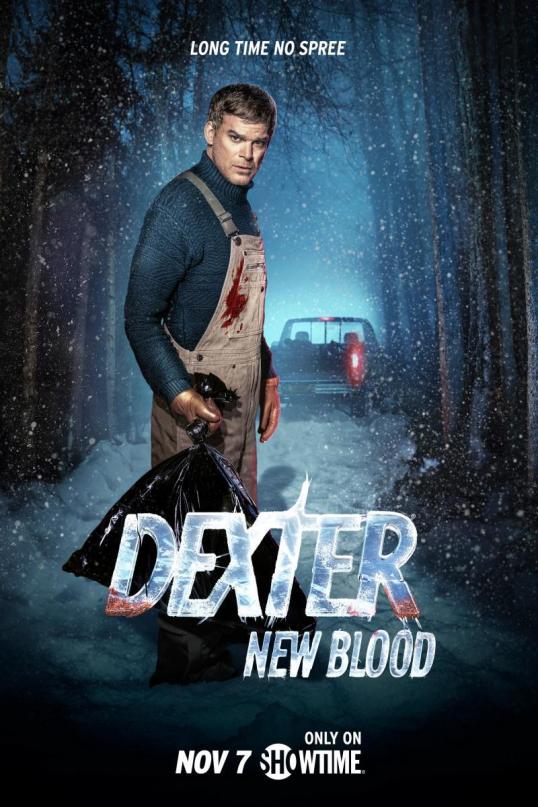
TV Review: Dexter: New Blood 1.10 “Sins of the Father” (dir by Marcos Siega)


I’ve been thinking about the finale of Dexter: New Blood for about three days now.  I’m going to guess that if you’re a Dexter fan, you’ve already seen it so I’m going to just talk about what happened without posting any spoiler warnings.  I hate spoiler warnings anyways.

Harrison shot and apparently killed Dexter.  Now, I have to admit that, when Harrison first showed up during the first episode, my initial thought was that Harrison was going to end up killing Dexter for the same reason that Dexter had killed so many others.  And, as other have pointed out, the entire show was pretty much leading up to either Harrison killing Dexter or Dexter being forced to kill Harrison.  So, really, I guess I should be happy that the show followed its storyline to its only logical conclusion.  I can certainly respect the show for staying true to itself but respect and happiness don’t always go together.

To be honest, even though I knew that it should happen, I really thought there was no way that the show would actually do it.  I was so used to Dexter being able to get out of any situation that I just naturally assumed that he would be able to do it again.  And if Dexter had managed to escape from the jail without killing Logan in the process, I think Dexter probably could have pulled it off.  But, by killing Logan, Dexter broke Harry’s code.  Dexter revealed that the code was really just a part of his own sociapathic ritual.  It wasn’t something that he truly obeyed,  Instead, it was something that he used to justify his dark urges.

Harrison realized what Dexter had done and, as a result, Harrison shot him.  I didn’t necessarily buy the idea that Dexter would just stand there and encourage his son to kill him.  That was a bit convenient and it required Dexter to have a conscience, which is something that we all know he didn’t have.  Even Dexter’s comment that he had never felt love until the minute Harrison pulled the trigger felt like another case of Dexter what he knew the audience wanted to hear.

My main issue with the episode wasn’t so much Harrison shooting Dexter as it was what happened next.  Allowing Harrison to escape and agreeing to cover up what he did was totally out-of-character for Angela.  Angela, who has shown that she’s willing to arrest anyone in town regardless of how close she may be to them, had no problem wiping Harrison’s prints off the gun and tossing him some money for his journey.  It didn’t make any sense.  Angela barely knows Harrison.  How does she know that Harrison didn’t help Dexter with the murders?  Also, after Angela discovered that Dexter was a murderer, did it not occur to her that there might be something strange about the stabbing at the school?  Is Angela okay with Harrison driving off to freedom while the kid that Harrison tried to murder is destined to always be remembered as a potential school shooter?  I can accept Harrison shooting Dexter.  I can even respect it.  But I cannot accept that Angela would let him get away with it.

There were other loose ends that bothered me.  Why was Edward Olsen such an important character in the first few episodes?  Why did he mysteriously vanish?  Why did the show seem to building up to a twist about Audrey’s parentage, just to abandon the whole thing an episode later?  How did Kurt manage to capture Molly, who was more or less aware that Kurt was a killer and certainly wouldn’t go anywhere willingly with him.  Considering that this episode appeared to be the definitive end of Dexter’s story, those loose ends are frustrating.

That said, it was a well-directed episode.  Michael C. Hall was riveting and genuinely frightening in the scenes where he manipulated Angela and Logan.  The final montage of the faces of everyone innocent person who died as a result of Dexter’s actions was an emotional moment and I’m glad to see that Doakes was included with Deb, Rita, LaGuerta, Lundy, and all the rest.  Doakes always got a raw deal.

Dexter: New Blood was a success.  Even the fact that I have mixed feelings about how it ended is proof of how well executed this revival was.  (Trust me, I could have hardly cared less when Dexter sailed into that hurricane, so fed up was I with the show at the time.)  And, between you and me, I’m not convinced that Dexter’s dead.  Yes, he was shot.  Yes, he didn’t look good.  But Harrison drove away before the paramedics arrived.  Dexter’s survived a lot.

At the very least, Ghost Dex would be amusing….

TV Review: Dexter: New Blood 1.9 “The Family Business” (dir by Sanford Bookstaver)


We all knew that, at some point, Dexter would have to welcome Harrison into the family business.  It finally happened on this week’s episode of Dexter: New Blood.

Set on Christmas day (but, oddly enough, airing during the first week of January), the ninth episode of Dexter: New Blood found Dexter and Harrison finally bonding.  Dexter told Harrison the story of Wiggles the Clown though, at the insistence of Ghost Deb, Dexter said that he just told Wiggles to stop doing what he was doing.  Even when Dexter was telling the story, it was obvious that Harrison knew there was more to it than just Dexter giving a stern lecture.

Harrison also told Dexter that he had stabbed his friend and that he wasn’t the hero that everyone made him out to be.  Yeah, we all figured that out a while ago, Harrison!  Still, it was interesting to watch Harrison discover what the rest of us take for granted.  We’re so used to the idea of Dexter tracking down serial killers and murdering them that it’s easy to forget just how weird and traumatic it would be for someone to learn about it or witness it for the first time.  One of the big problems that I had with the final season of Dexter’s original run is that Deb never seemed to be truly shocked at the discovery that her brother was a serial killer.  Fortunately, the reboot did a better job with Harrison than the original did with Deb.

And yes, Harrison did learn the truth.  He and Dexter tracked down Kurt’s secret lair and saw Kurt’s “trophies.”  And when Harrison announced that Kurt needed to die, just the slightest smile came to Dexter’s lips.  Dexter managed to bring Harrison over to his side without actually having to confess to all of the people that he had killed.  Only after Harrison had announced that he was on board with the idea that some people deserved to die, did Dexter admit to killing Wiggles the Clown and Arthur Mitchell.

Kurt met his end in this episode.  Harrison watched as Dexter killed him and then, somewhat ominously, had a flashback to Rita’s murder.  Is Harrison going to realize that, for all of Dexter’s rationalizations, his father is a serial killer as well?  If Harrison truly buys into the code, then Dexter could be in some trouble.

Actually, Dexter might be in trouble regardless.  Angela appears to have figured out that Dexter killed the drug dealer.  And, at the end of this episode, she received a letter telling her that “Jim Lindsay Killed Matt Caldwell” and one of the titanium screws that was left behind after Dexter burned Matt’s body.  If Angela learns the truth, will she arrest Dexter or will she let him and Harrison go free?  Angela has sworn to uphold the law but Kurt also murdered Angela’s best friend.  And, as we learned on Sunday, Kurt also murdered Molly.  Angela might be tempted to let Dexter escape.  I guess we’ll find out next week.

It was an excellent episode, though I have to admit that I was really disappointed when Molly showed up as one of Kurt’s trophies.  When Molly first appeared, her character annoyed me but, as the season progressed, I came to appreciate both the character and Jamie Chung’s performance.  In many ways, she was the stand-in for the viewers.  It was hard not to feel that she deserved better than to be killed off-screen.  Indeed, considering that she knew that Kurt was probably a killer, you have to wonder how he managed to ever get to her in the first place.

Still, that aside, The Family Business was Dexter at its best.  The deliberate pace and the atmospheric direction all reminded of the classic early seasons of Dexter.  Michael C. Hall perfectly captured Dexter’s love of his work while Jack Alcott played Harrison with the right mix of fascination and fear.  Still, I have to wonder what the show’s end game is going to be.  Ghost Deb was pretty adamant about Dexter not bringing Harrison into the family business and Ghost Deb usually know what she’s talking about.

We’ll find out next week!

TV Review: Dexter: New Blood 1.8 “Unfair Game” (dir by Sanford Bookstaver)


So, Dexter is going to teach Harrison “the code.”

Wow, who could have predicted that!?

Okay, okay …. I know it’s not good to gloat but let me have my moment.  From the minute that Harrison showed up at Dexter’s cabin, I’ve been waiting for him to take up the family business and it would appear that’s what is about to happen.  My prediction was correct and it’s actually kind of rare that happens so I’m definitely going to take a little bit of pride in this moment.

Kurt definitely had his chance to bring Harrison over to his side but he ruined it by snapping and trying to kill Harrison.  Big mistake there, Kurt.  Harrison is now back with Dexter and, judging from that big hug he gave him, it appears that there’s no longer any doubt in Harrison’s mind as to which father figure he should follow.

It was an exciting episode.  Along with Kurt’s attempts to bond with Harrison, we also got a lot of scenes of Dexter and the truck driver chasing each other through that abandoned summer camp.  (“Perfect place for a serial killer,” as Dexter put it.)  Why didn’t Kurt take out Dexter personally?  That was my only real question.  I get that Kurt wanted to bond with Harrison but he could have easily killed Dexter and the bonded with Harrison later.  It’s not like Harrison has anywhere to go.  Instead, Kurt made the mistake of outsourcing the murder of his biggest enemy.  Entrusting a job that important to a random truck driver doesn’t really make that much sense.  Kurt screwed that one up because, despite being shot in the leg, Dexter managed to kill that truck driver and save Harrison.  In the past, Dexter has spent so much time in its lead character’s mind that it was interesting to see that Dexter can take care of himself physically as well.

Dexter and Harrison appear to be ready to go to war with Kurt but it also appears that Angela has figured out that Dexter murdered that drug dealer a few episodes back.  Will Angela arrest Dexter?  Will Dexter have to fake his death yet again?  Let’s hope not.  There’s only so many times that one character can successfully fake his death before it starts to challenge the viewer’s suspension of disbelief.

That said, I don’t see Dexter sticking around town, regardless of how everything turns out.  I’ve seen some speculation that Dexter will sacrifice his life to save Harrison and then Harrison will be the “new” Dexter.  I don’t think that’s going to happen just because I don’t think Showtime is going to want to abandon the character of Dexter after this miniseries ends two weeks from now.  If nothing else, Dexter: New Blood has proven that there is still a sizable audience that’s interested in Dexter’s adventures.  Ask me to look into the future and I see Dexter and Harrison going on the road together and hunting killers.  It’s the family business.

Am I right?  We’ll find out in another two weeks!

TV Review: Dexter: New Blood 1.7 “Skin of Her Teeth” (dir by Sanford Bookslaver)


Occasionally, while watching an episode of the original run of Dexter, I would sometimes wonder, “What if Dexter didn’t kill this latest serial killer?  What if he actually did step back and just let the police do their job?”

Well, the latest episode of Dexter: New Blood answered my question for me.  Even after he had all of the evidence that he needed to believe that Kurt was not only the sniper but that he was also responsible for the decades-old murder of Iris, Dexter still tried to play by the rules.  He extracted a tooth from Iris’s mouth and, seeing that she had bitten her attacker, he gave it to Angela so that she could run a DNA test.  He also told Angela about the murder cabin to which Kurt had previously tried to lure Molly.  For once, Dexter stepped to the side and tried to let the system do its job.

Why did Dexter do this, despite Ghost Deb literally ordering him to kill Kurt?  Dexter’s pursuit of Kurt has been complicated by Kurt’s pursuit of Harrison.  With Harrison obviously growing more and more unstable, Dexter didn’t want to have to keep another secret from his son.  He didn’t want Harrison to make a martyr out of Kurt.  Dexter wanted to make sure that his son would eventually look up to the right serial killer.  Good for Dexter!

Unfortunately, it turns out that the system doesn’t work.  It didn’t work in Miami and apparently, it doesn’t work in upstate New York either.  Yes, Kurt is arrested and he’s taken off to jail.  But, after he concocts a story framing his abusive father and after the DNA on Iris’s tooth turns out to be just a 67% match, Kurt is set free.  However, while he is in jail, he’s visited by Dexter.  The two of them, obviously no longer pretending to be friends, find themselves discussing whether or not titanium can melt.  Earlier in the episode, a slovenly truck driver gave Harrison an envelope for Dexter.  Inside the envelope was a titanium screw, one that Dexter soon learns came from Matt’s body.  In short, Dexter knows that Kurt is a murderer and Kurt knows the same about Dexter.  However, others may soon be finding out as well.  With Kurt out of jail, Molly and Angela talked and realized that there were holes not only in Kurt’s story but Dexter’s as well.

Meanwhile, Harrison finally revealed the truth to Dexter.  As Harrison explained it, he has always had nightmares but now he realizes that the nightmares were actually memories of Rita’s murder.  (John Lithgow makes a cameo appearance as the Trinity Killer and is quite chilling, despite only being onscreen for a minute or two.)  Harrison announced that he was leaving town.  Just as Dexter tried to follow his son, he was attacked by the same trucker who gave Harrison the screw.  And then …. the episode ended!

This was a seriously good episode, probably the best of the season so far.  The episode opened on a properly macabre touch (with Dexter and Angela investigating Iris’s mummified corpse) and it ended on a moment of genuine suspense.  In between, Michael C. Hall and Clancy Brown both did compelling work as two guys who have a secret that only they can truly understand.  The scene were Dexter and Kurt faced off in the jail was wonderfully acted and directed.  As played by Clancy Brown, Kurt is the first Dexter villain to truly feel like a worthy adversary since the Trinity Killer.  Indeed, it seems somewhat appropriate that the same episode that featured a flashback to Kurt’s first kill also featured a flashback to Trinity’s final murder.

So, what can we expect to happen next week?  Dexter getting attacked by that truck driver would seem to suggest that Kurt has more allies that Dexter imagined.  What if Kurt is not working alone?  What if his truck stop is actually some sort of serial killer hang-out?  It’s possible and it would certainly explain why Kurt was so eager to have Harrison working there.  It would seem that Kurt might want to hunt Dexter next.

But here’s the thing — there are three episodes left.  Seeing as how Kurt and Dexter know the truth about each other, you have to wonder what they’re going to be spend the next three hours doing until their final confrontation.  Next week’s episode is called Unfair Game.  Could that be a reference to The Most Dangerous Game, the short story that Kurt seems to be trying to recreate with each of his murders?  The final two episodes are entitled: “Family Business” and “Sins of the Father,” which would seem to indicate that Harrison is going to play a key role in whatever happens.  Personally, I’m still expecting Edward Olsen to be revealed as Kurt’s partner.  Olsen hasn’t been in the last few episodes but he was prominently featured at the start of the season so it just seems like there has to be more to him beyond just being a wealthy land developer.

We’ll see what happens!

TV Review: Dexter: New Blood 1.6 “Too Many Tuna Sandwiches” (dir by Marcos Siega)


AGCK!  HARRISON BROKE THAT KID’S ARM!

Listen, a lot of interesting and important things happened on the latest episode of Dexter: New Blood.  Angela broke up with Dexter after revealing that she knew that Dexter was lying about his identity.  Dexter now has all the evidence that he needs to know that Kurt is a serial killer.  Kurt is continuing to bond with Harrison, to the extent that he’s now becoming as much of a father figure to Harrison as Dexter is.  The scene where Dexter and Harrison went to therapy together was classic, cringey Dexter.  Harrison and Audrey’s relationship is getting serious.  Hell, even Molly had something important to do this week.  There were a lot of good and memorable moments to be found in the sixth episode of Dexter: New Blood.

But what we’re always going to remember is Harrison coolly and efficiently snapping that kid’s arm.  Maybe it was the “crack” sound effect or that the show cut away just as the bone snapped but that totally freaked me out.  I’m just hoping the bone didn’t piece the skin.  God, I’m cringing just thinking about it.

Yes, Harrison definitely has some issues.  That’s been clear since the first episode.  With each subsequent episode, Harrison has gotten a little bit more openly violent, a little more openly insolent, and a little angrier.  Harrison is a time bomb and you have to wonder just what exactly Dexter is going to do about this.  Because his son seems like he’s going to snap eventually — ugh, snap.  Snap just like that kid’s arm….

The obvious solution would be for Dexter and son to go into business together, working as a team to take down murderers.  But is it too late for Dexter to do for Harrison what Harry did for him?  Dexter was raised for an early age to hunt down evildoers.  Harrison has developed his “dark passenger” without the benefit of guidance.  The entire town should be worried.

As for the rest of the episode, it was a good one.  It didn’t get bogged down in improbable coincidences like the previous episode and the story is definitely moving forward.  Dexter now knows that Kurt is a serial killer and, as a result of following Molly, he now knows where Kurt takes his victims.  But how long until Kurt figures out just who exactly Dexter is?  It’s going to happen.  Either Harrison is going to tell him or Kurt will figure it out on his own by listening to Molly’s podcast.  It’s obvious already that Kurt is going to do what he can to break up Harrison and Dexter …. in fact, he’s going to break up their uneasy relationship just as surely as Harrison broke that kid’s arm!  OH MY GOD!

Michael C. Hall and Jennifer Carpenter get and deserve a lot of praise for their work on Dexter.  Clancy Brown is doing good work as Kurt but that shouldn’t be a surprise, seeing as how he’s Clancy Brown.  But I have to say that the actor who is really taking me by surprise is Jack Alcott.  In previous episodes, Alcott has done a great job maintaining a balance between making Harrison sympathetic and making him petulant.  I mean, Harrison has been through a lot so it makes sense that he would not be the most emotionally stable character on the show and Alcott has done a good job of capturing Harrison’s unpredictable nature.  But last night, Alcott was briefly terrifying.  The look of pure hatred that went across Harrison’s face before he broke his opponent’s arm was genuinely scary.  And, of course, only Dexter and the audience noticed.  I’ll be interested to hear what Ghost Deb thinks about all this.

This was a good episode and I look forward to seeing what happens next week.  Will Harrison face any consequences or will he get away with yet another act of violence?  And how long until Kurt and Dexter have their final confrontation?

We’ll know soon enough!

TV Review: Dexter: New Blood 1.5 “Runaway” (dir by Marcos Siega)


There was a lot of coincidences in the latest episode of Dexter.  In fact, I would argue that there were perhaps more coincidences than were necessary.

For instance, I can accept that — having killed his latest victim — Kurt would just happen to drive up on Harrison while the latter was trying to run away from home.  And I can accept that Kurt would possibly see Harrison as being a kindred spirit.  It’s not just that Harrison and Kurt both have homicidal tendencies.  It’s also that they’re both people who feel like they’re on the outside of normalcy looking in.  Harrison probably reminds Kurt of himself as a teenager and, by mentoring Harrison, it’s possible that Kurt can try to fix the mistakes that he made while raising Matt.  Either that or he just wants to make Harrison his new partner in his side hustle, murdering hitchhikers.

I can accept all of that.  I mean, this is Dexter that we’re talking about.  Dexter requires a certain suspension of disbelief in order for the show to work.  If you spend too much time focusing on the chances of two serial killers actually ending up in the same small town in upstate New York, you’re never going to have time to appreciate Dexter’s sense of the macabre.

However, the show also asked me to believe that Angela and Molly would just happen to be in New York at the same time as Angel (David Zayas) and that Angel would just happen to be talking about the murders previously committed by the man that Angela now knows as Jim Lindsay.  I mean, it was good to see Angel again and I’m glad he’s still wearing the hat but his sudden appearance was a bit too convenient.  It was also very convenient that, earlier in the episode, a drugged Harrison told Audrey that his father was using a fake name and that Audrey later told Angela, at the exact moment that Angela was having her first doubts about Jim/Dexter.  The episode ended with Angela printing out an old obituary for Dexter Morgan, one that featured Dexter’s picture.

From the start of Dexter: New Blood, it has been obvious that Angela was going to learn that Jim was actually Dexter.  We all knew it was going to happen but I was hoping that Angela would learn the secret as the result of her own investigations, as opposed to just happening to attend the same random conference as someone from Dexter’s past.  Audrey very easily could have just told Angela what Harrison told her and Angela could have then done some investigating on her own.  Having her randomly stumble across the truth felt like a bit of a disservice to the character.  It felt like the type of groan-worthy plot twist that far too often popped up during the final seasons of the show’s original run.

So, yes, I was a bit disappointed.  A lot of this episode felt like filler.  Dexter returned to his serial killer ways to take out a drug dealer but, in another coincidence, Logan showed up to arrest the dealer before Dexter could actually do his full ceremony.  (Interestingly enough, the same thing happened with Kurt when his latest victim refused to run when he ordered her to.)  So, Dexter had to force the man to overdose on drugs before making a hasty retreat.  That was probably for the best, considering that Dexter still hasn’t found a good place to dump the bodies.

Still, there were a few intriguing moments in this episode.  I’m liking the idea of Harrison having to potentially choose between two serial killing mentors and Clancy Brown continues to give a strong performance as Kurt.  And, regardless of how she discovered the information, I’m looking forward to seeing Angela confront Dexter.

One final note: I still don’t think Kurt is working alone.  I think Olsen is somehow involved.  It wouldn’t surprise me if Molly was somehow involved too.  Seriously, if Molly isn’t secretly a killer then she’s just an extremely annoying character.  On a show like this, it’s always better to be a killer as opposed to just annoying.  Either way, we’ll see what happens!

TV Review: Dexter: New Blood 1.4 “H is for Hero” (dir by Sanford Bookstaver)


Boom!  I predicted Harrison would be a budding serial killer so give it up for me!

Well, to be honest, I’m probably not the only person who predicted that.  I haven’t been reading any other reviews of Dexter: New Blood beyond my own but Harrison turning out to have a dark passenger shouldn’t be a shocking development to anyone who watched the original Dexter series.  The way that the Trinity Killer killed Rita was obviously designed to turn Harrison into a killer.  There was even an episode during season 5 in which Dexter investigated whether or not Trinity’s son had taken up his father’s bad habits.  (And let’s not forget that, in the books, Dexter quickly realized that Rita’s children were sociopaths.)  Harrison following in his father’s footsteps was something that was set in motion long ago.  It’s an inevitable development.  The only question really is whether or not Harrison has killed before or if his attempt to kill his high school friend was his first dry run.  And will Dexter forgive his son, partner with his son, destroy his son, or be destroyed by his son?

While I’m patting myself on the back for being correct about Harrison, I should also admit that it appears that I was wrong about the identity of the killer sniper.  I was sure that it was going to be Olsen but the end of this episode seems to suggest that it’s Kurt.  Of course, Kurt could be working with Olsen.  Considering what’s happened in past seasons of Dexter, it wouldn’t be a shock to discover that the Sniper is actually more than one man.  Perhaps Matt was a part of the organization as well.  I mean, he certainly was trigger happy.

It was a good episode.  I’m cringing a little bit at the character of Molly Park, if just because she sometimes seems like a boomer’s version of what a podcaster is like.  (“Those crazy kids, with their cursing and their drunk sex….”)  But, I do think there is some potential to her “alliance” with Angela.  I also felt the fallout of the school stabbing was handled well, particularly Harrison’s new status as the town hero.  In many ways, Harrison is living Dexter’s fantasy.  He’s killing (or nearly killing) and he’s being celebrated for it.  He’s a hero, just like Dexter always wanted to be.

(That said, even I could tell that Harrison obviously stabbed himself.  Have the people in this town never watched an old episode of CSI?)

For me, the best part of the revival remains Ghost Deb.  She really deservers her own show, though plotlines would probably be limited by the fact that she’s just a figment of Dexter’s imagination.  Still, Jennifer Carpenter was one of the key parts of what made the original Dexter such an entertaining series and the way that show’s final season rather cavalierly killed her off is one of the many reasons why so many people hated the original finale.  Though Ghost Deb may not be solving crimes, she’s still calling everyone on their bullshit.  It’s good to have her back, in all of her profane glory.

TV Review: Dexter: New Blood 1.3 “Smoke Signals” (dir by Sanford Bookstaver)


It’s been a busy week, with my sister’s birthday and Thanksgiving, so it was only this morning that I finally got a chance to watch the latest episode of Dexter: New Blood.  

A lot happened in Smoke Signals.  In fact, it was probably the busiest episode of the series so far.  That’s not a complaint, of course.  If anything, this episode felt like a classic episode of the first Dexter series.  In Miami, there was always a lot going on around Dexter while Dexter tried to figure out a way to dispose of his latest victim.  The latest episode would seem to suggest that, chilly weather aside, upstate New York is not that much different from Dexter’s former home.

Here’s a quick rundown of what did happen:

First off, Lily the hitchhiker was killed by the serial killer who we all know is going to turn out to be Olsen.

Harrison is now a student at the local high school.  He stood up to group of bullies, which was cool.  But, by grabbing the bully by throat and basically strangling him while demanding that the bully leave his friends alone, Harrison confirmed my suspicion that he’s got his own Dark Passenger.

Audrey, who is kind of annoying, told Olsen to stop “fucking up the planet.”  Olsen pointed out that Audrey drives an “old gas guzzler.”  It seems kind of obvious to me that, along with being a Count Zaroff-style serial killer, Olsen is also Audrey father.

Angela continued to investigate Matt’s death and Dexter again found himself in the weird position of being the closest confidant to the people investigating a murder that he committed.

Dexter spent most of the episode trying to figure out how to get rid of Matt’s body.  It turned out to be not as easy as he thought it would be.  Eventually, after watching the Seneca people burn the body of the deer that Matt shot, it occurred to Dexter to do the same thing with Matt.

No sooner had Dexter finished stuffing Matt in the incinerator than he ran into Matt’s father, Kurt.  Kurt was totally drunk and swore that he had just had a conversation with Matt and that Matt was still alive!  I’m interested to see what the show does with the character of Kurt.  At first, I thought he’d just be another person who would eventually come too close to revealing the truth about Dexter, like Doakes from the first two seasons.  But the end of the latest episode, with Dexter driving the drunk Kurt home, suggested that their relationship could become a bit more complex.

For myself, the highlight of this episode was Ghost Deb, who spent the entire show popping up at the least opportune times and profanely taunting Dexter over his inability to get rid of Matt’s body.  Ghost Deb had a point.  Dexter is out of practice and his idea that he could somehow turn his urges on-and-off was a foolish one.  Dexter should know better.  Ghost Deb and the wood chipper was a great Dexter moment.

All in all, it was a good episode.  I do wish that Olsen was a bit less obvious in his villainy but Dexter was never exactly known for its nuanced villains.  The Trinity Killer was more the exception than the rule. That said, I’m interested to see where all of this stuff with Harrison leads.  Is Harrison a killer-in-training and, if so, how is Dexter going to deal with that?

Maybe we’ll find out tomorrow!

TV Review: Dexter: New Blood 1.2 “Storm of Fuck” (dir by Marcos Siega)


The second episode of Dexter: New Blood had a title that I’m sure Deb would have appreciated.

Indeed, any Deb-centric episode of the first series of Dexter was always guaranteed to feature a storm of profanity and one of the the things that I always liked about Dexter is that everyone on the show was always as shocked by Deb’s language as the viewer was.  Ghost Deb tends to curse a lot as well.  Of course, Ghost Deb has her reasons.  Not only is she dead but she can’t get her stupid stepbrother to listen to her advice.  Ghost Deb told Dexter not to let Harrison stay in the cabin.  She told Dexter that everyone he gets close to dies.  And yet, over the course of Storm of Fuck, Dexter not only invited Harrison to live with him but he also took Harrison along with him while he covered up the previous episode’s murder of Matt Caldwell.  (Of course, he didn’t tell Harrison what he was actually doing.  Dexter is very good at keeping his secrets.)

A few thoughts on Storm of Fuck:

First off, it’s pretty obvious that the girl in the motel is going to be used as the target in some version of The Most Dangerous Game, right?  And it’s also pretty obvious that Edward Olsen is the one behind it.  It’s in no way a big surprise because Dexter has always been full of evil, rich serial killers.  It also seems fairly obvious that Audrey is eventually going to end up getting hunted by Olsen.

Secondly, I don’t think Matt’s father (played by Clancy Brown) is a serial killer but I do think that he’s going to eventually figure out what Dexter did to his son.  He’ll be the New Blood‘s equivalent of James Doakes, the man who knows the truth but can’t get anyone to listen to him.

Third, Harrison has totally murdered someone, right?  I mean, he may not be a serial killer.  And the events of Storm of Fuck would seem to indicate that he doesn’t have anything to do with any of the recent missing persons cases.  But, obviously, he’s got some secrets.  What did he do back when he was on drugs?  Was he even on drugs or was that just something he said?  Are those drawings of people who he knows or people he killed?  When he read Dexter’s letter about “dark tendencies,” was he upset because he discovered Dexter was alive or was it because he knew that he did have those dark tendencies?  My point is that Harrison is destined to follow in his father’s bloody footsteps eventually.

As for the rest of Storm of Fuck, it was an okay episode.  It didn’t exactly move the story forward by much but it did allow us a chance to get to know all of the new characters.  To me, this episode worked best as an example of the show’s often underrated use of dark humor.  As macabre as the subject matter often is, it’s hard not to laugh at the contrast between Michael C. Hall’s deadpan voice-over and the events happening on screen.  And, in grand Dexter tradition, the entire episode featured Dexter getting one lucky break after another until, during the final few minutes, everything fell apart.  Dexter had nearly gotten everyone away from his cabin when Kurt Caldwell showed up and gave a rousing speech.  On any other show, we would have cheered a community coming together and Kurt’s speech would have been a big hero moment.

On Dexter, though, it’s just a storm of fuck.