October Positivity: The Trial (dir by Gary Wheeler)


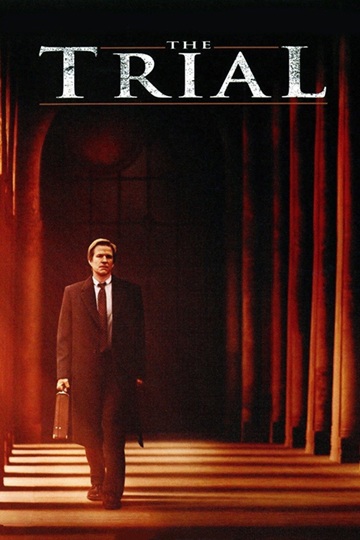
In 2010’s The Trial, Matthew Modine stars as Mac.

Mac is a Southern lawyer, even though it’s been a while since he practiced.  After his wife and children were killed in a car accident, Mac decided to retire from practicing law but he never surrendered his license.  A judge (Rance Howard) reaches out to him, asking him to serve as a public defender for Pete Thomason (Randy Wayne), a young man who has been accused of murdering his girlfriend.  The evidence is stacked against Pete and there are plenty of wealthy people who, for various reasons, want Pete to quickly be convicted.  Mac takes the case because he can tell that Pete is being railroaded.  When he discovers that Pete will possibly be facing the death penalty if he’s convicted, the case becomes very personal for Mac.

The prosecuting attorney (Bob Gunton) has managed to find a doctor (Brett Rice) who is willing to testify that Pete is a sociopath.  (The doctor has a reputation for finding just about anyone on trial to be a sociopath.)  Mac finds a doctor of his own, Dr. Anne Wilkes (Clare Carey), his testifies that Pete is nowhere near being a sociopath.  The problem is that Pete has no memory of what happened the night of the murder.  Mac may believe that Pete is innocent but can he convince the jury when the evidence all seems to suggest otherwise?

Like The List, The Trial was based on a novel by Robert Whitlow and it was directed by Gary Wheeler.  I was pretty hard on The List in last night’s review but I actually rather enjoyed The Trial, which was a solid and well-made legal thriller.  (The film’s status as a faith-based film largely comes from a scene in which Mac quotes the Book of Provers in regards to how, during a trial, it’s easy to believe the first person who speaks but it’s equally important to listen to how the accused replies.)  I enjoyed the twists and turns of the plot and the film’s ending worked well.  Though the film had a a made-for-television feel to it (despite having been a theatrical release), it still held and rewarded my interest.

It helped that the cast was well-selected and everyone gave good performances.  Matthew Modine, in particular, gave a strong performance as Mac, playing him not as being a saint but instead as being someone who was just determined to give his client the defense he deserved and to ultimately do the right thing.  Robert Forster played Mac’s brother-in-law and lead investigator and he brought his own brand of world-weary determination to the part.  Nobody plays a smug prosecutor as well as Bob Gunton, though it should be noted that the character himself never became a caricature.  Rance Howard was the ideal judge, tough but fair.  Randy Wayne was sympathetic as the confused Pete.  The cast really brought the film’s world to life.

I always enjoy a good legal thriller and The Trial was certainly that.

Guilty Horror Pleasure #87: The ‘Burbs (dir by Joe Dante)


1989’s The ‘Burbs takes place in …. well, it’s right there in the title.

Welcome to the suburbs!  It’s place with big houses, green lawns, and neighbors who often don’t have much to do other than watch each other and gossip.  Ray Peterson (Tom Hanks) lives with his wife, Carol (Carrie Fisher), and is friends with Art Weingartner (Rick Ducommun) and Mark Rumsfield (Bruce Dern).  Ricky Butler (Corey Feldman) is the local teenager.  It’s a nice neighborhood …. at least, until the Klopeks move in.

The Klopeks are viewed with suspicion from the minute they show up.  They’re from a different country, they always seem to be burying something in their backyard, and Dr. Werner Klopek (Henry Gibson) is oddly stand-offish.  When Walter Seznick (Gale Gordon) disappears and the the Klopeks are seen around Walter’s house and with Walter’s dog, Ray and his friends start to suspect that their new neighbors might be ritualistic murderers!

Oh, how I love The ‘Burbs.  The film’s portrait of the suburbs as being a hotbed of paranoia may be a familiar one but it doesn’t matter when you’ve got actors like Tom Hanks and Bruce Dern throwing themselves into their roles.  As always, Hanks is the glue that holds the film and its disparate parts together, giving a likable performance as a man who goes from being the voice of reason to being convinced that his neighbors are cannibals.  Bruce Dern gleefully sends up his own image as a paranoid Vietnam vet but there’s also a sweetness to Dern’s performance that really makes it stand out.  Dern’s character might be a little crazy but he does truly care about his neighbors.

Just as he did with Piranha and The Howling, Dante balances humor with suspense.  He does such a good job of telling the story and getting good performances from his cast, that even the film’s big twist works far better than one might expect.  It’s an 80s film so, of course, a few things explode towards the end of it.  The film’s character-based humor is replaced with some broader jokes but no matter.  The Burbs is an entertaining trip to the heart of suburban paranoia.

As the saying goes, just because you’re paranoid, that doesn’t mean that they aren’t out to get you.

Previous Guilty Pleasures

  1. Half-Baked
  2. Save The Last Dance
  3. Every Rose Has Its Thorns
  4. The Jeremy Kyle Show
  5. Invasion USA
  6. The Golden Child
  7. Final Destination 2
  8. Paparazzi
  9. The Principal
  10. The Substitute
  11. Terror In The Family
  12. Pandorum
  13. Lambada
  14. Fear
  15. Cocktail
  16. Keep Off The Grass
  17. Girls, Girls, Girls
  18. Class
  19. Tart
  20. King Kong vs. Godzilla
  21. Hawk the Slayer
  22. Battle Beyond the Stars
  23. Meridian
  24. Walk of Shame
  25. From Justin To Kelly
  26. Project Greenlight
  27. Sex Decoy: Love Stings
  28. Swimfan
  29. On the Line
  30. Wolfen
  31. Hail Caesar!
  32. It’s So Cold In The D
  33. In the Mix
  34. Healed By Grace
  35. Valley of the Dolls
  36. The Legend of Billie Jean
  37. Death Wish
  38. Shipping Wars
  39. Ghost Whisperer
  40. Parking Wars
  41. The Dead Are After Me
  42. Harper’s Island
  43. The Resurrection of Gavin Stone
  44. Paranormal State
  45. Utopia
  46. Bar Rescue
  47. The Powers of Matthew Star
  48. Spiker
  49. Heavenly Bodies
  50. Maid in Manhattan
  51. Rage and Honor
  52. Saved By The Bell 3. 21 “No Hope With Dope”
  53. Happy Gilmore
  54. Solarbabies
  55. The Dawn of Correction
  56. Once You Understand
  57. The Voyeurs 
  58. Robot Jox
  59. Teen Wolf
  60. The Running Man
  61. Double Dragon
  62. Backtrack
  63. Julie and Jack
  64. Karate Warrior
  65. Invaders From Mars
  66. Cloverfield
  67. Aerobicide 
  68. Blood Harvest
  69. Shocking Dark
  70. Face The Truth
  71. Submerged
  72. The Canyons
  73. Days of Thunder
  74. Van Helsing
  75. The Night Comes for Us
  76. Code of Silence
  77. Captain Ron
  78. Armageddon
  79. Kate’s Secret
  80. Point Break
  81. The Replacements
  82. The Shadow
  83. Meteor
  84. Last Action Hero
  85. Attack of the Killer Tomatoes
  86. The Horror At 37,000 Feet

Retro Television Review: Baywatch 1.2 “Heat Wave”


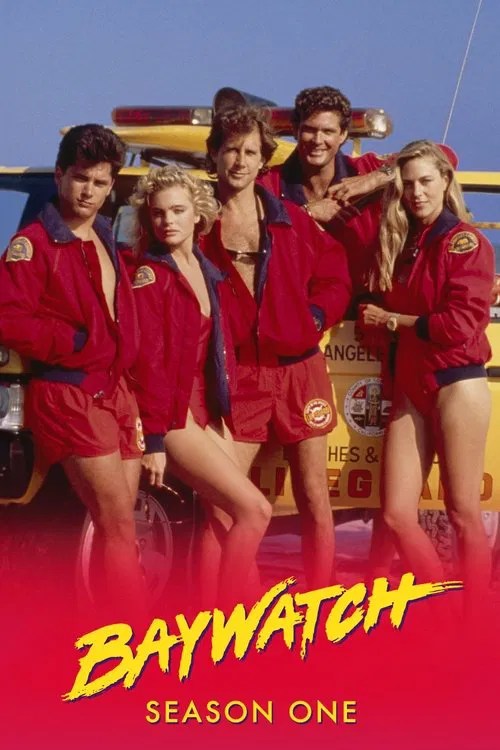
Welcome to Retro Television Reviews, a feature where we review some of our favorite and least favorite shows of the past!  On Saturdays, I will be reviewing Baywatch, which ran on NBC and then in syndication from 1989 to 2001.  The entire show can be purchased on Tubi.

Save me!

Episode 1.2 “Heat Wave”

(Dir by Gus Trikonis, originally aired on September 29th, 1989)

Not much of an episode this week, I’m afraid.

California is dealing with a heat wave and no one has air conditioning (really?) so everyone in Los Angeles is heading down to the beach so that they can relax in the hot sand.  Eddie and Trevor keep giving each other the side eye because Eddie is a Baywatch lifeguard and Trevor is a country club life guard.  Eddie tries to hit on a woman who has spent the entire day relaxing near his tower but it turns out that she’s visiting from Australia and only has eyes for Trevor.  “Maybe next time,” she tells Eddie.

Craig is told by his boss that he has to choose between being a lawyer at a big firm or a lifeguard.  Craig’s wife, Gina, suggests that Craig quit the law firm and become a beachfront lawyer.  She says that he can still be a lifeguard and he can just use their kitchen table as his desk.  I don’t know if I would be as understanding as Gina.  Craig was making a lot of money as a big corporate lawyer, even if he apparently couldn’t afford to get an air conditioner.

(What the Heck, California?  How are you surviving with air conditioning!?)

Meanwhile, two stupid kids get trapped in a storm drain.  Mitch sends the junior lifeguards out to look for them.  Hobie asks, “What can a bunch of junior lifeguards do?”  Mitch replies that this is an opportunity for the junior lifeguards to go to all the places that they’re usually not allowed to go.  So, basically, Mitch’s plan to find the missing kids is to put a bunch of other kids at risk.  I guess that’s why he’s the lieutenant.

Luckily, the two dumb kids are rescued.  One of the kids is the son of Steve Humboldt (Jeffrey Byron), a former Baywatch lifeguard.  It turns out that Steve lost custody of his kid in a court case and he basically abducted him.  But, after the kid nearly dies, Steve is like, “We’re going to call your mom and go home!” and that apparently makes everything okay under the “He Changed His Mind Afterwards” clause.

This was all pretty dumb.  Stay out of the storm drain, kids!  It’s not that difficult.

Brad’s “Book Reviews” – THE BOYS: A MEMOIR OF HOLLYWOOD AND FAMILY by Ron Howard & Clint Howard!


Every year during tax season, I get in the habit of playing movies and TV series on my third computer screen as I work. I don’t necessarily watch the shows, but they do provide a soothing background noise as I provide high quality tax preparation services for my clients. A few years back I played the entire series of “The Andy Griffith Show” all the way through a total of three times. I began to develop favorite episodes and would actually stop and watch certain parts as favorite scenes would play out. My very favorite moments would typically involve emotional scenes between Sheriff Andy Taylor and his son, Opie. Ron Howard began playing Opie when he was only six years old and there was never a cuter kid on a TV show. Needless to say, I was always bringing up the show in just about any conversation I was having during this time, whether it be with my wife, other family members or friends. Almost any situation that came up would remind me of something found on “The Andy Griffith Show.” Based on this newfound obsession, when Christmas rolled around that year, my wife purchased me a copy of the book THE BOYS by Ron Howard and Clint Howard. When we were preparing for our trip to Maui recently, I knew I had several plane flights and many beach hours ahead of me. While I don’t often read for pleasure, it did seem like the perfect time to dig in and find out what it was like to grow up as a kid actor on one of America’s most beloved TV shows.

THE BOYS has a pretty interesting setup as Ron Howard and Clint Howard share their various viewpoints on key moments and events in the evolution of the Howard family. It becomes clear very quickly that Ron and Clint are very different as we make our way through the first few chapters. They just see the world from wildly different perspectives. Ron emerges as kind of a rule following “square” while Clint proves to have quite the rebellious streak. But you can also tell how deeply they care about each other as brothers. The book takes its time to really focus in on their parents, Rance and Jean Howard, and how they instilled a “family comes first” philosophy in their heads from the very beginning. There were a few times where this philosophy was put to the test, but all in all the family unit retained its position as being more important than any roles in film and TV. Rance and Jean were both very present in their sons’ lives, and in a positive way. They took a very nominal management fee from their sons’ earnings, much less than the industry standards, and saved the rest for Ron and Clint. After all the stories of child actors, their stage parents, and their ultimate downfalls, the Howard’s situation couldn’t have been much more ideal thanks mostly to the consistency and character of Rance and Jean. While they don’t always shy away from their parents’ faults, these boys truly loved and appreciated their mom and dad, and that was refreshing to read. 

As far as Ron’s and Clint’s acting careers, THE BOYS doesn’t necessarily dwell too much on their various shows and movies that they were in, outside of those that really had the biggest impacts on their family and futures. We hear quite a bit about “The Andy Griffith Show” and “Gentle Ben,” but when you consider how young the boys were when they starred in those shows, there is a limit to how much they can really remember. Once again, most of the memories they share of these shows seem to be based on their work with their dad to learn their lines and understand the plots. I can say from firsthand experience that Rance’s coaching is amazing based on Ron’s performances as Opie Taylor. I don’t remember Clint as well in those early years, except for his handful of appearances as the PB & Jelly smeared Leon, also on “The Andy Griffith Show.” We do get some nice info on actors like Griffith, Don Knotts and Dennis Weaver that only serves to help me appreciate them even more. If you want a deep dive into any of their shows or movies, this book is probably not the place to look for that kind of detailed information, but they do sprinkle in some fun nuggets along the way. I especially enjoyed Ron’s stories about George Lucas and Henry Winkler, as well as Clint’s memories of playing Balok on “Star Trek.” We get quite a few stories from Ron and Clint about how hard it could be to be a well known child actor in grade school and high school. It makes sense that there were quite a few kids that gave them a hard time and each of the boys had to develop their own way for dealing with these people.

The book ultimately reaches its crescendo with the boys sharing details about their transitions into adulthood, both personally and professionally. We learn about Ron’s own love story with his wife Cheryl who was basically his first real girlfriend. With the perfect life partner in tow, Ron was free to pursue his passion to direct films, and he had to make some risky decisions for that to happen. It was fun reading about the “deal” he made with the legendary Roger Corman that gave him his big directorial break with the B-movie GRAND THEFT AUTO (1977). We all know where his directorial career eventually would go, but it certainly was no foregone conclusion in the late 70’s. Clint’s journey was difficult in a much different way, as he was a full blown alcoholic and drug addict when he was trying to figure things out. Once again, his own personal integrity and the strong bonds of a loving family ultimately allowed him to get an upper hand on his problems and go on to the unique and interesting career he has had. One of my main takeaways from reading THE BOYS is that I just love their family. No matter what, they always valued integrity and would always stick together. Ultimately, I think that was the most important story that the boys wanted to tell. 

Lisa Marie Reviews An Oscar Nominee: Nebraska (dir by Alexander Payne)


As Brad mentioned earlier, today is Bruce Dern’s birthday!

Bruce Dern is a favorite actor of mine.  He’s one of those performers who, over the course of his very long career, has appeared in all sorts of different and occasionally odd films, sometimes as a lead but most often as a character actor.  He appeared in biker films, westerns, literary adaptations, and Oscar-winners.  He killed John Wayne in The Cowboys.  He introduced Peter Fonda to acid in The Trip (Dern, for his part, has said that he the only person on the set of that film who has never done acid.)  He captured the trauma of Vietnam in Coming Home.  He played one of the great hyperactive cops in The Driver.  He came close to playing Tom Hagen in The Godfather and was the original choice for the attorney who was eventually played by Jack Nicholson in Easy Rider.

In 2013’s Nebraska, he broke my heart.

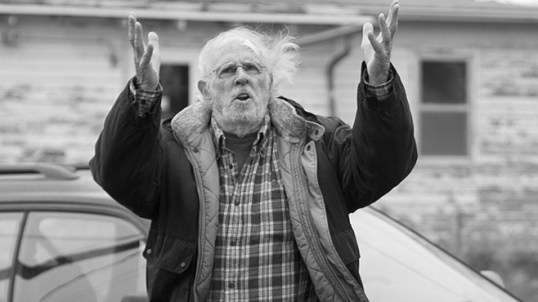
In Nebraska, Dern plays Woody Grant, an elderly man who is convinced that he’s won a million-dollar sweepstakes.  Everyone around him, including his wife (June Squibb) and his oldest son (Bob Odenkirk), realizes that the sweepstakes is a scam and that Woody has actually won nothing.  But Woody is convinced that a million dollars is waiting for him.  All he has to do is somehow make it from Montana to Nebraska.  At first, Woody attempts to walk along the interstate.  When that doesn’t work and the police end up arresting him and sending him home, his youngest son, David (Will Forte), agrees to drive Woody down to Lincoln, Nebraska.  David knows that there’s not any money waiting for Woody but, unlike his mother and his older brother, David hasn’t given up on the idea of connecting with his father.

Nebraska is a road movie, with the majority of the film following David and Woody as the drive through rural and smalltown America.  They stop off in Woody’s former hometown, where they meet Woody’s brother (Rance Howard) and also Woody’s former business partner, a bully named Ed (Stacy Keach).  Ed is convinced that Woody stole money from him.  Woody blames Ed for the loss of his air compressor.  Their anger has simmered for years and, at first, it’s tempting to assume that it’s simply one of those grudge matches that old men seem to have a weakness for.  But Ed turns out to truly be a rotten human being and Woody …. well, Woody his own problems but at least he’s not as bad as Ed.

Before I say anything else, I want to praise the entire cast.  June Squibb, Bob Odernkirk, Stacy Keach, Rance Howard, Melinda Simonsen (who has a small role as a receptionist in Lincoln), they all bring their characters to memorable life.  Will Forte is the heart of the film, trying to keep his family together and standing up for his father when it matters.  If you only know Will Forte as MacGruber, you need to see Nebraska.  That said, this film is dominated by Bruce Dern’s poignant, sad, and often very funny performance as Woody Grant.  Woody is a flawed character and Dern wisely doesn’t try to sentimentalize or downplay any of those flaws.  He drinks too much, he neglected his family when he was younger, he holds a grudge, and he’s incredibly stubborn.  But, as played by Dern, you just can’t help but like Woody and hope that he finds some sort of happiness.  Even though the viewer, like everyone else in Woody’s life, knows that the sweepstakes is a scam, it’s still hard not to spend the film hoping that Woody will prove everyone wrong when he makes it to Nebraska.

Nebraska was nominated for Best Picture while both Bruce Dern and June Squibb picked up acting nominations.  That year, the Best Picture race was dominated by 12 Years A Slave.  Matthew McConaughey won Best Actor for Dallas Buyers Club while Lupita Nyong’o won Best Supporting Actress for 12 Years A Slave.  Alexander Payne lost Best Director to Gravity’s Alfonso Cuaron.  Gravity also won the Oscar for Best Cinematography, defeating Nebraska’s gorgeous black-and-white imagery.

Oscars or not, Nebraska is a wonderful, late career showcase for the great Bruce Dern.

Evasive Action (1998, directed by Jerry P. Jacobs)


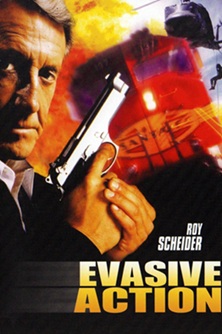
Some of the toughest criminals in America are being transported, via train, to a high security prison.  For some reason, instead of using an entire train to transport the prisoners and guards, it’s decided to just put the criminals in one car attached to a normal passenger train.  Did the passengers in the other cars get a warning that would be traveling with a bunch of desperate criminals?  Did they at least get a discount on their tickets?  Of course, Mafia kingpin Enzo Martini (Roy Scheider, slumming) engineers a takeover with the rest of the prisoners.  It’s up to Sheriff Wes Blaidek (Ray Wise) and bartender Zoe Clark (Delane Matthews) to stop the prisoners.

This is a fast-moving, dumb-as-Hell action movie that’s memorable mostly for having a cast that was very much overqualified for the film.  Keith Coogan, Dorian Harewood, Don Swayze, Ed O’Ross, and Sam J. Jones are all in this thing.  Clint Howard plays the homicidal serial killer who lets a child live because the kid has seen Taxi Driver.  Dick Van Patten plays the head of the parole board.  I can understand why Roy Scheider might be selected to play a mob boss and how Clint Howard and Don Swazye ended up playing killers.  But how do you look at this film’s story and think, “This need Dick Van Patten?”  It’s Die Hard on a train but without the wit or the budget.  The movie moves quickly, there’s plenty of train and helicopter action and it’s still good to see so many familiar and eccentric talents gathered together to bring too life one very stupid movie.  It’s too bad they couldn’t find room for Joey Travolta or Joe Estevez but I guess you can’t have everything.

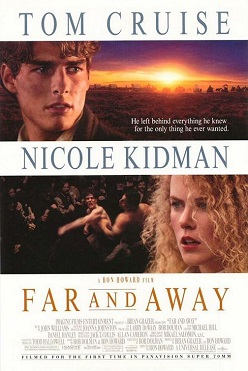
Far and Away (1992, directed by Ron Howard)


The year is 1892 and Joseph Donnelly (Tom Cruise) is a poor tenant famer in Ireland, used and exploited by the wealthy landowners.  Joseph falls in love with Shannon Christie (Nicole Kidman), the rebellious daughter of his landlord.  Shannon dreams of going to America, where rumor has it that land is being given away in the territory of Oklahoma on a first come/first serve basis.  Shannon even has some valuable spoons that she can use to raise money once they arrive in America.  Joseph, after being challenged to a duel by the Christies’ money manger, Stephen Chase (Thomas Gibson), also decides that heading to America might be a good idea.

Life in America is not as easy as Joseph and Shannon thought it would be.  They first end up in the dirty town of Boston, where Shannon loses her spoons and Joseph works for a corrupt political boss (Colm Meaney) and makes money as a bare-knuckles boxer.  They’ll reach Oklahoma eventually but not before Stephen and the Christies come to Boston and Joseph ends up working on the railroad and getting called “that crazy mick” multiple times.

Far and Away was Ron Howard’s attempt to make an American epic, in the style of John Ford.  It doesn’t work because Tom Cruise is too contemporary to be believable as a 19th century Irish immigrant and Howard tries so hard to push everything to an epic scale that it just makes it even more obvious how slight and predictable the movie’s story is.  Far and Away is full of big movie moments but it lacks the small human moments necessary to really engage its audience.  I will always remembers Far and Away because it was one of those films that seemed to take up permanent residence on HBO when I was growing up.  I didn’t really care about the film’s flaws back then.  Nicole Kidman was attractive and tall and she had wild red hair and back then, that’s all a movie needed to hold my attention.  Unlike Cruise, Nicole Kidman can effortlessly move between historical and contemporary films and, of the two leas, she comes off the best.  The movie is really stolen, though, by Colm Meaney, playing a ruthless political boss who could have taught Boss Tweed a thing or two.

Tomorrow is St. Patrick’s Day, when we will be celebrating the legacy of immigrants like the Christies and the Donnellys.  Far and Away tries to pay tribute to their courage and their refusal to give up, even when things were tough and deadly on the frontier.  For me, though, Far and Away will always just make me think of HBO in the 90s.

Late Night Retro Television Review: Baywatch Nights 2.20 “Hot Winds”


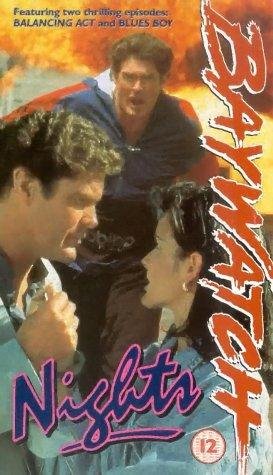
Welcome to Late Night Retro Television Reviews, a feature where we review some of our favorite and least favorite shows of the past! On Tuesdays, I will be reviewing Baywatch Nights, a detective show that ran in Syndication from 1995 to 1997. The entire show is currently streaming on YouTube!

This week, the world goes mad!

Episode 2.20 “Hot Winds”

(Dir by Parker Stevenson, originally aired on May 3rd, 1997)

A hot wind is blowing down from the hills and into Los Angeles.

People are going crazy in the streets.  Strangers are attacking each other for no reason.  Riots are breaking out.  The world seems like it’s gone off its axis and no one knows how to react.  Is the heat driving everyone mad or is it something else?  Diamont Teague tells Mitch and Ryan that he suspects that something supernatural is happening.  Mitch, as usual, argues that people in Los Angeles have always been crazy.  Not like this! Diamont says.

Is Diamont correct?  As he, Mitch, and Ryan leave the office, they run into an aggravated man who proceeds to beat on a brick wall until his hands are covered in blood.  Mitch assumes that the man must be on drugs.  Diamont says that they need to drive out to the desert so that they can find the source of the wind.  Mitch is skeptical until he starts seeing a ghostly image of a robed man carrying a scythe.

It’s a long trip out to the desert, made even longer by the rioting and the madness all around.  Mitch stops long enough to keep a woman from throwing her baby over a ledge.  But, as soon as Mitch grabs away her baby, the woman jumps anyway.  It’s quite a fall and somehow, the woman survives.  Luckily, Mitch is there to render CPR while the crazed crowd watches.  The world may going mad but Mitch is still a lifeguard, dammit.

Driving through the desert, Ryan wonders why she, Mitch, and Diamont aren’t going crazy like everyone else.  It’s a good question.  Seriously, last week was a lot of fun because it gave us a chance to watch the Hoff got possessed by a demon.  It’s hard not to regret that he didn’t get a chance to go crazy in this episode.

In the desert, the robed man with the scythe dances.  The scythe apparently is what sends down the hot air.  If Mitch can get the scythe away from the man, the violence can stop.  Who is the man?  Apparently, he’s a devil worshipper.  Ryan suspects that there might be hundreds of similar people out there.  Maybe they’re the ones who are responsible for all the madness in the world!  Has Ryan already forgotten that, a few episodes ago, it was established that the Knights Templar secretly controlled the world?

This episode was actually not bad.  The scenes of people suddenly going mad were effective and the man in the desert was actually a pretty ominous image.  Even the show’s overreliance on Dutch angles felt effective for once, drawing the audience into a world that was permanently off-balance.  I enjoyed this episode and I’ll remember it the next time I see a stranger yelling on a street corner.

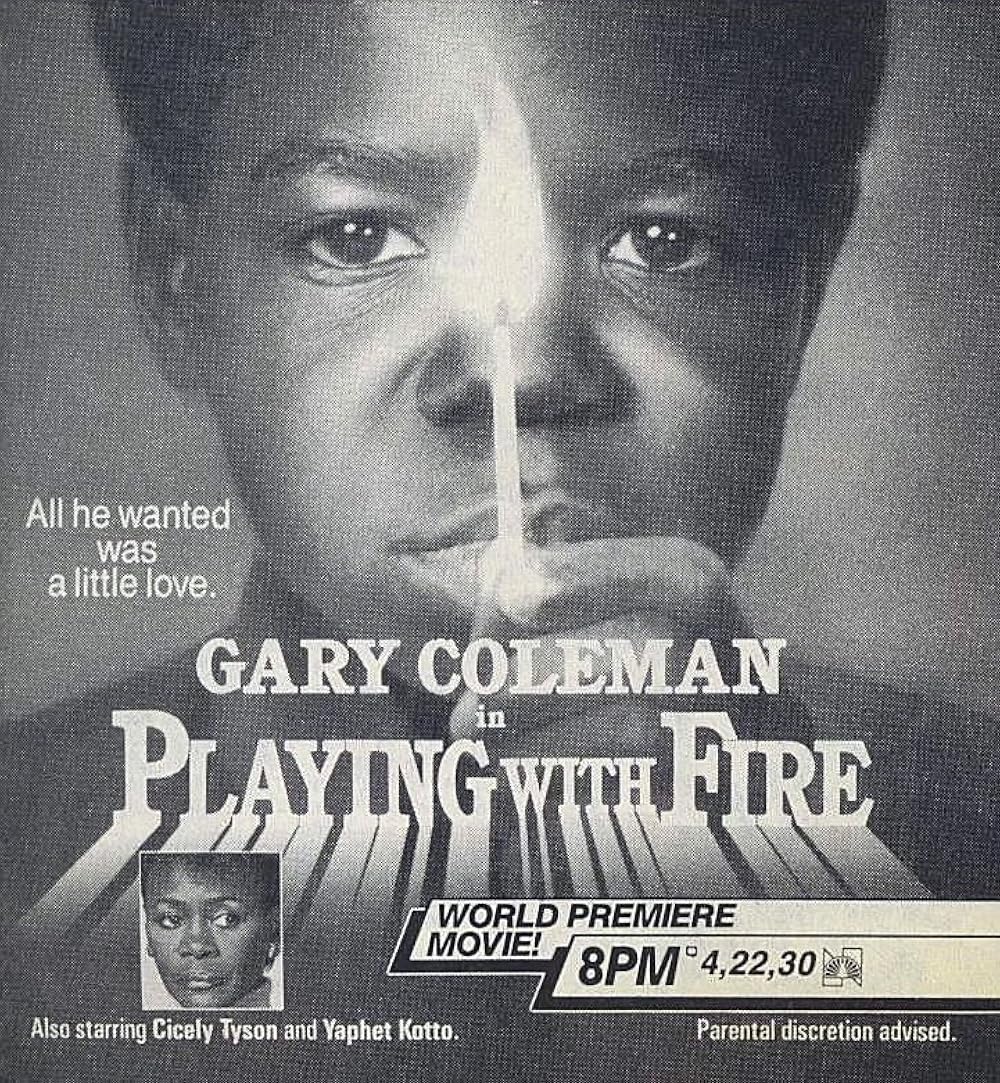
Playing With Fire (1985, directed by Ivan Nagy)


David Phillips (Gary Coleman) is a teenager who sets fires when he gets upset.  He has many reasons to be upset.  His parents (Ron O’Neal and Cicely Tyson) are getting divorced and are constantly fighting.  His teachers at school are always getting on his back.  He has to take care of his younger siblings and his dog.  He can’t even get the bigger kids in school to let him play basketball with them.  At first, David just plays with his lighter but, after he accidentally sets his mother’s coat on fire, David discovers that he likes to watch things burn.  David and his mother both claim it’s just coincidence that David is always nearby whenever a fire breaks out but Fire Chief Walker (Yaphet Kotto) knows what’s really going on.  After David nearly burns down his house, Walker tries to reach him before it’s too late.

This isn’t really meant to be a horror film  but it’s shot like one, with plenty of scenes of Gary Coleman staring at a burning fire with a possessed-look in his eyes.  The movie tries to make David sympathetic but the scene where he threatens his own dog with a lighter suggests that David has more problems than just his parents splitting up.  This was Gary Coleman’s first dramatic role.  I think it may have also been his only dramatic role.  It’s not that he’s not convincing as a really angry kid.  It’s just that he’s Gary Coleman so, no matter how much the movie tries, it still comes across as being a special episode of Diff’rent Strokes where Arnold becomes a pyromaniac.  Coleman tries to play up the drama of the situation but it’s hard not to laugh whenever he looks shocked at one of the fires that he has just started.  Every scene seems like it should end with Conrad Bain showing up with the cops.

For years, this movie was next to impossible to find but finally, someone found an old VHS tape in their garage and uploaded the movie to both YouTube and the Internet Archive, ensuring the world will never forget the time that Gary Coleman played with fire.

One final note: the director is better known for eventually becoming business partners with notorious Hollywood madam, Heidi Fleiss.

A Blast From The Past: The Drug Knot (dir by Anson Williams)


In 1986’s The Drug Knot, Dermot Mulroney plays a high school student.

At the time this show aired, Dermot Mulroney was 25 years-old and he looked like he was 30 but, looks aside, he actually gives a pretty convincing performance as Doug Dawson.  Doug is a smart and musically-gifted high school senior.  He’s talented enough to make beautiful music with a saxophone and rebellious enough to skip class so that he can play the sax in the school locker room.  His girlfriend, Kim (Meryl Streep look-alike Kim Myers), is totally in love with Doug but she also worries that he’s getting too heavily into dugs.  He’s gone from smoking weed to snorting cocaine.  He hides his drugs in his bedroom.  His mother (Mary Ellen Trainor) has no idea that Doug is a drug addict while Doug’s little brother (David Faustino) wants to be just like him.

Can you see where this is heading?

In order to combat the school’s growing drug problem, the school has invited a speaker named David Toma to give a speech at a school assembly.  Toma is a former cop who struggled with addiction himself.  He inspired not one but two television shows, one called Toma and the other called Baretta.  He goes from school to school and he gives speeches about all of the teenagers that he knows who have died as a result of doing drugs.  As we see throughout the episode, Toma is a confrontational speaker, one who is not afraid to yell at his audience.  Doug shows up for the assembly but his bad attitude leads to Toma kicking him out.

Personally, I’ve always had mixed feelings about the idea of trying to change people’s behavior by yelling at them.  I know that it’s a popular technique and there’s been a lot of television shows (Intervention and Beyond Scared Straight come to mind) that are all about getting in people’s faces and screaming at them.  My feeling, though, has always been that this approach is more about making other people feel good than actually changing behavior.  Everyone wants to see the people who have caused them stress get yelled at.  On talk shows, audiences would applaud whenever a disrespectful teen got sent to boot camp but it’s rare that you ever heard about whether or not the approach actually worked.  I mean, I assume the approach works for some people but I know that if someone yells at me not to do something, my usual reaction is to go ahead do it just because I resent authority.  David Toma’s approach would not have worked with me.

(One interesting thing about The Drug Knot is that David Toma is a real person and he plays himself.  Apparently, he’s still out there and still at it, even though he’s in his 90s now.  I should note that, on YouTube, there’s a lot of comments from people who say that getting yelled at by David Toma saved their lives so maybe the yelling approach does work for more people than I assumed.)

Anyway, as always when it comes to these made-for-TV anti-drug programs, the drugs lead to tragedy and The Drug Knot ends on a particular dark note.  For once, there is no redemption.

Here is The Drug Knot, complete with an anti-drug message from Michael Jordan: