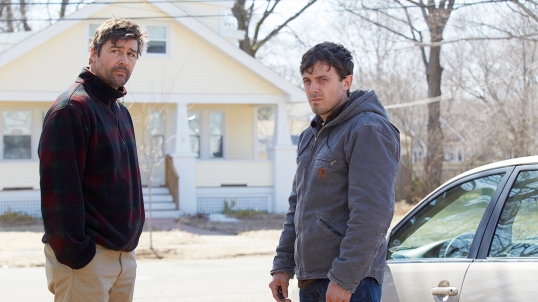
Winner: Casey Affleck, MANCHESTER BY THE SEA Runners-up: Denzel Washington, FENCES; Joel Edgerton, LOVING; Ryan Gosling, LA LA LAND; Tom Hanks, SULLY
BEST ACTRESS
Winner: Natalie Portman, JACKIE Runners-up: Emma Stone, LA LA LAND; Ruth Negga, LOVING; Amy Adams, ARRIVAL; Annette Bening, 20TH CENTURY WOMEN
BEST SUPPORTING ACTOR
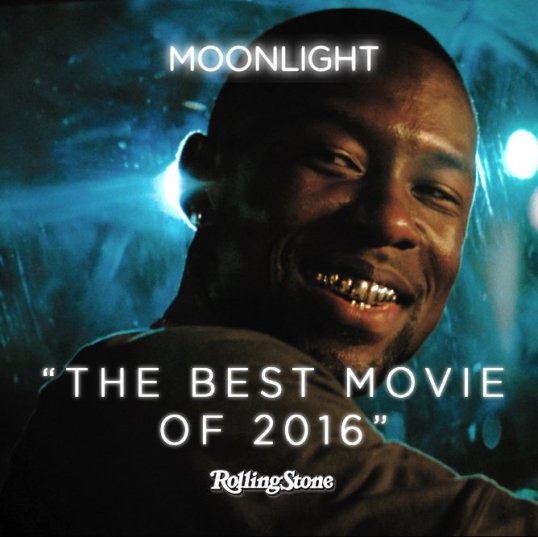
Winner: Mahershala Ali, MOONLIGHT Runners-up: Jeff Bridges, HELL OR HIGH WATER; Michael Shannon, NOCTURNAL ANIMALS; Lucas Hedges, MANCHESTER BY THE SEA; Ben Foster, HELL OR HIGH WATER
BEST SUPPORTING ACTRESS
Winner: Viola Davis, FENCES Runners-up: Naomie Harris, MOONLIGHT; Michelle Williams, MANCHESTER BY THE SEA; Greta Gerwig, 20TH CENTURY WOMEN; Judy Davis, THE DRESSMAKER
Oscar season continued today with even more precursors announcing their picks for the best of 2016! Perhaps most importantly, the 74th Annual Golden Globe nominations were announced today! Even though they rarely match up 100%, the Golden Globe nominations are considered to be one of the best precursors for what will be nominated for an Oscar in January.
So, should Silence be worried? Martin Scorsese’s latest acclaimed film was totally snubbed by the Golden Globes. That could be an ominous sign for a film that everyone seems to respect but which is still going to be a far harder sell at the box office than either The Wolf of Wall Street or Hugo.
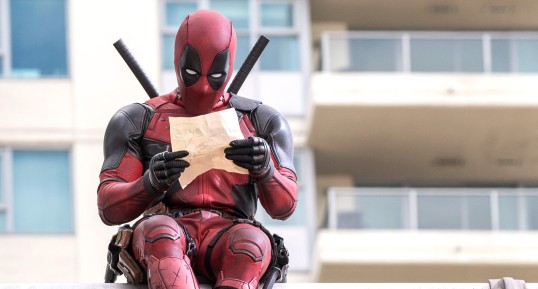
But again, it’s never an exact match between the Globes and the Oscars and the Academy can nominate up to ten films for best picture. Though it would certainly be interesting (and kinda neat) if it happened, I somehow doubt that the Academy is going nominate Deadpool over Silence.
(For that matter, I doubt Simon Helberg is going to pick up an Oscar nomination for Florence Foster Jenkins. Just a feeling…)
Best Motion Picture – Foreign Language
Divines (France)
Elle (France)
Neruda (Chile)
The Salesman (Iran)
Toni Erdmann (Germany)
Best Performance by an Actress in a Motion Picture – Drama
Amy Adams, Arrival
Jessica Chastain, Miss Sloane
Isabelle Huppert, Elle
Ruth Negga, Loving
Natalie Portman, Jackie
Best Performance by an Actor in a Motion Picture – Drama
Casey Affleck, Manchester by the Sea
Joel Edgerton, Loving
Andrew Garfield, Hacksaw Ridge
Viggo Mortensen, Captain Fantastic
Denzel Washington, Fences
Best Performance by an Actress in a Motion Picture – Musical or Comedy
Annette Bening, 20th Century Women
Lily Collins, Rules Don’t Apply
Hailee Steinfeld, The Edge of Seventeen
Emma Stone, La La Land
Meryl Streep, Florence Foster Jenkins
Best Performance by an Actor in a Motion Picture – Musical or Comedy
Colin Farrell, The Lobster
Ryan Gosling, La La Land
Hugh Grant, Florence Foster Jenkins
Jonah Hill, War Dogs
Ryan Reynolds, Deadpool
Best Performance by an Actress in a Supporting Role in any Motion Picture
Viola Davis, Fences
Naomie Harris, Moonlight
Nicole Kidman, Lion
Octavia Spencer, Hidden Figures
Michelle Williams, Manchester by the Sea
Best Performance by an Actor in a Supporting Role in any Motion Picture
Mahershala Ali, Moonlight Jeff Bridges, Hell or High Water
Simon Helberg, Florence Foster Jenkins
Dev Patel, Lion
Aaron Taylor-Johnson, Nocturnal Animals
Best Director – Motion Picture
Damien Chazelle, La La Land
Tom Ford, Nocturnal Animals
Mel Gibson, Hacksaw Ridge
Barry Jenkins, Moonlight
Kenneth Lonergan, Manchester by the Sea
Damien Chazelle – LA LA LAND Barry Jenkins – MOONLIGHT (Winner)
Kenneth Lonergan – MANCHESTER BY THE SEA
Jeff Nichols – LOVING
Denis Villeneuve – ARRIVAL
BEST ACTOR
Casey Affleck – MANCHESTER BY THE SEA
Joel Edgerton – LOVING
Ryan Gosling – LA LA LAND
Tom Hanks – SULLY Denzel Washington – FENCES (Winner)
BEST ACTRESS
Amy Adams – ARRIVAL
Annette Bening – 20th CENTURY WOMEN Isabelle Huppert – ELLE (Winner)
Ruth Negga – LOVING
Natalie Portman – JACKIE
Viola Davis – FENCES (Winner)
Greta Gerwig – 20th CENTURY WOMEN
Lily Gladstone – CERTAIN WOMEN
Naomie Harris – MOONLIGHT
Michelle Williams – MANCHESTER BY THE SEA
ARRIVAL – Eric Heisserer (Winner)
ELLE – David Birke
THE HANDMAIDEN – Park Chan-wook and Jeong Seo-Gyeong
FENCES – August Wilson
NOCTURNAL ANIMALS – Tom Ford
Oscar season continued today as the Washington D.C. Area Film Critics announced their picks for the best of 2016! What films and performers were honored in America’s capitol?
The Broadcast Film Critics Association have announced their nominees for the 22nd Annual Critics’ Choice Awards and here they are! Once again, in a pattern that will probably see repeated several times of this next month, the nominations were dominated by Moonlight, La La Land, and Manchester By The Sea.
FILM NOMINATIONS FOR THE 22ND ANNUAL CRITICS’ CHOICE AWARDS
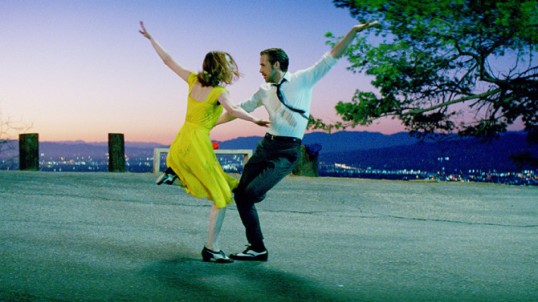
The International Press Academy — a.k.a. the Oscar precursor that nobody cares about — announced their nominees for the best of 2016 earlier today and it was a very good day for a film that I cannot wait to see, La La Land!
Here are the Satellite nominations!
Special Achievement Award Recipients
Mary Pickford Award- Edward James Olmos
Tesla Award- John Toll
Auteur Award- Tom Ford
Humanitarian Award- Patrick Stewart
Best First Feature- Russudan Glurjidze “House of Others”
Best Ensemble: Motion Picture- “Hidden Figures”
Best Ensemble: Television- “Outlander”
Actress in a Motion Picture
Annette Bening, “20th Century Woman” Emma Stone, “La La Land”
Natalie Portman, “Jackie”
Ruth Negga, “Loving”
Taraji P. Henson, “Hidden Figures”
Meryl Streep, “Florence Foster Jenkins”
Isabelle Huppert, “Elle”
Amy Adams, “Nocturnal Animals”
Actor in a Motion Picture
Casey Affleck, “Manchester by the Sea” Ryan Gosling, “La La Land”
Joseph Gordon-Levitt, “Snowden”
Viggo Mortensen, “Captain Fantastic”
Joel Edgerton, “Loving”
Andrew Garfield, “Hacksaw Ridge”
Tom Hanks, “Sully”
Denzel Washington, “Fences”
Actress in a Supporting Role
Helen Mirren, “Eye in the Sky”
Michelle Williams, “Manchester by the Sea”
Nicole Kidman, “Lion”
Octavia Spencer, “Hidden Figures” Naomi Harris, “Moonlight”
Viola Davis, “Fences” Actor in a Supporting Role
“The Happiest Day in the Life of Olli Maki”- Finland
“Toni Erdmann”- Germany
“Julieta”- Spain
“A Man Called Ove”- Sweden
“The Salesman”- Iran
“The Ardennes”- Belgium
“Ma’ Rosa”- Philippines
“The Handmaiden”- South Korea
“Elle”- France
“Paradise”- Russia
Motion Picture, Animated or Mixed Media Title of Film
“Zootopia” “Kubo and the Two Strings” “Moana”
“Finding Dory”
“My Life As a Zucchini” “The Jungle Book”
“The Red Turtle”
“Miss Hokusai”
“Trolls”
“Your Name”
Motion Picture, Documentary
“Gleason”
“Life Animated”
“O.J.: Made in America”
“13th”
“The Ivory Game”
“The Eagle Huntress”
“Tower”
“Fire at Sea”
“Zero Days”
“The Beatles: Eight Days a Week”
Director
Barry Jenkins, “Moonlight”
Kenneth Lonergan, “Manchester by the Sea”
Mel Gibson, “Hacksaw Ridge”
Damien Chazelle, “La La Land”
Tom Ford, “Nocturnal Animals”
Pablo Larrain, “Jackie”
Denzel Washington, “Fences”
Screenplay, Original
Andrew Knight/Robert Schenkkan, “Hacksaw Ridge”
Luke Davis, “Lion”
Kieran Fitzgerald/Oliver Stone, “Snowden”
Justin Marks, “The Jungle Book”
Allison Schroeder, “Hidden Figures”
Todd Komarnicki, “Sully”
Original Score
Rupert Gregson Williams, “Hacksaw Ridge”
Justin Hurwitz, “La La Land”
Lesley Barber, “Manchester by the Sea”
John Williams, “The BFG”
John Debney, “The Jungle Book”
Hans Zimmer, “Hidden Figures”
Original Song
“Audition”- ‘La La Land’
“City of Stars”- ‘La La Land’
“Dancing with Your Shadow”- ‘Po’
“Can’t Stop the Feeling”- ‘Trolls’
“I’m Still Here”- ‘Miss Sharon Jones’
“Running”- ‘Hidden Figures’
Cinematography
John Toll, “Billy Lynn’s Long Halftime Walk”
Linus Sandgren, “La La Land”
James Laxton, “Moonlight”
Simon Duggan, “Hacksaw Ridge”
Jani-Petteri Passi, “The Happiest Day in the Life of Olli Maki”
Bill Pope, “The Jungle Book”
Tom Cross, “La La Land”
Joi McMillon/Nat Sanders, “Moonlight”
Tim Squyres, “Billy Lynn’s Long Halftime Walk”
Alexandre de Francheschi, “Lion”
John Gilbert, “Hacksaw Ridge”
Steven Rosenblum, “The Birth of a Nation”
Colleen Atwood, “Alice Through the Looking Glass”
Eimer Ní Mhaoldomhnaigh, “Love & Friendship”
Courtney Hoffman, “Captain Fantastic”
Madeline Fontaine, “Jackie”
Mary Zophres, “La La Land”
Alexandra Byrne, “Doctor Strange”
Earlier today, The National Board of Review named their picks for the best of the year. They went with Manchester By The Sea and a whole lot of other films that I hope to finally get to see in December!
My favorite two winners? Amy Adams for best actress and Kubo and the Two Strings for Best Animated Film.
A cavaet: Of the so-called “major” precursors, The National Board of Review is usually the one that seems to match up the least with the actual Oscar results.
As proof of how busy I’ve been over the past few days, just consider this: On October 20th, awards season kicked off and I totally missed it!
That’s right. On October 20th, the nominations for the 2016 Gotham Awards were announced. The Gothams honor independent films and they actually have some pretty strict guidelines regarding what they consider to be independent. So, a lot of this year’s potential Oscar nominees are not eligible for the Gotham Awards.
That said, over the past few years, the Gothams have slowly emerged as a somewhat helpful precursor. While getting a Gotham nomination does not guarantee any film an Oscar nomination, it certainly doesn’t hurt. That may especially be true this year as 2016 has, for the most part, not been the great cinematic year that 2015 was. With no real favorites having yet to emerge, every precursor counts.
So, with that in mind and just a few days late, here are the Gotham nominations!
Best Feature
Certain Women
Kelly Reichardt, director; Neil Kopp, Vincent Savino, Anish Savjani, producers (IFC Films)
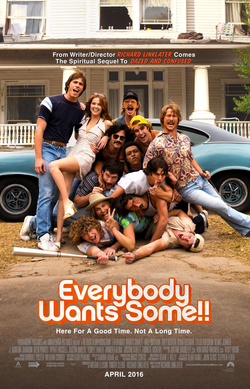
Everybody Wants Some!!
Richard Linklater, director; Megan Ellison, Ginger Sledge, Richard Linklater, producers (Paramount Pictures)
Manchester by the Sea
Kenneth Lonergan, director; Kimberly Steward, Matt Damon, Chris Moore, Lauren Beck, Kevin J. Walsh, producers (Amazon Studios)
Moonlight
Barry Jenkins, director; Adele Romanski, Dede Gardner, Jeremy Kleiner, producers (A24)
Paterson
Jim Jarmusch, director; Joshua Astrachan, Carter Logan, producers (Amazon Studios)
Best Documentary
Cameraperson
Kirsten Johnson, director; Marilyn Ness, producer (Janus Films)
I Am Not Your Negro
Raoul Peck, director; Rémi Grellety, Raoul Peck, Hébert Peck, producers (Magnolia Pictures)
O.J.: Made in America
Ezra Edelman, director; Caroline Waterlow, Ezra Edelman, Tamara Rosenberg, Nina Krstic, Deirdre Fenton, Erin Leyden, producers (ESPN Films)
Tower
Keith Maitland, director; Keith Maitland, Megan Gilbride, Susan Thomson, producers (Kino Lorber, Independent Lens)
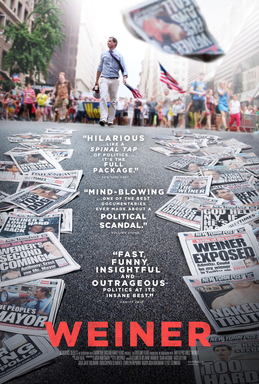
Weiner
Josh Kriegman, Elyse Steinberg, directors and producers (Sundance Selects and Showtime Documentary Films)
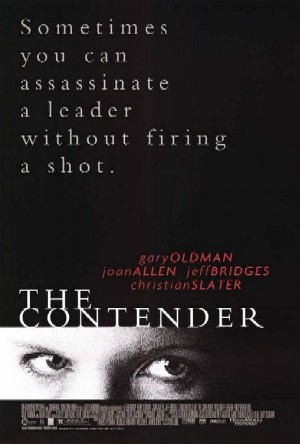
The 2000 political melodrama The Contender is one of the most hypocritical films that I’ve ever seen.
The Contender tells the story of what happens when U.S. Sen. Laine Hanson (played by Joan Allen) is nominated to be vice president by President Jackson Evans (Jeff Bridges). During Laine’s confirmation hearings, Rep. Shelly Runyon (Gary Oldman) dredges up rumors that, at a college frat party, Laine took part in a threesome in exchange for money.
When Runyon asks Laine about the rumors, she replies that she refuses to answer any questions about what she may or may not have done while she was younger. She replies that it is “simply beneath my dignity” and you know what? She’s absolutely right. First off, if someone could be disqualified just because of what they did in college then nobody would eve be eligible to be President. Secondly, and far more importantly, nobody would care about Laine’s sexual history if she was a man.
For over two hours, Laine refuses to answer any questions about the allegations and instead, she turns the tables on her attackers. And while this alone would not have made The Contender a good film (because, after all, The Contender was written and directed by Rod “Straw Dogs” Lurie), it at least would have been a film that I could respect.
But, Rod Lurie being Rod Lurie, he just couldn’t help but fuck it all up.
Towards the end of the film, Laine is attending a White House reception. She and President Evans sit down on the White House lawn and, as the stars shine above them, Evans says, “Just between us, is it true?”
Now, there’s two things that Laine could have said here that would have kept this film from falling apart. Laine could have said, “It’s none of your business.” And that would have been the right thing to say because, quite frankly, it is none of the President’s business. The whole point of the movie has been that it’s not anyone’s business.
Or, if the film actually had any guts, Laine could have said, “Yes, it’s totally true. Like most people, I experimented when I was in college. But that doesn’t have anything to do with whether or not I’m qualified to be your vice president.”
But no. Instead, Laine smiles and says, “Nothing happened. Two guys propositioned me, I said no, and they spread rumors.”
So, basically, the film is saying, “It’s nobody’s business if Laine was sexually active in college but don’t worry, Mr. and Mrs. American Audience, she was a virgin until she turned 30. So, it’s still okay for you to like her…”
And that’s the thing about The Contender. It’s a film that doesn’t have the courage of its own convictions. It’s a film that drags on for over two hours and it expects you to forgive it just because it pretends to have good intentions. As a woman, there’s nothing I hate more than being pandered to and, for all of its attempts to come across as being feminist, The Contender is all about pandering.
What makes The Contender an interesting bad film — as opposed to just your usual bad film — is how even the littlest details feel false. It’s obvious that Lurie knew all of the legal details that go into confirming a Vice President but he didn’t know how to make any of those details dramatically compelling. So, the film becomes a bit of a know-it-all lecture. By the time that Saul Rubinek popped up and said, “Do you know what Nelson Rockefeller said about the vice presidency?,” I found myself snapping back, “No, what did Nelson Rockefeller say about the Vice Presidency? Please tell because ah am so sure that it is just goin’ to be the most fascinatin’ thang that ah will ever hear in mah entire life!”
(The more annoyed I get, the more pronounced my Texas accent.)
There’s a lot of weird little things about The Contender that just don’t work. They may not sound like major problems but when combined together, they start to add up. For instance, there’s a long shot where we see U.S. Rep. Reginald Webster (Christian Slater) and his blonde wife at a White House reception and the shot just lingers on them for no particular reason. Long after you would expect the shot to end, it’s still going. This wouldn’t be an issue if there was some narrative reason for that shot. Instead, it’s just randomly dropped in there.
And then, after Laine is nominated, we see the front page of a newpaper and there, in the middle of the page, is a headshot of Joan Allen. Underneath it, a small headline reads, “It’s Laine!” It just feels so fake. Wouldn’t the nomination of the first female vice present actually rate a bigger headline and a more dynamic picture?
Speaking of fake, towards the end of the film, President Evans picks up a framed magazine cover and stares down at it. The magazine, itself, looks like one of those joke “Man of the Year” pictures that people pose for at a state fair. On the cover is a picture of Last Picture Show era Jeff Bridges. The headline on the magazine reads: “President Jackson Evans. His ideas have changed the world.” Not his actions, mind you. Not his policies. Instead, his ideas have changed the world. But the film shows us no evidence of this and, during Laine’s confirmation hearings, everyone spends the whole time debating the same old shit that they always seem to be debating in Washington.
(Of course, if you’re lucky enough to have a name like Jackson Evans, I guess you might as well become President.)
Of course, when it looks like Laine might not be confirmed, President Evans speaks before Congress. “For the first time, a woman will serve in the executive!” he declares, which seems like a hilariously awkward way to put it. (People in this film don’t talk like human being as much as they talk like characters in some fucked up Washington D.C. fanfic.) He then adds, “There are traitors among us!”
So, I guess the message here is yay for demagogues.
And don’t even get me started on Kathryn Morris, as the cheerful FBI agent who investigates Laine’s past and who, at one point, announces, “Laine is hope!” Would a male FBI agent ever have to deliver a line that stupid?
And also don’t even get me started on the subplot about Gov. Jack Hathaway (William Petersen), who stages an auto accident in an attempt to convince President Evans to nominate him for vice president.
The Contender is not a good film but it could have at least been a respectable film. But then, Rod Lurie had to have President Evans ask whether it was true or not.
Perhaps being a hypocrite was the idea that changed the world.
Monday is the first day of school down here in Dallas so it seems only appropriate that this latest entry in our Back to School series should be a look at one of those most quintessential Texas films ever made, the 1971 best picture nominee, The Last Picture Show.
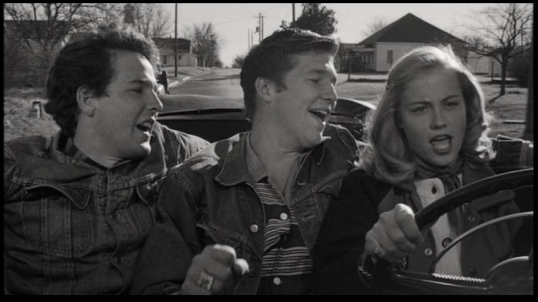
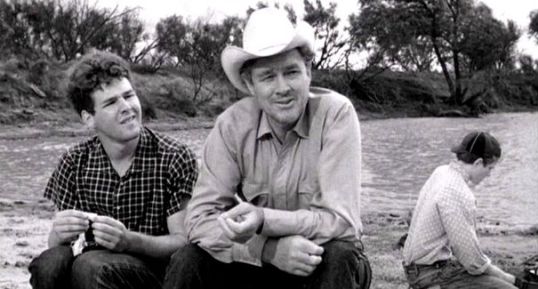
Directed by Peter Bogdanovich and based on a novel by Larry McMurtry, The Last Picture Show takes place in 1951 and tells the story of two high school seniors, best friends Sonny Crawford (Timothy Bottoms) and Duane Jackson (Jeff Bridges, reminding us once again why everbody loves him). Sonny and Duane live in the rural town of Anarene, Texas. With little to look forward to in the future, beyond perhaps getting a job working in the oil fields, Sonny and Duane are both intent on enjoying their final year of high school. Sometimes, that means driving down to Mexico for the weekend. Sometimes, it means going to the only theater in town and seeing a movie. Most of the time, however, it means hanging out in a pool hall owned by the strict but fatherly Sam (Oscar winner Ben Johnson). Often times they are accompanied by the intellectually disabled Billy (Sam Bottoms), who responds to everything with a blank smile and spends most of his spare time wandering around with a broom, futilely trying to sweep the dusty streets.
The charismatic and impetuous Sonny is dating the beautiful and self-centered Jacy Farrow (Cybil Shepherd), who is the daughter of the wealthiest woman in town. Jacy knows that her cynical mother (Ellen Burstyn) is having an affair with an oil worker named Abilene (Clu Gulager) but she’s more concerned with her own future. Even though she’s dating Sonny, Jacy still accepts an invitation from the awkward Lester Marlow (played by a memorably goofy Randy Quaid) to attend a naked indoor pool party. At the party, she meets Bobby Sheen (Gary Brockette), who is rich and will be able to provide her with the future that Duane never will. However, Bobby tells Jacy that he isn’t interested in her because she’s a virgin. If nothing else, this gives Jacy a reason to stay with Duane, at least until after they have sex.
Meanwhile, the far more sensitive Sonny ends up having an affair with Ruth Popper (Cloris Leachman, who won an Oscar for her performance in this film), the wife of the high school football coach. It appears that Sonny truly cares about Ruth but then he finds himself being tempted by none other than his best friend’s girlfriend…
At heart, The Last Picture Show really is basically a small town soap opera, a Texas version of Peyton Place.The difference between the two films — beyond the fact that The Last Picture Show just happens to be a 1oo times better than Peyton Place — is that The Last Picture Show doesn’t take place in a beautiful, idealized small town. Instead, the town ofAnarene is a believably bleak location, one that will be familiar to anyone who, like me, grew up in the American southwest. A good deal of the success of The Last Picture Show is due to the fact that it was actually filmed on location in Archer City, Texas.
(Nothing annoys me more than when I see the mountains of California in the background of a movie that’s supposed to be taking place in North Texas. We don’t have mountains up here. For the most part, we don’t even have hills. The land is flat. You can see forever, if you know where to look.)
Of course, you can’t talk about The Last Picture Show without talking about Robert Surtees’s stunning black-and-white cinematography. Not only does the black-and-white remind us that this is a film about a fading way of life but it drives home the fact that Sonny and Duane don’t have much to look forward to. Growing up in Anarene means they are destined for lives without color or excitement. In the end, can you really blame them for occasionally acting before they think?
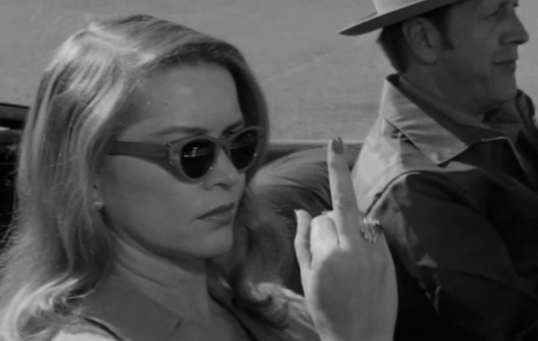
Ultimately, the success of The Last Picture Show is due to a lot of things. This was Peter Bogdanovich’s second film as a director and he did such an excellent job here that he’s basically spent the rest of his career trying to live up to this one film. (That said, Bodganovich also left his wife for Cybill Shepherd — despite the fact that his wife was the one who suggested that he make this film and cast Cybill in the first place! Don’t worry though — Polly Platt got her revenge by having a far more successful career than her ex-husband and she even produced Say Anything, a film that we will soon be looking at.) The screenplay, by McMurtry and Bogdanovich, is full of sharp dialogue and memorable characters. As for the performers, this is probably one of the best acted films ever made. Jeff Bridges and Timothy Bottoms play off each other well, Cybill Shepherd is the epitome of casual destructiveness, and Ben Johnson is brilliantly cast as the film’s moral center. My favorite performance comes from Ellen Burstyn, who delivers every line with just the right combination of contempt and ennui.
Ellen Burstyn in The Last Picture Show
If you’re a Texan, The Last Picture Show is one of those films that you simply have to see. And if you don’t enjoy it and if you don’t relate to at least a few of the characters (I related to Jacy, though I like to think that I’m a lot nicer in the way I treat people), then you’re not a real Texan.







 Through the Shattered Lens