Guilty Pleasure No. 126: Alligator (dir. by Lewis Teague)


Lewis Teague’s Alligator is exactly the sort of movie that sounds like a bad joke until you sit down with it and realize it is having a much better time than most “serious” creature features. The premise is pure drive-in delirium: a baby alligator is flushed down a toilet, survives in the sewer system beneath St. Louis, Missouri, feeds on discarded laboratory animals pumped full of experimental growth hormones, and eventually becomes a gigantic, people-eating urban nightmare. It is absurd from the start, but that absurdity is the movie’s best asset. Alligator is not a good film in the polished, tightly controlled sense. It is too clunky, too broad, and too openly ridiculous for that. But it is never boring, and it understands that a movie about a giant alligator stalking the sewer tunnels under St. Louis should be grimy, nasty, funny, and just a little bit stupid.

The film arrives in that sweet spot between the straightforward animal-attack movies of the 1970s and the increasingly self-aware horror comedies of the 1980s. It has some of the structure of a Jaws knockoff, of course: authorities dismiss warnings, a difficult investigator takes the danger seriously, and a creature grows into an outsized public threat before the final confrontation. But Alligator does not have the resources, atmosphere, or aquatic terror of Spielberg’s film, and to its credit, it does not really pretend to. Instead, it leans into the cheapness of its materials. The alligator is mostly an oversized practical effect, sometimes convincing enough to be threatening and sometimes looking like the kind of thing that should be knocking over miniature buildings in a 1950s monster movie. The difference is that Teague knows how to frame the thing. He keeps the creature partly hidden when that helps, lets the sewer setting do much of the atmospheric heavy lifting, and saves the full ridiculousness of the monster for when ridiculousness is exactly what the audience wants.

There is an immediately appealing trashy logic to the story. The alligator is not simply an animal that wandered into the wrong place; it is a product of environmental carelessness, corporate experimentation, and the city’s tendency to throw its problems underground. The movie opens with a young girl’s pet alligator being flushed away after it bites someone, a cruelly comic act that functions as the film’s entire moral universe in miniature. Humans dispose of an inconvenient creature, neglect the consequences, and then act shocked when the creature becomes a gigantic murderous problem. The idea is broadly ecological and vaguely anti-corporate, but Alligator never becomes preachy. It keeps those elements in the background as an excuse for gore, sewer crawling, and a steadily escalating body count.

Robert Forster plays David Madison, a St. Louis cop with the permanently tired demeanor of someone who has been forced to listen to too many witnesses describe impossible things. Forster is a major reason the movie works as well as it does. He does not play the material like a joke, but he also does not strain to elevate it into prestige horror. His performance is dry, irritated, and completely appropriate for a man investigating missing-person cases that increasingly point toward a subterranean reptile large enough to eat a car. Madison is not a particularly complicated protagonist, but Forster gives him enough weary professionalism that the audience can follow him through the nonsense. His deadpan approach also makes the film funnier without turning it into outright parody.

The supporting cast is a strange, entertaining mixture of familiar character-actor energy and exploitation-movie weirdness. Robin Riker plays Marisa, a reptile expert and Madison’s eventual love interest, and she is better than the role strictly requires. She has a brisk, practical presence, which is useful in a movie where most characters either refuse to believe the obvious or exist to become alligator food. The romance between her and Madison is thin, but it is handled with enough low-key charm that it does not stop the movie cold. It feels like a necessary B-movie ingredient rather than a desperate attempt to convince viewers that they are watching something emotionally profound.

Then there is Henry Silva. Honestly, the presence of Henry Silva alone tells you what kind of movie Alligator is trying to be. Silva plays Colonel Brockman, a professional hunter hired by the evil pharmaceutical company to find and kill Ramon, the giant gator created by its illegal growth-hormone dumping. He is not the mastermind behind the scientific mess; he is the company’s hired cleanup crew, brought in once the whole operation has become too big and too toothy to bury. Silva approaches the role with exactly the degree of swaggering, oily menace it needs. He is here to be Henry Silva in a monster movie, which means glaring, sneering, and acting as though the chance to hunt a massive sewer reptile is simply another profitable afternoon at work. Every time he shows up, the movie gets a little more fun.

The screenplay comes from John Sayles, which is almost comically overqualified on paper, though it makes more sense once the dialogue starts landing. Sayles gives the movie flashes of wit and an edge of social satire that keep it from being totally disposable. There are jokes about cops, politicians, wealthy elites, and corporate corruption, and while none of them are especially subtle, they have the right bite for a film this grubby. The story’s best satirical impulse is its refusal to make the rich and powerful merely unlucky victims of the monster. The alligator’s rampage eventually collides with a wealthy social gathering, and the movie takes obvious pleasure in turning a fancy event into a feeding ground. It is not exactly The Texas Chain Saw Massacre in its class consciousness, but it does understand that watching an enormous reptile crash through the polished facade of upper-class respectability is satisfying.

Teague directs with the workmanlike confidence of someone who knows that the material only needs to get from one entertaining set piece to another. The sewer scenes are the film’s strongest visual material. They are damp, shadowy, cluttered, and full of the sort of industrial grime that exploitation cinema loves. The setting is inherently creepy because it is both unreal and plausible: everyone knows a city like St. Louis has tunnels, pipes, forgotten chambers, and places where things can disappear, even if nobody really believes a giant alligator lives down there. The movie uses that unease effectively. When characters descend into the darkness, the tension is simple but real. You know something huge is moving nearby, and you know the special effects are not going to hold up to close inspection, but the atmosphere carries you through.

The attacks are uneven, but that is part of the charm. Some are genuinely nasty, particularly when the movie lets the creature strike suddenly from the shadows. Others are so exaggerated that they become funny in ways the filmmakers likely anticipated. There is a particularly memorable moment involving a child and a swimming pool that has the gleefully tasteless punch of old-school grindhouse horror. Alligator is never as graphic as the nastier exploitation films of its era, but it has enough blood, torn bodies, and monstrous chomping to satisfy an audience looking for low-rent carnage. It knows the basic rule of this kind of movie: if you are going to ask viewers to accept a mutant sewer alligator, you had better let it eat some people.

What makes Alligator last beyond its premise is that it does not seem embarrassed by what it is. There are many creature features that feel apologetic, as if the filmmakers know they are making junk and are waiting for the audience to laugh at them. Teague’s film is junk, absolutely, but it is crafted junk. It has actual pacing, committed actors, useful atmosphere, and a screenplay that occasionally has more on its mind than the average monster-on-the-loose picture. It is bad enough that its flaws become part of the entertainment, especially whenever the huge reptile lumbers into view or the plot makes a leap that only makes sense if nobody involved pauses to think for ten seconds. Yet it is not so bad that it becomes a chore. That is the crucial distinction.

By the time Alligator reaches its climax, it has delivered nearly everything its title promises: sewers, corrupt businessmen, cops with guns, practical monster effects, socialites getting their comeuppance, and Henry Silva looking like he would gladly accept a corporate paycheck to hunt an enormous mutant reptile. It is the kind of film best watched with an appreciation for grime, excess, and the noble tradition of exploitation cinema turning a ridiculous idea into a perfectly decent Saturday-night monster movie. Alligator will not make anyone forget the great creature features, but it earns its place as a scrappy, trashy, oddly lovable B-movie. It is not awful. It is not even truly bad. It is just delightfully cheap, mean, and goofy enough to remind you why bad movies can sometimes be more fun than good ones.

Previous Guilty Pleasures

  1. Half-Baked
  2. Save The Last Dance
  3. Every Rose Has Its Thorns
  4. The Jeremy Kyle Show
  5. Invasion USA
  6. The Golden Child
  7. Final Destination 2
  8. Paparazzi
  9. The Principal
  10. The Substitute
  11. Terror In The Family
  12. Pandorum
  13. Lambada
  14. Fear
  15. Cocktail
  16. Keep Off The Grass
  17. Girls, Girls, Girls
  18. Class
  19. Tart
  20. King Kong vs. Godzilla
  21. Hawk the Slayer
  22. Battle Beyond the Stars
  23. Meridian
  24. Walk of Shame
  25. From Justin To Kelly
  26. Project Greenlight
  27. Sex Decoy: Love Stings
  28. Swimfan
  29. On the Line
  30. Wolfen
  31. Hail Caesar!
  32. It’s So Cold In The D
  33. In the Mix
  34. Healed By Grace
  35. Valley of the Dolls
  36. The Legend of Billie Jean
  37. Death Wish
  38. Shipping Wars
  39. Ghost Whisperer
  40. Parking Wars
  41. The Dead Are After Me
  42. Harper’s Island
  43. The Resurrection of Gavin Stone
  44. Paranormal State
  45. Utopia
  46. Bar Rescue
  47. The Powers of Matthew Star
  48. Spiker
  49. Heavenly Bodies
  50. Maid in Manhattan
  51. Rage and Honor
  52. Saved By The Bell 3. 21 “No Hope With Dope”
  53. Happy Gilmore
  54. Solarbabies
  55. The Dawn of Correction
  56. Once You Understand
  57. The Voyeurs 
  58. Robot Jox
  59. Teen Wolf
  60. The Running Man
  61. Double Dragon
  62. Backtrack
  63. Julie and Jack
  64. Karate Warrior
  65. Invaders From Mars
  66. Cloverfield
  67. Aerobicide 
  68. Blood Harvest
  69. Shocking Dark
  70. Face The Truth
  71. Submerged
  72. The Canyons
  73. Days of Thunder
  74. Van Helsing
  75. The Night Comes for Us
  76. Code of Silence
  77. Captain Ron
  78. Armageddon
  79. Kate’s Secret
  80. Point Break
  81. The Replacements
  82. The Shadow
  83. Meteor
  84. Last Action Hero
  85. Attack of the Killer Tomatoes
  86. The Horror at 37,000 Feet
  87. The ‘Burbs
  88. Lifeforce
  89. Highschool of the Dead
  90. Ice Station Zebra
  91. No One Lives
  92. Brewster’s Millions
  93. Porky’s
  94. Revenge of the Nerds
  95. The Delta Force
  96. The Hidden
  97. Roller Boogie
  98. Raw Deal
  99. Death Merchant Series
  100. Ski Patrol
  101. The Executioner Series
  102. The Destroyer Series
  103. Private Teacher
  104. The Parker Series
  105. Ramba
  106. The Troubles of Janice
  107. Ironwood
  108. Interspecies Reviewers
  109. SST — Death Flight
  110. Undercover Brother
  111. Out for Justice
  112. Food Wars!
  113. Cherry
  114. Death Race
  115. The Beast Within
  116. Girl Series
  117. Gone in 60 Seconds
  118. Swordfish
  119. Marked For Death
  120. The Internship
  121. The Angry Red Planet
  122. 2012
  123. Old School
  124. No Escape
  125. In Death Series

The TSL Grindhouse: Record City (dir by Dennis Steinmetz)


1977’s Record City opens with a montage of rear-focused close-ups of women wearing short shorts and that pretty much tells you all that you really need to know about the film.  It’s crass, shameless, and very much a product of its time.

The film takes place over the course of one day at a California vinyl record shop.  It’s tempting to compare the film to something like Empire Records but, unlike Empire Records, Record City suggests that working in a record store is perhaps the worst thing that could ever happen to anyone.  The store is dirty and grimy.  The customers are rude and played by vaguely familiar comedy actors, all of whom seem to have been bitten by the overacting bug before stepping in front of the camera.  The employees all seem to hate each other.  Marty (Tim Thomerson) keeps getting slapped and kicked by Vivian (Deborah White).  Vivian keeps getting groped by almost every customer and employee who walks by her.  The only thing that Vivian hates more than men is other women.  The store’s owner (Jack Carter) is in trouble with the mob.  The store’s manager (Michael Callan) is lech who wears gold chains, keeps his shirt unbuttoned, and who expects the new cashier, Lorraine (Wendy Schaal), to sleep with him because, after all, he did hire her.  Danny (Dennis Bowen) is the shy guy with a crush on Lorraine.  Rupert (Stuart Goetz) is the nerdy virgin who goes from wearing a bowtie to dressing like a swinger but he still can’t get laid.  Both the customers and the employees are paranoid about “fairies” coming into Record City.  Pokey (Ed Begley, Jr.) wants to hold the place up and who can blame him?  Really, the only likable employee is a black man known only as The Wiz and that’s just because he’s played by Ted Lange.  (Yes, Isaac the Bartender from The Love Boat.)  Lange gets to perform a song at the end of the film.

When the film isn’t focused on the antics inside Record City, it’s all about the talent show that’s taking place in a nearby parking lot.  The talent show is hosted by radio DJ Gordon Kong (Rick Dees) and it gives the film an excuse to trot out a bunch of cameos, some of whom are more recognizable than others.  For instance, Gallagher — the comedian with the sledgehammer — shows up.  Kinky Friedman also shows up, playing himself and looking for records at Record City.  When he spots a woman with a blonde bowl cut and glasses, he accuses her of being John Denver and then grabs her breasts.  And to think — less  than 30 years later, Kinky Friedman would run for governor of my homestate.

Anyway, this is a terrible and rather boring movie but I did find it interesting for one reason.  It’s the reason why I find so many grindhouse films to be interesting.  Shot on location and for no other reason than to make money, Record City is a true product of its time.  There’s no attempt to try to make the 70s look nicer than they were.  There’s no attempt to try to make the record store look like anything more than a tacky establishment.  There’s an honesty to how low-rent the whole thing is.  Watching the movie is like stepping into a time machine and getting a chance to experience the past firsthand.  I was born long after the 70s but, after watching this film, I now feel like I’ve been there.

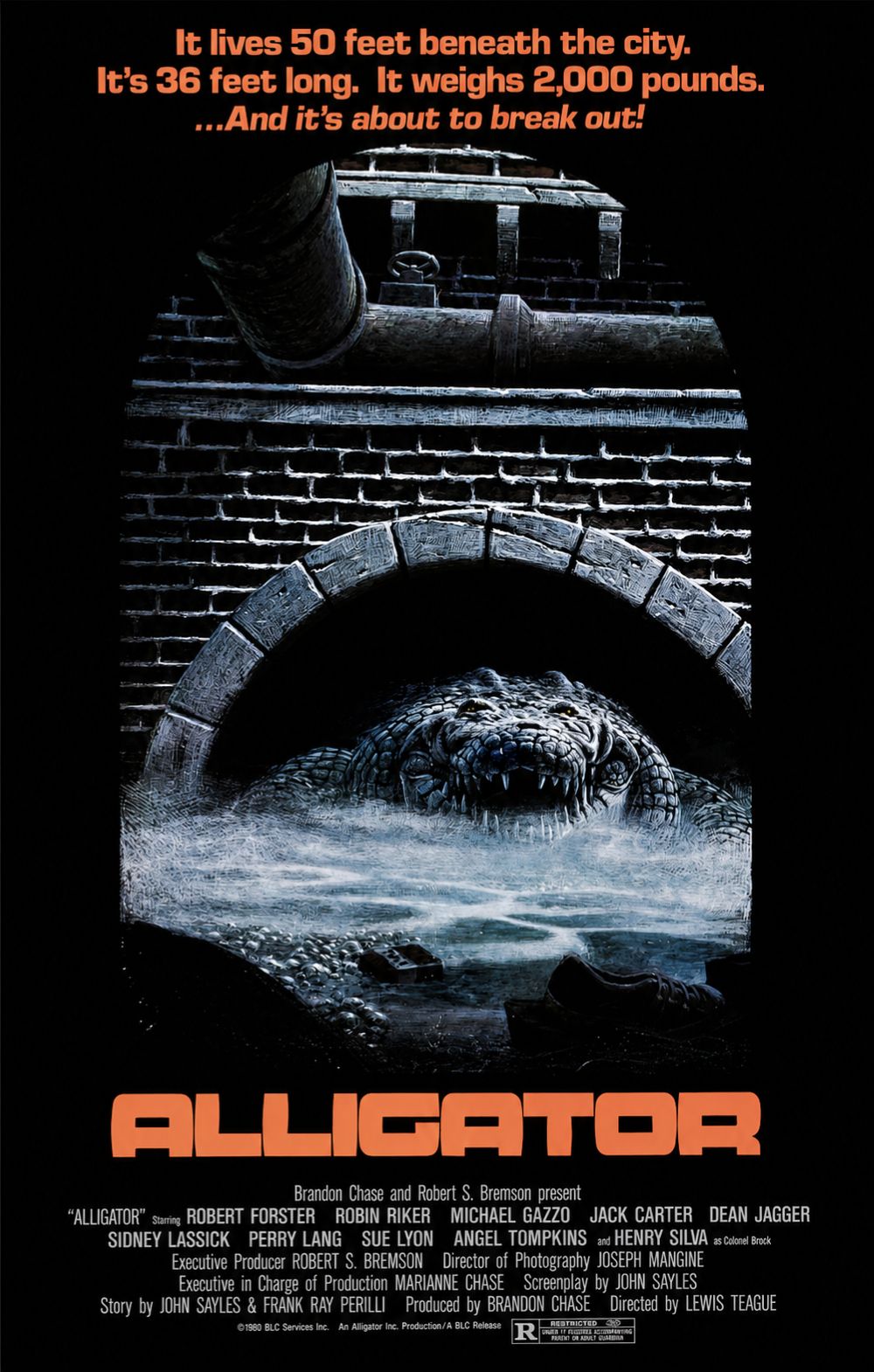
Horror Film Review: Alligator (dir by Lewis Teague)


1980’s Alligator begins in 1968.  While on vacation in Florida, a teenage girl named Marisa Kendall purchases a baby alligator named Ramon.  When she returns home to Chicago, her jerk of a father flushes Ramon down the toilet.

12 years pass.  Marisa (Robin Riker) becomes a herpetologist.  As for Ramon, he actually survives being flushed down the toilet and thrives in the sewer.  He eats the carcasses of animals that had been a part of an experiment involving a growth serum.  The serum had the desired effect of making the animals bigger but it also increased their metabolism to the extent that they became aggressive and had to eat constantly.  Evil industrialist Slade (Dean Jagger) is convinced that, by tossing the carcasses in the sewer, he’s ensured that no one will ever find out about the experiments.  Instead, he’s turned Ramon into a giant alligator who is always hungry.  Soon, the super-intelligent alligator is ambushing and eating sewer workers.

Burned-out Detective Dave Madison (Robert Forster) teams up with Marisa to solve the mystery of why so many body parts are turning up in the sewers.  It’s not easy.  No one wants to admit that there might be a giant alligator living under the city.  Everyone wants to believe that’s just an urban legend.  But, after a tabloid reporter (Bart Braverman) manages to snap a few photographs of Ramon before being devoured, the police are forced to deal with the fact that they’ve got an alligator on their hands.  As Slade continues to try to cover up his involvement, big game hunter Colonel Brock (Henry Silva) comes to town and announces that he will be capturing the alligator.

Directed by Lewis Teague and written by John Sayles, Alligator is a dark comedy disguised as a horror film.  While numerous people get eaten and the film ends on a properly ominous note, Alligator is obviously not meant to be taken seriously.  The cast is full of good actors who send up their own images.  That’s especially true in the case of Henry Silva, who appears to be having a blast as the hyper macho Colonel Brock.  Robert Forster, meanwhile, delivers his lines with a self-aware weariness that seems a bit more appropriate for a noir hero than a film about a detective investigating a giant alligator.  One reason why the film works is because Forster, Silva, and the rest of the cast understood exactly what type of film they were appearing in and they delivered their overheated lines with just enough wit to let the viewer know that the film was in on the joke.  The big and somewhat stiff-looking alligator may not look entirely real and it may move somewhat awkwardly but ultimately, it’s the most likable character in the movie.  It just wants to relax in the sewers but, every few minutes, someone else is bugging him.

When first released, Alligator struggled at the box office but it has since gone on to become a cult favorite.  Quentin Tarantino is a self-described fan and he had said he was inspired to cast Robert Forster as Max Cherry in Jackie Brown after seeing him as Dave Madison in this film.  That’s not bad for a movie about a giant alligator!

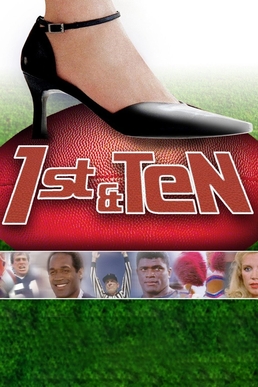
Late Night Retro Television Review: 1st & 10 1.8 “The Sins of the Quarterback”


Welcome to Late Night Retro Television Reviews, a feature where we review some of our favorite and least favorite shows of the past! On Wednesdays, I will be reviewing 1st and Ten, which aired in syndication from 1984 to 1991. The entire series is streaming on Tubi.

This week, Bryce Smith finally takes the field!

Episode 1.8 “The Sins of the Quarterback”

(Dir by Bruce Seth Green, originally aired on January 13th, 1985)

During a game against the — oh come on! — Atlanta Confederates, Bob Dorsey is sacked and knocked unconscious.  Ultra-religious backup quarterback Bryce Smith (Jeff East) is sent in to replace him.  Bryce throws an amazing pass across the entire field that is somewhat caught for a touchdown.  The Bulls win!

The defensive players celebrate by grabbing Bryce forcing liquor down his throat.  Bryce is a Mormon and a graduate of BYU.  Bryce gets drunk easily.  After the rest of the players leave the locker room, a barely coherent Bryce is  approached by cheerleader Tammy Baker (Pamela Jean Bryant) who says that she is God’s gift to him.  The scene ends rather abruptly, I assume because this episode was heavily edited for syndication.

A week later, an excited Tammy approaches Bryce at a roast honoring the team.  She tells him that she’s pregnant!  She’s super-excited!  Bryce, however, is shaken and — after a fantasy sequence set in the Garden of Eden — Bryce announces that he is retiring from football and going to Tibet to become a monk.  Why would a Mormon go to Tibet to become a monk?

Well, I guess the team is screwed!  Bob Dorsey still isn’t ready to come back and the third-string quarterback can barely throw the ball.  However, Bryce’s wife comes to the rescue.  She forgives Bryce for cheating and she also invites Tammy to come live with them.  Bryce can continue to play football!

Denardo, however, doubts that Bryce is the one who impregnated Tammy.  He demands that every other player who had sex with Tammy raise their hand.  Nearly every hand in the locker room goes up.  Bryce worries that everyone is going to have to move in with him and his wife….

Okay, then!  It’s hard to review this episode because, again, it’s obvious that the racy, original episode (the one that aired on HBO) was heavily edited for syndication.  The version that I saw featured a lot of abrupt jump cuts.  The story itself was fairly dumb but that’s kind of a given when it comes to this show.  I’ll give some credit to Jeff East.  He was far better than the material he had to work with.

Myself, I’m just amazed that this show featured a team called the Atlanta Confederates.  I’m going to assume that team eventually changed their name.

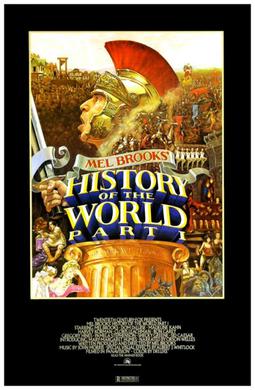
The History of the World, Part I (1981, directed by Mel Brooks)


Overlong, wildly uneven, gimmicky too a fault, and often laugh out loud funny with a mix of jokes that range from the crude to the sublimely clever to the surprisingly sentimental, The History of the World, Part I is the ultimate Mel Brooks films.

Narrated by Orson Welles and featuring five historical stories and a collection of coming attractions, The History of the World Part I follows man from his caveman origins to the French Revolution and the thread that ties it all together is that humanity always screws up but still finds a way to survive.  Moses (Mel Brooks) might drop and break one of the three tablets listing the 15 Commandments but he’s still able to present the other ten.  Stand-up philosopher Comicus (Mel Brooks) might make the mistake of poking fun at the weight of Emperor Nero (Dom DeLuise) but he still makes his escape with Josephus (Gregory Hines), Swiftus (Ron Carey), and Miriam the Vestal Virgin (Mary-Margaret Humes) and ends up serving as the waiter at the Last Supper.  (“Jesus!”)  The Spanish Inquisition may have been a catastrophe but it also gave Torquemada (Mel Brooks) a chance to show off his performance skills.  The French Revolution may have been a bloodbath but the future still held promise.  Ask for a miracle and he’ll show up as a white horse named Miracle, no matter what era of history you’re living in.

The humor is very Mel Brooks.  During the Roman Empire sequence, Madeline Kahn plays Empress Nympho.  Jackie Mason, Harvey Korman, Cloris Leachman, Spike Milligan, Jan Murray, Sammy Shores, Shecky Greene, Sid Caesar, Henny Youngman, and Hugh Hefner all make cameo appearances.  Carl Reiner is the voice of God.  John Hurt plays Jesus.  The film ends with the promise of a sequel that will feature “Jews in Space.”  Not every joke lands.  The entire caveman sequence feels forced.  But when the film works — like during The Inquisition production number — it’s hard not get caught up in its anything-goes style.  The entire Roman Empire sequence is probably more historically accurate than the typical Hollywood Roman epic.  That’s especially true of Dom DeLuise’s naughty performance as Emperor Nero.

Mel Brooks is 99 years old today and he says that he has at least one more film to give us, a sequel to Spaceballs.  I’m looking forward to it!  I’m also looking forward to rewatching and enjoying all of the films that he’s already given us.  The History of the World, Part I may not have initially enjoyed the critical acclaim of his earlier films but, in all of its anarchistic glory, it’s still pure Mel Brooks.

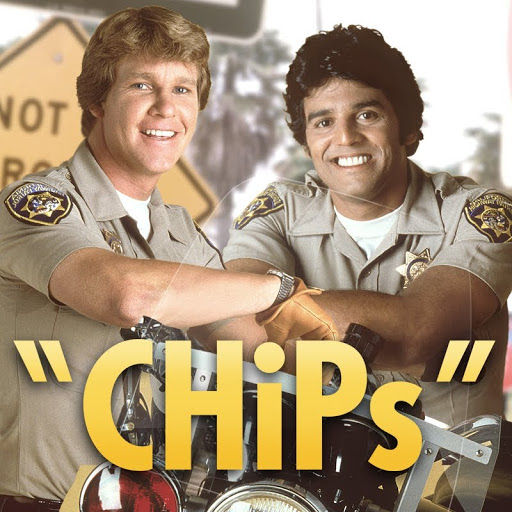
Late Night Retro Television Review: CHiPs 2.3 “Family Crisis”


Welcome to Late Night Retro Television Reviews, a feature where we review some of our favorite and least favorite shows of the past!  On Mondays, I will be reviewing CHiPs, which ran on NBC from 1977 to 1983.  The entire show is currently streaming on Freevee!

This week, a Partridge leads a Brady into a life of crime!

Episode 2.3 “Family Crisis”

(Dir by Phil Bondelli, originally aired on September 30th, 1978)

Tired of being confined to a police car, Officer Sindy Cahill (Brianne Leary) cannot wait to graduate from motor school so that she can become the Highway Patrol’s first female bike cop.  She’s so eager for the job that, when she’s off-duty, she rides around Los Angeles on a motor scooter and occasionally even makes an arrest.  Most of the other motorcycle cops are skeptical about Sindy …. because she’s a woman.  But Ponch is supportive of Sindy’s ambition …. because she’s a woman who he likes to look at.  Ponch spends the majority of this episode standing behind Sindy and leering.

A fancy black Trans Am has been stolen from a movie set and it is being used in a series of robberies.  The thieves have made no effort to disguise the car.  They didn’t even bother to paint over the very noticeable green racing stripe that, in theory, would make impossible for them to drive around without being spotted.  However, it doesn’t matter because the car is so fast and it can do so many fun movie tricks (like covering the street in smoke and oil) that no one can stop it.  Sindy has come up with a plan to catch the thieves but Getraer doesn’t want to hear it and we all know why.  In fact, when Sindy crashes her car while chasing the thieves, Getraer tells her that she needs to get checked out by the doctors before she goes back on duty.  “If I was a man, you’d let me right back out on the street!” Sindy snaps.  Sindy knows that Getraer is treating her differently …. because she’s a woman!

Fortunately, Getraer’s boss somehow finds a copy of Sindy’s plan and he decides that it’s brilliant.  With both the LAPD and the Highway Patrol working together, they manage to ambush and corner the Trans Am on the Los Angeles docks.  The two thieves push the wrong button in the car and they end up getting ejected from their seats and landing in the ocean.  Baker and Ponch share a laugh while the two men probably drown.

The two nameless thieves are not the only ones stealing cars.  Fred (Danny Bonaduce), a high school senior, is also stealing cars and — oh no! — he’s convinced his friend Wes (Christopher Knight) to go joyriding with him.  What Fred didn’t count on was Wes being the nephew of Officer Jon Baker.  Baker isn’t going to let anyone corrupt his nephew.  When Ponch and Baker eventually catch Fred and Wes and their girlfriends in a stolen car, they put the handcuffs on everyone, even though only Fred is going to be charged with a felony.  Baker tells Wes that he put the handcuffs on him to show him where his life is heading.  Wes thanks his Uncle Jon and hopefully, he’s learned an important lesson about why the Bradys didn’t hang out with the Partridges.

Finally, Ponch has finally moved out of his RV and into a swinging new apartment!  He’s got a view of the pool, so he’s happy.  Good for him.

This episode …. actually, this episode wasn’t that bad.  I liked Sindy because, if i was waiting to find out if I was going to be a motorcycle cop, I would probably ride around on a motor scooter too.  And having Danny Bonaduce leading Christopher Knight astray appealed to me as a student of pop culture.  There were some nice chase scenes.  The Trans Am was cool.  The California scenery was lovely.  It was a fun episode.

Retro Television Review: Fantasy Island 4.18 “The Searcher/The Way We Weren’t”


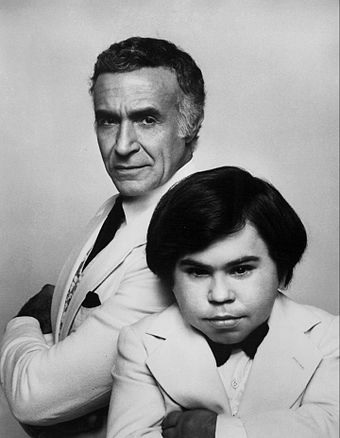
Welcome to Retro Television Reviews, a feature where we review some of our favorite and least favorite shows of the past!  On Tuesdays, I will be reviewing the original Fantasy Island, which ran on ABC from 1977 to 1984.  Almost the entire show is currently streaming on Daily Motion.

Oh my God, this week’s episode….

Episode 4.18 “The Searcher/The Way We Weren’t”

(Dir by Leslie H. Martinson, originally aired on March 7th, 1981)

This week’s episode was just silly and it’s going to be a struggle to even come up with the usual 500 words to say about it.

Fred Cooper (Jerry Van Dyke) is worried that married life is losing its spark so he wants to relive the early days of his marriage to Dottie (Laraine Stephens).  After going through a magic time travel cloud, Fred and Dottie find themselves living in their old house, which they share with Fred’s aunt.  Their neighbors are Vic (Jack Carter) and Myra Fletcher (Dawn Wells).  Vic is Fred’s boss.  He and Myra are also swingers!  Apparently, Fred forgot about that but I have to wonder how anyone would forget that?  Anyway, Vic offers Fred a promotion but only if Fred will allow Vic to sleep with Dottie.  Fred responds by punching Vic out while Vic is hosting a Swingers Convention on Fantasy Island.  (Tattoo must have been very happy this week.)  Vic realizes that he was in the wrong and Fred still gets his promotion.  But is it a real promotion or just a fantasy promotion?  Seriously, what the Hell is going on here?

Meanwhile, young heiress Karen Saunders-Holmes (Laurette Spang) comes to the island with her husband, Brian (James Darren).  Brian thinks that they’re just on their honeymoon but Karen actually has a fantasy.  She wants to be reunited with her father, a man named Noah who supposedly abandoned her when she was an infant and whom she has never met.  Mr. Roarke arranges for Noah (Paul Burke) to be released from prison for the weekend and….

PRISON!?  Yep, Noah is a convicted murderer and has spent the last two decades in a prison camp.  Noah claims that he was innocent of the crime.  Anyway, Mr. Roarke introduces Noah to Karen and Brian and says that Noah will be their guide on the Island….

Brian freaks out!  It turns out that Brian is actually the man who Noah was framed for murdering.  Brian went off and got plastic surgery after faking his own murder, which is why Noah doesn’t recognize him.  But Noah soon learns the truth when Brian tricks him into entering a bog of quicksand!

Does Noah survive the quicksand?  He does but we’re never told how.  Does Brian then freak out and run into the quicksand as well?  Of course.  Fantasy Island is such a dangerous place!

This was a silly episode.  Brian apparently not only had plastic surgery to change his face but also to reduce his age because there was no way he was old enough to a contemporary of Noah’s.  And for the swinger’s convention on Fantasy Island …. I mean, what?  Mr. Roarke is suddenly okay with a big key party on his Island?  How do you forget that you used to live next door to a swinging couple?  Like I said, this was just silly.  One fantasy features Jerry Van Dyke being way too goofy and the other features James Darren being way to obviously sinister.  Neither worked.

So far, the fourth season has really been a mixed bag, hasn’t it?  Hopefully, things will improve next week.

Retro Television Reviews: Fantasy Island 4.3 “The Skater’s Edge/Concerto of Death/The Last Great Race”


Welcome to Retro Television Reviews, a feature where we review some of our favorite and least favorite shows of the past!  On Tuesdays, I will be reviewing the original Fantasy Island, which ran on ABC from 1977 to 1986.  Almost the entire show is currently streaming is on Youtube, Daily Motion, and a few other sites.

This week, Fantasy Island loses a fantasy.  Read on to find out the details and remember, “Smiles, everyone!  Smiles!”

Episode 4.3 “The Skater’s Edge/Concerto of Death/The Last Great Race”

(Dir by Cliff Bole and Vince Edwards, originally aired on November 8th, 1980)

When this episode originally aired, it was a special two-hour episode of Fantasy Island, one that featured three fantasies as opposed to the usual two.

In Skater’s Edge, Charlie Johnson (Charlene Tilton) is a farm girl from Missouri who dreams of being a world class figure skater.  She comes to the Island to compete in the Fantasy Island Skating Competition.  Mr. Roarke gives Charlie a pair of magic skates that he claims belonged to figure skater Sonja Henie.  As long as Charlie is wearing the skates, she is the greatest skater in the world.  She takes the competition by storm and she also wins the heart of coach Mike O’Brien (Dack Rambo).  Unfortunately, in doing so, Charlie upsets Mike’s protégé, Laura Henderson (Peggy Fleming).  Laura steals Charlie’s skates but, after Mr. Roarke talks to her about the importance of friendship and fair play, Laura returns the skates to Charlie. Charlie gets a perfect score from the judges but, even more importantly, she learns a lesson in humility and she’s happy when Laura is named the winner of the competition.  Laura has the Fantasy Island championship but Charlie has got Mike.

In Concerto of Death, Dennis Cole plays Jeremy Hale, who comes to the island with his wife (Mary Ann Mobley).  Jeremy’s brother was a talented concert pianist who was murdered.  Jeremy wants to play as well as his brother but he also wants to solve his murder.  Roarke gives Jeremy an emerald ring that glows a deep green when Jeremy plays his piano.  Roarke warns Jeremy that his brother’s ghost might try to possess him and seek violent revenge against those who he blames for his death.  The scenes involving Jeremy being possessed feature Jeremy being suffused by a green glow and yes, it’s kind of silly but it’s still fun in the way that cheap special effects often are.  Eventually, Jeremy realizes that his brother was killed by Carla Marco (Erin Gray) and it ends with the police taking away Carla and Jeremy’s guest cabin burning to the ground.  That cabin burned down to the ground at least once per season.

Finally, in The Last Great Race, Dick Shawn and Juliet Mills play a couple who are divorcing.  They go on a race with the winner getting the majority of their possessions.

You may notice that I don’t have much to say about The Last Great Race.  This is because the Race fantasy was edited out of this episode when it went into syndication.  Unfortunately, all of the versions that I’ve found of this episode online are of the syndicated version.  So, I guess The Last Great Race is just going to be the lost fantasy of Fantasy Island.

It’s hard to judge this episode because, in the syndicated version, it’s very obvious that a lot has been removed.  It makes things feel a bit disjointed with the scene transitions often coming abruptly.  Charlie and Mike seem to fall in love in record time and Laura declaring herself to be Charlie’s friend seems odd because we haven’t really seen them interact before Laura steals her skates.  Meanwhile, the story with Jeremy also feels rushed with the final confrontation between Jeremy and the murderer seeming to come out of nowhere.

That said, it’s kind of a fun episode.  The skating scenes feature an obvious stunt double for Charlene Tilton and it’s hard not to be kind of charmed by how obvious it all is.  (You can get dizzy as the scene cuts from close-ups of Tilton’s face and close-ups of the stunt double’s legs.)  The supernatural story makes no sense but the silly special effects made me smile.  The episode ends with Mr. Roarke causing snow to fall on Fantasy Island but, in typical Roarke fashion, he makes sure that it only falls on Tattoo.  Roarke has a good laugh while Tattoo screams in terror.  Seriously, those two hate each other so much.

Retro Television Reviews: Fantasy Island 3.19 “The Swinger/Terrors of the Mind”


Welcome to Retro Television Reviews, a feature where we review some of our favorite and least favorite shows of the past!  On Tuesdays, I will be reviewing the original Fantasy Island, which ran on ABC from 1977 to 1986.  Almost entire show is currently streaming is on Youtube!

This week, Fantasy Island swings!

Episode 3.19 “The Swinger/Terrors of the Mind”

(Dir by Cliff Bole, originally aired on February 9th, 1980)

This week, we have one fun fantasy and one fantasy that’s a bit less interesting.

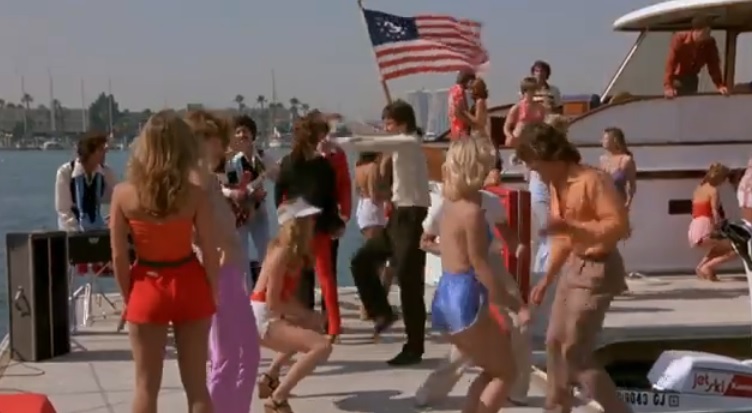
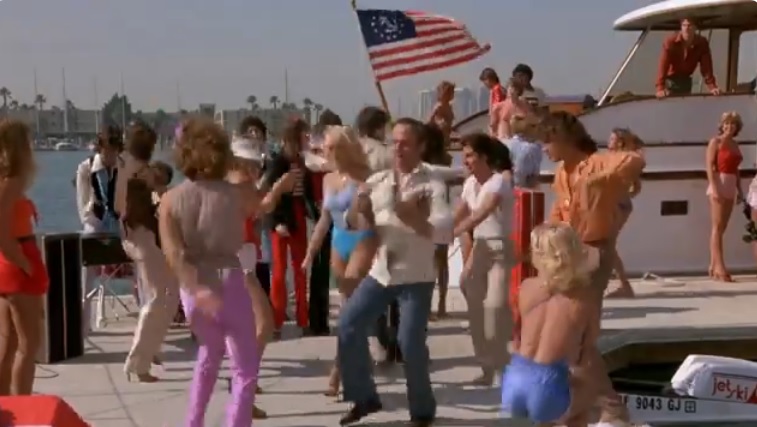
The less interesting fantasy features Herman Dodge (Howard Morris), a middle-aged man who is upset because he feels that he was too old to take part in the sexual revolution of the 60s and 70s.  Having just gotten a divorce from Maxine (Anne Francis), Herman comes to the Island with his best friend, Stan (Jack Carter).  Herman wants to be a swinger so Mr. Roarke makes him look a few years younger and then he takes him to the “Fantasy Island Mariana, where all the swingers hang out.”

Looks like a happening place!

Herman is soon the most popular guy at the marina and he even has a new girlfriend named Peggy (Judy Landers).  Unfortunately, Duke (Lou Richards) and his friend, Hot Dog (Ed Ruffalo), are threatened by Herman’s sudden popularity.  Herman is challenged to various “water sports,” (yes, I snickered) and Herman manages to hold his own but he’s not sure if he’ll be able to jump over a speedboat while on skis.  Fortunately, Maxine shows up on the Island and Herman realizes that he not only loves her but he also enjoys being a part of the older, more conservative generation.

It’s a typical Fantasy Island fantasy, designed to appeal to the older viewers who weren’t sure what was going on with those wild and crazy kids.  It was okay but it wasn’t particularly interesting.

Far more interesting was the other fantasy, in which Sharon Sanders (Lisa Hartman) comes to the Island from a small town and asks to be given the chance to see the future.  Mr. Roarke gives her a diamond ring.  When she concentrates on the diamond, she gets a vision of the future.  Her first vision is of Martin Ward (Frankie Avalon) getting run over by a drunk driver.  Sharon saves Martin’s life and the two of them fall in love.  The Fantasy Island casino makes one of its rare appearances as Sharon uses the ring to win a lot of money at Roulette.  But then Sharon sees a vision of an older man (Stephen McNally) strangling her and the fantasy is no longer fun.

Sharon wants to leave the Island and end her fantasy.  Mr. Roarke replies that he cannot cancel a fantasy once it has begun, despite the fact that he’s done or offered to do that many times in the past for other guests.  (I sometimes suspect that Mr. Roarke makes things up as he goes along.)

Anyway, the older man turns out to be the owner of the casino.  He wants to murder Sharon because he can’t afford to pay her gambling winnings.  Fortunately, when he does attack Sharon, Martin pops up out of nowhere and saves her life.  Yay!

(So, I guess the casino is going to be closed now?  And I thought Mr. Roarke owned the casino.  Who knows?  The Island is a confusing place.)

Sharon, having learned that the world is a dangerous place, returns to her hometown with Martin.  Martin says they’re going to settle down together.  Mr. Roarke says that he hopes Sharon has learned a lesson about taking fate into her own hands and not worrying about what the future holds, which doesn’t make much sense considering that Sharon’s future would have included being murdered if she hadn’t worried about it.

Though the fantasy becomes less logical the more I think about it, it was still an enjoyable one.  Lisa Hartman and Frankie Avalon had a surprising amount of chemistry and the scene where the killer chased Sharon into a cemetery was well-done.  I’m just happy that Martin was there to save Sharon, as opposed to hanging out at the Fantasy Island Marina.

That’s where all the swingers hang out, you know.

Retro Television Reviews: Fantasy Island 2.22 “The Comic/The Golden Hour”


Welcome to Retro Television Reviews, a feature where we review some of our favorite and least favorite shows of the past!  On Tuesdays, I will be reviewing the original Fantasy Island, which ran on ABC from 1977 to 1986.  The entire show is currently streaming on Tubi!

This week, Fantasy Island brings us a mix of crime and comedy!

Episode 2.22 “The Comic/The Golden Hour”

(Dir by Earl Bellamy, originally aired May 5th, 1979)

Since this series began, I’ve been wondering what the legal status of Fantasy Island is.  Is it a territory of the United States?  Is it a part of the British Commonwealth?  Is it an independent nation?  Finally, in this episode, the question is answered.  Fantasy Island is an independent nation, though one that appears to be closely aligned to the United States.  And Mr. Roarke is the sole legal authority.  In short, Mr. Roarke is a bit of a dictator and the Island’s laws are pretty much determined by his whims.

This becomes apparent when a plane is forced to make an emergency landing on the island.  The plane is carrying a prisoner named Mike Banning (Michael Parks) to the United States.  When Federal Marshall Victor Grennan (Morgan Woodward) announces that there is no way he’s going to let Mike out of his handcuffs, Mr. Roarke announces that he’s in charge of the Island and, on the Island, no one is handcuffed.  Reluctantly, Grennan sets Mike free.

It also turns out that Mr. Roarke had a specific reason for wanting Mike on the island.  While in prison, he developed a pen pal relationship with a woman named Sandy Larson (Toni Tennille).  Mike’s letters provided a lot of comfort to Sandy after an auto accident left her in a wheelchair.  In fact, Sandy is in love with Mike and she’s on the Island!  Roarke arranges for Mike and Sandy to finally meet face-to-face.  Unfortunately, Sandy is self-conscious about her wheelchair and Mike feels like he’s a loser with no future.  Mike even tries to escape at one point, running through the jungle until he’s eventually captured by the Marshal.  Still, despite all of that, Mike and Sandy realize that they really do love each other.  Mike is willing to finish out his three years in prison if it means that Sandy will be waiting for him on the outside.  Fortunately, a bit Deus ex Machina comes into play as evidence is miraculously found that proves that Mike wrongfully convicted.  Yay!

While all of that’s going on, joke writer Jerry Burton (Fred Grandy) fantasizes about quitting his job working for comedic legend Danny Baker (Jack Carter) and instead pursuing a stand-up career of his own.  Mr. Roarke arranges for Jerry to perform at a bar on the northside of the Island.  Roarke explains that the bar is popular with the workers at the local pineapple plantation.  (See?  We’re learning even more about the Island!)  However, when the bar is shut down due to a brawl, Jerry instead finds himself performing at the big Fantasy Island talent show.  In fact, he’ll even be substituting for Danny, who was scheduled to host but has been held up on another part of the Island.

At first, Jerry bombs.  He has no confidence.  But then Danny joins him on stage and they bring down the house.  Jerry and Danny arrived on the Island as employee and employer but now, they’re leaving a comedy team.  Yay!  Plus. Jerry reconnects with his old high school girlfriend (Pat Klous).  Yay again!

The comedy stuff was fun, largely because Fred Grandy was as likable and goofy here as he was as Gopher on the The Love Boat.  However, what really made this episode memorable was the method intensity that Michael Parks brought to the role of Mike Banning.  While all the other guest stars goof around and enjoy the scenery, Parks plays his role with a seething rage.  It’s unexpected but it works.

All in all, this was a good episode.  The combination of Fred Grandy and Michael Parks turned out to be just what Fantasy Island needed.