Here Are The 2019 Independent Spirit Award Nominees!


Here are the 2019 Indie Spirit Award nominations!  These nominations are meant to honor the best independent films of 2019 and their announcement marks the official beginning of awards season (at least as far as this sight is concerned!)  I hate to say it but I still need to see quite a few of the films nominated below so, for now, I’ll hold off on any editorial commentary.

For those looking for some sort of evidence of how the Oscar nominations can go, the Independent Spirit Awards can be an iffy precursor, just because several of the expensive, major studio contenders aren’t eligible to nominated.  (For instance, neither The Irishman nor Once Upon A Time In Hollywood were eligible.)  That said, for the record, the two biggest Spirit nominees are The Lighthouse and Uncut Gems.  Waves and The Farewell, which have been the center of considerable Oscar speculation, did not do as strongly in the nominations as many people apparently expected.  Make of that what you will!

Here are the nominees!

Best Supporting Female

  • Jennifer Lopez – HUSTLERS
  • Taylor Russell – WAVES
  • Zhao Shuzhen – THE FAREWELL
  • Lauren “Lolo” Spencer – GIVE ME LIBERTY
  • Octavia Spencer – LUCE
  • Best Supporting Male
  • Willem Dafoe – THE LIGHTHOUSE
  • Noah Jupe – HONEY BOY
  • Shia Labeouf – HONEY BOY
  • Jonathan Majors – THE LAST BLACK MAN IN SAN FRANCISCO
  • Wendell Pierce – BURNING CANE

Best Screenplay

  • Noah Baumbach – MARRIAGE STORY
  • Jason Begue, Shawn Snyder – TO DUST
  • Ronald Bronstein, Benny Safdie, Josh Safdie – UNCUT GEMS
  • Chinonye Chukwu – CLEMENCY
  • Tarell Alvin Mccraney – HIGH FLYING BIRD

Best First Screenplay

  • Fredrica Bailey, Stefon Bristol – SEE YOU YESTERDAY
  • Hannah Bos, Paul Thureen – DRIVEWAYS
  • Bridget Savage Cole, Danielle Krudy – BLOW THE MAN DOWN
  • Jocelyn Deboer, Dawn Luebbe – GREENER GRASS
  • James Montague, Craig W. Sanger – THE VAST OF NIGHT

Best Cinematography

  • Todd Banhazl – HUSTLERS
  • Jarin Blaschke – THE LIGHTHOUSE
  • Natasha Braier – HONEY BOY
  • Chananun Chotrungroj – THE THIRD WIFE
  • Pawel Pogorzelski – MIDSOMMAR

Best Editing

  • Julie Béziau – THE THIRD WIFE
  • Ronald Bronstein, Benny Safdie – UNCUT GEMS
  • Tyler L. Cook – SWORD OF TRUST
  • Louise Ford – THE LIGHTHOUSE
  • Kirill Mikhanovsky – GIVE ME LIBERTY

Best International Film

  • INVISIBLE LIFE, Brazil
  • LES MISERABLES, France
  • PARASITE, South Korea
  • PORTRAIT OF A LADY ON FIRE, France
  • RETABLO, Peru
  • THE SOUVENIR, United Kingdom

Best Documentary (Award given to the director and producer)

  • AMERICAN FACTORY
  • APOLLO 11
  • FOR SAMA
  • HONEYLAND
  • ISLAND OF THE HUNGRY GHOSTS

The John Cassavetes Award is presented to the best feature made for under $500,000 and is given to the writer, director, and producer. 2020 #SpiritAwards Nominees are:

  • BURNING CANE
  • COLEWELL
  • GIVE ME LIBERTY
  • PREMATURE
  • WILD NIGHTS WITH EMILY

Best Female Lead

  • Karen Allen – COLEWELL
  • Hong Chau – DRIVEWAYS
  • Elisabeth Moss – HER SMELL
  • Mary Kay Place – DIANE
  • Alfre Woodard – CLEMENCY
  • Renée Zellweger – JUDY

Best Male Lead 

  • Chris Galust – GIVE ME LIBERTY
  • Kelvin Harrison  Jr., – LUCE
  • Robert Pattinson – THE LIGHTHOUSE
  • Adam Sandler – UNCUT GEMS
  • Matthias Schoenaerts – THE MUSTANG

Best First Feature (Award given to the director and producer)

  • BOOKSMART
  • THE CLIMB
  • DIANE
  • THE LAST BLACK MAN IN SAN FRANCISCO
  • THE MUSTANG
  • SEE YOU YESTERDAY

Best Feature [award given to the producer(s)]

  • A HIDDEN LIFE
  • CLEMENCY
  • THE FAREWELL
  • MARRIAGE STORY
  • UNCUT GEMS

Best Director

  • Robert Eggers – THE LIGHTHOUSE
  • Alma Har’el – HONEY BOY
  • Julius Onah – LUCE
  • Benny Safdie, Josh Safdie – UNCUT GEMS
  • Lorene Scafaria – HUSTLERS

The Robert Altman Award is given to the ensemble cast, director & casting director of one film: MARRIAGE STORY – Noah Baumbach, Douglas Aibel, Francine Maisler, Alan Alda, Laura Dern, Adam Driver, Julie Hagerty, Scarlett Johansson, Ray Liotta, Azhy Robertson, Merritt Wever

The Truer Than Fiction Award, in its 25th year, is for emerging directors of non-fiction features and includes an unrestricted grant. Finalists:
Khalik Allah – BLACK MOTHER
Davy Rothbart – 17 BLOCKS
Nadia Shihab – JADDOLAND
Erick Stoll & Chase Whiteside – AMÉRICA

The Producers Award, now in its 23rd year, honors emerging producers who demonstrate creativity, tenacity and vision, despite highly limited resources. The award includes an unrestricted grant. These are the finalists:
Mollye Asher
Krista Parris
Ryan Zacarias

The Someone To Watch Award, in its 26th year, recognizes a talented filmmaker of singular vision and includes an unrestricted grant. The finalists are:
Rashaad Ernesto Green – PREMATURE
Ash Mayfair – THE THIRD WIFE
Joe Talbot – THE LAST BLACK MAN IN SAN FRANCISCO

The Bonnie Award will recognize a mid-career female director with a $50,000 unrestricted grant. The 2020 Film Independent #SpiritAwards Bonnie Award finalists are:
MarielleHeller
KellyReichardt
LuluWang

Here’s The Trailer For The Invisible Man


Sorry, everyone!  I’ve been so busy this week that I’m a little bit late in sharing this trailer.  All apologies!

Without any further delay, here’s the trailer for The Invisible Man, which features Elisabeth Moss being menaced by her abusive ex!  It appears that, having faked his own death, he is using a formula designed by Moss to torment her without being seen! Seriously, he couldn’t even come up with his own invisibility formula?  What a jerk!

This comes out on February 28th so, if you have a bad Valentine’s Day next year, just remember that you have this to look forward to!

Here’s the trailer!

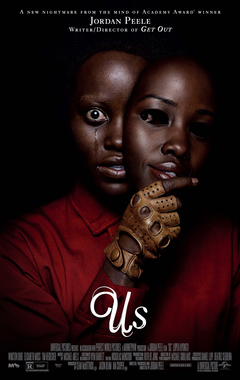
Horror Film Review: Us (dir by Jordan Peele)


“They’re us,” a child says in Jordan Peele’s second film, Us.

And indeed, they are.  Us suggests that everyone has at least one doppelganger, living underground in conditions of absolutely misery and awkwardly imitating the same lives as those above ground, just without any of the rewards that those of us above-ground take for granted.  Those underground are known as the Tethered, because they’re permanently tied to those of us above ground.  Of course, what’s easily overlooked is that we’red tied to them as well.  Or, at least, we are until someone picks up a knife or a pair of scissors and violently severs the connection.

It’s probably not a coincidence that the film’s title — Us — can just as easily be read as U.S, as in the United States.  Jordan Peele may have said that he wanted Us to be a full-on horror film, as opposed to Get Out‘s mix of comedy, horror, and social commentary, but Us definitely has its political subtext, with the Tethered meant to stand in for every marginalized group that has been pushed underground by American society.  Though the film may have been inspired by an episode of The Twilight Zone, it actually has more in common with the classic British shocker, Death Line (a.k.a. Raw Meat.)  There’s not a huge amount of difference between the largely mute Tethered and the pathetic cannibal in Death Line who, after growing up in the British Underground, is capable of only telling his victims to “Mind the doors.”

If nothing else, Us proves that Jordan Peele actually is a good filmmaker with a firm grasp on how to make an effective horror movie.  Get Out was good but also, I think, a bit overpraised by mainstream critics who often seemed to not realize just how much, in their attempts to make sure that we understood just how much they loved and understood the movie, they sounded like Bradley Whitford bragging about how he would have voted for Obama a third time.  When Us came out, a lot of viewers were waiting to see if Peele’s second film could possibly live up to all the hype surrounding its director and, for the most part, it does.

Political subtext aside, this is the all-out horror film that Peele promised, full of jump scares, disturbing imagery, and just enough humor to keep things from getting too unbearably nightmarish.  (As bad as you might feel for Elisabeth Moss’s character and her family, it’s hard not to appreciate the irony of the film’s Alexa-substitute misunderstanding a command to call the police.)  Interestingly enough, the Tethered are pretty much homicidal as soon as they come above ground.  This isn’t a case where a tragic misunderstanding leads to bloodshed that could have been avoided.  No, this is a case where the Tethered have spent decades trapped and out-of-sight and they’re pissed off about it.  Just because the Tethered may be us, that doesn’t mean that they’re going to have any sympathy for us when they finally do track us down.  In the style of Wes Craven’s The Hills Have Have Eyes, Us follows a perfect family as they eventually find themselves resorting to the same violence as the Tethered, in an attempt to save not only their lives but also the lifestyle that they’ve come to take for granted.  The Tethred are us indeed.

The film is well-acted, with Lupita Nyong’o standing out as both the mother of an imperiled family and her doppelganger, who has spent years underground and who is one of the few Tethered to be able to speak.  Of course, there’s a twist at the end of the movie and I won’t ruin it here, other than to say that it’s effectively done and will actually make you reconsider everything that you’ve just seen.

Us is another triumph from Jordan Peele.  Even more importantly, it’s an undeniably effective horror film.

Here’s The Trailer For The Kitchen


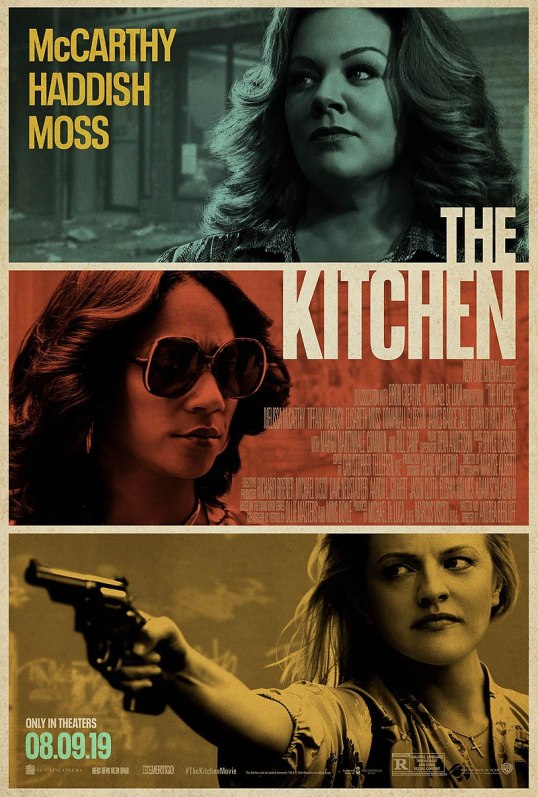
The Kitchen, which will be coming out in August, is one of those films about which I am cautiously optimistic.

It’s about three women in 1970s New York.  Each one is married to a member of the Irish mafia.  When their husbands all end up getting arrested by the FBI, the women take control of the rackets themselves.  This, of course, brings them into conflict with the old and patriarchal Italian mob.

It is it a comedy?  Well, it does star TIffany Haddish and Melissa McCarthy as two of the of the wives.  However, though they both may be thought of as being primarily comedic actresses, Haddish is a critical favorite right now and McCarthy has two Oscar nominations despite the fact that she’s appeared in some truly terrible movies over the past few years.  Both of them have proven that they can handle drama just as well as comedy.

So, is this a drama?  Well, as you can see in the trailer below, it does appear to feature Elisabeth Moss falling in love with violence.  In fact, the trailer features a few people getting killed but it also appears to take a rather jaunty approach to all the death.  “Oh look!  He’s sitting on the toilet and he got shot!”

So, I’m going to guess that this film is going to try to balance both comedy and drama.  That approach, when it works, can lead to wonderful things.  And when it doesn’t work …. well, let’s not even think about it.

I will say this — the trailer’s glimpse of 42nd Street is gorgeous!

Anyway, here’s the trailer for Widows …. I mean, The Kitchen:

Remembering The Real Rocky: Chuck (2017, directed by Philippe Falardeau)


In 1975, an unheralded boxer named Chuck Wepner shocked the world when he managed to go nearly 15 rounds with Muhammad Ali.  (He only fell short by 19 seconds.)  The fight not only made Wepner a temporary celebrity but it also inspired a down-on-his-luck actor to write a script about an aging boxer who just wants to show that he can go the distance.  The name of that script was Rocky and it made Sylvester Stallone a star.

As for Chuck Wepner, he initially enjoyed being known as “the Real Rocky,” but he soon learned that fame is often fleeting.  After Wepner retired from the ring (but not before one exhibition match against Andre the Giant), he attempted to reinvent himself as an actor but a combination of bad friends, bad decisions, and a bad cocaine habit conspired to derail his life and Wepner eventually ended up serving a 10-year prison sentence.  While he was incarcerated, Wepner did get to see a film being shot on location in the prison.  The name of the film was Lock-Up and the star was none other than Sylvester Stallone.

With Chuck, Chuck Wepner finally gets the movie that he deserves.  Wepner’s fight with Ali occurs early on in the film.  The rest of Chuck deals with Wepner’s attempts to deal the aftermath of the biggest night of his life.  Wepner may love his fame but secretly, he knows that it’s not going to last.  While Stallone makes millions playing the role of Rocky Balboa, Chuck struggles to make ends meet.  Even when given a chance to appear in Rocky II, Wepner falls victim to his insecurity and blows the audition.  Seeking escape though drugs, the real Rocky ends up in prison, watching the other Rocky shoot his latest movie.  Though the film suggests that Chuck finally found some peace with his third wife and a career as a liquor distributor, it’s still hard not to feel that Chuck Wepner deserved more.

Featuring a great lead performance from Liev Schreiber and outstanding supporting work from Naomi Watts, Jim Gaffigan, Michael Rapaport, Ron Perlman, and Morgan Spector (who plays Sylvester Stallone as being well-meaning but often insensitive), Chuck is a heartfelt, warts-and-all portrait of Chuck Wepner.  The film sets out to give Wepner the recognition that he deserves and it largely succeeds.  Watch it as a double feature with ESPN’s The Real Rocky.

Here’s What Won At The Emmys Last Night!


Last night, Lisa Marie did not watch the Emmys because she says that, “I’m just not feeling TV this year.”  If Twin Peaks had been eligible to be nominated, I bet it would have been a different story!

Instead, she asked me to watch the ceremony and let everyone know what I thought.  It needed less politics and more cats.

Here’s the list of winners:

COMEDY

BEST COMEDY SERIES
“Atlanta”
“Black-ish”
“Masters of None”
“Modern Family”
“Silicon Valley”
“Unbreakable Kimmy Schmidt”
X — “Veep”

BEST COMEDY ACTRESS
Pamela Adlon, “Better Things”
Jane Fonda, “Grace and Frankie”
Allison Janney, “Mom”
Ellie Kemper, “Unbreakable Kimmy Schmidt”
X — Julia Louis-Dreyfus, “Veep”
Tracee Ellis Ross, “Black-ish”
Lily Tomlin, “Grace and Frankie”

BEST COMEDY ACTOR
Anthony Anderson, “Black-ish”
Aziz Ansari, “Master of None”
Zach Galifianaks, “Baskets”
X — Donald Glover, “Atlanta”
William H. Macy, “Shameless”
Jeffrey Tambor, “Transparent”

BEST COMEDY SUPPORTING ACTRESS
Vanessa Bayer, “Saturday Night Live”
Anna Chlumsky, “Veep”
Kathryn Hahn, “Transparent”
Leslie Jones, “Saturday Night Live”
Judith Light, “Transparent”
X — Kate McKinnon, “Saturday Night Live”

BEST COMEDY SUPPORTING ACTOR
Louie Anderson, “Baskets”
X — Alec Baldwin, “Saturday Night Live”
Tituss Burgess, “Unbreakable Kimmy Schmidt”
Ty Burrell, “Modern Family”
Tony Hale, “Veep”
Matt Walsh, “Veep”

BEST COMEDY DIRECTING
X — “Atlanta” (“B.A.N.”)
“Silicon Valley” (“Intellectual Property”)
“Silicon Valley” (“Server Error”)
“Veep” (“Justice”)
“Veep” (“Blurb”)
“Veep” (“Groundbreaking”)

BEST COMEDY WRITING
“Atlanta” (“B.A.N.”)
“Atlanta” (“Streets on Lock”)
X — “Master of None” (“Thanksgiving”)
“Silicon Valley” (“Success Failure”)
“Veep” (“Groundbreaking”)
“Veep” (“Georgia”)

DRAMA

BEST DRAMA SERIES
“Better Call Saul”
“The Crown”
X — “The Handmaid’s Tale”
“House of Cards”
“Stranger Things”
“This is Us”
“Westworld”

BEST DRAMA ACTRESS
Viola Davis, “How to Get Away with Murder”
Claire Foy, “The Crown”
X — Elisabeth Moss, “The Handmaid’s Tale”
Keri Russell, “The Americans”
Evan Rachel Wood, “Westworld”
Robin Wright, “House of Cards”

BEST DRAMA ACTOR
X — Sterling K. Brown, “This is Us”
Anthony Hopkins, “Westworld”
Bob Odenkirk, “Better Call Saul”
Matthew Rhys, “The Americans”
Liev Schreiber, “Ray Donovan”
Kevin Spacey, “House of Cards”
Milo Ventimiglia, “This is Us”

BEST DRAMA SUPPORTING ACTRESS
Uzo Aduba, “Orange is the New Black”
Millie Bobby Brown, “Stranger Things”
X — Ann Dowd, “The Handmaid’s Tale”
Chrissy Metz, “This is Us”
Thandie Newton, “Westworld”
Samira Wiley, “The Handmaid’s Tale”

BEST DRAMA SUPPORTING ACTOR
Jonathan Banks, “Better Call Saul”
David Harbour, “Stranger Things”
Ron Cephas Jones, “This is Us”
Michael Kelly, “House of Cards”
X — John Lithgow, “The Crown”
Mandy Patinkin, “Homeland”
Jeffrey Wright, “Westworld”

BEST DRAMA DIRECTING
“Better Call Saul” (“Witness”)
“The Crown” (“Hyde Park Corner”)
“The Handmaid’s Tale” (“The Bridge”)
X — “The Handmaid’s Tale” (“Offred”)
“Homeland” (“America First”)
“Stranger Things” (“Chapter One: The Vanishing of Will Byers”)
“Westworld” (“The Bicameral Mind”)

BEST DRAMA WRITING
“The Americans” (“The Soviet Division”)
“Better Call Saul” (“Chicanery”)
“The Crown” (“Assassins”)
X — “The Handmaid’s Tale” (“Offred”)
“Stranger Things” (“Chapter One: The Vanishing of Will Byers”)
“Westworld” (“The Bicameral Mind”)

MOVIE/LIMITED SERIES

BEST LIMITED SERIES
X — “Big Little Lies”
“Fargo”
“Feud: Bette and Joan”
“Genius”
“The Night Of”

BEST TV MOVIE
X — “Black Mirror: San Junipero”
“Christmas of Many Colors”
“The Immortal Life of Henrietta Lacks”
“Sherlock: The Lying Detective”
“The Wizard of Lies”

BEST MOVIE/MINI ACTRESS
Carrie Coon, “Fargo”
Felicity Huffman, “American Crime”
X — Nicole Kidman, “Big Little Lies”
Jessica Lange, “Feud: Bette and Joan”
Susan Sarandon, “Feud: Bette and Joan”
Reese Witherspoon, “Big Little Lies”

BEST MOVIE/MINI ACTOR
X — Riz Ahmed, “The Night Of”
Benedict Cumberbatch, “Sherlock: The Lying Detective”
Robert De Niro, “The Wizard of Lies”
Ewan McGregor, “Fargo”
Geoffrey Rush, “Genius”
John Turturro, “The Night Of”

BEST MOVIE/MINI SUPPORTING ACTRESS
Judy Davis, “Feud: Bette and Joan”
X — Laura Dern, “Big Little Lies”
Jackie Hoffman, “Feud: Bette and Joan”
Regina King, “American Crime”
Michelle Pfeiffer, “The Wizard of Lies”
Shailene Woodley, “Big Little Lies”

BEST MOVIE/MINI SUPPORTING ACTOR
Bill Camp, “The Night Of”
Alfred Molina, “Feud: Bette and Joan”
X — Alexander Skarsgard, “Big Little Lies”
David Thewlis, “Fargo”
Stanley Tucci, “Feud: Bette and Joan”
Michael Kenneth Williams, “The Night Of”

BEST MOVIE/MINI DIRECTING
X — “Big Little Lies”
“Fargo” (“The Law of Vacant Places”)
“Feud: Bette and Joan” (“And the Winner Is”)
“Genius” (“Einstein: Chapter One”)
“The Night Of” (“The Art of War”)
“The Night Of” (“The Beach”)

BEST MOVIE/MINI WRITING
“Big Little Lies”
X — “Black Mirror: San Junipero”
“Fargo” (“The Law of Vacant Places”)
“Feud: Bette and Joan” (“And the Winner Is”)
“Feud: Bette and Joan” (“Pilot”)
“The Night Of” (“Call of the Wild”)

VARIETY/REALITY

BEST REALITY COMPETITION PROGRAM
“The Amazing Race”
“Amercan Ninja Warrior”
“Project Runway”
“RuPaul’s Drag Race”
“Top Chef”
X — “The Voice”

BEST VARIETY TALK SERIES
“Full Frontal with Samantha Bee”
“Jimmy Kimmel Live”
X — “Last Week Tonight with John Oliver”
“Late Late Show with James Corden”
“Late Show with Stephen Colbert”
“Real Time with Bill Maher”

BEST VARIETY SKETCH SERIES
“Billy on the Street”
“Documentary Now”
“Drunk History”
“Portlandia”
X — “Saturday Night Live”
“Tracey Ullman’s Show”

BEST VARIETY SERIES DIRECTING
“Drunk History”
“Jimmy Kimmel Live”
“Last Week Tonight with John Oliver”
“Late Show with Stephen Colbert”
X — “Saturday Night Live”

BEST VARIETY SERIES WRITING
“Full Frontal with Samantha Bee”
X — “Last Week Tonight with John Oliver”
“Late Night with Seth Meyers”
“Late Show with Stephen Colbert

Insomnia File #21: Truth (dir by James Vanderbilt)


What’s an Insomnia File? You know how some times you just can’t get any sleep and, at about three in the morning, you’ll find yourself watching whatever you can find on cable? This feature is all about those insomnia-inspired discoveries!

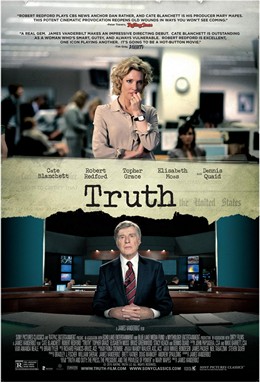
If, last night, you found yourself awake at three in the morning, you could have turned over to Starz and watched the 2015 film, Truth.

I can’t say for sure whether or not Truth would have put you to sleep.  It kept me awake, largely because I was in a state of shock that any movie could be as bad as what I was watching.  Without running the risk of hyperbole, I can say that Truth is one of the worst fucking movies that I’ve ever seen in my entire life.  It’s not just that the film is poorly scripted, inconsistently acted, and directed in the most heavy-handed way possible.  No, the problems with Truth went far beyond mere execution.  Truth is a film with an agenda, one that I kind of agree with, but it’s such a total misfire that it ends up doing more damage to its cause than good.  Truth is meant to be a defense of the much maligned mainstream media but it’s so poorly put together that it’s easy to imagine it being one of Donald Trump’s guilty pleasures.  Remember how all of us musical theater nerds used to hatewatch Smash?  I imagine that the White House staff does the same thing with Truth.

Truth is ostensibly based on a true story.  In 2004, veteran anchorman Dan Rather (played by Robert Redford) reported a story that then-President George W. Bush got preferential treatment while he was serving in the Air National Guard.  This story was considered to be especially big because 1) the Iraq War was deeply unpopular, 2) Bush was in a tight race for reelection, 3) his opponent, John F. Kerry, didn’t have much to offer beyond having served in Vietnam, and 4) questions were being raised about what Kerry actually did in Vietnam.

One of the most important pieces of evidence in Rather’s story were four memos that had been provided by a retired Lieutenant Colonel from the Air National Guard, a veteran Bush-hater named Bill Burkett (played, in the film, by Stacy Keach).  Shortly after the story aired, conservative bloggers claimed that the memos were obvious forgeries.  After spending weeks defending the story and haughtily dismissing anyone who didn’t collect an eight-figure paycheck from CBS, Rather admitted on air that the authenticity of the memos could not be verified.  In the wake of the scandal, Rather’s longtime producer, Mary Mapes (Cate Blanchett), was fired.  Rather retired a year earlier than expected and went on to become one of those reliably dull commentators who occasionally emerges to complain about how the world hasn’t been the same since Adlai Stevenson died.  Mapes later wrote a book, which argued that 1) the memos were authentic and 2) it didn’t actually matter whether they were authentic, even though they like so totally were.

With all the current talk about fake news and whether both the media and Hollywood exist in a bubble, Truth is a film that should be especially relevant but, as previously stated, it’s so clumsy and heavy-handed that it actually does more harm than good.  About halfway through the film, there’s a hilarious scene in which literally the entire country is shown watching 60 Minutes with awe-struck expression on their face.  Children are watching.  Customers in a bar are watching.  The cooking staff in the kitchen pauses in their work to watch the report.  Heroic music rises on the soundtrack.  This scene, with all of its self-important grandeur, pretty much sums up everything that’s wrong with Truth.  It’s one thing to argue that the news media does, should, and must play an important role in American life.  It’s another thing to make your argument by constructing a fantasy world where the entire country plots their lives around watching 60 Minutes.  But that’s the way Vanderbilt directs the entire film.  He’s so high on the fumes of his good intentions that he doesn’t realize his film basically comes across like a parody of those intentions.

Especially in the second half of the film, there’s a lot of speeches about why journalism is important.  And those speeches may actually make a great point but the problem is that none of them convince us that Mary Mapes and Dan Rather didn’t get fooled by some painfully obvious forgeries.  In its laudable effort to defend journalism, Truth makes the mistake of excusing shoddy journalism. When, towards the end of the film, Mapes exclaims that the memos were only a minor part of the overall story and not necessary to prove that Bush got preferential treatment, you want someone to ask her, “If you could prove the story without them, then why did you include these unverifiable documents in the first place, especially considering that they were received from a questionable source?”  But nobody does because none of the film’s saintly characters have been written or portrayed with the nuance necessary to be able to survive a question like that.   Truth‘s problem is that it wants to have it both ways.  “It doesn’t matter that this story was based on obviously fake documents,” Truth says, “And, because Mary Mapes and Dan Rather were sent by God to tell the truth, the obviously fake documents were completely real.”

And then there’s the film’s performers.  Stacy Keach is great as Burkitt and his eccentric performance suggests the film that Truth could have been if it wasn’t so concerned with trying to portray its lead characters as saints.  But then there’s Robert Redford, whose portrayal of Dan Rather has all the nuance and personality of a wax figure.  (Redford wears suspenders.  That’s the extent of his performance.)  As Mary Mapes, Cate Blanchett is totally wasted.  She doesn’t really have a character to play, beyond her male director’s conception of what a professional woman is supposed to be like.  (She also has a traumatic back story of abuse, which the film trots out in such a klutzy manner that it’s actually incredibly insulting to real-life abuse victims.)  Dennis Quaid, Topher Grace, and Elisabeth Moss all show up as members of Mapes’s team.  Quaid is playing a military man so he gets to salute in slow motion.  Grace is playing a hipster with a beard so he gets this embarrassing scene where he rants about how he’s being targeted not because of sloppy reporting but because of a corporate conspiracy.  (This was obviously meant to be a huge applause moment but, like a lot of the movie, it doesn’t explain how the progressive cause is helped by shoddy journalism.)  Moss doesn’t get to do anything, other than sit in the background.  To waste a cast of this quality is a crime.

So why did this mostly terrible film get respectful reviews?  Why did Sasha Stone and Jeff Wells insist that Truth was destined to be an Oscar contender?  Call it confirmation bias.  Truth plays to mainstream liberals (which includes the majority of film reviewers) in much the same way that God’s Not Dead 2 plays to Christians.  But just because you agree with a film’s ideology, that doesn’t make it an example of good filmmaking.  While artistic films are often political, it’s rare that political films are ever art.  If every anti-Bush film was an artistic masterpiece, we would be living in a cinematic golden age.

Here’s the thing.  We live in a time when the media is under attack and being used a convenient scapegoat for every bad thing in America. Donald Trump largely won in 2016 by portraying the media as being biased and that’s a charge that will undoubtedly be repeated many times over the next four years.  A heavy-handed mess like Truth doesn’t help anything.

truth_2015_poster

Previous Insomnia Files:

  1. Story of Mankind
  2. Stag
  3. Love Is A Gun
  4. Nina Takes A Lover
  5. Black Ice
  6. Frogs For Snakes
  7. Fair Game
  8. From The Hip
  9. Born Killers
  10. Eye For An Eye
  11. Summer Catch
  12. Beyond the Law
  13. Spring Broke
  14. Promise
  15. George Wallace
  16. Kill The Messenger
  17. The Suburbans
  18. Only The Strong
  19. Great Expectations
  20. Casual Sex?

Talking About Love: The Best of Me (dir by Michael Hoffman) and The One I Love (dir by Charlie McDowell)


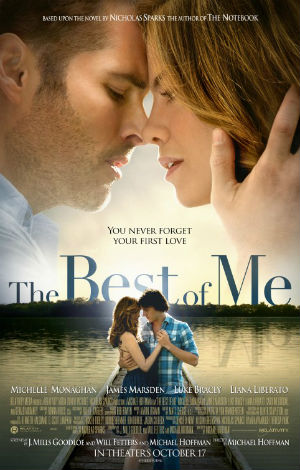
The_Best_of_Me_poster

When I wrote my review of The Theory of Everything, I mentioned that Stephen Hawking’s A Brief History of Time made a brief, if important, appearance in another film released earlier this year.  That film, of course, was the latest Nicholas Sparks adaptation, The Best Of Me.  

Now, I have to admit that The Best Of Me was one of those forgettable films that I kind of suspected most of our readers would not mind me never getting around to reviewing.  It came out two months ago, it got terrible reviews, and it didn’t do much business at the box office.  I didn’t even enjoy it and I’m the girl who always ends up defending the Twilight films whenever the boys here at the Shattered Lens start to make fun of them.  You can tell the impression that the Rest Of Me made on me by the fact that I just got the name wrong and I didn’t even bother to correct my mistake.

But here’s the thing.  January is rapidly approaching and, with January, comes my annual 16 worst films of the year list.  And chances are that The Best Of Me will appear on that list and I’d like to be able to link to a review.

It’s probably not a shock to hear that The Best Of Me is not a good film.  With the exception of The Notebook, the novels of Nicholas Sparks are not known for inspiring good films.  Instead, they are known for inspiring films about achingly pretty people who meet on the beach, have a melodramatic secret in the past, and ultimately end up falling in love.  And dying, of course.  Somebody always has to die.  The familiar Nicholas Sparks formula actually works pretty well when you’re the one reading his prose and visualizing the story in your head.  That’s largely because you can always imagine yourself as the heroine and maybe James Franco, Bradley Cooper, or Ryan Gosling as the hero.  But, when it comes to making movies out of his books, the end results are often so predictable and uninspired that the Nicholas Sparks drinking game had to be legally banned after scores of single women fell ill with alcohol poisoning.

(Yes, that actually did happen!  Google it! …. or don’t.  Actually, don’t.)

The Best Of Me is, without a doubt, the most Nicholas Sparksian Nicholas Sparks adaptation ever made.  Seriously, it has everything that you would expect from a Nicholas Sparks film and it presents it all so predictably that watching the movie is a bit like watching a checklist.  We’ve got two former high school lovers who are reunited 20 years later.  We’ve got melodrama that comes out of nowhere.  We’ve got multiple flashbacks.  We’ve got soft focus cinematography.  And, of course, we’ve got an ending that is meant to be both tragic and inspiring but it’s neither because, since this is a Nicholas Sparks movie, we already knew that the ending was going to try to be both tragic and inspiring.

What we don’t have is much chemistry between the two lead actors.  James Marsden and Michelle Monaghan are both pretty in the way that people in Nicholas Sparks films often are but you never get the feeling that they have much affection for each other.  Even worse, in the flashbacks, their characters are played by two actors (Luke Bracey and Liana Liberato) who look absolutely nothing like James Marsden or Michelle Monaghan.  In particular, it’s impossible to believe that Luke Bracey could ever grow up to look like James Marsden.  I found myself half-expecting a huge twist where Marsden would reveal that he was an intruder.

And you know what?

That would have been a lot more interesting than what we got!  Somebody help me get in touch with Nicholas Sparks!  I’ve got some ideas for his next book!

The One I Love

For a far more memorable look at love and relationships, allow me to suggest The One I Love, a film that was obviously made for a lot less money than The Best of Me but which is also a lot more thought-provoking.

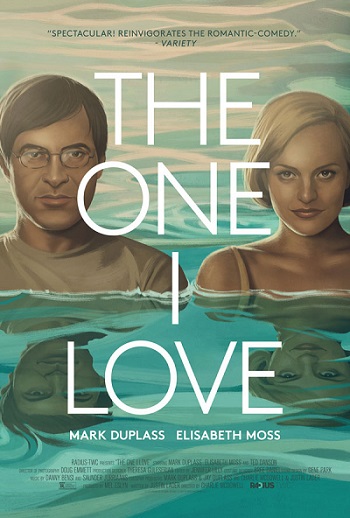
In The One I Love, Mark Duplass and Elisabeth Moss play a couple whose marriage is on the verge of breaking up.  At the suggestion of their friendly-yet-creepy marriage counselor (Ted Danson), they agree to spend a weekend at a beautiful but remote house.  Danson assures them that they will be the only couple at the house. Duplass and Moss agree and, at first, the weekend seems to be working.  However, soon both of them start having conversations and encounters that the other claims to not remember.  Duplass and Moss discover that they are not alone at the house…

And to tell you anything else about the plot would be unfair.  The One I Love is one of those films that works best when the viewer discovers its mysteries at the same time as the characters.  To spoil the film would be a crime.  Let’s just say that there is a twist that will leave you reconsidering everything that you’ve previously seen in the movie.

Beyond that twist, however, The One I Love works for the exact reason that The Best of Me does not.  Moss and Duplass have the chemistry that the leads in The Best Of Me lack.  You believe them both as individuals and as a couple.

So, when it comes time to consider what we talk about when we talk about love, check out The One I Love and leave The Best Of Me behind.

Trailer: On The Road


Here’s the trailer for the film that will probably end up dominated my twitter timeline when it’s eventually released.  I follow a lot of big Kerouac fans (and I think Big Sur is one of the great American novels) and I’ll be interested to see what they think of the long-delayed film version of On The Road.  For now, I’ll just say that it’s rarely a good sign when the film version of an iconic novel is full of star cameos and I have a hard time imagining the dependably dull Garrett Hedlund as Dean Moriarty.

(Already, I can hear people complaining about the prominence of Kristen Stewart in the film’s trailer….)

Green Lantern: Emerald Knights (Trailer)


Since this weekend has turned into Green Lantern weekend due to the promotional blitz by Warner Brothers to hype up it’s upcoming live-action film of the same title I would be remiss not to include as part of his hype the upcoming animated film from Warner Premiere and DC Animation: Green Lantern: Emerald Knights.

This latest in DC animated films (all of which have been good to great. Not a stinker in them) is an anthology film which takes six stories of the greatest Green Lanterns and links them to the current danger threatening the Guardians (creator of the Green Lantern Corps), the GL Corps and the universe itself.

Before this weekend’s WonderCon footage for the live-action was shown I was more excited for Green Lantern: Emerald Knights than I was for the Ryan Reynolds live-action. It had a great voice cast with Nathan Fillion (fans’ first choice for live-action Hal Jordan) as Hal Jordan with Elisabeth Moss, Jason Isaacs, Kelly Hu, Henry Rollins and Steve Blum rounding out the ensemble cast.

I think with the batting average of the DC Animation being quite high I have high hopes that Green Lantern: Emerald Knights will follow in the footsteps of it’s predecessor and have critical and general success.