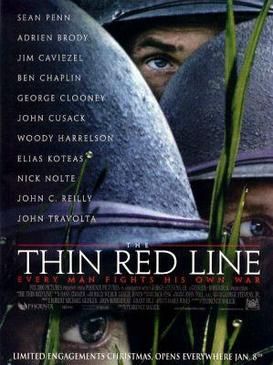
Lisa Marie Reviews An Oscar Nominee: The Thin Red Line (dir by Terrence Malick)


Based on a novel by James Jones (and technically, a sequel of sorts to From Here To Eternity), 1998’s The Thin Red Line is one of those Best Picture nominees that people seem to either love or hate.

Those who love it point out that the film is visually stunning and that director Terrence Malick takes a unique approach to portraying both the Battle of Guadalcanal and war in general.  Whereas Steven Spielberg’s Saving Private Ryan told a rather traditional story about the tragedy of war (albeit with much more blood than previous World War II films), The Thin Red Line used the war as a way to consider the innocence of nature and the corrupting influence of mankind.  “It’s all about property,” one shell-shocked soldier shouts in the middle of a battle and later, as soldiers die in the tall green grass of the film’s island setting, a baby bird hatches out of an egg.  Malick’s film may have been an adaptation of James Jones’s novel but its concerns were all pure Malick, right down to the philosophical voice-overs that were heard throughout the film.

Those who dislike the film point out that it moves at a very deliberate pace and that we don’t really learn much about the characters that the film follows.  In fact, with everyone wearing helmets and running through the overgrown grass, it’s often difficult to tell who is who.  (One gets the feeling that deliberate on Malick’s point.)  They complain that the story is difficult to follow.  They point out that the parade of star cameos can be distracting.  And they also complain that infantrymen who are constantly having to look out for enemy snipers would not necessarily be having an inner debate about the spirituality of nature.

I will agree that the cameos can be distracting.  John Cusack, for example, pops up out of nowhere, plays a major role for a few minutes, and then vanishes from the film.  The sight of John Travolta playing an admiral is also a bit distracting, if just because Travolta’s mustache makes him look a bit goofy.  George Clooney appears towards the end of the film and delivers a somewhat patronizing lecture to the men under his command.  Though his role was apparently meant to be much larger, Adrien Brody ends up two lines of dialogue and eleven minutes of screentime in the film’s final cut.

That said, The Thin Red Line works for me.  The film is not meant to be a traditional war film and it’s not necessarily meant to be a realistic recreation of the Battle of Guadalcanal.  Instead, it’s a film that plays out like a dream and, when viewed a dream, the philosophical voice overs and the scenes of eerie beauty all make sense.  Like the majority of Malick’s films, The Thin Red Line is ultimately a visual poem.  The plot is far less important than how the film is put together.  It’s a film that immerses you in its world.  Even the seeming randomness of the film’s battles and deaths fits together in a definite patten.  It’s a Malick film.  It’s not for everyone but those who are attuned to Malick’s wavelength will appreciate it even if they don’t understand it.

And while Malick does definitely put an emphasis on the visuals, he still gets some good performances out of his cast.  Nick Nolte is chilling as the frustrated officer who has no hesitation about ordering his men to go on a suicide mission.  Elias Koteas is genuinely moving as the captain whose military career is ultimately sabotaged by his kind nature.  Sean Penn is surprisingly convincing as a cynical sergeant while Jim Caviezel (playing the closest thing the film has to a main character) gets a head start on humanizing messianic characters by playing the most philosophical of the soldiers.  Ben Chaplin spends most of his time worrying about his wife back home and his fantasies give us a glimpse of what’s going on in America while its soldiers fight and die overseas.

The Thin Red Line was the first of Terrence Malick’s films to be nominated for Best Picture and it was one of three World War II films to be nominated that year.  However, it lost to Shakespeare In Love.

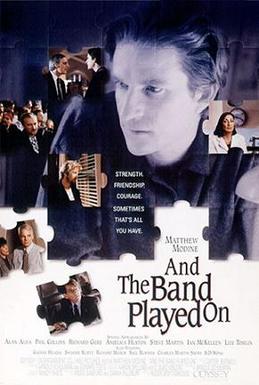
Film Review: And The Band Played On (dir by Roger Spottiswoode)


I live in a very cynical time.

That was one of my main thoughts as I watched 1993’s And The Band Played On.

Directed by Roger Spottiswoode and featuring an all-star cast, And The Band Played On deals with the early days of the AIDS epidemic.  It’s a film that features many different characters and storylines but holding it all together is the character of Dr. Don Francis (Matthew Modine), an epidemiologist who is haunted by what he witnessed during the Ebola epidemic in Africa and who fears that the same thing is going to happen in America unless the government gets serious about the mysterious ailment that is initially called “gay cancer” before then being known as “GRID” before finally being named AIDS.  Dr. Francis is outspoken and passionate about fighting disease.  He’s the type who has no fear of yelling if he feels that people aren’t taking his words seriously enough.  In his office, he keeps a track of the number of HIV infections on a whiteboard.  “Butchers’ Bill” is written across the top of the board.

Throughout the film, quite a few people are dismissive of Dr. Francis and his warnings.  But we, the audience, know that he’s right.  We know this because we know about AIDS and but the film also expects us to trust Dr. Francis because it’s specifically stated that he worked for the World Health Organization before joining the Center For Disease Control in Atlanta, Georgia.  As far as the film is concerned, that’s enough to establish his credentials.  Of course, today, after living through the excesses of the COVID pandemic and the attempts to censor anyone who suggested that it may have begun due to a lab leak as opposed to some random guy eating a bat, many people tend to view both the WHO and the CDC with a lot more distrust than they did when this film was made.  As I said, we live in a cynical time and people are now a lot less inclined to “trust” the experts.  To a large extent, the experts have only themselves to blame for that.  I consider myself to be a fairly pragmatic person but even I now find myself rolling my eyes whenever a new health advisory is issued.

This new sense of automatic distrust is, in many ways, unfortunate.  Because, as And The Band Played On demonstrates, the experts occasionally know what they’re talking about.  Throughout the film, people refuse to listen to the warnings coming from the experts and, as a result, many lives are lost.  The government refuses to take action while the search for a possible cure is hindered by a rivalry between international researchers.  Alan Alda gives one of the best performances in the film, playing a biomedical researcher who throws a fit when he discovers that Dr. Francis has been sharing information with French scientists.

It’s a big, sprawling film.  While Dr. Francis and his fellow researchers (played by Saul Rubinek, Glenne Headly, Richard Masur, Charles Martin Smith, Lily Tomlin, and Christian Clemenson) try to determine how exactly the disease is spread, gay activists like Bobbi Campbell (Donal Logue) and Bill Kraus (Ian McKellen) struggle to get the government and the media to take AIDS seriously.  Famous faces pop up in small rolls, occasionally to the film’s detriment.  Richard Gere, Steve Martin, Anjelica Huston, and even Phil Collins all give good performances but their fame also distracts the viewer from the film’s story.  There’s a sense of noblesse oblige to the celebrity cameos that detracts from their effectiveness.  All of them are out-acted by actor Lawrence Monoson, who may not have been a huge star (his two best-known films are The Last American Virgin and Friday the 13 — The Final Chapter) but who is still heart-breakingly effective as a young man who is dying of AIDS.

Based on a 600-page, non-fiction book by Randy Shilts, And The Band Played On is a flawed film but still undeniably effective and a valuable piece of history.  Director Roger Spottiswoode does a good job of bringing and holding the many different elements of the narrative together and Carter Burwell’s haunting score is appropriately mournful.  The film ends on a somber but touching note.  At its best, it’s a moving portrait of the end of one era and the beginning of another.

Late Night Retro Television Reviews: Gun 1.5 “The Hole”


Welcome to Late Night Retro Television Reviews, a feature where we review some of our favorite and least favorite shows of the past!  On Tuesdays, I will be reviewing Gun, an anthology series that ran on ABC for six week in 1997.  The entire show is currently streaming on Tubi!

This week, the gun ends up at the bottom of a swimmin’ hole!

Episode 1.5 “The Hole”

(Dir by Ted Demme, originally aired on May 24th, 1997)

Yep, this episode of Gun centers around an old country swimming hole.  Every day, teenage Sondra (Kirsten Dunst) and her younger brothers, Brendan (Drake Bell) and Tad (Joe Pichler), head down to the Hole.  For Sondra, swimming in the Hole is a chance to escape from her life of living in a trailer park with her trashy mother (Carrie Fisher) and her pervy stepfather (Cliff Bemis).  For Brendan and Tad, going to the Hole is a chance to look for the treasure that they are convinced is at the bottom of the water.  It is true that there is something shiny in the Hole.  Sondra thinks that it might be the diamonds that she could use to finance an escape from the trailer park and a one-way trip down to Florida.  Actually, it’s the pearl-handled gun that’s been at the center of every episode of Gun.

(In this episode, it’s suggested that the gun has been at the bottom of the hole for over a year.  So, how did it end up in that town in the first place?  Is this episode taking place before or after the previous episodes?  I guess the simple solution is that it’s not the same gun as the gun seen in the previous episodes but the part of me that loves continuity is having a hard time accepting that.)

The gun belonged to James Munday (Johnny Whitworth), who has only recently been released from prison.  He was convicted of murdering his girlfriend and only the fact that he was a minor at the time kept him from being given a life sentence.  James claims that his girlfriend died as a part of a failed suicide pact and he’s convinced that the gun in the Hole can prove his innocence.

When James and Sondra meet, it doesn’t take long for them to fall for each other.  Sondra remains James of his dead girlfriend and Sondra, like of all of us, is attracted to brooding rebels.  However, when the rest of the town hears that James has been going to the Hole, a lynch mob is formed.  Dick Sproule (Max Gail), the father of the girl that James was convicted of killing, is soon at the Hole with a rifle in his hands.  Can James prove his innocence and will the town even care?

This episode was extremely overwrought and it featured every flaw that tends to turn me off of anthology shows in general.  All of the characters were broadly drawn.  The dialogue was way overwritten.  Director Ted Demme told the story with a heavy-hand and used slow motion as if he was under the impression that he was the first director to ever consider heightening the drama by slowing things down.  The whole thing just felt like a bad creative writing assignment.  Out of the cast, only Kirsten Dunst was able to really create a character who felt as if she had a life outside of the demands of the story.  Everyone else seemed to be a caricature.  In the end, James may have been a hot, brooding rebel but he was also kind of whiny.  That got old pretty quickly.

*Sigh*  Well, that’s another disappointing episode of Gun for you!  Next week, I’ll be reviewing the series finale.  Hopefully, this show will at least end on a worthwhile note.

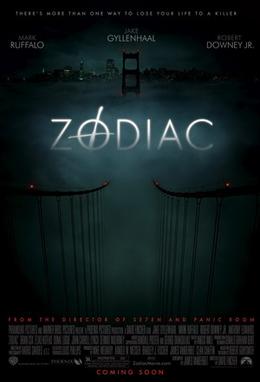
October True Crime: Zodiac (dir by David Fincher)


Who was the Zodiac Killer?

That is a question that has haunted journalists, cops, and true crime fans since the late 60s.  It is known that the Zodiac Killer murdered at least five people in Northern California in 1968 and 1969.  He targeted young couples, though he is also thought to have murdered on taxi driver as well.  What set Zodiac apart from other killers is that he was a prolific letter writer, who sent cards and ciphers to the police and the journalists who were reporting on his crimes.  In one of his ciphers, Zodiac claimed that he had killed 37 people.  Cartoonist Robert Graysmith later wrote two books about his personal obsession with the case.  He estimated that the Zodiac may have been responsible for hundred of murders, up through the 80s.  Of course, reading Graysmith’s first Zodiac book, it’s also easy to suspect that Graysmith reached a point where he saw the Zodiac’s hand in every unsolved murder in the San Francisco area.  Of all the unidentified serial killers in American history, Zodiac is one that most haunts us.  Zodiac was a serial killer who operated in an era when such things were still considered to be uncommon.  Much as Jack the Ripper did during the Victorian Age, Zodiac announced the arrival of a new age of evil.

Zodiac wrote about being a film fan and he was probably happy about the fact that he inspired quite a few films.  1971’s The Zodiac Killer came out while Zodiac was still sending letters to the police and cops actually staked out the theaters showing the film just to see if he  would show up.  Dirty Harry‘s Scorpio Killer was also based on Zodiac, right down to the taunting letters that he sent the mayor and again, one has to wonder if Zodiac ever showed up to watch Clint Eastwood take him down.

And, if Zodiac survived into the 21st Century, one has to wonder if he showed up in the theaters for 2007’s Zodiac.

One of the best true crime films ever made, Zodiac not only recreates the crimes of the Zodiac but it also examines the mental price of obsessing over the one unknown force of evil.  Mark Ruffalo plays Dave Toschi, the celebrity cop who nearly sacrificed his professional reputation in his search for the identity of the killer.  Jake Gyllenhaal plays cartoonist Robert Graysmith, who spends over a decade searching for the Zodiac’s identity and who loses his wife (Chloe Sevigny) in the process.  And Robert Downey, Jr. plays Paul Avery, the crime reporter to whom the Zodiac wrote and who sunk into paranoia and addiction as a result.  This is a film that is less about the Zodiac’s crime and more about how this unknown killer seemed to unleash a darkness that would come to envelope first a city and eventually an entire nation.

As one might expect from a film directed by David Fincher, Zodiac plays out like a filmed nightmare with the starkly portrayed murders being all the more disturbing because they often take place outside, where people would think they would be safe.  (The second murder is especially terrifying, as it plays out without even the sound of background music to allow us the escape of remembering that it’s only a movie.)  Fincher heightens our paranoia but having a different actor play the killer in each scene, reminding us that the Zodiac could literally be anyone.  Indeed, one of the scarier things about Zodiac is that, in the course of his investigation, Graysmith meets so many different people who seem like they could be the killer.  Even if they aren’t the Zodiac, the viewer is left with the feeling that the world is full of people who are capable of committing the same crimes.  The film becomes a journey into the heart of darkness, with the Zodiac becoming both a malevolent force and potentially your next door neighbor.  And with the film’s detailed recreation of the 60s and the 70s, the film becomes a portrait of a country on the verge of changing forever with the Zodaic and his crimes representing all the fear waiting in the future.

Again, as one might expect from a Fincher film, it’s a well-acted film, especially by Robert Downey, Jr.  Zodiac came out a year before Iron Man, when Downey was still better known for his personal troubles than for his talent.  Downey perfect captures his character’s descent into self-destruction, as he goes from being cocky and self-assured to being so paranoid that he’s carrying a gun.  (Paul Avery’s actual colleagues have disputed the film’s portrayal of Avery being mentally destroyed by the Zodiac.)  Ruffalo and Gyllenhaal also do a good job of portraying Toschi and Graysmith’s growing obsession with the case while Charles Fleischer and John Carroll Lynch both make strong (and creepy) impressions as two men who might (or might not) be the killer.

Though the film was not a success at the box office and it was totally ignored by the Academy, Zodiac has built up a strong reputation in the years since its released.  It’s inspired a whole new generation of web sleuths to search for the killer’s identity.  Personally, my favored suspect is Robert Ivan Nichols, an enigmatic engineer who abandoned his former life and changed his name to Joseph Newton Chandler III in the 70s and who committed suicide in 2002.  I think much like Jack the Ripper, the Zodiac’s identity will never be definitely known.  There have been many compelling suspects but most of the evidence seems to be circumstantial.  (That’s certainly the case when it comes to Nichols.)  The Zodiac was thought to be in his 30s or even his early 40s in 1969 so it’s doubtful that he’s still alive today.  In all probability, his identity and his motive will forever remain an unsolvable mystery.

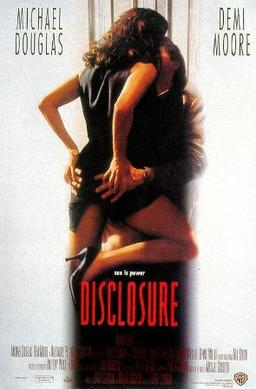
Insomnia File #39: Disclosure (dir by Barry Levinson)


What’s an Insomnia File? You know how some times you just can’t get any sleep and, at about three in the morning, you’ll find yourself watching whatever you can find on cable? This feature is all about those insomnia-inspired discoveries!

On Tuesday, if you were having trouble getting to sleep around one in the morning, you could have turned over to Cinemax and watched the 1994 film, Disclosure.

The majority of Disclosure takes place at DigiCorp, which is some sort of technology company that Bob Garvin (Donald Sutherland) founded because, as the movie explains it, he only has $100 million dollars but still dreams of being a billionaire someday.  With a huge merger approaching, Garvin announces that he will be promoting Meredith Johnson (Demi Moore) to run the new CD-ROM division.  This shocks a lot of people, as everyone was expecting the promotion to go to Tom Sanders (Michael Douglas).  However, Garvin explains that, ever since his daughter died, he’s wanted to promote a woman.

(Presumably, if a male relative had died, Tom would have gotten the promotion.  I have to admit that I kept waiting for the film to get back to the subject of Garvin’s dead daughter but, apparently, that was just an odd throw-away line.)

Tom and Meredith have a history.  They were once lovers, though Tom is now happily married to Susan (Caroline Goodall) and has a family.  Meredith takes one look at a picture of Susan and says that Tom must miss being able to take his lover from behind whenever he felt like it.  Tom says, “Mrs. Robinson,  you’re trying to seduce me.”  No, actually, he says, “No, no, no, no, no, no…..”  It all ends with Tom fleeing Meredith’s office while Meredith, in her bra, chases after him, shouting threats all the way.  The only witness to this is a cleaning lady who sadly shakes her head before returning to her dusting.

Tom is so traumatized by the experience that he has a bizarre nightmare in which Donald Sutherland says that he likes his suit and then attempts to lick his face.  Tom’s trauma continues when he goes to work the next day and discovers that Meredith has accused him of sexual harassment!  Tom responds by suing the company and it’s time for an epic courtroom battle, one that will deal with one of the most important issues of our time….

….except that never happens.  Here’s what is weird.  For all the talk about abuse of power and all the scenes of a remorseful Tom apologizing to both his wife and his secretary for his past behavior, the whole sexual harassment plot turns out to be a red herring.

Instead, the film turns into this weird techno thriller, one that involves Tom trying to figure out how to make a better CD-ROM.  That may have been a big deal back in 1994 but today, you watch the film and you think, “Who cares?”  (Even better is a scene where Garvin brags about how his company is on the cutting edge of fax technology.)  Once Tom realizes that Meredith only accused him of sexual harassment to keep him from building the perfect CD-ROM, we get a scene of him using a virtual reality headset to search through the companies files.  At one point, he spots a bot with Demi Moore’s face destroying files and he shouts out, “She’s in the system!”  It’s just strange.

The film’s plot is often incoherent but the cast keeps things amusing.  Michael Douglas spends the first half of the movie looking either annoyed or terrified.  Things pick up for him in the 2nd half of the movie.  Whenever he gets good news from his lawyer, he jumps up in the air and goes, “Yessssssss!” and it’s so dorky that it’s kind of endearing.  Meanwhile, Demi Moore doesn’t even try to make Meredith into a credible character, which is actually just the right approach to take to this material.  There’s no room for subtlety in a film as melodramatic as this.  Finally, Donald Sutherland is his usual avuncular self, smirking at all the right moments and suggesting that he finds the movie to be just as amusing as we do.  For all of its plot holes and problematic subtext, Disclosure is an entertainingly stupid film.  A lot of the credit for the entertaining part has to go to the cast.

As I said, Disclosure is just strange..  As with most films from the 90s, its sexual politics are all over the place.  On the one hand, Tom learns that even inadvertent sexism can make the women who wok with him feel unsafe.  On the other hand, the only woman with any hint of a personality is portrayed as being pure evil.  In no way, shape, or form is this a movie to be taken seriously.  Instead, this is just a weird film that cries out, “1994!”

Previous Insomnia Files:

  1. Story of Mankind
  2. Stag
  3. Love Is A Gun
  4. Nina Takes A Lover
  5. Black Ice
  6. Frogs For Snakes
  7. Fair Game
  8. From The Hip
  9. Born Killers
  10. Eye For An Eye
  11. Summer Catch
  12. Beyond the Law
  13. Spring Broke
  14. Promise
  15. George Wallace
  16. Kill The Messenger
  17. The Suburbans
  18. Only The Strong
  19. Great Expectations
  20. Casual Sex?
  21. Truth
  22. Insomina
  23. Death Do Us Part
  24. A Star is Born
  25. The Winning Season
  26. Rabbit Run
  27. Remember My Name
  28. The Arrangement
  29. Day of the Animals
  30. Still of The Night
  31. Arsenal
  32. Smooth Talk
  33. The Comedian
  34. The Minus Man
  35. Donnie Brasco
  36. Punchline
  37. Evita
  38. Six: The Mark Unleashed

Have You Seen Jade Logue?


This is Jade Logue.  She is 16 years old and was last seen in New York City on June 26th.  Her last known location was in the Barclays Center/Fort Greene area of Brooklyn.

Jade is the daughter of actor Donal Logue, who is one of the actors who, even if you don’t know his name, you’d probably immediately recognize his face.  He’s been in a lot of stuff.  Right now, he plays Harvey Bullock on Gotham.

Needless to say, both Donal and Jade’s mother, Kasey Smith, are very concerned about Jade’s well-being.  They have requested that anyone with any information about Jade’s whereabouts contact NYPD Detective Frank Liuzzi at 718 636 6547.

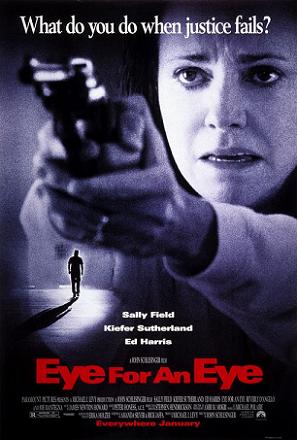
Insomnia File #10: Eye For An Eye (dir by John Schlesinger)


What’s an Insomnia File? You know how some times you just can’t get any sleep and, at about three in the morning, you’ll find yourself watching whatever you can find on cable? This feature is all about those insomnia-inspired discoveries!

Eye_for_an_Eye_(1996_film)_poster

If you were awake at midnight and trying to get some sleep, you could have turned over to ThillerMax and watched the 1996 revenge thriller, Eye For An Eye.  However, the film wouldn’t have helped you get to sleep.  Eye For An Eye is not a film that you sleep through.

Eye For An Eye opens with Karen McCann (Sally Field) comforting her youngest daughter, Megan (Alexandra Kyle).  Megan is terrified of a moth that has flown into her bedroom.  “Kill it, mommy, kill it!” Megan shouts.  Instead, Karen gently takes the moth in her hand and allows it to escape through an open window.  In those first few minutes, the film tells us everything that it feels to be important about Karen.  She’s a mother.  She lives in a big house in the suburbs.  And she wouldn’t kill a moth…

But — the name of the title is Eye For An Eye and that would seem to promise killing so we know that something terrible is going to happen to change Karen’s outlook on life.

And it does!  The next afternoon, Karen is stuck in traffic and calls her oldest daughter, 17 year-old Julie (Olivia Burnette).  In an extremely harrowing sequence that is pure nightmare fuel, Karen helplessly listens as Julie is raped and murdered.

A white trash deliveryman named Robert Doob is arrested for the crime and we immediately know that he’s guilty.  First off, his name is Robert Doob and that’s a serial killer name if I’ve ever heard one.  Secondly, he smirks at Karen and her husband (Ed Harris) and, in a particularly cruel moment that was especially upsetting to this former stutterer, he imitates Julie’s stammer.  Third, Robert has tattoos and Satanic facial hair.  And finally, Robert Doob is played by Keifer Sutherland.  And usually, I find Keifer and his growl of a voice to be kinda sexy in a dangerous sorta way but in Eye For An Eye, he was so icky that he just made my skin crawl.

Robert Doob is obviously guilty but an evil liberal judge throws the case out on a technicality.  After Karen gets over the shock of seeing justice perverted, she decides to take the law into her own hands.  After meeting a professional vigilante (Philip Baker Hall, looking slightly amused no matter how grim he tries to act), Karen decides to learn how to use a gun so that she can get her revenge…

There’s not a single subtle moment in Eye For An Eye but that’s actually the main reason I enjoyed the film.  Everything — from the performances to the script to the direction to the music to … well, everything — is completely and totally over-the-top.  The symbolism is so heavy-handed and the film is so heavily stacked in favor of vigilante justice that the whole thing becomes oddly fascinating.  It may not be a great film but it’s always watchable.  It may not be subtle and it may even be borderline irresponsible in its portrayal of the American justice system but who cares?  By the end of the movie, I was over whatever real world concerns I may have had about the film’s premise and I was totally  cheering Karen on in her quest for vengeance.  I imagine I’m not alone in that.  Eye For An Eye is the type of film that elitist movie snobs tend to dismiss, even while secretly knowing that it’s actually kinda awesome.

Previous Insomnia Files:

  1. Story of Mankind
  2. Stag
  3. Love Is A Gun
  4. Nina Takes A Lover
  5. Black Ice
  6. Frogs For Snakes
  7. Fair Game
  8. From The Hip
  9. Born Killers

Review: Gotham S1E02 “Selina Kyle”


GothamS1E02

Tonight’s Gotham picked up where the “Pilot” left off and that’s the fallout from the murders of Thomas and Martha Wayne. We find out during the episode that the Wayne family was considered one of the two pillars of the Gotham community which kept the city’s order and status quo. The other pillar being Don Carmine Falcone was a nice touch by the writers. It was this little piece of world-building information that is gradually selling me into this series even this early in it’s freshman season.

The history of Batman, the Wayne family and the underworld which permeates Gotham has been told and retold so many times that it’s hard to imagine that anything new could be added to keep things fresh to hardcore fans of the character and the world. It’s actually been a major problem for comic book and film screenwriters when it’s time to come up with something new and not have it become such a major deviation from the character canon to alienate fans.

Showrunner Bruce Heller must’ve seen something within the backstory and history of some of Batman’s adversaries because he looks to be setting up Carmine Falcone and Fish Mooney as the two main antagonists for season 1. In the comics and in the films we don’t really get to explore these two characters very closely. They’re described as underworld mob bosses and, at times, seen as brutish thugs who just happen to be the heads of their criminal enterprises.

“Selina Kyle” is the title of tonight’s episode though we don’t really see the title character until much later in the episode. The episode itself dealt with a new case for the Gordon and Bullock duo who are still feeling their way around each other. It doesn’t help that Bullock seems to be getting tired of Gordon’s “holier-than-thou” attitude towards him and the rest of the force considering he and many in the force think Gordon killed Cobblepot in the previous episode. We, the audience, know better, but Gordon knows he has to continue to sell that assumption made by everyone.

While tonight’s episode wasn’t as overly busy with cramming as many Batman characters and locations it was still quite packed. In addition to building on the Gordon and Bullock relationship, we also have the episode’s main story about teen runaways being grabbed off the streets by unknown parties. Then there’s still the Wayne murders which the pilot episode showed wasn’t really solved. Will the murders of Bruce’s parents take up the bulk of the first season (I sure hope it doesn’t) or will it get a good enough resolution to help move the season’s narrative towards other more interesting storylines.

gotham-selina-kyle_article_story_large

It’s in the last twenty or so minutes of the episode that we finally get to see Selina Kyle. Camren Bicondova has such a unique look that it’s a bit jarring seeing her, at first. Yet, it’s the actress’ very exotic-look that hints at Bruce Wayne and Batman’s one true love turning into quite the seductive beauty. Yet, tonight’s episode just portrayed Selina Kyle as a tough, street-savvy runaway whose major role this season is the fact that she knows who really killed the Waynes.

Now, what really made tonight’s episode keep the series on an upward trend would be the two characters mentioned in the beginning: Carmine Falcone and Fish Mooney.

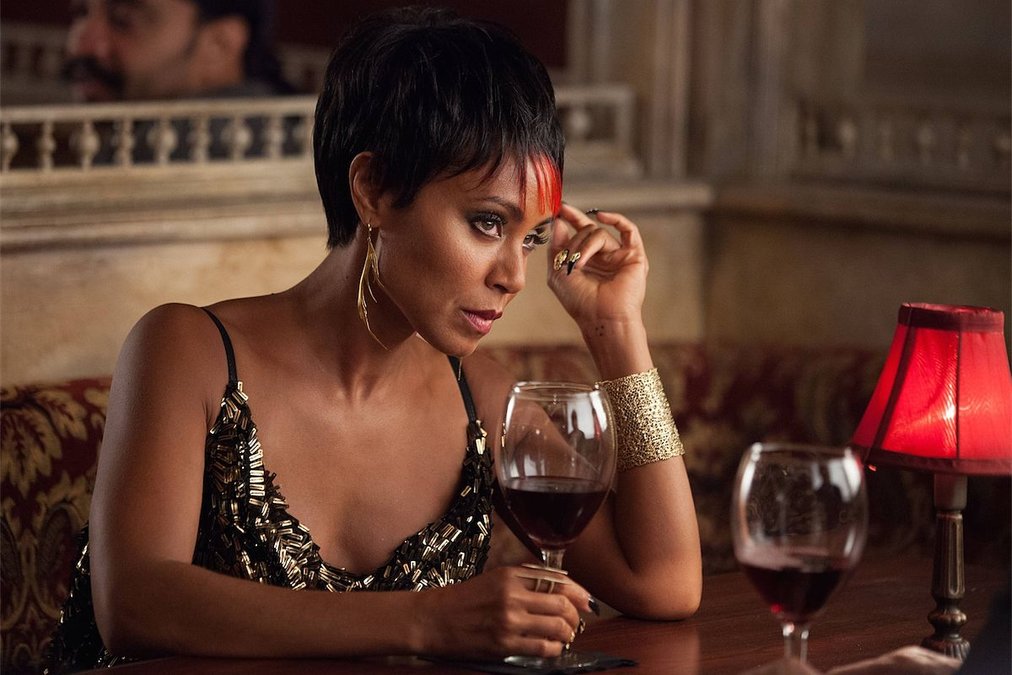
These two characters have become more interesting in just two episodes than throughout all the thousands of stories told about Batman through the comics, films and cartoons. As played by John Doman and Jada Pinkett Smith respectively, Falcone and Mooney make the show really interesting. These are not costume wearing villains or mentally-scarred antagonists. They’re hardcore criminals, but who have learned how to work within the system that is Gotham’s elite society. Where the show pushes forward that the Wayne family has been and continues to be a longstanding pillar of Gotham community, the show also seems to intimate that it does so with a sort of tacit acknowledgement of the seedier side of Gotham.

John Doman’s performance as Carmine Falcone continues to impress. There’s an almost paternal quality to the character but one that never tries to hide the brutality that’s made him the boss of all of Gotham’s criminal underworld. There was such a nice transition from polite businessman to sociopath mob boss in a space of a heartbeat during Falcone’s impromptu meeting with Mooney that one had to rewatch the scene more than once to pick it up.

Of course, many will point out that Jada Pinkett Smith as Mooney was just as good, but in a much more showier fashion. No disagreement in this corner. Smith’s performance is the opposite of Doman’s and it will be interesting how the power play between the two bosses will develop and how it’ll affect the rest of the cast of characters on Gotham.

This show still has growing pains to go through, but tonight’s episode was a good way in working through it while still trying to tell a compelling story. One thing Heller seems to have gotten right (whether by accident or deliberately) with this show’s writing is that he’s made the villains more interesting than it’s supposed heroes. That’s always been the case with Batman outside the comics and this show just continues to perpetuate it.

dcdbb92b4b1341fbc16f9bde1f629fc2

Trash TV Guru — “Gotham” Episode 1, “Pilot”


4GothamCity-610x343

Okay, fair enough, I’m kinda late to the party here since Arleigh has already chimed in with his thoughts on the rather unimaginatively-titled first episode of Fox’s new Gotham TV series, Pilot, but as  the closest thing to a “Bat-fanatic” here at TTSL, I thought I’d go ahead and offer a second opinion — even if it’s not terribly different from the first one you fine folks have read here.

Let’s start by stating the obvious — between Year OneEarth OneZero Year, and Batman Begins, the origins of the Dark Knight detective have been done to death on the printed page and the silver screen over the last couple of decades, so only the venue is really “new” here, the basic outlines of the story this show is going to present are already well-known — aren’t they?

Well, yes and no. We all know how the series “ends,” whenever that happens to be — Bruce Wayne dons the cape and cowl and becomes Batman. Similarly, we all know how the story begins — wealthy socialites Thomas and Martha Wayne are gunned down in the notorious “Crime Alley” neighborhood of Gotham City in front of their young-at-the-time son, (here played by David Mazouz) and his life is, obviously, forever changed.

It’s what happens in between those well-established “bookends” that  events in Gotham will be playing out, and there does seem to be ample room for either whole-cloth invention, or creative re-interpretation, within the confines of that territory, and this pilot episode shows that, as was done with Smallville over the course, of — what,  ten seasons? — the principal creative minds at work here, most notably executive producer (and writer of this opening salvo) Bruno Heller, will be doing a little of both.

gotham-ben-2

Apparently the main plot thread, at least running through the first season, will see clean-cut rookie detective Jim Gordon (Ben McKenzie) and his crooked partner, Harvey Bullock (Donal Logue), investigating the Wayne murders, and this initial episode largely focuses on them chasing a red herring in the form of a small-time hood named Mario Pepper (Daniel Stewart Sherman) , who they end up killing while he’s trying to escape, to the equal parts relief and despair of his wife and young plant-loving daughter, Ivy (Clare Foley). There’s some painfully strained dialogue that will probably make long-time Bat-fans cringe interspersed here and there, and a couple of scenes that are downright painful to watch, but by and large the story moves along at a reasonable enough little clip, the twists and turns our two protagonists encounter are generally involving, and the stage seems to be set for at least a modestly entertaining yarn as things progress.

Was the episode a great intro to the series? Not by any stretch of the imagination. Was it good enough? Sure, what the hell — I’ll be back next week for more, at any rate, and we’ll see where it goes from there.

So, how about a rundown of what Heller and director Danny Cannon get right, and what they get wrong, shall we? First, the good stuff : Mazouz is excellent as the pre-pubescent Bruce Wayne, and shows  pretty remarkable acting range for a kid. He’s by turns heartbroken, sullen, withdrawn, and determined. Good show all around. McKenzie displays a requisite amount of “regular-guy charm” as the show’s ostensible lead. Logue is a magnificent casting choice for a gruff and cynical veteran detective who’s definitely on the take — probably from more than one source — but may not be completely beyond redemption. Camren Bicondova largely lurks behind the scenes as a young Selina Kyle, but she exudes mysterious charisma to spare and you’ll definitely want to see more of her. John Doman seems intent on giving crime boss Carmine Falcome a whole new layer of depth and a set of complex motivations that really have me interested in finding out just what makes him tick. Cory Michael Smith is the perfect blend of genius and creepy in his role as police scientist Edward Nygma, who will “grow up” to become, of course, The Riddler. And Robin Lord Taylor as Oswald Cobblepot delivers his lines — and performs his physical actions — with a kind of just-beneath-the-surface insanity that shows that if and when he does become The Penguin, he’ll probably be more of the Danny DeVito ilk than the Burgess Meredith one.

The real show-stealer, though, is Jada Pinkett Smith as new character Fish Mooney, a second-tier — for now — player in the local mob scene who has brains, ambition, cunning, and sex appeal to spare. She seems to be having the time of her life sinking her teeth into the role, and it certainly shows. And if she’s not enjoying herself, well then — guess her acting is even better than I’m giving it credit for.

Oh, and just as a quick aside : does anyone else think the scene where she’s auditioning a struggling young stand-up comic for her club might be the first appearance in this series of, well — you-know-who? Maybe I’m over-thinking things, but I had to put it out there regardless.

harvey-bullock-gotham

It’s not as if Heller isn’t prone to offering other subtle hints in this episode’s script, either — one of Gordon’s superior officers just happens to be named Sarah Essen (Zabryna Guevara), and folks who have read Frank Miller and David Mazzuchelli’s Batman : Year One know that name well. Likewise, fans of the Gotham Central comics series will already be well familiar with the names Crispus Allen and Renee Montoya (played by Andrew Stewart-Jones and Victoria Cartagena, respectively), who pop up here as GCPD internal affairs agents. They’re not given much to do, admittedly, but a word of warning to Heller and all other series writers as far as this subject goes : Renee Montoya, in particular, is someone with a lot of hard-core fans, being that she represents one of the few positive portrayals of strong, independent, lesbian women of color anywhere in mainstream comics. Treat her right, or ignore her altogether, but don’t get this one wrong. There are some lurid hints dropped that she has “a past” with Gordon’s fiancee, Barbara (Erin Richards), but I wouldn’t suggest playing Montoya for pure soap opera value — it would be tremendously disrespectful to a character that was truly groundbreaking on the printed page.

Which brings us to what Gotham, at least so far, seems to be getting wrong (apart from some occasionally dodgy set design and CGI work and the script flaws previously mentioned) : Sean Pertwee (son of my second-favorite Doctor to Tom Baker) is a good casting choice as Alfred, and his protectiveness of his young charge certainly shows through, but Heller writes him as a semi-militaristic hard-ass in a move that seems to be a direct nod to the risible work of writer Geoff Johns in his limp Batman :Earth One graphic novel (please note I’m only singling out Johns’ script for criticism, as Gary Frank’s art on that book was superb). I hope they don’t go too far down that road with the world’s most famous fictional butler. Poison Ivy appears to be the victim of a radically different “re-imagining” that, so far, looks a lot less than promising. The overall tone of the proceedings appear overly concerned with shoe-horning in too many specific Bat-elements and not doing enough to establish the city as an entity separate from its most famous vigilante crime-fighter. And having Barbara be a well-heeled, glamorous socialite is a bit of a betrayal of the working-class roots of Jim Gordon and his family that we’ve all come to know — he just doesn’t look right lounging around in her fashionable penthouse apartment.

gotham

All in all, then, what we’ve got  is a case of “some good, some bad.” By the time the episode was over I was reasonably optimistic that, despite the “mix n, match” approach to re-invention and outright invention that I mentioned earlier,  we’re not looking at another Smallville clone here — i.e. a show that amounts to little more than Beverly Hills, 90210 with super-powers. The jury is still out, though,  on whether or not this show’s creators have enough of a different spin to add to the Bat-mythos to make this a worthwhile project. They’re borrowing influences from a wide range of sources, some of which I would’ve preferred having them ignore altogether, but it’s probably safe to assume that only some of those things will prove to be major factors in the series going forward. How far forward I go along with it remains to be seen, as there was nothing in the pilot episode to make me say “alright, awesome, I’m all in!” — nor was there enough to make me throw up my hands and walk away in disgust. We’ll call how I feel about things “cautious optimism” for now, with the greater emphasis being on “cautious.” Heller and co. have me interested — not it’s time to impress me.

Review: Gotham S1E01 “Pilot”


GothamS1E01

“Gotham stands on a knife’s edge” — Carmine Falcone

It’s one of 2014’s most-anticipated new series. The world is superhero crazy right now and it was only time before DC dipped back into the Batman well to base a live-action tv series on their most-successful property.

Gotham doesn’t actually take the usual tack and bring in Batman himself as it’s main character. The show uses one of Batman’s most important allies as the focal point of the show. Jim Gordon has always been one of Batman’s staunchest friends throughout every story ever told about the Dark Knight. This show looks to explore Jim Gordon’s early years as part of the Gotham City Police Department. We still get to see Bruce Wayne as a child and his character and who he will become still loom large over the pilot and, I suspect, the series in general.

The pilot episode was written by the show’s executive producer Bruno Heller and it’s actually too paint-by-the-numbers. It literally tries to introduce as many of the Batman rogues gallery in it’s less-than-an-hour running time. We get a quick intro to not just the Riddler and the Joker, but we also get the early beginnings of the Penguin, Catwoman and Poison Ivy. Don’t even get me started on Batman’s more traditional adversaries in Fish Mooney and Carmine Falcone.

It’s difficult to judge a series on it’s pilot episode since the show is still trying to find it’s identity. We saw this with last year’s other comic book series, Agents of S.H.I.E.L.D., and how it took literally 2/3’s of it’s first season to finally find it’s stable footing before it could even figure out what show it wanted to be. Gotham may just have an easier time to find its way in the superhero entertainment landscape since DC has confirmed that the series will not tie-in with it’s cinematic universe the way Marvel did with it’s own series. This should give Bruno Heller and his writers a much more free hand in molding the show into what they want. Yet, there’s a danger in that freedom in that too much of a drastic deviation from the Batman source will rile up the character’s rabid fanbase.

FOX-Gotham-Exten-1525

The first episode does arrive with some very good performances from it’s leads. Ben McKenzie as Det. Jim Gordon commands the stage whenever he’s on the screen. He’s able to convey not just the man of integrity we know Jim Gordon to be, but also inject a bit of a darkness to the character that we rarely saw in the films and cartoons, but comic book fans are very well aware of. McKenzie’s Jim Gordon definitely a bit more rougher around the edges but still idealistic than the Gary Oldman take on Jim Gordon who was more seasoned, but also more cynical about the best way to combat crime in Gotham.

Donal Logue as his veteran partner Harvey Bullock does a good job in becoming the bridge for the audience between the principled Gordon and the more corrupt, underbelly of law and order that is Gotham. We’re not sure if he’s a corrupt cop or just one who has learned how to navigate the dangerous waters of the criminal underworld as one of Gotham’s protectors. Time will tell if this version of Harvey Bullock becomes more of the Batman Begins analogue Arnold Flass or the cynical, but loyal cop of the cartoons.

Now, a show about Batman’s hometown wouldn’t be able to call itself by that city’s name if I didn’t mention the rogues gallery that will end becoming Batman’s (and to an extent, Jim Gordon) reason for being. We don’t see colorful costumes or even the recognizable look of Batman’s villains in this pilot episode, but as stated earlier they do try to cram as many of them in this series premiere as they could. It’s almost like a convoy designed to remind audiences that the show will explore not just Jim Gordon’s early days before Batman rises from the shadows, but also the time of the villains before he arrives.

cdn.indiewire.com

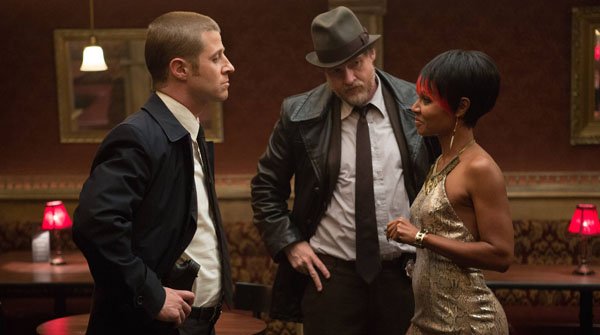
Of all the bad guys the show tries to push at the audience in this pilot it’s Fish Mooney as portrayed by Jada Pinkett Smith that stands out most. Her crimelord brings a certain amount of flair to the episode that hints at the over-the-top villainy that will come about once Bruce is all grown up and takes up the mantle of the bat. There’s hints of a past relationship between her and Logue’s Bullock that could turn out to be interesting. Robin Lord Taylor as a young Oswald Cobblepot aka the Penguin is ok, but something in his performance looks like someone trying too hard to bring out in this series the Penguin’s quirky mannerisms that the character looks to be the most cartoony of all introduced in the episode.

Gotham had a good and interesting introductory episode that laid enough stones on the series’ foundation as it moves forward. With only 16 episodes instead of the usual 24 most full-length tv series get Bruno Heller and the show’s writers has less time to create this version of the  Gotham and Batman world we’ve come to expect. Will they manage to inject some new blood into a world that’s been adapted and reimagined through decades of comics, tv and film work or will the series just try to appease the hardcore comic book fanbase thus alienating the wider general audience.

We shall see and future review installments will tell if this site buys into the series with wholeheartedly or end up getting off the ride before it’s over.