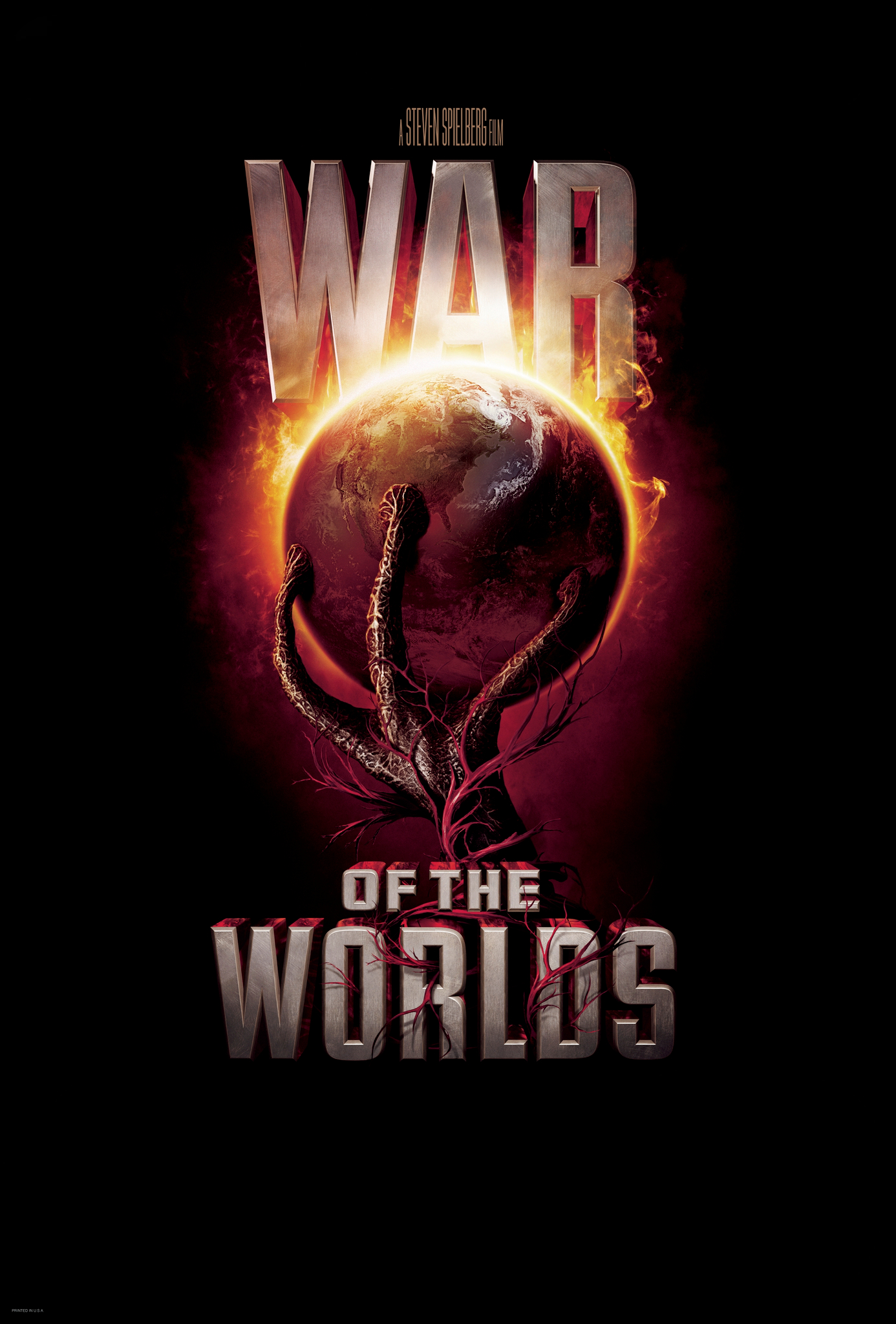
Review: War of the Worlds (dir. by Steven Spielberg)


“This is not a war any more than there’s a war between men and maggots… This is an extermination.” — Harlan Ogilvy

When looking back at the vast filmography of Steven Spielberg, science fiction usually evokes a sense of sweeping wonder, starry-eyed optimism, or at the very least, a deeply felt humanism. Films like Close Encounters of the Third Kindand E.T. the Extra-Terrestrial taught generations to look at the stars with hope rather than dread. Even when things took a darker turn in Jurassic Park or the neon-drenched corridors of Minority Report, there remained a foundational thrill—a cinematic ride that ultimately leaves the audience exhilarated. However, his 2005 adaptation of H.G. Wells’ classic novel, War of the Worlds, stands as a radically different beast altogether. It is arguably the bleakest, most claustrophobic blockbuster Spielberg ever directed, operating less as an adventurous alien invasion epic and more as a raw, nerve-shredding analog for collective trauma. Emerging a mere four years after the collapse of the Twin Towers, the film strips away the romanticism of cosmic exploration and replaces it with a visceral, ground-level nightmare of sudden, inexplicable annihilation.

The brilliance of Spielberg’s approach, working alongside screenwriter David Koepp, lies in how intensely localized the narrative remains. Rather than tracking the invasion from the traditional perspective of military command centers, global leaders, or brilliant scientists, the audience is trapped inside the chaotic, deeply flawed perspective of Ray Ferrier, played with a brilliant, unheroic franticness by Tom Cruise. Ray is not a savior; he is a deadbeat, blue-collar crane operator living in a graying New Jersey suburb. He is the kind of father who doesn’t know his son’s school schedule and has an empty refrigerator when his ex-wife drops off their two children, Robbie and Rachel. By centering the apocalypse around a fractured, working-class American family, Spielberg roots the cosmic terror in a painful reality. The impending destruction of the planet mirrors the collapse of Ray’s domestic stability, forcing a man who can barely manage basic parental accountability to suddenly navigate the literal end of the world.

From a purely technical standpoint, the first act of War of the Worlds features some of the most masterful suspense and terror ever committed to celluloid, heavily leaning on a barrage of explicit 9/11 visual imagery. The sequence where the first Martian Tripod emerges from beneath a New Jersey intersection is a masterclass in modern cinematic dread, directly weaponizing the fresh, collective trauma of the post-9/11 American public. Spielberg eschews the clean, omniscient visual language of standard disaster cinema for an organic, chaotic documentary style, mirroring the sudden, disorienting informational and electronic blackout experienced by millions during the real-world attacks. The camera lingers on heavy, ominous storm clouds moving against the wind, the eerie crackle of localized lightning strikes, and the unsettling silence of a neighborhood stripped of electronic life. When the asphalt fractures and the colossal, three-legged war machine rises from the earth, the sound design hits the audience like a physical blow. The Tripod’s horn—a terrifying, mechanical foghorn groan—instantly triggers an ancient, mammalian fight-or-flight response. As the machine opens fire with its disintegration beams, turning nearby pedestrians into literal puffs of ash, the camera tracks Ray running for his life through a massive, rolling cloud of dust and debris. When Ray finally makes it back to his house, the ash of his vaporized neighbors covers his clothes and face, an unmistakable and deeply unsettling visual that explicitly echoes the horrific reality of the streets of Manhattan on September 11, 2001.

This deliberate invocation of post-9/11 anxiety is the thematic engine that drives the entire film. Spielberg does not hide these parallels; he highlights them with a devastating accuracy that makes the film difficult to watch even decades later. When the invasion begins, a terrified, screaming Rachel asks her father if it is “the terrorists,” a line that perfectly encapsulates the collective, reactionary psyche of the mid-2000s American consciousness, where any sudden, catastrophic violence was instantly filtered through the lens of domestic terrorism. The imagery of walls plastered with photocopied missing-persons flyers, crowds of refugees trudging down desolate highways with whatever belongings they can carry, and a derailed, blazing passenger train hurtling past an abandoned station all tap into a very specific, historical vulnerability. In Independence Day, an alien invasion was an opportunity for global unity and triumphant, cigar-chomping counter-offensives. In Spielberg’s hands, the invasion is an overwhelming, asymmetric slaughter that reduces the world’s most powerful military to a collection of burning tanks rolling over a ridge into an invisible abyss.

However, while the film masterfully handles the grand-scale terror of the invasion, it stumbles significantly when navigating its internal family dynamics, particularly regarding Ray’s son, Robbie, played by Justin Chatwin. I completely agree with the widespread criticism that Robbie is an intensely annoying, deeply self-destructive presence whose actions and decisions repeatedly defy basic human survival instincts. Throughout the crisis, his behavior goes beyond typical teenage rebellion and crosses into pure narrative absurdity. Instead of helping protect his traumatized, screaming younger sister, Robbie consistently sabotages his family’s safety to aggressively gawk at a hopeless war zone. His sudden, obsessive urge to join a military force that is clearly being pulverized by an unearthly power feels entirely unearned and maddening to watch. His character arc reaches a peak of irritation when he blindly runs over a burning ridge directly into a mechanical meat grinder, abandoning his family for a bizarre, suicidal patriotic impulse. This makes his miraculous survival at the end of the film a massive narrative misstep; having him casually show up at his grandparents’ pristine Boston home after witnessing a literal military massacre completely undermines the high-stakes realism Spielberg spent two hours building, turning what should have been a tragic consequence of his own foolishness into a cheap, unearned happy ending.

As the narrative progresses past the family friction, the film shifts its focus from external spectacle to the internal breakdown of human morality under the weight of existential terror. This transition is embodied by the mid-movie introduction of Harlan Ogilvy, played with an unsettling, unhinged intensity by Tim Robbins. Trapped in a dark basement while the Martians harvest the surrounding countryside, Ray and Ogilvy represent two radically different, yet entirely believable, reactions to trauma. Ogilvy is consumed by a vengeful, nihilistic madness, obsessed with digging tunnels and launching a futile, suicidal guerrilla war against an enemy that operates on a completely different evolutionary plane. Ray, conversely, is driven solely by a desperate, animalistic urge to protect his daughter. The sequence culminating in Ray’s decision to kill Ogilvy behind closed doors to keep him from alerting the aliens is one of the darkest thematic beats in Spielberg’s career. It forces the audience to confront a disturbing truth: the true horror of the apocalypse is not just what the monsters do to us, but what we are willing to do to each other to survive another hour.

The film’s visual palette, masterfully crafted by cinematographer Janusz Kamiński, reinforces this pervasive sense of rot and despair. Kamiński utilizes a heavily bleached, high-contrast aesthetic that drains the world of vibrant color, leaving behind a cold, metallic landscape dominated by sickly slates, deep shadows, and stark whites. This visual harshness reaches its zenith during the infamous “Red Weed” sequence. As the Tripods begin carpet-bombing the landscape with human blood to fertilize an invasive, crimson alien flora, the film transforms into a surrealist, gothic horror show. The Earth itself is literally being terraformed by the bodily fluids of the slaughtered, creating a grotesque, bleeding ecosystem that visually mirrors the internal rot of the surviving human populations. It is a sequence that feels closer to the cinematic nightmares of H.R. Giger than the traditional whimsy of a Spielbergian adventure.

Despite its immense strengths, War of the Worlds is frequently criticized for its final act, a critique that deserves a nuanced evaluation. The abrupt resolution—wherein the seemingly invincible Martians suddenly succumb to Earth’s microscopic bacteria—is lifted directly from H.G. Wells’ original 1898 text. While narratively faithful, its execution in a modern Hollywood blockbuster can feel jarring, functioning as a biological deus ex machina that robs the human protagonists of a traditional, heroic victory. Furthermore, Robbie’s unearned survival represents a sudden, almost desperate pivot back toward Spielberg’s traditional family-first sentimentality. This neat resolution feels somewhat unearned given the preceding two hours of unrelenting, uncompromising nihilism, momentarily fracturing the film’s gritty, documentary-like reality.

Yet, looking past these structural stumbles, the final voiceover adaptation of Wells’ text offers a profound philosophical punctuation mark to the nightmare. The realization that humanity has earned its right to survive on this planet not through military might or moral superiority, but through millions of years of evolutionary struggle alongside the tiniest microbes, recontextualizes the entire ordeal. It reminds the audience of our inherent fragility and the hubris of believing ourselves to be permanently secure in our modern, technological fortresses. Spielberg’s War of the Worlds remains an incredibly potent piece of mainstream filmmaking precisely because it refuses to comfort its audience for the majority of its runtime. It stands as a brilliant, terrifying time capsule of an era defined by sudden vulnerability, demonstrating that even the master of cinematic wonder could look into the abyss of the cosmos and see nothing but our own reflections looking back in sheer terror.

What Lies Beneath (2000, directed by Robert Zemeckis)


Claire (Michelle Pfeiffer) is a former cellist who is still struggling to recover from a serious car accident and who has been at loose ends ever since her daughter left for college.  Claire’s husband, Norman (Harrison Ford), is a scientist and a college lecturer.  After their neighbor, Mary (Miranda Otto), disappears, Claire becomes convinced that Mary’s husband (James Remar) did something to her.  Claire also becomes convinced that Mary’s ghost is trying to contact her, by appearing in the lake and filling the bathtub up with water whenever Claire isn’t looking.  Norman tells Claire that she’s imagining things and pushes her to see a therapist.  As Claire investigates, she discovers that Norman knows more than he’s letting on.

What Lies Beneath is a long and drawn-out ghost story that Robert Zemeckis made because he had time to kill while the filming of Cast Away was on hiatus so Tom Hanks could lose weight and grow a beard.  That this movie was not a personal project for Zemeckis is reflected in his direction, which is surprisingly impersonal for a Zemeckis film.  The film is a showcase for Michelle Pfeiffer, who gives a good performance as the emotionally fragile Claire and holds the film’s many disparate elements together.  Harrison Ford sometimes seems disinterested but his casting still pays off when Norman gets to say and do some things that you normally would never expect Harrison Ford to do.

I remember seeing this in a theater in 2000 and being surprised by the ending.  Looking back on it today, I just can’t believe that I sat through the entire movie.

Lisa Marie Reviews An Oscar Nominee: The Thin Red Line (dir by Terrence Malick)


Based on a novel by James Jones (and technically, a sequel of sorts to From Here To Eternity), 1998’s The Thin Red Line is one of those Best Picture nominees that people seem to either love or hate.

Those who love it point out that the film is visually stunning and that director Terrence Malick takes a unique approach to portraying both the Battle of Guadalcanal and war in general.  Whereas Steven Spielberg’s Saving Private Ryan told a rather traditional story about the tragedy of war (albeit with much more blood than previous World War II films), The Thin Red Line used the war as a way to consider the innocence of nature and the corrupting influence of mankind.  “It’s all about property,” one shell-shocked soldier shouts in the middle of a battle and later, as soldiers die in the tall green grass of the film’s island setting, a baby bird hatches out of an egg.  Malick’s film may have been an adaptation of James Jones’s novel but its concerns were all pure Malick, right down to the philosophical voice-overs that were heard throughout the film.

Those who dislike the film point out that it moves at a very deliberate pace and that we don’t really learn much about the characters that the film follows.  In fact, with everyone wearing helmets and running through the overgrown grass, it’s often difficult to tell who is who.  (One gets the feeling that deliberate on Malick’s point.)  They complain that the story is difficult to follow.  They point out that the parade of star cameos can be distracting.  And they also complain that infantrymen who are constantly having to look out for enemy snipers would not necessarily be having an inner debate about the spirituality of nature.

I will agree that the cameos can be distracting.  John Cusack, for example, pops up out of nowhere, plays a major role for a few minutes, and then vanishes from the film.  The sight of John Travolta playing an admiral is also a bit distracting, if just because Travolta’s mustache makes him look a bit goofy.  George Clooney appears towards the end of the film and delivers a somewhat patronizing lecture to the men under his command.  Though his role was apparently meant to be much larger, Adrien Brody ends up two lines of dialogue and eleven minutes of screentime in the film’s final cut.

That said, The Thin Red Line works for me.  The film is not meant to be a traditional war film and it’s not necessarily meant to be a realistic recreation of the Battle of Guadalcanal.  Instead, it’s a film that plays out like a dream and, when viewed a dream, the philosophical voice overs and the scenes of eerie beauty all make sense.  Like the majority of Malick’s films, The Thin Red Line is ultimately a visual poem.  The plot is far less important than how the film is put together.  It’s a film that immerses you in its world.  Even the seeming randomness of the film’s battles and deaths fits together in a definite patten.  It’s a Malick film.  It’s not for everyone but those who are attuned to Malick’s wavelength will appreciate it even if they don’t understand it.

And while Malick does definitely put an emphasis on the visuals, he still gets some good performances out of his cast.  Nick Nolte is chilling as the frustrated officer who has no hesitation about ordering his men to go on a suicide mission.  Elias Koteas is genuinely moving as the captain whose military career is ultimately sabotaged by his kind nature.  Sean Penn is surprisingly convincing as a cynical sergeant while Jim Caviezel (playing the closest thing the film has to a main character) gets a head start on humanizing messianic characters by playing the most philosophical of the soldiers.  Ben Chaplin spends most of his time worrying about his wife back home and his fantasies give us a glimpse of what’s going on in America while its soldiers fight and die overseas.

The Thin Red Line was the first of Terrence Malick’s films to be nominated for Best Picture and it was one of three World War II films to be nominated that year.  However, it lost to Shakespeare In Love.

Horror Film Review: The Silence (dir by John R. Leonetti)


“Don’t make a sound!”

“Why not?”

“Because we’re characters in the 2019 film, The Silence.”

“Uhmmm….okay.”

“And there’s monsters flying around the car.”

“Oh, is that what those are?  I thought they were like fruit bats or something.”

“And they only hunt by sound.”

“Wait.”

“So, if you make a sound, they’ll swoop down and kill the entire family, even old grandma in the back seat.”

“Does any of this seem familiar?”

“Shhhh….”

“I swear this film feels familiar.”

“Oh please …. this is nothing like A Quiet Place.”

“Uhmm …. big flying creatures swarming on people who make noise and killing them.  How is this not like A Quiet Place?”

“Well, The Silence not only features creatures that only hunt by sound but there’s also a subplot that comes out of nowhere, about a bunch of cultists who have cut out their tongues and who want to sacrifice the family to the monsters.”

“Oh.”

“Nothing like A Quiet Place.”

“So, basically, this just A Quiet Place meets a bad episode of Fear The Walking Dead.

“Kind of but you know what?  The Silence has got Stanley Tucci in the cast and he’s an Oscar nominee!  Plus, Kiernan Shipka plays Tucci’s deaf daughter and she’s Sabrina.  Also, Miranda Otto is in it and she-costars with Kiernan on that Sabrina show, so this entire movie really does feel like a particularly messed-up episode of Chilling Adventures of Sabrina.”

“So, basically, this movie is a A Quiet Place meets Fear The Walking Dead meets that terrible Sabrina show.”

“My point is that this film has a really good cast and it’s also got the guts to totally waste them in uninteresting roles.”

“How does that take guts?”

“It also has the guts to kill off the adorable family dog because sometimes you just have to make difficult choices to say alive.”

“Especially when you’re living in a second-rate version of A Quiet Place, right?”

“LISTEN!”

“Uhmm …. should you have just yelled like that, considering all the monsters killing anyone who makes a sound?”

“Whoops.”

“Well, we’re screwed …. AAAAAAGH!”

And the rest is silence.


Insomnia File #47: Downhill (dir by Nat Faxon and Jim Rash)


What’s an Insomnia File? You know how some times you just can’t get any sleep and, at about three in the morning, you’ll find yourself watching whatever you can find on cable or Netflix? This feature is all about those insomnia-inspired discoveries!

If you were having trouble getting to sleep at two in the morning last night, you could have turned over to HBO and watched Downhill, the remake of Force Majeure that was released in February.

Downhill tells the story of annoying family taking a ski vacation in Austria.  Billie Stanton (Julia Louis-Dreyfus) is a high-powered attorney who gets annoyed when things don’t go perfectly.  Pete Stanton (Will Ferrell) is …. well, he’s Will Ferrell playing a typical Will Ferrell role.  He’s a big. annoying dofus who spends all of his time on his phone and who is constantly telling the same long, boring, faux profound story about his dead father.  They have two annoying sons and it’s pretty obvious from the start that neither Billie nor Pete is particularly happy with how their marriage or their lives have turned out.  When Pete abandons his family during a minor avalanche, it leads to Billie realizing that Pete doesn’t really seem to be that much into his family or his marriage.  But, since that was obvious from the start, it’s not really that big of a revelation for the audience.

Downhill is a frustrating film to watch, especially if you’ve seen Force Majeure.  Downhill takes the basic storyline of Force Majeure and all of the issues that were raised by Force Majeure and then it explores them in the shallowest way possible.  A lot of the trouble comes down to the fact that Will Ferrell is a good comedian but he’s an inconsistent dramatic actor.  The film tries to work as a dramedy but Ferrell approaches each scene as if it were a sketch on Saturday Night Live.  As a result, Downhill is less like Force Majeure and more like an episode of The Office where D’Angelo Vickers takes everyone skiing.  Julia Louis-Dreyfus is a little bit more grounded in reality but there’s really not much to her role, beyond being annoyed.

I did like the performance of Zach Woods, playing a pretentious friend of the couple and bragging about how he went skiing on shrooms.  Woods has a talent for suggesting the oddness that often hides behind the most straight-laced of facades.  And the scenes with Miranda Otto as a decadent libertine would have been funny if they didn’t feel as if they belonged in a totally different move.  For the most part, though, Downhill fell flat.

Previous Insomnia Files:

  1. Story of Mankind
  2. Stag
  3. Love Is A Gun
  4. Nina Takes A Lover
  5. Black Ice
  6. Frogs For Snakes
  7. Fair Game
  8. From The Hip
  9. Born Killers
  10. Eye For An Eye
  11. Summer Catch
  12. Beyond the Law
  13. Spring Broke
  14. Promise
  15. George Wallace
  16. Kill The Messenger
  17. The Suburbans
  18. Only The Strong
  19. Great Expectations
  20. Casual Sex?
  21. Truth
  22. Insomina
  23. Death Do Us Part
  24. A Star is Born
  25. The Winning Season
  26. Rabbit Run
  27. Remember My Name
  28. The Arrangement
  29. Day of the Animals
  30. Still of The Night
  31. Arsenal
  32. Smooth Talk
  33. The Comedian
  34. The Minus Man
  35. Donnie Brasco
  36. Punchline
  37. Evita
  38. Six: The Mark Unleashed
  39. Disclosure
  40. The Spanish Prisoner
  41. Elektra
  42. Revenge
  43. Legend
  44. Cat Run
  45. The Pyramid
  46. Enter the Ninja

Chilling Adventures of Sabrina, S2 E5, “Blackwood” (Dir: Alex Pillai) Review By Case Wright


sabrina

First of all, it’s always so fun to read Lisa’s reviews.   I hope she wants to review another one of these episodes.  She always sees things that I don’t like HERE!!!! and HERE!!!!.  It has been a true pleasure working with/for her over these years.  This series is making me already plan for my October reviews!!!  Weren’t they awesome last October?! Yes…Yes…They were.

Is this season getting better? Yes, but that’s mostly because the first episode of the second season was so very unsatisfying and disappointing. The series seems to be evolving into a Tales From The Crypt over the top fest.  I loved TFTC, but that’s not what I expected Sabrina to become.  I saw this series as a scary in your face we’re mad as hell at the patriarchy and we’re not gonna take it anymore!  The feminism is still there, but it really hits you over the head with its agenda ….every….single…episode; It comes across as a PSA sometimes.  When done right, like last season, you root for the agenda, but now I’m lectured by it.  It’s kind of annoying when you already agree.

This episode was directed by Alex Pillai (Riverdale) and he did a fine paint by numbers job with the episode.  It got the job done….fine, not great, but definitely fine like the Chicago Cubs in the 2000s or Two Buck Chuck (Charles Shaw).  The episode was all about marriage, the loss of feminine identity, and misogyny…lots and lots of misogyny.  Really, this Church of Night is a bunch of knuckle dragging dirtbags.  I get the whole- we’re evil bit, but it doesn’t really work all the time.  The characters are mostly strong women and the constant subjugation that the Church imposes seems kinda silly that anyone would put up with it let alone these powerful heroines.   Also, the constant “for Hell’s Sake” “Your Unholiness” “Your Dishonor” just makes me laugh;  I look like loon when I’m on the elliptical watching this.

In the episode, Aunt Z is getting married and she’s all jittery and worried about being exposed for stealing one of the Blackwood babies.  Also, Father Blackwood is going full-on misogynist pig. He wants the church of night to go back to its old ways of chauvinism.  His plan is to write up the basic philosophy and give it to the Anti-Pope (Ray Wise). (Side Note: God, I love Ray Wise.  He’s awesome in everything he does and was the best devil ever in Reaper. Unfortunately, he’s only in the show for a couple of minutes.) Sabrina catches wind of Blackwood’s Misogynist plan because Ambrose tells her .

The Solution: Sabrina gets her Dad’s manifesto that’s all women and men are equal, witches should marry mortals, and powertrain warranties are bullshit.  Sabrina has Nick retrieve it from the bottom of the sea.  Just as the Anti-Pope will read it, Father Blackwood has him murdered and frames Ambrose for it!!! DUN DUN DUN!!!!  Basically, all of Sabrina’s plans fail: Aunt Z and Blackwood marry, Blackwood has Aunt Z walk behind him (bleh), Ambrose is jailed, Sabrina and Nick are expelled, and Aunt Hilda becomes lactose intolerant.  Bad all the way around.

I normally don’t get into subplots, but spring is in the air.  Ms Wardwell and Adam are falling in love. It’s really sweet.  She explains that marriage is a complete destruction of a woman’s identity. Wardwell looks at Adam expecting a fight, but instead he accepts her, her values, and just wants to be with her. It’s …well….sweet.  I was a bit moved.  Satan gets jealous and wants her to kill him, but instead she makes him a ring of protection.  I hope these crazy kids make it work.

The show is moving in the right direction, but the show seems to collapse under its own weight sometimes.  It has these big themes and plots, but can’t quite deliver them this season because of the campiness, clunky dialogue, and endless subplots that grind the suspense and gravitas to dust.  Maybe this is the way Riverdale is?  I never wanted to watch that show and now I really don’t want to.  My guess is that season 1 was Ruth Chris Steakhouse and season 2 is Red Robin and yes I did get food poisoning from them once.


TV Review: Chilling Adventures of Sabrina 2.4 “Doctor Cerberus’s House of Horrors” (dir by Alex Garcia Lopez)


Is Chilling Adventures of Sabrina the most underlit show on Netflix?

Seriously, every scene on the show seems to take place in near darkness.  I get that’s because the show itself is supposed to be dark and spooky and I appreciate the fact that the show is trying to maintain a proper atmosphere but still, as I watched the fourth episode of the 2nd season, I found myself shouting, “Will someone turn on a freaking light!?”  Like a lot of things about this show, the constant darkness seems like one of those “it seemed like a good idea at the time” concepts.

That said, I also have to say that I liked this installment a bit more than the previous episode.  Though it can probably be correctly stated that this was something of a filler episode, it still had enough surreal moments to remain entertaining.  In fact, it reminded me a bit of last season’s superior Dreams In A Witch House.  Like that episode, House of Horrors largely took place in the minds of the show’s characters.  Whereas Dreams In A Witch House used the character’s nightmares as a way to provide a glimpse of their subconscious fears and desires, this episode used Tarot readings.

The episode begins with Hilda and Dr. Cee hanging out at Cerebrus Books.  No mention is made of the fact that Dr. Cee apparently has an incubus inside of him, which seems like an odd thing to go unmentioned.  Anyway, a fortune teller (played by Veronica Cartwright) shows up and asks if she can do readings in the back of the store.  Hilda and Dr. Cee promptly agree because …. well, when do they ever say no to anyone?

For the next hour, various characters wandered into Cerebrus Books and got their fortune read.  The fortune teller turning over her cards would lead to everyone having a surreal vision of the future.  The visions rarely turned out well but, with one huge exception, the fortune teller was always quick to explain that the ominous vision was actually a good thing.  For instance, Sabrina may have seen herself getting killed during Nick’s magic show but the fortune teller was quick to explain that the vision meant Sabrina should put her faith in Nick and not trust anyone else.  Theo may have had a vision of turning into a boy and then having his body turn to wood but apparently, that meant Theo should trust others to help him out.  Roz was thinking of having an operation to get her sight restored but her vision — in which a blind girl accused Roz of stealing her eyes — convinced Roz that she should remain blind.  Harvey saw that going to Rhode Island would lead to him having a Satanic roommate.  Hilda envisioned telling Father Blackwood the truth about the baby but then discovered that would just lead to Blackwood cheating on her.  “Some secrets,” the fortune teller announces, “should stay secrets.”

Finally, Ambrose showed up and got his vision of the future.  Four things disturbed him.  First off, Luke was nowhere in the vision.  Secondly, in the vision, Father Blackwood made him a member of the Judas Society and ordered him to murder the Spellmans.  Third, in the vision, Ambrose did just that.  And fourth, the fortune teller told Ambrose this was going to happen, regardless of what he did.

Rushing to Father Blackwood’s office, Ambrose asked for an assurance that Father Blackwood would never hurt the Spellmans. “Of course not!” Blackwood replied before informing Ambrose that Luke was dead and that Ambrose was now a member of the Judas Society….

After all this, it was revealed that the fortune teller had actually been Ms. Wardwell in disguise.  I can’t say that I was particularly surprised by this reveal.  Since Wardwell was, up until the show’s final five minutes, the only regular not to have made an appearance, it was obvious that the fortune teller would turn out to be her.  I’m going to assume that her advice was intentionally bad and we should definitely be worried about Sabrina’s relationship with Nick.

Anyway, this episode was entertaining enough.  Since Sabrina is really the only multidimensional character on the show, Chilling Adventures can be uneven when it doesn’t focus on her but this show managed to do a pretty good job with the other characters.  We may not have learned anything new about any of them but some of their visions were enjoyably surreal and macabre.  The scenes of Theo’s body turning to wood were well-handled and Roz’s vision was genuinely frightening.  Even though you knew they weren’t real, the scenes of a murderous Ambrose stalking through the Spellman House were appropriately creepy.

Up next in the TSL’s Sabrina review-a-thon: Case returns with his reviews of Episodes Five and Six!

The Chilling Adventures of Sabrina, S2,Ep2 Review By Case Wright


sabrina

Hello friends. Last time we spoke, it was really hard.  I wondered if my second favorite show after Santa Clarita Diet went Lost Season 2 on me.  The season opener was bad…really bad.  It was scary for me to watch the second episode.  I was actually worried that the show was a season 1 fluke or maybe I misread or willfully blinded myself to a meh show. Well, I’m happy to write that this episode was a solid …. Not Bad.  Its flaws were LEGION (and we’ll go over those), but the story had a theme, character growth, and despair.  Honestly, through in some Adele and Ben and Jerry’s and you got the makings of a lonely night in as you watch yourself age and love sulks away from you, broken, and never to return.

The episode is all about unrequited love and who We should be, but who We really are.  It’s fun, if you’re in the mood for it.  It was written by new writer Mj Kaufman and Christina Ham (Orphan Black) and these writers capture the loneliness of all of the most interesting characters.

The Devil talks to Ms Wardwell who we know is Lilith (Adam’s First Wife).  He not too gently casts her aside and tells Wardwell/Lilith that Sabrina is to be Satan’s Prophet and Queen, not Her.  The heartbreak is palpable, but the Devil’s  Costume looks like a step above Party City and it really takes me out of it.  Lilith asserts that Sabrina is too goody goody to be the Devil’s main squeeze and they wager on it: have Sabrina steal a stick of gum.  Sabrina resists.

I gotta ask why? She seemed all on board the Midnight Train to Gethsemane with Old Scratch, but she just can’t bring herself to steal the forbidden Fruit Stripe.  I would’ve been all in for the Freshen Up gum…ya know the one with the goo inside…I liked it….Whatever.  Because she refused, Satan starts hurting people around Sabrina by giving them Chickenpox.  WHAAAA?  Chickenpox?! What kind of anti-vax town is Greendale?! Let it burn to the ground! They’ll give us all measles!  To make amends to Satan, she starts to burn the school down as per Satan’s command.  Well, why bother?! They’ll all get Whooping Cough soon enough away.  Come on, Lucifer…this town is doomed and weird.

There are good subplots the Lilith story, which is a nice evil love story where Ms Wardwell watches her life portrayed as entertainment.  The Evil Dean wrote and produces a play of Lilith and Satan falling in sort of love.  It might of brought her a smile, but instead it brings tears because Satan has found a new special lady and Lilith’s destined to be eternally alone. We see in Ms Wardwell AKA Lilith how love is supposed to be, but how it withers and dies.

Suzie is now Theo is the focus of the other subplot. She should be accepted as a boy, but it doesn’t quite work out that way.  Theo tries to change in the boy’s locker room and is mocked by some, but gawked at by all.  The shot is done very well. We close up on the known bullies from the previous episodes, but then the camera pulls back and ALL of the boys are gawking silently, waiting to see female nudity regardless of her gender identity.  They simply can’t help it.  Where we should be, but who we are.  It’s disappointing, realistic, and sad.

Sabrina and Harvey react to a sensual spark and begin making out, but her tie to Satan destroys the encounter and ends their love affair forever.  What their love should be and the reality cannot be.

This was a good episode overall.  It allowed you to see and not be told Lilith’s story and the struggles that everyone has against loneliness and despair.

Adele

Chilling Adventures of Sabrina, S1 Ep 9: The Returned Man, Review (Dir Craig Macneill)


STAW

Happy Devil’s Eve.  I will be doing the last episode on Halloween- Bwahahaha!

The Returned Man – directed by Craig Macneill is all about the failure! Since both Episode 8 & 9 were directed well, I’d like to get into their differing styles just a bit. Maggie Kiley built suspense with camera moves and slowing ratcheting up tension like a Hitchcock thriller or The Shining. Craig Macneill’s work feels more like an Italian horror film that relies on music, gore, and lighting to convey confusion, horror, and fear.

This episode is the reckoning of Sabrina’s necromancy.  She did raise Tommy, but he came back….different.  Tommy doesn’t speak, eat, or catch footballs normally.  What he does do is be very still and yet menacing.  Also, Sabrina’s clever plot to cheat death and have the witch return from death after 10 minutes isn’t really working out.  The sister is coughing up gravel.  All and all everything is going horribly horribly wrong.  When Sabrina returns the necromancy book to Ms. Wardwell, she feigns surprise that Sabrina went on the necromancy path.  This cements the sole culpability for Sabrina.

Why isn’t Tommy eating?  When the dead miners are delivered to the Spellman house, we learn that there is a good reason Tommy isn’t hungry; he was chowing down on the corpses of the other miners.  Yes, Tommy is a ….. ZOMBIE!!!! This is cut really well with a scene with Tommy attacking their POS dad.

Sabrina realizes that Tommy came back without a soul and that his soul is in limbo.  She thinks she can just waltz into limbo and get it. No muss no fuss.  Well, nope.  The Spellmans are now all aware of Sabrina’s shenanigans and think she is beyond reckless because she is.  No one wants to help Sabrina go into limbo except…..Ms Wardwell.

The limbo scene is excellent.  It reminds me of Phantasm or The Beyond. We pierce the veil and it’s filled with confusion and a terror called a Soul Eater!!! Sabrina meets her mother in Limbo, but she can’t recognize Sabrina.  This reminded me of The Beyond because if you make it to Hell in that film, you go blind from the revelation. Then, she does find Tommy, but as she is about finish Tommy’s rescue, the soul eater devours him.

Ms. Wardwell is conveniently near Sabrina for this scene and all others that can compromise Sabrina.  Wardwell convinces Sabrina that Harvey must know the truth. Sabrina agrees and we see Harvey’s love for Sabrina shatter.  He doesn’t seem angry as much as he is disgusted by being completely overruled in any of the decisions that affected him directly.  This causes them to break up, which isolates Sabrina completely from the human world.

I enjoyed how the characters were allowed to be diminished.  Sabrina failed in every way possible and lost everything.  This allows her to be prepped for a full corruption.  See you on Halloween!!!

*SPOILERS* Chilling Adventures of Sabrina, S1 E8: The Burial, Review (Dir Maggie Kiley)


STAW

Happy Devil’s Eve!!! I would like to take a moment to tell Jason Blum to hire this Director A LOT!!! From Jumpstreet, she throws us off and builds suspense with her camera angles and moves.  We’re right there with the characters in the thick of suspense in the first seconds!  It almost has a found footage feel to it.  THAT TAKES SKILL! JASON, HIRE HER! A LOT!!! SHE’LL DO A GREAT JOB AND MAKE YOU LOTS OF MONEY!

Back to the review!

Maggie Kiley understood the theme of the episode immediately: Corruption.  Mostly, she uses close-in one-shots and two-shots, drawing us into these conversations where all of our characters are being slowly cozened into full darkness.

We quickly learn that Harvey’s brother Tommy is trapped in the mine and presumed dead. The drunkard father moves ahead with funeral plans right away to get insurance money.  All of these characters are under stress, which is when the easy corrupt always seems to present itself.  We learn from Hilda that their ground brings people back from the dead and in no way should give Sabrina any ideas to commit necromancy.

Furthering the theme of corruption, as the funeral is held, Sabrina violates Harvey’s will for the third time in the season.  She has used her power to make him forget, make him safe, and make him strong.  As pressure mounts, she continues to become more and more comfortable in overriding Harvey’s will.  The series is amazingly complex in that none of the characters end the season with clean hands.  They all are slowly corrupted in some way.  It brings home the slow pernicious temptation that humankind always faces in times of a crisis: To do right thing or the easy thing.  In this show, everytime Sabrina overrides Harvey’s will, we bear witness to it sending her going further down the path of darkness, giving up more and more of her humanity and bringing her closer to Satan.

And who is there at every turn to nudge Sabrina down the easy path of darkness: Mary Wardwell.  She never tells Sabrina: Raise Tommy From the Dead!!!  No, that’s not how temptation works.  She presents the means and opportunity, allowing Sabrina see this viable opportunity to make things all better.  Mary does it over coffee.  It’s innocuous, but the option is presented.

Throughout the episode, it’s brought up that she never asked Harvey if bringing Tommy back from the dead is what he would want. Once again, she is being tempted to substitute her will for his.  In going down the path of resurrection, Sabrina is not only substituting her will in place of Harvey’s, she is substituting her will for the very will of God himself.

Why is this working on her? Evil is attractive.  I have met people that were actually evil.  They appeared normal, but they were not.  They committed terrible acts. Why? Each time I was confronted with these men, their actions were done out of arrogance and expedience.  They knew the act work and because they knew could do it.  That’s the heart of evil: convenience and arrogance.

Ambrose is given clemency from his house arrest by Father Blackwood. With it, comes fealty.  The shot is pulled closer and closer just more actively to bear.  Then, once proposed, the shot backs off.  As if to say, I’m just here to help.

Aunt Z is corrupted as well, but hers is a lot more direct and in keeping with the show’s raging hormone.  She has a torrid affair with Father Blackwood.  It is STEAMY! Honestly, this is the most relatable bad act on the show.

Sabrina learns that the sisters were responsible for Tommy’s death. She conflates vengeance with justice.  They caused harm, so I can use them and harm them in order to correct a greater harm.  In doing this, Sabrina convinces herself to commit murder.  You could argue that it was temporary, but it was pointed out that it was still murder in order to bring Tommy back.

When you hear presumably Tommy banging on the Harvey’s door; it’s straight up terrifying.  The last shot is the hand on the doorknob- Brilliant!

I’ve written about this before how you could have a great director who can’t direct horror.  Maggie Kiley knows what she’s doing. I was riveted.  I can’t wait to see more of her art!