The TSL Grindhouse: The Student Nurses (dir by Stephanie Rothman)


When my mom was dying in 2008 and then when my Dad was in hospice care in 2024, I learned just how important nurses were.

While the doctors that I dealt with were often brusque and overworked, the nurses were the ones who always took the time to answer my questions.  While the doctors took an attitude of, “Death happens,” the nurses were the ones who were willing to show compassion.  They were the ones who seemed to understand the pain that both myself and my sisters were going through.  The nurses were the ones who seemed to care.  Even when it comes to something simple like getting my ADHD prescription renewed, I always feel more relaxed when I’m dealing with a nurse than dealing with a doctor.

(Don’t get me wrong.  I understand why doctors so often avoid a personal connection with their patients.  As Doctor Warshaw (Richard Stahl) puts it in 1970’s The Young Doctors, “mourning is reserved for loved ones.”  It may sound cold but it’s the truth.)

When my Dad was in home hospice, we had a nurse the came by the house every day.  She was cool and professional but still always seemed to care.  She was also a chain-smoker and there were more than a few days that I stepped outside with her.  She always had an extra cigarette for me.  Usually, I don’t smoke because I have asthma but, at that time, I was so stressed that the calming effect of smoking made the risk worth it.  Knowing that the nurse would always arrive early in the morning helped me deal with a very difficult time.  At a time when everything felt like it was spinning out of control, the nurse was someone upon whom I could depend.  After my father died, I struggled to adjust to a lot of things, including the absence of the nurse.  I discovered I missed the nurse’s professional presence.  I missed talking about my feelings while burning a cigarette down to its filter.

In short, I have a lot of respect for nurses.  They have a difficult job, one that I certainly could not do.  But I’m thankful for all that they’ve done for me, my family, and other people’s families.

With all that in mind, I watched 1970’s The Student Nurses earlier today.

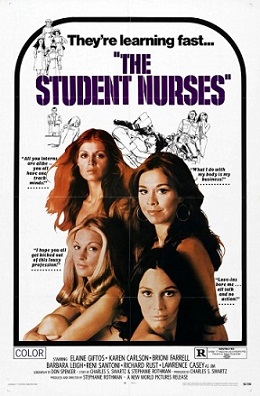
The Student Nurses tells the story of four women who are studying to be nurses while working at the local hospital.  Phred (Karen Carlson) is introduced when she’s attacked by a crazed patient.  Later, she falls for a doctor named Jim (Lawrence P. Casey).  Sharon (Elaine Giftos) grows close to a terminally ill patient (Darrell Larson) and discovers the wisdom of Dr. Warshaw’s admonition about mourning.  Priscilla (Barbara Leigh), who is regularly admonished for the length of her skirt and for never wearing a bra, meets a charismatic drug dealer named Les (Richard Rust).  Les is all about dropping the acid on the beach but he’s not about sticking around when his girlfriend gets pregnant.  And finally, Lynn (Brioni Farrell) meets a Latino political activist named Victor Charlie (Reni Santoni) and discovers that some people just aren’t rich enough to go to the hospital.  When Victor shoots a cop during a raid on his headquarters, Lynn is forced to make a difficult decision.

The Young Nurses is almost legendary because of its status as a politically-themed exploitation film.  It’s a Roger Corman production so there’s a lot of nudity.  But director Stephanie Rothman used the genre to explore themes of class conflict and feminism.  All four of the nurses are portrayed as being strong and independent women who have sex because they want to and who feel no shame about their decisions.  For a 1970 film, that was a big deal.  Interestingly, considering the film’s reputation, it’s actually fairly even-handed when it comes to the differing worldviews of the nurses.  One of the nurses decides that she wants to serve in the Army Nurse Corps, even if that means going to Vietnam.  Another ends up bragging about the gun that she’s carrying in her glove compartment, just in case anyone tries to stand in the way of the revolution.  The film treats both of their decisions with respect.  The important thing, the film seems to be saying, is that all of them are in control of their own future.

It’s an exploitation film, make no doubt about it.  Today, we might talk about the film’s politics and its feminist subtext but I kind of doubt that’s what made the film a box office success in 1970.  That said, Stephen Rothman brings some imagination to even the film’s most exploitive scenes.  When Priscilla drops acid on the beach, Rothman slowly introduces more and more people to the scene, leaving us to wonder, just as Priscilla does, whether they’re real or their just a part of her trip.  All four of the lead actresses are well-cast and fans of great character actors will probably enjoy seeing Reni Santoni playing someone other than a cop or a doctor.

Finally, like so many exploitation films, The Student Nurses is a true time capsule.  The music, the clothes, the groovy slang, this is a film that proudly announces that it was made in 1970.  We may not have time machines but at least we have the movies.

I have no idea if The Student Nurses is a realistic portrayal of what it was like to be a student nurse in 1970.  That said, it’s an entertaining film and, in its grindhouse way, a tribute to the nurses who do so much.
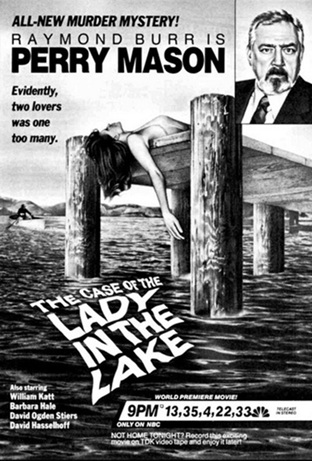
 

I Watched Perry Mason: The Case of the Lady In The Lake (1988, Dir. by Ron Satlof)


Fifteen years ago, the sister of Sara Wingate (Doran Clark) was murdered at a lake near the family home.  Traumatized, Sara had a nervous breakdown.  It was only when she married Billy Travis (David Hasselhoff), a former tennis player, that Sara started to get over her fear of the lake.  When Sara disappears while walking along the lake, Billy is arrested and charged with murdering her.  Because Perry’s is an old friend of Sara’s uncle (John Ireland), he takes the case.  If you’re going to get arrested for murder, you better hope one of your relatives knows Perry Mason.

This movie wasn’t bad.  It had a twist at the end, which I saw coming but which was still unique for the Perry Mason movies.  The actual guilty party is pretty obvious but the mystery wasn’t as important as usual in this one.  The supporting cast was pretty good, though David Hasselhoff seemed to be too calm for someone accused of murder.  As Perry, Raymond Burr uses his cane again and leans against something whenever he has to stand up.  Della jokes that Perry won’t be skiing anymore.  Most of the action falls to Paul Drake, Jr. (William Katt), who gets beaten up even more than usual but who also gets to be the big hero in the end.

This was the last Perry Mason film for both William Katt and David Ogder Stiers, who played the district attorney.  I’m going to miss both of them.  William Katt’s hair was huge in this one and I was really looking forward to seeing how much bigger it could get.

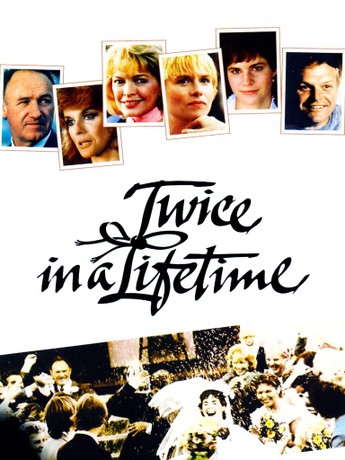
Twice In A Lifetime (1985, dir by Bud Yorkin)


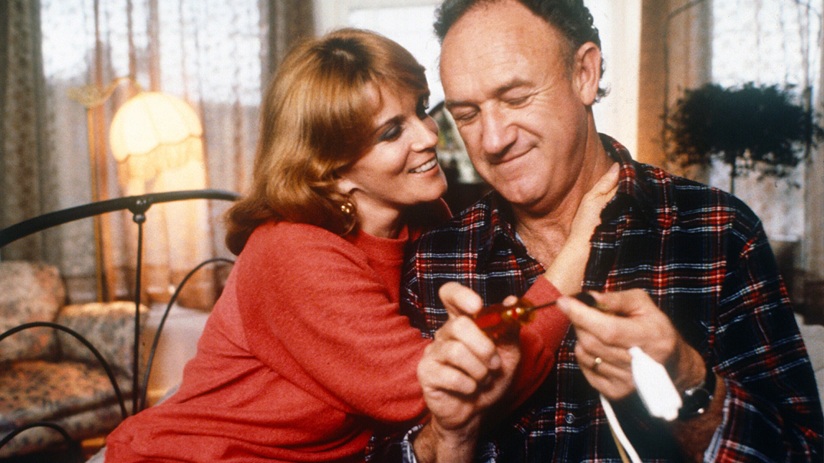
Today, for obvious and tragic reasons, people everywhere have been thinking about their favorite Gene Hackman performances.  Hackman was an actor who always brought his all, even when he was appearing in a lesser film.  I think you could ask five different people for their five favorite Hackman performances and they would all give five different answers.  His performance as Lex Luthor in Superman and Superman II has always been one of my favorites.  Others will undoubtedly cite his award-winning performance as Popeye Doyle in The French Connection or his great work as Norman Dale in Hoosiers or his work in classic neo-noirs like The Conversation and Night Moves.  Let’s not forget his most unexpectedly great turn, as the blind man in Young Frankenstein.  Hackman gave so many great performances that some of them were for films that are not even remembered today.

Twice In A Lifetime is one of those forgotten films but I think it features one of Hackman’s best performances.  He plays Harry Mackenzie, a steelworker who is married to Kate (Ellen Burstyn, made up to look frumpy) and who has two daughters (Amy Madigan and Ally Sheedy).  Harry is the type of everyman that Hackman excelled at playing.  He’s a hard worker, a good family man, and a good friend.  What no one, not even Harry realizes, is that he’s also having a midlife crisis.  On his 50th birthday, he goes out to the neighborhood bar with his buddies and falls for the new barmaid, Audrey (Ann-Margaret).  Harry ends up leaving his wife for Audrey, pursuing the spark that his marriage no longer gives him.  The movie follows Harry and Kate and their daughters as they adjust to their new lives and they plan for the younger daughter’s wedding.

Twice In A Lifetime was one of many 80s films that dealt with divorce and it has the same flaws that afflicted many of them.  These films, which were often made by middle-aged directors who had just gone through their own divorces, rarely played fair when it came to depicting why the marriage failed.  Twice In A Lifetime stacks the odds in Harry’s favor just by suggesting that Ann-Margaret would end up working at a bar frequented by steelworkers.  Harry has to choose between his plain and boring wife and Ann-Margaret.  That’s going to be a difficult choice!  The twist that Harry’s decision was ultimately the right thing for Kate doesn’t feel earned.

But damn if Gene Hackman isn’t great in this film.  Even though he was one of the most recognizable actors in the movie, Hackman is totally believable as both a steelworker and a man who worries that he’s destroyed his family.  It’s not just one moment or scene that makes this a great performance.  It’s the entire performance as a whole, with Hackman portraying all of Harry’s conflicted emotions both before and after leaving his family.  Hackman gives a performance that is more honest than the film’s script or direction.  The movie believes Harry did the right thing but Hackman shows us that Harry himself isn’t so sure.  Hackman captures the middle-aged malaise of a man wondering if his life is as good as it gets.  When the movie works, it is almost totally due to the emotional authenticity of Hackman’s performance.  Twice in a Lifetime may be a forgotten film but it’s also proof of how great an actor Gene Hackman really was.  There will never be another one like him.

Film Review: The Last Innocent Man (dir by Roger Spottiswoode)


In 1987’s The Last Innocent Man, Ed Harris plays Harry Nash.

Harry is a criminal defense attorney, one who specializes in defending people who have been charged with committing murder.  He’s good at his job but he’s not sure that he’s happy with his life.  He went into the law to save people from Death Row but years of getting acquittals for guilty people have taken their toll on Harry’s psyche.  His most recent client was Jonathan Gault (David Suchet), a man accused of having killed his wife.  The verdict was “not guilty” but Harry suspects that Gault may have been guilty of both what he was charged with and also countless crimes for which he hasn’t been charged.  It doesn’t help that Gault confronts Harry in a parking lot and says he wants Harry to co-write a book about how he got Gault acquitted.  Gault proceeds to tell Harry that he did kill his wife, before suddenly laughing and saying that he’s only joking.

Despite all of the money and the fame, Harry needs a break from dealing with guilty people.  He tells his shocked partner that he will be temporarily stepping back from their practice.  Along with being burned out, Harry is also interested in pursuing a romantic relationship with Jenny Stafford (Roxanne Hart).  Jenny is married but she assures Harry that she is in the process of getting a divorce from her husband, Philip (Darrell Larson).

However, when Philip is arrested and accused of murdering a policewoman who was working undercover as a prostitute, Harry finds himself defending Philip in court.  Philip swears that he’s innocent of the crime and that he’s never even been with a prostitute.  He claims that, when the murdered occurred, he was at home with his wife.  Jenny is willing to collaborate Philip’s alibi, even though Harry suspects that she’s lying.

As you can probably guess, there are plenty of twists and turns to the plot of The Last Innocent Man.  Unfortunately, they’re not exactly shocking twists and turns.  The Last Innocent Man is a courtroom drama and it pretty much sticks to the rules of the genre, which means a lot of snarky comments between Harry and the prosecutor and also plenty of scenes of various lawyers snapping “Objection!” and demanding a recess.  This is the type of film where people fall apart on the witness stand and the audience in the courtroom murmurs whenever something shocking happens.  The Judge can’t pound that gavel hard enough to make The Last Innocent Man anything more than a standard courtroom drama.

That said, director Roger Spottiswoode keeps the action moving at a quick-enough pace and Ed Harris is ideally cast in the role of the morally conflicted Harry Nash.  As well, there’s an entertaining supporting performance from Clarence Williams III, cast here as a cocky pimp, and David Suchet is chillingly evil as the worst of Harry’s clients.  The Last Innocent Man doesn’t quite reach the Hitchcockian heights that it was reaching for but, still, fans of courtroom dramas will enjoy it or, at the very least, show a little leniency in their judgment.

Cinemax Friday: City Limits (1984, directed by Aaron Lipstadt)


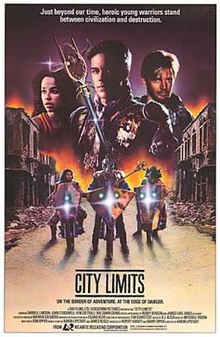
Fifteen years into the future, a plague has wiped out almost everyone legally old enough to drink and it has instead left behind a post-apocalyptic hellscape dominated by teenagers.  Tired of living in the boring desert, Lee (John Stockwell) hops on his motorcycle, puts on a skull mask, and drives to a nearby city.  He hopes to join the Clippers, one of the two gangs that is fighting for control of the city.  However, the Clippers aren’t as easy to join as Lee thought they would be.  As well, an evil corporation (led by Robby Benson of all people) is manipulating the two gangs as a part of a plan to take over the city and also the world.

City Limits is one of those films that would probably be totally forgotten if it hadn’t been featured on an episode of Mystery Science Theater 3000.  It’s a good episode but, unfortunately, it’s also led to City Limits getting a reputation for worse than it actually is.

City Limits is a dumb, low-budget movie that was made to capitalize on the success of films like Mad Max.  The plot is impossible to follow, too many scenes are shot in the middle of the night, and Robby Benson is somehow even less intimidating as the villain as you would expect him to be.  (All of Benson’s scenes take place in the same bare office and feature him sitting at a desk.  It probably took a day at most for Benson to do all of his scenes.)  Even with all that in mind, though, City Limits is a fun movie, especially if you can turn off your mind, just relax, and not worry about trying to make it all make sense.  John Stockwell is a likably goofy hero and, Benson aside, the film has got a surprisingly good supporting cast, including Rae Dawn Chong, Kim Cattrall, Tony Plana, Darrell Larson, and even Kane Hodder in a blink-and-you’ll-miss-him type of role.  James Earl Jones wears a big fur coat and blows people up.  He also narrates the film, which automatically elevates everything that happens.  Some of the action scenes are exciting.  Fans of people shouting insults while riding motorcycles will find a lot to enjoy in City Limits.  And, finally, there are a few genuinely funny moments.  I loved that the gangs borrowed all of their plans for old comic books.

City Limits is stupid but entertaining, whether you’re watching it on your own or with Joel and the Bots.


Insomnia File #10: Eye For An Eye (dir by John Schlesinger)


What’s an Insomnia File? You know how some times you just can’t get any sleep and, at about three in the morning, you’ll find yourself watching whatever you can find on cable? This feature is all about those insomnia-inspired discoveries!

Eye_for_an_Eye_(1996_film)_poster

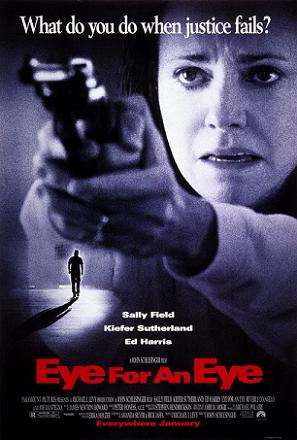
If you were awake at midnight and trying to get some sleep, you could have turned over to ThillerMax and watched the 1996 revenge thriller, Eye For An Eye.  However, the film wouldn’t have helped you get to sleep.  Eye For An Eye is not a film that you sleep through.

Eye For An Eye opens with Karen McCann (Sally Field) comforting her youngest daughter, Megan (Alexandra Kyle).  Megan is terrified of a moth that has flown into her bedroom.  “Kill it, mommy, kill it!” Megan shouts.  Instead, Karen gently takes the moth in her hand and allows it to escape through an open window.  In those first few minutes, the film tells us everything that it feels to be important about Karen.  She’s a mother.  She lives in a big house in the suburbs.  And she wouldn’t kill a moth…

But — the name of the title is Eye For An Eye and that would seem to promise killing so we know that something terrible is going to happen to change Karen’s outlook on life.

And it does!  The next afternoon, Karen is stuck in traffic and calls her oldest daughter, 17 year-old Julie (Olivia Burnette).  In an extremely harrowing sequence that is pure nightmare fuel, Karen helplessly listens as Julie is raped and murdered.

A white trash deliveryman named Robert Doob is arrested for the crime and we immediately know that he’s guilty.  First off, his name is Robert Doob and that’s a serial killer name if I’ve ever heard one.  Secondly, he smirks at Karen and her husband (Ed Harris) and, in a particularly cruel moment that was especially upsetting to this former stutterer, he imitates Julie’s stammer.  Third, Robert has tattoos and Satanic facial hair.  And finally, Robert Doob is played by Keifer Sutherland.  And usually, I find Keifer and his growl of a voice to be kinda sexy in a dangerous sorta way but in Eye For An Eye, he was so icky that he just made my skin crawl.

Robert Doob is obviously guilty but an evil liberal judge throws the case out on a technicality.  After Karen gets over the shock of seeing justice perverted, she decides to take the law into her own hands.  After meeting a professional vigilante (Philip Baker Hall, looking slightly amused no matter how grim he tries to act), Karen decides to learn how to use a gun so that she can get her revenge…

There’s not a single subtle moment in Eye For An Eye but that’s actually the main reason I enjoyed the film.  Everything — from the performances to the script to the direction to the music to … well, everything — is completely and totally over-the-top.  The symbolism is so heavy-handed and the film is so heavily stacked in favor of vigilante justice that the whole thing becomes oddly fascinating.  It may not be a great film but it’s always watchable.  It may not be subtle and it may even be borderline irresponsible in its portrayal of the American justice system but who cares?  By the end of the movie, I was over whatever real world concerns I may have had about the film’s premise and I was totally  cheering Karen on in her quest for vengeance.  I imagine I’m not alone in that.  Eye For An Eye is the type of film that elitist movie snobs tend to dismiss, even while secretly knowing that it’s actually kinda awesome.

Previous Insomnia Files:

  1. Story of Mankind
  2. Stag
  3. Love Is A Gun
  4. Nina Takes A Lover
  5. Black Ice
  6. Frogs For Snakes
  7. Fair Game
  8. From The Hip
  9. Born Killers