I’m a big fan of Robert De Niro, and I think it all started because of the movie MIDNIGHT RUN (1988). I was only 14 years old when it came out, but it was everything I wanted in a movie, which was primarily great action, with a dash of fun comedy. I was soon seeking out all of his great work, whether it be with Coppola, Scorsese, De Palma, or even Roger Corman. Well, just this evening, as I was browsing through Amazon Prime’s selection of horror films, I came across HIDE AND SEEK. Since I’d never seen it before, and it looked kind of creepy, I thought I’d give it a chance.
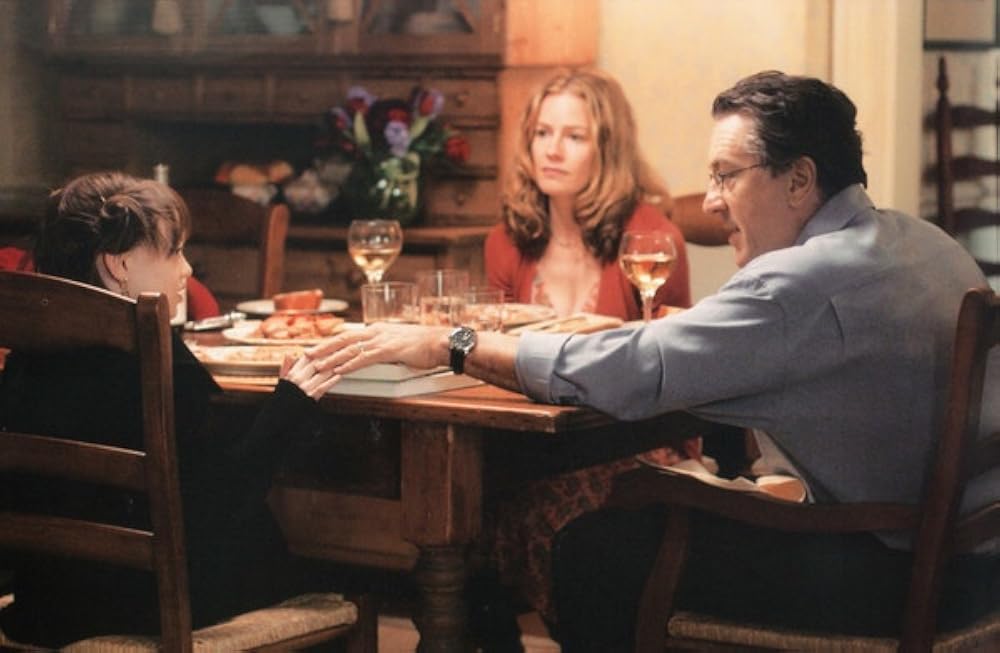
De Niro plays David Callaway, a psychologist who is struggling to cope with the death of his wife. He moves with his young daughter, Emily (Dakota Fanning), to a house out in the country in upstate New York, hoping that a change of scenery will help them both recover from their loss. Unfortunately, Emily begins acting strangely, talking about an imaginary friend named Charlie. Before long, David finds himself dealing with a series of increasingly disturbing events that seem to have something to do with this mysterious friend.
I’ve always enjoyed a good psychological thriller, especially one that keeps you guessing about what’s going on. HIDE AND SEEK is one of those movies that wants to freak you out and make you question whether or not you can trust what you’re seeing, or any of the people involved. Of course this being a psychological thriller, you can’t really trust anyone, especially the people who pretend to care the most.
Dakota Fanning is excellent as Emily. I’ve always held her performance in the great Denzel Washington film, MAN ON FIRE (2004), in high regard as an example of how great a child actress can be. Here, I think she does a good job of making Emily seem both vulnerable and a little scary at times. De Niro is also effective, particularly as the story gradually reveals more about the relationship between him and his daughter. The supporting cast, which includes Famke Janssen, Amy Irving, and especially Elisabeth Shue, adds to the mystery surrounding the film. I just like seeing Elisabeth Shue in any film, because I’ve had a crush on her since the fifth grade.
HIDE AND SEEK is the kind of thriller that depends on its twists and turns, and whether or not we’re willing to go along. I will say that I enjoyed the watching the story unfold, even when the ending doesn’t come off quite as clever as the filmmakers had hoped. My final verdict is that it’s an entertaining film with strong central performances from De Niro and Fanning. I enjoy movies that give me something to think about while I’m watching them, and this one kept me interested in finding out what was really going on. It was a fun watch on dark night in October.
“All these traditions, jack-o’-lanterns, putting on costumes, handing out treats, they were started to protect us, but nowadays… no one really cares.” — Principal Steven Wilkins
What better and more fun way is there to celebrate the full month of scares and horror that October has become than with Michael Dougherty’s 2007 film Trick ’r Treat? It is the kind of Halloween movie that feels less like it was merely set on the holiday and more like it was built out of everything people love about it. Trick ’r Treat has jack-o’-lanterns glowing on porches, costumes ranging from charming to grotesque, chilly nighttime streets, old local legends, candy bowls, haunted-school-bus stories, werewolves, serial killers, and that ever-present feeling that something is watching from behind a tree. It is funny, nasty, creepy, and strangely cozy at the same time. More than almost any modern horror film, it understands Halloween as a whole atmosphere rather than a collection of familiar props.
At first glance, the movie looks like an anthology film. It is divided into several distinct stories with their own central characters, premises, and horror styles. One segment involves a principal with a murderous secret, another follows a group of kids investigating a grim local legend, another centers on young women looking for dates at a costume party, and another focuses on a bitter old man dealing with a small but persistent visitor. Each story could almost function as its own short horror movie. Dougherty clearly enjoys shifting tones, moving from slasher material to ghost-story melancholy, then into monster-movie lunacy and dark comedy. But the key difference is that Trick ’r Treat is not simply an anthology stitched together by a host or a framing device. Every story told in the film ties into an overarching story unfolding across one night of Halloween.
That structure is one of the movie’s smartest features. Characters drift in and out of one another’s narratives, sometimes briefly and sometimes in ways that completely change the audience’s understanding of what they have already seen. A person who seems like a background extra in one sequence becomes the focus of another. A strange sound, a distant scream, a passing school bus, or a visual detail in one story can gain much more meaning when it reappears elsewhere. The movie plays with chronology too, allowing events to overlap and occasionally revealing that scenes which seemed straightforward were occurring at a different point in the night than viewers assumed. It rewards attention without becoming confusing for the sake of being clever.
Dougherty handles those connections smoothly because the film never stops feeling like one continuous Halloween night. The transitions are playful rather than showy. The camera may follow a character down a street, past a decorated yard, into another group’s story, and suddenly the audience has entered a different kind of nightmare. That makes the town itself feel like a character. It is not a generic horror-movie setting where bad things happen because the script requires them to. It feels like a community with traditions, buried crimes, local myths, annual rituals, and plenty of people who are either hiding something or about to discover something unpleasant.
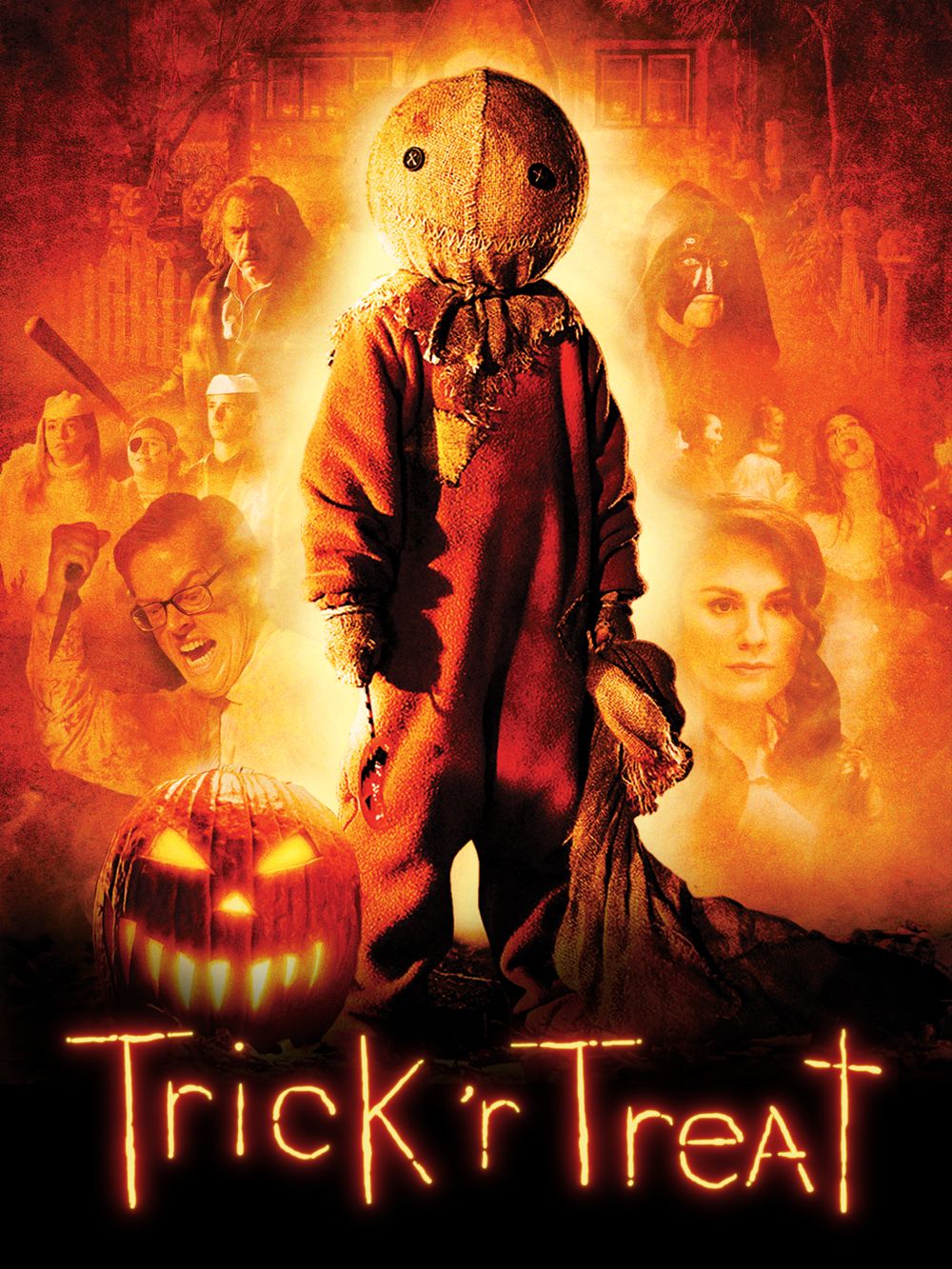
The town’s Halloween obsession is also what gives the film its personality. Trick ’r Treat treats Halloween rules almost like ancient laws: wear a costume, hand out candy, never blow out a jack-o’-lantern before midnight, and always respect the dead. Breaking those rules does not guarantee immediate punishment in a simple moralistic way, but it certainly puts people at risk. The film’s central icon, Sam, embodies that idea. Wearing orange pajamas, a burlap sack mask, and carrying a lollipop that can become a weapon, Sam is one of the great modern horror mascots because he is both adorable and deeply unsettling. He is not presented as a typical slasher villain with a detailed backstory or a conventional motivation. He feels more like the living spirit of Halloween itself: mischievous, ceremonial, cruel when necessary, and completely devoted to the holiday’s traditions.
Sam’s presence gives the movie a connective thread beyond plot mechanics. He appears in the background, watches over events, and eventually takes center stage in a way that is both amusing and genuinely tense. There is something almost storybook-like about him. He resembles a child going door to door for candy, but his behavior suggests an old supernatural force enforcing rules everyone else has forgotten. The movie wisely never overexplains him. Horror icons often become less interesting once every mystery is reduced to lore, family trees, and exposition. Sam works because Dougherty lets him remain partly unknowable.
The cast is another reason the film holds together so well. Dylan Baker is excellent as Steven Wilkins, the seemingly mild suburban principal whose cheerful politeness becomes much more disturbing once the movie reveals what he is doing after dark. Baker has a talent for making every smile look just slightly too controlled. His storyline is especially effective because it mixes grotesque humor with an unsettling domestic quality. He is not stalking victims through a foggy forest or living in an abandoned asylum. He is cleaning up a mess in his backyard while trying to maintain a normal family routine. That contrast makes his scenes nastier and funnier.
Brian Cox brings real weight to Mr. Kreeg, the grumpy old man at the center of the film’s most memorable Sam-focused material. Cox could have played him as a broad caricature, but he gives the character enough fear, frustration, and hidden sadness to make the confrontation feel more substantial than a simple old-man-versus-monster sequence. The movie’s final act uses his house almost like a haunted maze, with the warm, cluttered interior gradually becoming a battlefield. The tone remains playful, yet there is a real sense of danger whenever Sam drops the cute disguise and shows what he can do.
Anna Paquin also stands out in the segment involving Laurie and her friends. At first, it seems like the film is setting up a familiar vulnerability narrative: young women in costumes, a dark forest, strange men, and the possibility of a predatory attacker. Then Trick ’r Treat gleefully twists expectations. The reveal is not subtle, but it is staged with enough energy and confidence that it lands as a crowd-pleasing monster-movie moment. Dougherty knows that horror does not always need to be grim to be effective. Sometimes the best reaction is an audience laughing in surprise right before a scene turns bloodier than expected.
The school-bus story is probably the film’s creepiest material. The idea of children killed by adults and returning as drowned, decayed figures could have been handled in a cheap or overly cruel way, but the movie gives it a sad, mythic edge. The ghosts are frightening, but the story is also about guilt, buried history, and a town that has allowed its ugliest secret to become a campfire legend. The children may be supernatural monsters by the time they reappear, but the adults who wronged them are even more horrifying. That is a recurring theme throughout Trick ’r Treat: Halloween monsters are dangerous, but human selfishness, cowardice, and cruelty tend to create the worst consequences.
Visually, the film has aged remarkably well because it does not chase a slick, overly polished look. It has a rich autumnal color palette full of oranges, blacks, deep reds, and warm porch-light yellows. The night scenes are dark enough to feel threatening but clear enough that viewers can appreciate the costumes, decorations, and production design. Every street seems covered in leaves, every house has candles or carved pumpkins, and every shadow seems capable of hiding a creature. It feels like a heightened version of childhood Halloween memories, except those memories have been invaded by murderers, werewolves, demons, and ghosts.
The practical effects and creature work add a lot to that charm. The movie uses CGI when needed, but it does not depend on weightless digital spectacle. Sam’s physicality, the werewolf transformations, the decayed school-bus children, and the various masks and props all have a tactile quality. They look like things that belong in a haunted attraction, a particularly elaborate costume shop, or an old EC Comics-style horror story. That handmade texture fits the film perfectly. Trick ’r Treat is polished, but it never feels sterile.
What makes the movie so rewatchable is how comfortably it moves between tones. It can be goofy without becoming stupid, gruesome without becoming exhausting, and sentimental about Halloween without turning saccharine. It embraces the holiday’s childish excitement while acknowledging the darker folklore underneath it. There is candy, costumes, and neighborhood fun, but there are also old grudges, punished sinners, restless dead, and things that hunt after midnight. Dougherty understands that those two sides belong together. Halloween is fun partly because it lets people play with fear in a safe, communal way, and Trick ’r Treat captures that balance better than most horror movies.
The film’s anthology-like design gives it variety, while its overlapping characters, recurring events, and shared setting make it feel like one cohesive story rather than a disconnected collection of shorts. Its lasting popularity has also made the lack of a sequel feel increasingly strange. Fans have been clamoring for another trip through Sam’s Halloween night for years, and Dougherty has repeatedly hinted that he has ideas for where a follow-up could go. He has discussed multiple script drafts, storyboards, concept art, and the possibility of giving Sam a new adversary, but the project still has not received an official greenlight.
That uncertainty is frustrating, especially because Trick ’r Treat feels like a world with plenty more stories left to tell. At the same time, it is probably better that Dougherty has not rushed out a sequel just to cash in on the film’s cult status. The original works because it feels carefully constructed, visually specific, and completely committed to its Halloween setting; any follow-up would need to preserve that same mix of horror, comedy, folklore, and interconnected storytelling. For now, Trick ’r Treat remains an annual October rewatch because it honors Halloween’s old traditions while creating its own: a funny, spooky, blood-soaked celebration of costumes, candy, campfire legends, and the things that come out once the porch lights go dark.
Welcome to Retro Television Reviews, a feature where we review some of our favorite and least favorite shows of the past! On Mondays, I will be reviewing Miami Vice, which ran on NBC from 1984 to 1989. The entire show can be purchased on Prime!
This week, a man kills for his dolls.
Episode 4.16 “Honor Among Thieves?”
(Dir by Jim Johnston, originally aired on March 4th, 1988)
A serial killer named Paul Delgado (John Bowman and no, we’re not related as far as I know) is killing girls in Miami. He believes that he’s being ordered to kill by his collection of dolls and, when he’s speaking as a doll, he uses a high-pitched voice. He picks women up at carnivals or on the beach and he kills them by injecting them with 100% pure cocaine. He poses their bodies with a doll beside them.
Because of the cocaine connection, homicide detective Jarrell (Dylan Baker) approaches Castillo. Castillo explains that his best men are working deep undercover, trying to take down a drug lord named Palmo (Ramy Zada). That’s right, this is yet another episode where Crockett pretends to be Burnett and Tubbs pretends to be Cooper and somehow, they’re able to get away with it despite the fact that their cover has been blown in almost every previous episode.
Delgado works for Palmo and things get even more complicated when it turns out that Delgado is Crockett and Tubbs’s connection inside Palmo’s operation. When Palmo discovers that Delgado is the killer, he puts Delgado on trial. The jury is made up of other drug dealers. Since Crockett is pretending to be a lawyer, he’s assigned to serve as Delgado’s defense counsel. Palmo tells Crockett that, unless he’s acquitted by the drug dealer jury, he’ll reveal that Crockett and Tubbs are working undercover….
This was a weird episode, It didn’t really work because Delgado was a bit too cartoonish to be taken seriously. Perhaps if the show had just made him a serial killer who killed women with cocaine, it would have worked. But the show had to go the extra step and have him talk to his dolls in a high-pitched voice. As well, this was yet another episode where we were forced to wonder if people in the Miami underworld just don’t communicate with each other. After all the drug lords that have been busted by Crockett and Tubbs, you would think that word would eventually get out about “Burnett” and “Cooper.” I mean, their cover gets blown in nearly every episode. Frank Zappa put a bounty on Crockett’s head in season 2! And yet somehow, Crockett and Tubbs are still able to walk into a drug lord’s mansion, introduce themselves as Burnett and Cooper, and not automatically get shot.
There were some definite problems with this episode but it was weird enough to at least hold one’s attention. As opposed to the episodes with the aliens and the bull semen, this episode didn’t seem like it was trying too hard to be weird. Instead, it just was genuinely weird. It was watchable and, as far as the fourth season of Miami Vice is concerned, that definitely counts as an accomplishment.
I’ll admit that I’m not a huge fan of horse racing, although I will periodically go to the Oaklawn Racetrack in Hot Springs, AR, and watch them run. I did enjoy the horse racing movie SEABISCUIT (2003) when I saw it a decade or so ago, and I always enjoy driving past the beautiful horse farms in Lexington, KY, when I’m on my way to see my wife’s family in West Virginia. This weekend was the Kentucky Derby, and I saw a stat that every horse running is a descendant of the 1973 triple-crown winner, Secretariat. I thought that was pretty cool stuff. I told my wife about it, so we decided to watch the movie SECRETARIAT (2010) this morning.
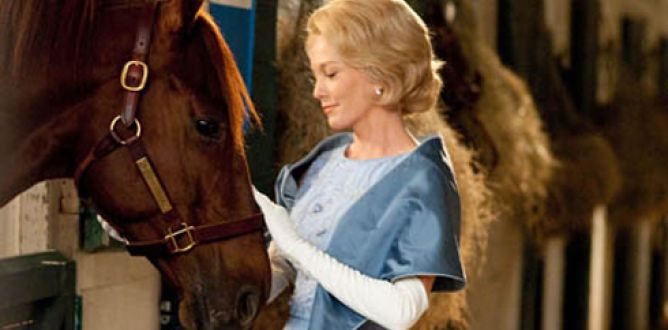
The film centers on Penny Chenery Tweedy (Diane Lane), a Boulder, CO housewife who takes over the management of her dad’s horse stables in Virginia when his health gets so bad that he can no longer handle it himself. The business is facing a lot of financial problems, and her husband just wants her to sell everything and come on back home. But Penny doesn’t want to sell, especially when the stable acquires a young colt that just may have to the right combination of speed and stamina to become a great racehorse. Wanting to see her horse get a chance to run, she hires eccentric trainer Lucien Laurin (John Malkovich) and the aggressive jockey Ron Turcotte (Otto Thorwarth) in order to give “Secretariat” a chance to reach his potential. And boy does he ever, ultimately becoming the first “Triple Crown” winner in 25 years.
I’ll go ahead and say that I pretty much got exactly what I was expecting with SECRETARIAT. It’s a “feel-good” movie that made me happy at the end. Outside of him being a triple crown winner, I didn’t know much about Secretariat’s story, so it was fun just seeing how dominant he truly was during his legendary run in 1973. And the performances from the leads are very good. Diane Lane is beautiful and convincing as the housewife determined to give every thing she has to make Secretariat a winner. John Malkovich’s eccentric horse trainer is the kind of role he excels in, and he’s both funny and emotionally engaging. I liked Otto Thorwarth and Nelson Ellis as Secretariat’s jockey and groomer, respectively. Each of them had their individual moments to shine. I also wanted to mention how impressive the camerawork is during the racing sequences. For a film like this to be exciting, the races have to be exciting and director Randall Wallace and cinematographer Dean Semler deliver in spades. If I had any complaint about the film, it would probably be the oversimplification of some of the supporting characters. For a film based on a true story, it was odd to see the owner of Secretariat’s primary competition reduced to almost a comic book villain in his behavior. That aside, I enjoyed the film and I’m glad I watched it.
I love Thanksgiving because I love spending time with my family. My Mom is one of 15 kids from a large Catholic family in central Arkansas, so this is the time of year that I get to see a big part of that extended family. A lot of people are spread out across the state and country so we don’t get to see everyone at Thanksgiving, but we do get to see a lot of people. We go to my aunt Jo Ellen’s house, and I get to hang out with a bunch of my aunts, uncles and cousins. We’ll have a giant feast from a potluck of items we’ve grown to love over the years…Aunt Jo Ellen’s turkey and dressing, Mom’s candied yams, Aunt Connie’s deviled eggs, the giant table of desserts, etc. Our family is all about traditions, and this is the time of year we share those with each other. I just love it!
One of our movie-watching traditions is watching PLANES, TRAINS AND AUTOMOBILES together. And we do it every year. We still laugh at all the right parts…Kevin Bacon getting Steve Martin’s cab thanks to a mysteriously large trunk on the curb, John Candy reading The Canadian Mounted, Doobie’s Taxiola, “Those Aren’t Pillows,” Owen’s strange facial expressions and throat noises, “a couple of balls and an extra set of fingers,” the runway crossing, the car rental counter meltdown, “you’re going the wrong way,” the hotel destruction getaway, and the indestructible car radio. Odds are many of you are smiling as you read this quick summary of some of my favorite parts. We’ll watch the movie together while we’re settling in back at Dad and Mom’s house after a wonderful Thanksgiving lunch. It’s a guarantee that Dad will be snoring at some point.
As much as I love to eat, to me, Thanksgiving is all about spending time with the ones I love. We’ll tell a lot of the same stories that we’ve told many times over the years, and we’ll laugh at them all over again. We’ll truly enjoy our time together. Our family is not perfect, and we don’t always see eye to eye on everything, but we love each other and that is more important than just about anything else. That’s a Crain family tradition passed down from my parents. One of the best things about PLANES, TRAINS AND AUTOMOBILES is that there are times when the laughs die completely down, and that’s when the movie reveals its heart. The same can be said for my family, and that’s something I’m truly thankful for.
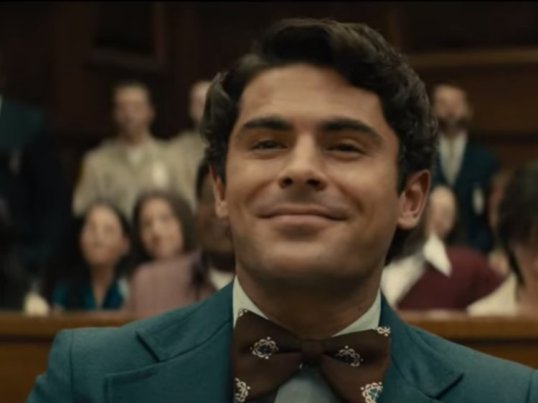
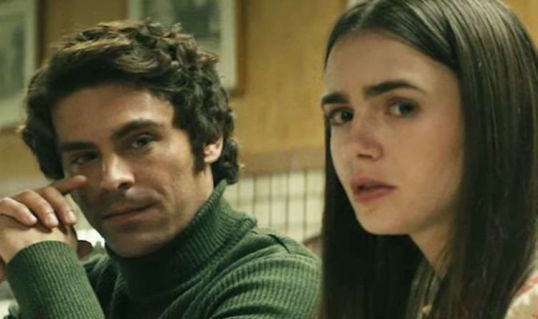
Early on in the new Netflix film, Extremely Wicked, Shockingly Evil, and Vile, there’s a scene in which Liz Kendall (Lily Collins) and her sister, Joanna (Angela Sarafyan) go to a bar. Through some rather heavy-handed dialogue, we learn that Liz has just broken up with her boyfriend, that she has next to zero self-confidence, and that she’s a single mother. She doesn’t think that there’s a man anywhere who would be interested in her. Joanna responds by pointing out that there’s one man who appears to be very interested. In fact, he hasn’t taken his eyes off of Liz since they entered the bar.
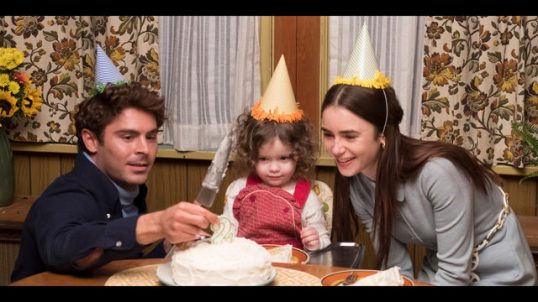
That man’s name is Ted (Zac Efron) and, at first, he seems like he’s too good to be true. He’s charming. He’s a law student. He appears to love spending time with Liz’s daughter. He looks like Zac Efron. Perfect, right?
Of course, we know something that Liz doesn’t. We know that Ted is Ted Bundy and that, eventually, he’s going to become one of America’s notorious serial killers, a symbol of evil so potent that, more than 30 years after he was executed by the state of Florida, he continues to get movies made about him.
Because we know who and what Ted is, we spend the first fourth of the movie cringing at everything that makes Liz happy. For instance, Liz is shocked to discover that Ted apparently loves her daughter but we’re just like, “Oh my God, that’s Ted Bundy! GET YOUR DAUGHTER AWAY FROM TED BUNDY!” Liz thinks it’s romantic when Ted makes breakfast for her but we’re just staring at the big kitchen knife in his hand. When Liz and Ted make love, only we notice the blank look on Ted’s face as he looks down at Liz and we find ourselves wondering what’s happening in his mind.
The film is told largely through Liz’s eyes and, with one exception, we never see Bundy actually committing any of his crimes. (That’s a good thing, by the way. We already know who Ted Bundy was and what he did. There’s no need to sensationalize the very real pain that he caused.) Like Liz, we find out about Bundy’s crimes through news reports and arrest records. For instance, when Bundy is arrested for attempted kidnapping in Utah, Liz doesn’t find out about it until a story appears in the local Seattle newspaper. When Liz demands to know why he didn’t tell her what was happening, Bundy gives her a bullshit story about how he’s being framed and how his lawyer is going to get the case thrown out. We know that Ted’s lying but Liz believes him because …. what else is she going to do? Is she going to believe that this perfect man who seems to love both her and her daughter is actually a sociopathic monster?
The film follows Bundy from one trial to another, as he’s charged with crimes across country. It shows how this superficially charming law student became something of a media celebrity. (When a reporter asks him if he’s guilty, Bundy grins and asks if the reporter is referring to a comic book that he stole when he was in the fifth grade.) Bundy escapes. Bundy is arrested. Bundy escapes again. Bundy eventually ends up being tried in Florida, where he revels in the attention. When Liz loses faith in him, Bundy replaces her with an unstable woman named Carole Ann (Kayla Scodelario). However, even while Carole Ann is dutifully delivering statements from Bundy to the press, Bundy is still calling Liz and begging her to believe that he’s innocent and he’ll soon be freed from prison.
Why is it so important to Bundy that Liz believe in him? Is he just entertaining himself by manipulating her or, in his relationship with her, does he see the type of normalcy that he desires but knows he’s incapable of ever achieving? Towards the end of the film, Liz comes close to asking Bundy if he was planning on killing her the first night that they met. She doesn’t and it’s doubtful that Bundy would have given an honest answer but it’s still a question that hangs over every minute of this film (as does Liz’s physical resemblance to the majority of Bundy’s victims).
Though the film may be told from Liz’s point of view, she’s often comes across as just being a meek bystander, watching as the darkness of Ted Bundy envelops her world. The film itself seems to be far more interested in Ted Bundy and his twisted celebrity. Zac Efron plays Bundy as someone who knows how to be charming and who is good enough at imitating human emotions that he’s managed to keep the world from noticing that he’s essentially hollow on the inside. Bundy has gotten so used to acting out a role that, even when he’s on trial for his life, he can’t resist the temptation to turn the courtroom into his own stage. He demands to defend himself and, though he initially proves himself to be a good lawyer, his demands and his questions become progressively more flamboyant and self-destructive. It’s as if he’s gotten so caught up in playing his role that he’s incapable of recognizing the reality of his situation. He performs for the jury, the judge, and the television audience, treating the whole thing as if he’s just a character in a movie. It’s only when he has no choice but to accept that he’s been caught and he’s never going to escape that Bundy finally shows some human emotion. He cries but his tears are only for himself. It’s a chilling performance and Zac Efron deserves every bit of praise that he’s received.
Unfortunately, the film itself doesn’t really tell us anything that we didn’t already know. Director Joe Berlinger is best-known as a documentarian and he talks a “just the facts” approach to the story. We don’t really get any insight into how a monster like Ted Bundy could come to exist. Outside of Efron’s revelatory performance, there’s not much here that couldn’t be found in any of the other films that have been made about Ted Bundy.
(Interestingly enough, as I watched the film, it occurred to me that Ted Bundy was a monster who could have only thrived in a pre-Internet age. For all the books and movies that portray him as being some sort of cunning genius, Bundy actually wasn’t that smart. He approached two of early his victims in a public place and introduce himself as being “Ted,” usually within earshot of a handful of witnesses. He was so brazen that the police even ended up with a sketch that pretty much looked exactly like him. In all probability, the only way that Ted Bundy avoided getting arrested in Seattle was that he moved to Utah, where his crimes were unknown and the sketch wasn’t readily available. Today, of course, that sketch and Ted’s name would be on Twitter and Facebook as soon as they were released by the police. My friend Holly would probably retweet the sketch and say, “Do your thing, twitter!” He would have been identified and arrested in just a matter of time. Instead, Bundy committed his crimes at a time when news traveled slower and law enforcement agencies were not in constant communication with each other.)
The good news is that Extremely Wicked is not, as some feared, a glorification of Ted Bundy. He’s a monster throughout the entire film. Zac Efron proves himself to be a far better actor than anyone’s ever really given him credit for being. It’s a flawed film but, at the very least, it’s also a disturbing reminder that sometimes, darkness hides behind the greatest charm.
What’s an Insomnia File? You know how some times you just can’t get any sleep and, at about three in the morning, you’ll find yourself watching whatever you can find on cable? This feature is all about those insomnia-inspired discoveries!
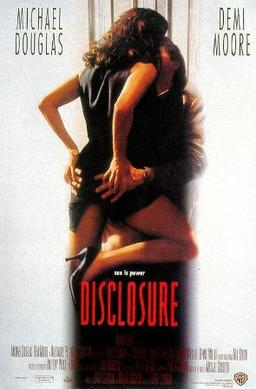
On Tuesday, if you were having trouble getting to sleep around one in the morning, you could have turned over to Cinemax and watched the 1994 film, Disclosure.
The majority of Disclosure takes place at DigiCorp, which is some sort of technology company that Bob Garvin (Donald Sutherland) founded because, as the movie explains it, he only has $100 million dollars but still dreams of being a billionaire someday. With a huge merger approaching, Garvin announces that he will be promoting Meredith Johnson (Demi Moore) to run the new CD-ROM division. This shocks a lot of people, as everyone was expecting the promotion to go to Tom Sanders (Michael Douglas). However, Garvin explains that, ever since his daughter died, he’s wanted to promote a woman.
(Presumably, if a male relative had died, Tom would have gotten the promotion. I have to admit that I kept waiting for the film to get back to the subject of Garvin’s dead daughter but, apparently, that was just an odd throw-away line.)
Tom and Meredith have a history. They were once lovers, though Tom is now happily married to Susan (Caroline Goodall) and has a family. Meredith takes one look at a picture of Susan and says that Tom must miss being able to take his lover from behind whenever he felt like it. Tom says, “Mrs. Robinson, you’re trying to seduce me.” No, actually, he says, “No, no, no, no, no, no…..” It all ends with Tom fleeing Meredith’s office while Meredith, in her bra, chases after him, shouting threats all the way. The only witness to this is a cleaning lady who sadly shakes her head before returning to her dusting.
Tom is so traumatized by the experience that he has a bizarre nightmare in which Donald Sutherland says that he likes his suit and then attempts to lick his face. Tom’s trauma continues when he goes to work the next day and discovers that Meredith has accused him of sexual harassment! Tom responds by suing the company and it’s time for an epic courtroom battle, one that will deal with one of the most important issues of our time….
….except that never happens. Here’s what is weird. For all the talk about abuse of power and all the scenes of a remorseful Tom apologizing to both his wife and his secretary for his past behavior, the whole sexual harassment plot turns out to be a red herring.
Instead, the film turns into this weird techno thriller, one that involves Tom trying to figure out how to make a better CD-ROM. That may have been a big deal back in 1994 but today, you watch the film and you think, “Who cares?” (Even better is a scene where Garvin brags about how his company is on the cutting edge of fax technology.) Once Tom realizes that Meredith only accused him of sexual harassment to keep him from building the perfect CD-ROM, we get a scene of him using a virtual reality headset to search through the companies files. At one point, he spots a bot with Demi Moore’s face destroying files and he shouts out, “She’s in the system!” It’s just strange.
The film’s plot is often incoherent but the cast keeps things amusing. Michael Douglas spends the first half of the movie looking either annoyed or terrified. Things pick up for him in the 2nd half of the movie. Whenever he gets good news from his lawyer, he jumps up in the air and goes, “Yessssssss!” and it’s so dorky that it’s kind of endearing. Meanwhile, Demi Moore doesn’t even try to make Meredith into a credible character, which is actually just the right approach to take to this material. There’s no room for subtlety in a film as melodramatic as this. Finally, Donald Sutherland is his usual avuncular self, smirking at all the right moments and suggesting that he finds the movie to be just as amusing as we do. For all of its plot holes and problematic subtext, Disclosure is an entertainingly stupid film. A lot of the credit for the entertaining part has to go to the cast.
As I said, Disclosure is just strange.. As with most films from the 90s, its sexual politics are all over the place. On the one hand, Tom learns that even inadvertent sexism can make the women who wok with him feel unsafe. On the other hand, the only woman with any hint of a personality is portrayed as being pure evil. In no way, shape, or form is this a movie to be taken seriously. Instead, this is just a weird film that cries out, “1994!”
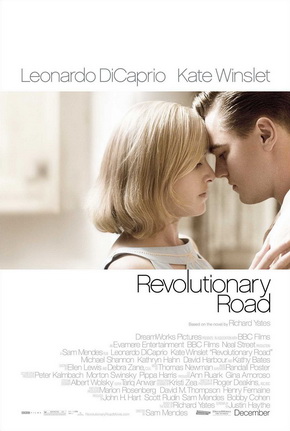
I have such mixed feelings about the 2008 film Revolutionary Road.
As you may remember, Revolutionary Road got a lot of attention because it reunited the Titaniclovers, Kate Winslet and Leonardo DiCaprio. In Revolutionary Road, they would be playing the type of married couple that we all know Jack and Rose would have become if the boat hadn’t hit that iceberg.
Revolutionary Road also got a lot of attention because it was directed by Sam Mendes and it was a return to the “suburbs-as-Hell” genre of filmmaking that won Mendes an undeserved Oscar for his work on American Beauty.
And finally, Revolutionary Road was based on a 1961 novel by Richard Yates that had originally been declared to be unfilmmable. After decades of being optioned and then abandoned, Revolutionary Road was finally coming to the screen.
With all that in mind, a lot of critics expected that Revolutionary Road would be one of the best films of the year. When the film itself was finally released, there were a few ecstatic reviews. There were predictions of Oscar glory. But, for the most part, both audiences and critics had a somewhat muted reaction. The film itself simply did not live up to all of the build up.
That said, Kate Winslet gave a great performance. In the role of aspiring actress-turned-housewife-turned-prisoner April, Winslet gives a fierce and tragic performance. The film revolves around April’s struggle to live her own life and pursue her own ambitions in a world that continually tells her that she should simply be happy and content to have a husband, two children, and a house in the suburbs. When April describes her life as being full of “hopeless emptiness,” we all know exactly what she’s talking about.
Leonardo DiCaprio was a bit less convincing as her husband, Frank. Then again, that’s not really a surprise. DiCaprio is always at his worse whenever he has to play a “normal” character. His screen presence is too off-center for him to be believable as a suburban conformist. It was obviously good publicity to reunite DiCaprio and Winslet but that doesn’t change the fact that Leo is totally miscast. Whenever Frank and April fight, Kate Winslet seems to be screaming from her very soul while DiCaprio is just shrill. Admittedly, Frank is meant to be a shallow character but that doesn’t justify a shallow performance.
Throughout the film, Frank and April are constantly nagged by their real estate agent, Helen Givings (Kathy Bates). Whenever Helen drops by the house, she goes “Yoo hoo!” in the shrillest way possible and the audiences is reminded that Sam Mendes is not a particularly subtle director. That willingness to go over-the-top made him the perfect director for Skyfallbut, in both American Beauty and this film, it just leads to some talented actors giving very bad performances.
Helen’s son, John (Michael Shannon), has one of those cinematic mental illnesses, the type that gives him the power to explicitly state each scene’s subtext. John is also one of those overly theatrical characters who works a lot better as a literary conceit than as an actual character.
And really, I guess that sums up why I have never liked Revolutionary Road as much as I wanted to. The film works whenever it focuses on Kate Winslet, precisely because she gives such a heartfelt and naturalistic performance. However, at the same time, Winslet is so good that she exposes how artificial and theatrical the rest of the film is. If only the rest of the production had followed Winslet’s lead, Revolutionary Road could have been something great.
For all the pre-release Oscar hype, Revolutionary Road was largely ignored when it came to the Academy Awards. Michael Shannon received a surprise nomination for best supporting actor but otherwise, the film was snubbed. Kate Winslet, however, did finally win an Oscar that year when she picked up the Best Actress award for her performance in The Reader.