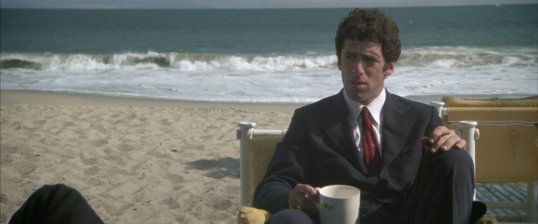
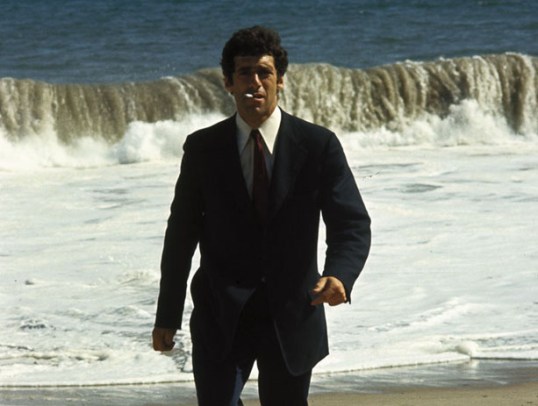
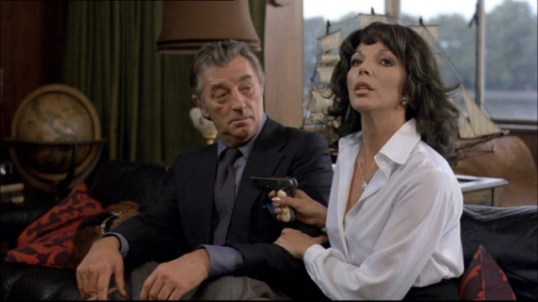
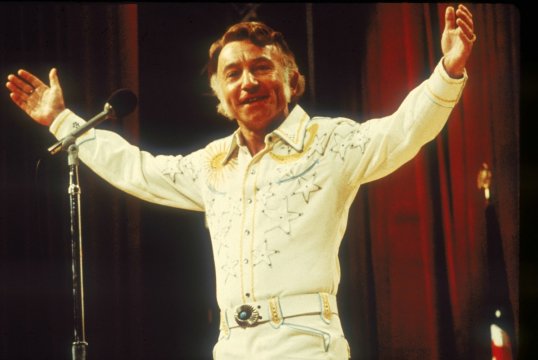
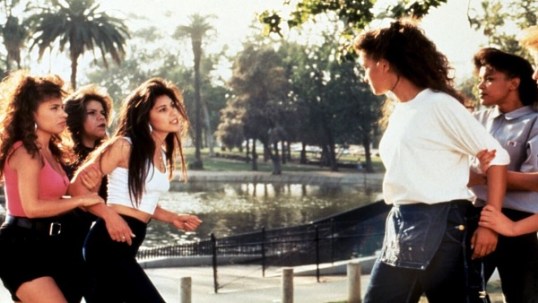
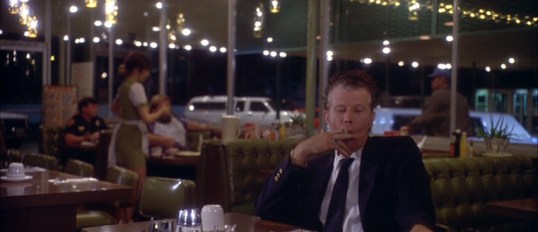
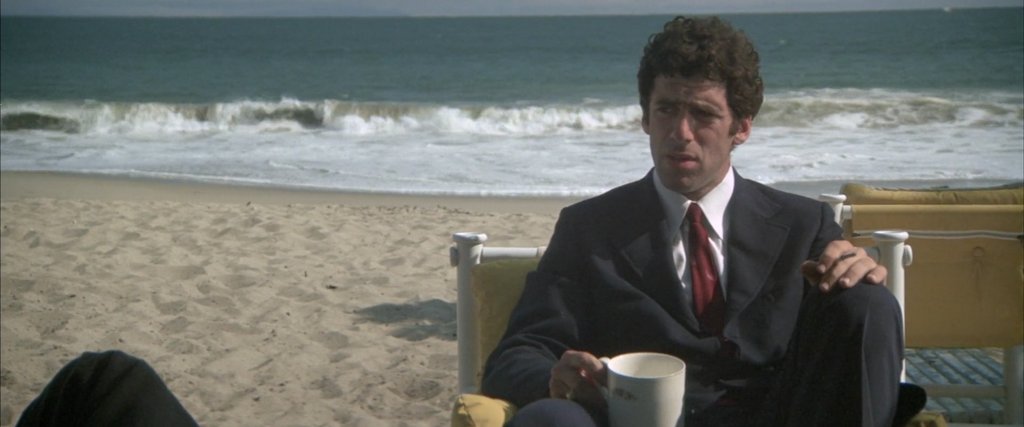
The Long Goodbye (1973, dir by Robert Altman, DP: Vilmos Zsigmond)
4 Shots From 4 Films is just what it says it is, 4 shots from 4 of our favorite films. As opposed to the reviews and recaps that we usually post, 4 Shots From 4 Films is all about letting the visuals do the talking.
Today is the anniversary of the birth of Raymond Chandler. That means that it’s time for….
4 Shots From 4 Philip Marlowe Films
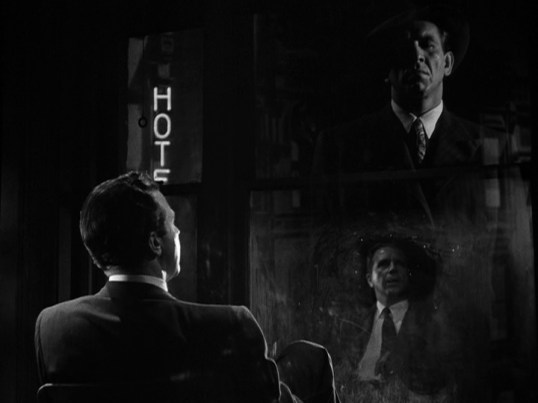
Murder, My Sweet (1944, dir by Edward Dmytryk, DP: Harry J. Wild)
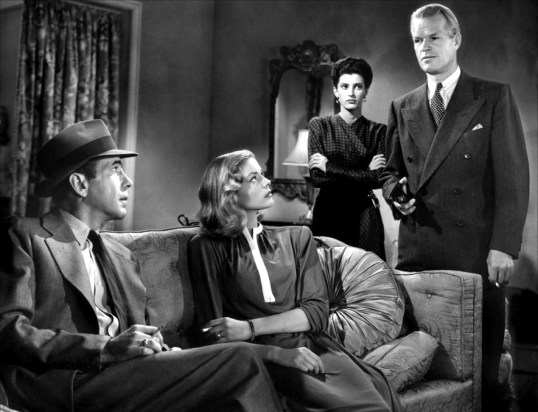
The Big Sleep (1946, dir by Howard Hawks, DP: Sidney Hickox)
The Long Goodbye (1973, dir by Robert Altman, DP: Vilmos Zsgimond)
The Big Sleep (1978, dir by Michael Winner, DP: Robert Payner)
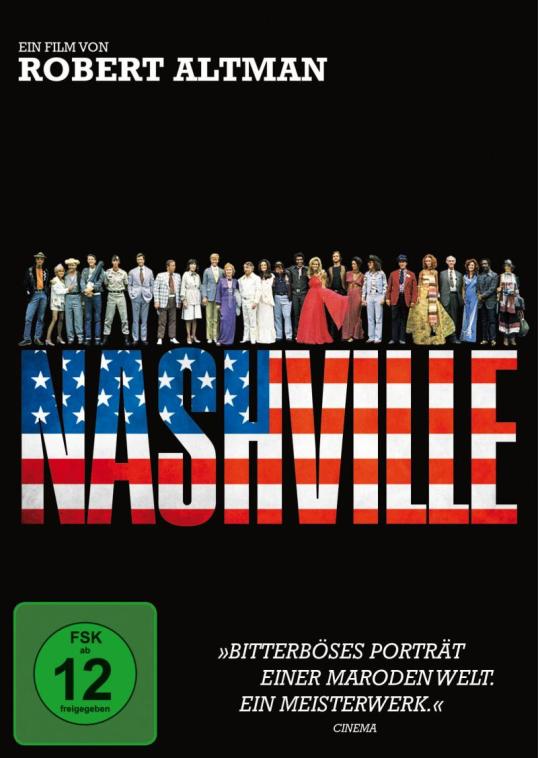
A lot of people might not automatically think of Haven Hamilton as being one of the heroes of Robert Altman’s 1975 masterpiece, Nashville. In fact, one could argue that there really aren’t any true heroes to be found in Nashville. No one in the film lives a perfect life. Everyone has their selfish moments. Even an otherwise sympathetic character like Lily Tomlin’s Linnea Reese still cheats on her husband. That said, I would argue that, at the end of the film, Haven Hamilton proves himself to be a far better person than anyone was expecting.
Played by Henry Gibson, Haven Hamilton is first seen recording a patriotic song about “how we must be doing something right” to last 200 years. He’s one of the elder statesmen of Nashville, an obviously vain man who is instantly identifiable due to his white suits and his sideburns. He’s a figure who represents what the majority of the film’s viewers would consider to be the past. He sings about and sells a vision of an idealized life. He sings a song about how he can’t leave his wife because he loves his children too much. Meanwhile, in reality, he’s carrying on an open affair with Lady Pearl (Barbara Baxley) and barely seems to acknowledge his loyal son, Bud (Dave Peel). Bud has a nice singing voice but Haven has made it clear that the Hamilton family only has room for one singer. Instead, Haven sent his son to Harvard and then put him in charge of his business affairs. It’s easy to dismissive of Haven. He’s vain. He’s old-fashioned. He looks down on the younger talent that’s coming into Nashville. He’s a celebrity but he’s only a Nashville celebrity. An awkward scene in which he meets Elliott Gould and Julie Christie (both playing themselves) captures the contrast between Nashville and Hollywood.
And yet, at the film’s conclusion, when the gunshots ring out and Barbara Jean (Ronee Blakely) collapses on stage, Haven is the one who tries to shield her. Even after he takes a bullet to the arm, Haven is the one who shouts that “This isn’t Dallas, it’s Nashville!” Haven Hamilton is the one who cries out for someone to sing and, when Albuquerque (Baraba Harris) does so, it unites the panicked crowd and prevents a riot. While everyone was too stunned to act, Haven Hamilton took charge and he said exactly the right thing. After spending the film being viewed as an out-of-touch blowhard, Haven Hamilton is the one who risked his life in an unsuccessful attempt to save Barbara Jean. And, in the end, Haven is the one character who truly understands the power of music to bring people together. “This isn’t Dallas!” Haven shouts, a demand that his city, his kingdom, will not give into the madness that seems to be afflicting the rest of the country. At that moment, the viewer sees that, regardless of what the film may want us to think about the character, Haven Hamilton was right. We must be doing something right to have lasted 200 (or 250) years.
And, for that reason, Haven Hamilton — for all of his flaws — is today’s Hero of the Day.
4 Or More Shots From 4 Or More Films is just what it says it is, 4 shots from 4 of our favorite films. As opposed to the reviews and recaps that we usually post, 4 Shots From 4 Films lets the visuals do the talking!
Today, we pay tribute to the year 1993 with….
4 Shots From 4 1993 Films
Mi Vida Loca (1993, dir by Allison Anders, DP: Rodrigo Garcia)
Short Cuts (1993, dir by Robert Altman, DP: Walt Lloyd)
Sliver (1993, dir by Phillip Noyce, DP: Vilmos Zsigmond)
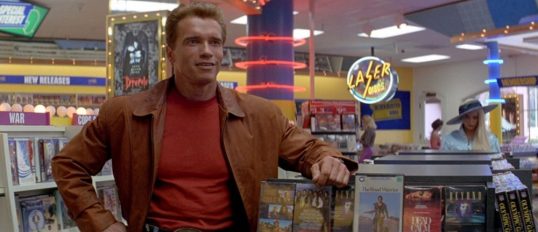
The Last Action Hero (1993, directed by John McTiernan, DP: Dean Semler)
In this scene from Robert Altman’s 1975 masterpiece, Nashville, Julie Christie plays herself as a famous visitor to the city for which the film is named. She is introduced to Haven Hamilton (Henry Gibson), Haven’s lawyer, Delbert Reese (Ned Beatty), political advance man John Triplette (Michael Murphy), and country music star Connie White (Karen Black). Julie Christie may be a star in Hollywood but Connie is the star of Nashville.
Karen Black improvised her dismissive line about Julie Christine not even being able to comb her hair. It was a moment that reportedly shocked the rest of the cast and the crew but it was also a line that perfectly summed up both Connie as a character and Altman’s version of Nashville.
Since today would have been Robert Altman’s 101st birthday, it only seems right that today’s song of the day should come from his best film. In this scene from 1975’s Nashville, Keith Carradine sings I’m Easy as Altman’s camera finds each of his lovers in the audience, all convinced that Carradine is singing expressly to them.
This song won Nashville it’s only Oscar. It also made Keith, who wrote the song, the only Oscar winner amongst the fabled Carradine family.
4 Shots From 4 Films is just what it says it is, 4 shots from 4 of our favorite films. As opposed to the reviews and recaps that we usually post, 4 Shots From 4 Films lets the visuals do the talking!
Today, we celebrate what would have been the 101st birthday of the great director, Robert Altman! It’s time for….
4 Shots From 4 Robert Altman Films
MASH (1970, dir by Robert Altman, DP: Harold E. Stine)
The Long Goodbye (1973, dir by Robert Altman, DP: Vilmos Zsigmond)
Nashville (1975, dir by Robert Altman, DP: Paul Lohmann)
Short Cuts (1993, dir by Robert Altman, DP: Walt Lloyd)
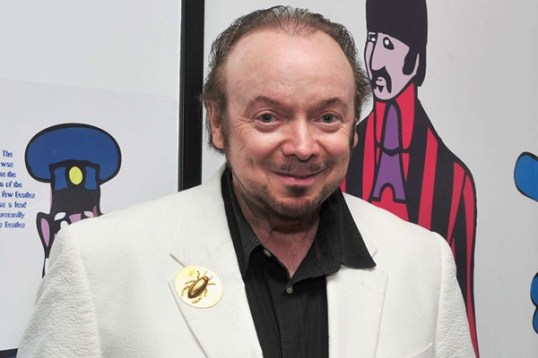
Bud Cort died on February 11th, at the age of 77. He was a beloved character actor, one who had a real skill for bringing eccentric characters to life. He became a star briefly with films like Brewster McCloud and especially Harold and Maude but Hollywood never really knew what to do with him. After he was nearly killed in a car accident in 1979, his momentum stalled. Smart directors still cast him because he always gave good performances but he spent most of his career in small roles. (In Heat, he was the obnoxious restaurant manager who drove Dennis Haysbert back into a life of crime.)
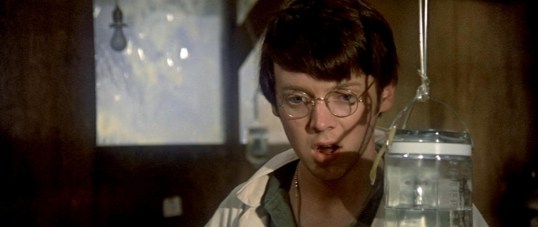
When Cort died, most of the stories focused on his performance in Harold and Maude. That was understandable. That said, I’ve always been touched by Cort’s performance in 1970’s MASHand I wanted to take a moment to just express how wonderful I thought he was in the role of Private Boone.
Though he had previously appeared in two earlier films, Cort got an “introducing” credit for his role in MASH. He played Boone, a usually quiet corpsman who speaks with a slight stutter. When a patient in Post-Op develops complications, Major Frank Burns (Robert Duvall) tells Boone to get a cardiac needle. Boone obviously isn’t sure what Burns needs but Burns snaps at him to get it. When Boone comes back with a needle, the patient has already died. Burns calls Boone an idiot for getting the wrong needle. Burns offers to get a nurse. “It’s too late, Boone,” Burns says, motioning at the dead man, “you killed him.” Burns walks away as Boone, a look of shock on his face, tries not to cry.
And I have to admit that I want to cry with him. It’s one of the more shocking scenes in Altman’s film and it works because of not only Robert Duvall’s memorably nasty turn as Burns but also Bud Cort’s emotional vulnerability of Boone. Boone, who is in Korea because he was drafted, has not only seen a man die but he’s been told that he’s responsible. With just the slightly cocking of his head and the sniffling of a young man who doesn’t want to cry on duty, Bud Cort shows us just how devastated Boone is.
And, of course, Boone was not responsible. Trapper John (Elliott Gould) takes one look at the patient’s chart and sees that it was Burns’s own incompetence that is to blame. When Trapper punches out Burns, it’s a cathartic moment. The only thing you regret is that Boone wasn’t in the room to see it.
That was Bud Cort’s big moment in MASH, though he appears throughout the film. Indeed, if you watch carefully, there’s a subplot in which Boone starts dating one of the nurses and eventually becomes much more confident in himself. We don’t know much about Boone but we do see that he’s become a member of the gang. Unlike Burns or David Arkin’s Sgt. Vollmer, Boone is accepted by the inhabitants of the Swamp.
He even gets to attend the mock suicide of Painless.. Reportedly, Boone’s line of “You’re throwing away your whole education,” was improvised on the spot by Bud Cort.
The Long Goodbye (1973, dir by Robert Altman, DP: Vilmos Zsigmond)
4 Shots From 4 Films is just what it says it is, 4 shots from 4 of our favorite films. As opposed to the reviews and recaps that we usually post, 4 Shots From 4 Films is all about letting the visuals do the talking.
Today is the anniversary of the birth of Raymond Chandler. That means that it’s time for….
4 Shots From 4 Philip Marlowe Films
Murder, My Sweet (1944, dir by Edward Dmytryk, DP: Harry J. Wild)
The Big Sleep (1946, dir by Howard Hawks, DP: Sidney Hickox)
The Long Goodbye (1973, dir by Robert Altman, DP: Vilmos Zsgimond)
The Big Sleep (1978, dir by Michael Winner, DP: Robert Payner)
4 Shots From 4 Films is just what it says it is, 4 shots from 4 of our favorite films. As opposed to the reviews and recaps that we usually post, 4 Shots From 4 Films lets the visuals do the talking!
Today, we pay tribute to the legendary cinematographer, Vilmos Zsigmond. Born 90 years ago today in Hungary, Zsigmond got his start in the 60s with low-budget films like The Sadist but he went on to become one of the most in-demand cinematographers around. In fact, of all the people who started their career working on a film that starred Arch Hall, Jr., it’s hard to think of any who went on to have the type of success that Zsigmond did.
Zsigmond won one Oscar, for his work on Close Encounters of Third Kind. He was nominated for three more. He also received a BAFTA award for his work on The Deer Hunter and was nominated for an Emmy for his work on Stalin. He’s considered to be one of the most influential cinematographers of all time.
In honor of the legacy of Vilmos Zsigmond, here are….
4 Shots From 4 Films
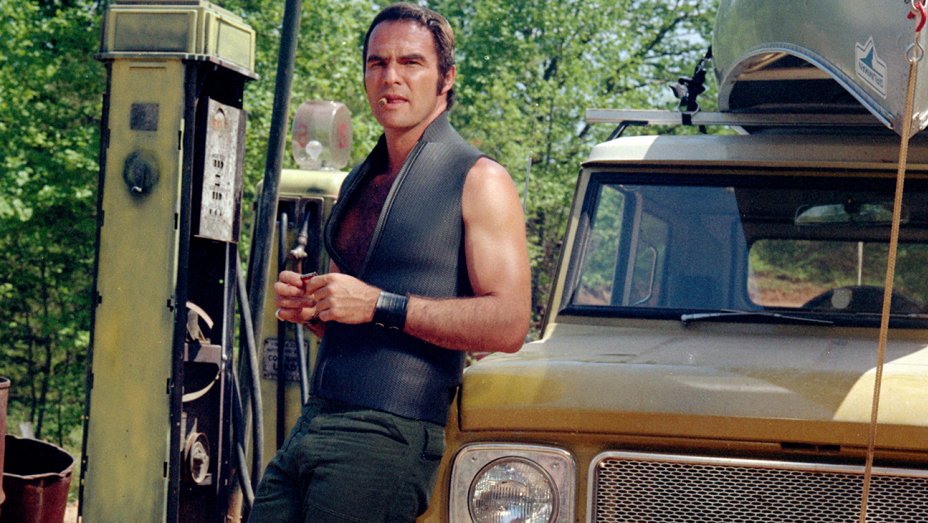
Deliverance (1972, directed by John Boorman, DP: Vilmos Zsigmond)
The Long Goodbye (1973, dir by Robert Altman, DP: Vilmos Zsigmond)
Close Encounters of the Third Kind (1977, dir by Steven Spielberg, DP: Vilmos Zsigmond)
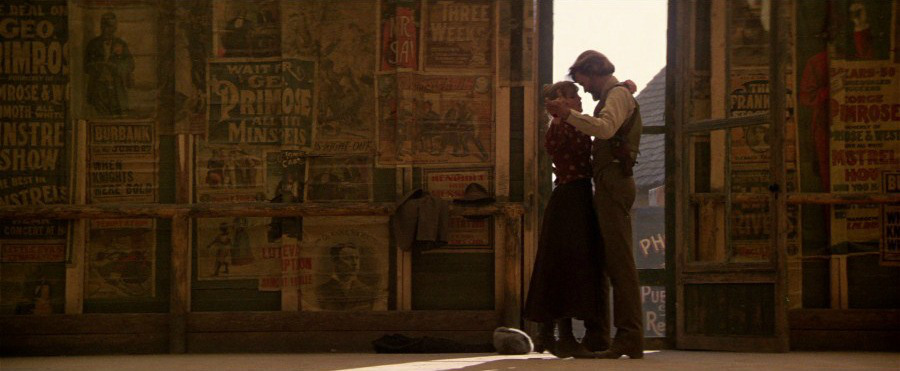
Heaven’s Gate (1980, directed by Michael Cimino, DP: Vilmos Zsigmond)
Opening with a swarm of helicopters spaying for medflies and ending with an earthquake, 1993’s Short Cuts is a film about life in Los Angeles.
An ensemble piece, it follows several different characters as they go through their own personal dramas. Some of them are married and some of them are destined to be forever single but they’re all living in varying states of desperation. Occasionally, the actions of one character will effect the actions of another character in a different story but, for the most part, Short Cuts is a portrait of people who are connected only by the fact that they all live in the same city. There are 22 principal characters in Short Cuts and each one thinks that they are the star of the story.
Jerry Kaiser (Chris Penn) cleans the pools of rich people while, at home, his wife, Lois (Jennifer Jason Leigh), takes care of their baby and works as a phone sex operator. Jerry’s best friend is a makeup artist named Bill (Robert Downey, Jr.) who enjoys making his wife, Honey (Lili Taylor), looks like a corpse so that he can take her picture. One of her photographs is seen by a fisherman (Buck Henry) who has already discovered one actual corpse that weekend. He and his buddies, Vern (Huey Lewis) and Stuart (Fred Ward), discovered a dead girl floating in a river and didn’t report it until after they were finished fishing. (The sight of Vern unknowingly pissing on the dead body is one of the strongest in director Robert Altman’s filmography.)
Stuart’s wife, Claire (Anne Archer), is haunted by Stuart’s delay in reporting the dead body. A chance meeting Dr. Ralph Wyman (Matthew Modine) and his wife, artist Marian (Julianne Moore), leads to an awkward dinner between the two couples. Claire works as a professional clown and Ralph ends up wearing her clown makeup while his marriage falls apart.
Earlier, Claire was stopped and hit on by a smarmy policeman named Gene Shepard (Tim Robbins), who just happens to be married to Marian’s sister, Sherri (Madeleine Stowe). Gene is already having an affair with Betty Weathers (Frances McDormand), the wife of a helicopter pilot named Stormy (Peter Gallagher). When Stormy discovers that Betty has been cheating, he takes a creative revenge on her house.
Doreen Pigott (Lily Tomlin) lives in a trailer park with her alcoholic husband, Earl (Tom Waits). Driving home from her waitressing job, Doreen hits a young boy. The boy says he’s okay but when he gets home, he passes out. His parents, news anchorman Howard Finnegan (Bruce Davison) and his wife, Anne (Andie MacDowell), rush him to the hospital, where his doctor is Ralph Wyman. As Howard waits for his son to wake up, he has a revealing conversation with his long-estranged father (Jack Lemmon, showing up for one scene and delivering an amazing monologue). Meanwhile, a baker named Andy (Lyle Lovett) repeatedly calls the Finnegan household, wanting to know when they’re going to pick up their son’s birthday cake.
Based on the short stories of Raymond Carver and directed by Robert Altman, Short Cuts can sometimes feel like a spiritual descendent of Altman’s Nashville. The difference between this film and Nashville is that Short Cuts doesn’t have the previous film’s satiric bite. As good as Nashville is, it’s a film that can be rather snarky towards it character and the town in which it is set. Nashville is used as a metaphor for America coming apart at the seams. Short Cuts, on the other hand, is a far more humanistic film, featuring characters who are flawed but, with a few very notable exceptions, well-intentioned. If Nashville seem to be a portrait of a society on the verge of collapse, Short Cuts is a film about how that society ended up surviving.
It’s not a perfect film. There’s an entire storyline featuring Annie Ross and Lori Singer that I didn’t talk about because I just found it to be annoying to waste much time with. (The Ross/Singer storyline was the only one not to be based on a Carver short story.) The conclusion of Chris Penn’s storyline wasn’t quite as shocking as it was obviously meant to be. But, flaws and all, Altman and Carver’s portrait of humanity does hold our attention and it leaves us thinking about connections made and sometimes lost. Seen today, Short Cuts is a portrait of life before social media and iPhones and before humanity started living online. It’s a time capsule of a world that once was.