Review: The Distinguished Gentleman (dir. by Jonathan Lynn)


“With all this money coming in from both sides, how does anything ever get done?” — Thomas Jefferson Johnson

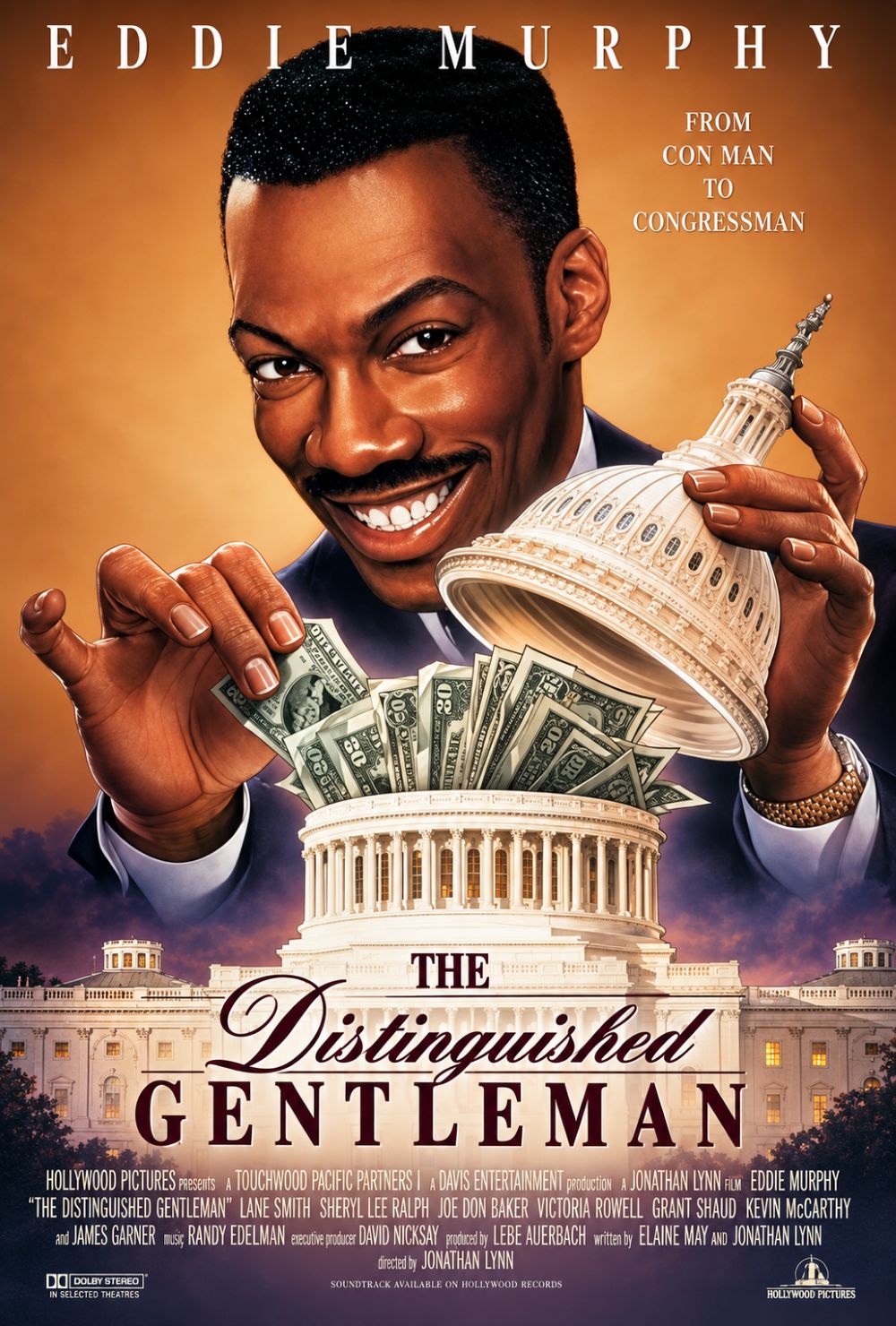
The Distinguished Gentleman is an uneven but enjoyable Eddie Murphy comedy whose premise has become more relevant with time. Directed by Jonathan Lynn, the 1992 film casts Murphy as Thomas Jefferson Johnson, a Florida con man who discovers that a recently deceased congressman had the exact same name. Seeing a shortcut to money and status, Johnson runs for the vacant House seat, wins largely on name recognition, and enters Washington with no meaningful political experience. In 1992, that premise played as broad political satire. Today, it carries a more uneasy edge, because its suggestion that image, recognition, and confidence can outrun scrutiny does not seem nearly as far-fetched.

That change in perspective makes the film’s central joke more interesting. Johnson begins as a small-time hustler who understands scams, pressure, ego, and persuasion. Once he reaches Congress, however, he discovers a political world that runs on many of the same instincts. The people around him do not call their dealings scams. They talk about donations, access, relationships, opportunities, and constituent concerns. But Johnson sees the transaction beneath the polished language immediately. The movie’s sharpest idea is that he may be a con man, yet he is not automatically the least honest person in Washington. He merely lacks the expensive suits and professional vocabulary used to make self-interest look respectable.

Murphy is exactly the right actor to make that contradiction work. Thomas Jefferson Johnson has to be selfish enough for the premise to hold together, clever enough to survive in an unfamiliar environment, and charming enough that the audience still wants to follow him after he wins office through deception. Murphy brings all of those qualities to the role. Johnson enjoys the attention, travel, influence, and special treatment attached to public office because he sees Congress as the biggest score he has ever found. At the same time, Murphy gives him enough quickness and warmth that he never becomes unpleasant. Even when Johnson does not understand what is happening around him, he moves through Washington with the confidence of someone who assumes he belongs there.

That confidence drives the movie’s strongest material. Johnson may not know committee procedure, legislative language, or public policy, but he knows people. He can recognize when praise is a setup, when a favor comes with strings attached, and when a supposedly helpful figure is treating him as an investment. This makes him an effective comic guide through Washington’s rituals. He is unqualified in the usual sense, but he is unusually qualified to identify the self-dealing hidden behind political formality. Jonathan Lynn understands the humor in that contrast and keeps the early scenes moving briskly through offices, hearings, fundraisers, press events, and lobbyist meetings. His direction is functional rather than visually distinctive, but it gives Murphy room to work and makes the political setting clear without drowning the comedy in procedure.

The problem is that the movie gradually moves away from the very idea that gives it its satirical bite. Johnson’s election is a pointed joke about name recognition, voter inattentiveness, and political branding. He wins because his name is familiar enough to inspire trust, not because anyone has evaluated his experience, policies, or character. That setup could have supported a more sustained comedy about campaigns, media manipulation, and the ease with which public image can substitute for qualification. Instead, the film shifts into a more conventional pharmaceutical-company corruption plot, giving Johnson an external villain and a clear reason to become more responsible.

That shift is understandable, since the story needs stakes beyond Johnson simply enjoying the perks of Congress. It also gives Murphy a more sympathetic character arc. Once Johnson sees the real-world consequences of corporate influence and political favors, he begins to use his instincts against people whose schemes are more damaging than his own. The change works because he does not become a completely different person. He remains fast-talking, opportunistic, and alert to every available angle. What changes is his sense of scale: his scams are about quick money, while the larger political and corporate schemes around him can hurt ordinary people while remaining hidden behind legal language and respectable appearances.

Still, making the conflict so clear-cut also weakens the satire. The opening suggests that corruption is part of a broader culture of money, access, public relations, and political influence. The later plot makes it easier to imagine that the problem lies mainly with a few especially corrupt people. Lane Smith’s Dick Dodge represents that polished form of corruption effectively. Dodge has the calm authority and practiced respectability of a politician who can make unethical behavior sound like normal procedure. He is a good villain precisely because he does not need to look obviously sinister; he simply treats power as something to be managed for private benefit.

Dodge’s presence becomes more useful because the film gives him a genuine counterweight in Charles S. Dutton’s Congressman Elijah Hawkins. Hawkins is almost Dodge’s opposite: plainspoken, principled, and committed to the idea that public office should mean public service. Dutton gives the role enough strength that Hawkins does not come across as a bland symbol of virtue. He is not there simply to lecture Johnson. Instead, he demonstrates that integrity and competence can exist within the same institution that has rewarded Dodge’s cynicism. Through these two men, Johnson sees both versions of political life: Dodge shows how power can be abused, while Hawkins shows what it is supposed to accomplish.

That contrast helps the film’s best themes land even when the plot becomes more routine. Johnson starts out believing that public office is just another hustle, only with better benefits and larger payouts. Hawkins gives him a reason to see the job differently, while Dodge proves that the cynicism Johnson brought to Washington is not entirely misplaced. Johnson’s eventual decision to push back against corruption therefore feels earned, even if the film resolves the conflict more neatly than its setup deserves. He does not become an idealist so much as a hustler who finally recognizes that the people above him are running a far bigger and more harmful game.

Viewed now, that idea carries more weight than it did in 1992. George Santos’s rise and eventual expulsion from Congress following repeated revelations about his background and finances offered a modern example of political presentation outpacing public scrutiny. Tommy Tuberville’s move from high-profile college-football coach and broadcaster into the U.S. Senate reflects a different but related reality: name recognition built outside politics can be a major electoral asset. The point is not that either man is literally comparable to Thomas Jefferson Johnson. It is that the film’s basic concern—how easily familiarity and confidence can be mistaken for qualification—has become harder to dismiss as mere comic exaggeration.

The same pattern can be seen beyond Congress. Donald Trump reached the presidency after decades as a celebrity businessman and television personality, while Arnold Schwarzenegger’s worldwide fame as a bodybuilder and movie star became a significant advantage in his successful run for governor of California. Celebrity alone never explains an election, and prior careers in sports or entertainment do not automatically make someone unfit for public office. Still, those examples show why the film’s name-recognition joke now feels more pointed. A highly recognizable candidate begins with a built-in audience, a simple public identity, and the kind of familiarity that many traditional candidates spend years trying to earn.

That dynamic has only become more visible as media personalities from different ideological camps seek office. Television hosts, pundits, podcasters, athletes, entertainers, and online figures can launch campaigns with established audiences, fundraising networks, and brand recognition already in place. In that environment, Johnson’s path to office feels less like an impossible gag and more like a deliberately exaggerated version of a real political tendency. The Distinguished Gentleman is not predicting every modern development, but it understands that voters may attach trust to a familiar name or face before they ask harder questions about qualifications, judgment, or policy.

This added relevance does not erase the film’s flaws. The comedy is still inconsistent, and the lobbyists, politicians, and corporate villains are often broader than they are funny. Murphy can make routine scenes entertaining, particularly when Johnson bluffs through official settings with total confidence despite not knowing the rules. But the movie often settles for familiar Washington stereotypes when it could push its satire further. It is rarely dull, yet it repeatedly avoids the messier implications of its best idea.

Even so, The Distinguished Gentleman remains worth revisiting as a mid-tier Murphy vehicle with more ambition than its reputation suggests. It does not have the comic consistency of Trading Places, the invention of Coming to America, or the effortless momentum of Beverly Hills Cop. Its pharmaceutical-company plot is too conventional, and its ending is more reassuring than genuinely sharp. Yet Murphy gives it a strong center, Dutton and Smith create an effective moral and political contrast, and the premise has gained resonance with time. What began as a funny story about a con man finding his way into Congress now plays as a reminder that political satire becomes less comfortable when reality starts catching up to it.
Late Night Retro Television Review: Pacific Blue 2.19 “Lost and Found”


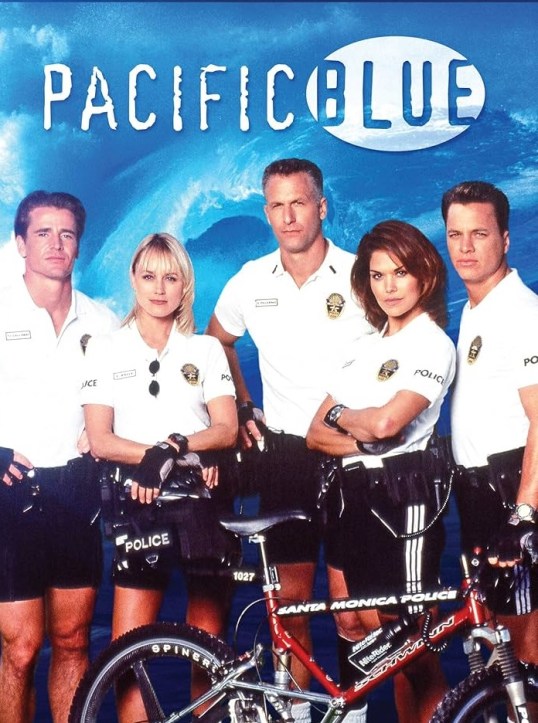
Welcome to Late Night Retro Television Reviews, a feature where we review some of our favorite and least favorite shows of the past! On Tuesdays, I will be reviewing Pacific Blue, a cop show that aired from 1996 to 2000 on the USA Network!  It’s currently streaming everywhere, though I’m watching it on Tubi.

This week, the bike cops screw up another case.

Episode 2.19 “Lost and Found”

(Dir by Michael Levine, originally aired on March 2nd, 1997)

I’ve often felt that the most interesting thing about Pacific Blue is witnessing just how totally incompetent the bicycle cops really are.

This episode centers around a girl who has run away from home.  Chris and Palermo are holding her at the station and they release her to the first guy who shows up claiming to be her father.  They don’t bother to ask the man for any sort of proof that he’s her father.  They don’t even ask to see his ID.  Instead, they just let her go with him.

Guess what?  That guy wasn’t her father!

Her actual father shows up a little while later and, needless to say, he’s pretty pissed off.  Instead of apologizing or in any way accepting accountability for screwing up, Palermo and Chris snap at the guy to calm down and then say that they’ll track down his daughter.  What’s funny is that we’re supposed to be on the side of the bicycle cops because the father is angry and yelling.  Well, the father has every right to be angry and yelling.  THE IDIOTS LET HIS RUNAWAY DAUGHTER LEAVE WITH THE FIRST GUY WHO SHOWED UP!

Now, the show later reveals that the father was abusive and that his daughter ran way because he was beating her.  Yeah, he’s not a good father and he should lost custody of his daughter.  That doesn’t make the bicycle cops any less incompetent, though!  It just amuses that this show continually tries to convince us that we should take these people seriously as cops but every episode seems to feature them making some sort of terrible mistake.  This show really seems to think that, as long as Chris is shooting people the death glare, that means she’s not responsible for any of her screwups.

This episode also featured a subplot in which Cory tried to protect her no-good brother from some hitmen.  She did a better job with her storyline than Chris and Palermo did with the case of the runaway.  Maybe Cory should be in charge.

Retro Television Review: Fantasy Island 6.6 “The Beautiful Skeptic/The Last Platoon”


Welcome to Retro Television Reviews, a feature where we review some of our favorite and least favorite shows of the past!  On Tuesdays, I will be reviewing the original Fantasy Island, which ran on ABC from 1977 to 1984.  Unfortunately, the show has been removed from most streaming sites.  Fortunately, I’ve got nearly every episode on my DVR.

This week, someone tries to expose Fantasy Island!

Episode 6.6 “The Beautiful Skeptic/The Last Platoon”

(Dir by Ricard Montalban, originally aired on November 27th, 1982)

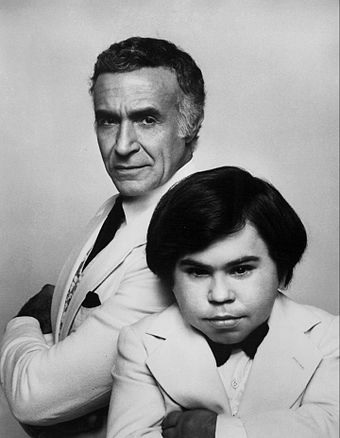
Your eyes do not deceive you.  This episode was directed by Mr. Roarke himself, Ricardo Montalban!

The main fantasy deals with Jack Oberstar (Gary Frank), who wants to go back to World War II so that he can find proof that his brother, Ken (Steve Kanaly), was killed in action and did not, as the army claims, desert and become a black market smuggler.  After the customary warnings from Mr. Roarke, Jack finds himself serving alongside his brother in France.  Jack not only gets to bond with his brother but he also discovers that it was the evil Galloway (Don Stroud) who stole his brother’s identity and went on to become a criminal.  Ken did die heroically but, without his dog tags, he was misidentified.  No sooner does Jack learn all this then he finds himself back in the present.  Jack is happy to know the truth but he regrets not having returned with proof.

However, Mr. Roarke reveals that, while Jack was having his fantasy, a career criminal died while serving a life sentence in France.   By checking his fingerprints, the authorities discovered that the criminal was Galloway, who was long believed to have died in World War II.  Jack realizes that he can now argue that Galloway stole Ken’s identity!  He’s happy, even if he doesn’t have his definite proof.  Myself, I started thinking about how different the world must have been in the days before DNA testing.  Today, Jack presumably wouldn’t even have to go Fantasy Island to prove that the body buried in “Galloway’s” grave was actually his brother.

As for the other storyline, it features Connie Stevens as journalist Christine Connelly, who is determined to prove that Mr. Roarke is a fake.  She tells Roarke that she interviewed eleven former guests and all of them were happy with how their fantasies went.  Christine argues that there’s no such thing as “eleven satisfied customers,” which is a weird way to put it.

Christine brings along two people who have fantasies.  Jay (Jimmie “JJ” Walker) wants to win a weight-lifting competition, despite being Jimmie “JJ” Walker.  Luckily, Roarke has some magic chalk dust that allows Jay to do just that.  (You have to feel bad for everyone who actually wasted their time training for the competition.)  Frank (Herb Edelman ) wants to be reunited with his estranged wife, Connie (Ruta Lee).  This actually proves somewhat difficult, as Connie really doesn’t want to see Frank.  But it turns out that this is because Connie thinks that Frank is having an affair with Christine.  I’m not sure that Roarke reunited Connie and Frank is really greater proof than Jimmie Walker winning a strongman competition but the important thing is that Christine learns to be less of a cynic and to open her mind to the magic of Fantasy Island.

This was not a bad trip to the Island.  Much as Mr. Roarke did with the Island, Ricardo Montalban kept the episode moving quickly and efficiently.  It’s interesting that Fantasy Island started out as this place that was shrouded in mystery but, by the sixth season, it was apparently well-known enough to attract the attention of tabloid television.  In the end, Mr. Roarke proved his good intentions and protected the Island.  Good for him!


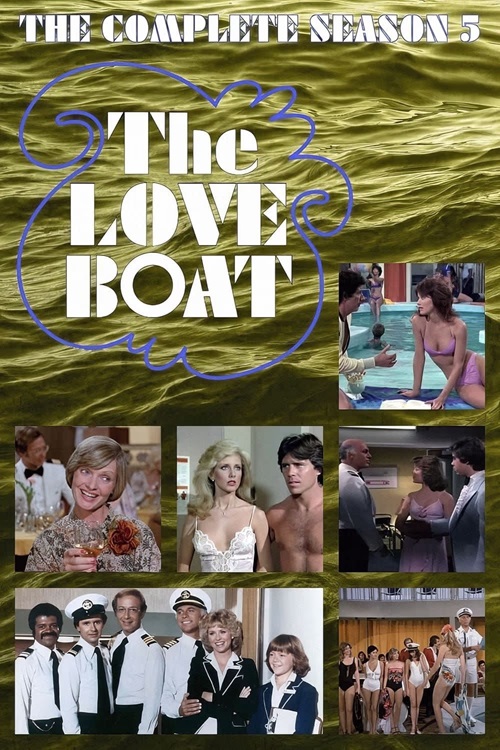
Retro Television Review: The Love Boat 5.1 and 5.2 “The Expedition/Julie’s Wedding/The Mongala/Julie’s Replacement/The Three R’s/The Professor’s Wife”


Welcome to Retro Television Reviews, a feature where we review some of our favorite and least favorite shows of the past!  On Wednesdays, I will be reviewing the original Love Boat, which aired on ABC from 1977 to 1986!  The series can be streamed on Paramount Plus!

This week, we start season 5 of The Love Boat!

Episode 5.1 and 5.2 “The Expedition/Julie’s Wedding/The Mongala/Julie’s Replacement/The Three R’s/The Professor’s Wife”

(Dir by Roger Duchowny, originally aired on October 10th, 1981)

The fifth season of The Love Boat opens with a two-hour spectacular.  Our Love Boat crew is in Australia, where they will be guiding The Sea Princess on a voyage through the South Pacific.  It’s a bit odd to start off a season of The Love Boat on a different boat but I guess the plan was to show off all the different ships that sailed for Princess Cruise Lines.  This episode was actually shot on the boat during a cruise.  It’s interesting to see how different the Sea Princess is from the show’s usual location.  It has nicer hallways than the Pacific Princess and a much larger lobby.  However, I prefer the relative privacy of the Pacific Princess’s multi-level dining room to the wide open space provided by the Sea Princess.

Captain Stubing, Gopher, Isaac, and Doc are shocked when Julie does not board the ship.  She’s been on vacation with her boyfriend, Tony (Anthony Andrews), for the last few months. Tony lives in Australia so, really, it shouldn’t be too hard for Julie to make it to the ship. Instead, a substitute cruise director named Yvonne (Delvene Delaney) shows up.  Doc and Gopher are happy because it gives them a new co-worker to lust after.  Captain Stubing is upset because Julie has sent them all a letter in which she explains that she will be marrying Tony and retiring to the animal habitat where he works.  She asks Stubing to give her away and she invites Vicki to be a bridesmaid.  Gopher, Isaac, and Doc will be ushers.

Doc is briefly distracted from chasing Yvonne when he spots Barbara Carroll (Michelle Phillips) boarding the boat.  However, Barbara has eyes for Ralph Sutton (Patrick Duffy), a rancher who is blind without his glasses.  Unfortunately, that means that he can’t read the love letter that Barbara wrote him.  Because she wants Ralph for herself, Connie Walker (Jennilee Harrison) lies about what the letter says.  *GASP*  (Don’t worry, it all works out.)

Meanwhile, an expedition headed by shady Deke Donner (Jose Ferrer) goes to an island and captures a hairy man (Patrick Ward) who they believe is the Mongola, a.k.a., the missing link!  (Wait, what?)  They hide the ape-man in the ship’s cargo area (huh?) and try to keep anyone else from learning that they’re transporting a living thing.  Everyone acts like he’s a caveman but it’s kind of obvious that the Mongola is just a confused guy with a beard.  Dr. Jill McGraw (Donna Dixon) falls in love with the Mongola, much to the consternation of her colleague, Dr. Barry Mason (Gary Frank).  Meanwhile, Deke’s old friend, Prof. Milo Ender (Harry Morgan), is stunned to discover that the Mongola has a vaccination scar.  Milo’s wife, Vivian (Katherine Helmond), encourages Milo to keep the secret to himself so that they can at least make some money off of the Mongola.  (Like, seriously, what the Hell is even going on with this story?)  Milo agrees, though it doesn’t seem to occur to him that, if he could notice the vaccination scar, then pretty much anyone could notice the vaccination scar.  Eventually, the Mongola gets loose from his cage and jumps overboard.  “He’s shark food,” Deke says.  (What in the name of God is going on here?)  However, the Mongola apparently survives because the police are waiting to arrest Deke as soon as the ship docks in Australia.

But what about the wedding!? you’re saying.  Well, the wedding doesn’t happen.  It nearly happens.  Julie shows up at the church.  However, Tony finds out that he’s going to die in a month or two so he leaves Julie at the altar.  Julie flies back to Los Angeles with the rest of the Love Boat crew.

Seriously, this is the most morbid episode of The Love Boat that I’ve ever seen.

Still, morbid or not, it’s an entertainingly weird episode and the Australian and New Zealand scenery is lovely to look at.  (As with all of the two-hour episodes of The Love Boat, there’s a lot of travelogue padding.)  There’s something oddly appealing about seeing the usual Love Boat shenanigans mixed in with a story about the Missing Link and Julie discovering that the love of her life is terminally ill.  I mean, the song isn’t lying.  The Love Boat really does promise something for everyone.

I mean, in the end, we all know that Julie couldn’t get married because then she’d have to leave the show and that wouldn’t happen until Lauren Tewes’s cocaine use became a problem during the seventh season.  Tony could either cheat on her or he could die.  (Better he die than do what almost every man does at his bachelor party.)  The episode ends with Tony still alive so I guess the show’s writer were leaving their options open.  Maybe Tony will make a miraculous recovery, who knows?

Myself, I’m just happy that the crew is back together.  It’s time to set sail …. again!

Late Night Retro Television Review: Friday the 13th: The Series 1.21 “Double Exposure”


Welcome to Late Night Retro Television Reviews, a new feature where we review some of our favorite and least favorite shows of the past! On Fridays, I will be reviewing Friday the 13th: The Series, a show which ran in syndication from 1987 to 1990. The show can be found on YouTube!

This week, a reporter uses a cursed camera to make the news!

Episode 1.21 “Double Exposure”

(Dir by Neill Fearnley, originally aired on May 16th, 1988)

As you may remember, at the end of the previous episode, Ryan reluctantly left the Pentite Community and returned to Toronto so that he could continue to help Micki and Jack track down the cursed antiques.  When he left, he promised Laura that he would always love her.

Well, that didn’t last long.  This episode opens with a Ryan in a photobooth, taking pictures of himself and his new girlfriend, Cathy!  RYAN, YOU CAD!  Now, in Ryan’s defense, Cathy is played by Catherine Disher (who previously played the supercool Sophie in the first season of T and T) and she seems like a much better match for Ryan than the somewhat dour Laura.  Cathy and Ryan actually have fun together!  Of course, this is Friday the 13th and that means that all fun is temporary.

There’s a serial killer stalking Toronto and Ryan just happens to witness him murdering his latest victim in an alley.  To Ryan’s shock, the killer appears to Winston Knight (Gary Frank), a television news anchorman who is currently getting huge rating because of his reporting on the killings.  But how can that be?  When Ryan witnesses the murder, Winston is live on the air, delivering the news.  Winston even gets a phone call from someone claiming to be the murderer.

Winston speculates that the killer might be an obsessed fan who is wearing a Winston Knight mask.  Of course, the truth of the matter is that Winston is using a cursed camera to take a picture of himself.  The picture then turns into a doppelganger of Winston.  The Doppelganger commits a murder, Winston reports on the tragedy, and then, after five hours, Winston sets the negative on fire and the Doppelganger is destroyed.  If Winston doesn’t destroy the negative after five hours, Winston will be the one who is destroyed and the Doppelganger will become human.  It all sounds a bit complicated, to be honest.  You have to wonder how Winston managed to figure all of this out.

Anyway, the important thing is that Winston is eventually exposed as the murderer.  While trying to kill Ryan at the antique store, the Doppelganger is stabbed by Ryan.  It doesn’t hurt the Doppelganger until Winston fails to burn the negative and vanishes from existence.  The Doppelganger becomes human and then promptly drops dead of his wound.  Ryan conquers another cursed antique but, unfortunately, not before the Doppelganger murders Cathy.  The episode ends not on a note of triumph but instead with Ryan looking at a picture of Cathy and tearing up.

Wow, what a dark episode!  Sometimes, it’s easy to forget that, on this show, Ryan is basically a very naive and very earnest teenager.  He falls in love easily, he always believes that things will turn out for the best, and his heart is broken nearly every time he has to retrieve an antique.  Jack is used to the pain and Micki is a bit of a cynic but Ryan is still trying to balance happiness with the psychological damage that comes from seeing the worst things possible on a weekly basis.  John D. LeMay and Catherine Disher were adorable together and it was hard not to get a bit upset when Cathy fell victim to the Doppelganger.  This episode was sad but undeniably effective.

Poor Ryan!

Horror on TV: Friday the 13th The Series 1.21 “Double Exposure” (dir by Neill Fearnley)


How did anchorman Winston Knight (played by Gary Frank) manage to commit a murder while, at the same time, appearing on a live news broadcast!? How can anyone be two places at once? Could a cursed antique camera have something to do with it?

Ryan and Micki are on the case in tonight’s episode of Friday the 13th: The Series!

This episode originally aired on May 21st, 1988!

Trash TV Guru — “Gotham” Episode 1, “Pilot”


4GothamCity-610x343

Okay, fair enough, I’m kinda late to the party here since Arleigh has already chimed in with his thoughts on the rather unimaginatively-titled first episode of Fox’s new Gotham TV series, Pilot, but as  the closest thing to a “Bat-fanatic” here at TTSL, I thought I’d go ahead and offer a second opinion — even if it’s not terribly different from the first one you fine folks have read here.

Let’s start by stating the obvious — between Year One, Earth One, Zero Year, and Batman Begins, the origins of the Dark Knight detective have been done to death on the printed page and the silver screen over the last couple of decades, so only the venue is really “new” here, the basic outlines of the story this show is going to present are already well-known — aren’t they?

Well, yes and no. We all know how the series “ends,” whenever that happens to be — Bruce Wayne dons the cape and cowl and becomes Batman. Similarly, we all know how the story begins — wealthy socialites Thomas and Martha Wayne are gunned down in the notorious “Crime Alley” neighborhood of Gotham City in front of their young-at-the-time son, (here played by David Mazouz) and his life is, obviously, forever changed.

It’s what happens in between those well-established “bookends” that  events in Gotham will be playing out, and there does seem to be ample room for either whole-cloth invention, or creative re-interpretation, within the confines of that territory, and this pilot episode shows that, as was done with Smallville over the course, of — what,  ten seasons? — the principal creative minds at work here, most notably executive producer (and writer of this opening salvo) Bruno Heller, will be doing a little of both.

gotham-ben-2

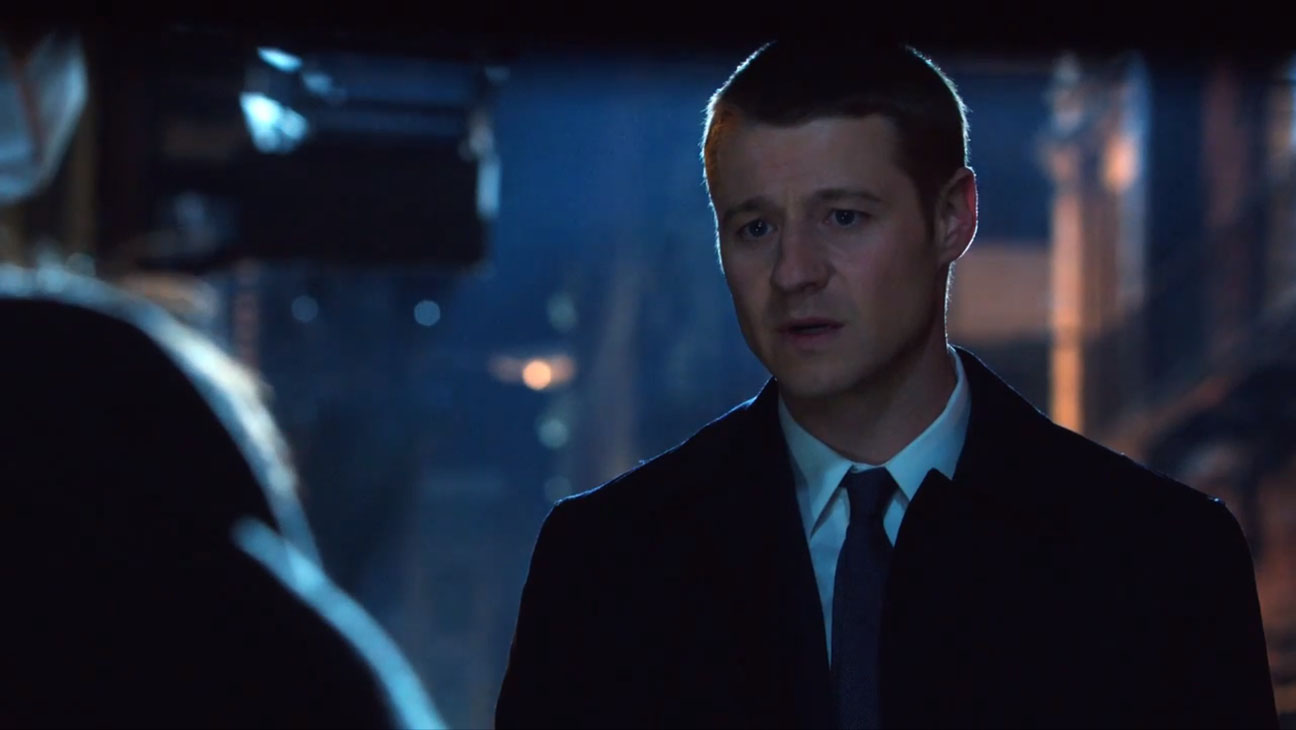
Apparently the main plot thread, at least running through the first season, will see clean-cut rookie detective Jim Gordon (Ben McKenzie) and his crooked partner, Harvey Bullock (Donal Logue), investigating the Wayne murders, and this initial episode largely focuses on them chasing a red herring in the form of a small-time hood named Mario Pepper (Daniel Stewart Sherman) , who they end up killing while he’s trying to escape, to the equal parts relief and despair of his wife and young plant-loving daughter, Ivy (Clare Foley). There’s some painfully strained dialogue that will probably make long-time Bat-fans cringe interspersed here and there, and a couple of scenes that are downright painful to watch, but by and large the story moves along at a reasonable enough little clip, the twists and turns our two protagonists encounter are generally involving, and the stage seems to be set for at least a modestly entertaining yarn as things progress.

Was the episode a great intro to the series? Not by any stretch of the imagination. Was it good enough? Sure, what the hell — I’ll be back next week for more, at any rate, and we’ll see where it goes from there.

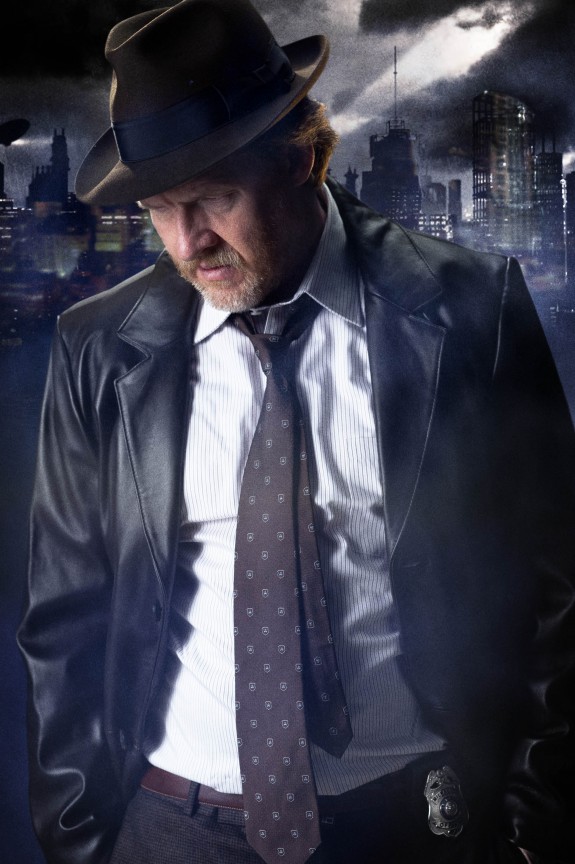
So, how about a rundown of what Heller and director Danny Cannon get right, and what they get wrong, shall we? First, the good stuff : Mazouz is excellent as the pre-pubescent Bruce Wayne, and shows  pretty remarkable acting range for a kid. He’s by turns heartbroken, sullen, withdrawn, and determined. Good show all around. McKenzie displays a requisite amount of “regular-guy charm” as the show’s ostensible lead. Logue is a magnificent casting choice for a gruff and cynical veteran detective who’s definitely on the take — probably from more than one source — but may not be completely beyond redemption. Camren Bicondova largely lurks behind the scenes as a young Selina Kyle, but she exudes mysterious charisma to spare and you’ll definitely want to see more of her. John Doman seems intent on giving crime boss Carmine Falcome a whole new layer of depth and a set of complex motivations that really have me interested in finding out just what makes him tick. Cory Michael Smith is the perfect blend of genius and creepy in his role as police scientist Edward Nygma, who will “grow up” to become, of course, The Riddler. And Robin Lord Taylor as Oswald Cobblepot delivers his lines — and performs his physical actions — with a kind of just-beneath-the-surface insanity that shows that if and when he does become The Penguin, he’ll probably be more of the Danny DeVito ilk than the Burgess Meredith one.

The real show-stealer, though, is Jada Pinkett Smith as new character Fish Mooney, a second-tier — for now — player in the local mob scene who has brains, ambition, cunning, and sex appeal to spare. She seems to be having the time of her life sinking her teeth into the role, and it certainly shows. And if she’s not enjoying herself, well then — guess her acting is even better than I’m giving it credit for.

Oh, and just as a quick aside : does anyone else think the scene where she’s auditioning a struggling young stand-up comic for her club might be the first appearance in this series of, well — you-know-who? Maybe I’m over-thinking things, but I had to put it out there regardless.

harvey-bullock-gotham

It’s not as if Heller isn’t prone to offering other subtle hints in this episode’s script, either — one of Gordon’s superior officers just happens to be named Sarah Essen (Zabryna Guevara), and folks who have read Frank Miller and David Mazzuchelli’s Batman : Year One know that name well. Likewise, fans of the Gotham Central comics series will already be well familiar with the names Crispus Allen and Renee Montoya (played by Andrew Stewart-Jones and Victoria Cartagena, respectively), who pop up here as GCPD internal affairs agents. They’re not given much to do, admittedly, but a word of warning to Heller and all other series writers as far as this subject goes : Renee Montoya, in particular, is someone with a lot of hard-core fans, being that she represents one of the few positive portrayals of strong, independent, lesbian women of color anywhere in mainstream comics. Treat her right, or ignore her altogether, but don’t get this one wrong. There are some lurid hints dropped that she has “a past” with Gordon’s fiancee, Barbara (Erin Richards), but I wouldn’t suggest playing Montoya for pure soap opera value — it would be tremendously disrespectful to a character that was truly groundbreaking on the printed page.

Which brings us to what Gotham, at least so far, seems to be getting wrong (apart from some occasionally dodgy set design and CGI work and the script flaws previously mentioned) : Sean Pertwee (son of my second-favorite Doctor to Tom Baker) is a good casting choice as Alfred, and his protectiveness of his young charge certainly shows through, but Heller writes him as a semi-militaristic hard-ass in a move that seems to be a direct nod to the risible work of writer Geoff Johns in his limp Batman :Earth One graphic novel (please note I’m only singling out Johns’ script for criticism, as Gary Frank’s art on that book was superb). I hope they don’t go too far down that road with the world’s most famous fictional butler. Poison Ivy appears to be the victim of a radically different “re-imagining” that, so far, looks a lot less than promising. The overall tone of the proceedings appear overly concerned with shoe-horning in too many specific Bat-elements and not doing enough to establish the city as an entity separate from its most famous vigilante crime-fighter. And having Barbara be a well-heeled, glamorous socialite is a bit of a betrayal of the working-class roots of Jim Gordon and his family that we’ve all come to know — he just doesn’t look right lounging around in her fashionable penthouse apartment.

gotham

All in all, then, what we’ve got  is a case of “some good, some bad.” By the time the episode was over I was reasonably optimistic that, despite the “mix n, match” approach to re-invention and outright invention that I mentioned earlier,  we’re not looking at another Smallville clone here — i.e. a show that amounts to little more than Beverly Hills, 90210 with super-powers. The jury is still out, though,  on whether or not this show’s creators have enough of a different spin to add to the Bat-mythos to make this a worthwhile project. They’re borrowing influences from a wide range of sources, some of which I would’ve preferred having them ignore altogether, but it’s probably safe to assume that only some of those things will prove to be major factors in the series going forward. How far forward I go along with it remains to be seen, as there was nothing in the pilot episode to make me say “alright, awesome, I’m all in!” — nor was there enough to make me throw up my hands and walk away in disgust. We’ll call how I feel about things “cautious optimism” for now, with the greater emphasis being on “cautious.” Heller and co. have me interested — not it’s time to impress me.