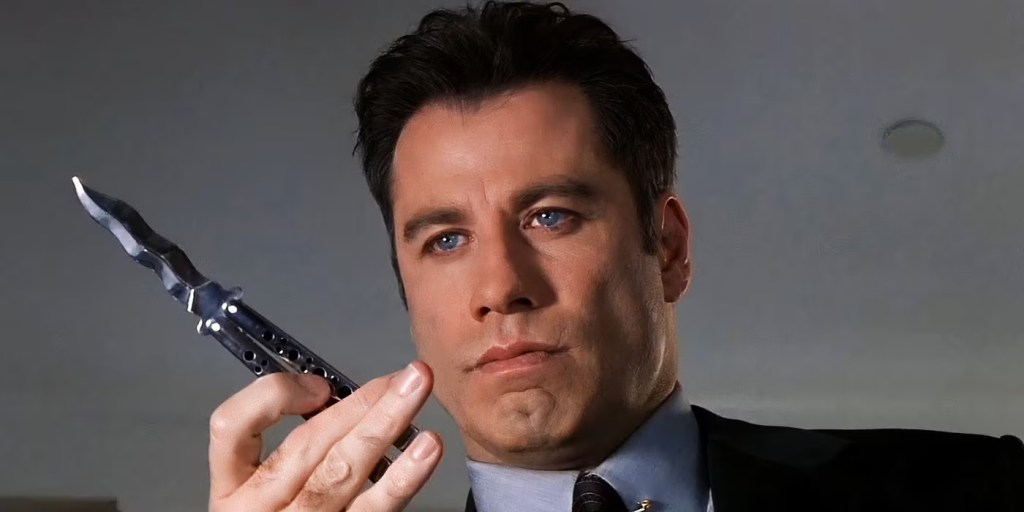
Brad reviews PHENOMENON (1996), starring John Travolta!


Born in 1973, I missed the first John Travolta phenomenon. I wasn’t even five years old when movies like SATURDAY NIGHT FEVER and GREASE were released. Now don’t get me wrong, I loved John Travolta as a kid. I remember watching GREASE at my cousins’ house when I was around ten, and we all loved it. Probably the movie I loved the most is Brian De Palma’s BLOW OUT from 1981. Fox 16 out of Little Rock loved to play that movie, and I thought it was so great. It was the mid-80’s when I was watching it, so his best work had been several years before. 

From the mid-80’s to the early 90’s, I was obsessed with renting videos at our local rental shops. Do y’all remember the crap that Travolta was putting out then… TWO OF A KIND (1983), PERFECT (1985), THE EXPERTS (1989), CHAINS OF GOLD (1990), etc? I remember wanting to watch RAMBO: FIRST BLOOD PART II at the movies when I was kid, and the theater in Conway, Arkansas was playing 2 movies: RAMBO and PERFECT. My mom insisted on PERFECT. So there we were, Dad, Mom, my older brother, me, and my younger sister in the theater watching PERFECT. It was an R-rated film, and Mom walked us out less than half an hour into the movie due to some guy putting his head under a woman’s skirt. I still remember the other patrons laughing at us as we walked out. This moment is burned into my psyche. Travolta did work on the hit LOOK WHO’S TALKING movies, but at the time, he got no credit because these were talking baby movies. It almost seemed like Travolta’s career had become something of a joke from the time I was a grade schooler all the way into my college years. I still loved him, but any time his name came up, the conversation was always about his good movies that were made years earlier contrasted against the crap he was in now. 

And then Tarantino’s PULP FICTION was released in 1994, he was absolutely incredible, and I was all about phase 2 of the John Travolta phenomenon. I watched just about everything he did over the next five years at the movie theater. During this remarkable stretch, I saw him in GET SHORTY, BROKEN ARROW, PHENOMENON, FACE/OFF, and many others. I revisited PHENOMENON again this week, and it took me back to that time when a 22 year old college student was rediscovering what a talented actor Travolta could be with the right material. 

George Malley (Travolta) is a likable “Everyman” who works as a mechanic in a small town in Northern California. On his 37th birthday, a mysterious flash of light knocks him over and changes everything. Suddenly he’s the smartest guy in town, and he can even move things with his mind. At first, his abilities amaze his friends and neighbors, but they soon begin to be afraid of him because they don’t understand him. George doesn’t understand why he’s so smart all of a sudden, but he’s falling in love with Lace (Kyra Sedgwick) anyway. The ultimate “answer” is somewhat realistic, and ultimately quite moving. 

Director Jon Turteltaub (WHILE YOU WERE SLEEPING, NATIONAL TREASURE) does a good job by focusing on George and his friends rather than the supernatural “mystery elements” of the plot. We may not understand exactly why George has these extraordinary abilities, but they mostly remain a backdrop in a story about love, friendship, and mortality. The film asks a simple question: How would we react if someone we’ve known all our lives is suddenly one of the most amazing people on earth? If you follow much social media these days, we know the answer. How often do we see people get torn down as soon as they show any exceptional ability? We even see this in our own families, and we see it in this movie as well. Watching the film 30 years later, that fact really sticks out to me. 

I’ve been a fan of PHENOMENON for three decades specifically because I love John Travolta’s performance in the movie. He’s just so likable, so when things start to go bad for him, we’re disappointed as well. He plays George as a man whose growing genius makes him want to help people even more. He’s so sincere that we never stop pulling for him, which is a true testament to Travolta’s incredible work. Kyra Sedgwick is amazing as well. As a mother and having been hurt before, her character takes her time letting George into her life, but once she does she goes all in. I love it. Forest Whitaker, Robert Duvall, and Jeffrey DeMunn all have outstanding moments that make the small-town community feel real. Their friendships specifically help provide an emotional strength that most films don’t have. 

PHENOMENON isn’t a perfect film, as it’s probably a little too long, and it may linger a little too much on vague “science.” However, it is a film that’s most interested in showing us a character who uses the gifts he’s been given to make life better for those around him while he can. It’s a timeless idea that gives PHENOMENON a power that has only grown stronger with time. It’s also a reminder that John Travolta has a magnetic screen presence. Beneath all of his charisma is an actor capable of tremendous warmth and vulnerability. At the end of the day, those are the kinds of characters we end up really caring about.

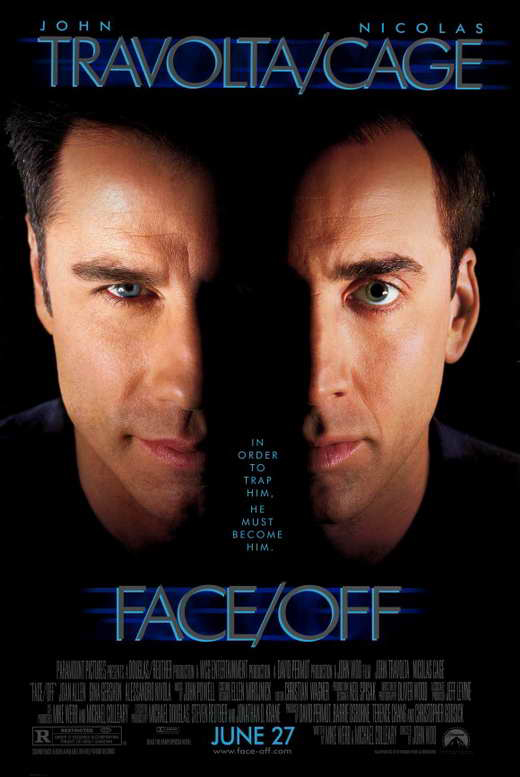
Scenes That I Love: John Woo’s Face/Off


Today, the Shattered Lens wishes a happy 77th birthday to director John Woo, the man who did the most to popularize the idea of the slo mo of doom!

Today’s scene that I love comes from Woo’s 1997 film, Face/Off.  In this scene, Nicolas Cage and John Travolta purse each other in speedboats.  The action is wonderfully over-the-top.  Throughout this film, Cage and Travolta both do what they do best in this scene and so does John Woo.

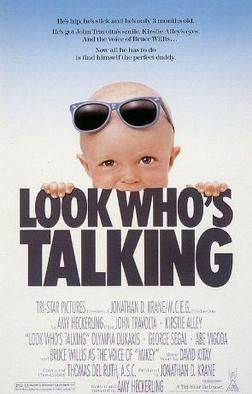
I Liked Look Who’s Talking (1989, Dir. by Amy Heckerling)


Mollie Jensen (Kirstie Alley) is an accountant who has an affair with a married client, Albert (George Segal) and ends up getting pregnant.  At first, Albert has no interest in being a father but luckily, when Mollie goes into labor, she’s driven to the hospital by a down-on-his-luck taxi driver named James (John Travolta).  After little Mikey is born, James agrees to be Mikey’s babysitter in return for Mollie letting James use her address so he can set up nursing care for his grandfather (Abe Vigoda).  Mollie and James are falling in love but then Albert reenters the picture.  Will Mollie choose rich Albert or goofy James?

As if there’s any doubt!

The important this is not the story but that the story is narrated by Mikey and Mikey sounds just like Bruce Willis!

I will admit it.  I like Look Who’s Talking.

Hey, it’s cute!  It’s a movie that opens with a point of view shot of a herd of sperm heading for an egg.  Little sperm Mikey is so excited!  Even before Mikey is born, he’s giving us his opinions.  When he is born and they cut the umbilical cord, he says, “Hey, I need that!”  What newborn wouldn’t say that?  You’re comfortable and suddenly, you’re getting dragged into the real world.

What I really like about Look Who’s Talking is that we just hear Mikey’s narration and thoughts but Mikey himself doesn’t actually talk.  It’s not like those creepy commercials where they use cheap CGI to make it look like the babies are actually talking.  I hate those commercials.  Instead, we’re just hearing Mikey’s thoughts and his thoughts are probably the ones that most babies would have.  He just sounds like Bruce Willis.  John Travolta is adorable in this.  Kirstie Alley is neurotic and relatable.  The babies are all cute.  But the true star of the film is Bruce Willis’s voice.  Supposedly, Willis ad-libbed most of his lines.  Mikey’s crude but most babies are.

No, I haven’t seen the sequels.  I won’t ever see the sequels.  I get the feeling this is one of those movies that could only work once.  Didn’t the third movie feature talking animals and no Bruce Willis?  There’s no need for that.


Scenes That I Love: The Opening Credits of Saturday Night Fever


Saturday Night Fever (1977, dir. John Badham)

Today is John Travolta’s birthday!

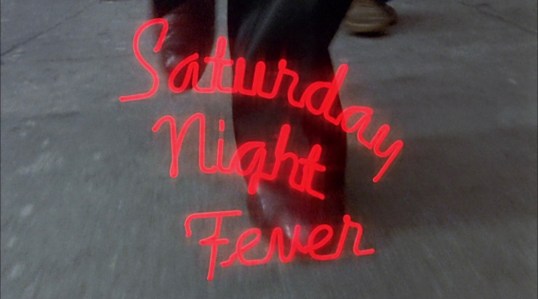
In honor of this day, here’s a scene that I love, the opening credits of Saturday Night Fever.  Watch as John Travolta, playing the role of Tony Manero, walks down the streets of Brooklyn, not letting the fact that he’s carrying two cans of paint do anything to lessen his strut.  Watch as Tony puts a down payment on a pair of shoes!  Thrill as Tony buys two slices of pizza!  Cringe as Tony bothers a woman who wants absolutely nothing to do with him!

This is one of the greatest introductions in film history.  Not only does it set Tony up as an exemplar of cool but it also subverts our expectations by revealing just how little being an exemplar of cool really means.  I always relate to the woman who gets annoyed with Tony and tells him to go away.  I know exactly how she feels, as does any woman who has ever been stopped in the middle of the street by some guy who thinks she has an obligation to talk him.  It doesn’t matter how handsome he is or how much time he obviously spent working on his hair.  He’s still just some guy carrying two buckets of paint and acting like she should be flattered that he spent half a minute staring at her ass before chasing after her.  For all of his carefully constructed attitude, Tony comes across as being a rather ludicrous figure in this introduction.  He carries those cans of paint like he’s going to war and you secretly get the feeling that he knows how silly he looks carrying them but he’s not going to allow anything to get in the way of his strut.  And yet, as ridiculous as Tony sometimes seems and as bad as behavior does get, you can’t help but want the best for him.  That’s the power of Travolta’s performance.  He shows us who Tony could be if he only had the courage.

Happy birthday to John Travolta!  And here is today’s scene that I love:

Music Video of the Day: Whenever I’m Away From You by John Travolta (1977, dir by ????)


John Travolta sings!

Actually, I guess that’s not a surprise.  He did co-star in Grease and all that.  Still, it’s kind of interesting to see Travolta doing the sensitive singing teen idol routine.  Why is he dressed like Prince Valiant?  It was the 70s, I guess.

Enjoy!

Review: Face/Off (dir. by John Woo)


“It’s like looking in a mirror. Only… Not.”​ — Castor Troy with Sean Archer’s face

Face/Off is one of those late‑90s action movies that feels like it escaped from an alternate universe where “too much” is a compliment, not a warning label. It is bigger than it needs to be, sillier than the premise probably deserves, and yet somehow more emotionally earnest than most modern blockbusters. The result is a film that swings hard between breathtakingly good and gloriously ridiculous, and that tension is exactly what makes it worth revisiting.​

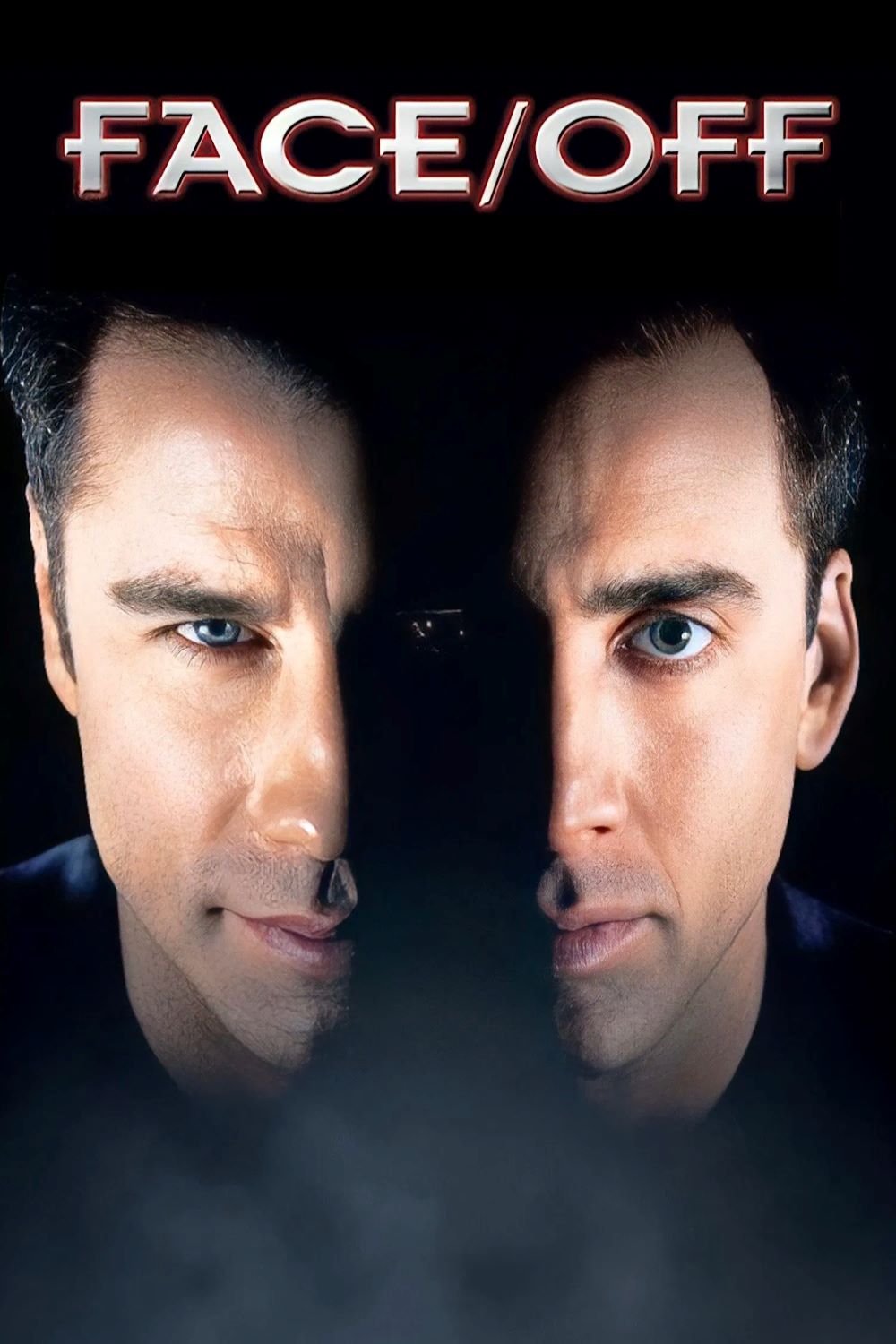
At its core, Face/Off is a story about two men who literally become each other, but it works because it never treats that concept as a small thing. John Travolta’s Sean Archer is an FBI agent consumed by grief after the death of his young son, while Nicolas Cage’s Castor Troy is a theatrical terrorist who seems to enjoy being evil as a kind of performance art. The sci‑fi hook—cutting off their faces and swapping them—does not remotely pass a reality test, but the movie leans into the idea with such conviction that you either roll with it or get left behind in the opening act.​

The big selling point is the acting showcase baked into that swap. Watching Travolta play a supposedly buttoned‑up lawman unraveling inside the body of a flamboyant villain, while Cage dials his madness into something deceptively controlled, gives the film a strange, theatrical energy. There is a real pleasure in tracking how each actor steals little gestures and rhythms from the other, so scenes become layered: what you’re seeing on the surface and who you know is “underneath” the borrowed face are constantly at odds.​

That identity confusion isn’t just a gimmick; it gives the film some surprising emotional weight. Archer’s grief isn’t window dressing—his obsession with bringing down Troy comes from the trauma of losing his son, and the face swap forces him to confront who he’s become in that tunnel‑vision pursuit. Meanwhile, Troy, once inside Archer’s life, plays “family man” in a way that’s both gross and unnervingly intimate, manipulating Archer’s wife Eve and daughter Jamie with a mix of faux tenderness and predatory charm.​

Joan Allen, as Eve, quietly grounds all this insanity. Her character spends a good chunk of the film being gaslit on a level that would break most people, yet Allen plays her with a subdued intelligence that makes the eventual moment of realization feel earned instead of convenient. Dominique Swain’s Jamie gets more of a stock “rebellious teen” setup, but the way Troy‑as‑Archer slithers into her life gives some scenes a genuinely uncomfortable edge, underlining how invasive the villain’s masquerade really is.​

Of course, this is a John Woo movie, so the drama is constantly fighting for space with balletic gunfights and slow‑motion chaos. The action is elaborate and stylized, full of dual pistols, flying bodies, and highly choreographed carnage that feels closer to a violent dance than a grounded firefight. Whether it is the prison escape with its magnetic boots or the church shootout framed with doves and religious imagery, Woo stages set pieces as big operatic crescendos, not just plot checkpoints.​

That operatic tone is both a strength and a weakness. On the one hand, the heightened style matches the bonkers premise, letting the movie exist in a kind of hyper‑reality where emotions and bullets fly with the same intensity. On the other hand, the sheer excess sometimes undercuts the more serious beats, as if the film can’t decide whether it wants to be a heartfelt story about grief and identity or the wildest action comic you have ever flipped through.​

The script occasionally gestures at deeper themes but rarely lingers on them. Archer’s time in a secret off‑the‑books prison hints at broader commentary about state power and dehumanization, yet the movie mostly uses the setting as a backdrop for an escape sequence rather than exploring what it means. Similarly, Troy’s infiltration of Archer’s family brushes against ideas about how easily trust and intimacy can be weaponized, but the story is more interested in cranking up tension than really unpacking that psychological damage.​

Where the writing truly shines is in the mechanics of the cat‑and‑mouse relationship. The film keeps finding new ways to twist the knife, whether it’s Archer stuck in Troy’s body trying to convince former enemies he’s changed sides, or Troy using Archer’s authority to erase evidence and tighten the trap. Some of the most satisfying scenes are the quieter confrontations where both men have to stay in character in front of others while aiming verbal daggers at each other, maintaining the illusion even as their hatred escalates.​

Still, Face/Off is not exactly a model of restraint or logic, and that’s where some fair criticism comes in. The science of the face swap is nonsense even by sci‑fi standards, and the movie’s attempts to hand‑wave voice, body shape, and mannerisms require a level of suspension of disbelief that will be deal‑breaking for some viewers. On top of that, the third act piles on so many stunts and reversals that fatigue can set in; not every action beat feels necessary when the emotional arc has already hit its key notes.​

There is also the question of tone in how the film treats violence and trauma. The opening murder of Archer’s son is genuinely brutal, and the later manipulation of his family taps into real discomfort, yet the movie often snaps back into cool‑shot mode a moment later, as if unsure how long it wants to sit with pain. That tonal whiplash can make it hard to fully buy into the emotional stakes, because the film keeps reminding you it is here, first and foremost, to put on a show.​

Despite those flaws, Face/Off has aged in a strangely resilient way. In an era where many big action movies flatten actors into interchangeable cogs in a CG machine, there’s something refreshing about how much personality this film allows its leads to display, even when they’re chewing the scenery. The movie’s excess becomes part of its charm: it feels handcrafted in its madness, a spectacle built around big performances rather than just big effects.​

Face/Off is neither a straightforward masterpiece nor a disposable guilty pleasure; it lives in a messy, entertaining space between those extremes. The film delivers memorable performances, inventive set pieces, and a surprisingly sincere emotional throughline, but it also leans on ludicrous science, tonal inconsistency, and overindulgent action. If you can accept its central absurdity and meet it on its own heightened wavelength, it remains a wild, engaging ride that showcases what happens when star power, genre bravado, and unfiltered style crash into each other at full speed.​

Film Review: Battlefield Earth (dir by Roger Christian)


After avoiding it for 25 years, I finally watched the infamous 2000 fiasco, Battlefield Earth, last night.

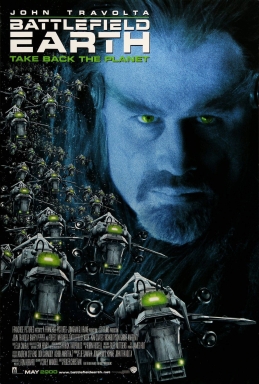
Battlefield Earth, based on a superlong novel by creepy cult guru L. Ron Hubbard, was a longtime passion project of John Travolta’s.  Travolta, a Scientologist, had long wanted to make a movie out of Hubbard’s science fiction epic and, on a hot streak following films like Pulp Fiction and Get Shorty, he finally did so in 2000.  He played Terl, a member of a giant alien race called the Psychlos.  The Psychlos have conquered Earth and humanity has regressed back to an almost prehistoric standard of living.  When a brave human, Johnnie Goodboy Tyler (Barry Pepper), defies his elders and proceeds to venture out into the ruins of Denver, he’s captured by Terl.  Eventually, Johnnie is shown a copy of the Declaration of Independence and it inspires him to lead a revolution against the Psychlos.

Battlefield Earth turned out to be just as bad as I had heard, a charmless wannabe epic that used far too many Dutch angles and relied on slow motion to try to create a heroic (or, in some cases, tragic) feel to the action.  The plot of the film felt like something recycled from an old 1930s serial, which makes sense when you consider that L. Ron Hubbard was a pulp writer before he decided to become a guru.  What I was not prepared for was just how mind-numbingly dull Battlefield Earth is.  Most bad movies can at least make the claim of being entertaining in their badness.  If nothing else, you can often admire them for their ambition.  Take a film like Plan 9 From Outer Space.  Plan 9 From Outer Space is often derided as being the worst film of all time but it’s still terrifically entertaining and there’s a likable earnestness at the heart of it.  Director Ed Wood may not have had a budget and his main star may have been present only through stock footage but, dammit, Wood was determined to make a science fiction epic that would double as a plea for world peace and he did just that.  There’s a heart at the center of Plan 9 From Outer Space and that makes it a film that you can mock but you never quite dislike.  For all the talk of Battlefield Earth being a passion project for Travolta, the end result is an empty and rather soulless film.

(I nearly listed Battlefield Earth as being one of our Icarus Files but then I remembered that Icarus at least managed to get close to the sun.  Battlefield Earth can’t even get out of Denver.)

Travolta’s career has never really recovered from Battlefield Earth.  He is an actor who can claim to have appeared in two of the biggest, most influential films of all time — Pulp Fiction and Saturday Night Fever — but his legacy appears to be walking around on stilts in Battlefield Earth.  As for Barry Pepper, he does probably about as well as anyone could with the role of Johnnie Goodboy Tyler but still, it’s sad to see a good actor wasted in such a bad movie.  (In fact, there’s quite a few good actors — Forest Whitaker, Kim Coates, Richard Tyson — wasted in this movie.)  From what I understand, the movie only covered the first 400 pages of Hubbard’s 1100-page novel.  Travolta had hopes to do a sequel but that’s not going to happen.

It’s for the best.  If people need to see a movie about L. Ron Hubbard’s belief system, they can always rewatch The Master.


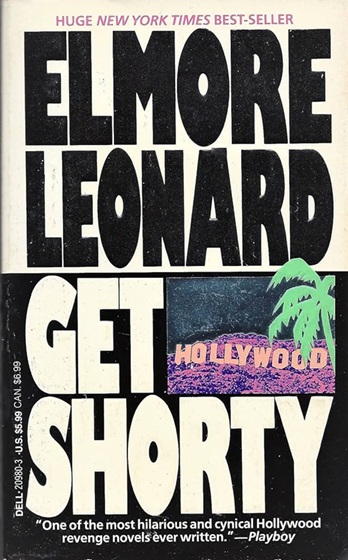
Book and Film Review: Get Shorty (by Elmore Leonard and dir by Barry Sonnenfeld)


In 1995’s Get Shorty, John Travolta stars as Chili Palmer.

Chili is a loan shark for the mob, an effortlessly cool guy who lives in Miami and who loves to watch old movies.  Chili may work for the Mafia and he may make his living by intimidating people but he doesn’t seem like such a bad guy, especially when compared to someone like Ray “Bones” Barboni (Dennis Farina).  Bones is an uncouth and rather stupid gangster who steals Chili’s leather jacket from a restaurant.  Chili reacts by breaking Bones’s nose with just one punch.  Bones reacts by trying to shoot Chili but instead, he gets shot by Chili himself.  (The bullet only grazes his forehead.)  Chili can do all this because he’s protected by Momo (Ron Karasbatsos) but, after Momo drops dead after having to walk up several flights of stairs just to then be given a surprise birthday party, Chili suddenly finds himself working for Bones.  (This all happens in the first few minutes of this perfectly paced film.)

Bones, eager to humiliate Chili, sends him to Vegas to collect on a debt owed by a dry cleaner named Leo (David Paymer).  Leo is thought to be dead but Bones wants to collect the money from Leo’s widow.  It’s not the sort of thing that Chili likes to do so instead, he ends up going to Hollywood to collect a debt from B-movie director Harry Zimm (Gene Hackman).  Chili  happens to like Harry’s movies.  He also likes Harry’s current girlfriend and frequent co-star, actress Karen Flores (Rene Russo).

Chili ends up in Hollywood, a town where everyone has some sort of hustle going.  Chili finds himself dealing with drug dealers (Delroy Lindo), egocentric film stars (Danny DeVito), stuntmen-turned-criminals (James Gandolfini), and the widow (Bette Midler) of a screenwriter.  Chili also finds himself looking to escape from the debt collection business by becoming a film producer.  Harry has a script that he wants to make.  Chili proposes a film based on the story of Leo the dry cleaner.  Danny DeVito’s Martin Weir wants to be a “shylock” in a movie just so he can show off his intimidating stare.  (“Is this where I do the look?” he asks while listening to the pitch.)  Get Shorty is a whip-smart satire of Hollywood, one in which the gangsters want to be film people and all of the film people want to be gangsters.  It features wonderful performances from the entire cast, with Travolta epitomizing cool confidence as Chili Palmer.  Hackman, Russo, DeVito, Gandolfini, and Lindo are all excellent in their supporting roles but I have to admit my favorite performance in the film is probably given by Dennis Farina, who turns Bones Barnobi into a very believable (and a believably dangerous) buffoon.

Get Shorty is based on a book by Elmore Leonard.  First published in 1990, the book is a quick and entertaining read, one that reminds us that Leonard was one of the best “genre” writers of his time.  When I read that book, I was surprised to see how closely the movie stuck to the book’s plot.  Much of the film’s dialogue is right there in the book.  It’s a book that practically shouts, “Turn me into a movie!” and fortunately, director Barry Sonnenfeld did just that.

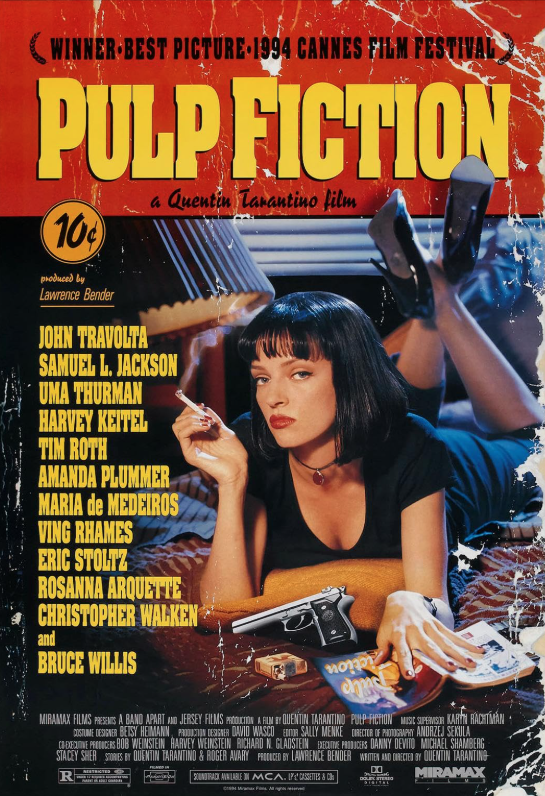
Pulp Fiction, (Written & Dir. Quentin Tarantino) Review by Case Wright


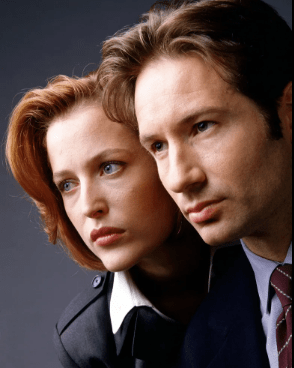
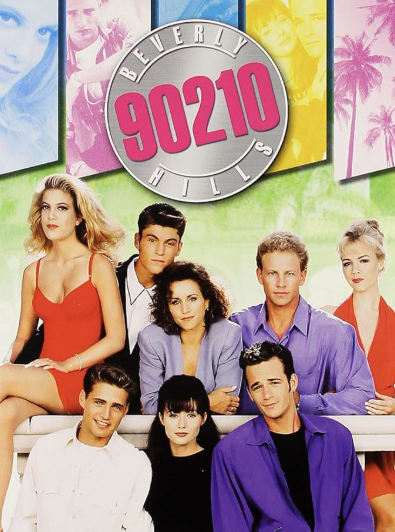
“Pulp Fiction” was as peak 1990s as much as these two:

Or this Archie’s Comic live action show

While “X-Files” attracted big audiences 60-40% male and the reverse for “90210”, “Pulp Fiction” captured 1994: Jocks, Nerds, Guys, Women, Girls, Boys, Boomers, X-ers, Older Millennials, you name it – Everyone was into Pulp Fiction. Tarantino described this art as a number of cliches: the mobster attracted to the mob wife, the boxer who tricks the mobsters into giving him money and NOT throwing the fight, and the killer who finds God. The cliches dig into DNA. WHY? Because they have the same motivations as our caveman ancestors: the unobtainable mate, a sense of honor, and redemption. These themes are the basic building blocks of what make us human beings and why these stories echo through the millennia – our ancestors fears are the same as ours today. Some might claim that “Reservoir Dogs’ was better- they are incorrect– Pulp Fiction was WAY more entertaining.

Even though this was released and written in the 1990s, it had an older feel to it. First, everyone smoked indoors. I remember the 1990s, smoking was on the OUTS big time! Second, man did he like to use a certain racial slur. OOF. But then again, I’m not from Los Angeles. Maybe, it’s like Alabama there? I have no idea! I can say that the film did hold up as re-watched it today. It was still relevant and maybe that’s because it was difficult to pin down the time period; in fact, the music was mostly from the 1970s and the story time jumped- A LOT! The Miramax producer who worked on the show also jumps a lot, but mostly in the shower.

The story begins with two mobsters Vincent Vega and Jules Winnfield murdering two guys to get a magical briefcase back to their boss Marsellus Wallace, which feeds into the next storyline of Butch an aging fighter who’s about to rip off the mob, which feeds into Mia Wallace – Marsellus Wallace’s wife overdosing on heroin, which feeds into Butch on a quest to retrieve his great-grandfather’s watch, which feeds into a pretty graphic man on man scene of sexual violence and revenge, which feeds into Jules finding God, which feeds into cleaning brains out of a car, and finally ending in a diner being robbed by Tim Roth. Yes, the film requires attention. It’s not “Dazed and Confused”. You gotta pay attention.

I recently watched a show with Lisa Marie that time jumped – oh no, were their Germans around who got too close at a family reunion off camera?!

I still believe this is Quentin’s Opus and you cannot convince me otherwise because it connected to everyone and launched and re-launched A LOT of careers. Pulp Fiction’s legacy was that it empowered a 1990s writers to work in humor with their grittiness like in Halloween H20, which I reviewed here

https://unobtainium13.com/2016/10/29/halloween-h20-alt-title-they-stab-baby-boomers-dont-they/
: Pulp Fiction, (Written & Dir. Quentin Tarantino) Review by Case Wright

I recommend to going on Hulu and checking Pulp Fiction out again.

Happy 71st Birthday, John Travolta!!


I couldn’t let today go by without recognizing John Travolta. I’ve enjoyed so many of his films over the years, especially movies like GREASE, BLOW OUT, PULP FICTION, and GET SHORTY. But the movie I probably love the most is FACE/OFF. I remember watching it at the movie theater back in 1997 and thinking it was the best movie ever. It came out at a perfect time when I was obsessed with John Woo, and I was still enjoying Travolta’s mid-90’s comeback. I still watch FACE/OFF at least once every year.

Enjoy this excellent scene from John Woo’s FACE/OFF!